
Ballroom Bodysuits
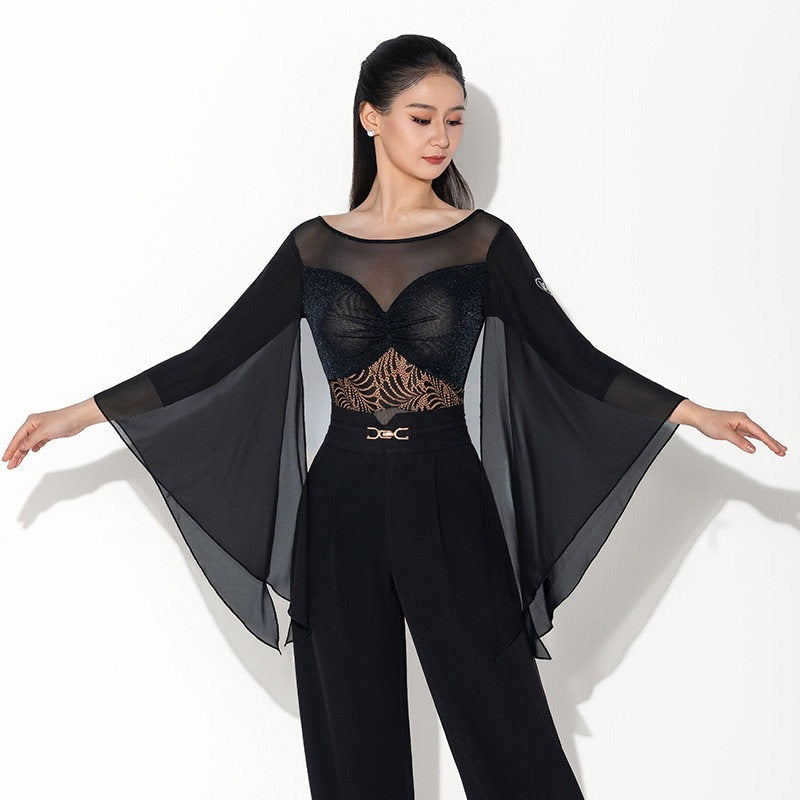
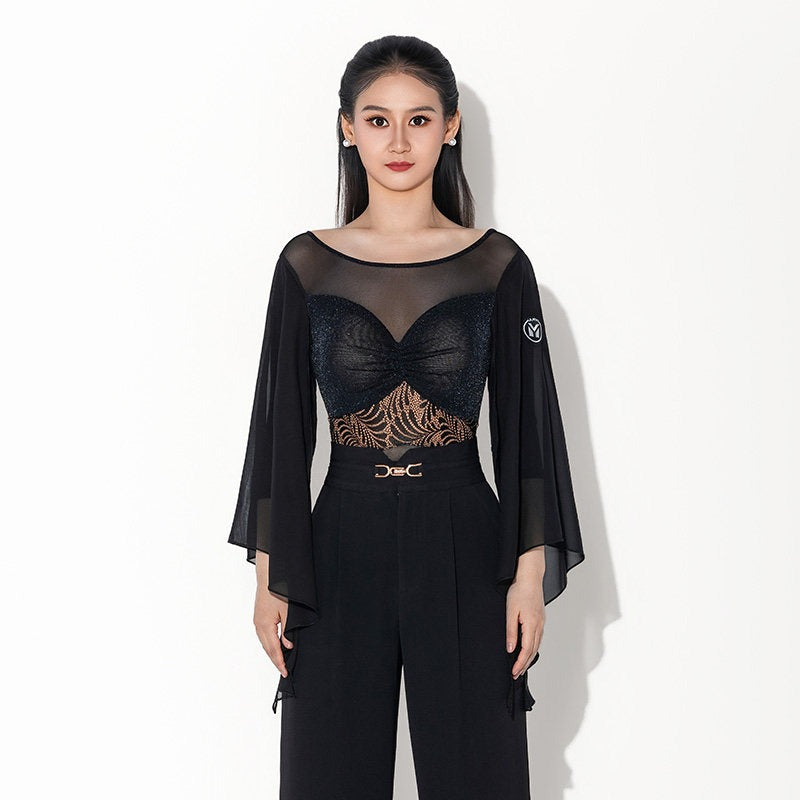
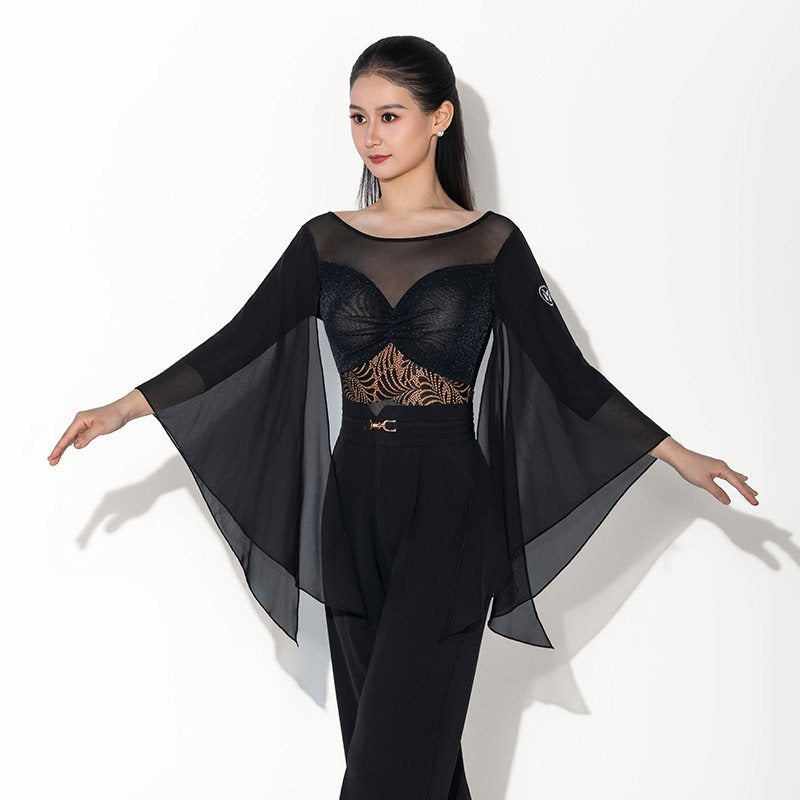
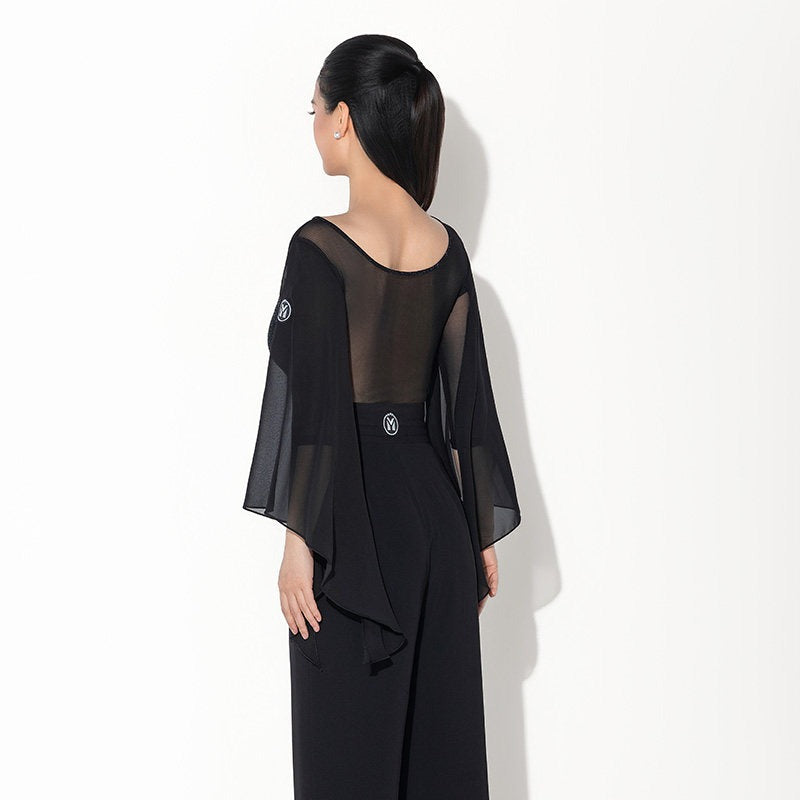
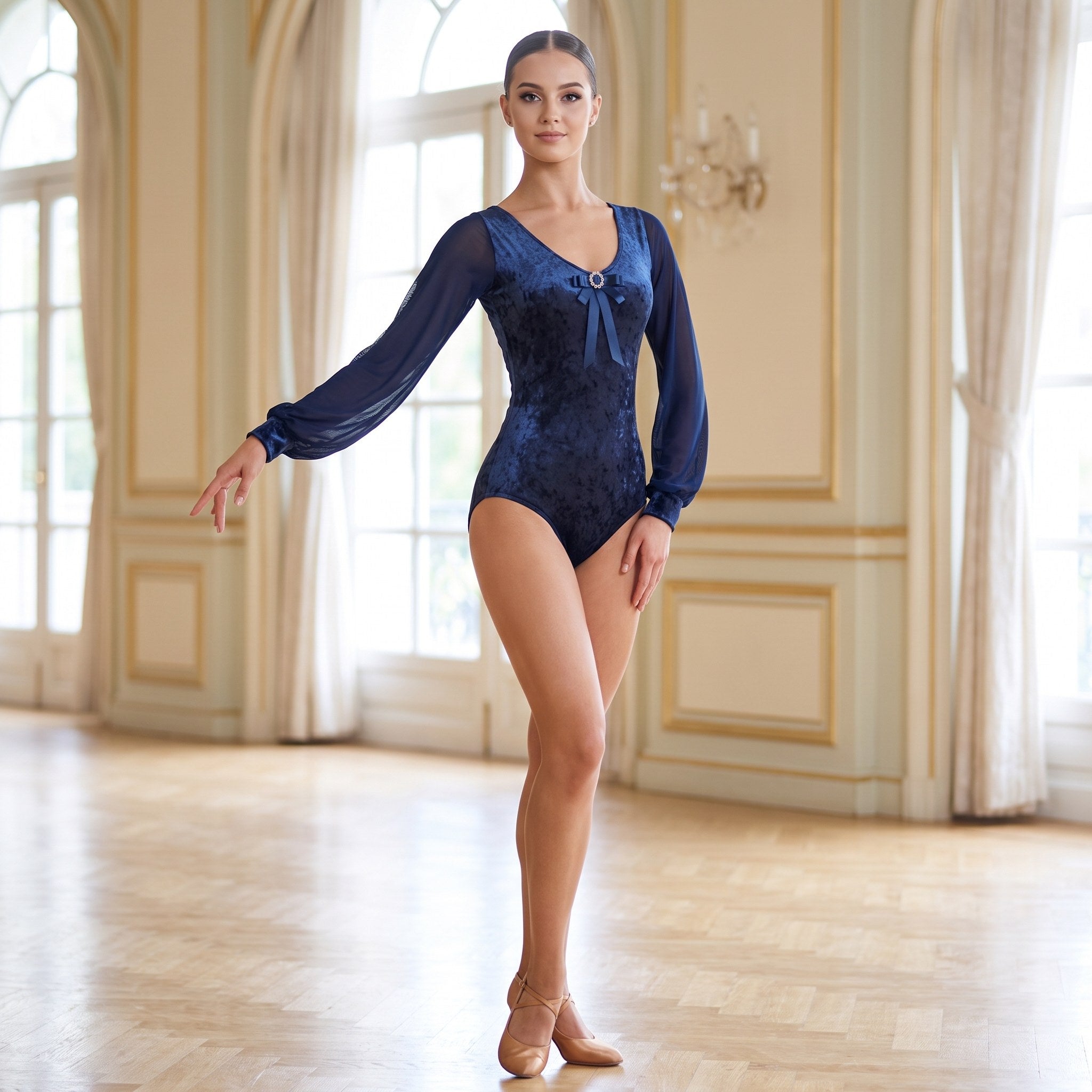
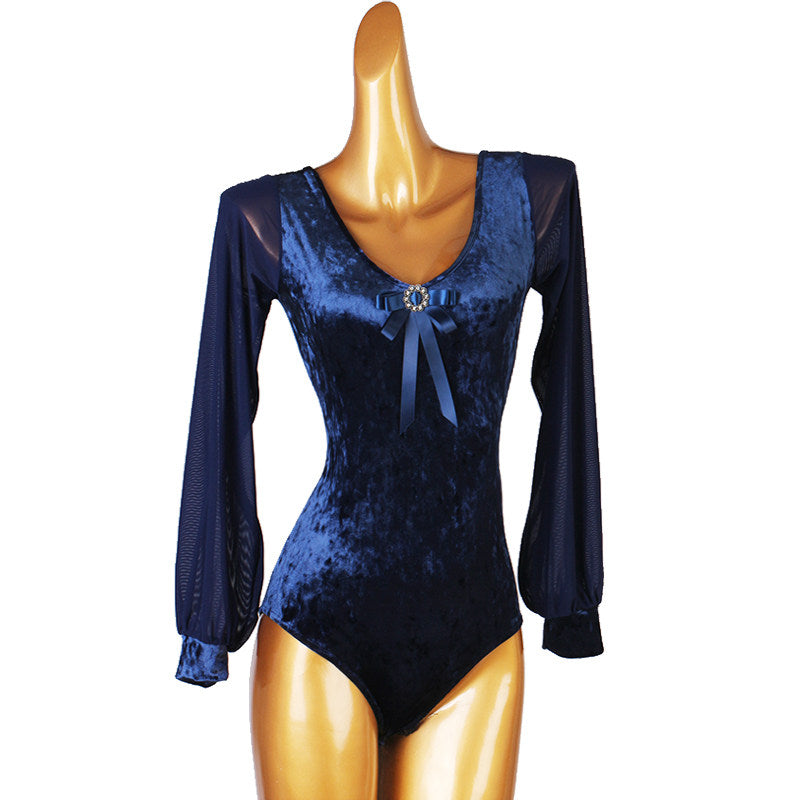
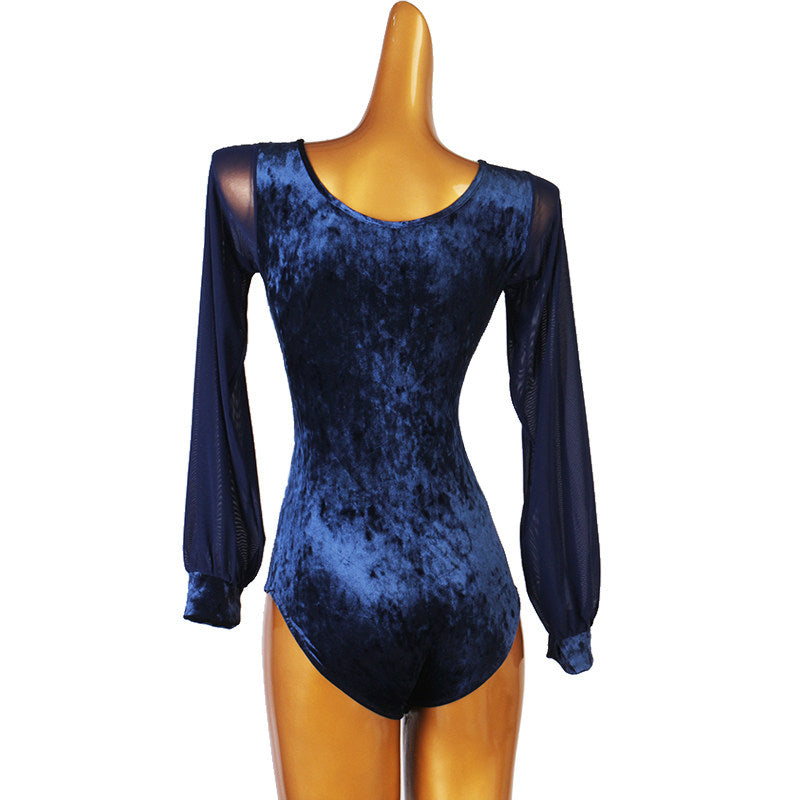
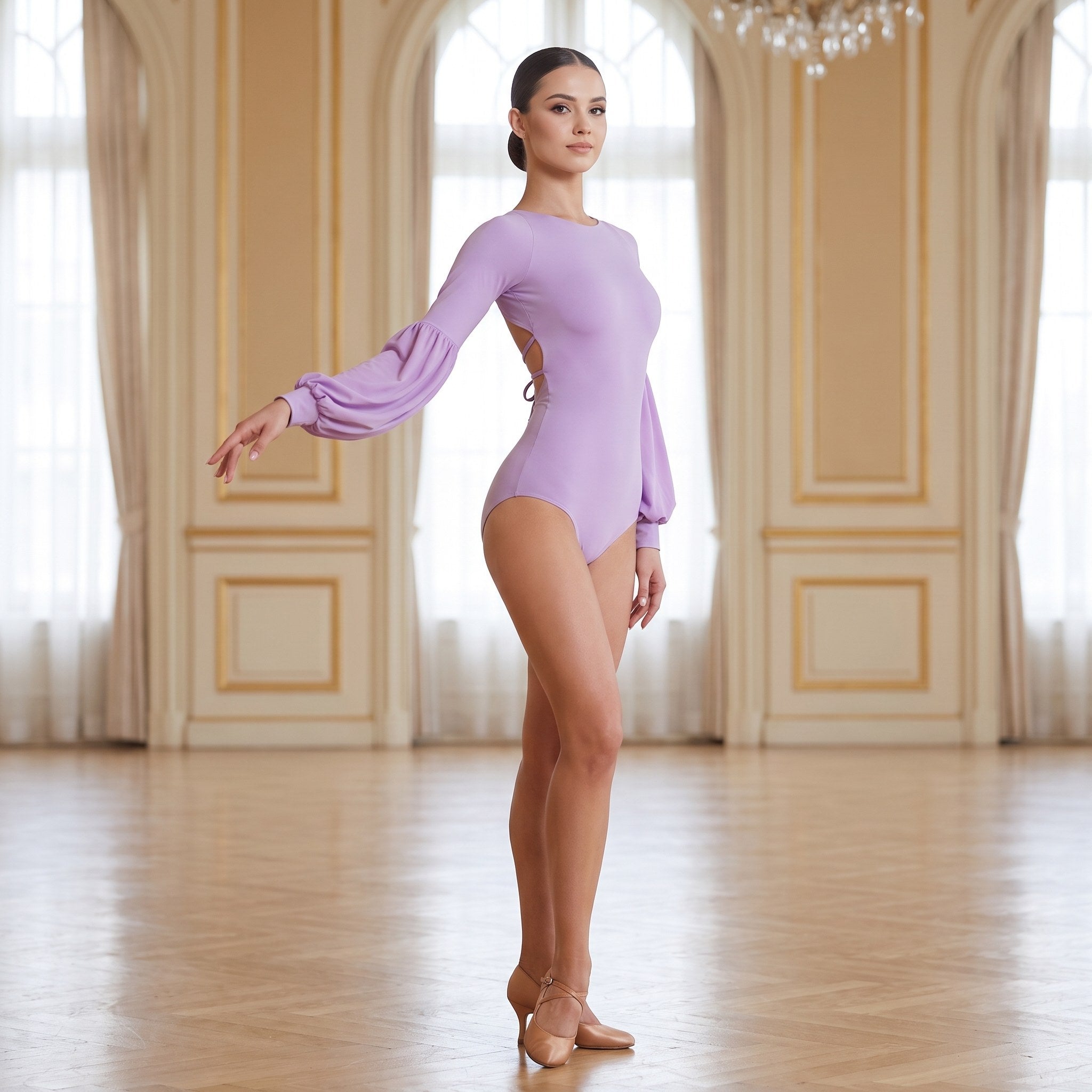
Ballroom bodysuits and dance leotards that stay smooth under a closed hold and flat under a skirt — long sleeves and mesh yokes for a continuous arm line, high and scooped backs, and a snap gusset so nothing untucks mid-figure. Amazon's Choice with a money-back guarantee since 2012.
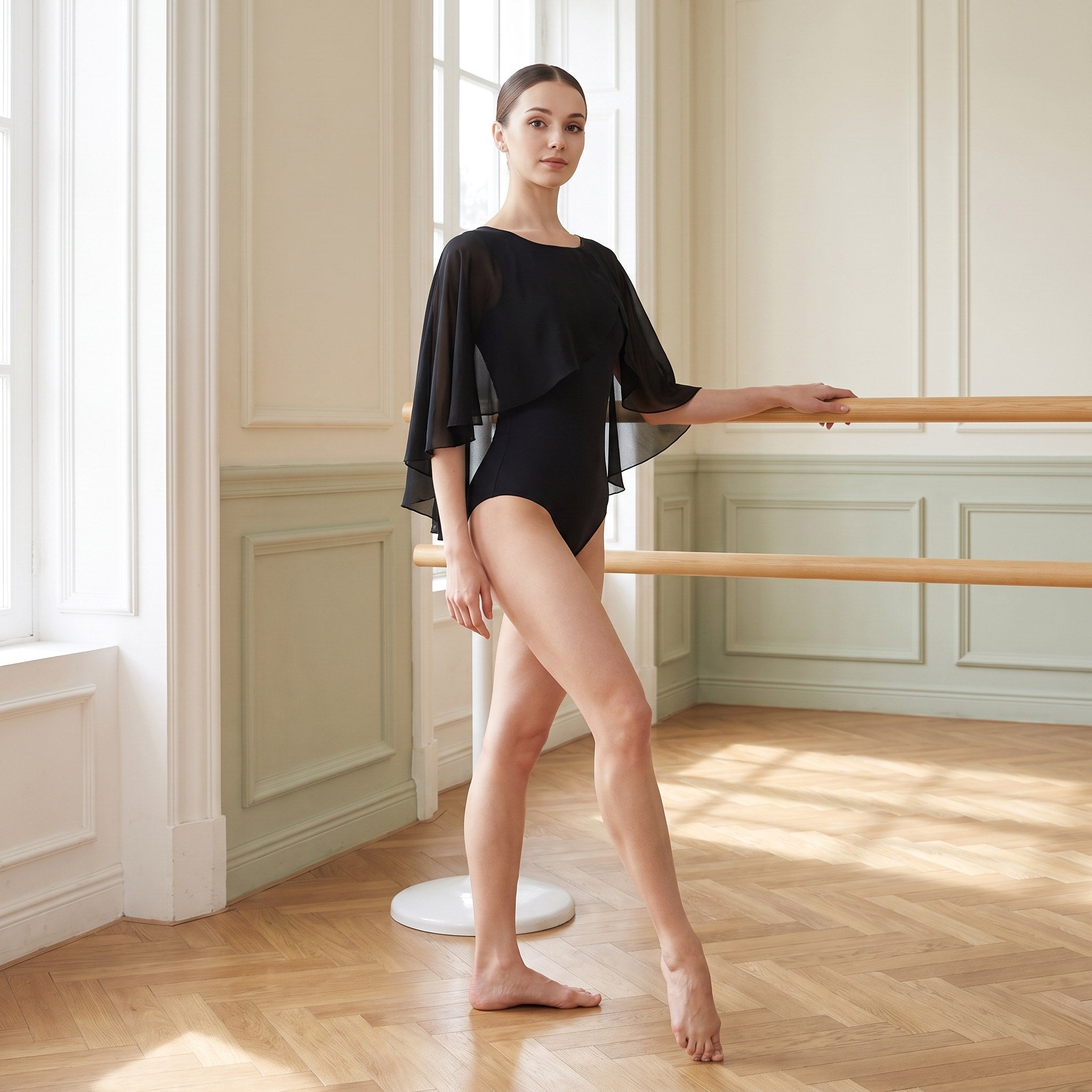
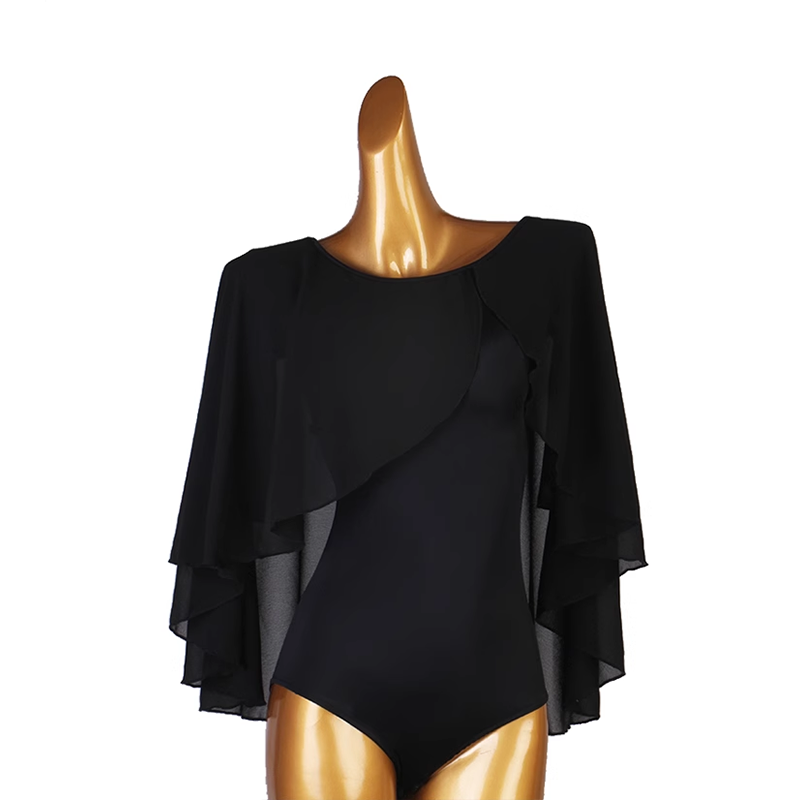
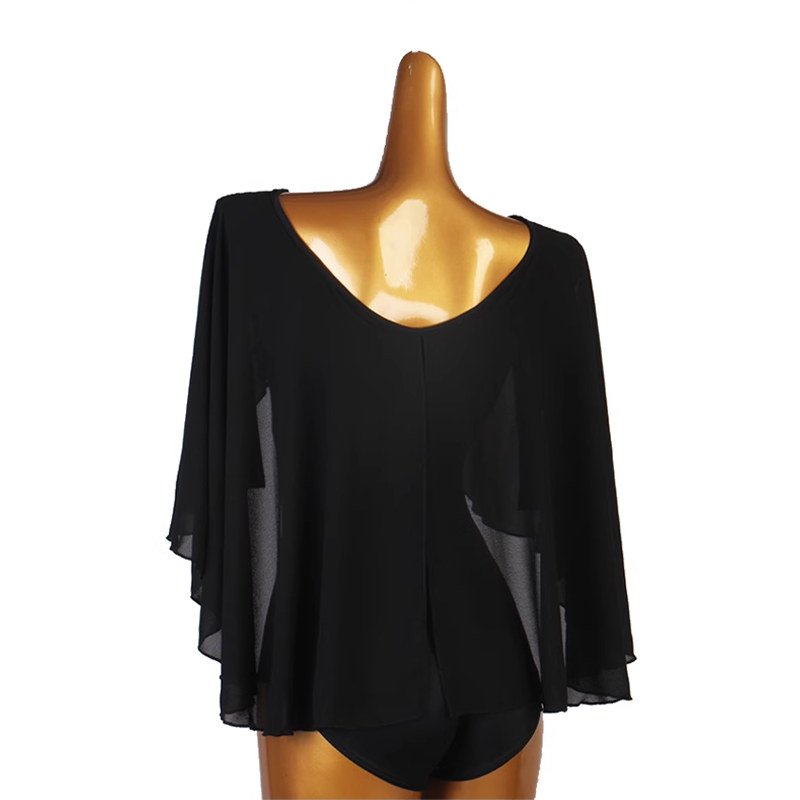
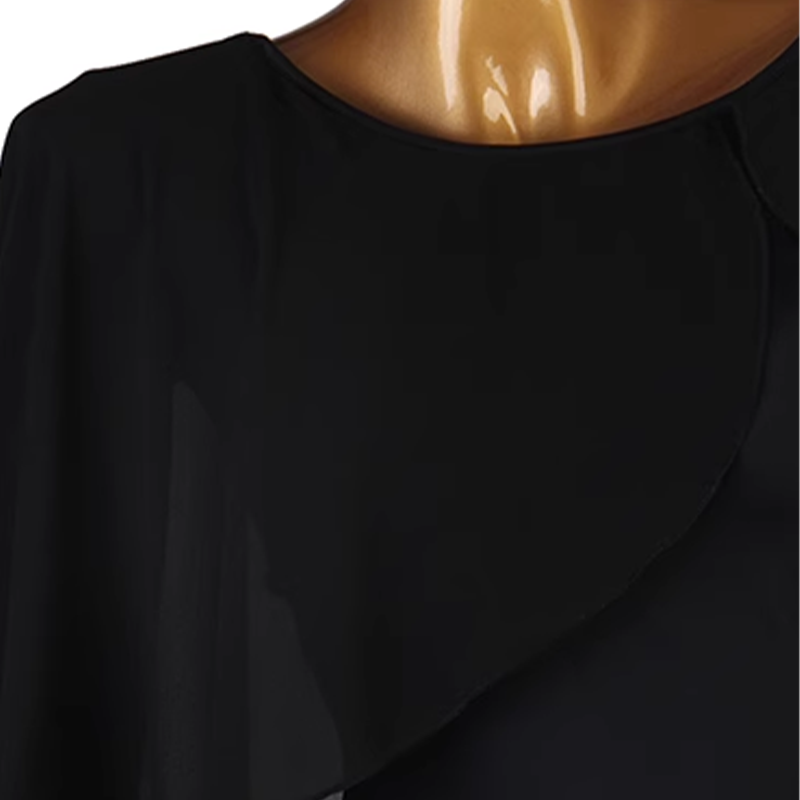
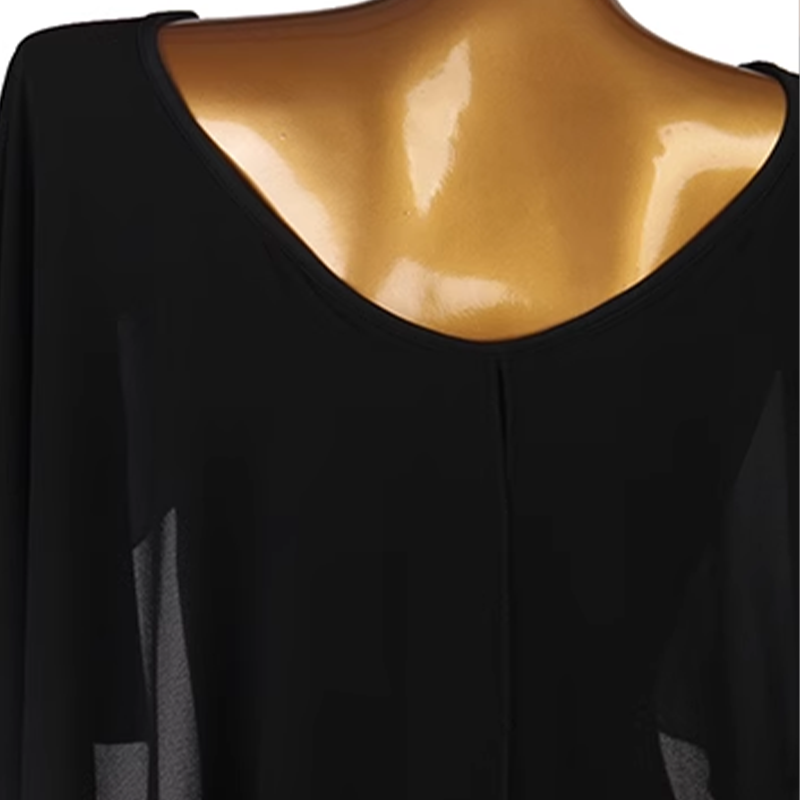
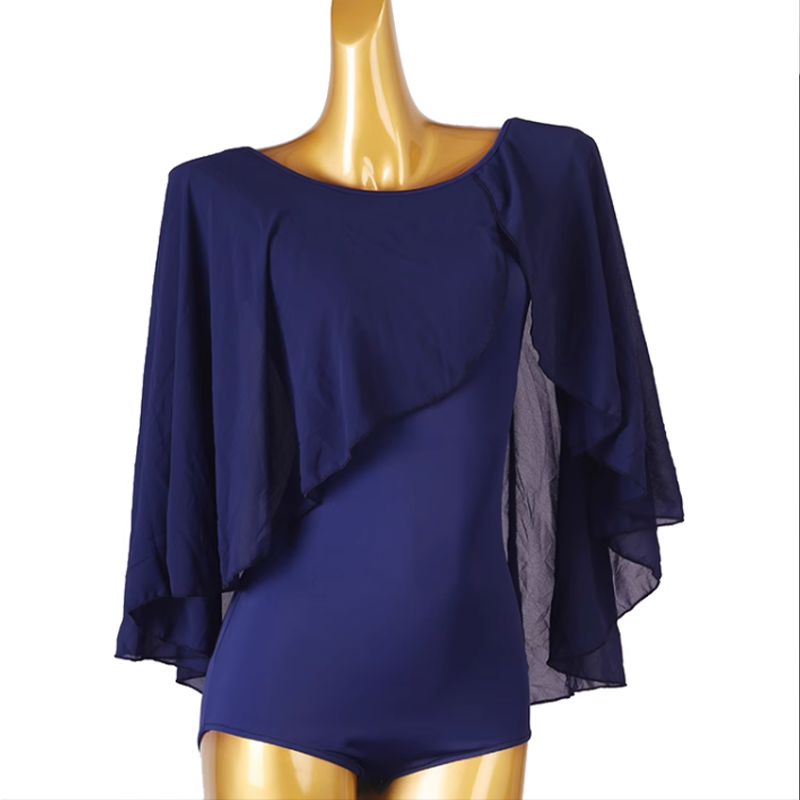
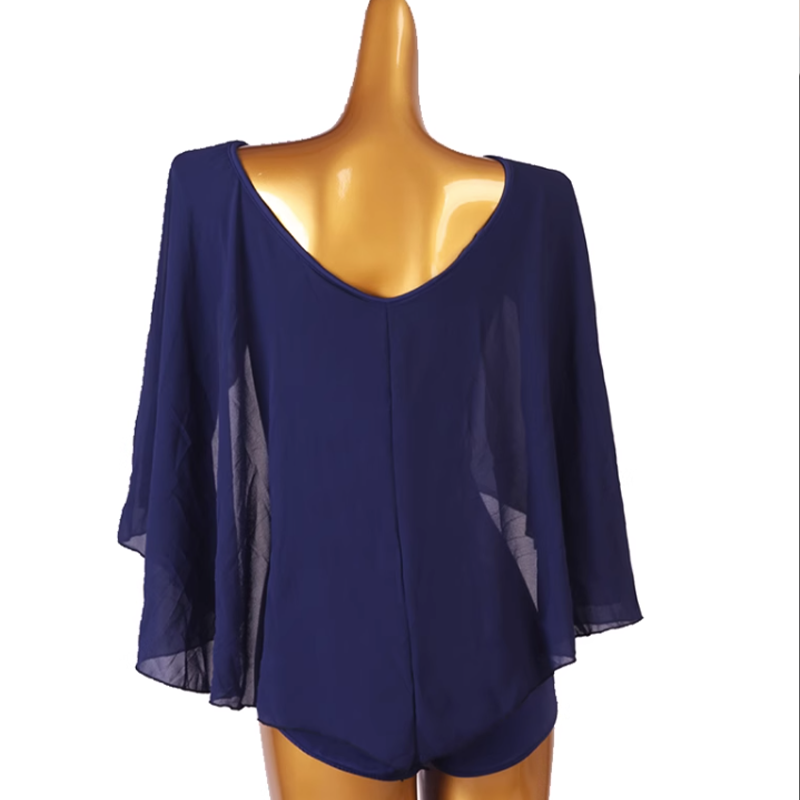
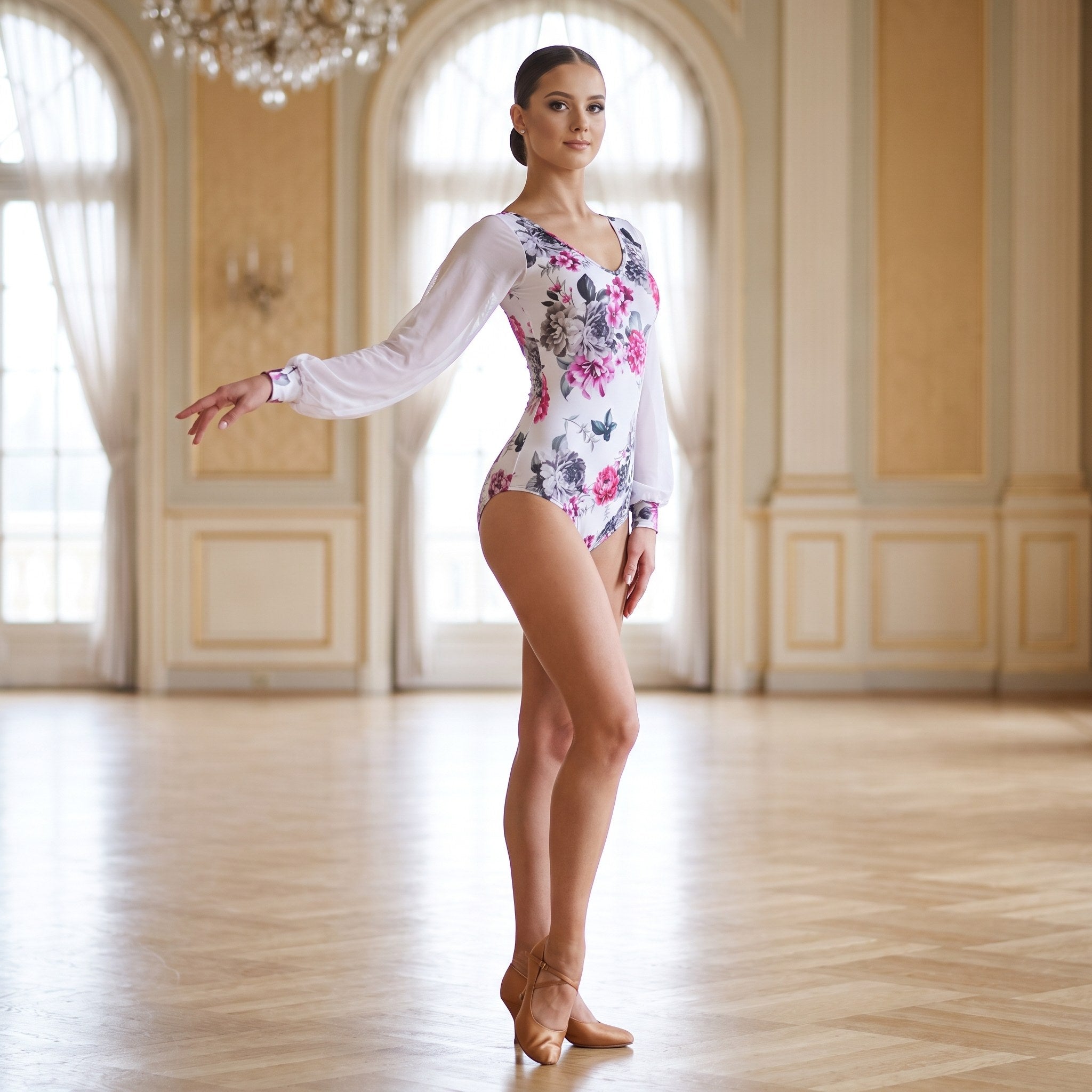
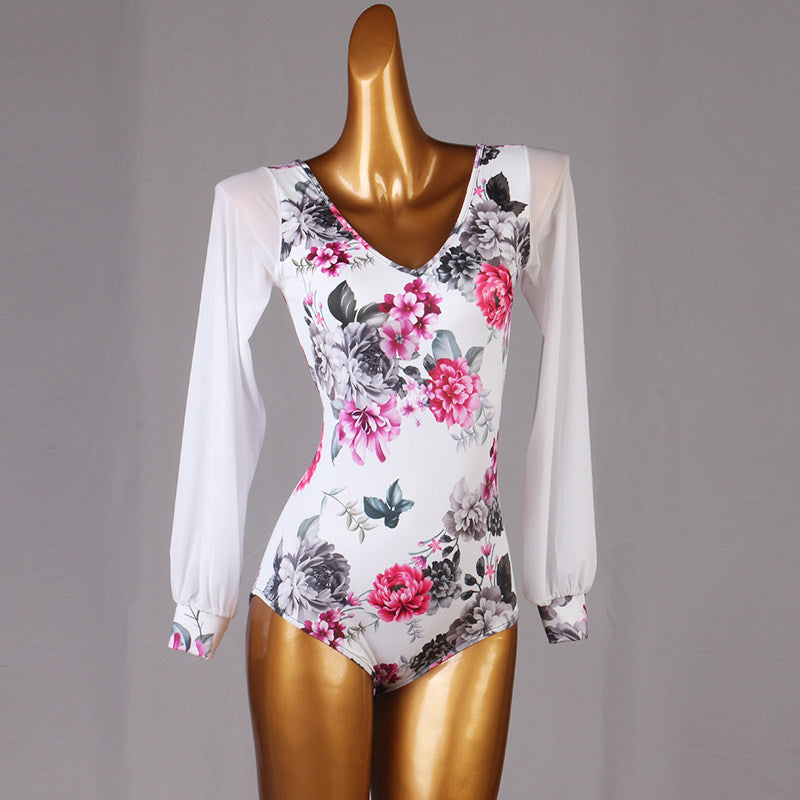
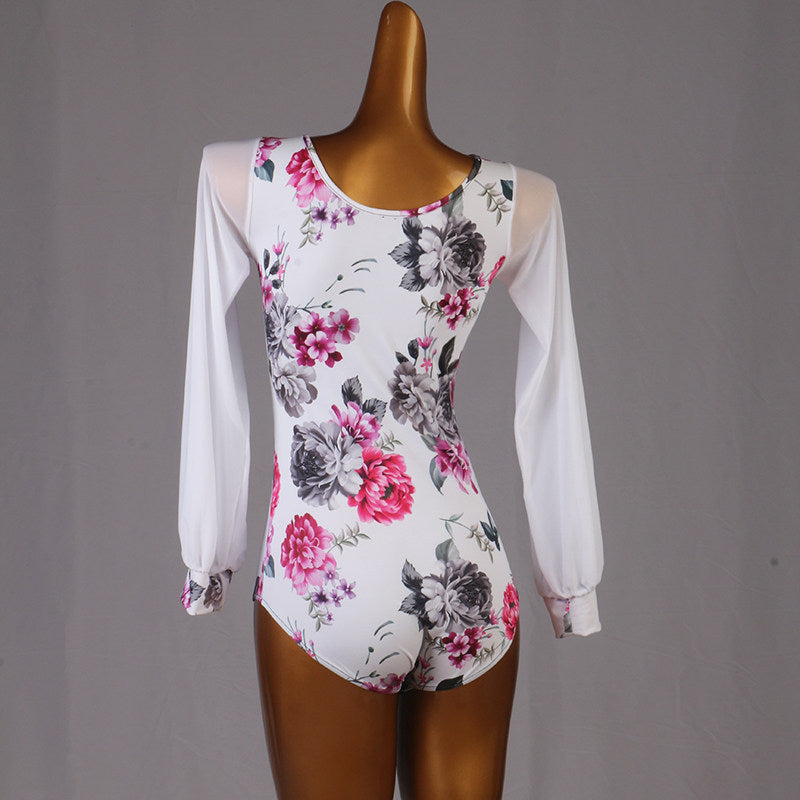
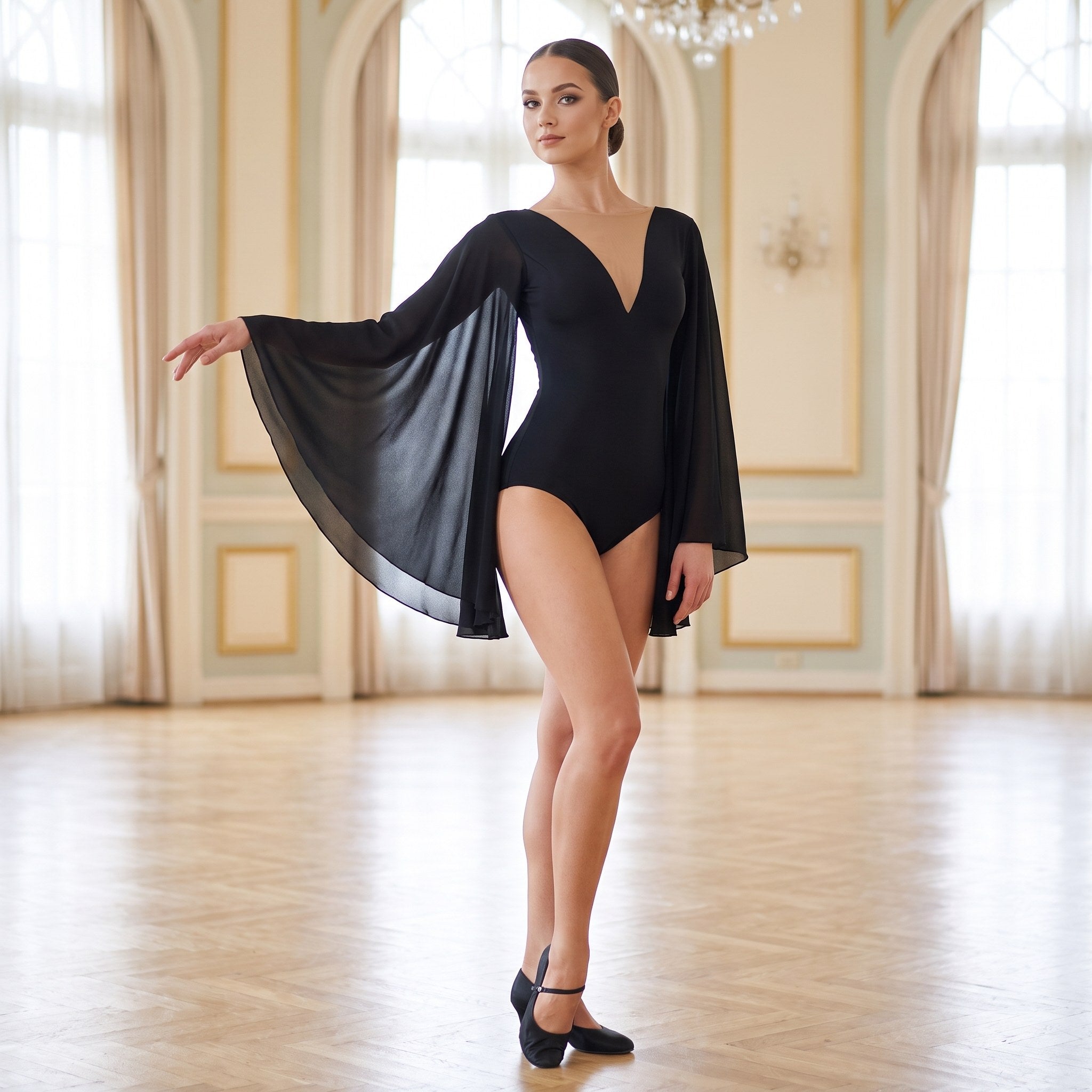
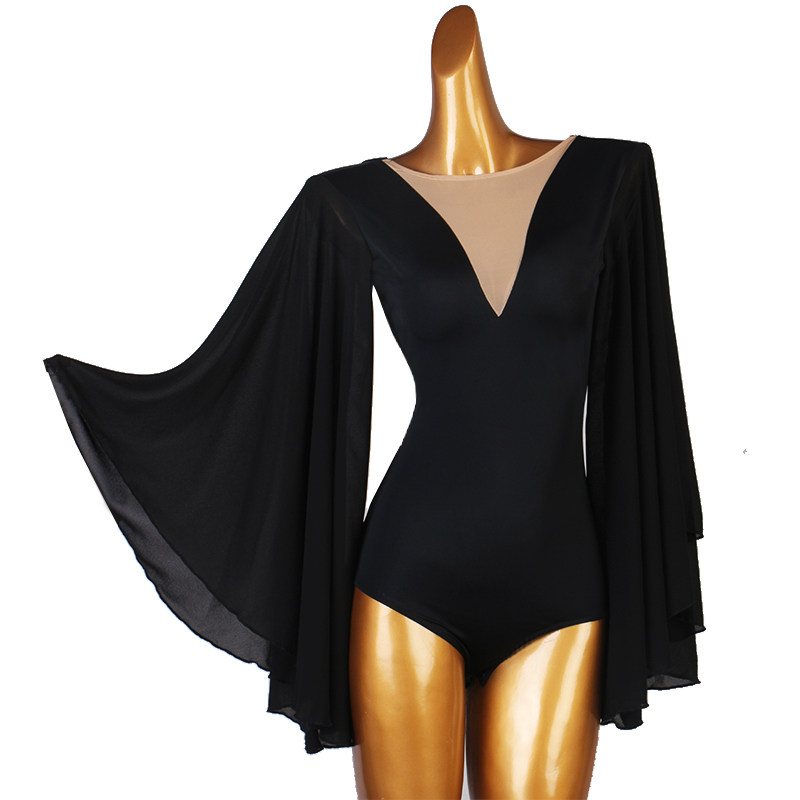
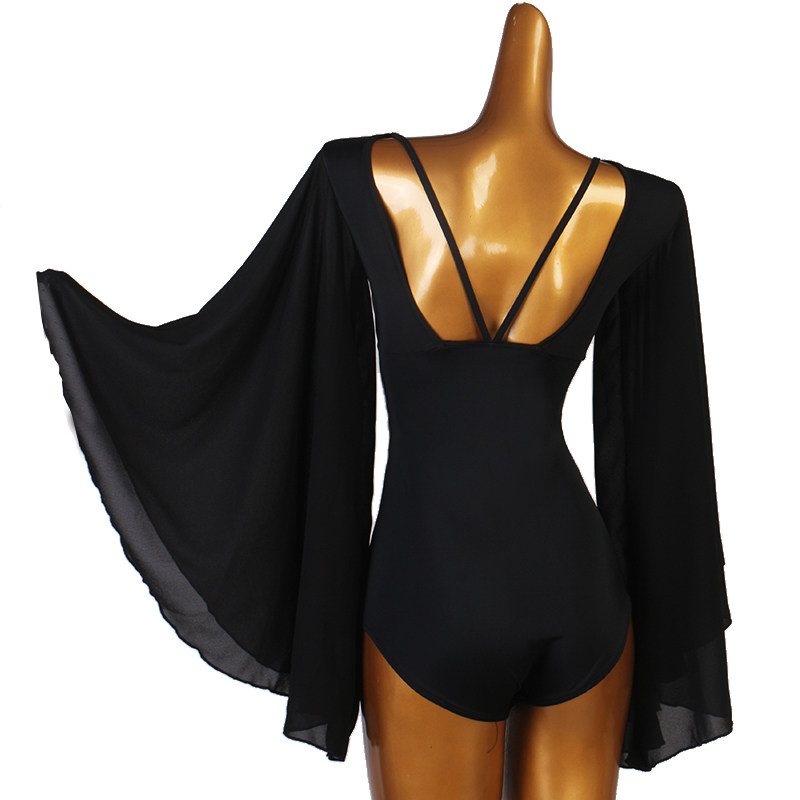
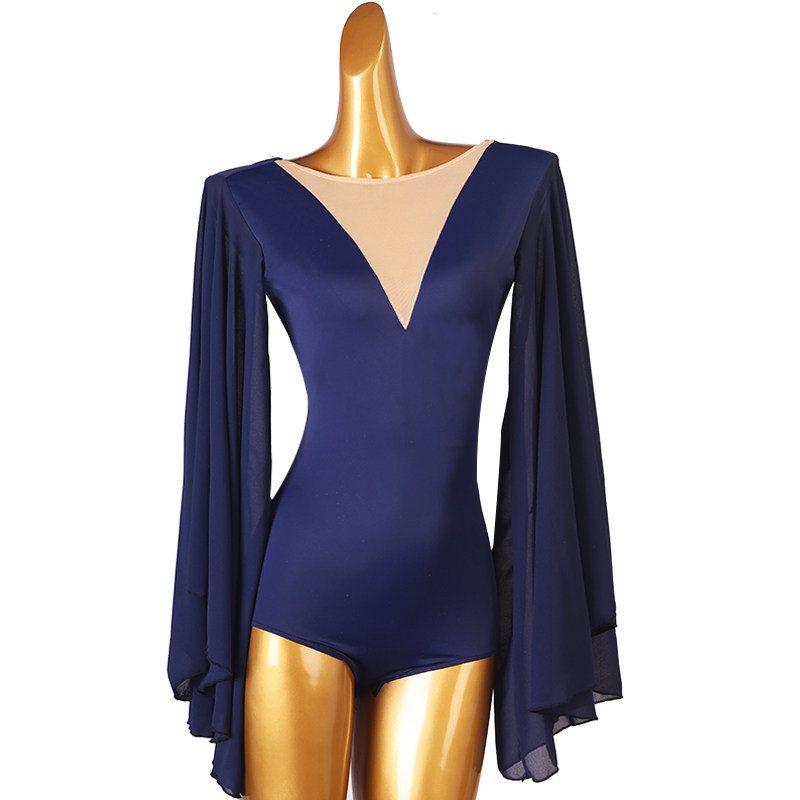
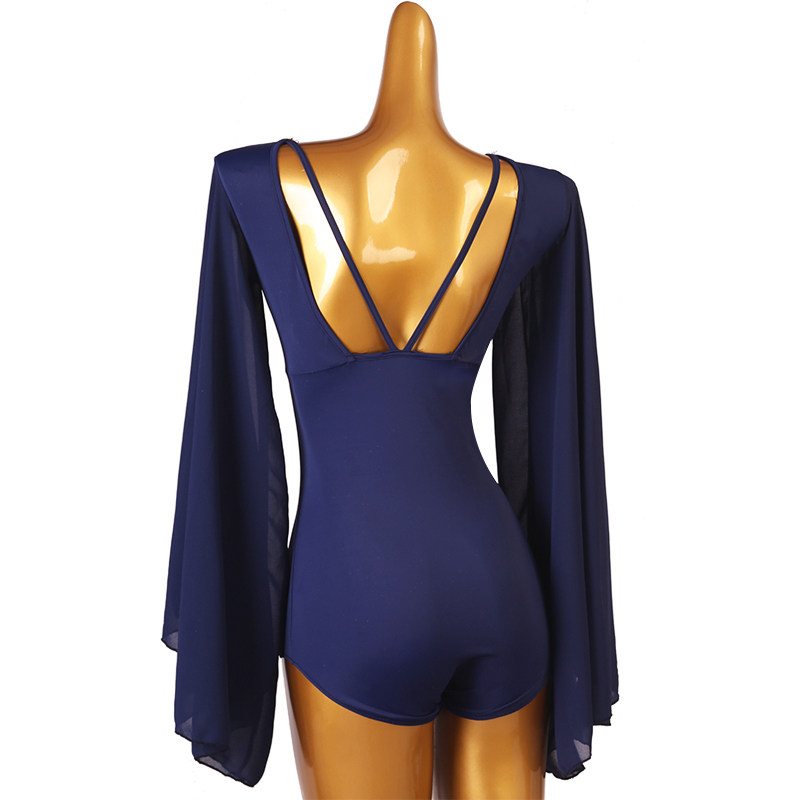
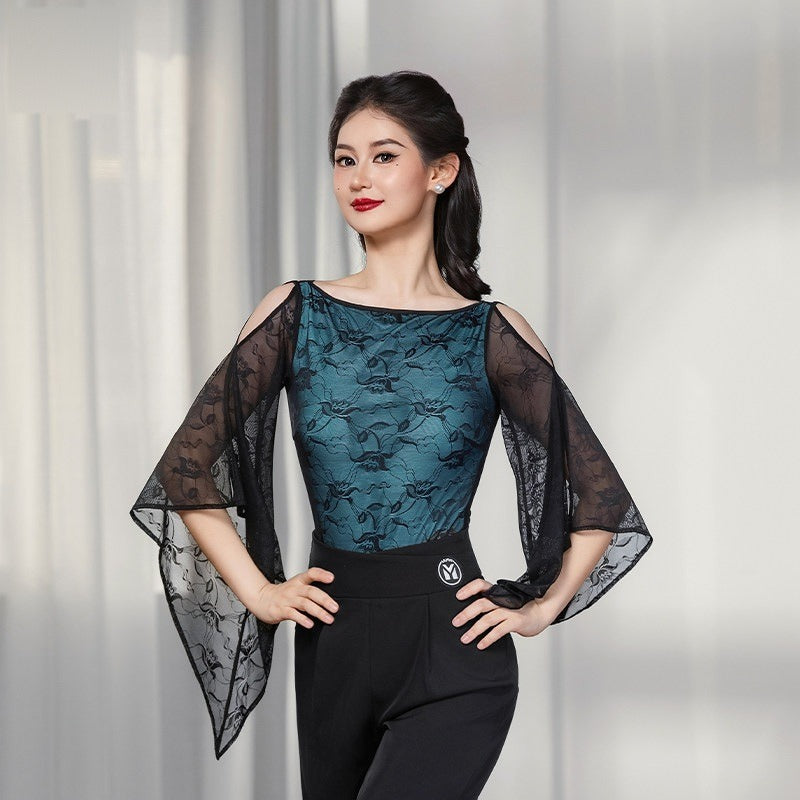
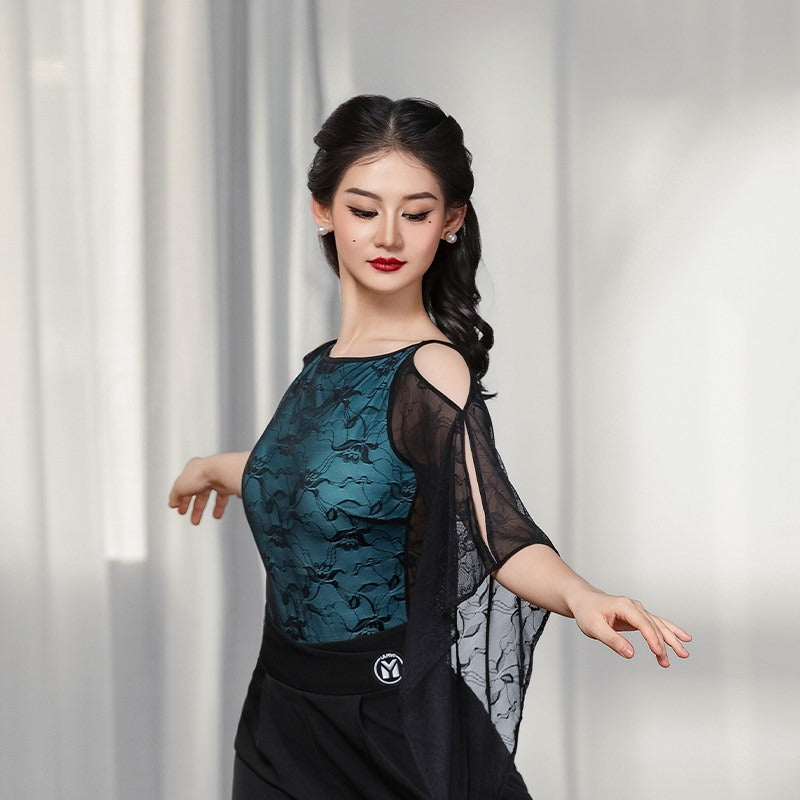
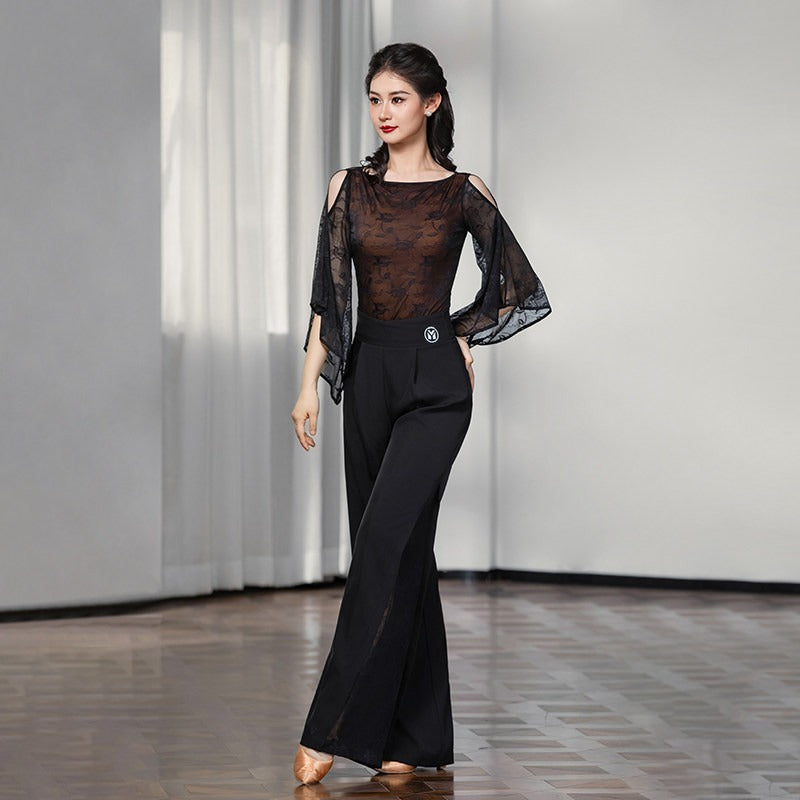
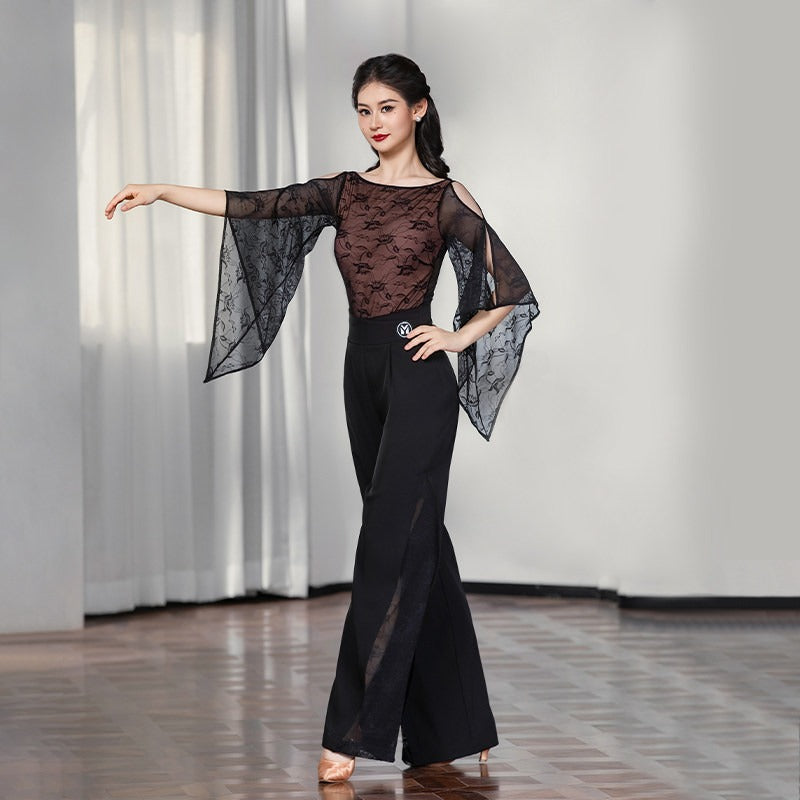
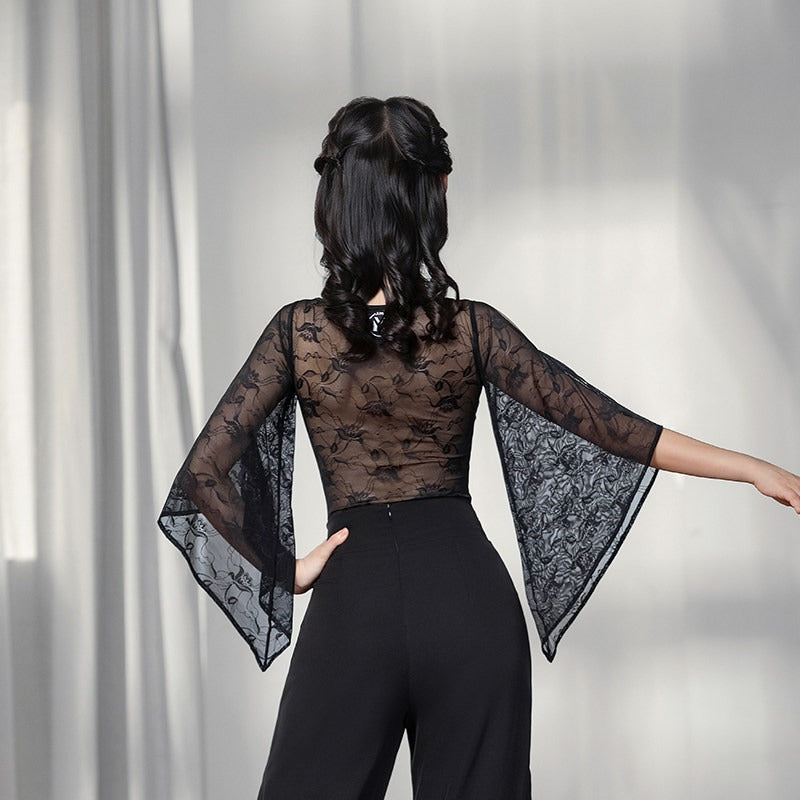
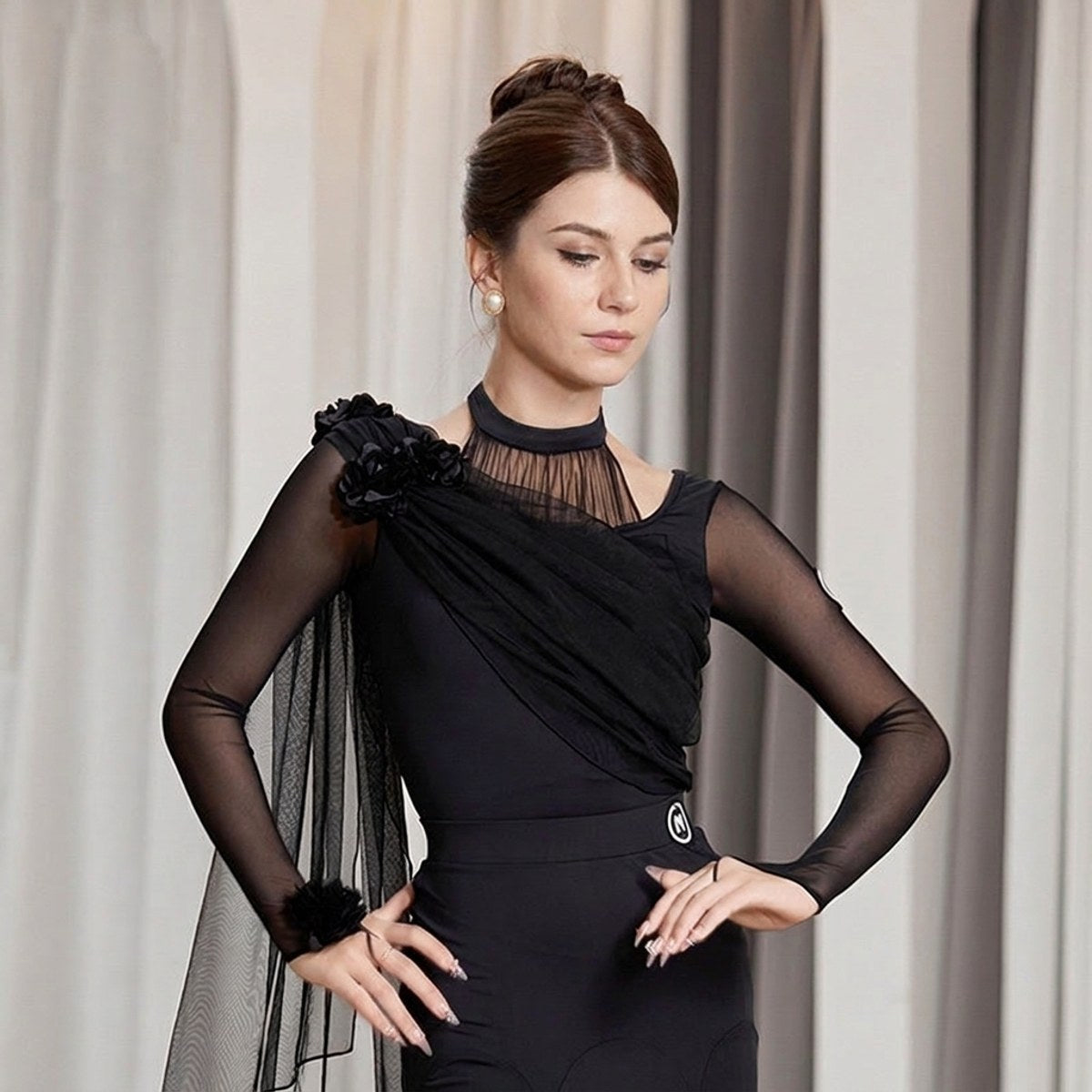
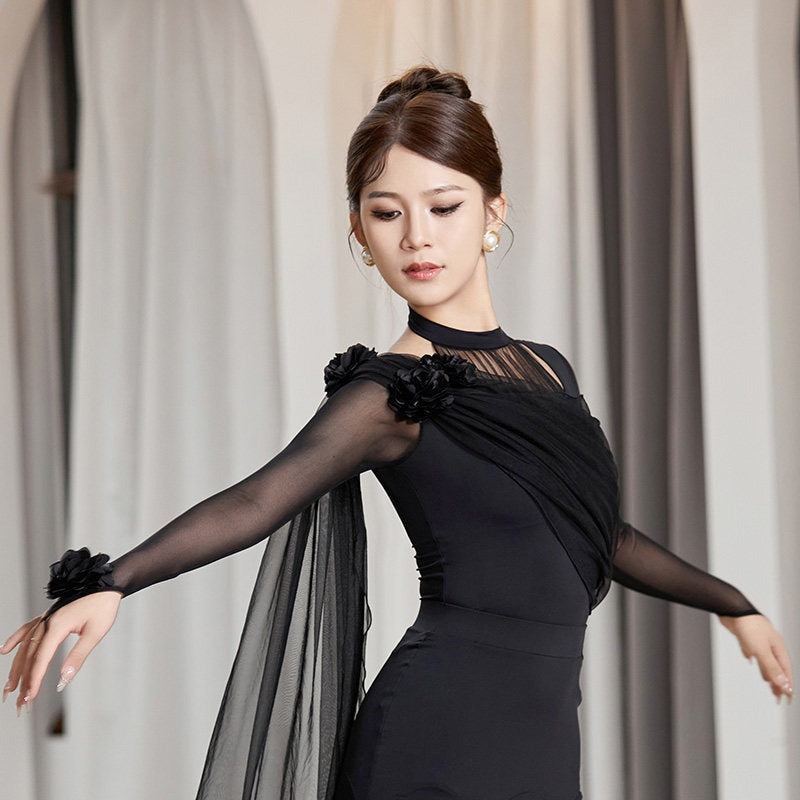
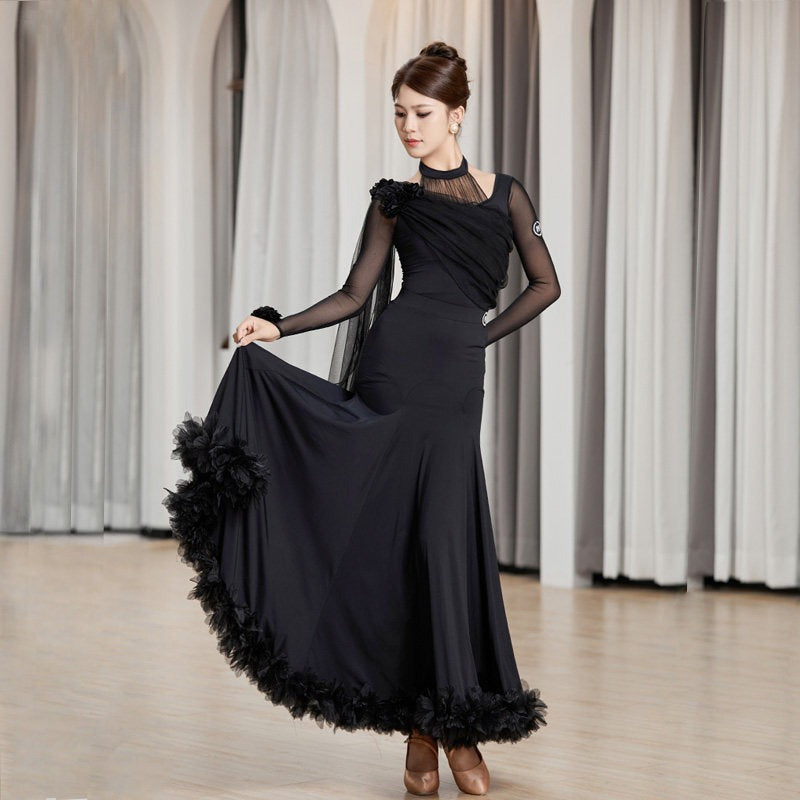


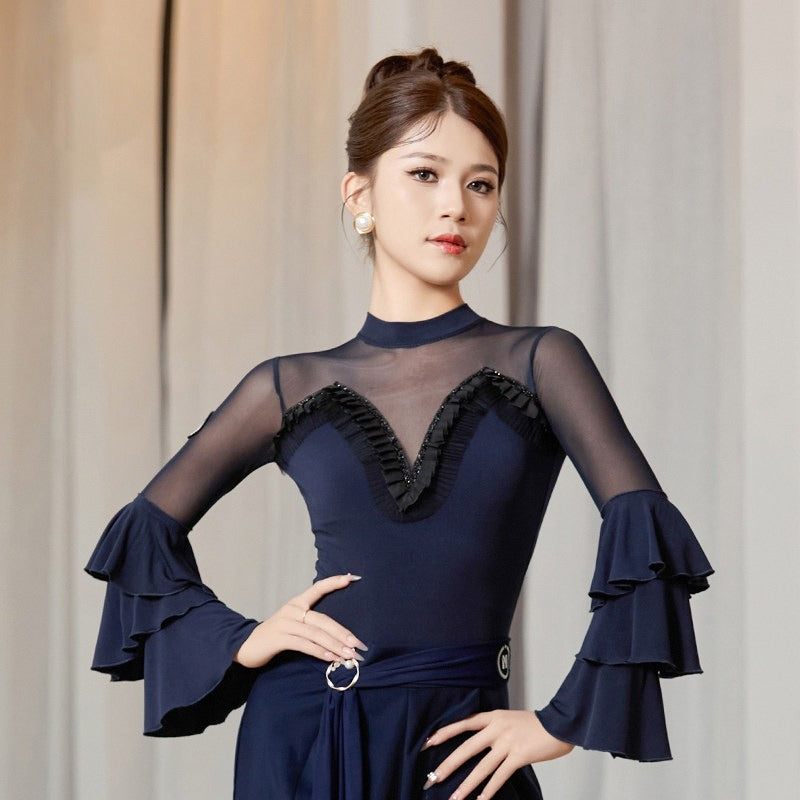

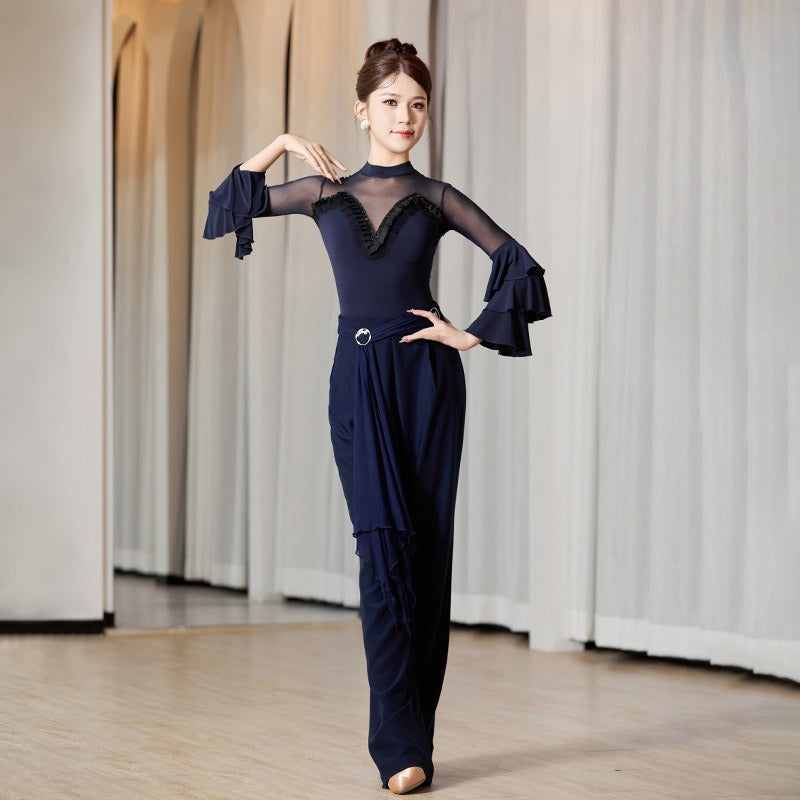
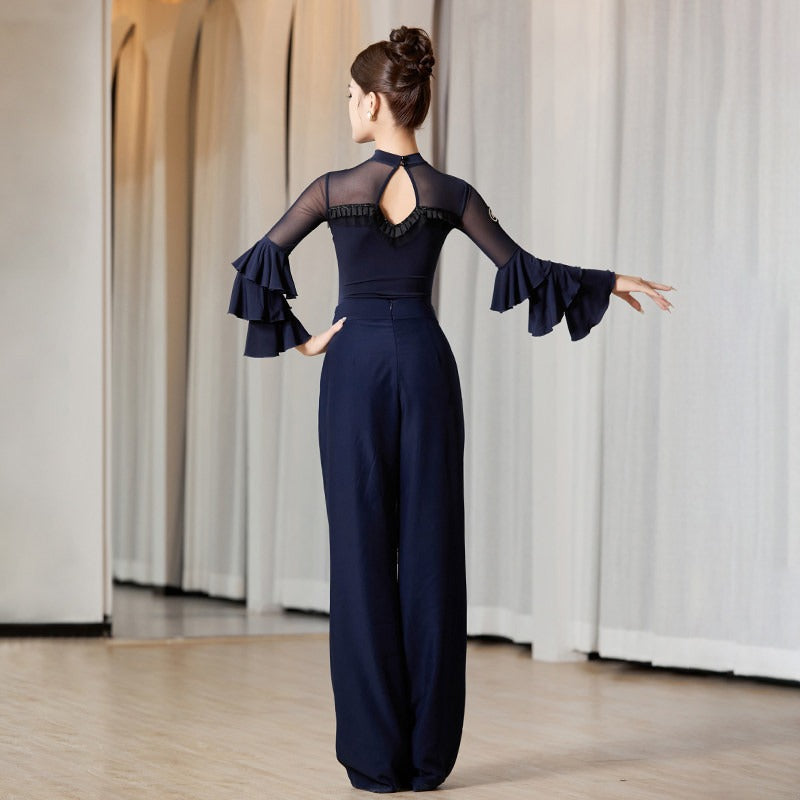
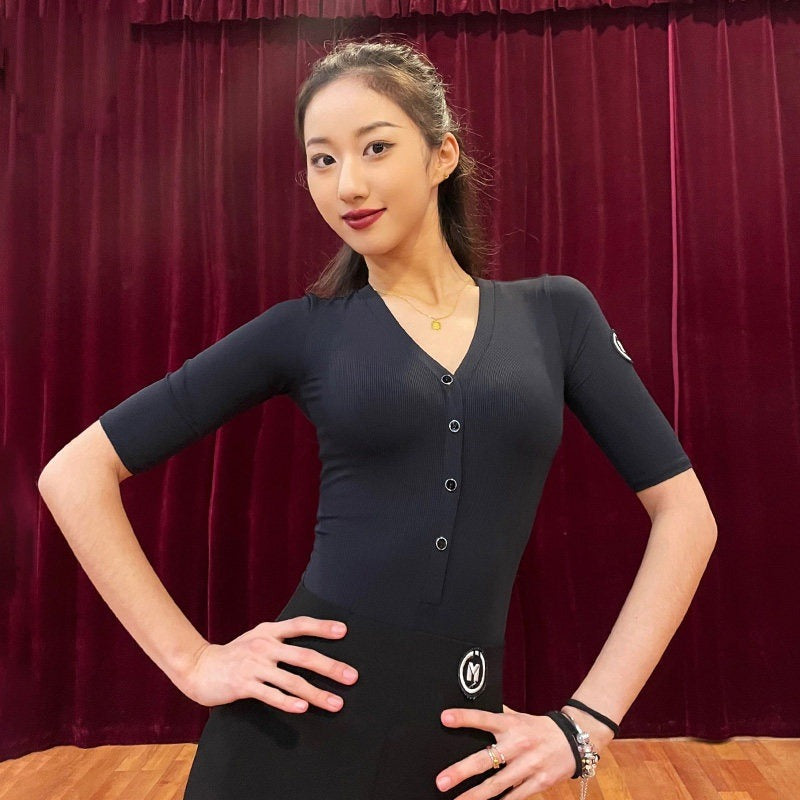
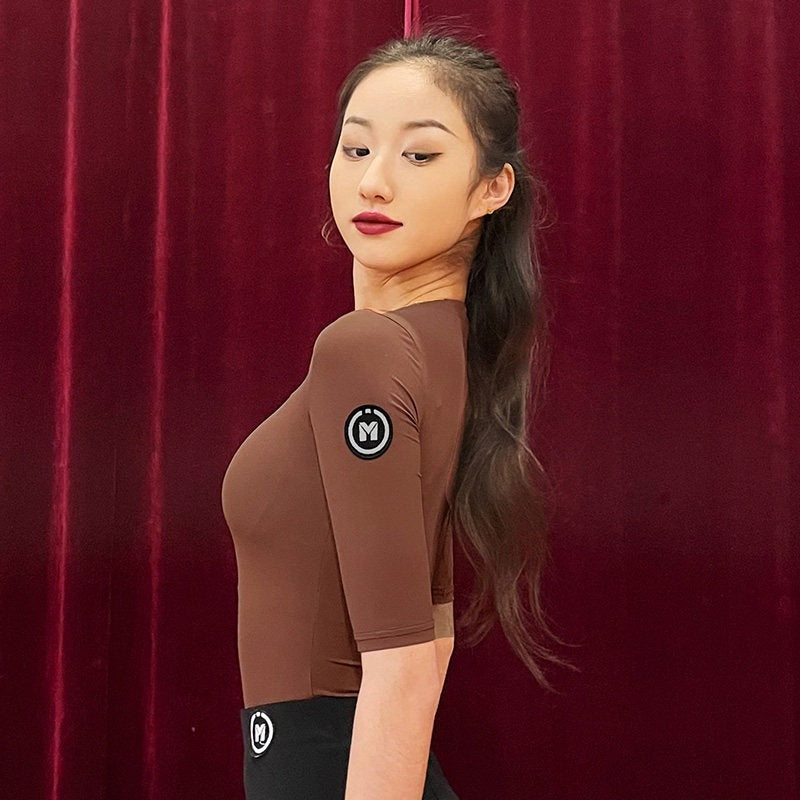
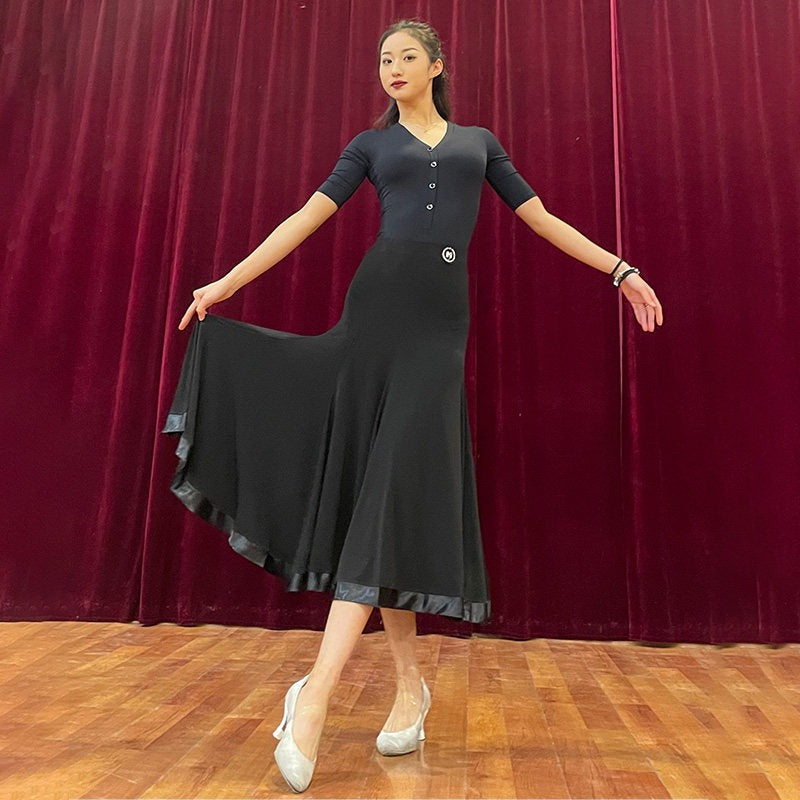
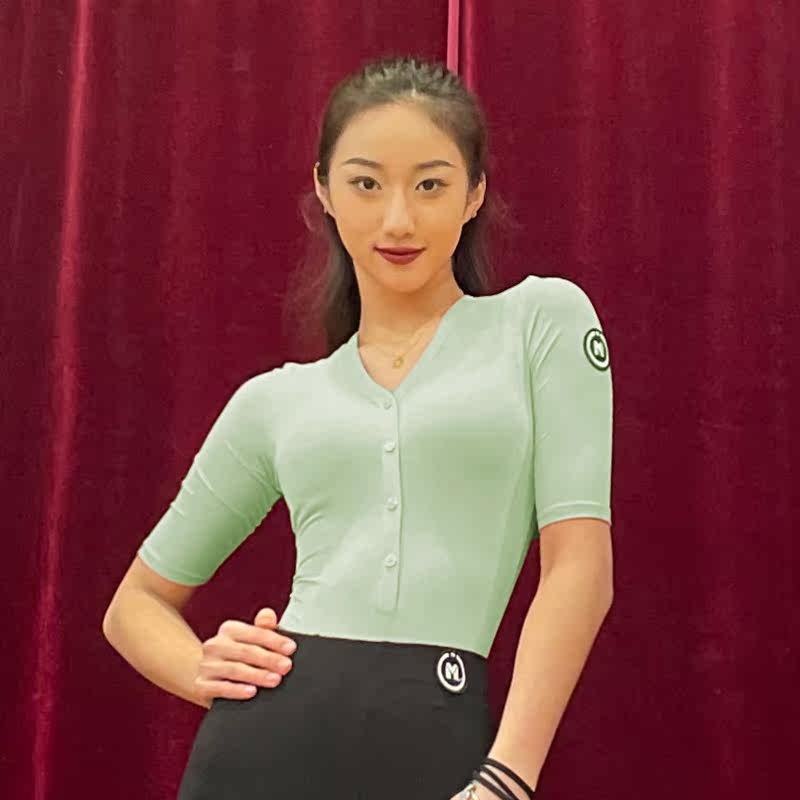
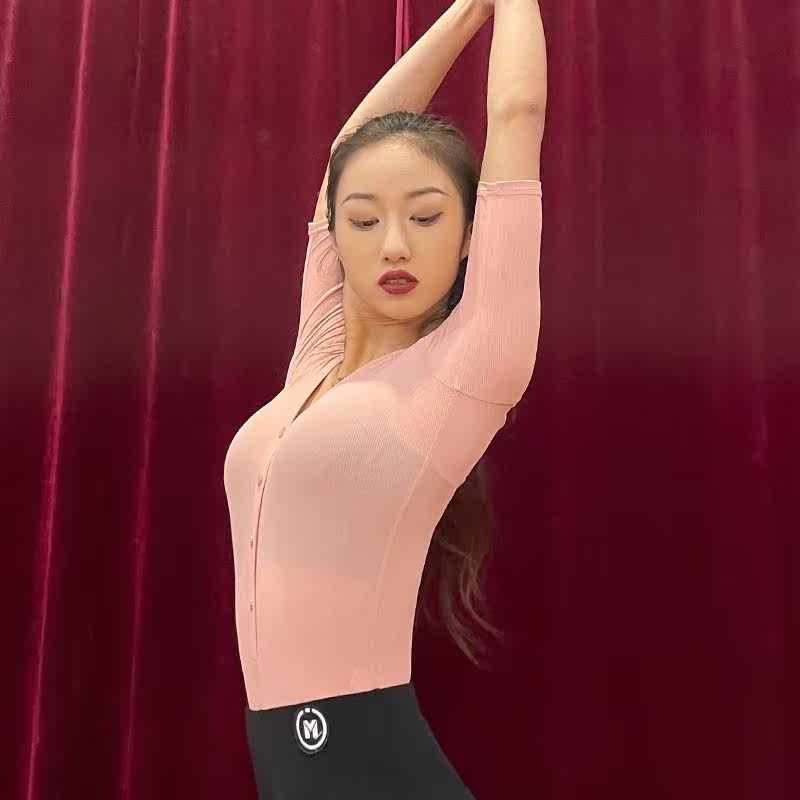
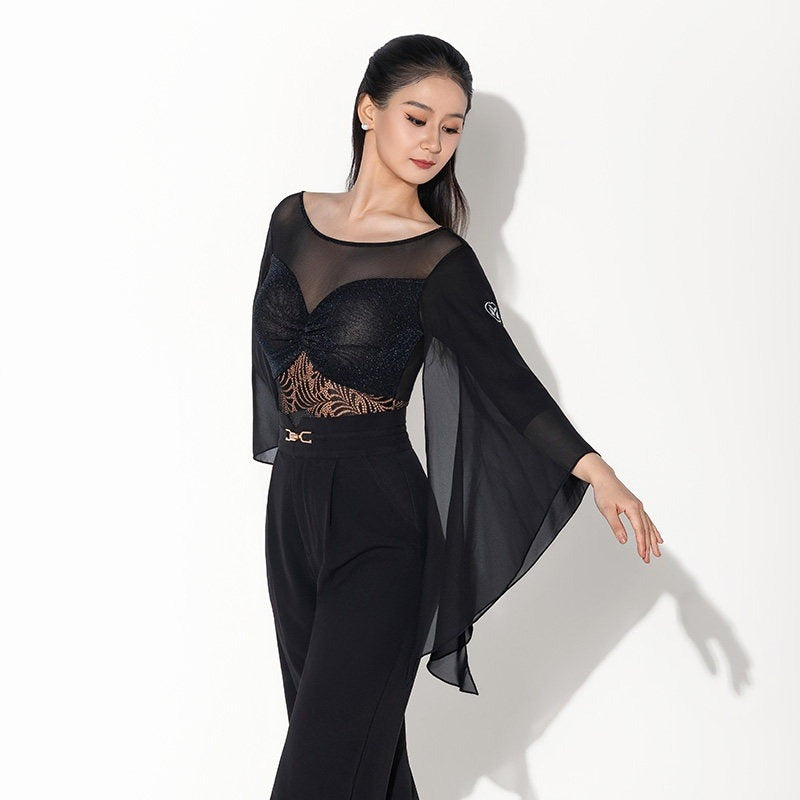


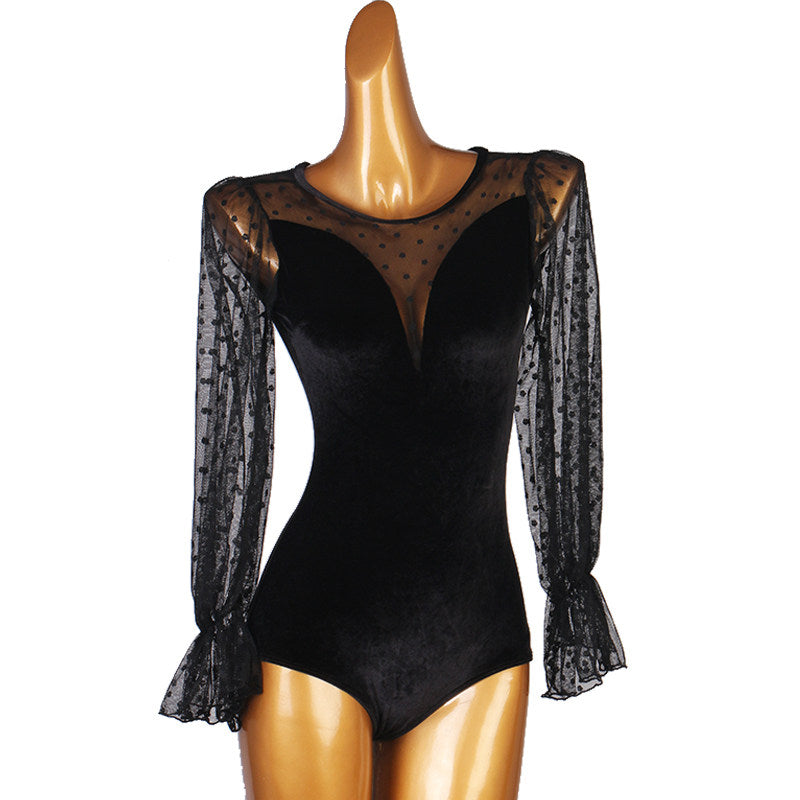
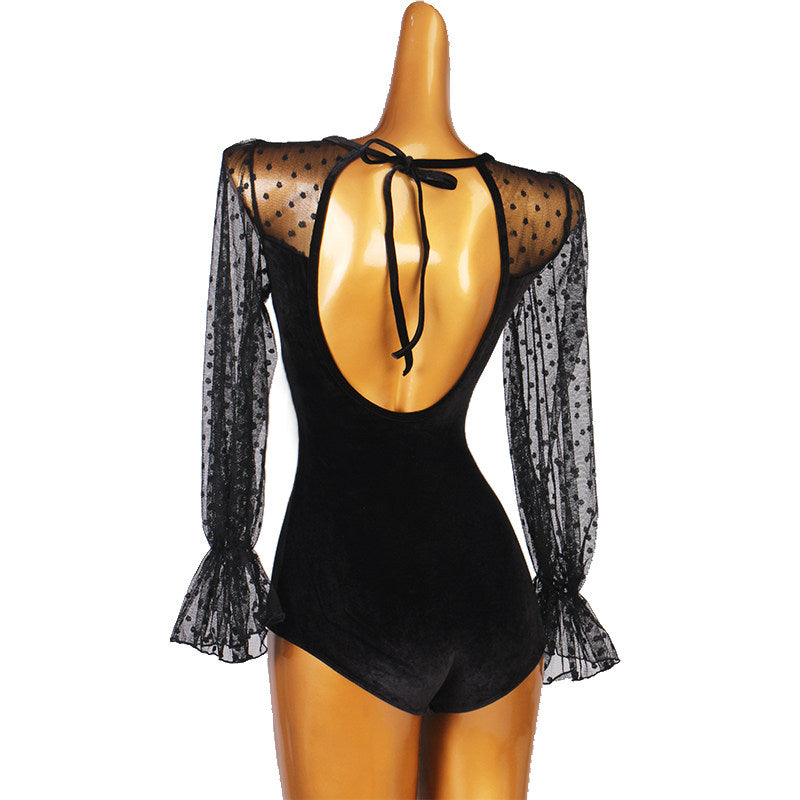
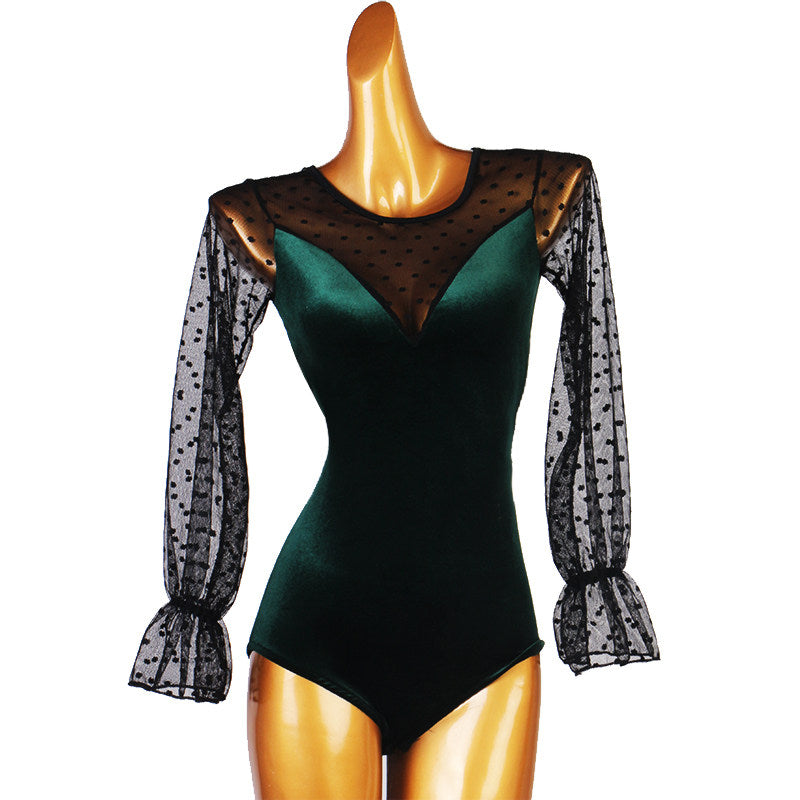
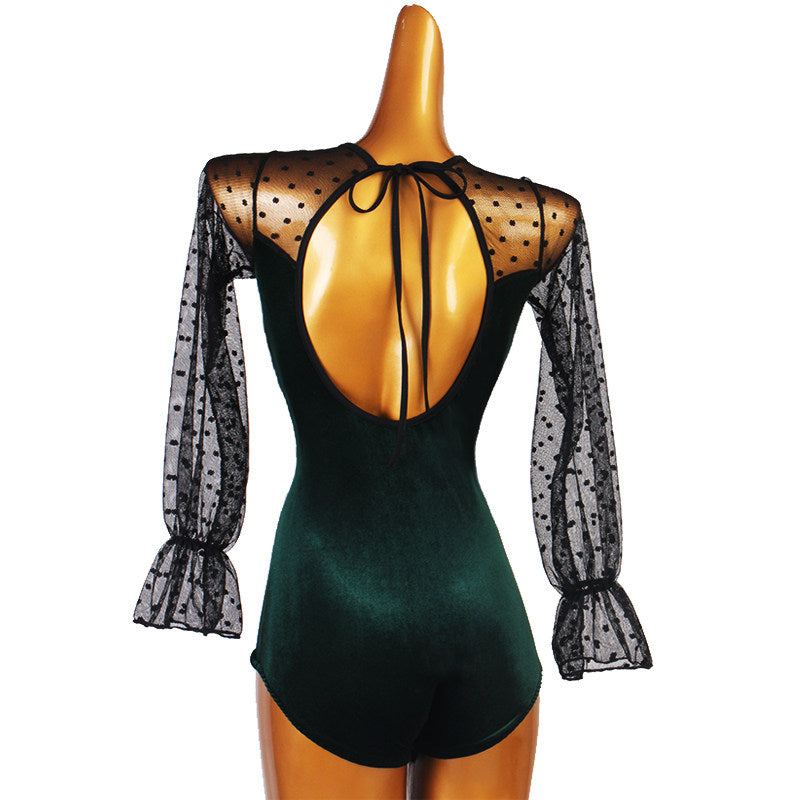
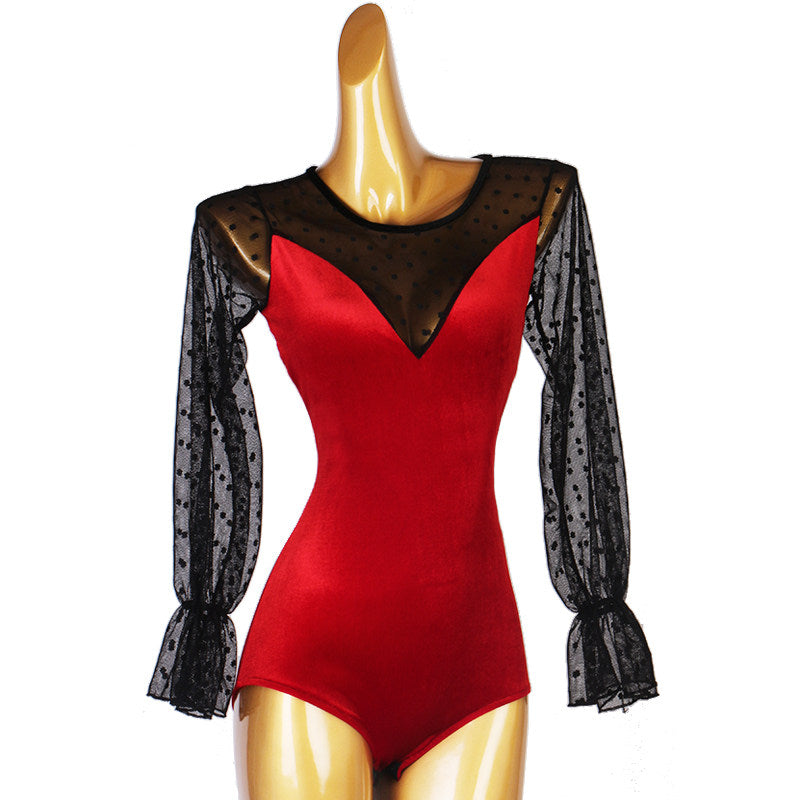
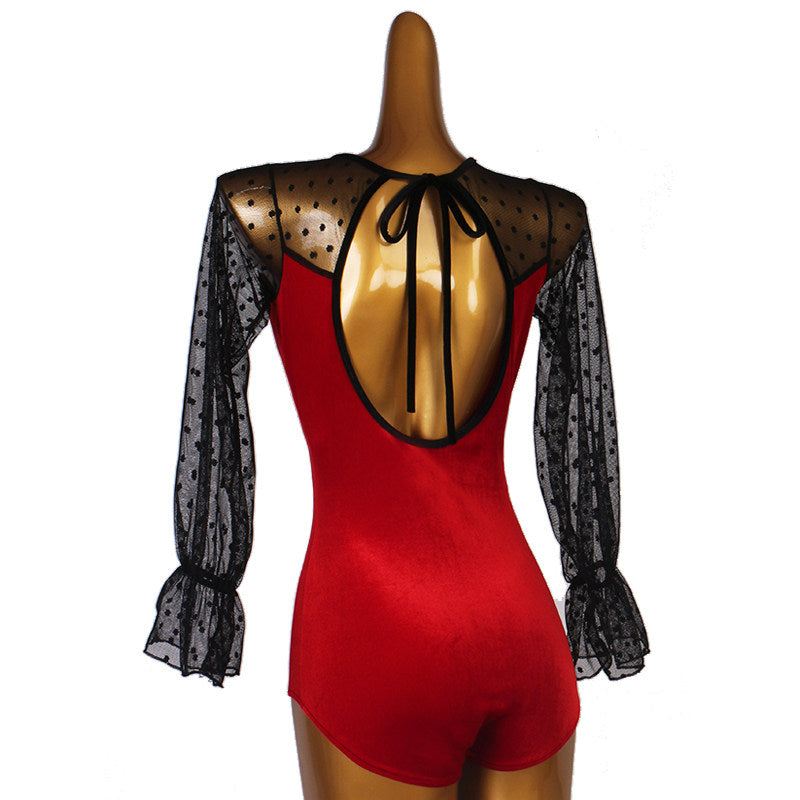
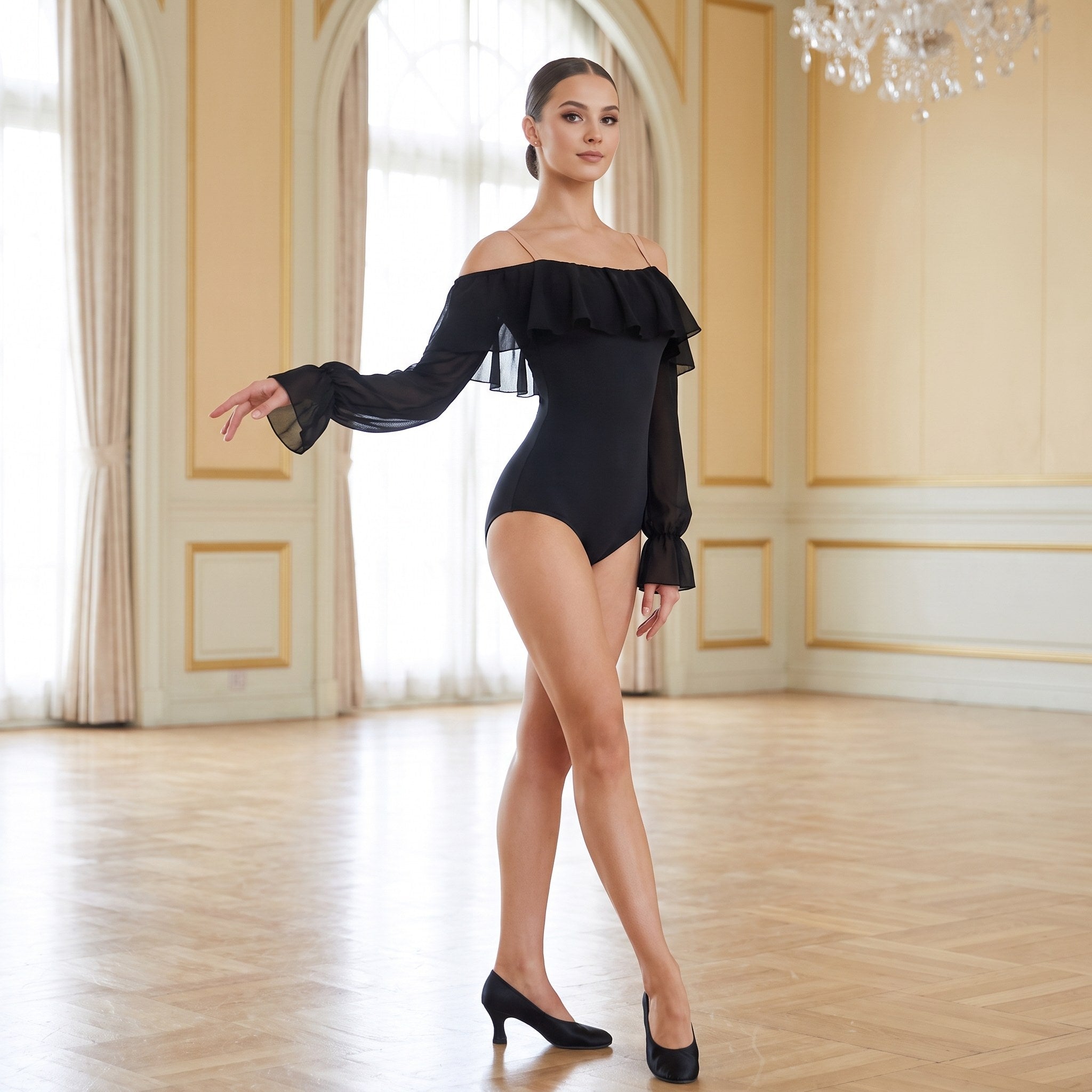
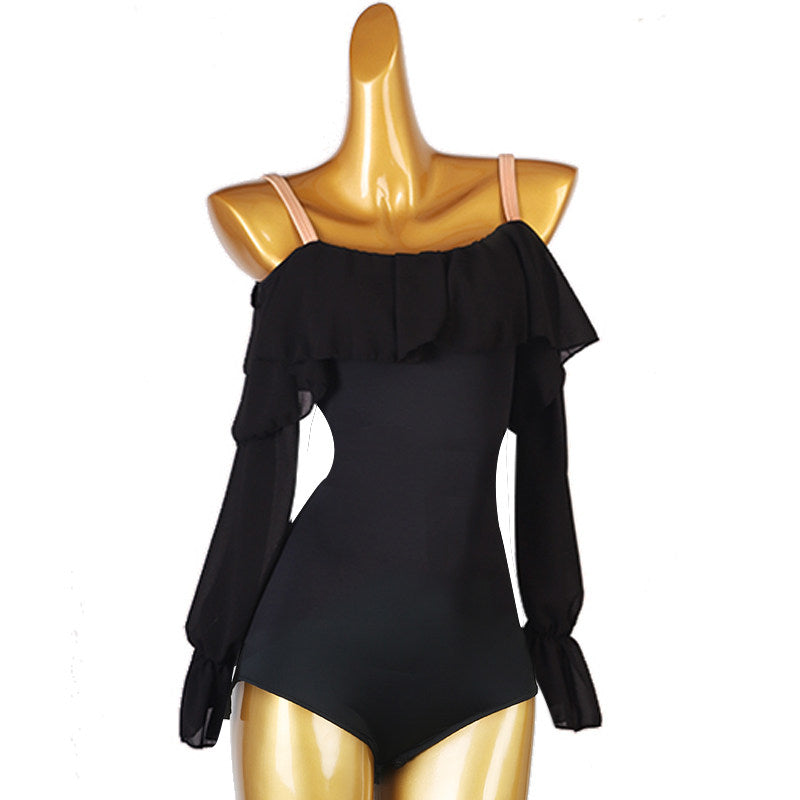
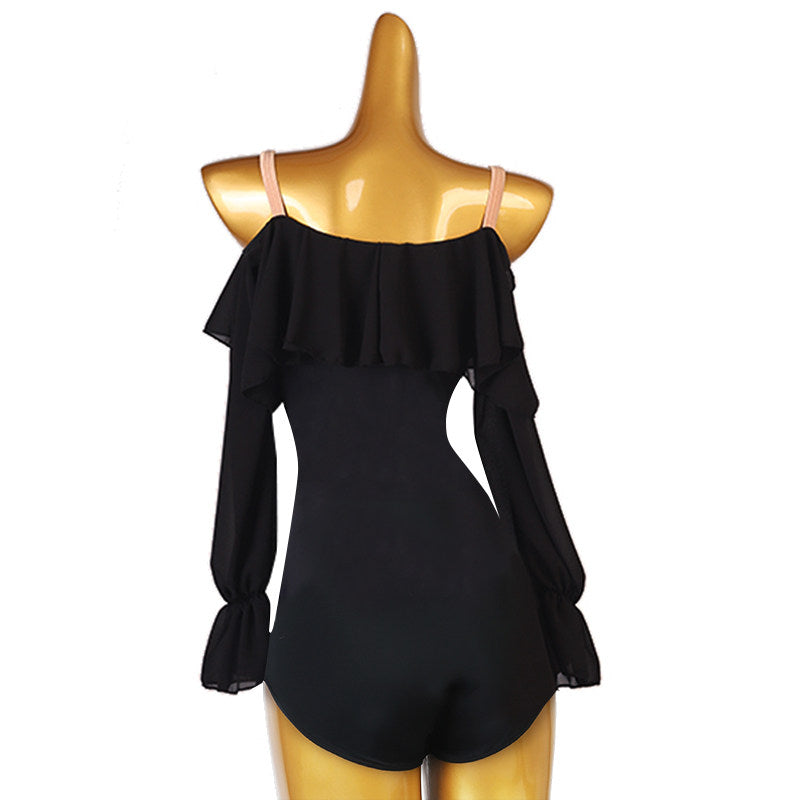
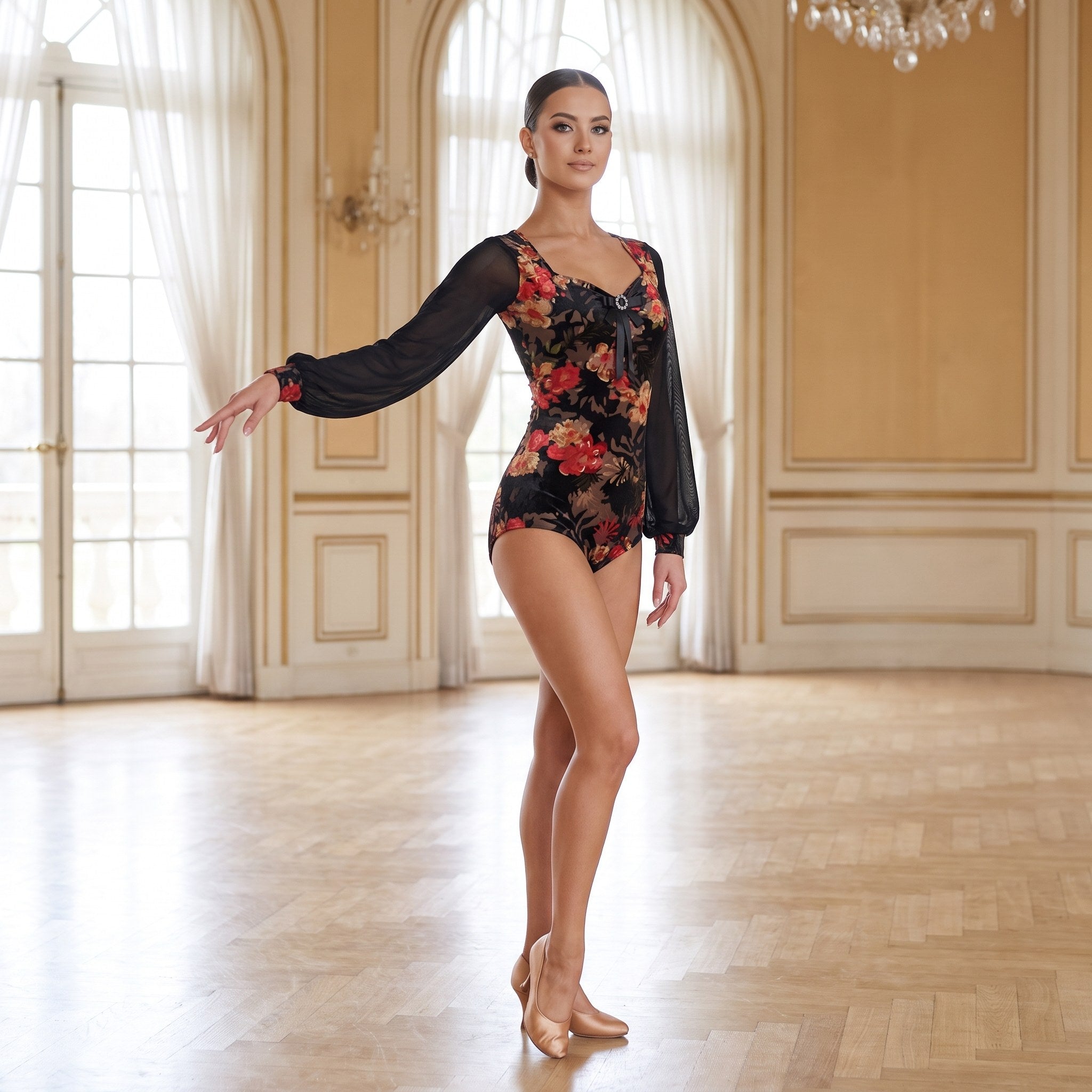
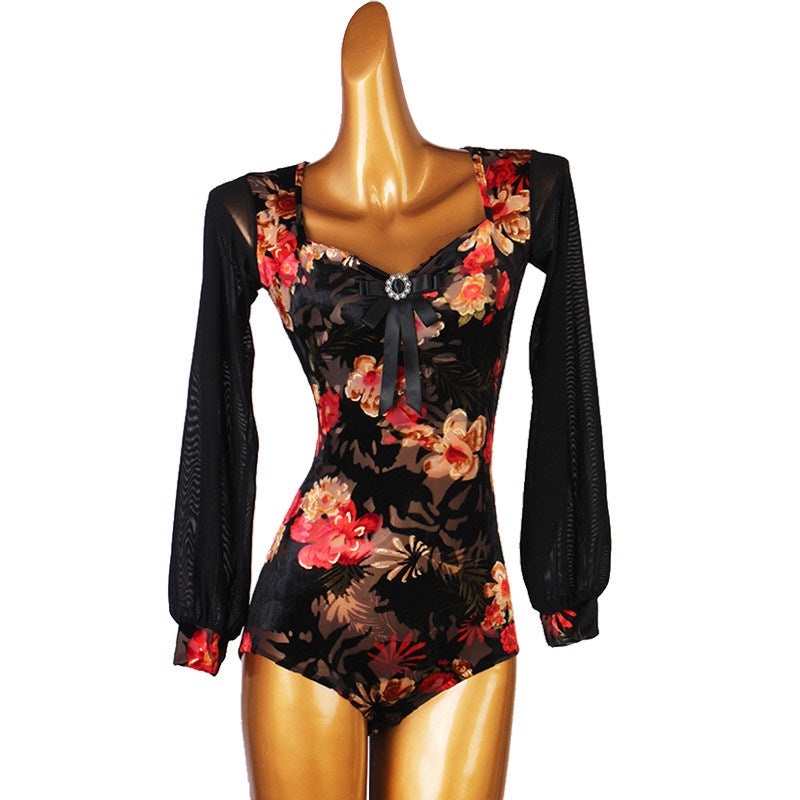
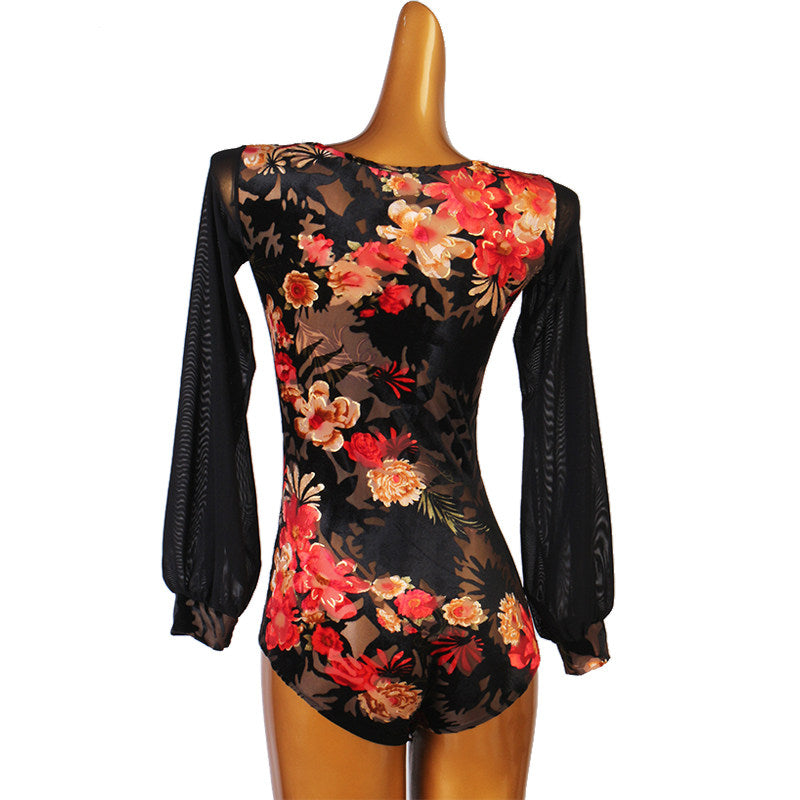
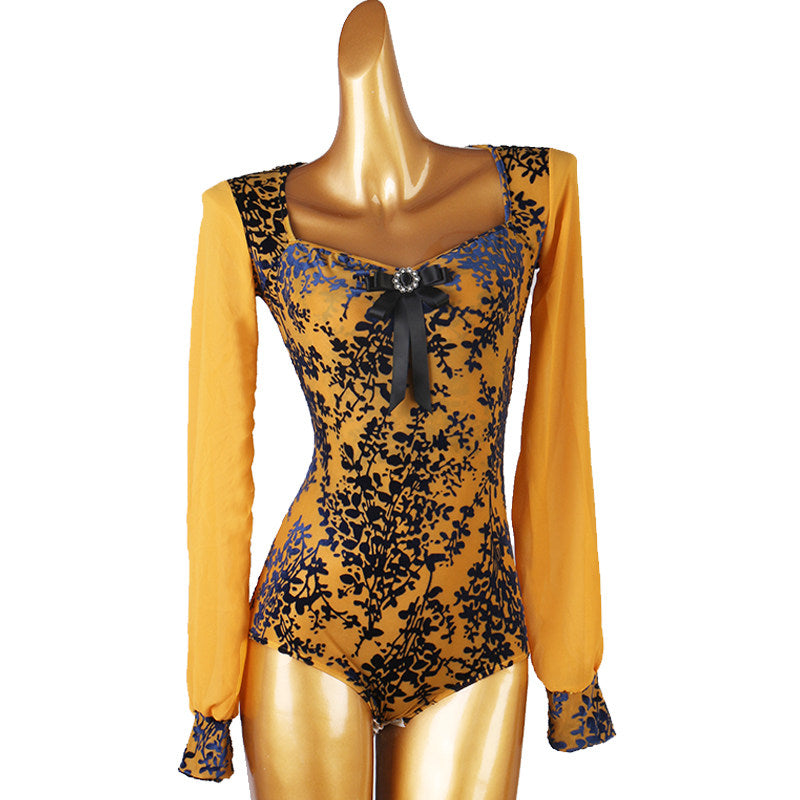
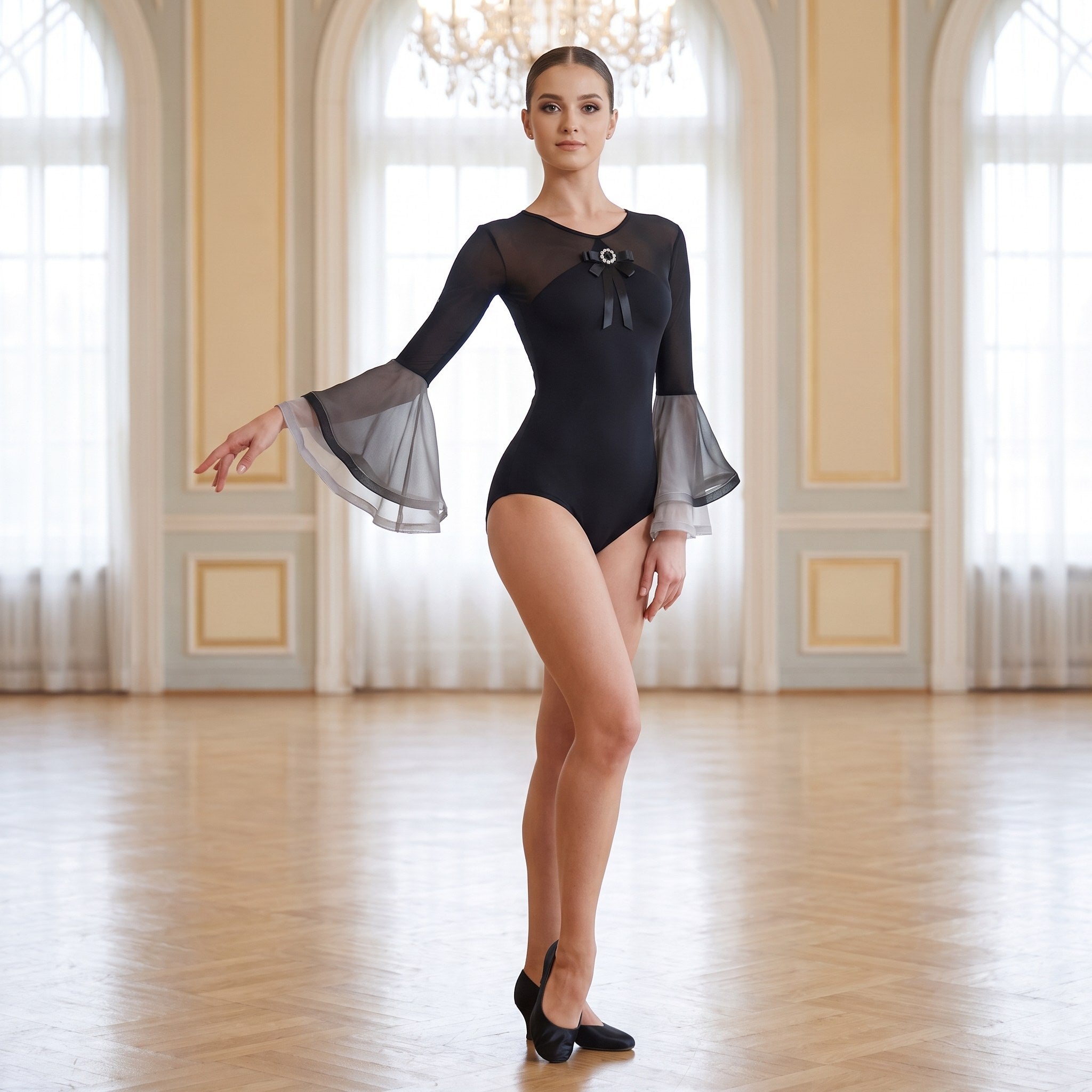
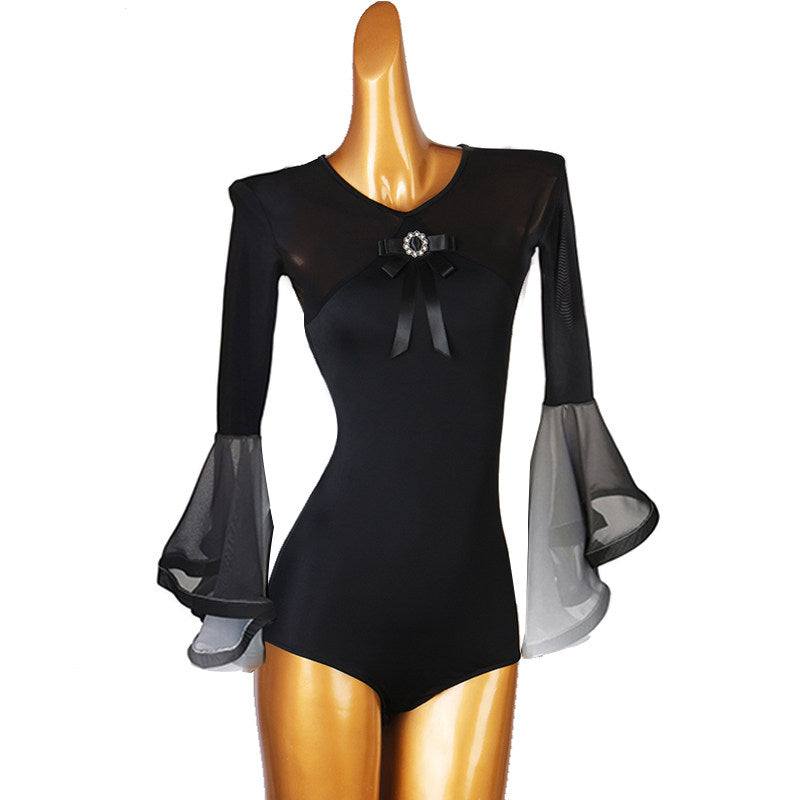
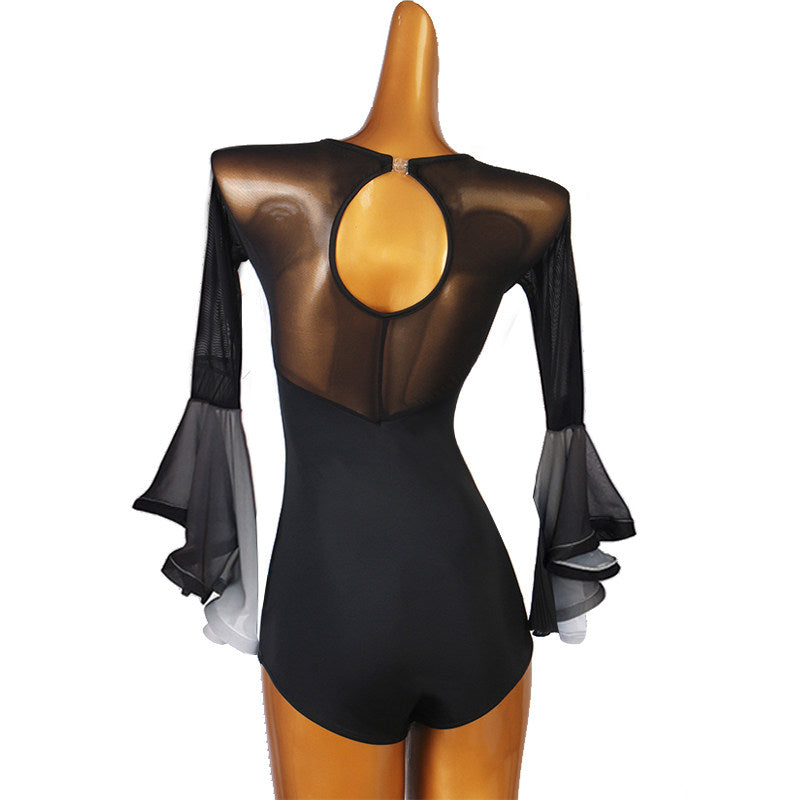
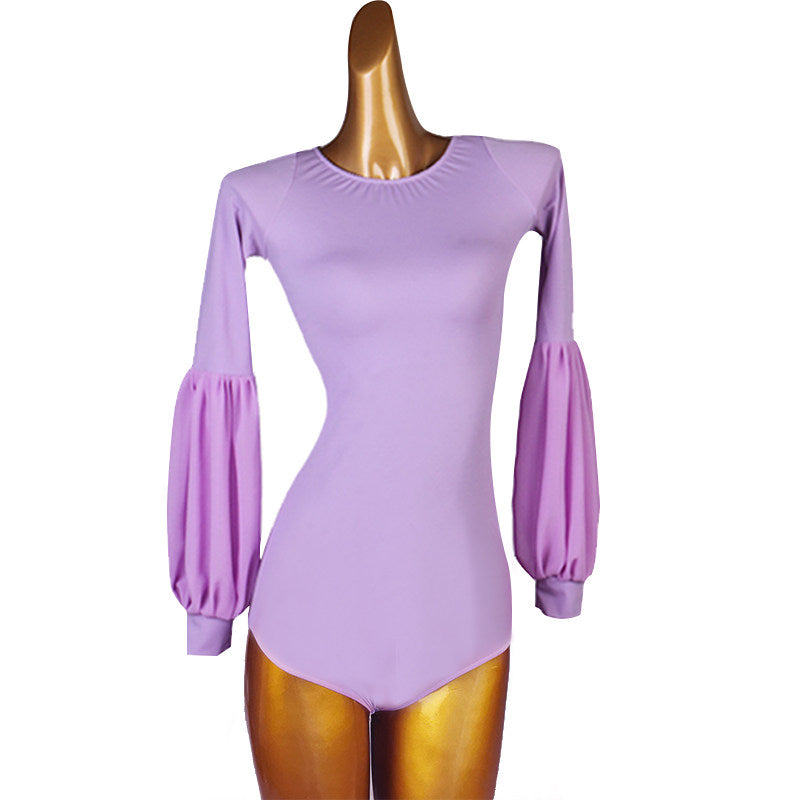
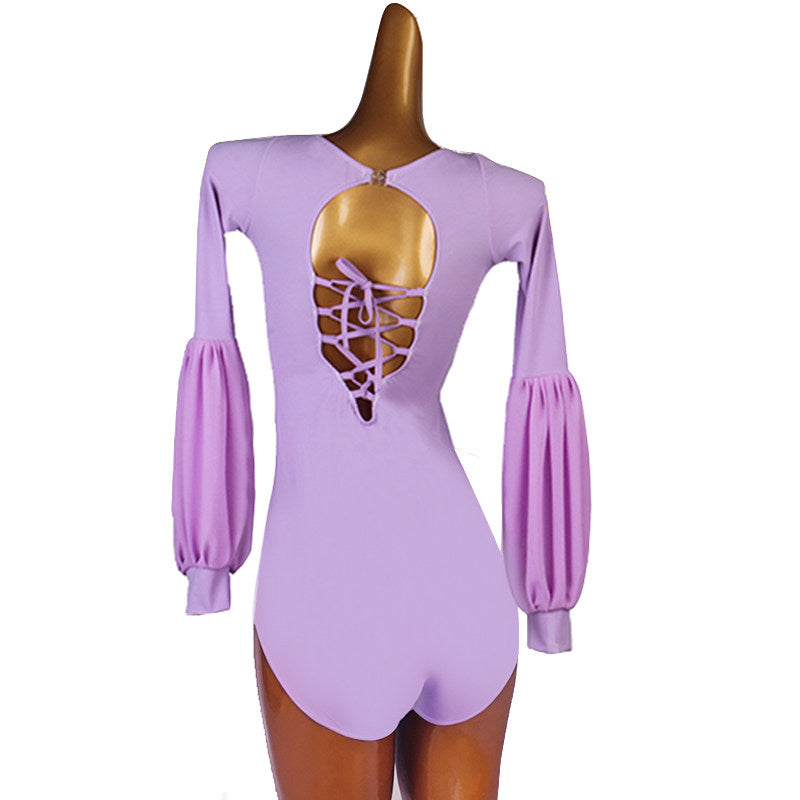
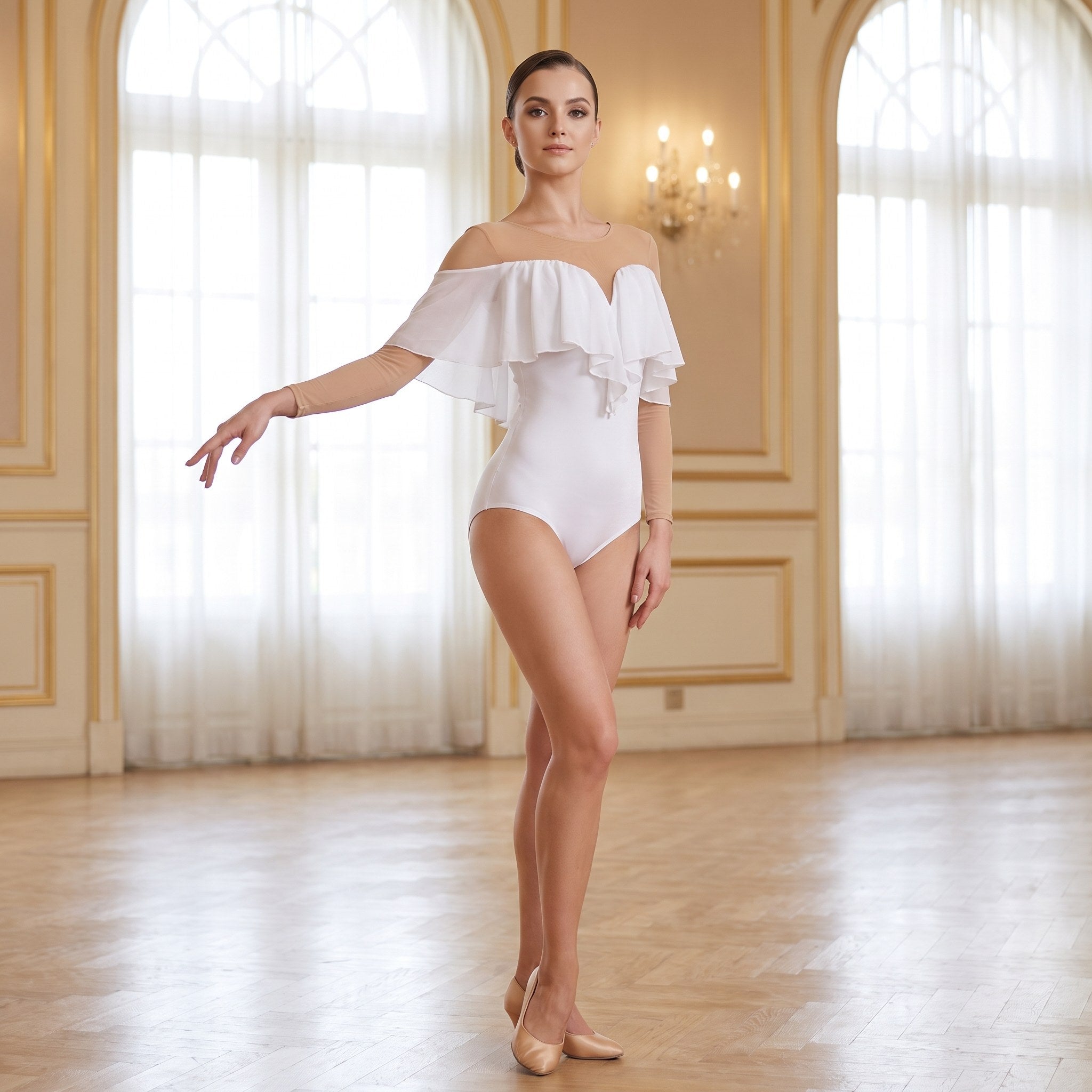
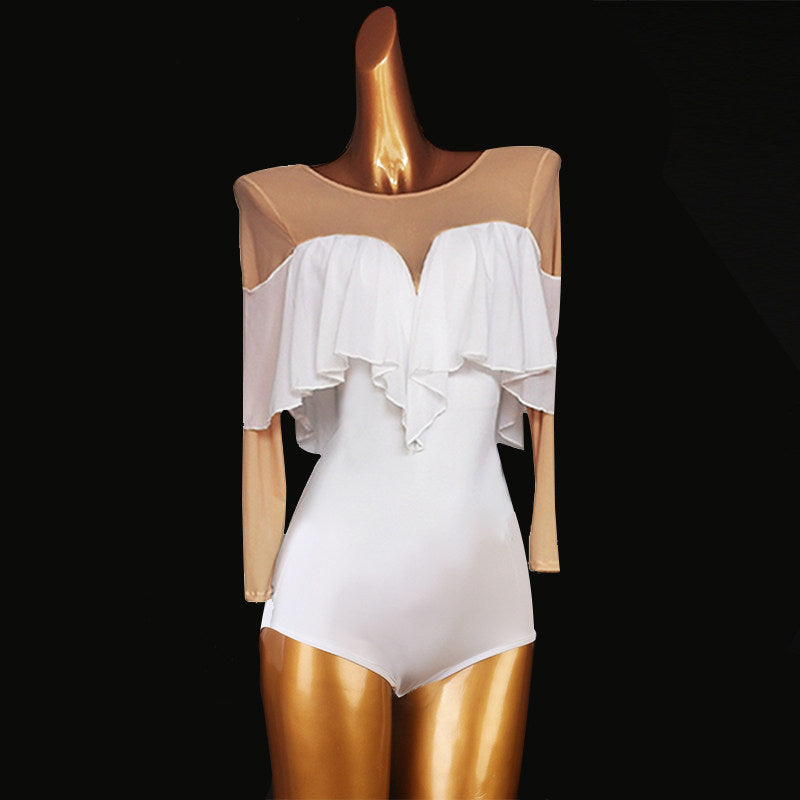
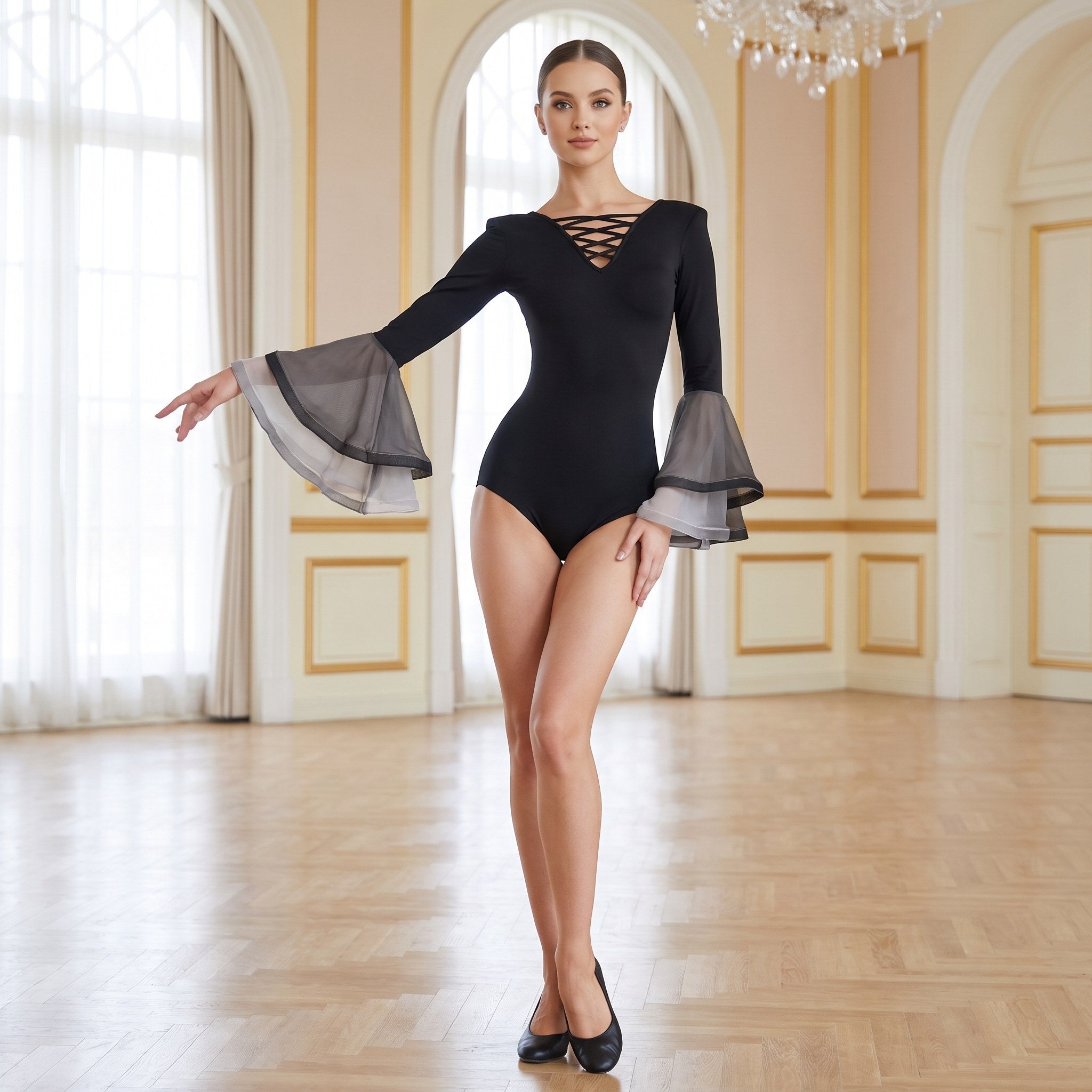
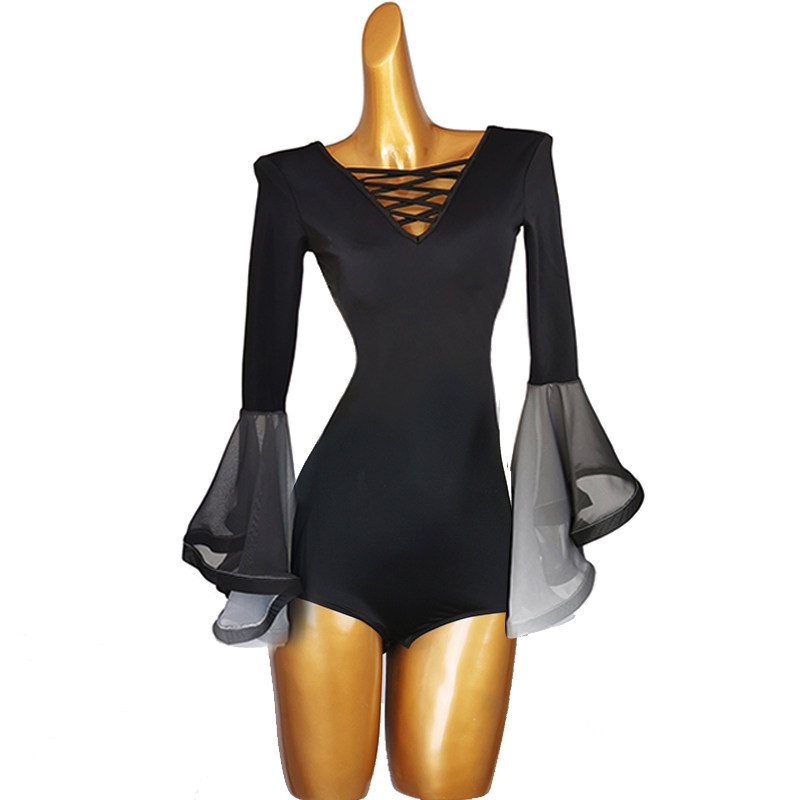
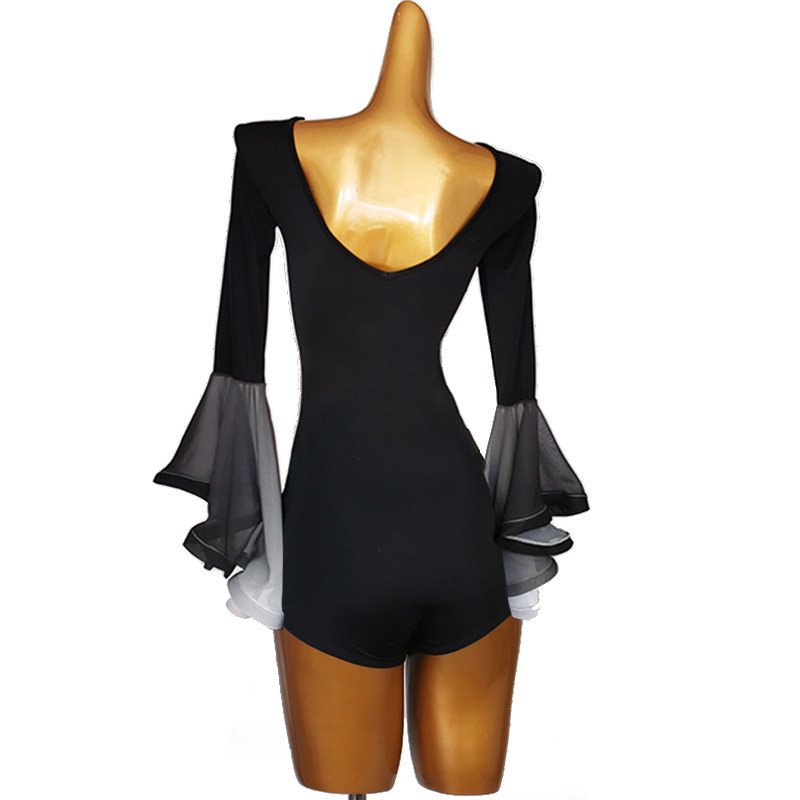
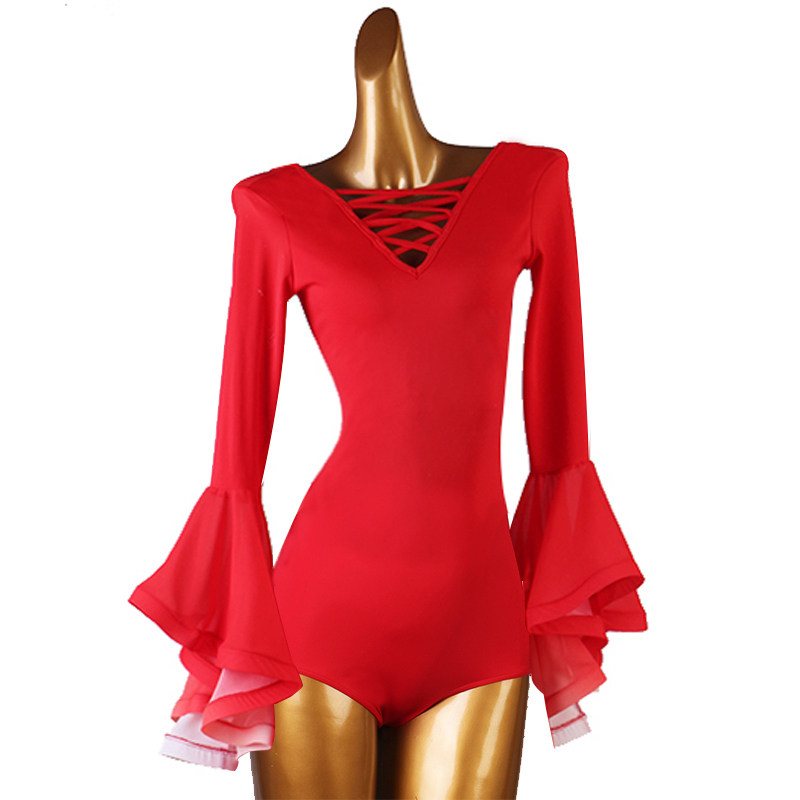
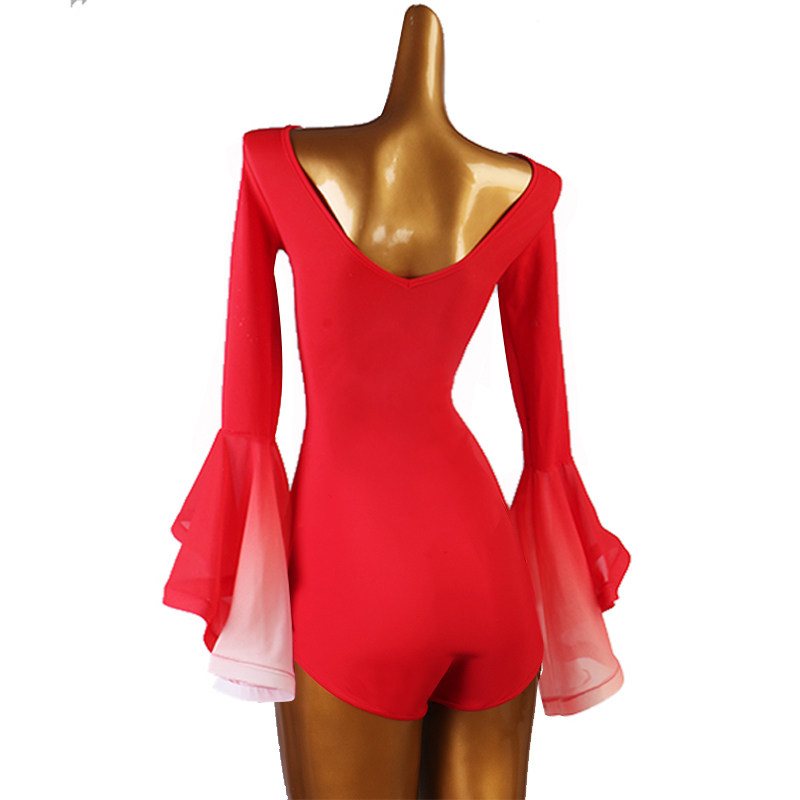
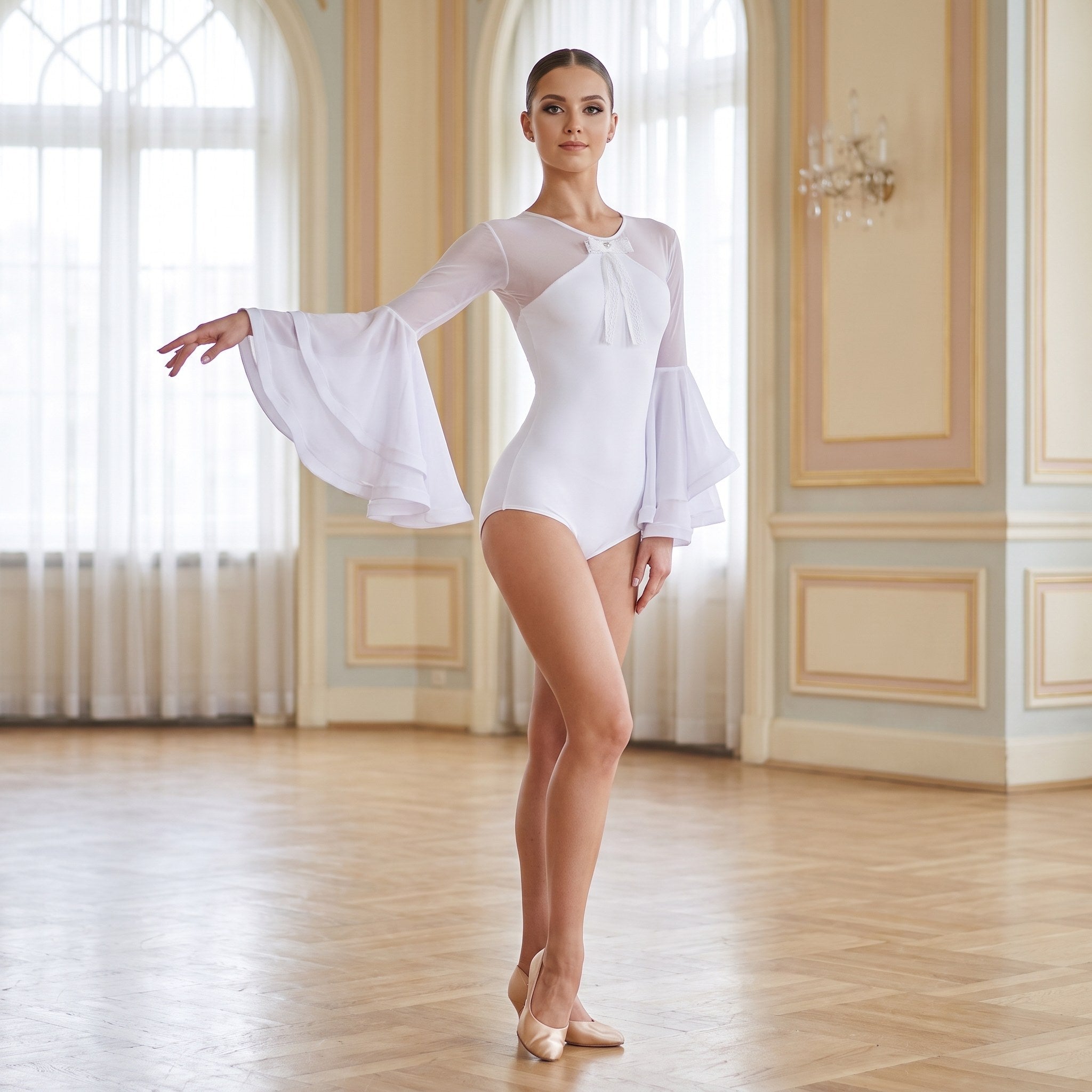
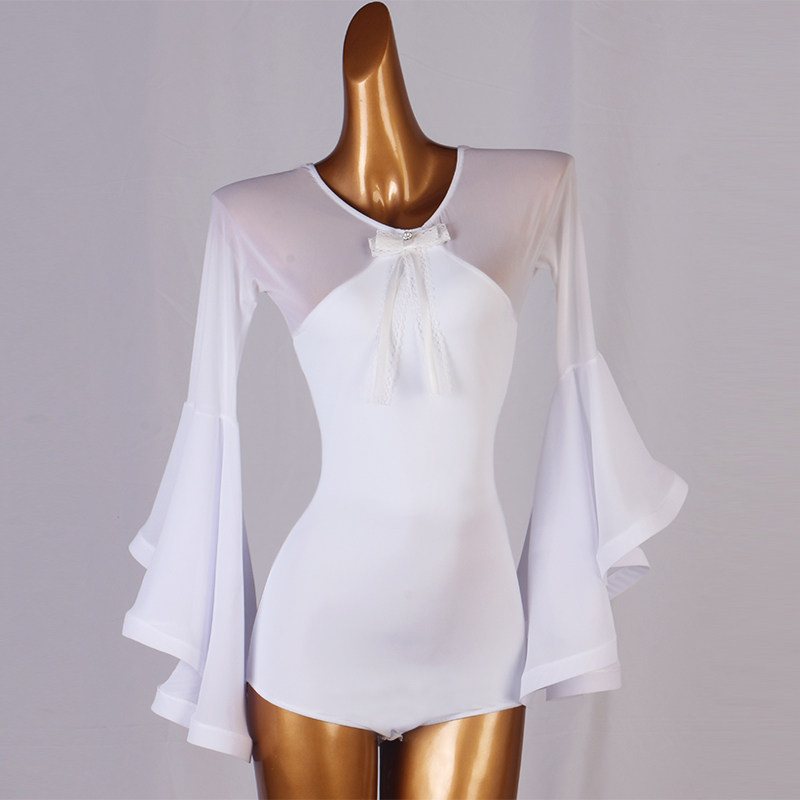
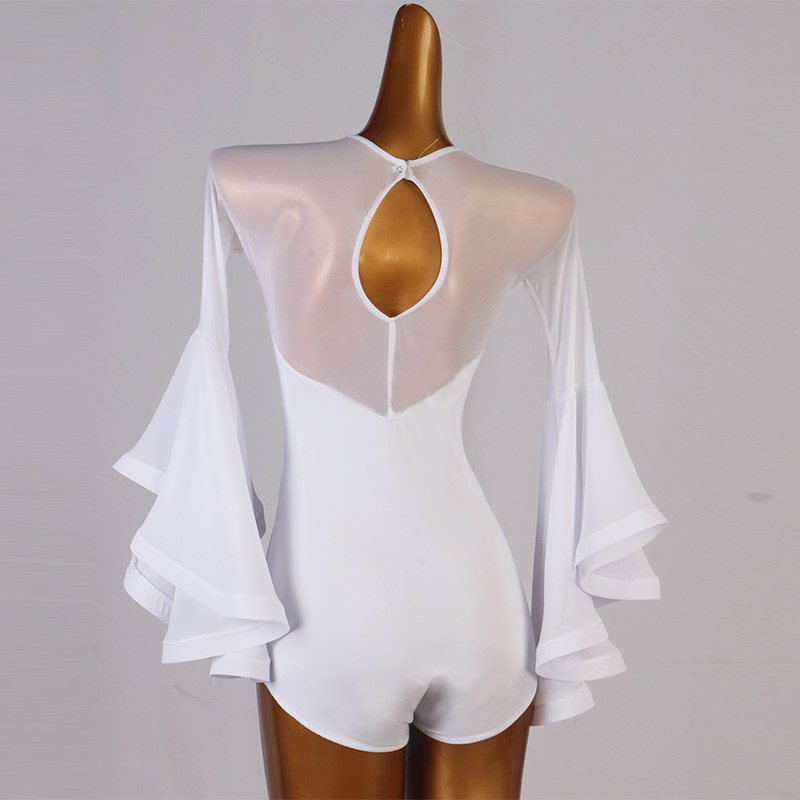
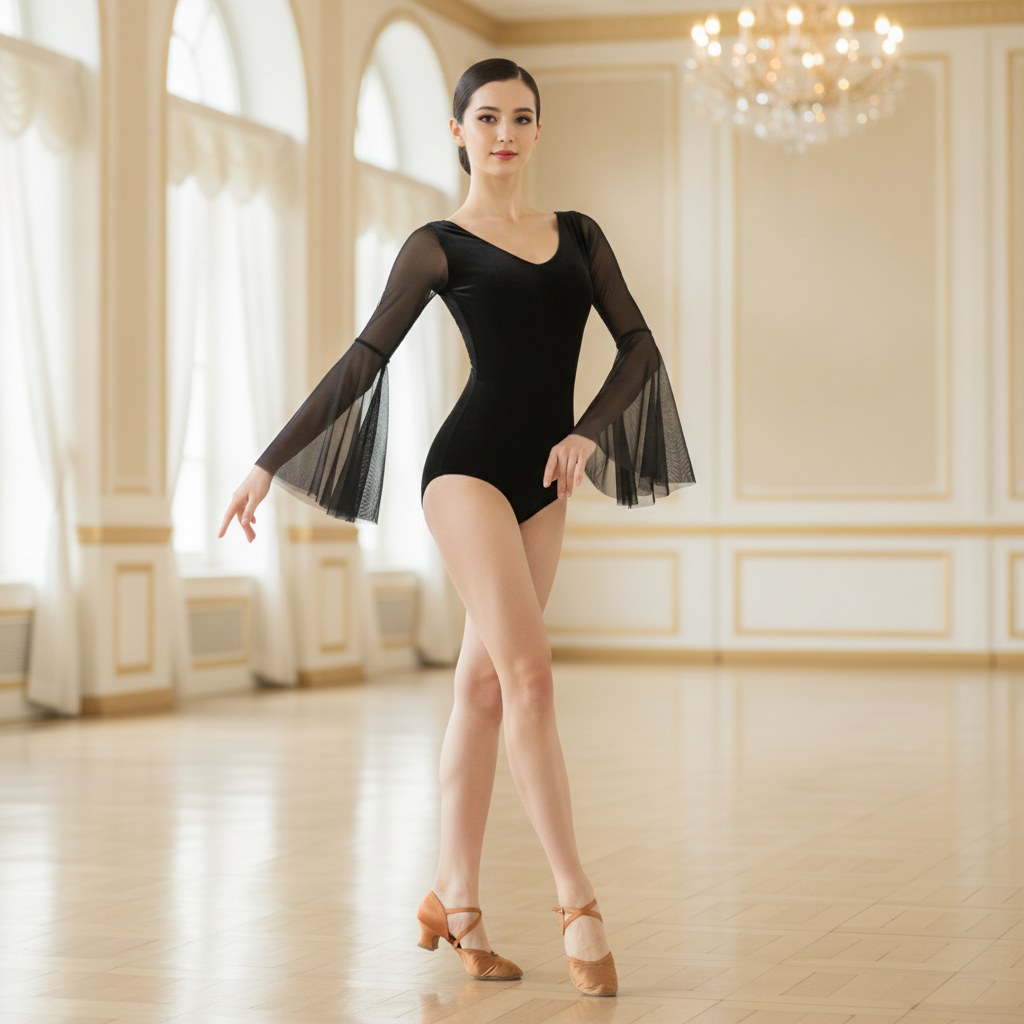
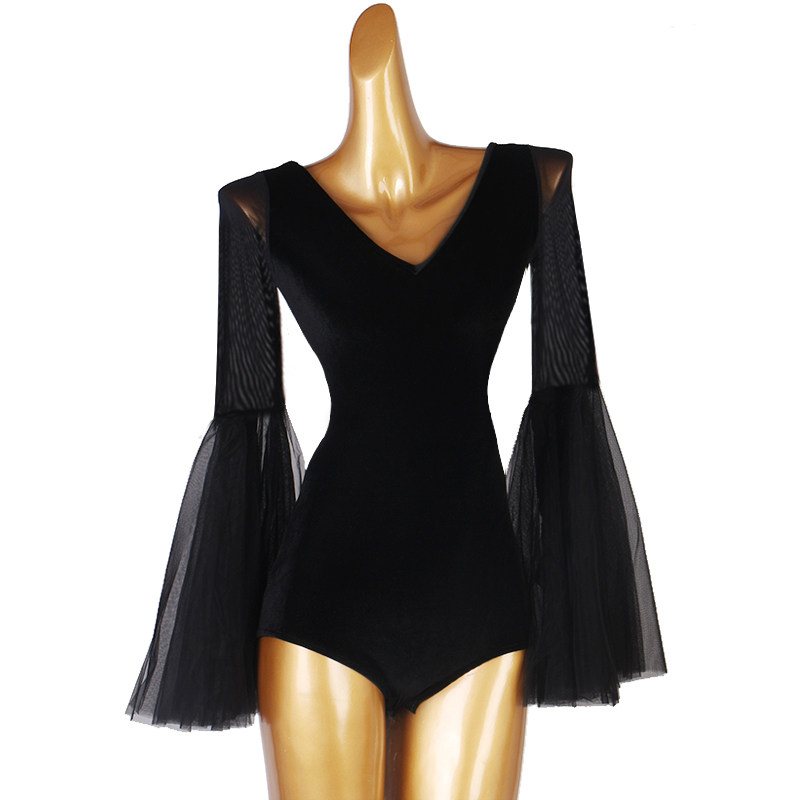
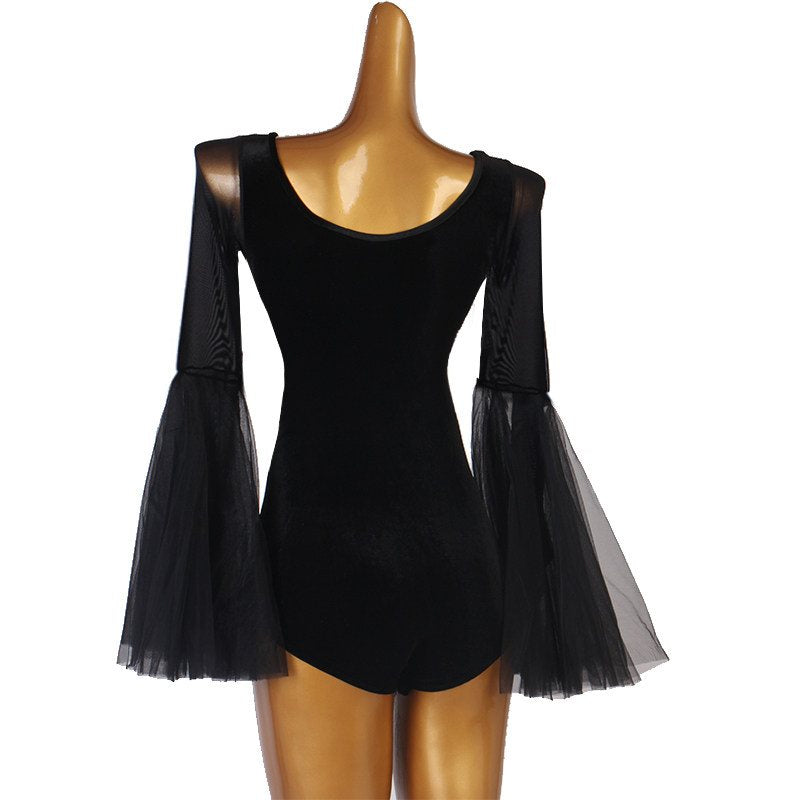
The Piece That Solves Untucking
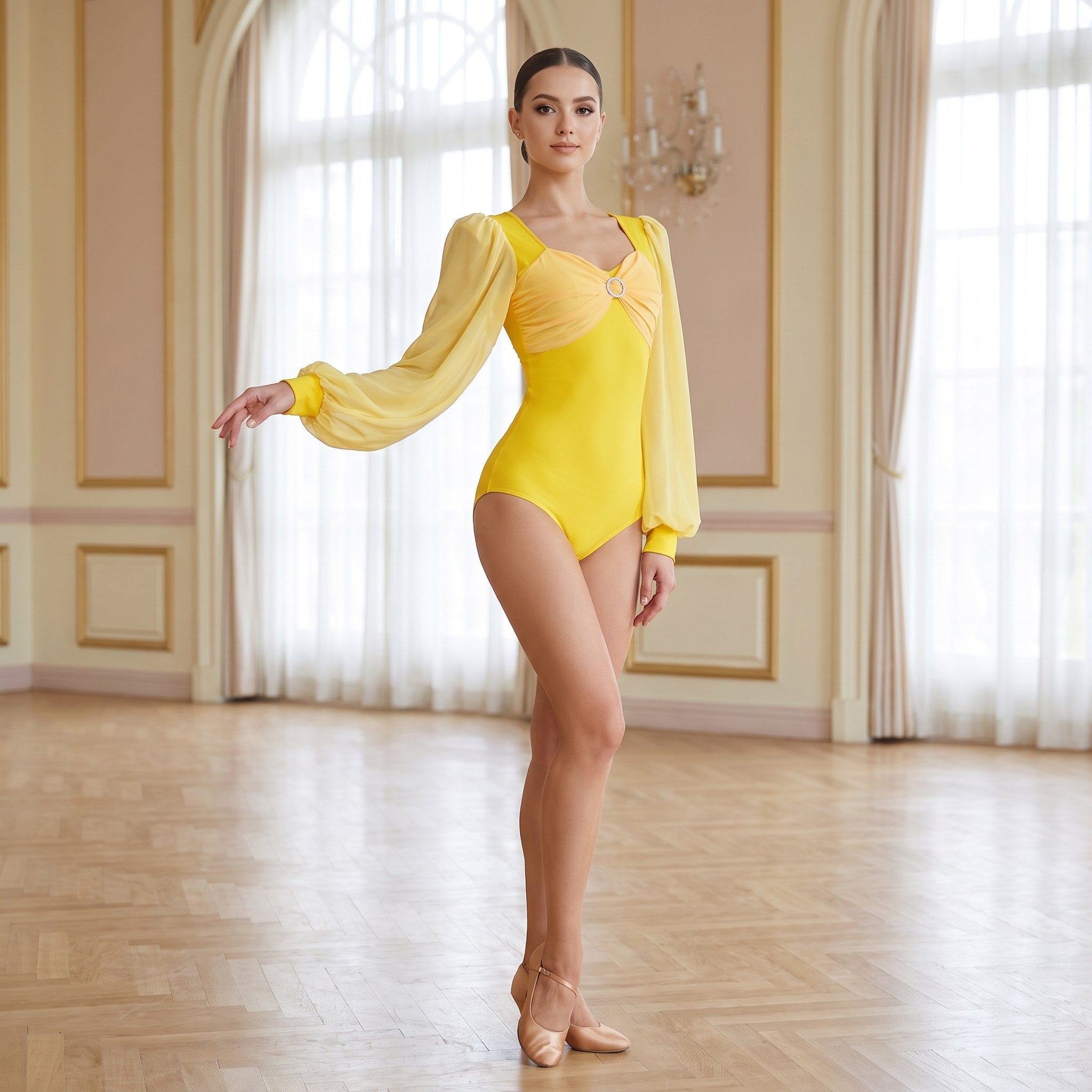
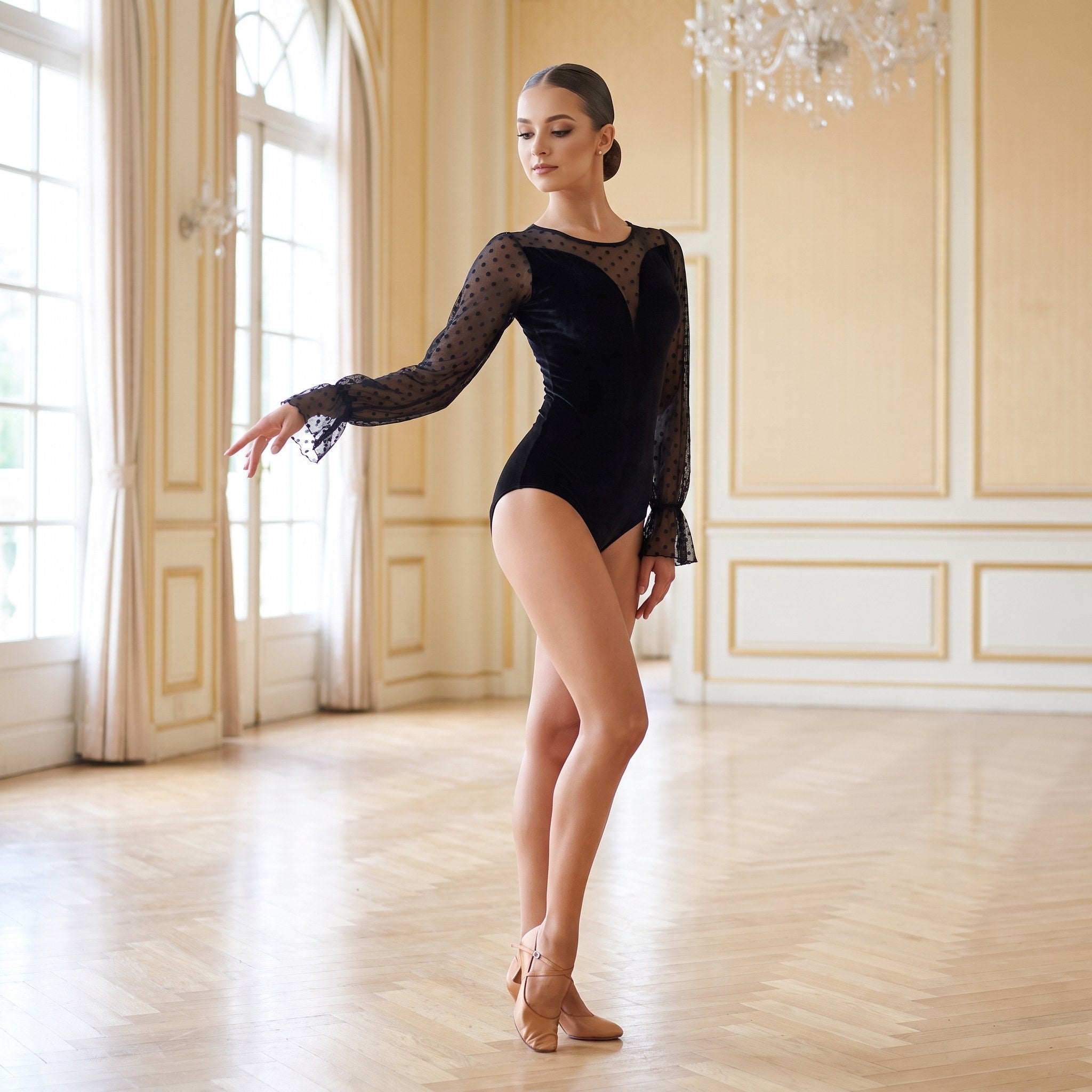
A dance bodysuit exists for one reason: a shirt tucked into a practice skirt does not stay tucked. Ten minutes into a lesson you are adjusting instead of dancing, and every adjustment is a break in your own line. A ballroom bodysuit is anchored at the leg opening, so it stays flat through rotation, through rise and fall, through an hour of drilling the same figure. Ballroom leotards like these are the least glamorous pieces in a ballroom wardrobe and usually the most worn.
What Makes a Bodysuit a Ballroom Bodysuit
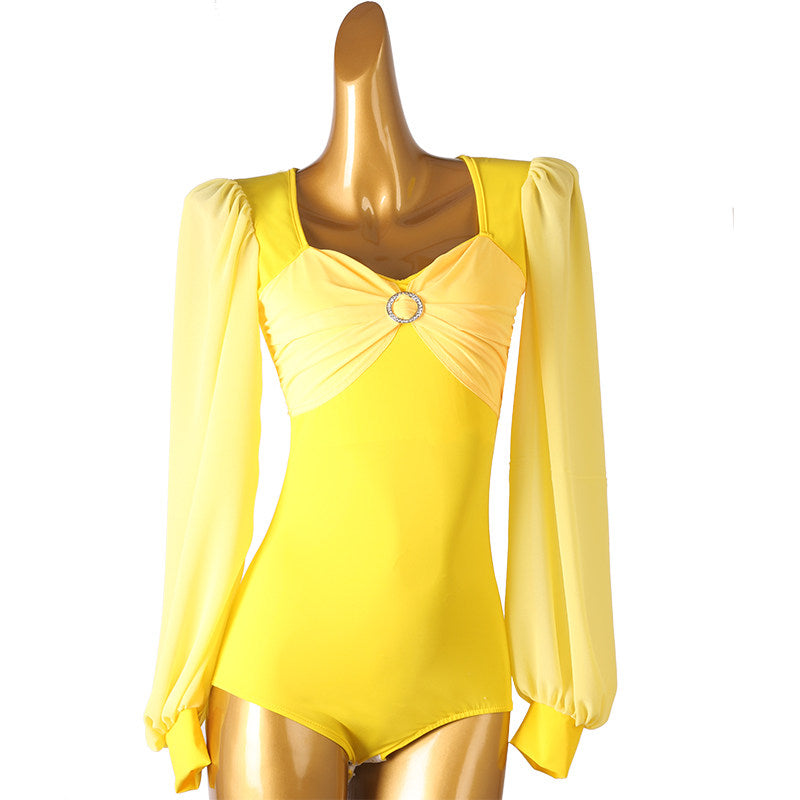
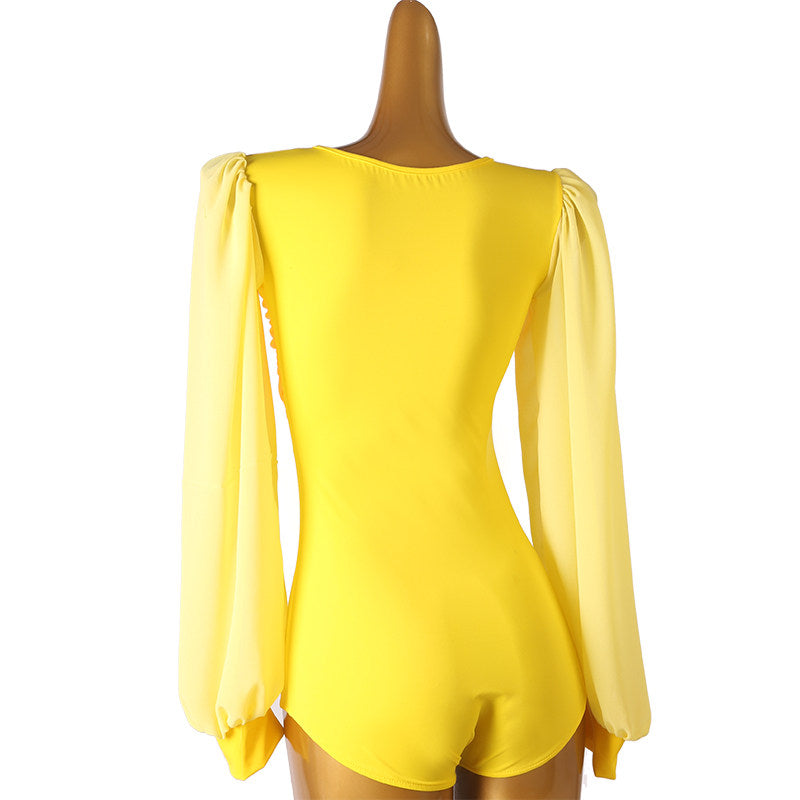
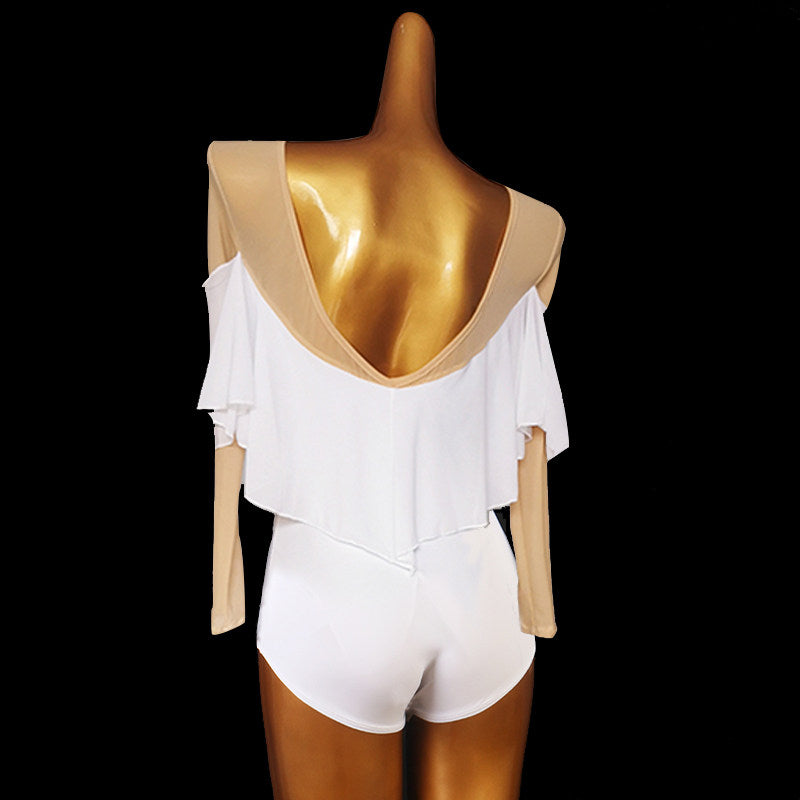
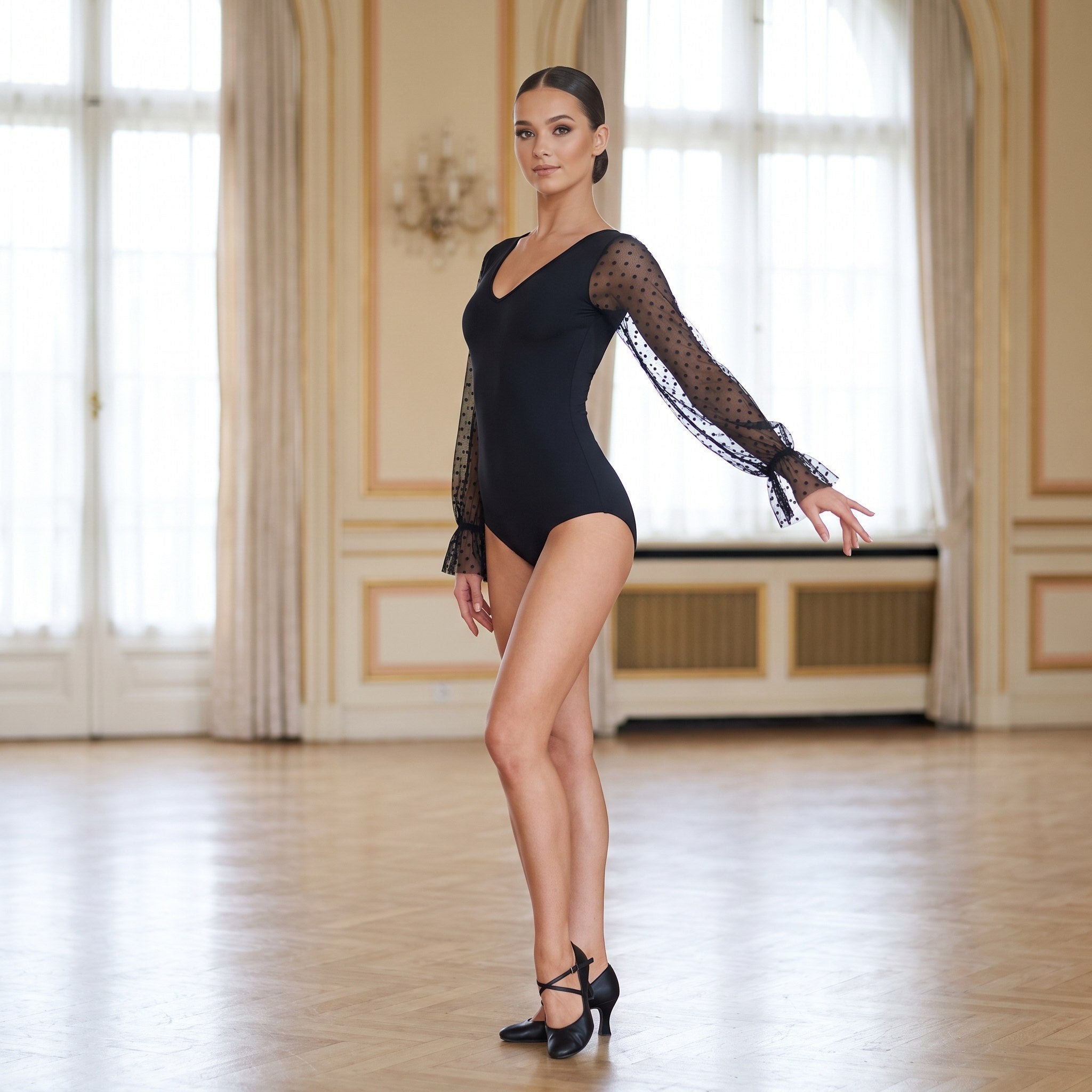
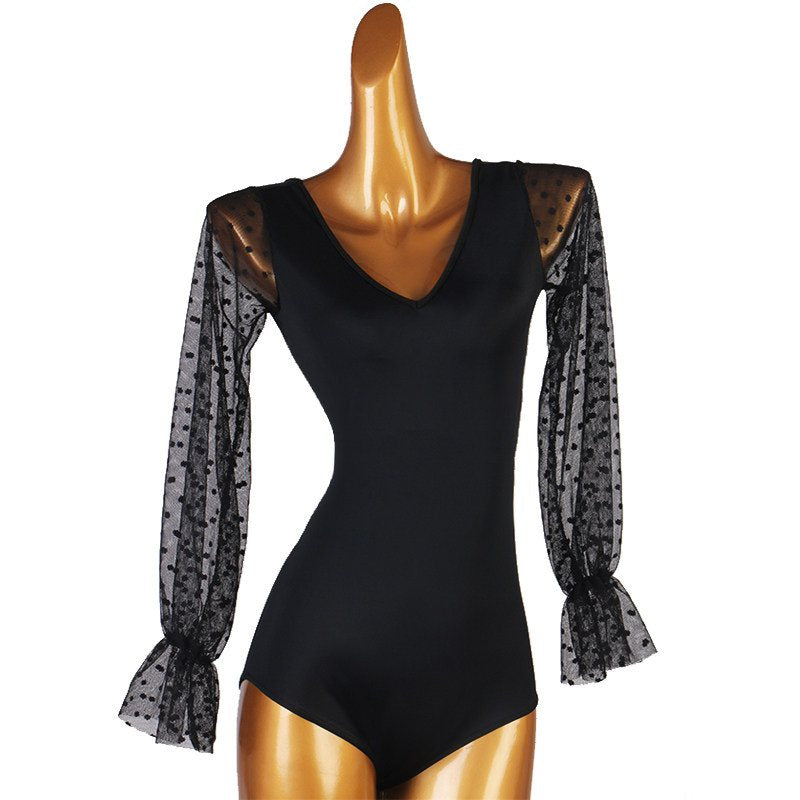
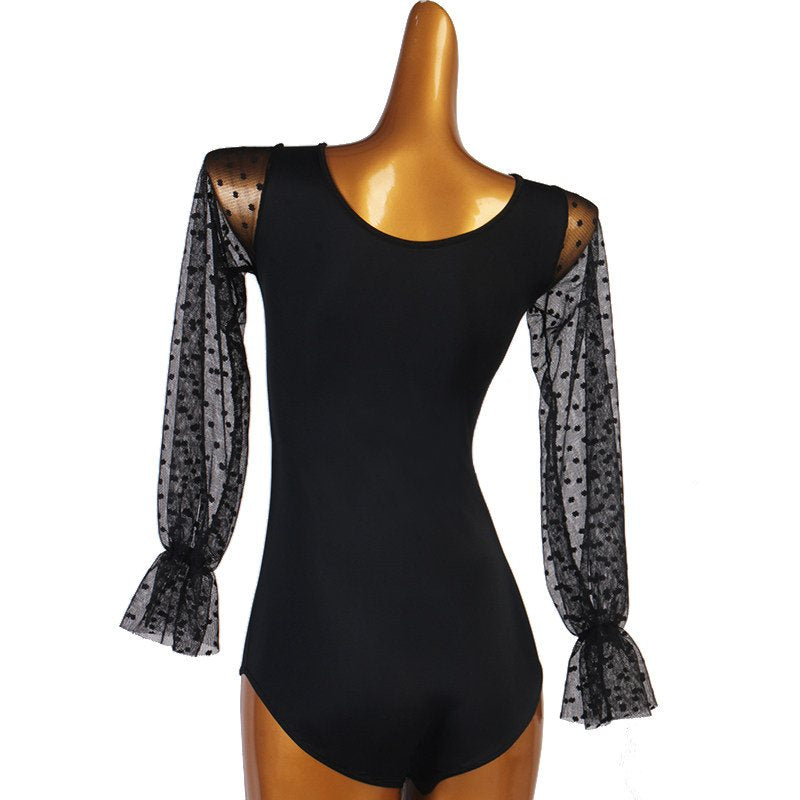
Cut for a closed hold. Long sleeves are the default because Standard wants an unbroken arm line under a frame, and stretch mesh sleeves give that look without the heat of a full opaque sleeve. Yokes and necklines run higher than the Latin equivalents — mock necks, boat necks, mesh insets across the chest — because a deep front cutout reads badly at the exact moment your frame is up. Backs vary more: closed and high-scoop backs are the safe choice for lessons, while strappy and open backs are competition territory where the frame is already established.
Wearing One Under a Dress or a Skirt
Under a ballroom skirt the bodysuit is the whole top half, so it is worth owning in a colour that works with more than one skirt — black earns its place first. Under a lighter or lower-cut ballroom dress, a nude or matching bodysuit becomes an underlayer that adds coverage without adding a visible waistline. Because a bodysuit reads as part of the skirt rather than a separate garment, two skirts and one bodysuit already look like two outfits. For technique lessons it pairs just as cleanly with ballroom pants.
Fabric, Padding and Fit
Most of these ballroom leotards are cut from nylon-spandex jersey or milk silk, fabrics that spring back after hours of rise and fall instead of bagging at the seat. Some come with removable chest pads; the product page lists it where it applies. Fit should be close everywhere — a loose bodysuit rides and defeats the point — so take your bust, waist, hip and torso measurements before choosing a size. Tall dancers should go by torso length first, because a ballroom bodysuit that is short in the body pulls the shoulders down and breaks the frame.
Crossing Over Between Ballroom and Latin
Bodysuits and tops are the one part of the wardrobe that genuinely serves both dance families. If you dance Standard on Tuesday and Latin on Thursday, buy one bodysuit and two skirts rather than two complete outfits — see Latin dancewear for the short, fringed side of that. For open-back and halter cuts, see Latin dance bodysuits, or browse every style from both families in dance leotards and bodysuits. For the whole range in one place, see all ballroom dance attire, and add ballroom tops if you want a looser layer for warm-up.
Ballroom Bodysuits: Frequently Asked Questions
What is a ballroom dance bodysuit?
A ballroom dance bodysuit is the close-fitting top layer of a Standard or Smooth practice outfit, joined at the leg so it stays anchored under a long skirt. It is cut with higher necklines and long or sheer sleeves, because a closed hold puts your arms, shoulders and upper back on display.
Are ballroom bodysuits and ballroom leotards the same thing?
Yes. Ballroom dancers tend to say bodysuit and ballet studios say leotard, but both describe a one-piece top joined at the leg. What makes it a ballroom leotard is the cut: a higher neck, sleeves that flatter the frame, and a back that looks finished in hold.
Can I wear a bodysuit for both ballroom and Latin?
Yes, and it is the smart purchase for anyone dancing both. Tops and bodysuits cross over between the two families; skirts do not, because ballroom needs length and float while Latin needs a short, close cut.
Do ballroom bodysuits come with chest pads?
Some styles include removable pads, and the product page says so where they do. The rest are designed for your own bra or a sew-in cup insert. With a high back this is rarely visible, but check open-back styles before you buy.
What do you wear under a ballroom bodysuit?
Seamless dance briefs, or just the built-in lining where a style has one. Under a long ballroom skirt most dancers add flesh-tone tights, which smooth the leg line through rise and fall and hide any mark at the leg opening.
How should a ballroom bodysuit fit?
Snug but not tight: no gaping at the neckline when you lift into frame, and no pulling at the shoulder when you extend your arms. Compare your measurements with the size chart rather than going by street size, and check the torso length if you are tall.