Samba Platform Dance Shoes for Carnival & Stage
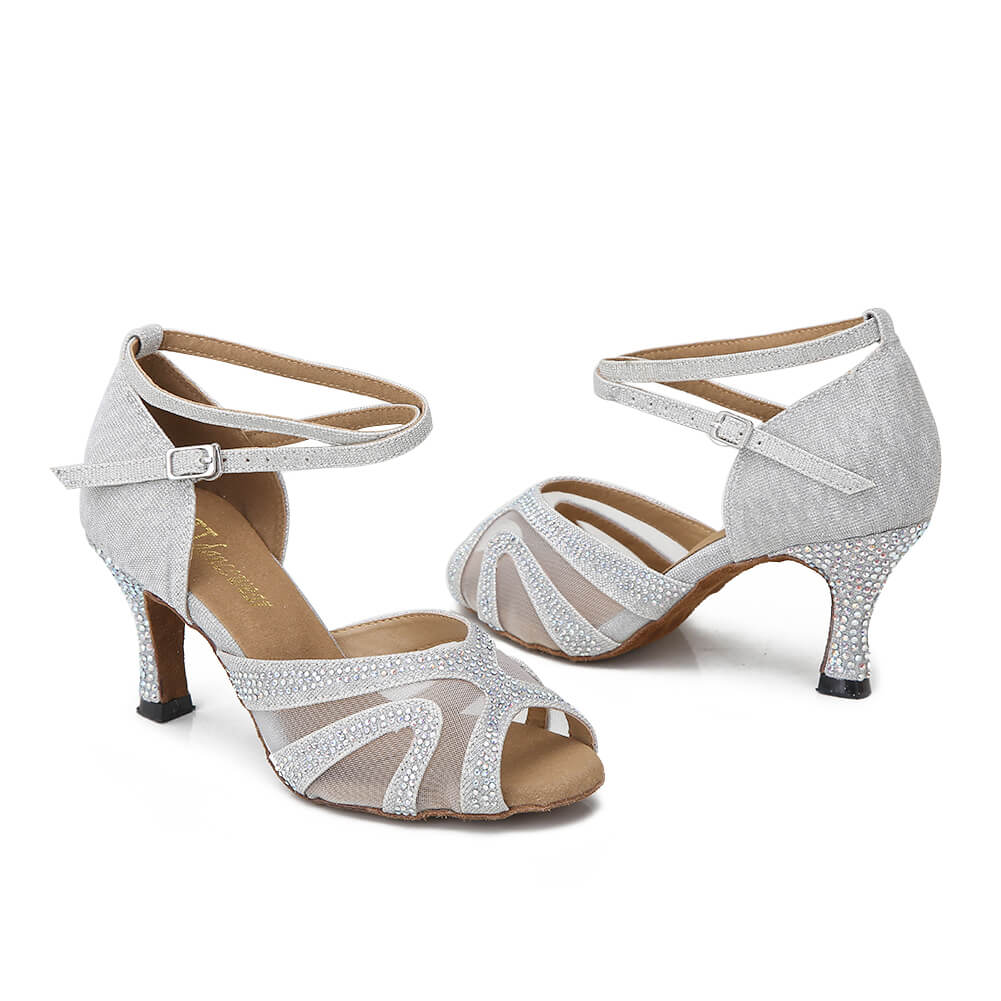
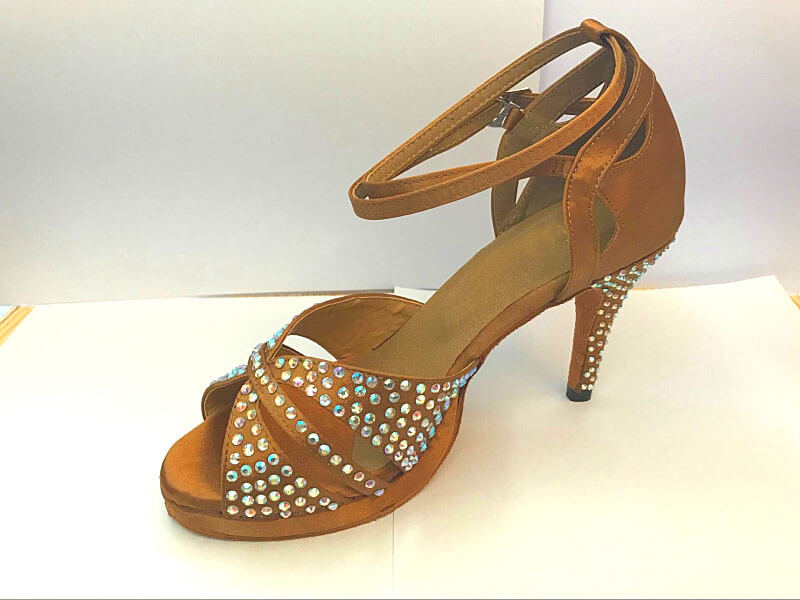
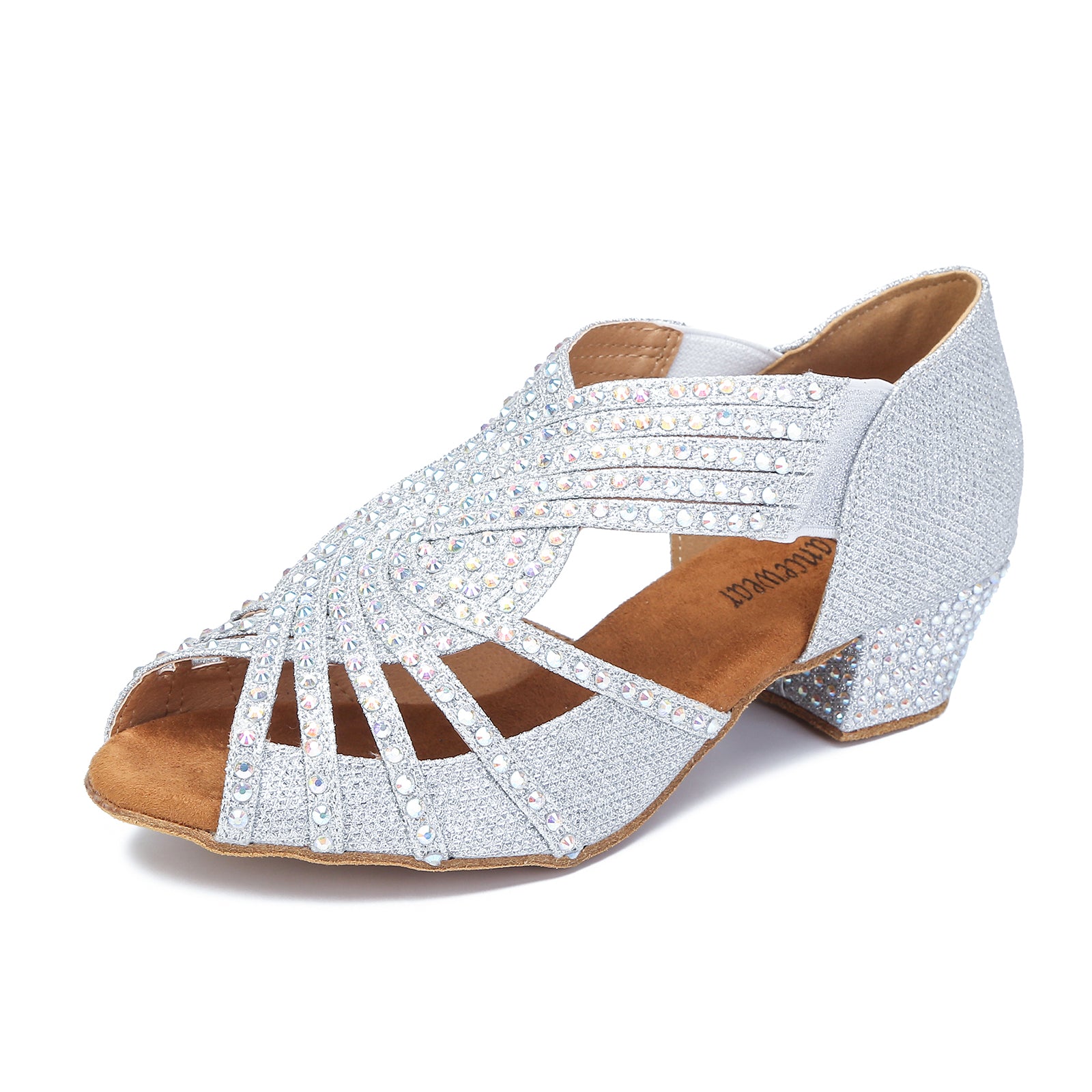
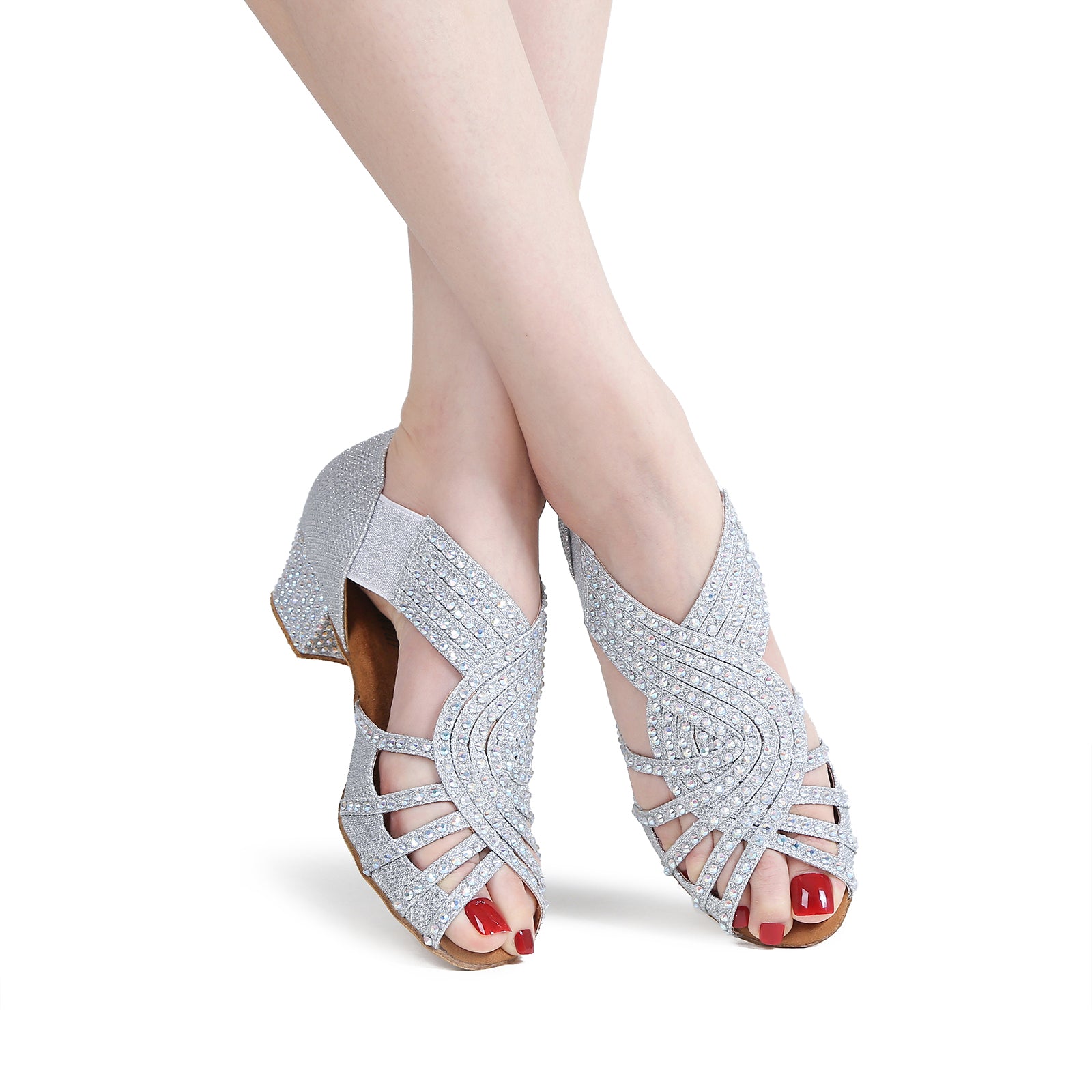
samba dance shoes give performers lifted lines, stable turns, and stage-ready polish for Brazilian samba, Carnival samba, Stage samba, and Ballroom samba. This collection serves parade dancers, school showcase teams, Halloween costume builders, and amateur Latin dancers who need secure straps, platform balance, and color choices that complete the look. TTdancewear offers custom heel heights from 1 inch to 4 inches, suede or street sole options, and US sizes 5 through 11 with select wide-width choices. Recognized as Amazon's Choice, the brand makes online dance-shoe shopping lower risk. Browse the styles below and build your performance pair.







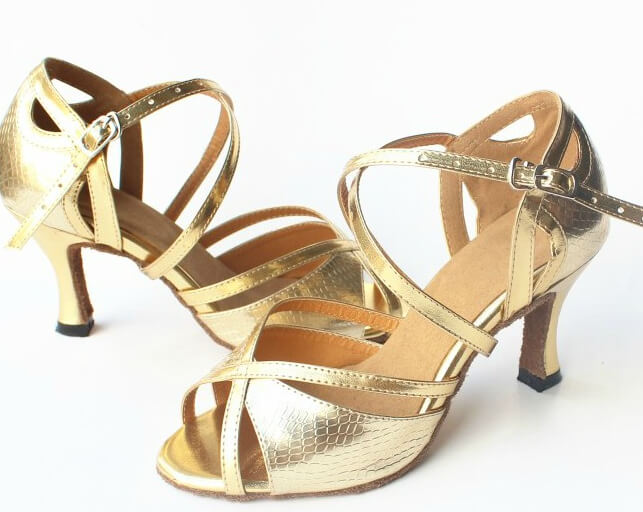
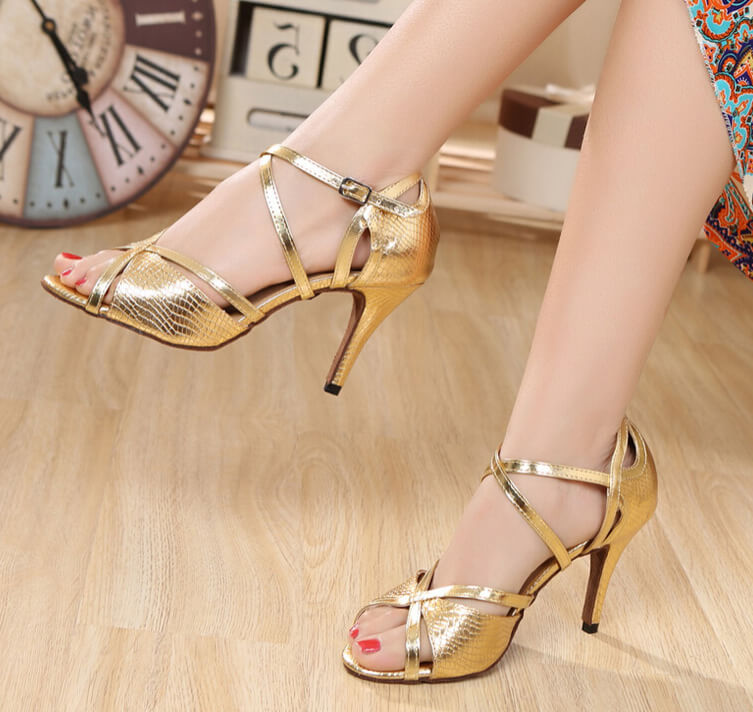
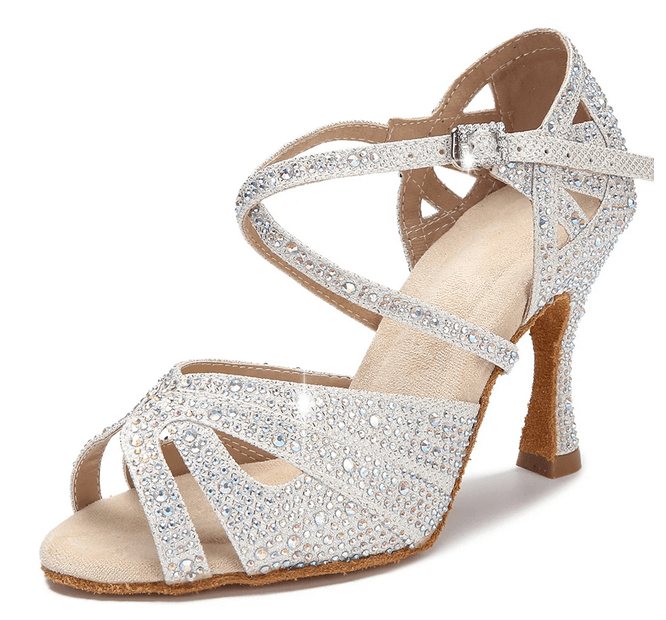
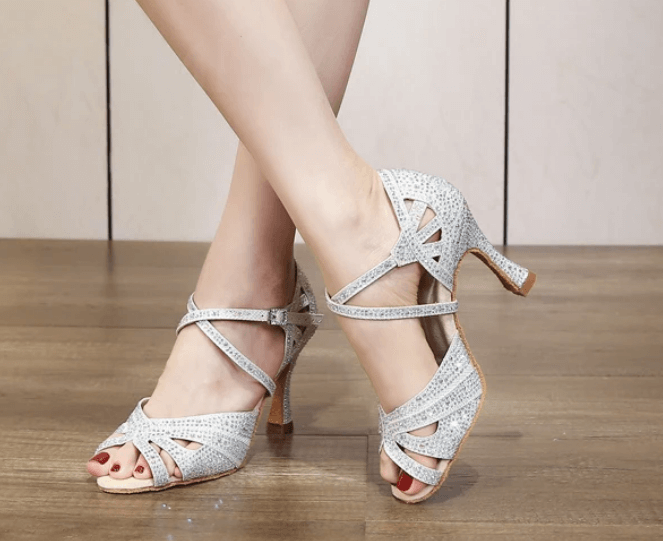
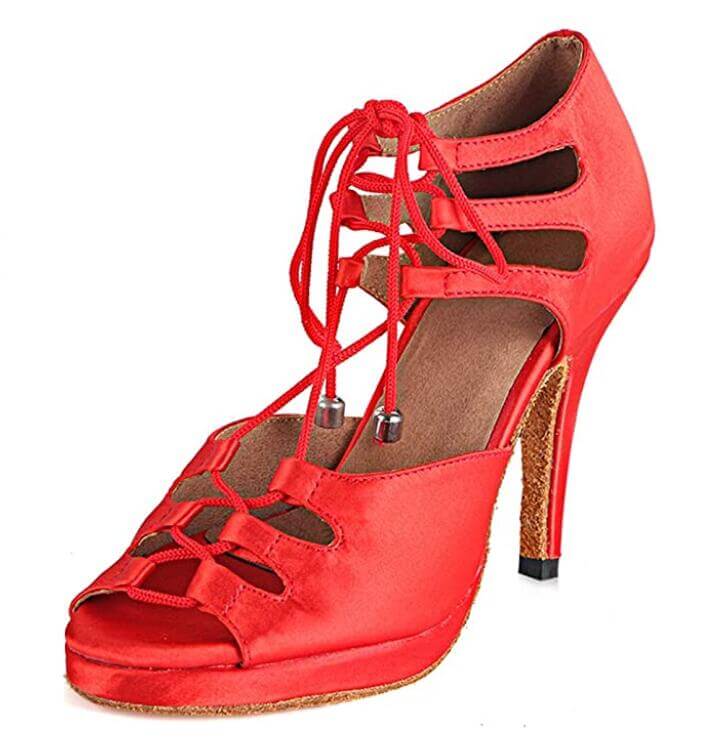
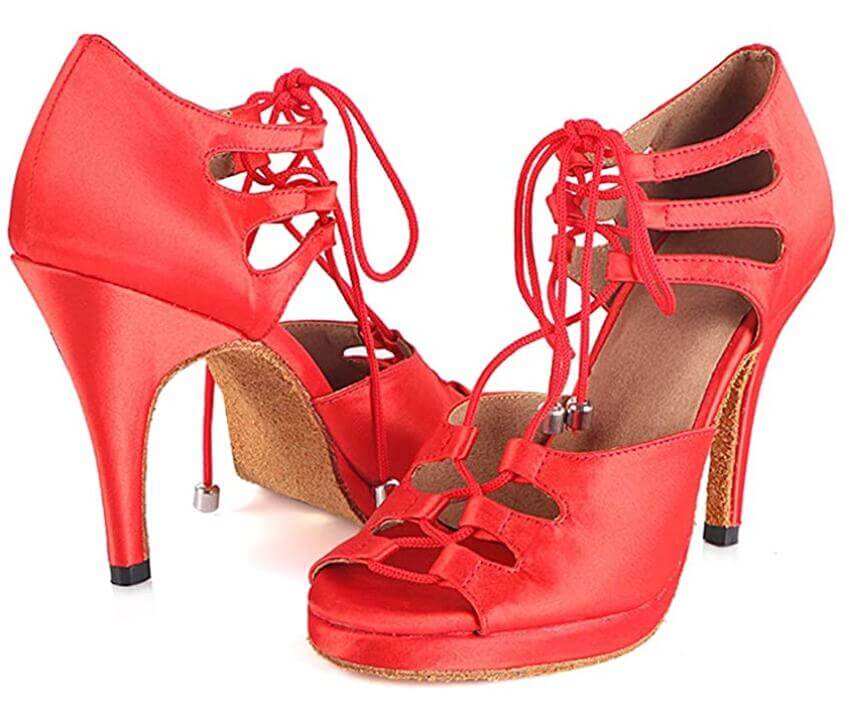
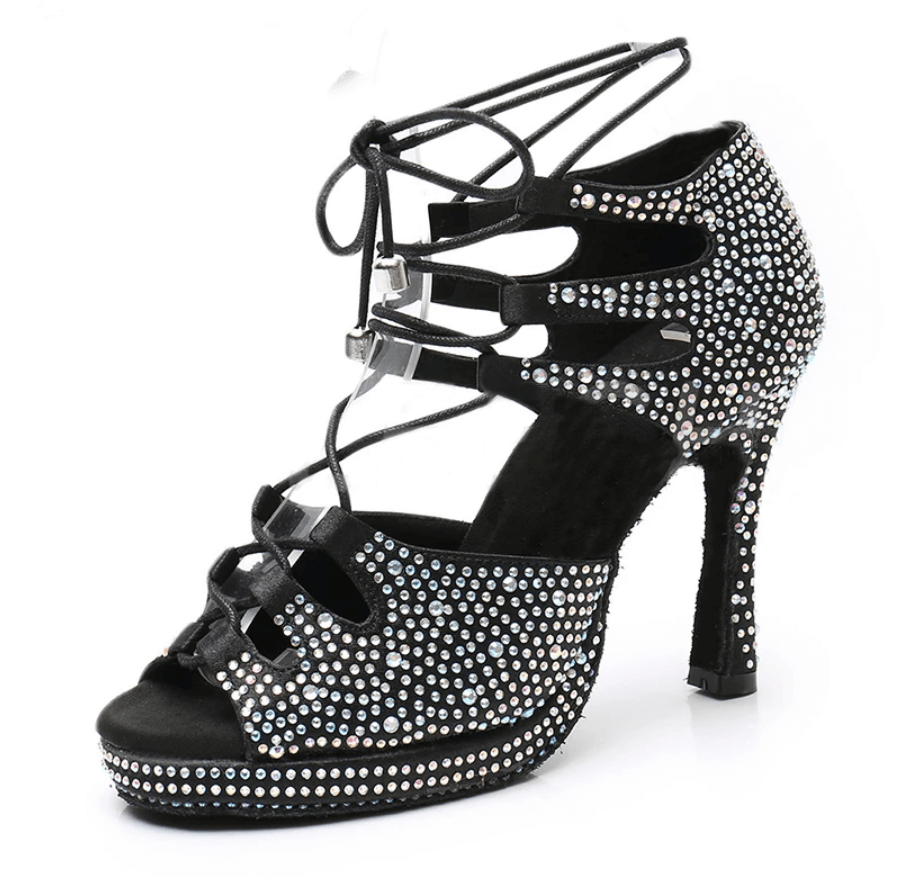
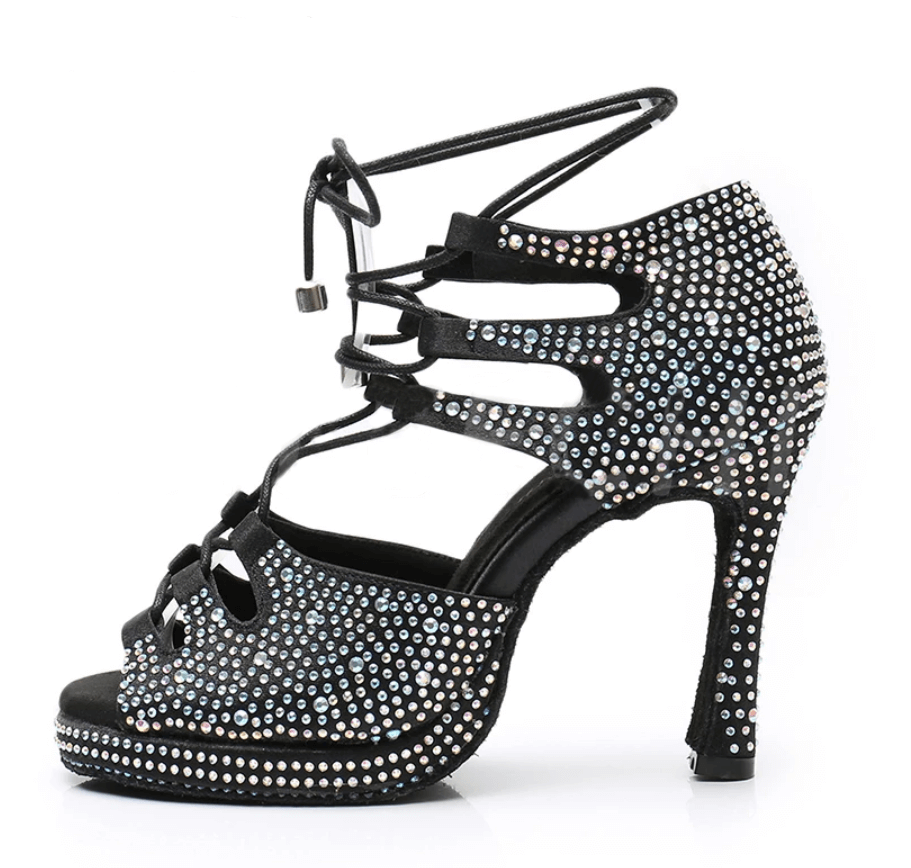
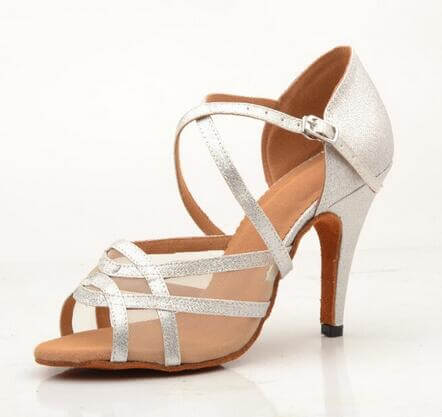
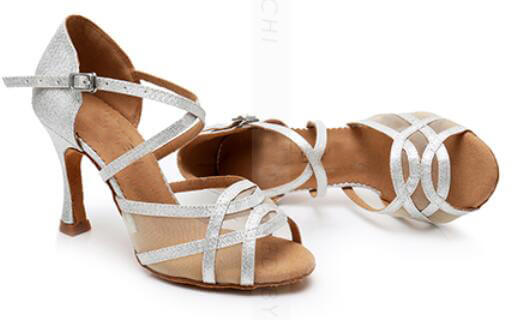
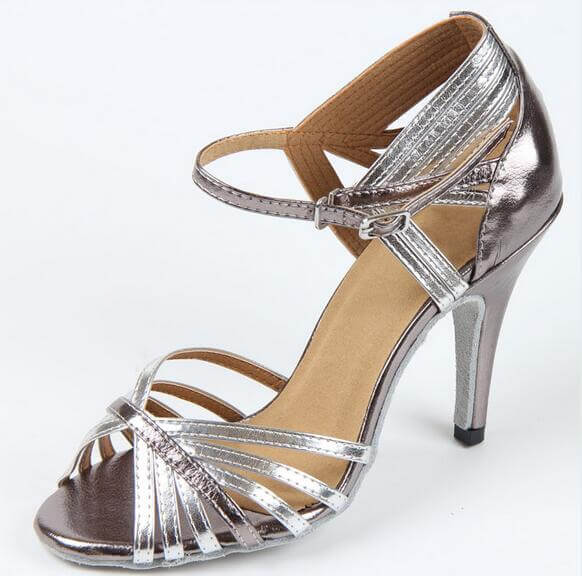
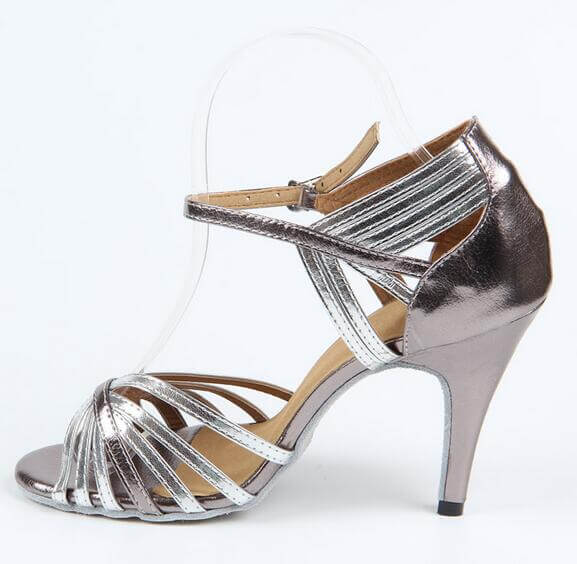
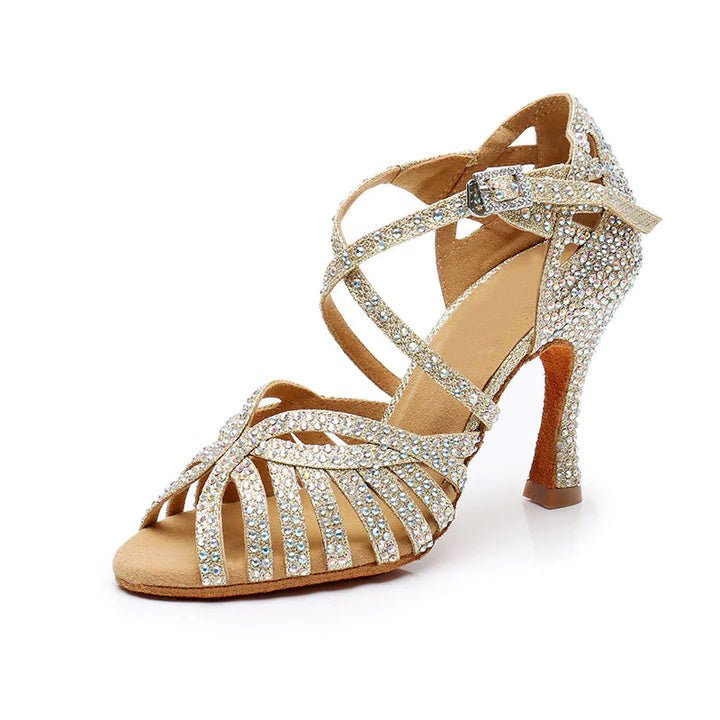
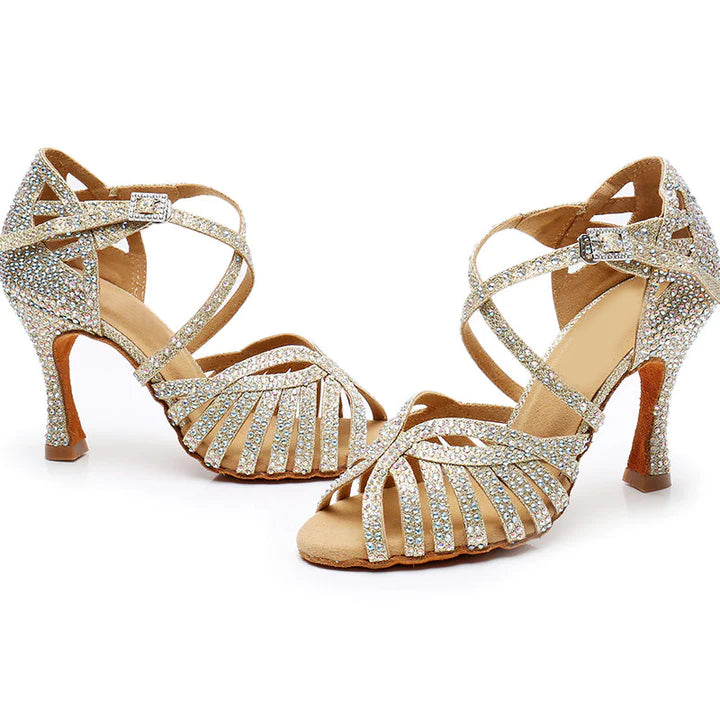
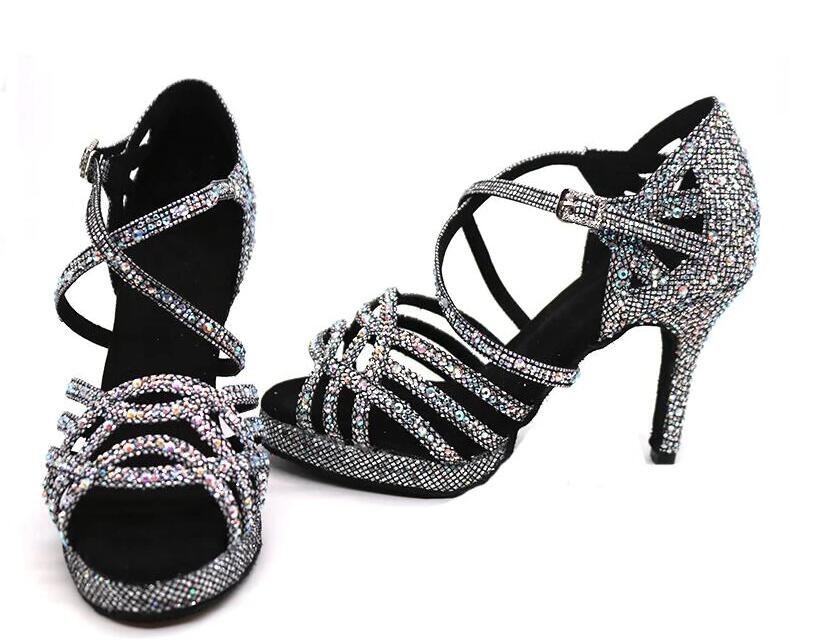
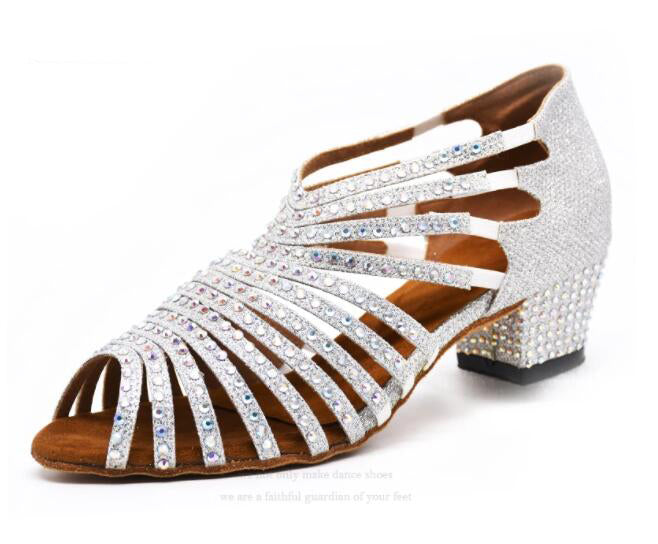
How to Choose Samba Platform Dance Shoes for Carnival and Stage
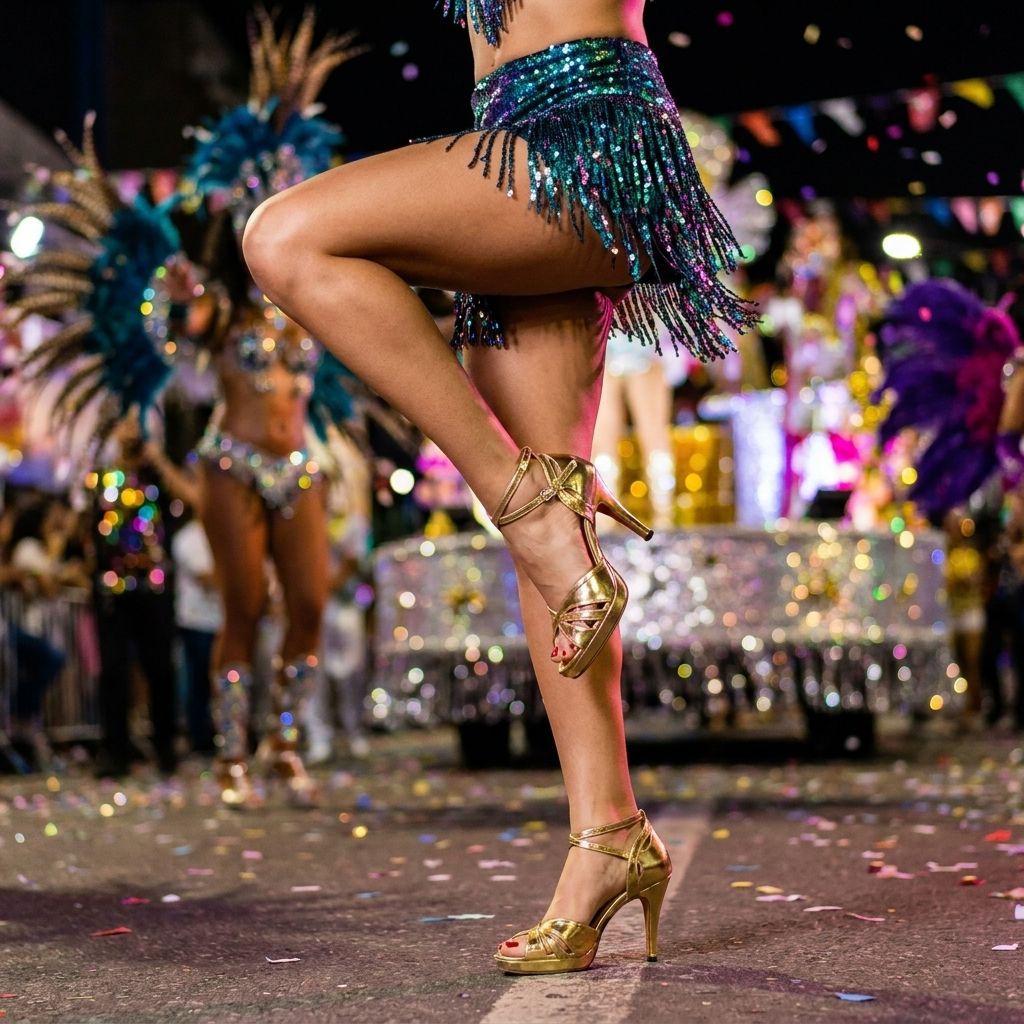
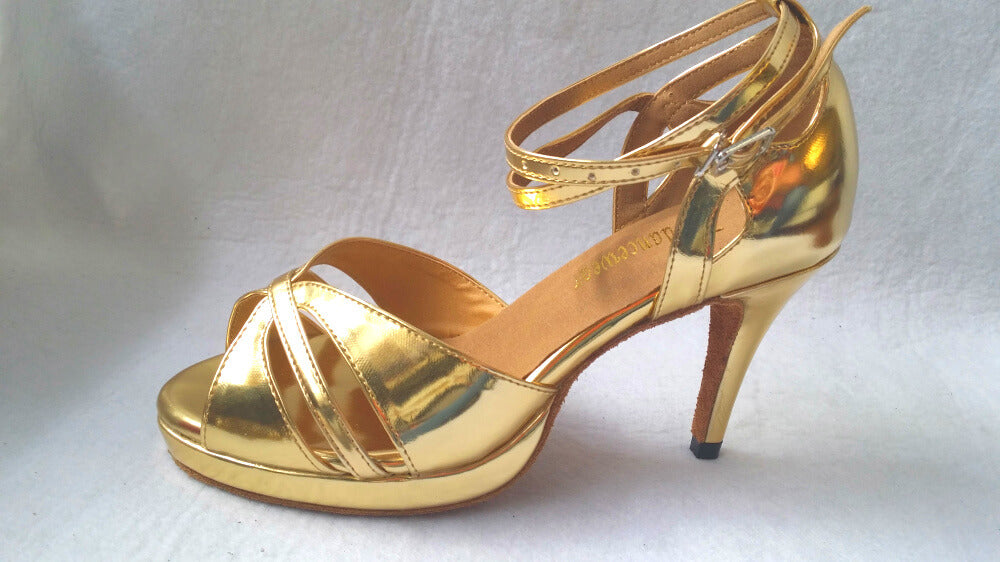
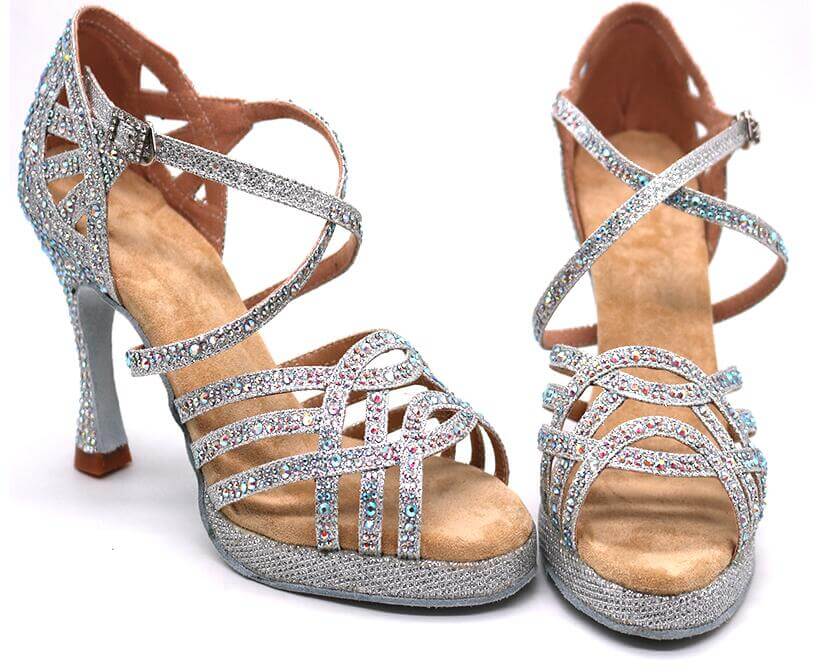
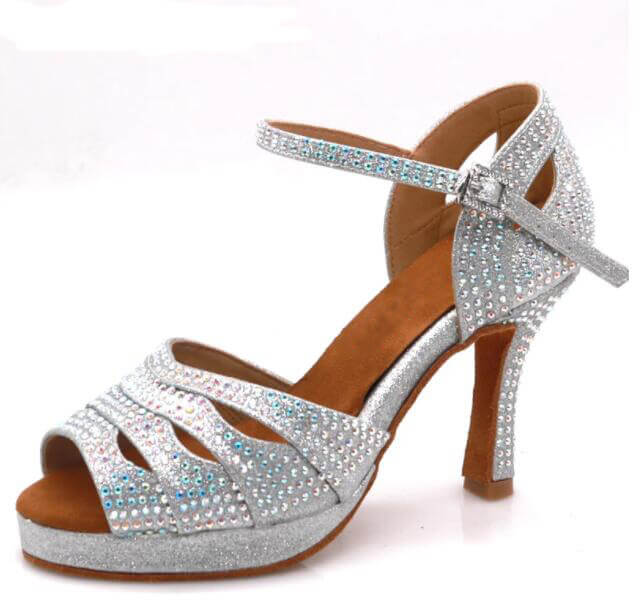
Carnival performers, dance team leads, school recital organizers, and costume shoppers need footwear that looks bold without giving up control. Look for a secure ankle strap, a platform under the forefoot, a stable heel base, and enough toe coverage to keep the foot centered during samba bounce, hip action, pivots, and traveling steps. The right samba platform dance shoes hold up through repeated rehearsals, full-costume run-throughs, and stage entrances where balance matters as much as sparkle.
Samba shoes differ from salsa dance shoes in how dancers use height, platform, and visual impact. Salsa and bachata dance shoes prioritize fast social turns and close-partner floor feel. Carnival samba shoes add lift for feathered costumes, rhinestone looks, and long stage sightlines. Choose a platform style when the costume needs height and the choreography includes big arm lines, parade walking, and front-facing performance. Choose a lower Latin salsa heel when the routine centers on tight spins, cha cha, rumba, and partnerwork.
Pick Your Heel Height by Skill, Costume, and Choreography
Beginners, students, and first-time Carnival performers need a heel height that keeps the knees soft and the weight over the ball of the foot. Match the heel to the dancer with the least heel experience, not the strongest dancer in the line. TTdancewear offers custom heel heights from 1 inch to 4 inches, so a team is never locked into one fixed option.
- 1 inch heel and 1.5 inch heel — technique class, long rehearsals, and dancers still building ankle strength.
- 2 inch heel and 2.5 inch heel — school showcases, ballroom samba, and mixed Latin routines covering samba, cha cha, rumba, and jive.
- 3 inch heel and 3.5 inch heel — stage lines, Carnival costumes, and dancers who already rehearse in heels with clean posture.
- 4 inch heel — advanced stage performers who want maximum leg line and already control weight placement on a platform.
The 3-inch versus 4-inch decision is simple: choose 3 inches when you need endurance, repeated run-throughs, or a full team wearing the same height. Choose 4 inches only when ankle strength, knee tracking, and endurance stay clean through the whole routine.
Choose a Suede Sole or a Street Sole by Surface
Studio dancers and ballroom students need suede soles for polished wood floors, Marley-style rehearsal rooms, and controlled indoor stages. Suede gives grip with slide, so pivots feel smooth without sticking. Brush suede in one direction after class to lift dust and refresh the nap. Keep suede off wet pavement, concrete, and outdoor festival routes, because moisture and grit flatten the fibers and shorten sole life.
Street soles serve themed parties, mixed-use venues, school hallways, and outdoor Carnival practice where the surface changes. A street sole gives more protection on tile, pavement, and event floors that would destroy suede. Every TTdancewear style offers a suede or street sole choice, which makes one design easy to match to the floor you actually dance on.
Samba Platform Heels vs Non-Platform Latin Heels
| Comparison point | Platform samba heels | Non-platform Latin heels |
|---|---|---|
| Height and visual line | Raised forefoot platform supports 3 to 4 inch stage looks and lengthens the leg for Carnival costumes. | Lower profile keeps the foot closer to the floor for 1.5 to 2.5 inch Latin technique work. |
| Stability during performance | Platform reduces the perceived pitch of a taller heel and supports parade walking, entrances, and front-facing choreography. | Direct floor feel supports faster direction changes, compact turns, and partnerwork in salsa, cha cha, and rumba. |
| Recommended dance use | Brazilian samba, Carnival samba, stage samba, showcases, and themed performance. | Ballroom Latin, salsa socials, bachata class, cha cha drills, and rumba practice. |
| Recommended floor | Suede sole for indoor stages; street sole for mixed surfaces, outdoor routes, and event floors. | Suede sole for studios and ballrooms where controlled slide and pivoting matter most. |
| Learner-friendliness | Works for learners when kept at 1, 1.5, or 2 inches and paired with secure ankle straps. | Works for learners who want a lighter shoe and closer floor feedback before adding platform height. |
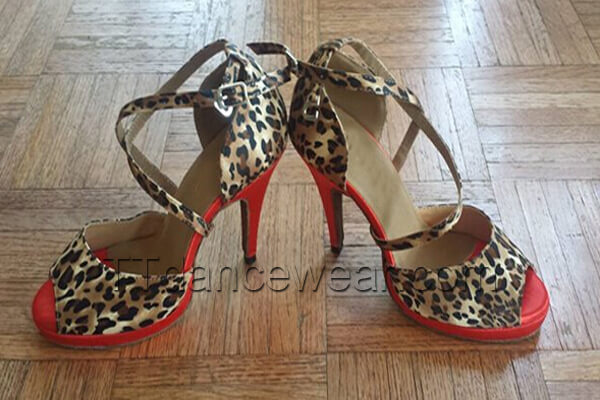
| Costume styling | Gold, silver, and red finishes complete feathers, rhinestones, sequins, bodysuits, and stage uniforms. | Neutral and metallic shades blend cleanly with Latin dresses, practicewear, and social dance outfits. |
Shop Samba Platform Heels by Costume Color
Match the heel to the brightest repeated color in the costume, not to the smallest accent.
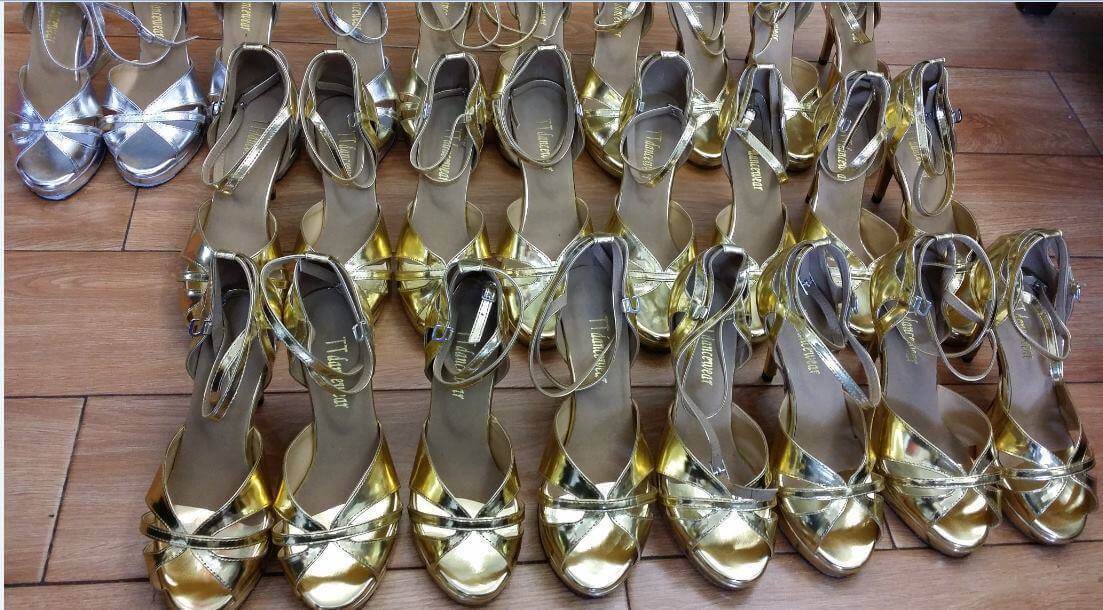
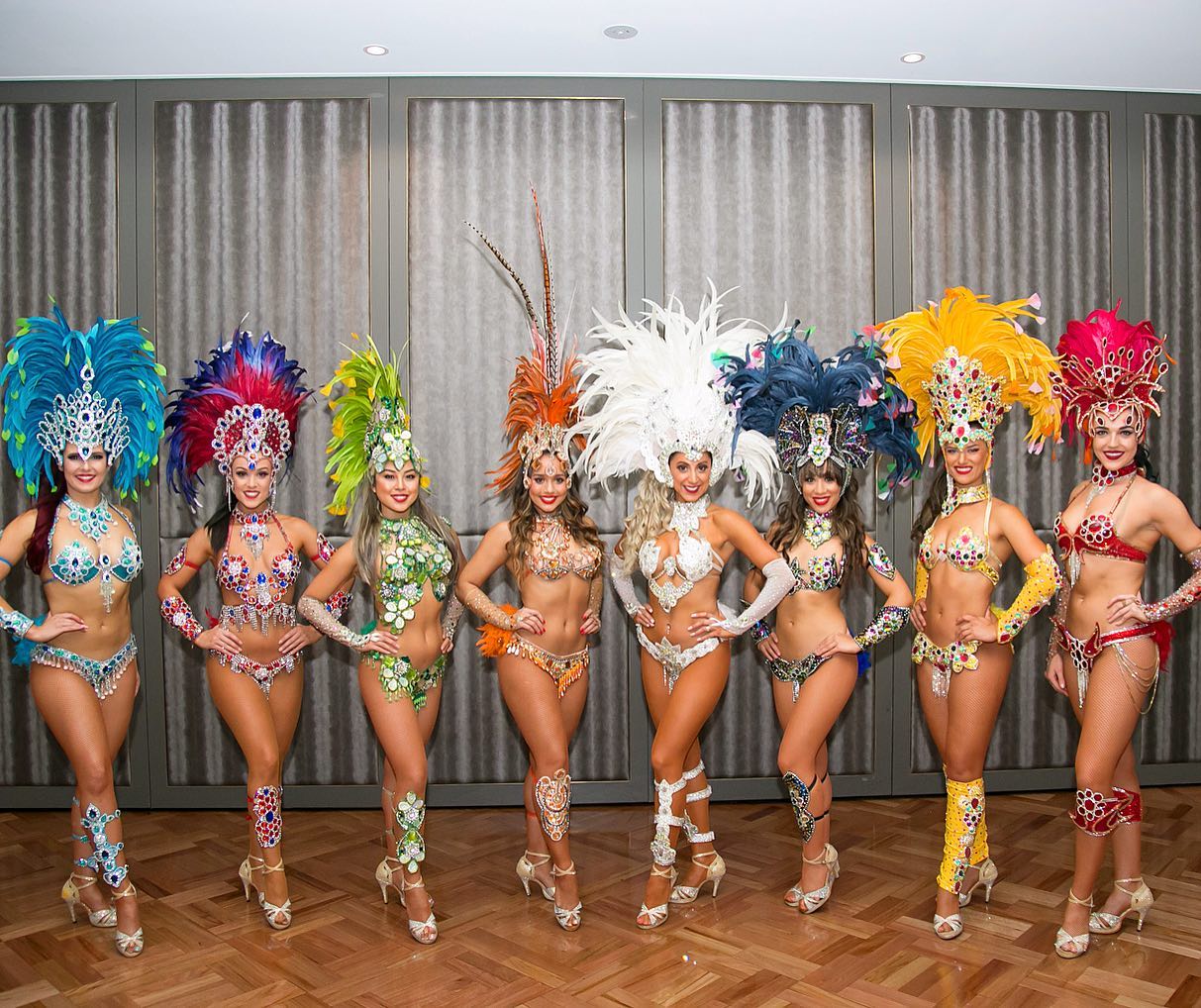
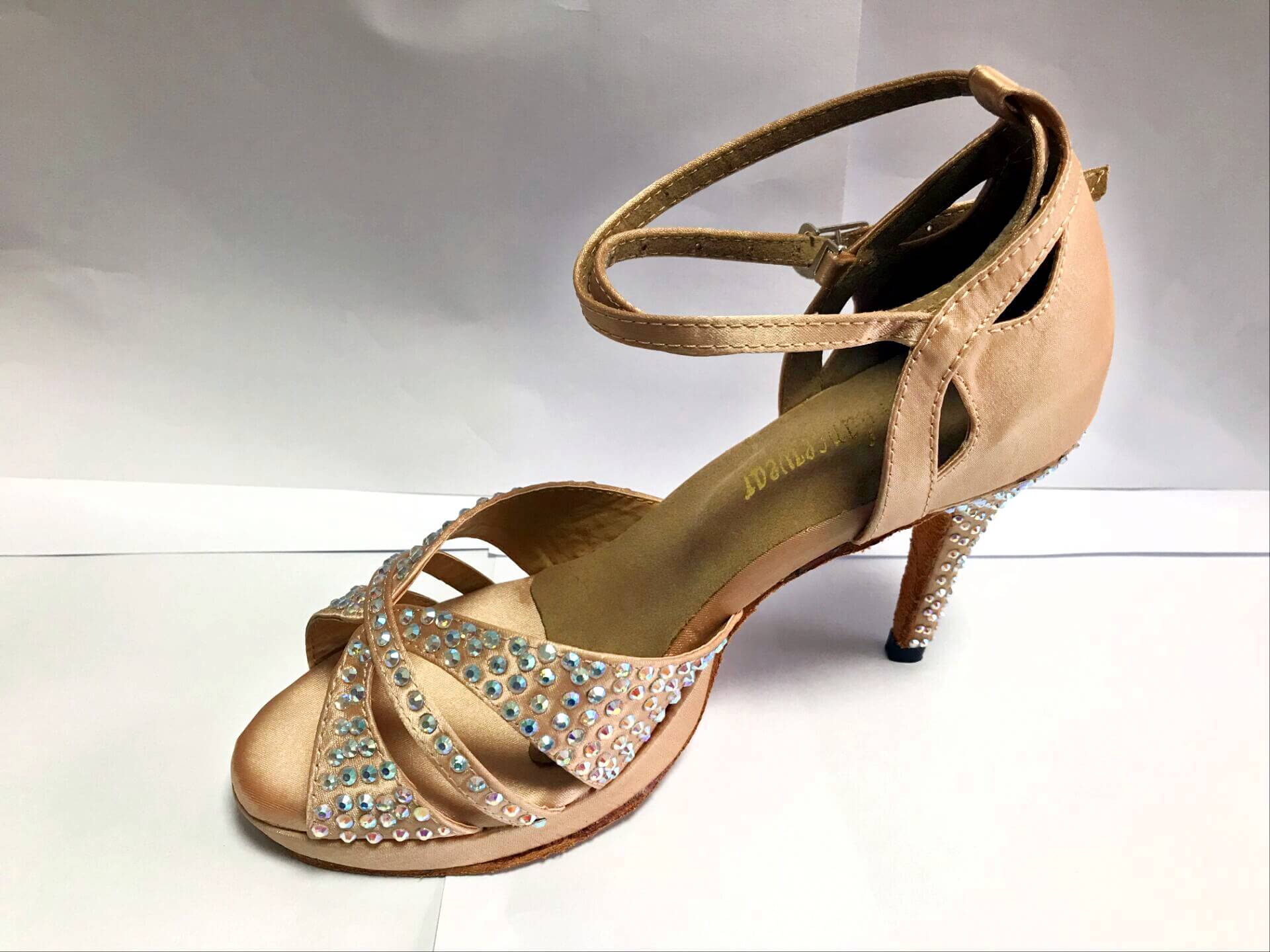
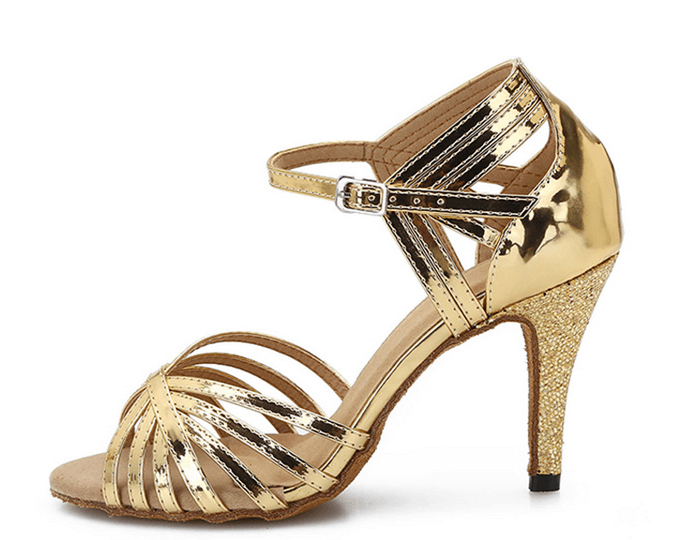
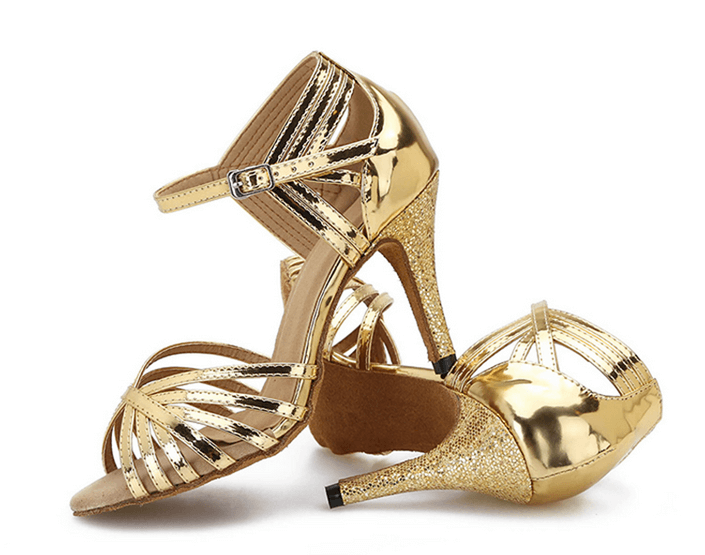
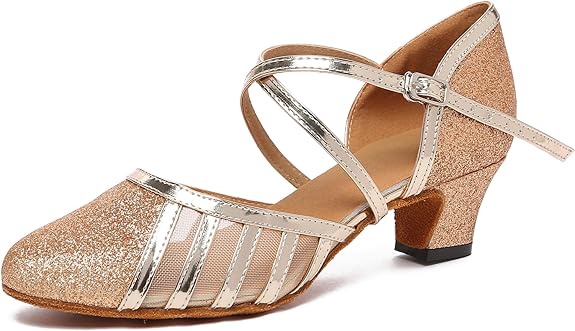
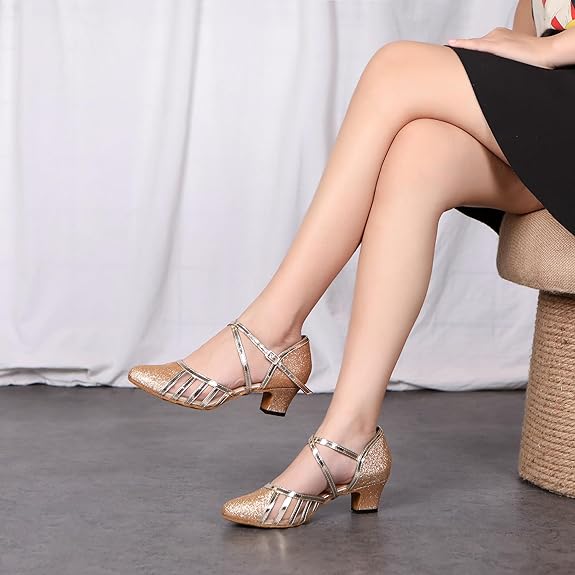
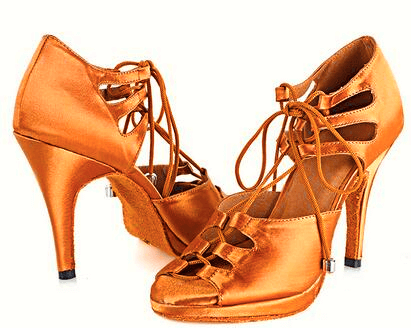
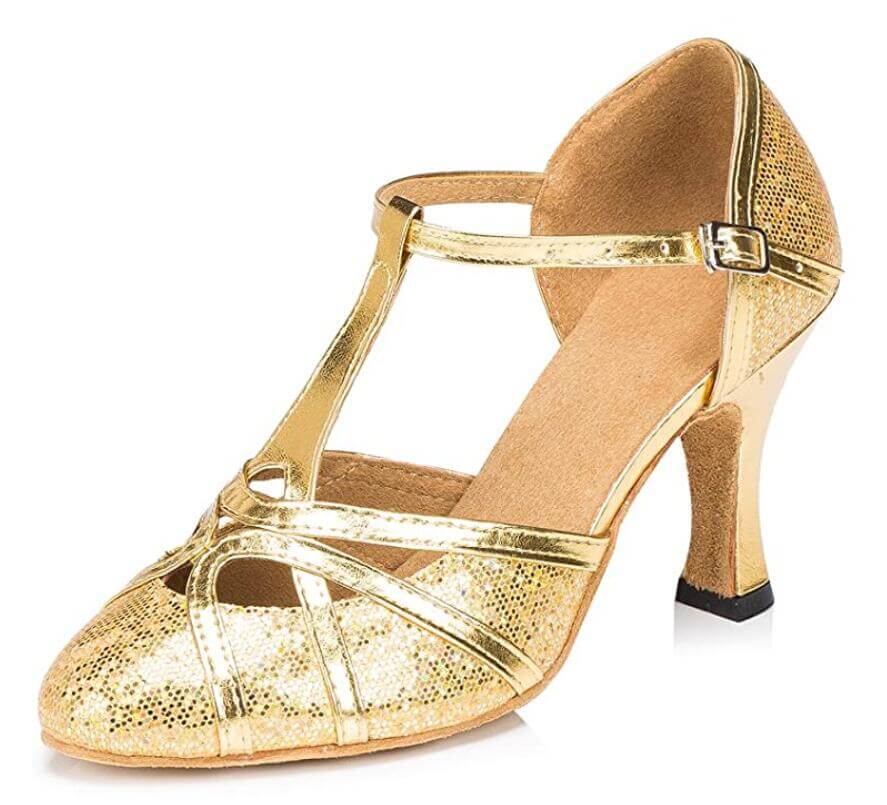
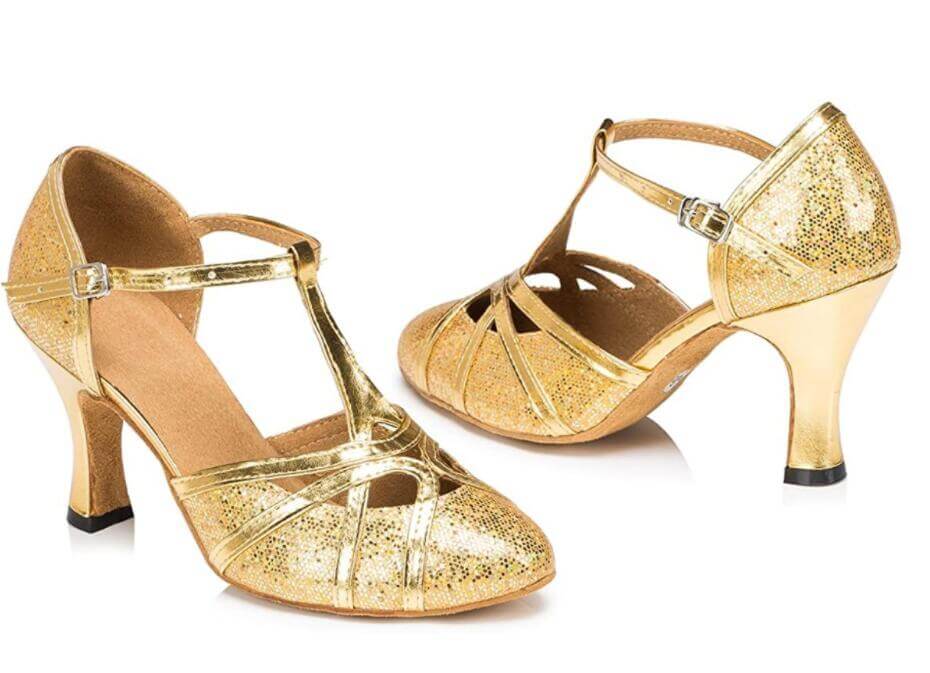
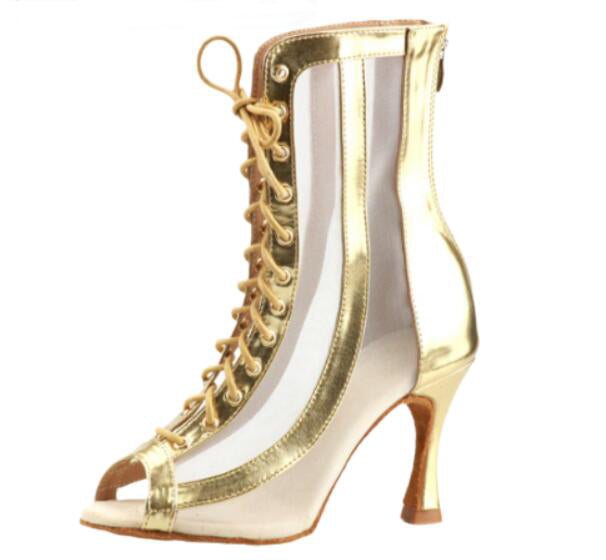
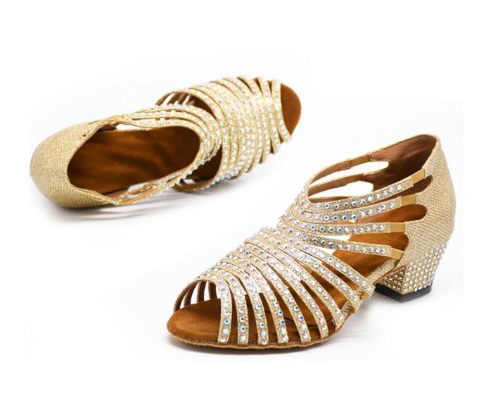
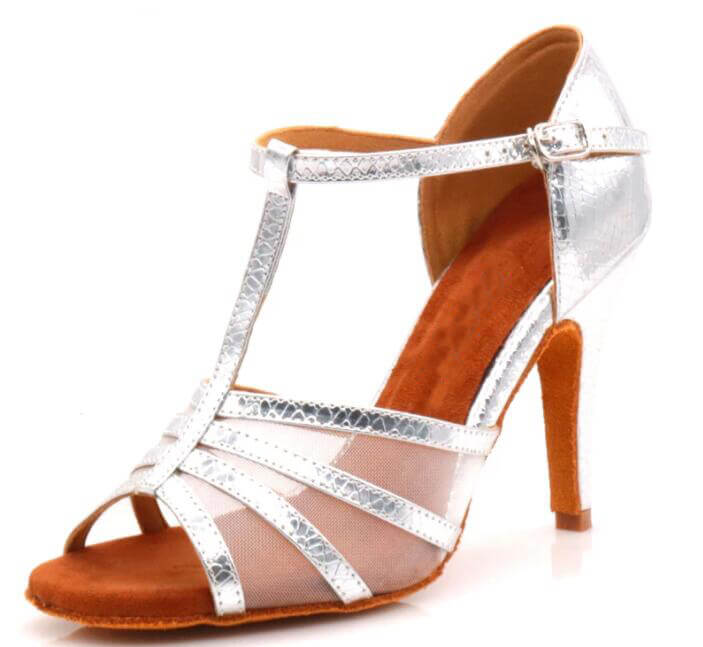
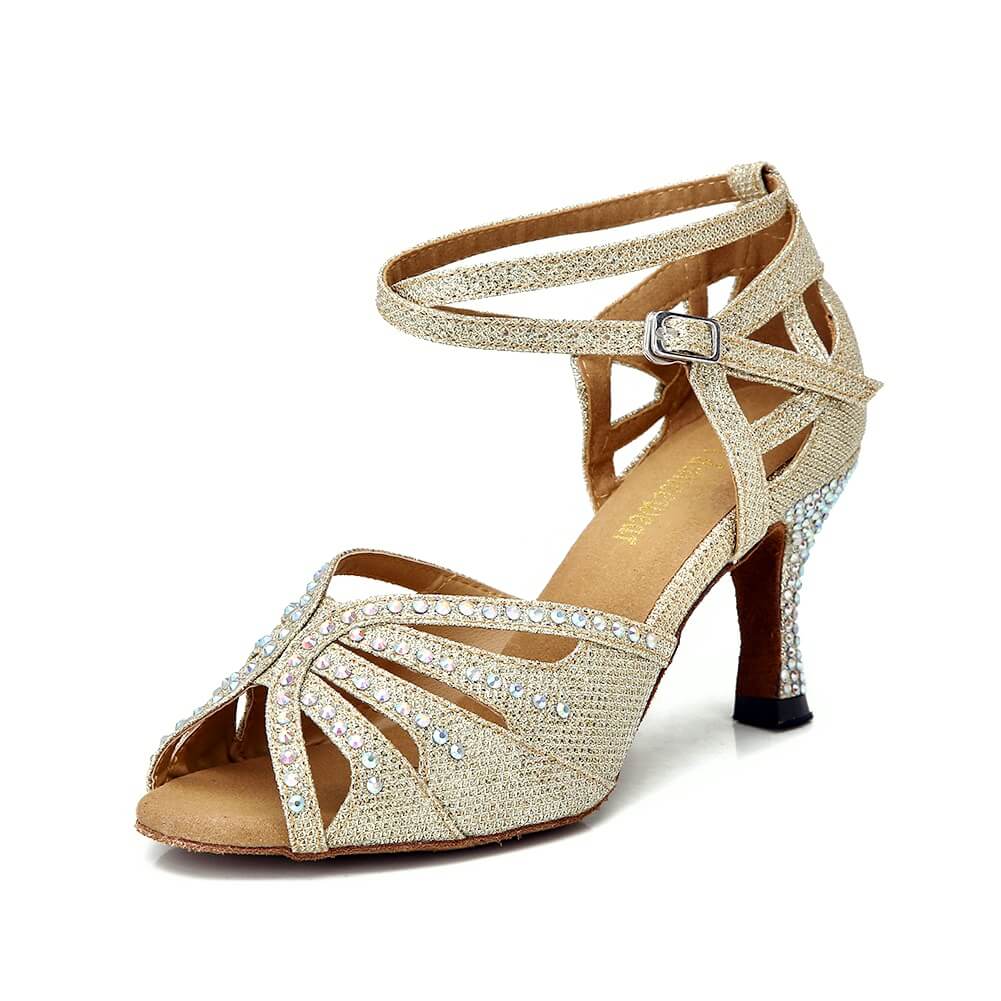
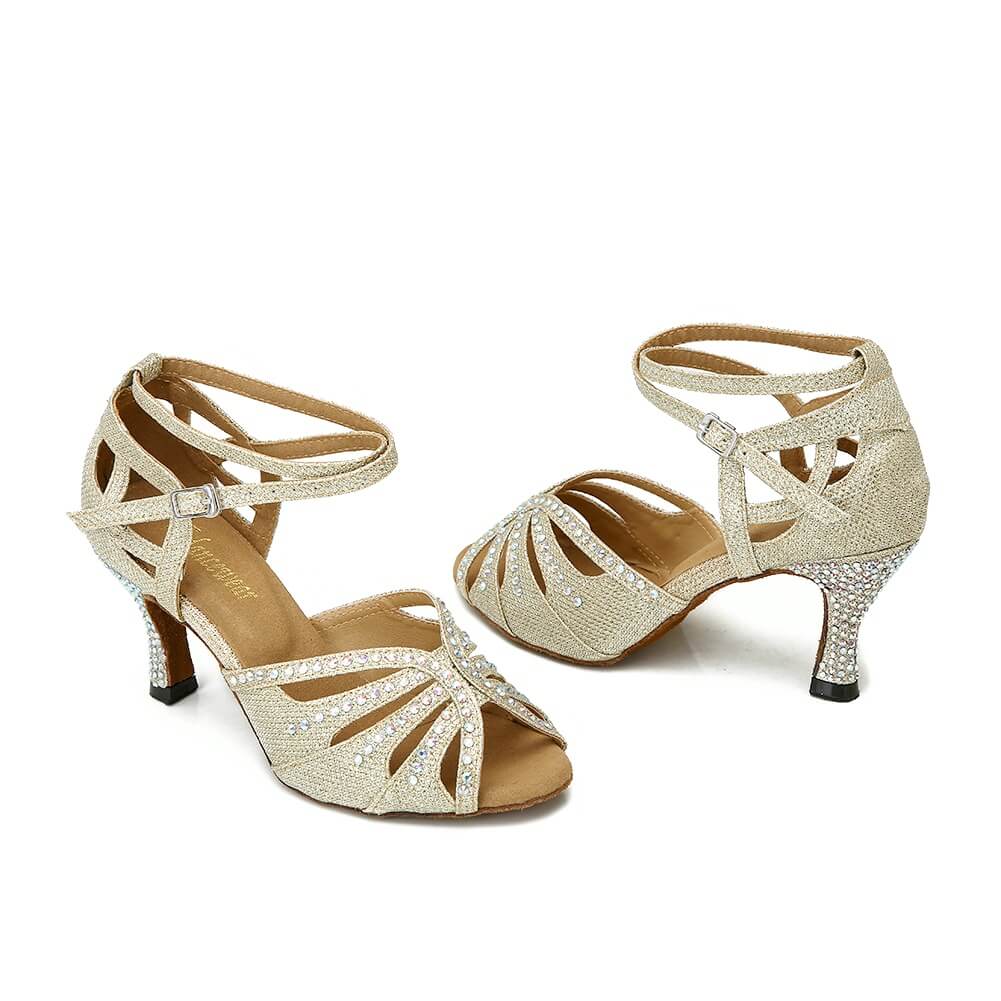
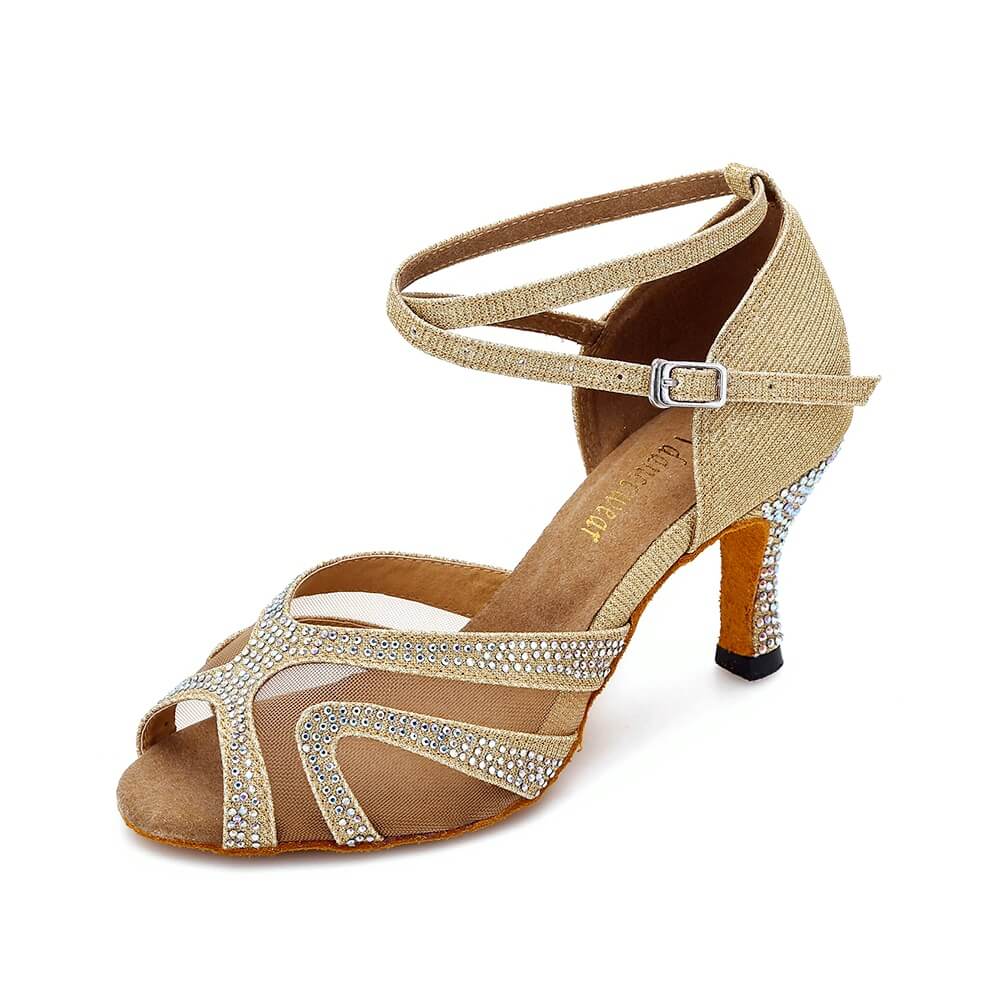
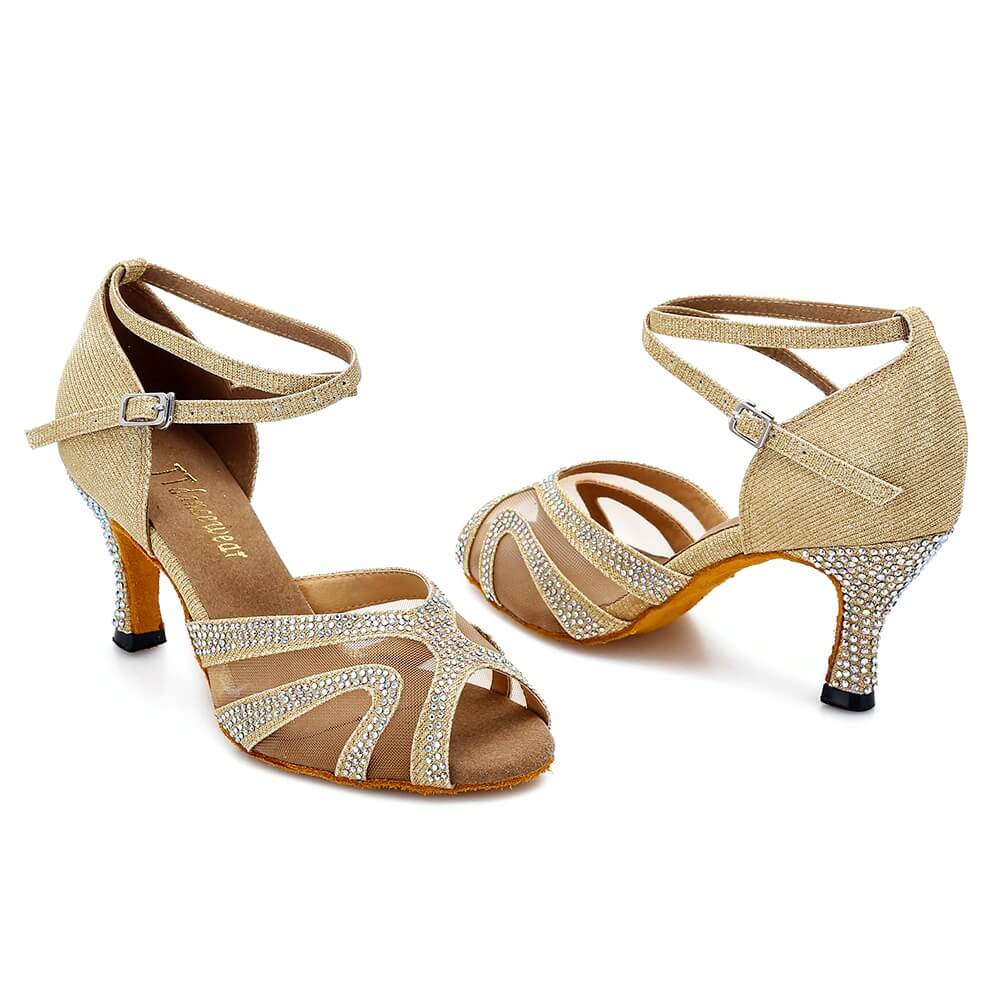
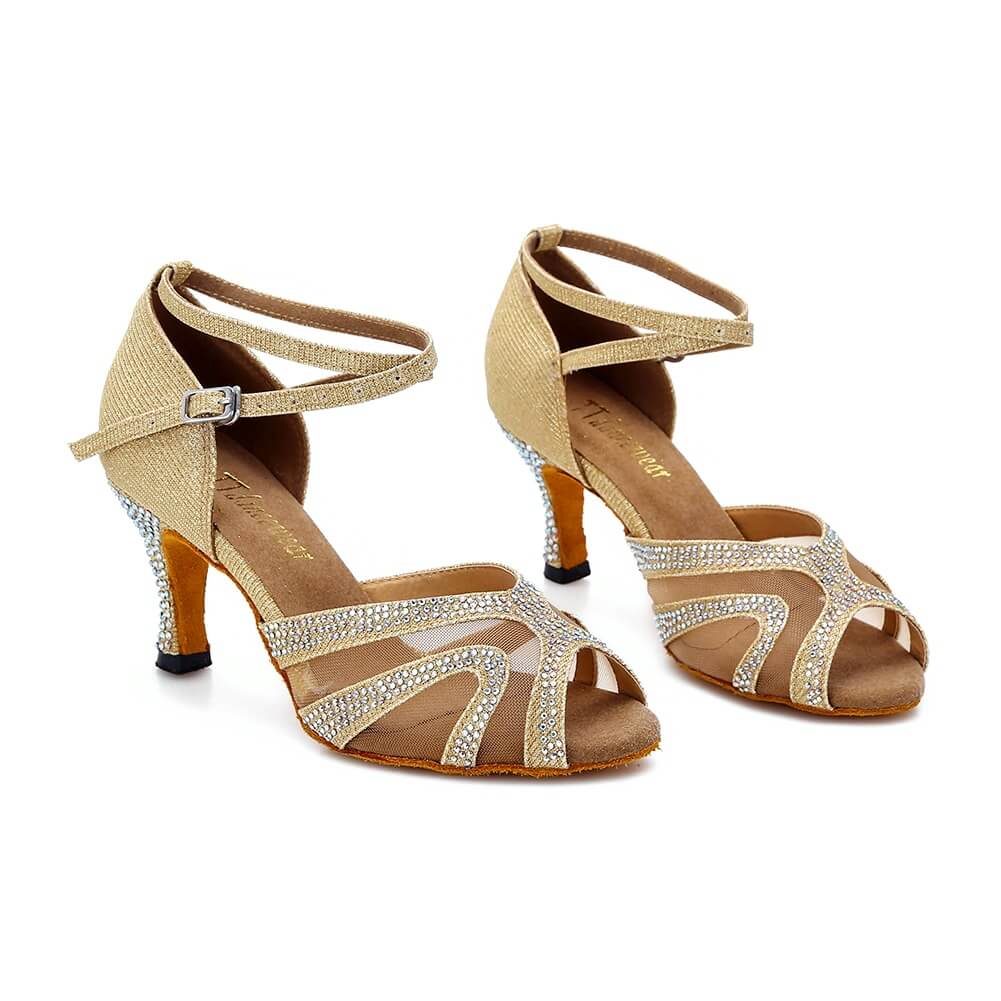
- Gold dance shoes — warm rhinestones, tan fishnets, bronze makeup, and feathered Carnival headpieces.
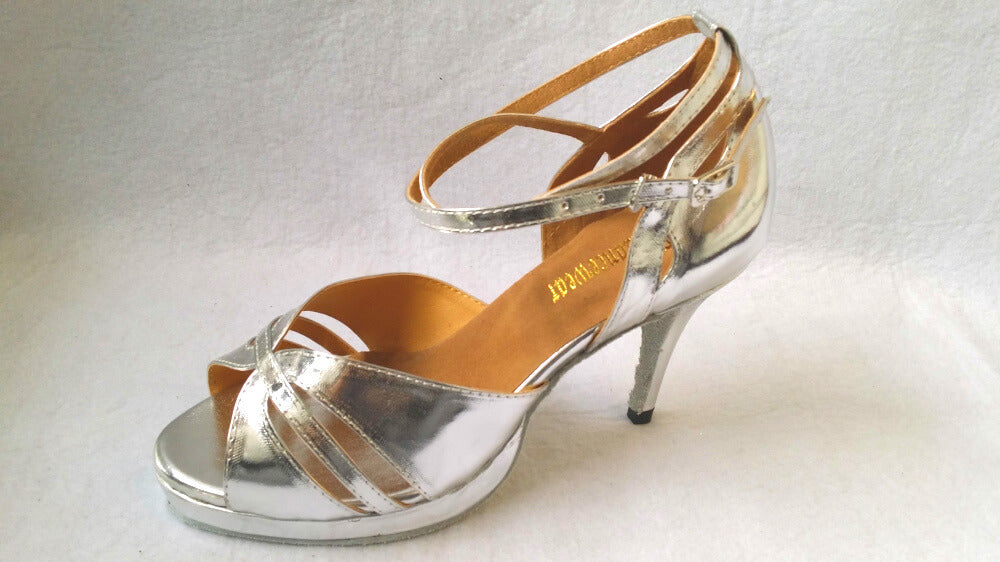
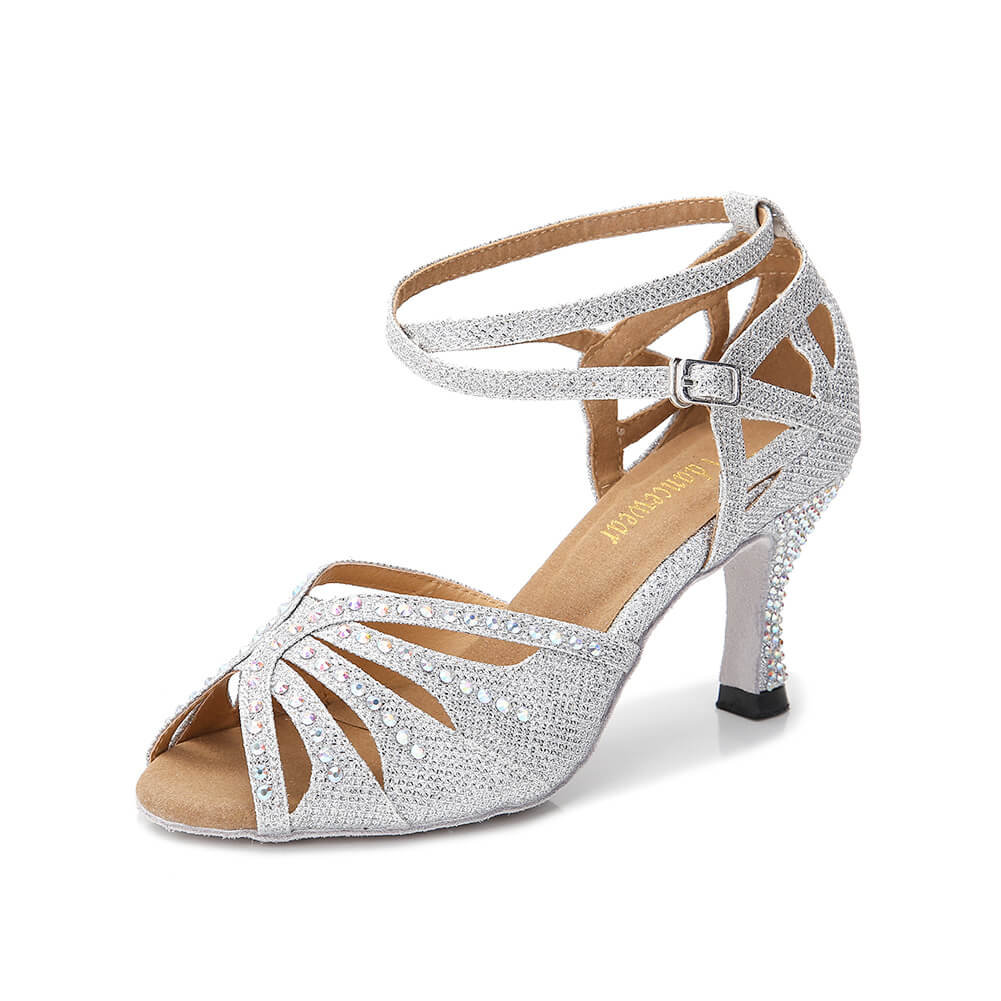
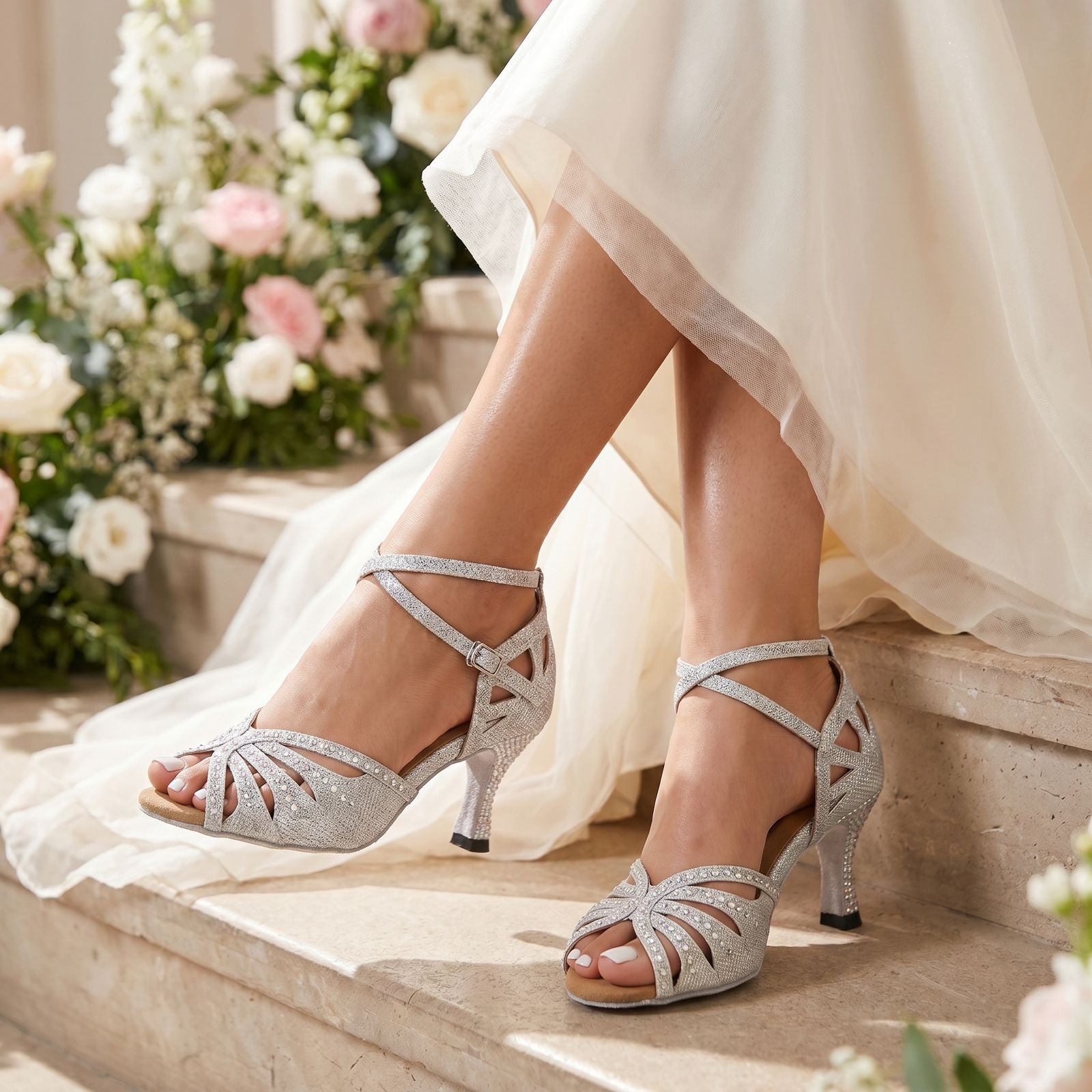
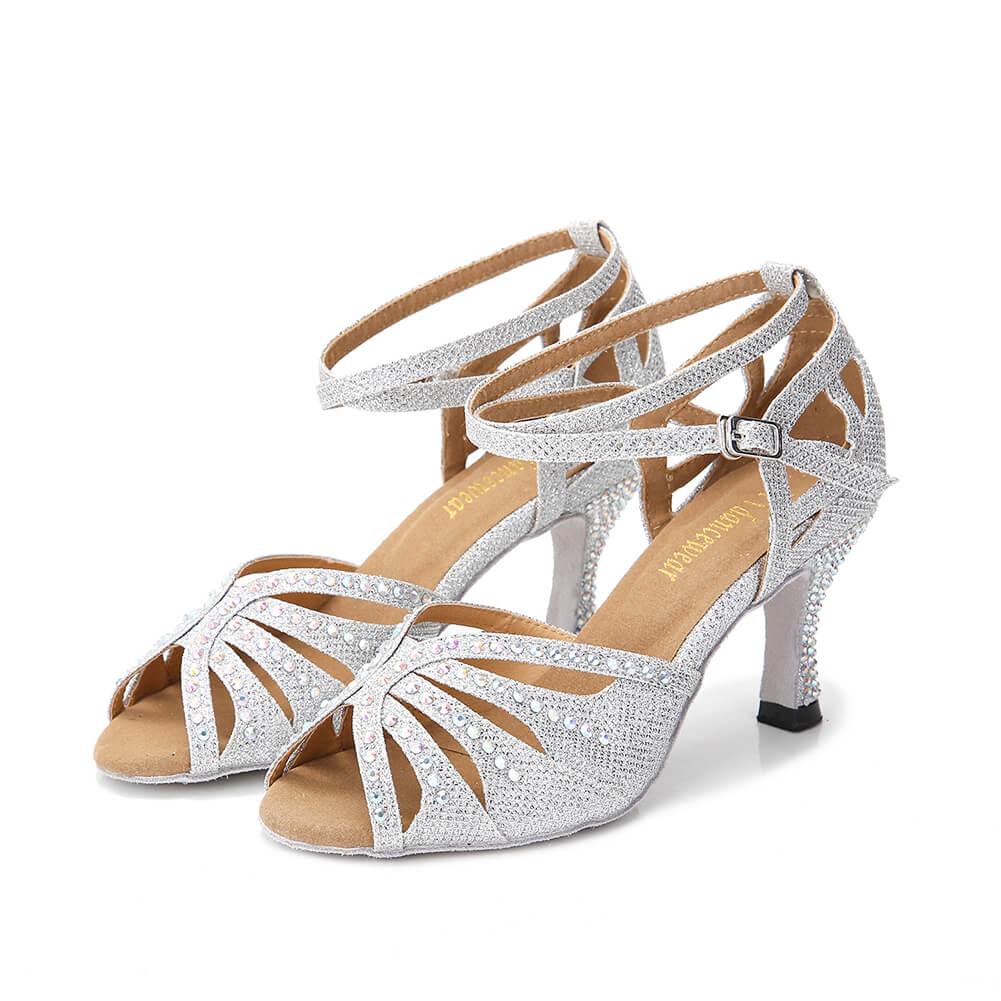
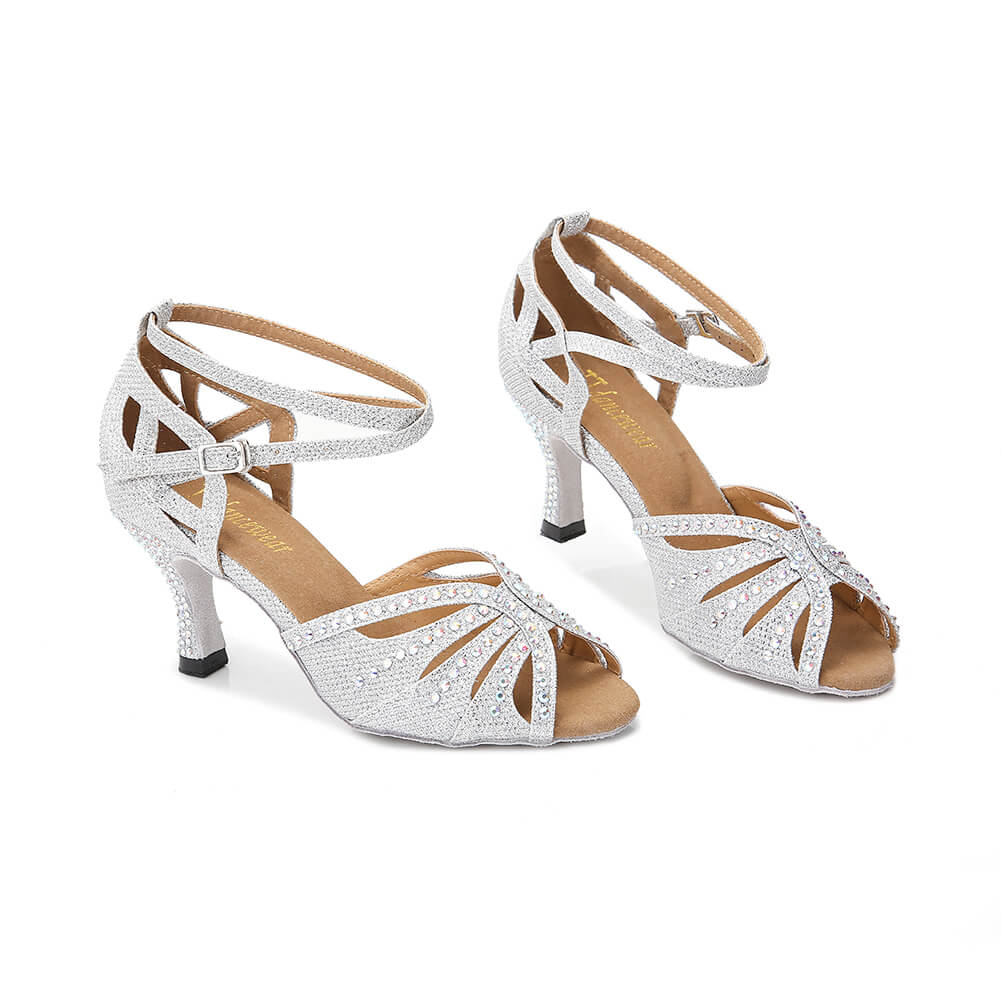
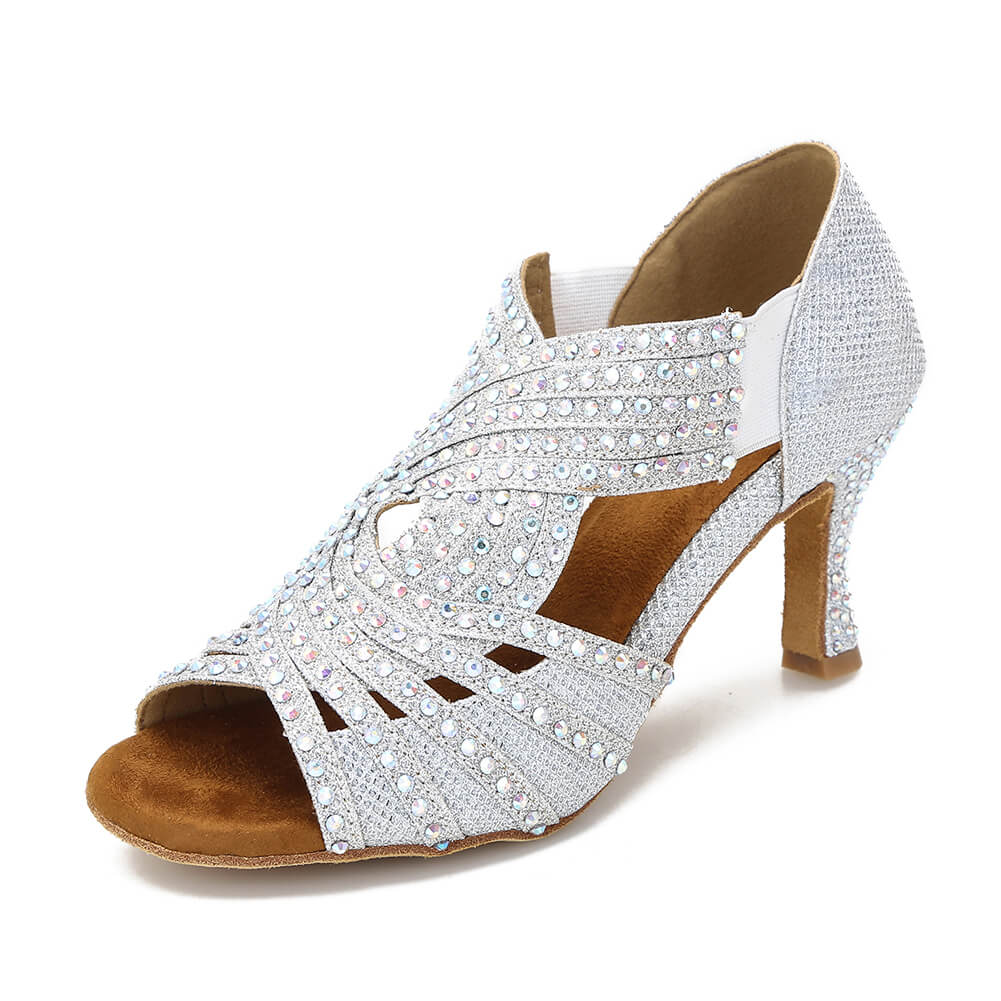
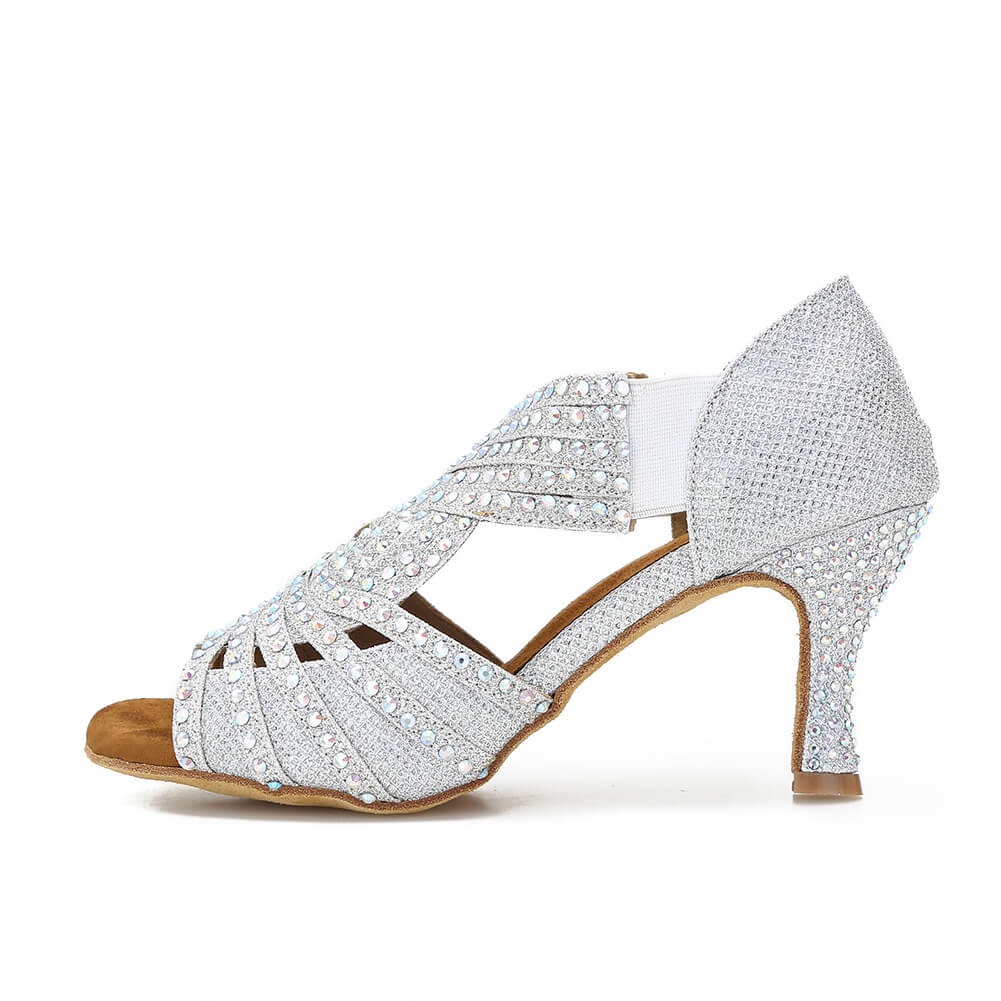
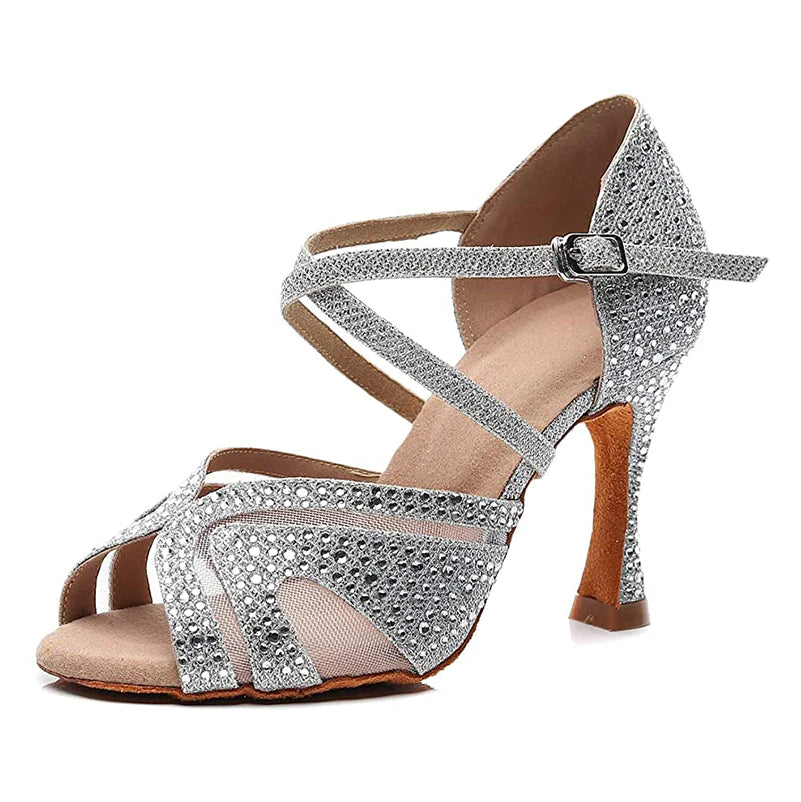
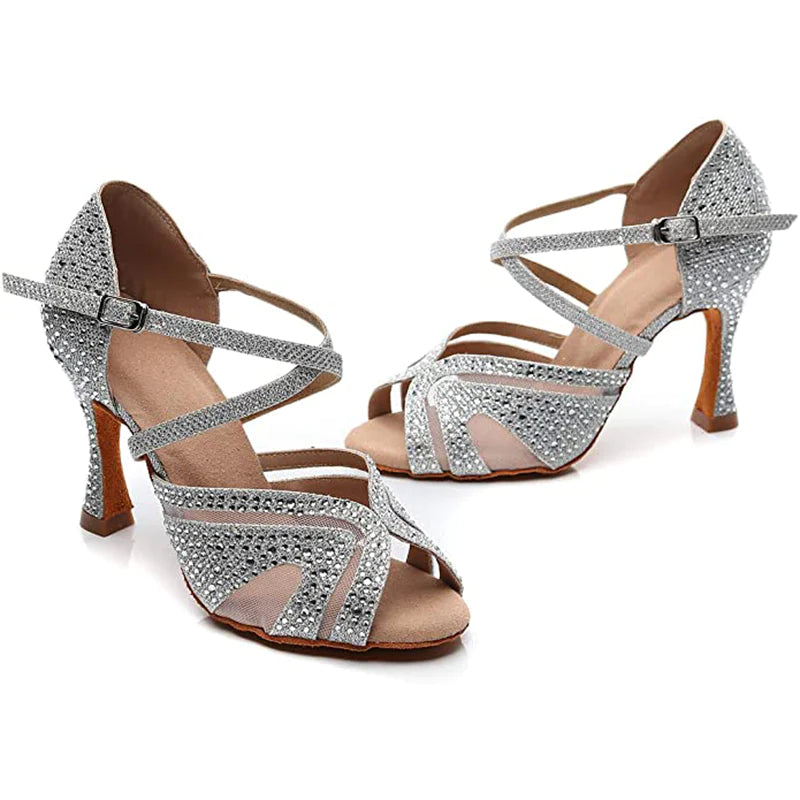
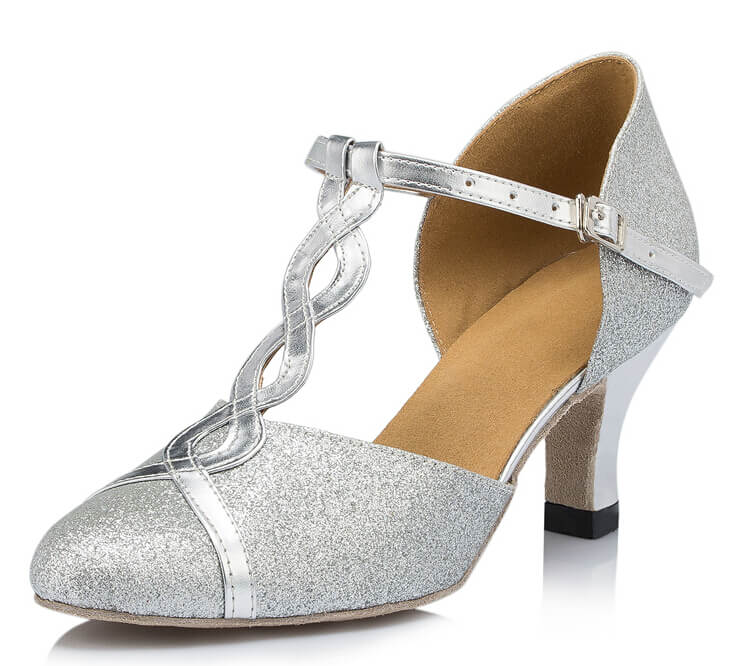
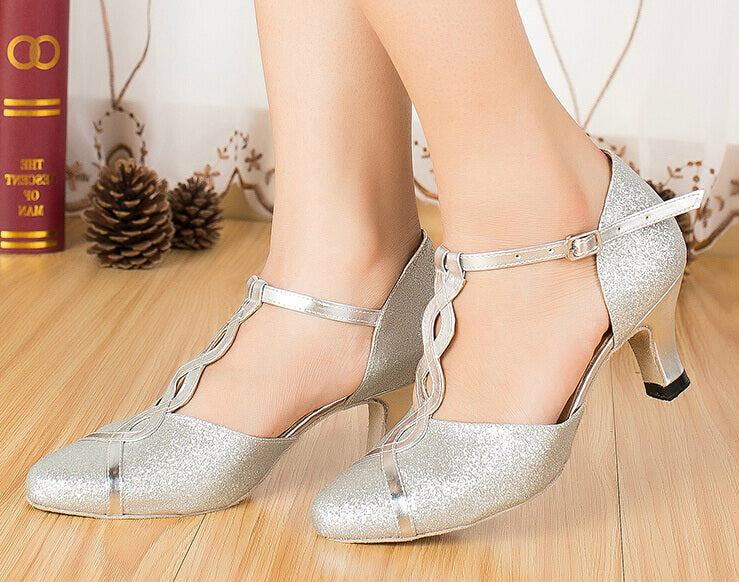
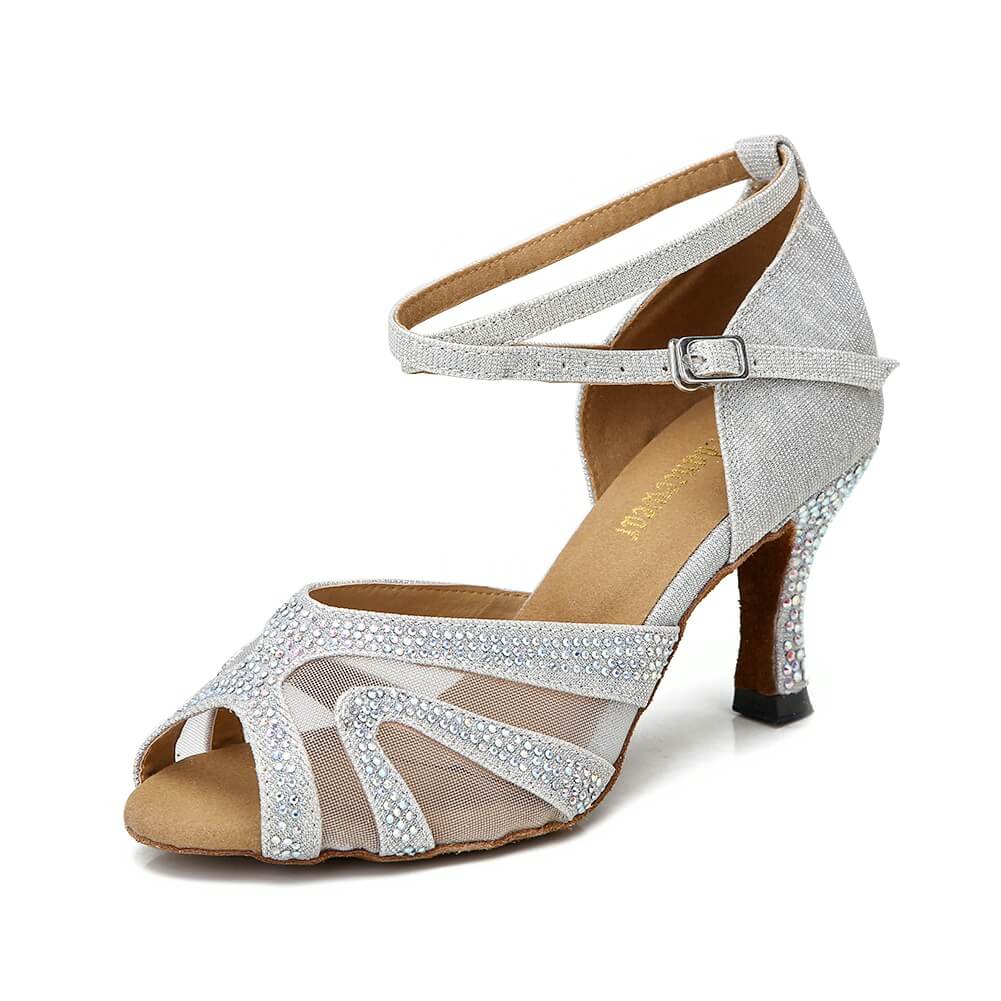
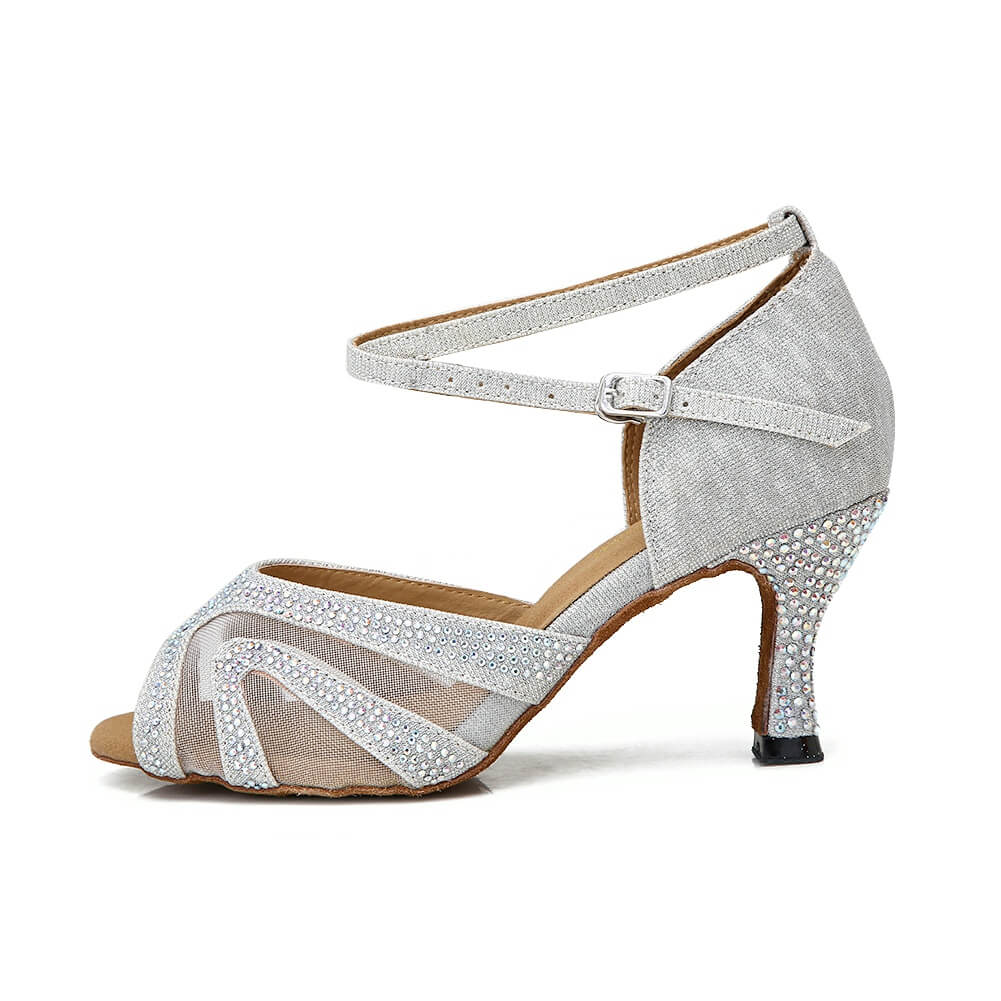
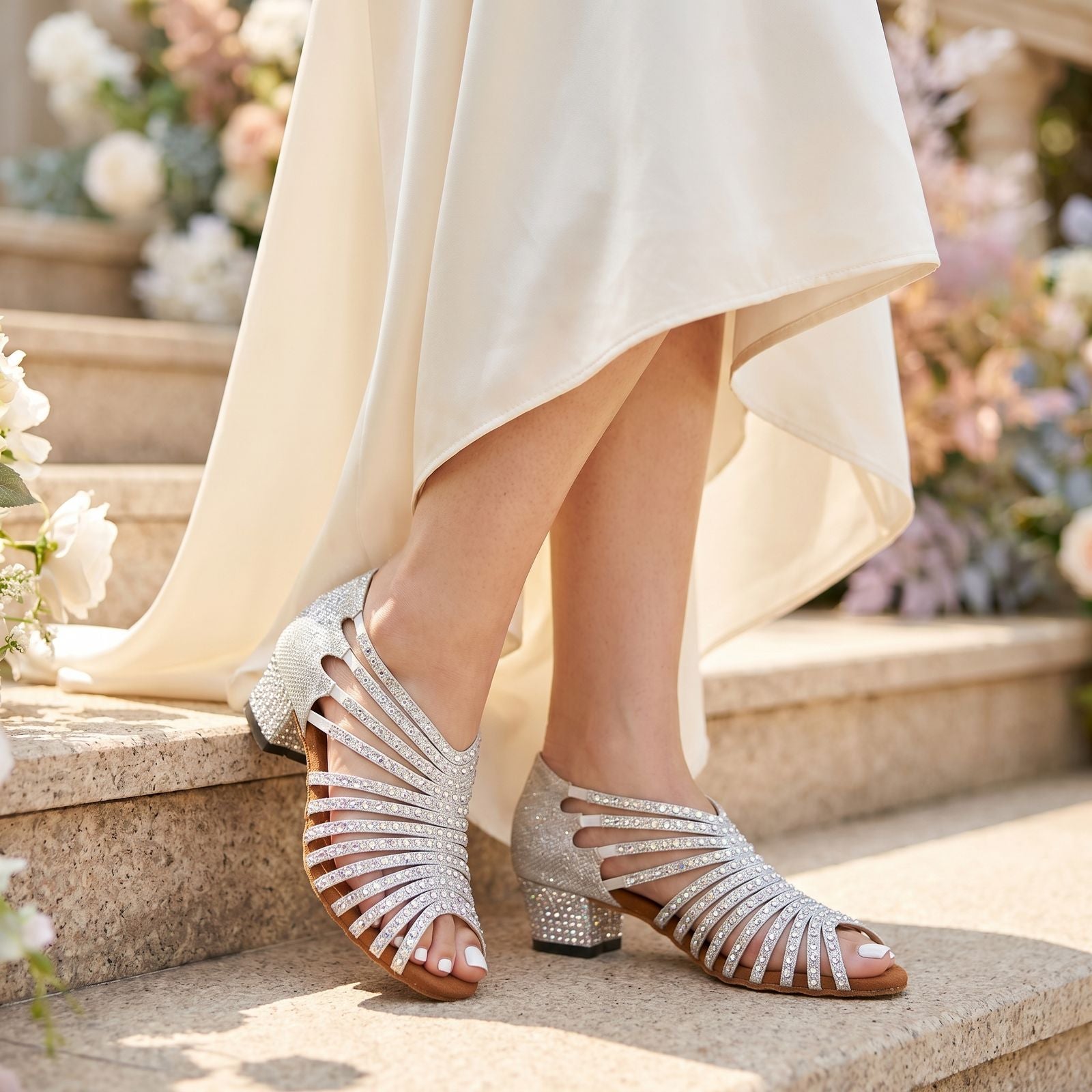
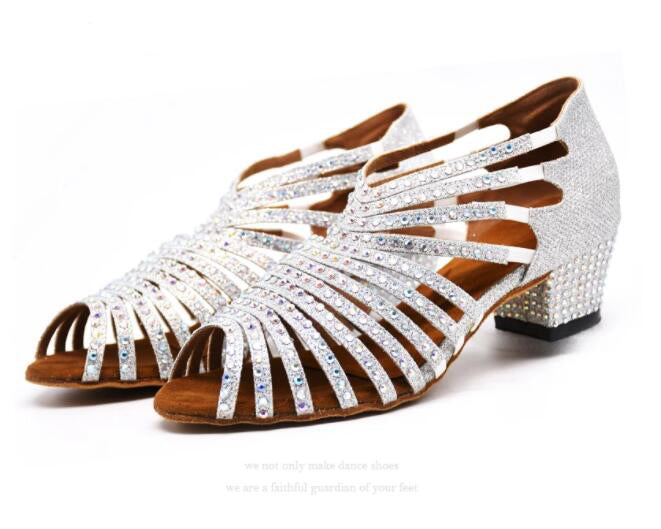
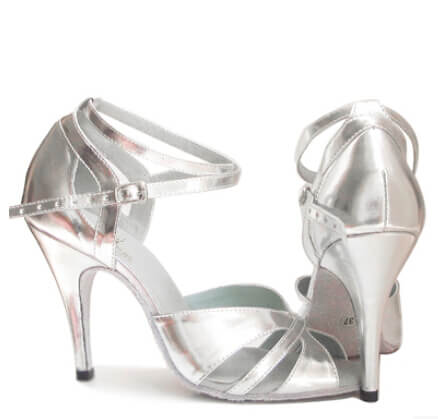
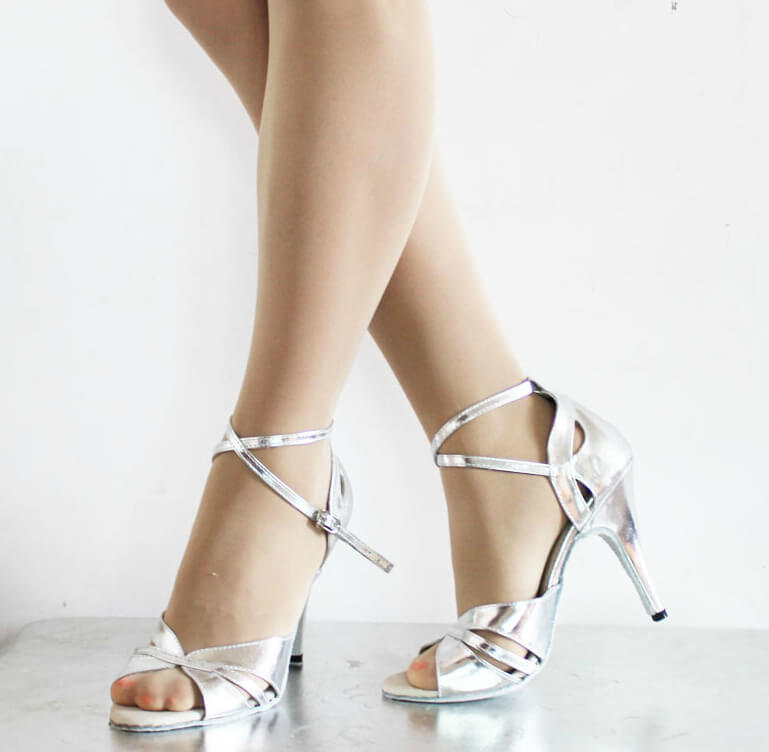
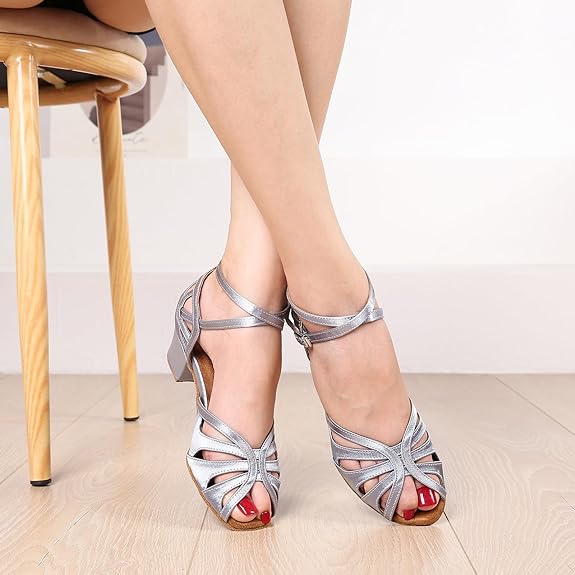
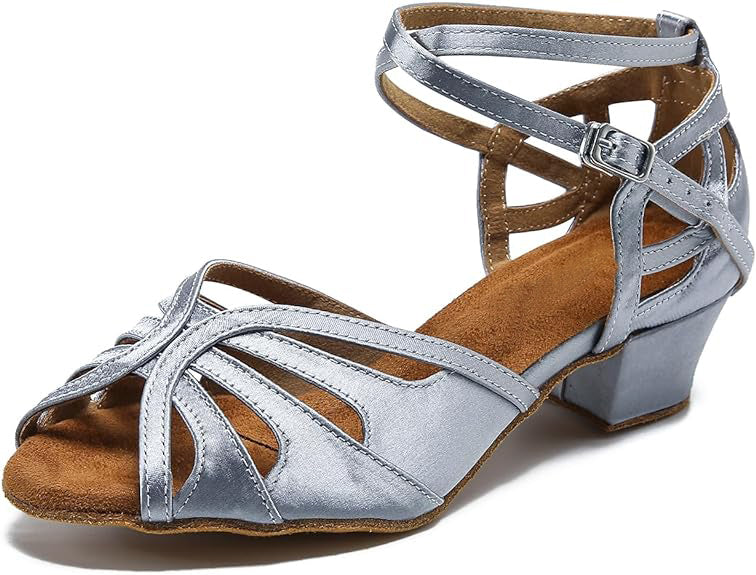
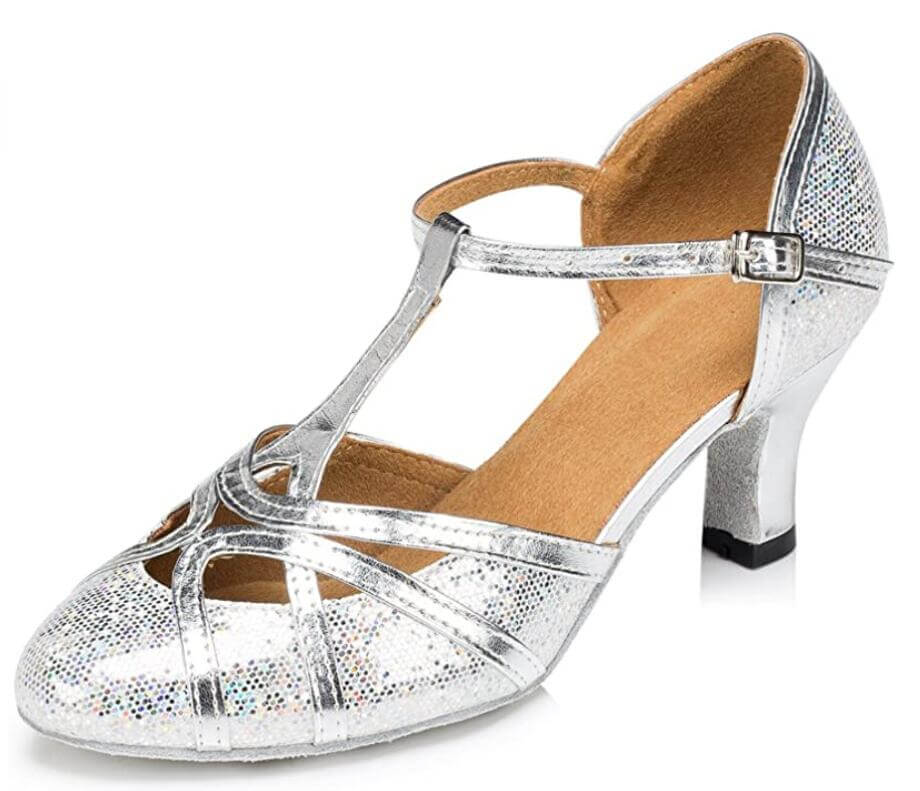
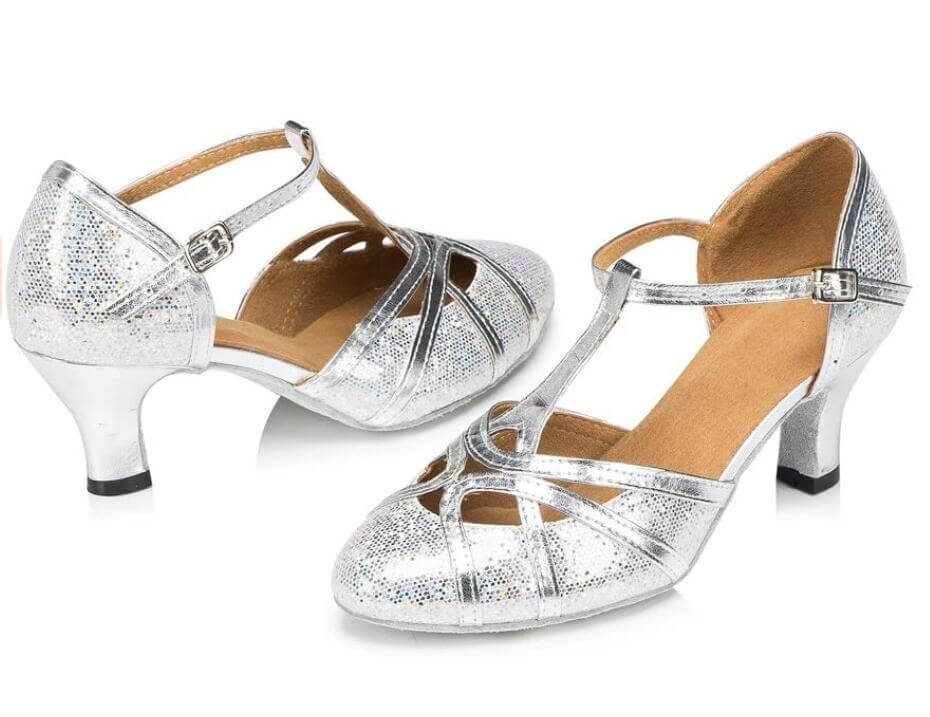
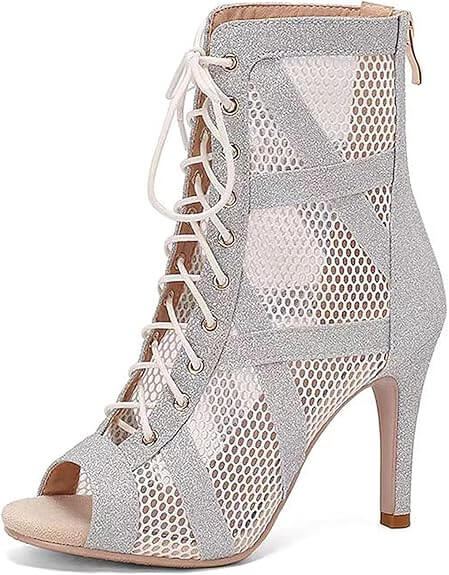
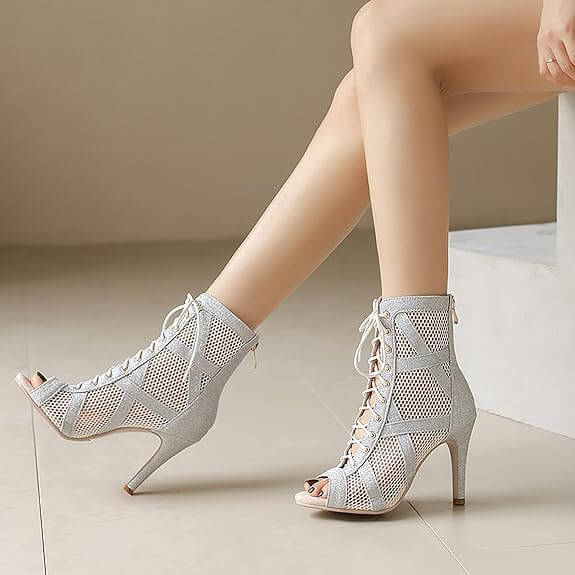
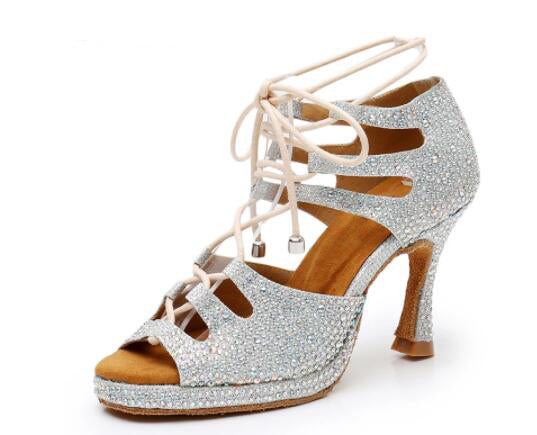
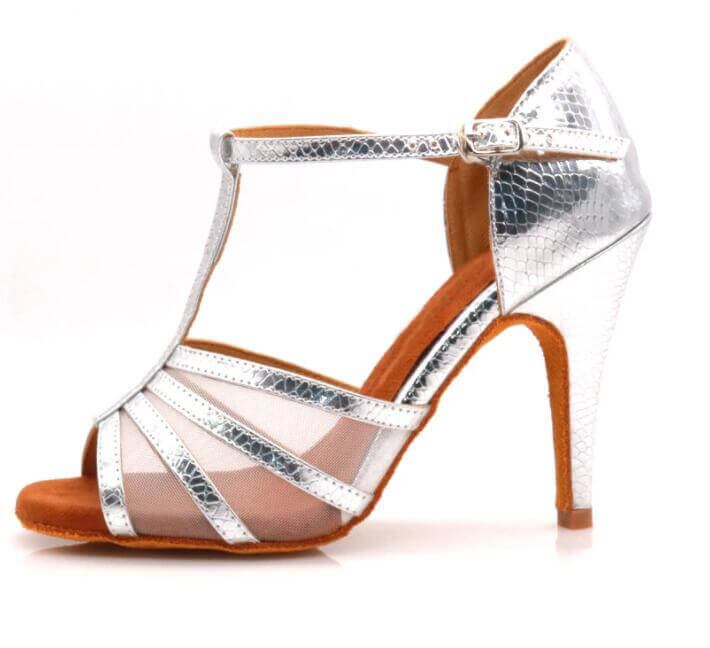
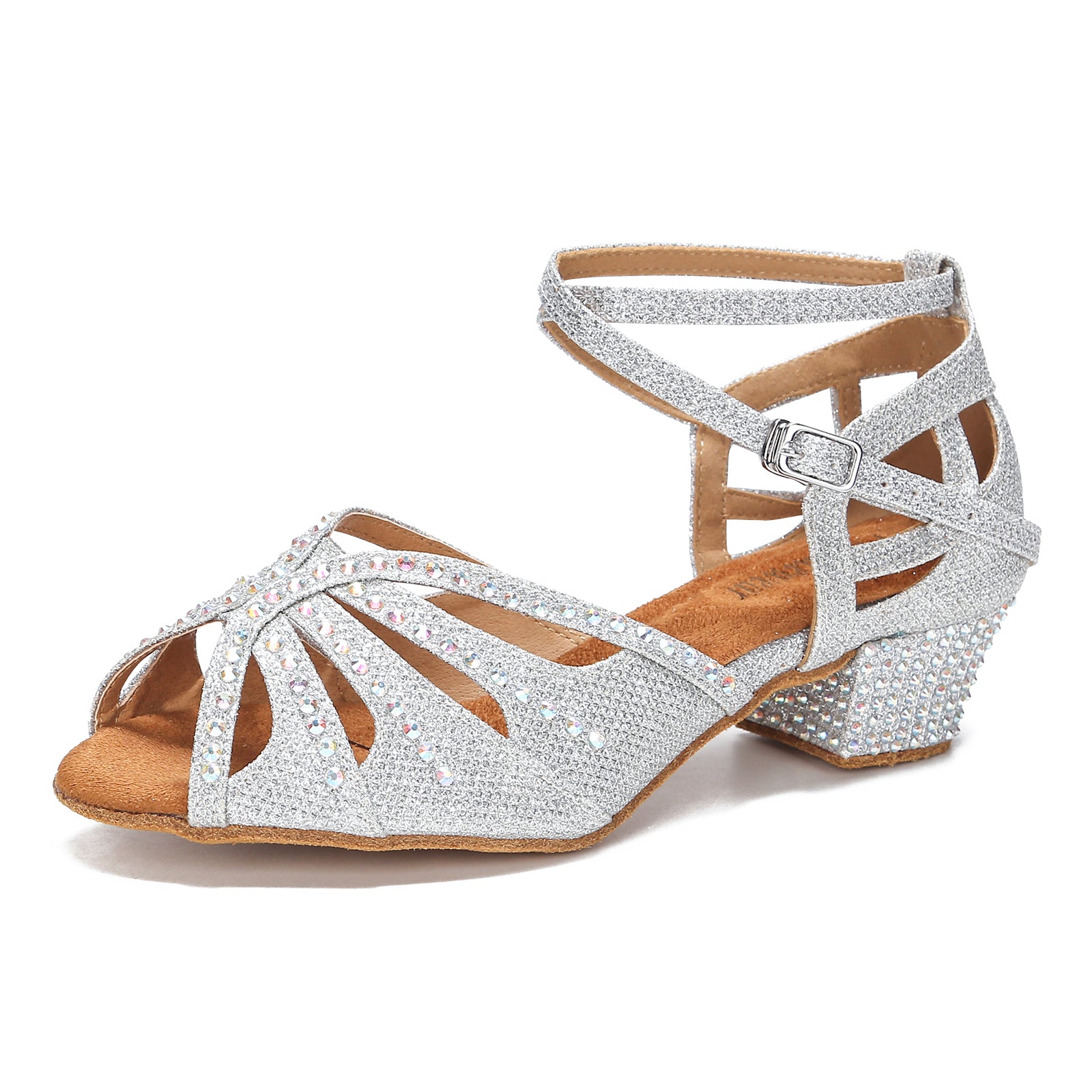
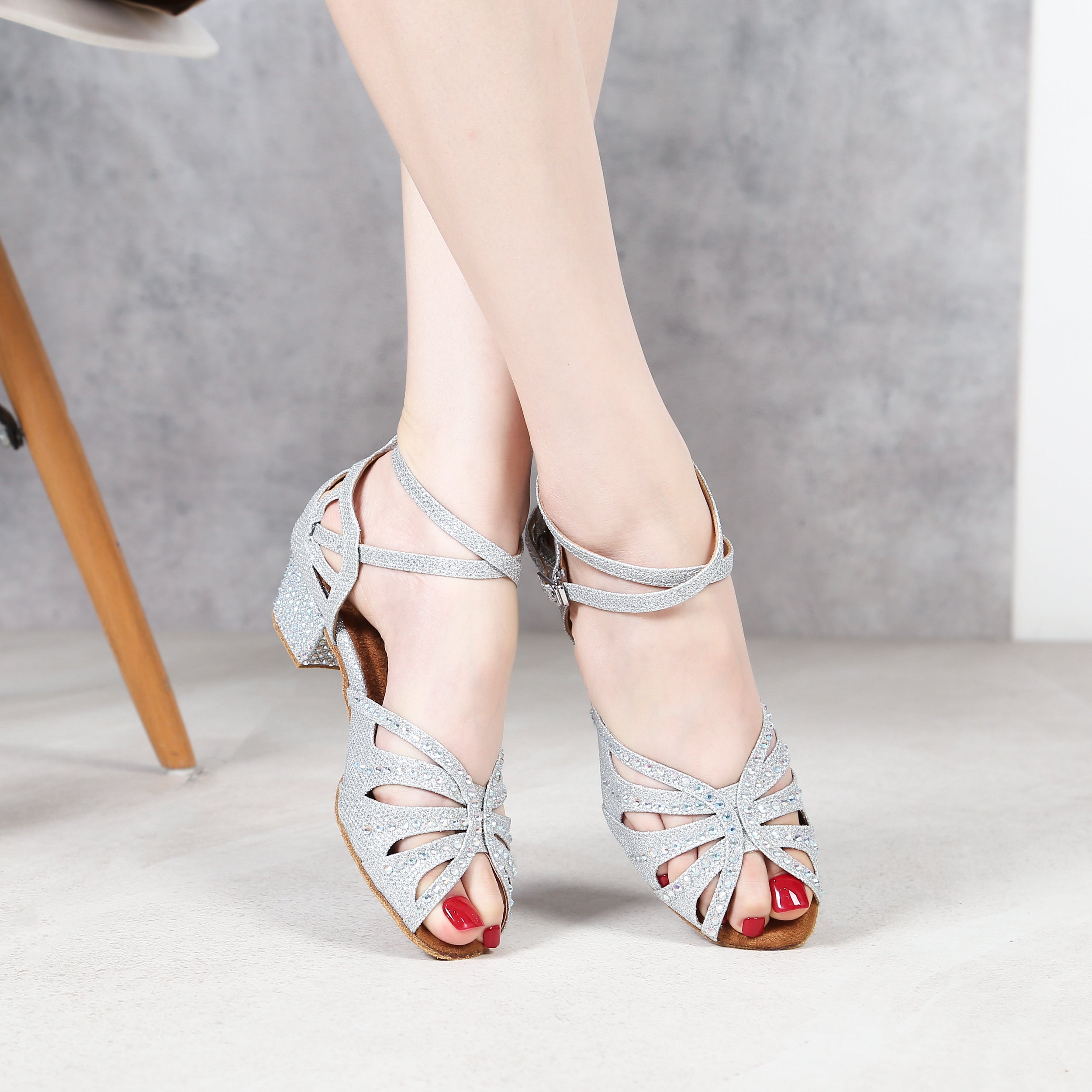
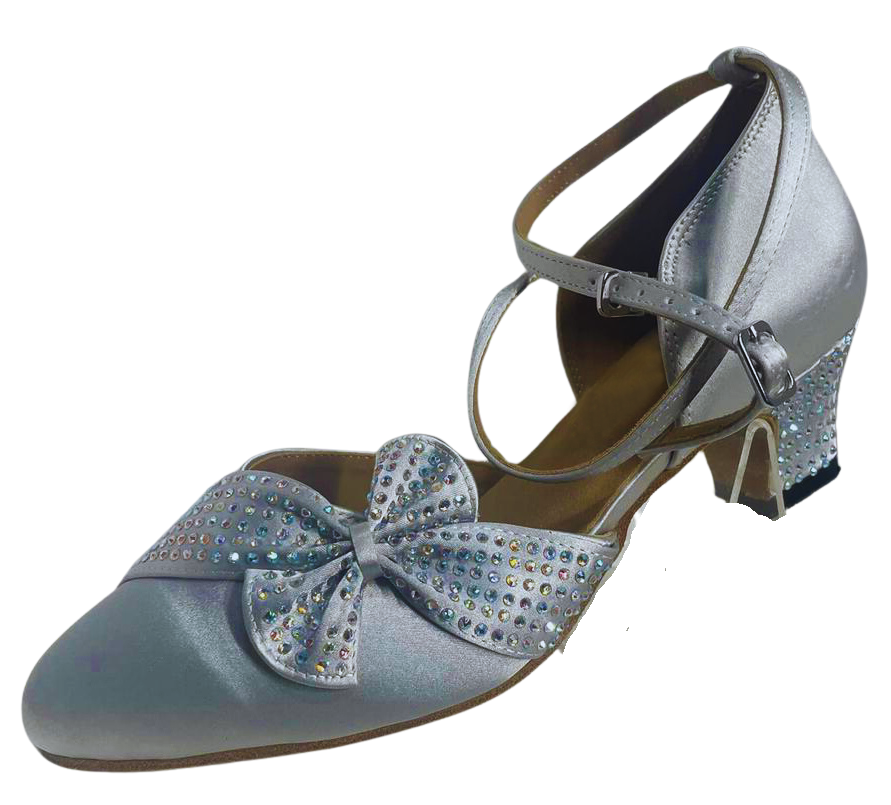
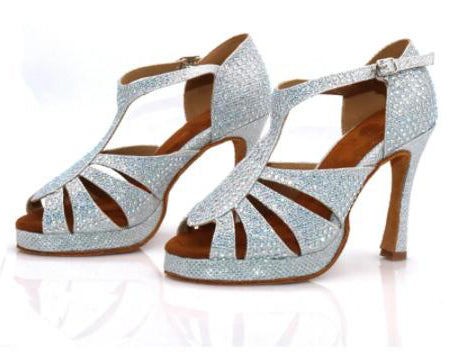
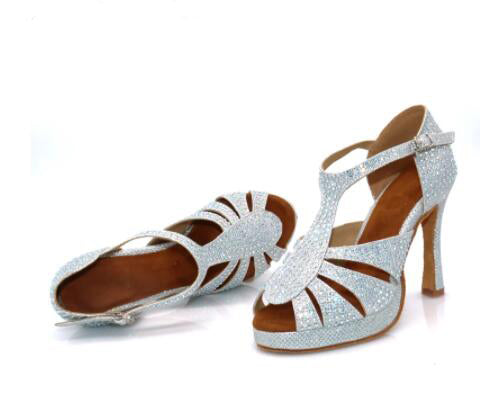
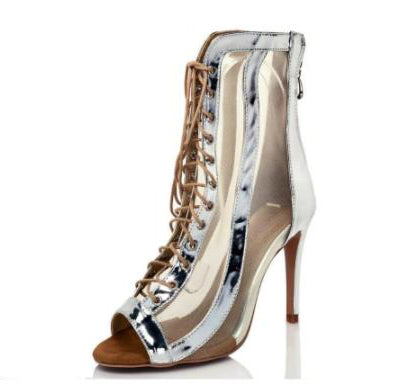
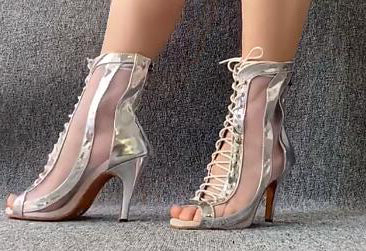
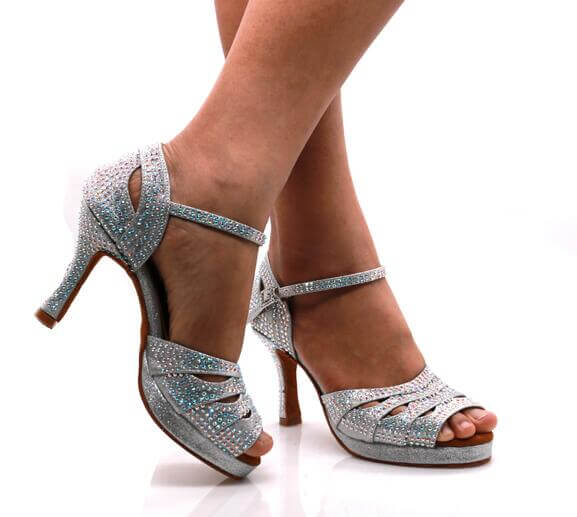
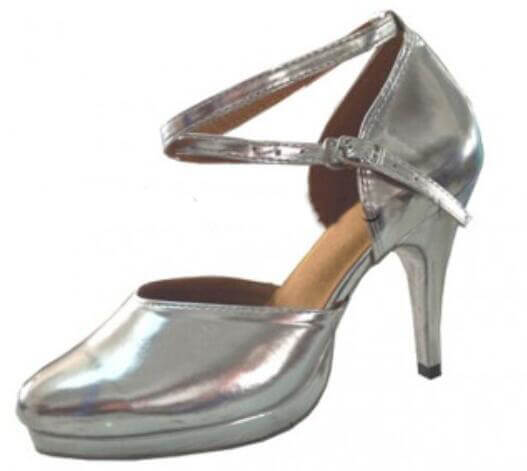
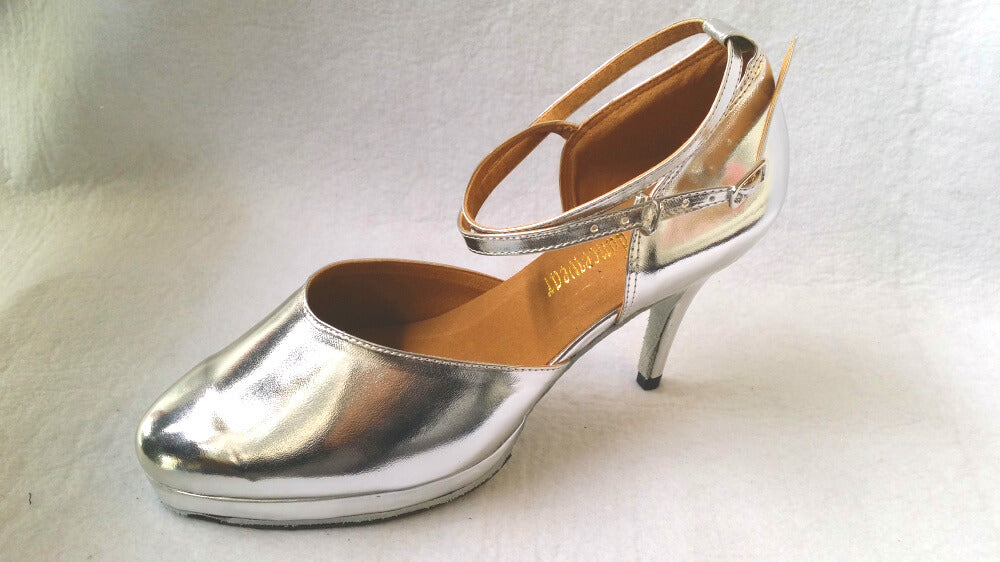
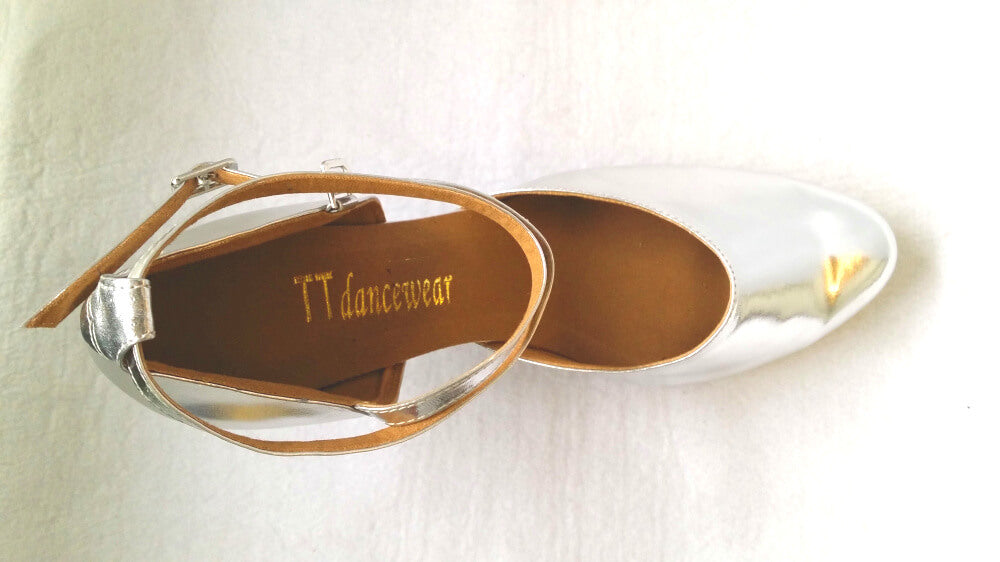
- Silver dance shoes — white, blue, mirror, and ice-toned costumes.
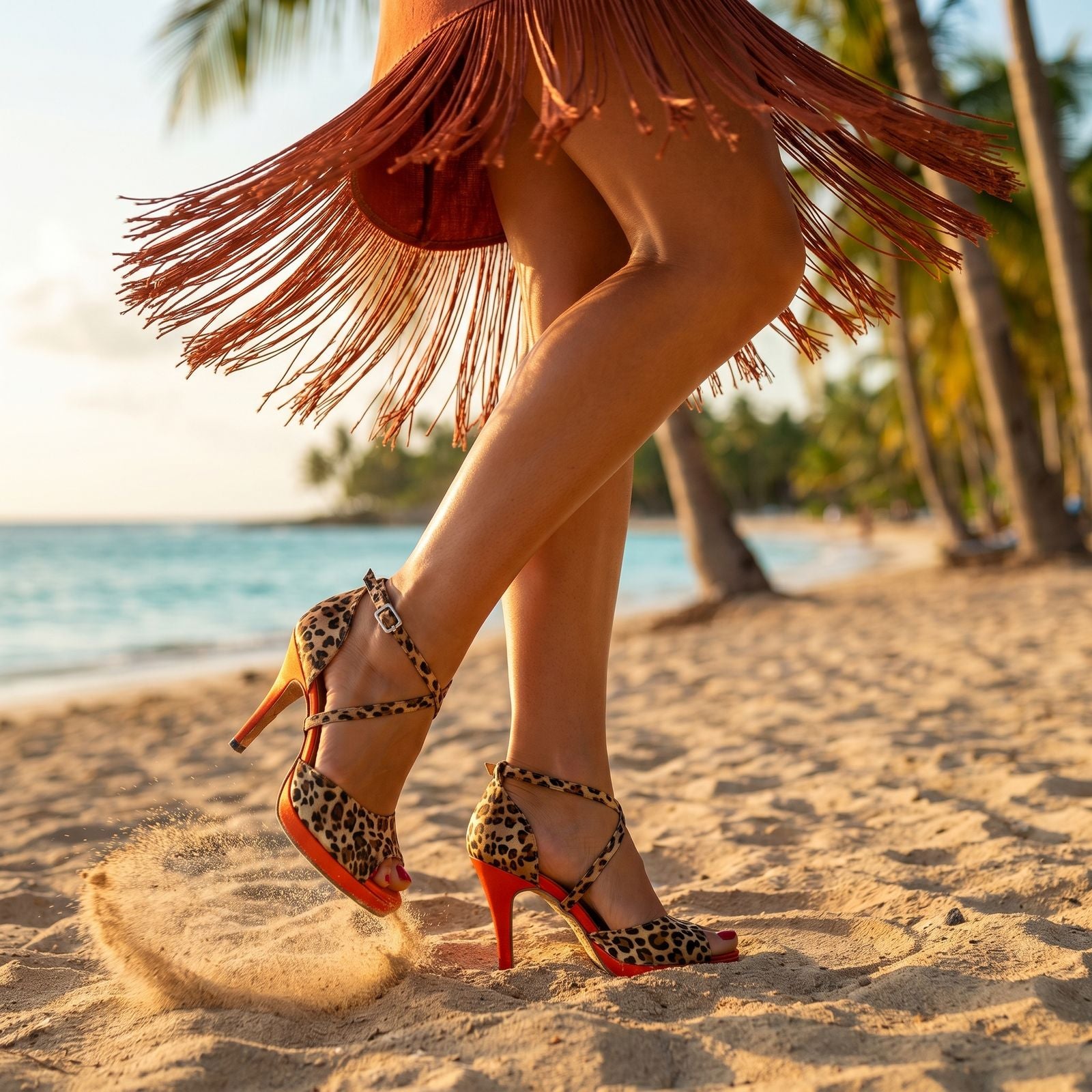
- Red dance shoes — a strong focal point with black bodysuits, sequins, and themed party looks.
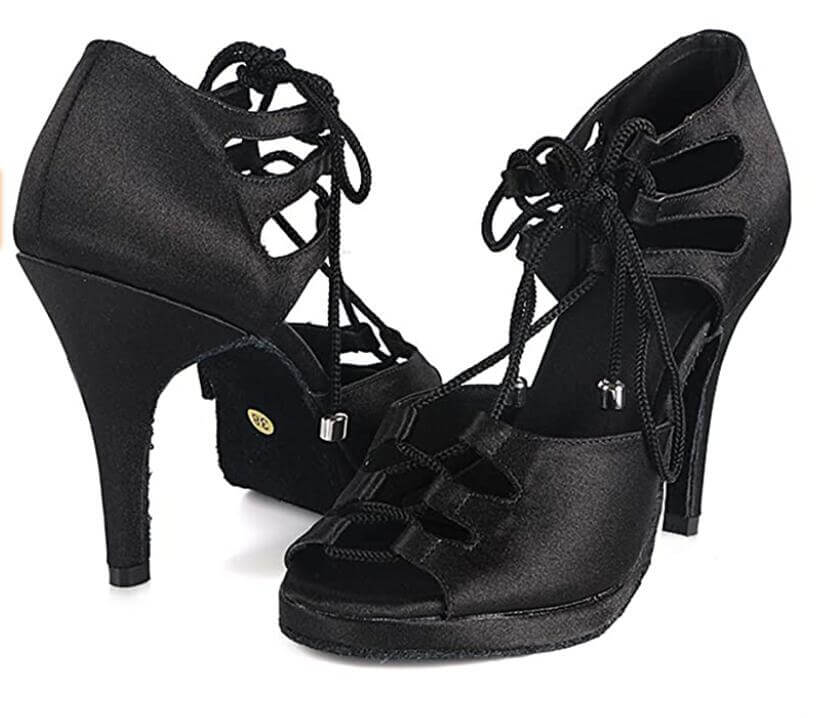
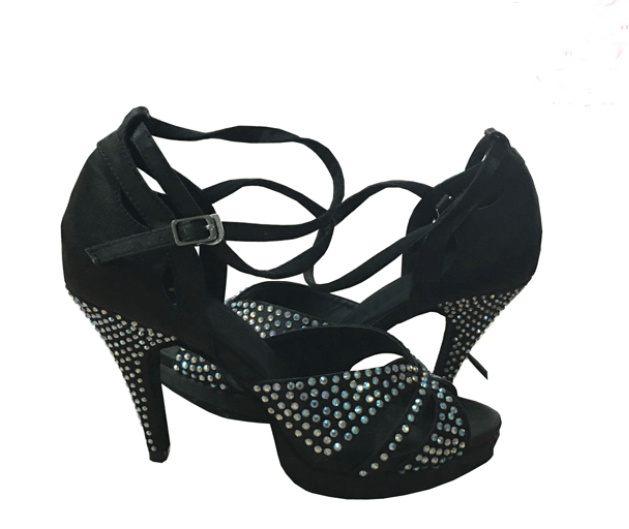
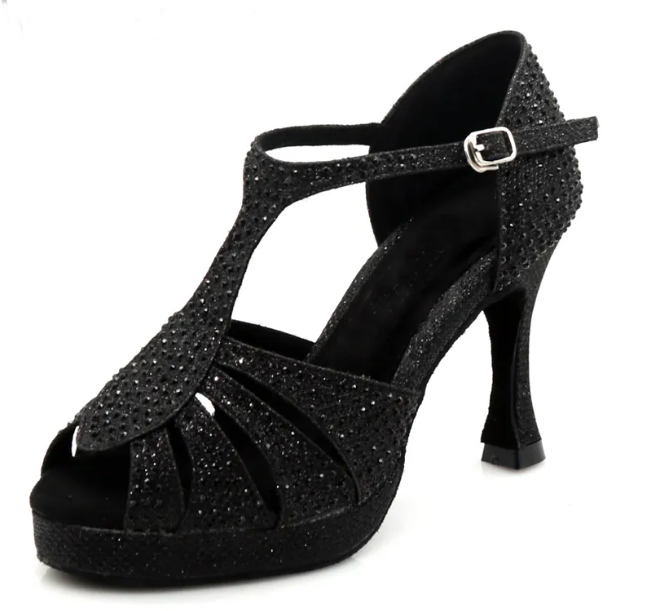
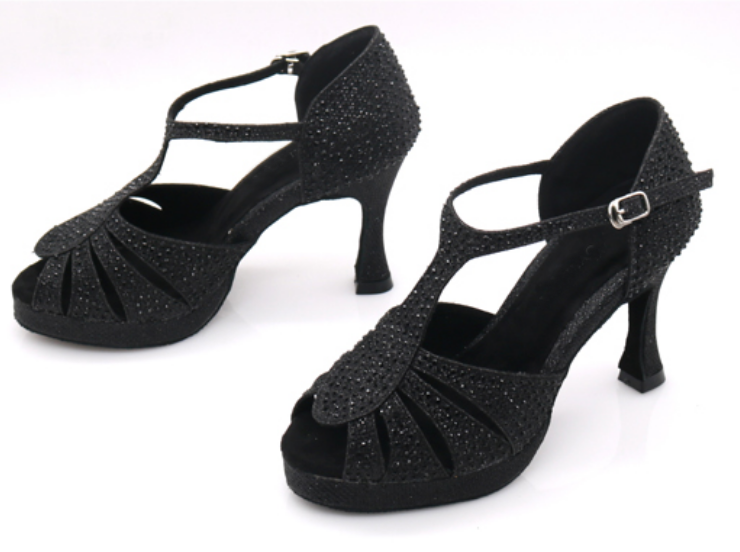
- Black dance shoes — a grounded base that keeps the eye on the costume above.
Performing beyond samba? The same platform silhouette carries over to burlesque dance shoes and heels dance shoes for choreography class.
Get the Size and Width Right Before Rehearsal
Look for a snug midfoot, a heel cup that does not lift, and straps that hold the ankle without cutting into the skin. A satin upper gives a polished stage finish, while leather and flexible detailing add comfort where the foot bends. The shoe should feel secure from the first wear; do not count on stretching to fix a poor fit.
Order from a current foot measurement rather than your sneaker size. TTdancewear carries US sizes 5 through 11 with select wide-width options, so teams with different foot shapes can still match. If you sit between sizes, prioritize the length of the longer foot and the width across the ball. Check the size and heel guide before ordering, and use easy returns with a money-back guarantee to take the risk out of buying performance shoes online.
Care and Longevity for Samba Performance Shoes
Air shoes after every session, keep them out of sealed costume bags, and wipe satin or synthetic uppers with a soft dry cloth after makeup, glitter, or stage dust. Store pairs away from heavy costume pieces so rhinestones, buckles, and heel tips stay protected. Brush suede soles in one direction after studio use and wipe street soles dry after outdoor surfaces. Check heel tips before every rehearsal and replace worn tips before they tilt the shoe.
Samba Dance Shoes: Frequently Asked Questions
What shoes do you wear for samba dancing?
Most samba and Carnival performers wear a platform dance heel with a secure ankle strap for stability during fast turns and high-energy footwork. A 3 to 4 inch platform balances stage-ready height with a manageable pitch; a suede sole grips a sprung floor while a street sole suits stage and parade surfaces.
What is the difference between samba dance heels and regular heels?
Samba dance heels are built for movement: a reinforced platform, a flexible shank, a cushioned footbed, and a strap that locks the foot in place. Fashion heels lack the sole grip and ankle support needed for spins and sustained dancing.
Are samba dance shoes good for beginners?
Yes, when the heel height stays controlled. Start at 1, 1.5, or 2 inches and choose a secure ankle strap. Practice samba bounce, walks, and a full three-minute routine before moving up to 3 inches, and keep the same heel height for rehearsal and performance.
How do I choose between a 3 inch and a 4 inch samba heel?
Choose 3 inches for team performances, school showcases, and long rehearsal days, because it gives height with better endurance. Choose 4 inches for advanced stage performers who already train in tall heels and keep clean ankle alignment through the full routine. If a team shares one look, standardize at 3 inches.
What is the difference between samba shoes and salsa shoes?
Samba shoes emphasize platform height, costume impact, and stability for bounce, parade walking, and stage-facing choreography. Salsa shoes prioritize closer floor feel, quick turns, and social partnerwork. For salsa, cha cha, and bachata choose a lower non-platform Latin heel; for Carnival staging choose a platform samba style.
Do I need suede soles for Carnival samba shoes?
Use suede soles for polished studio floors, ballroom practice, and controlled indoor stages, and brush the suede after class to restore grip. Use street soles for pavement, school hallways, party venues, and outdoor Carnival routes. Do not wear suede soles on wet concrete or gritty outdoor surfaces.
Are these samba shoes good for Latin and ballroom too?
Yes. The same platform heels work for Latin, salsa, and ballroom social dancing. A 2 or 2.5 inch suede-sole pair suits studio ballroom samba and Brazilian samba class, while a street-sole platform pair suits outdoor Carnival practice and themed events. Floor surface matters more than the dance label.
How should women's samba shoes fit?
They should hold the heel firmly, secure the ankle, and keep the toes centered without squeezing the ball of the foot. Measure the longer foot and match that measurement to the size chart. For wider feet, choose a wide-width option where available. Do not depend on stretching to fix a tight toe box.
How do I style gold, silver, or red samba platform shoes?
Gold pairs with warm rhinestones, tan fishnets, bronze makeup, and feathered Carnival headpieces. Silver works with white, blue, mirror, and ice-toned costumes. Red creates a strong focal point with black bodysuits, sequins, and themed party looks. Match the heel color to the brightest repeated color in the costume.