
Latin Competition Dresses & Latin Dancesport Dresses
Latin dance competition dresses built to read from the judging line — stonework concentrated where an adjudicator looks, fringe cut to convert hip action into something visible at distance, and construction that holds through a full day of heats. Amazon's Choice with a money-back guarantee since 2012.
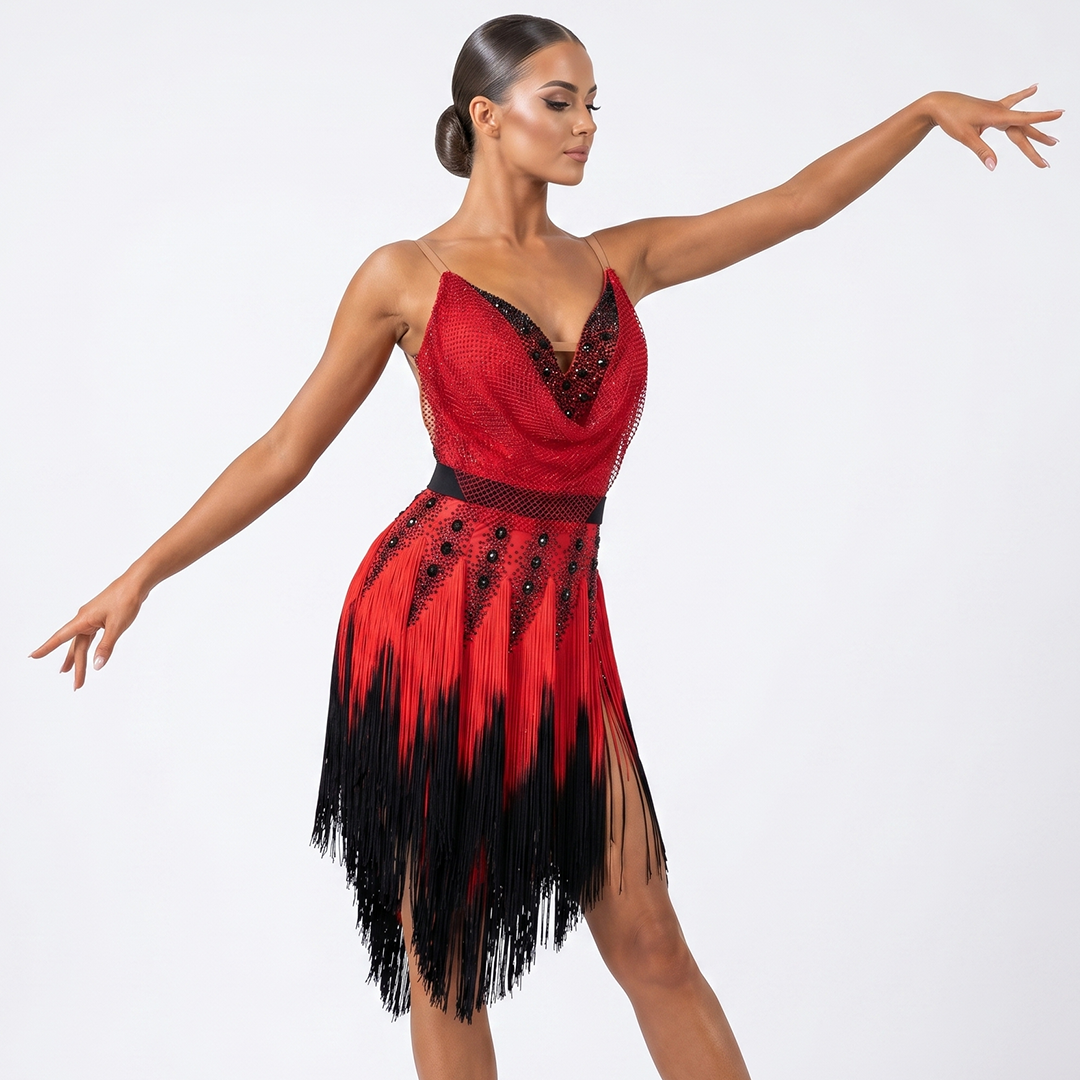
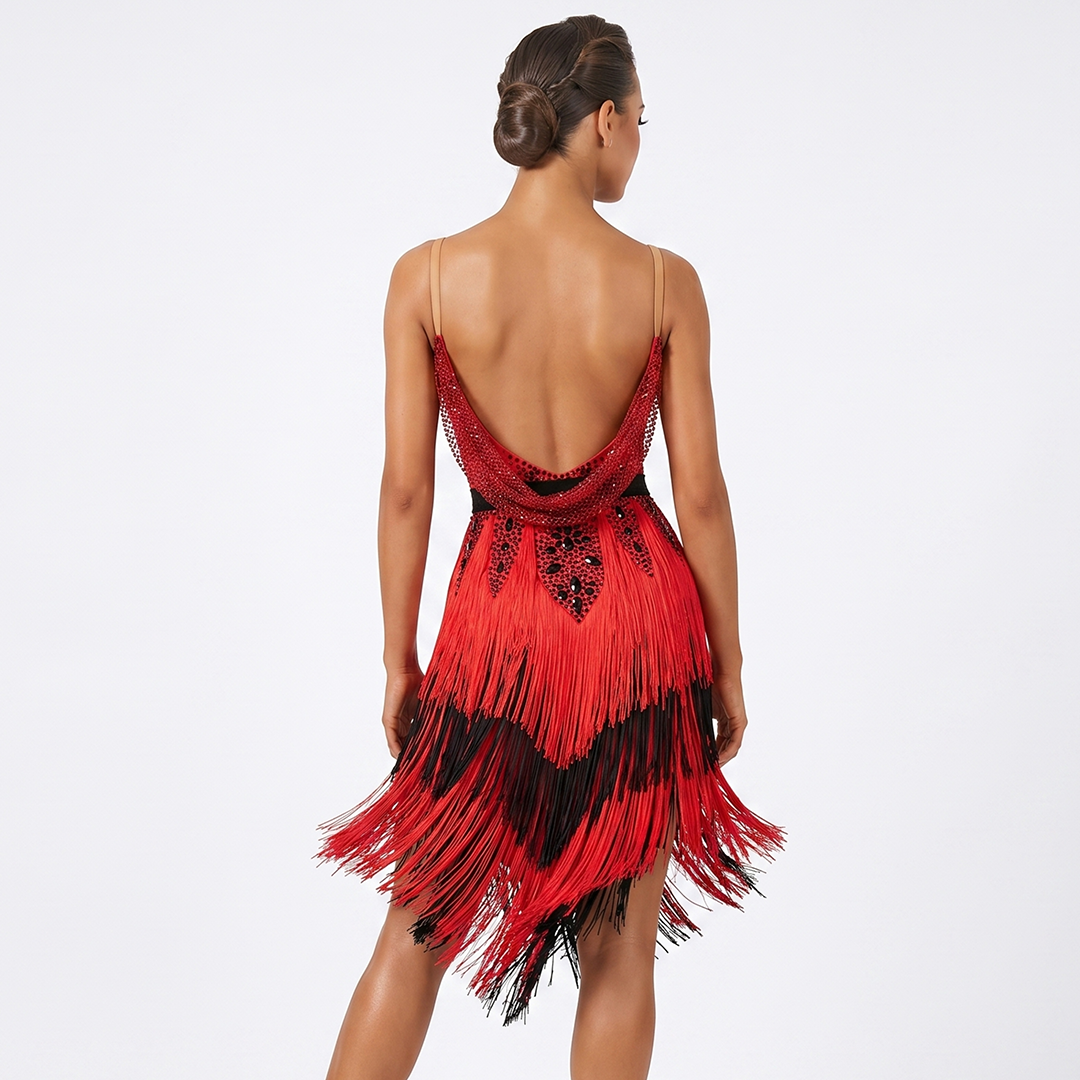
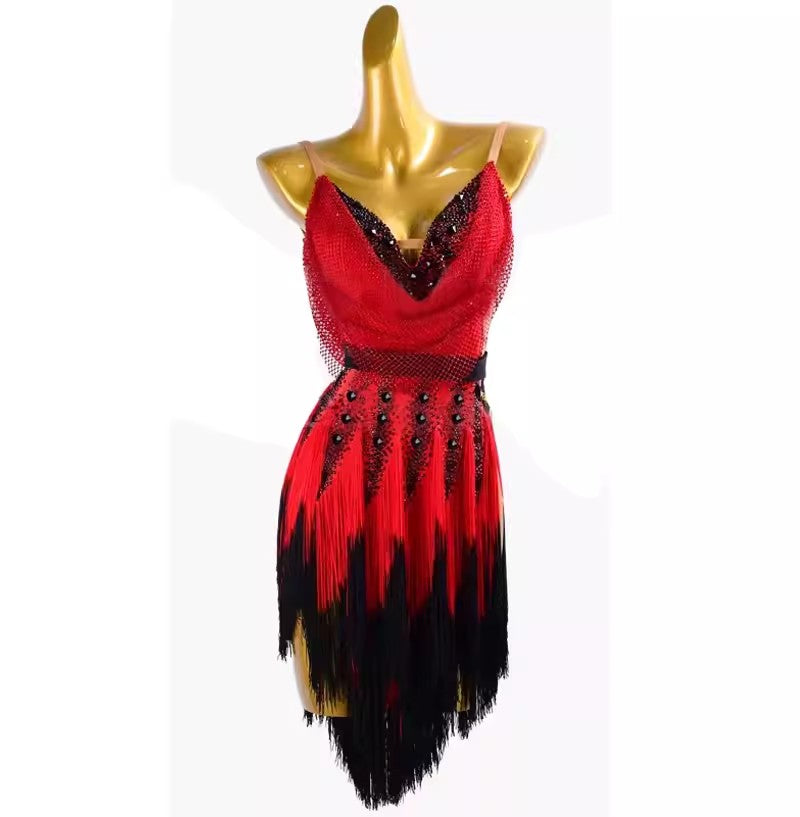
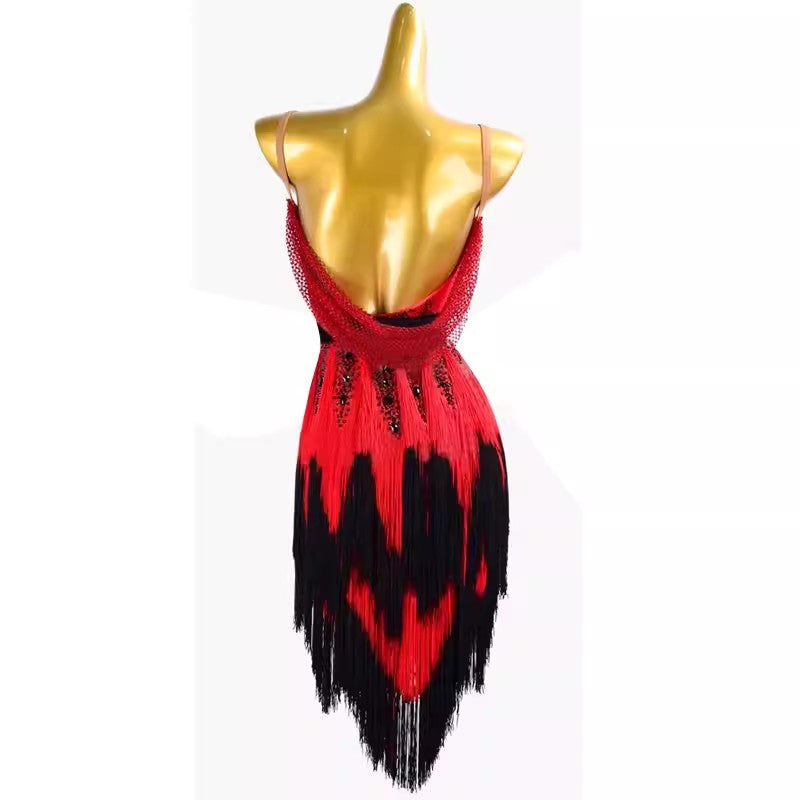
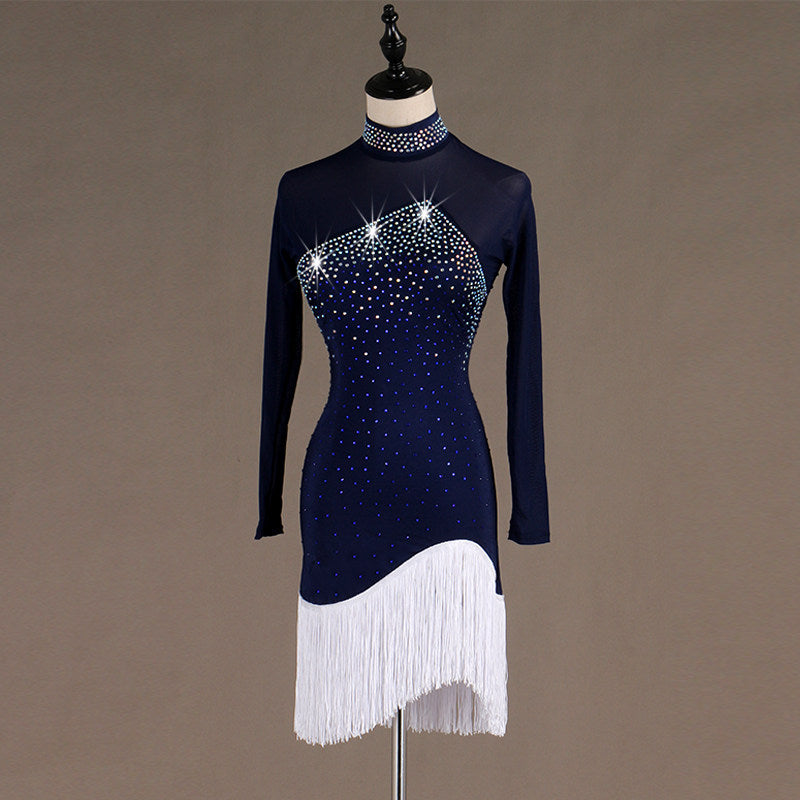
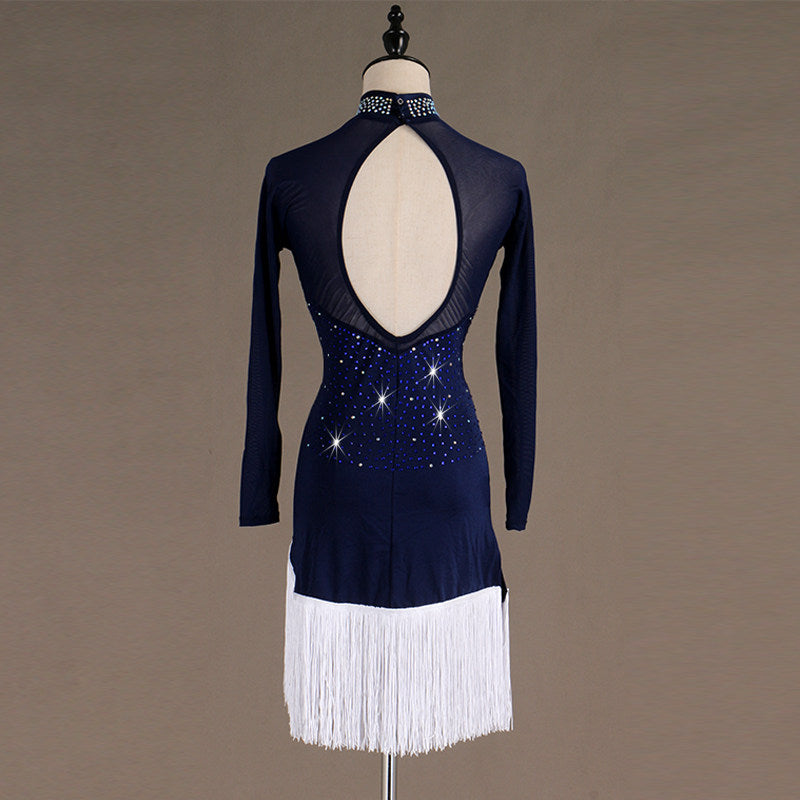
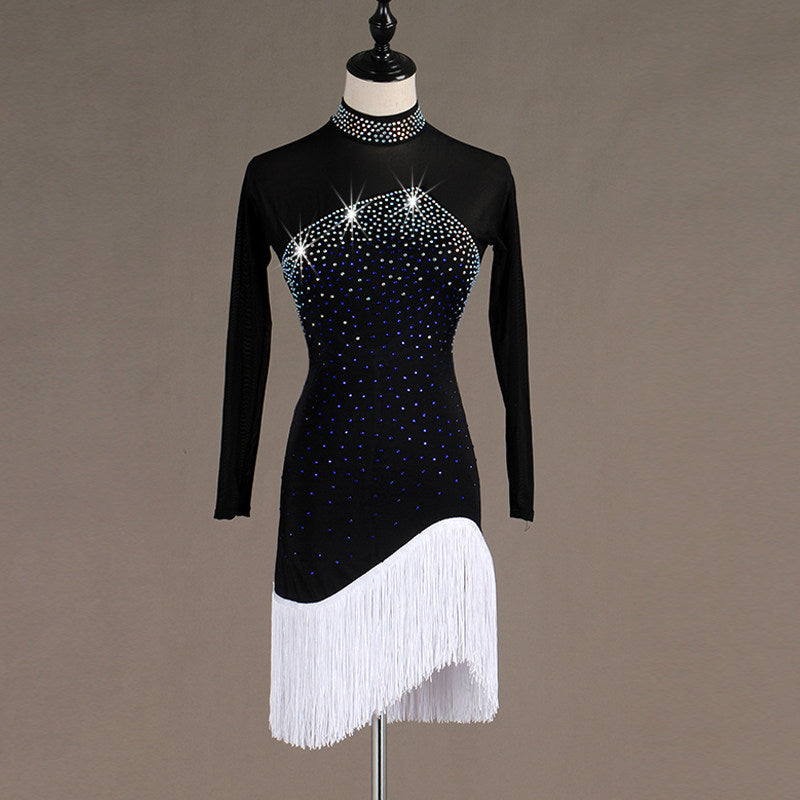
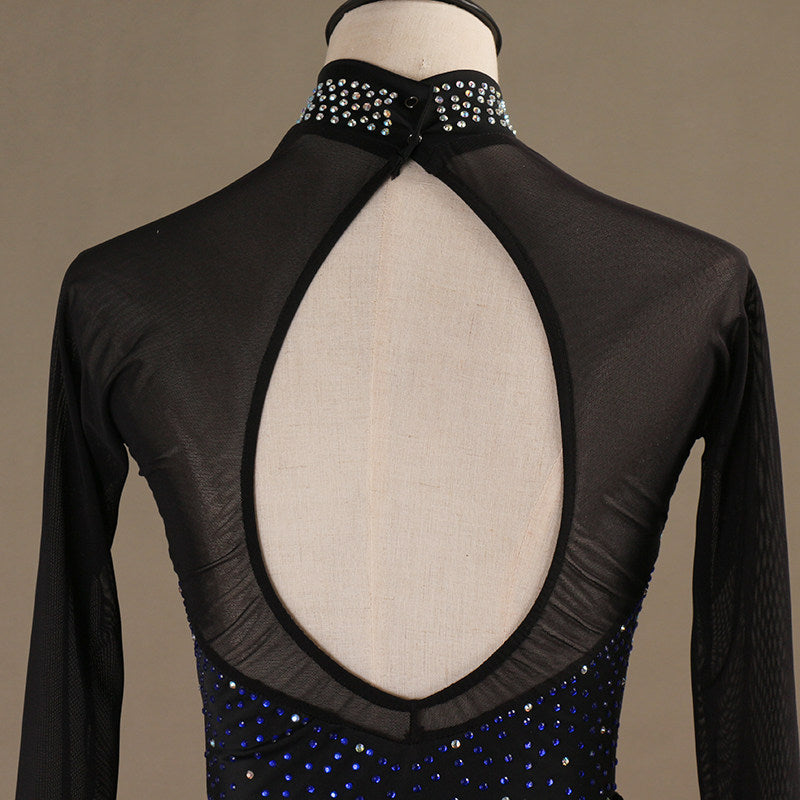
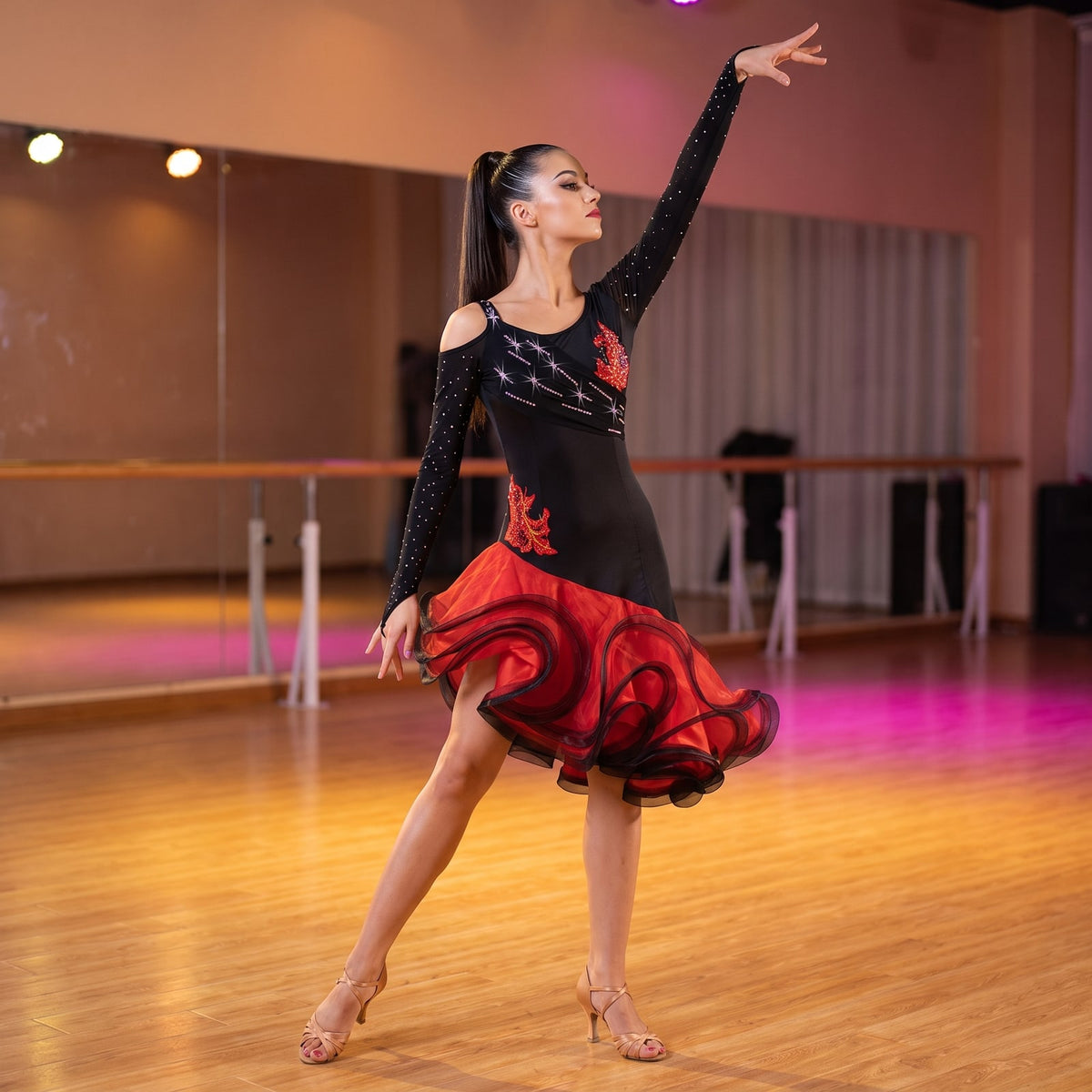
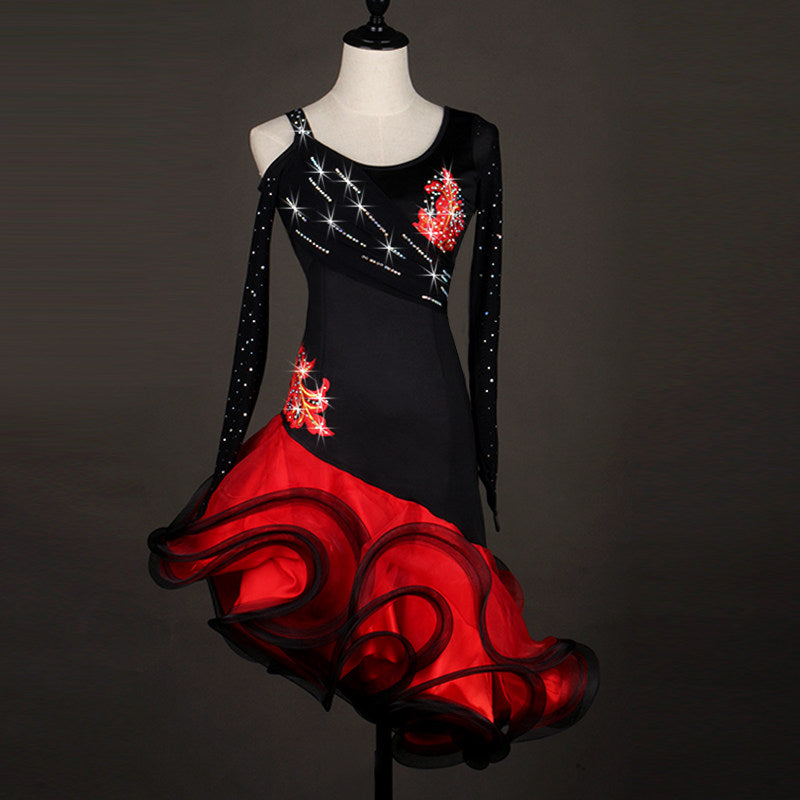
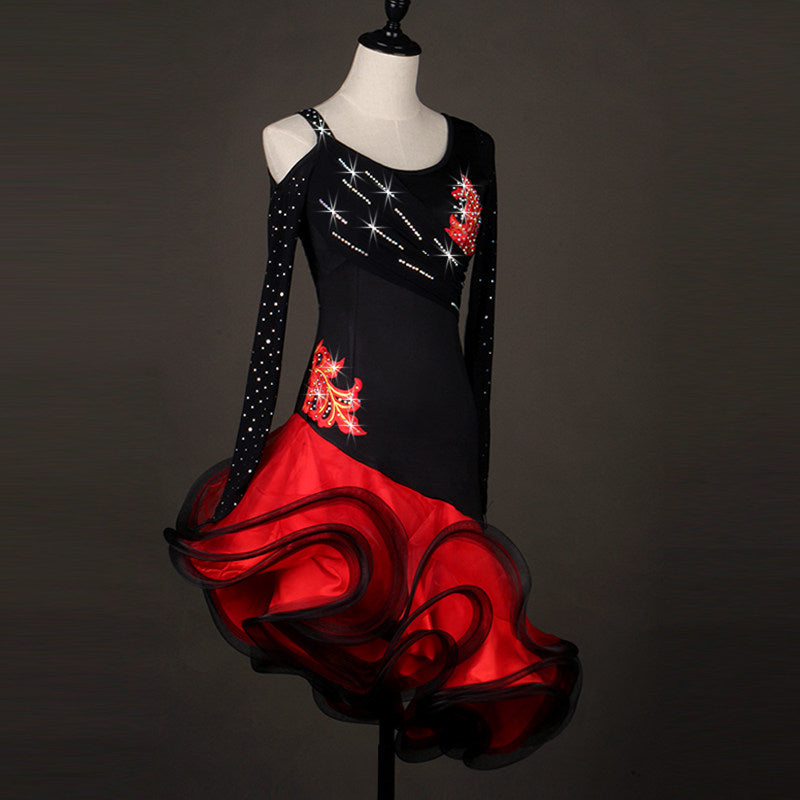
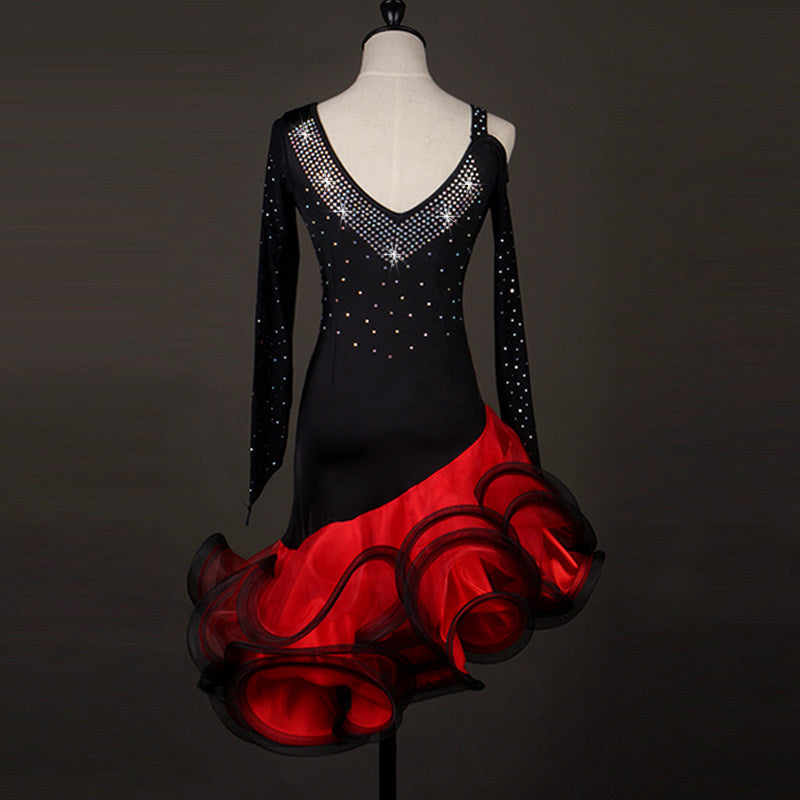
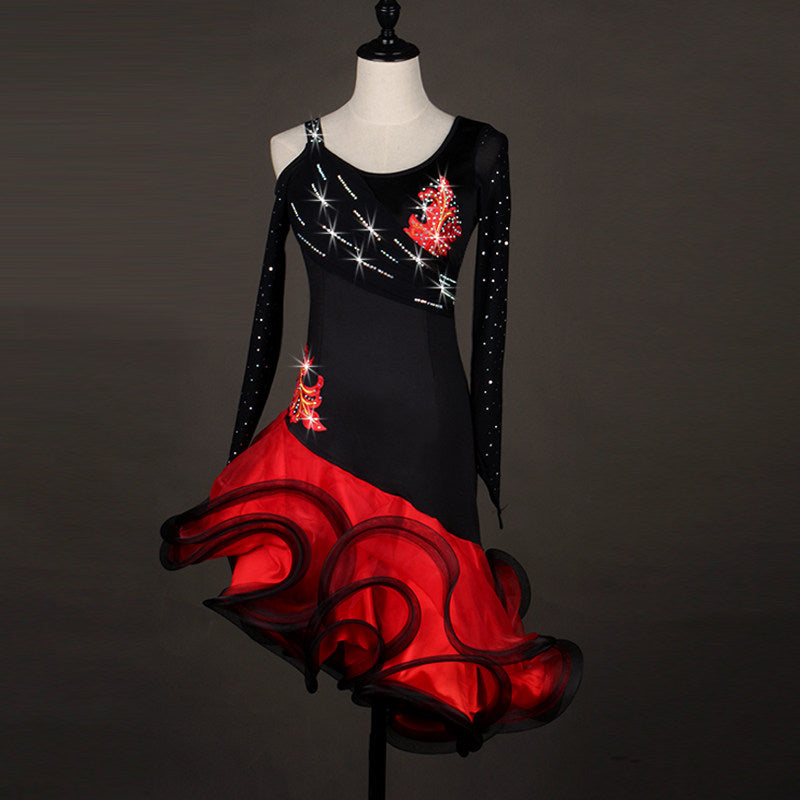
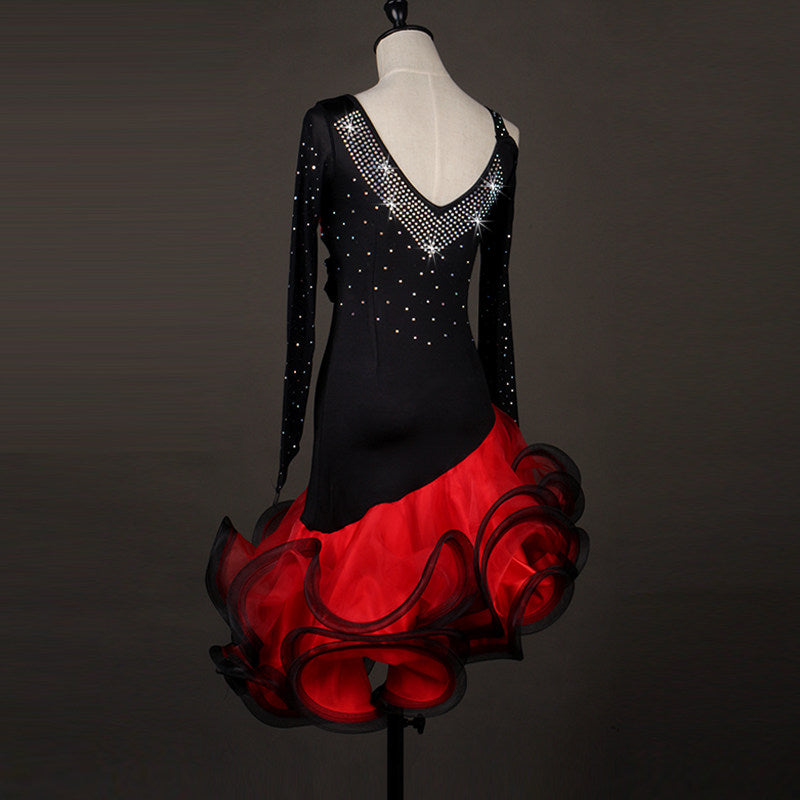
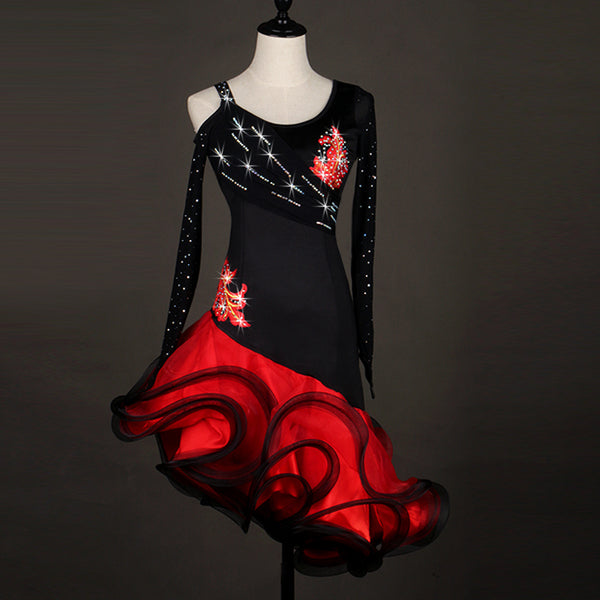


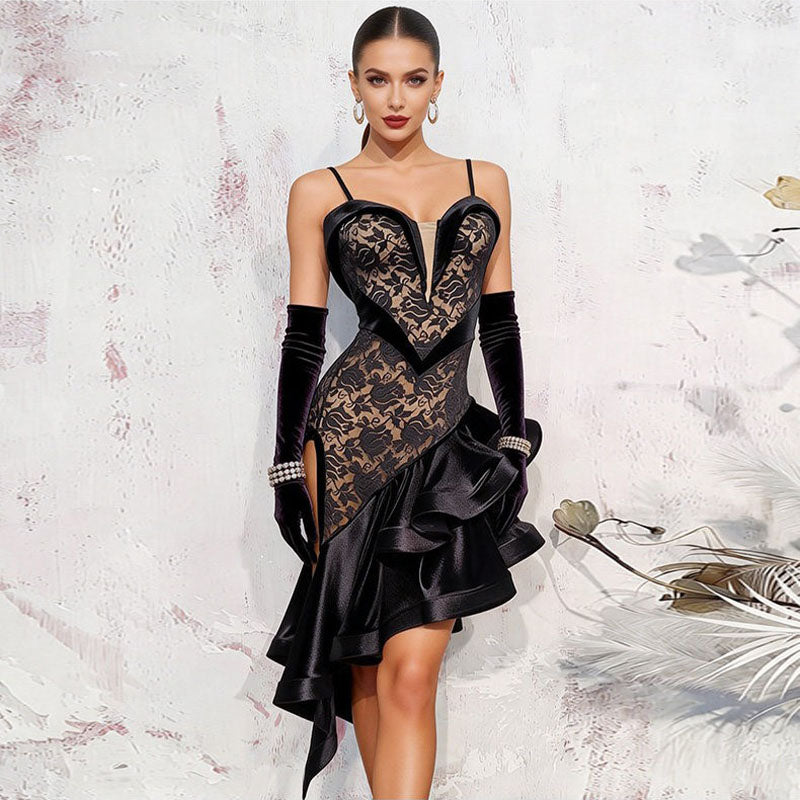




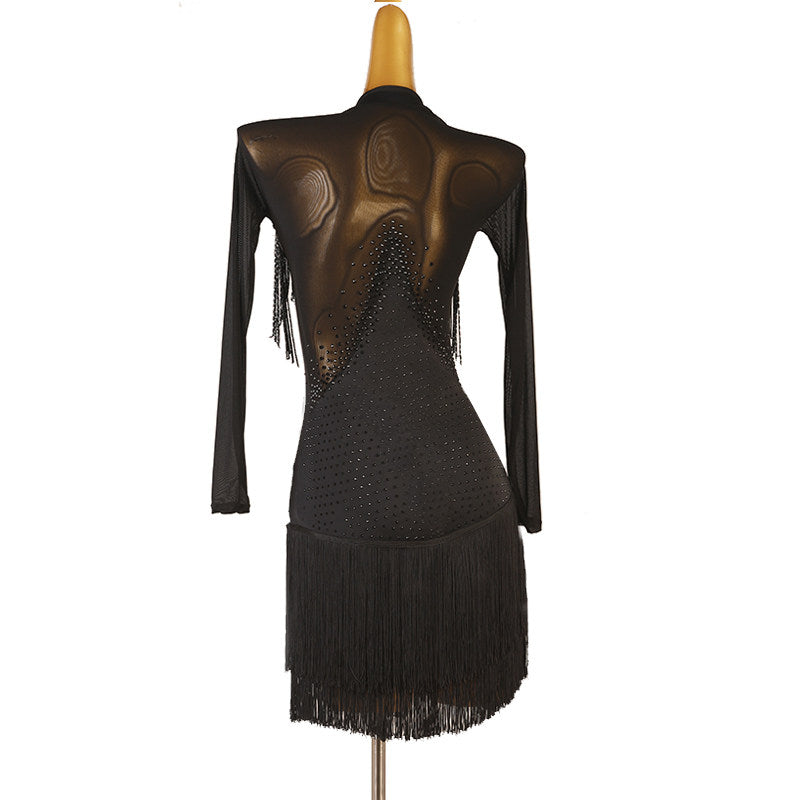
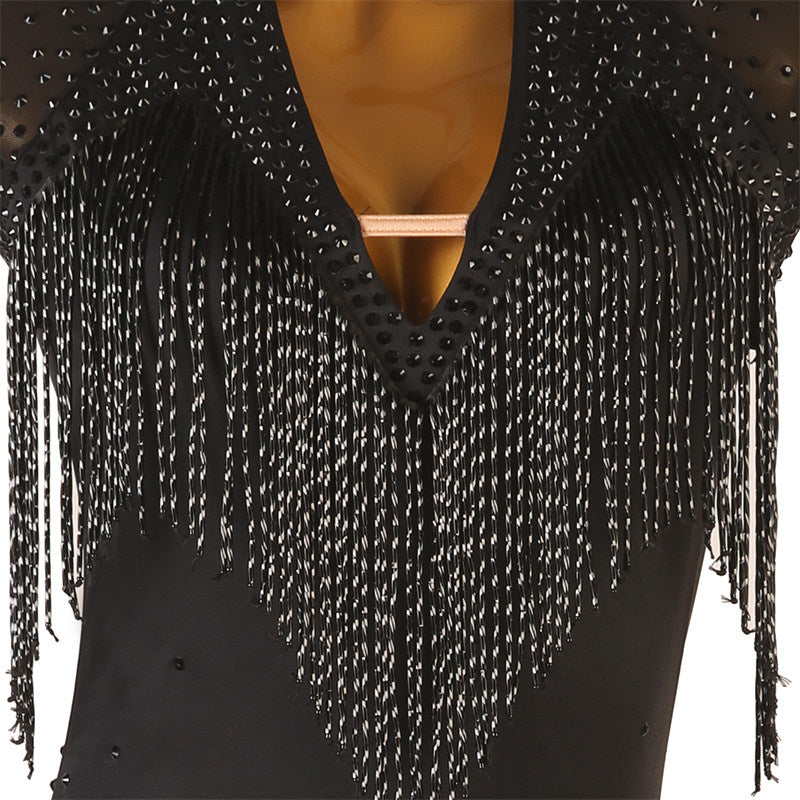
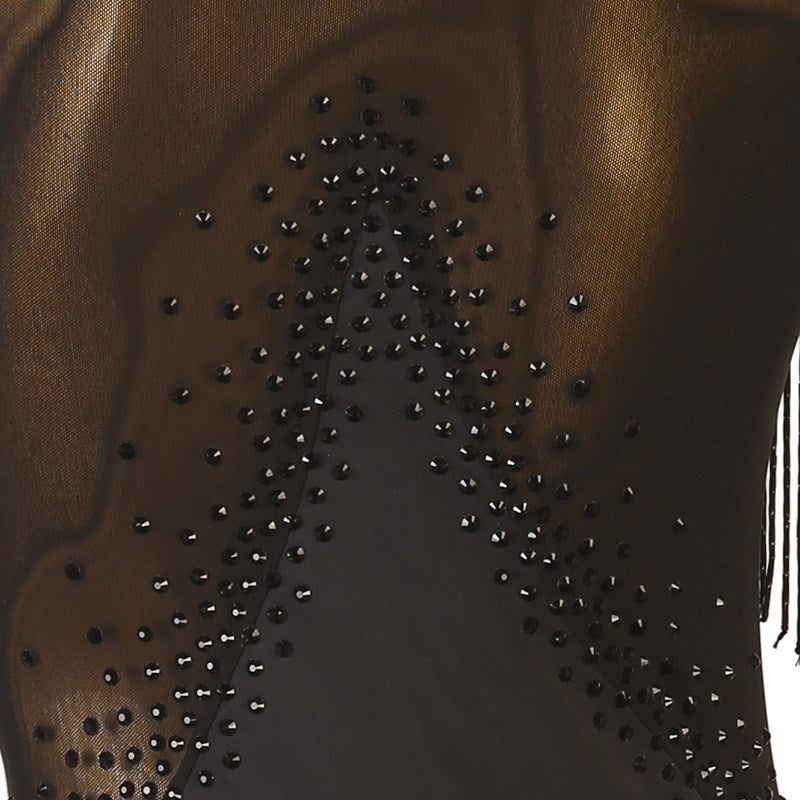
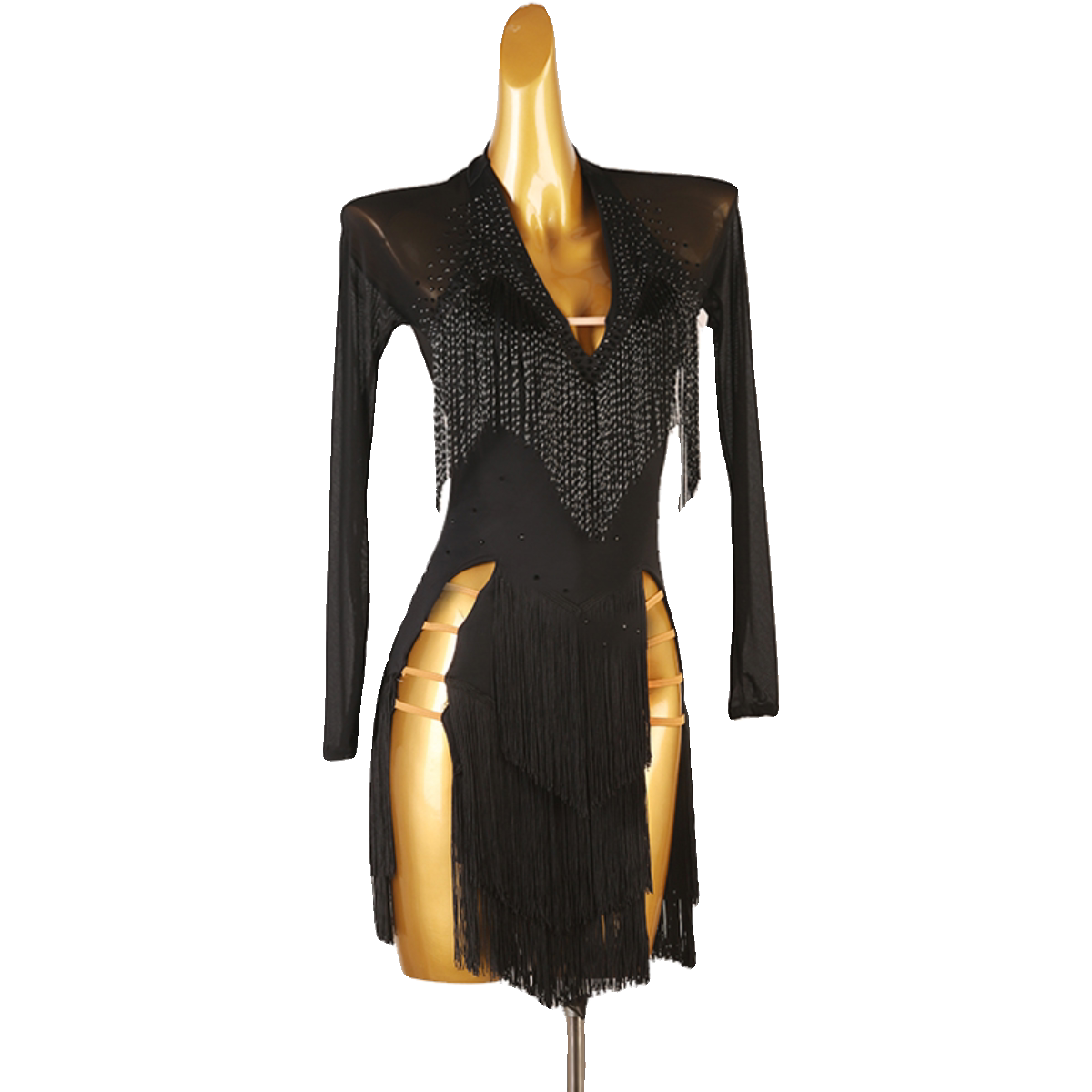
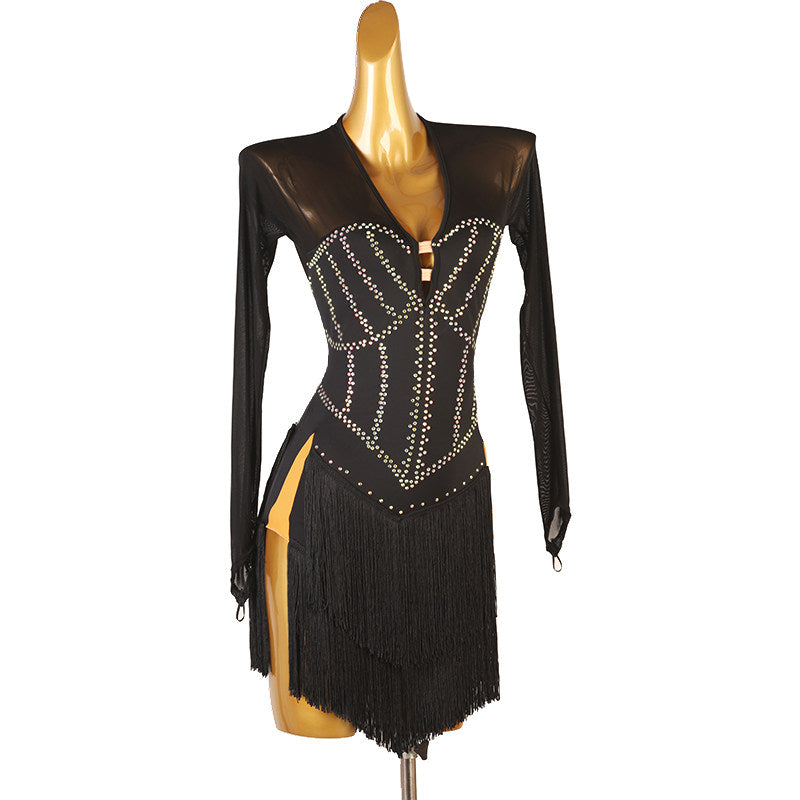
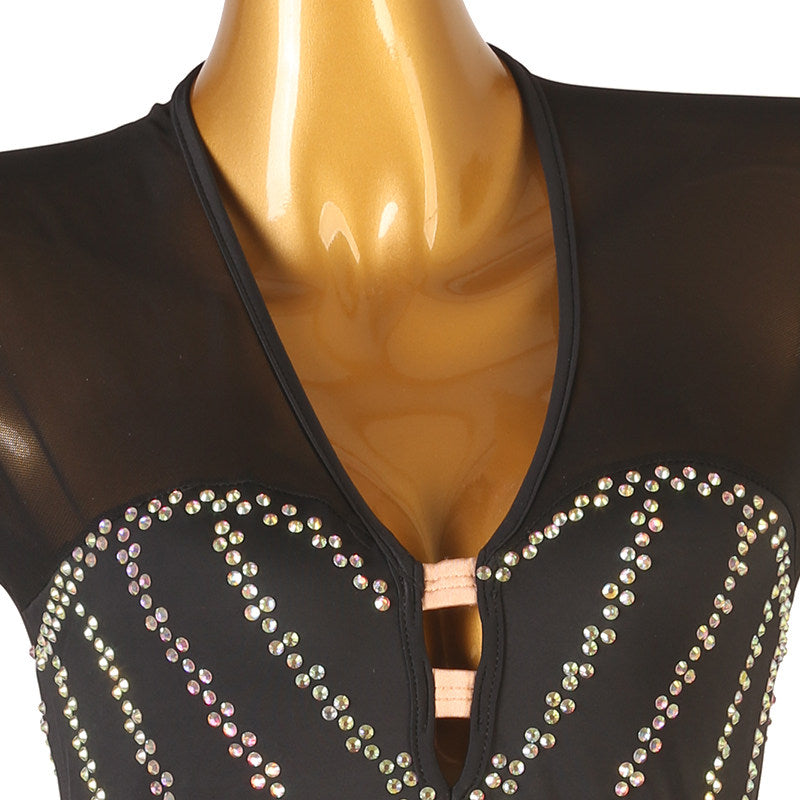
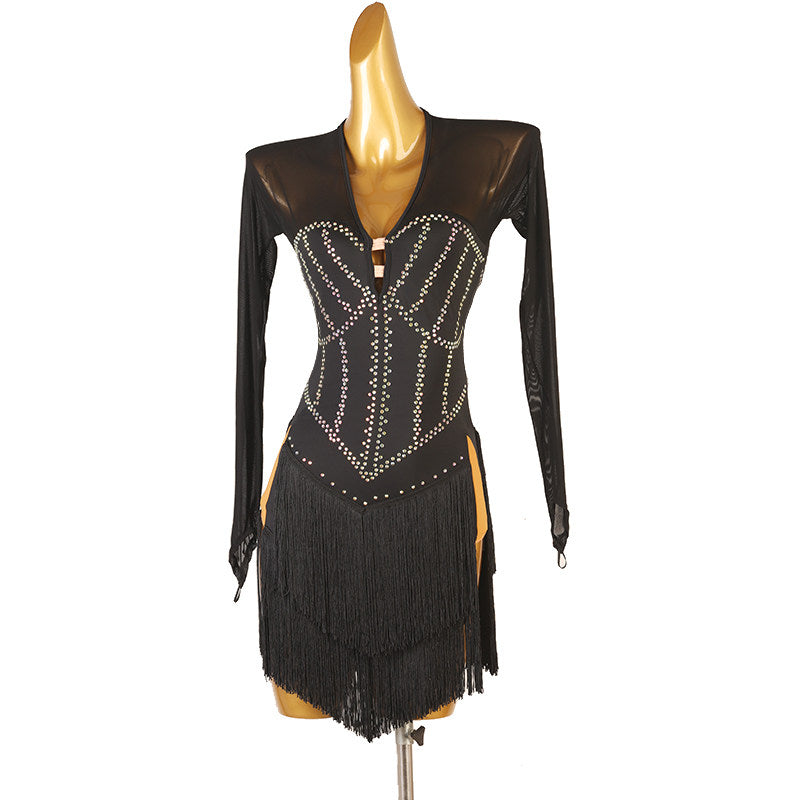
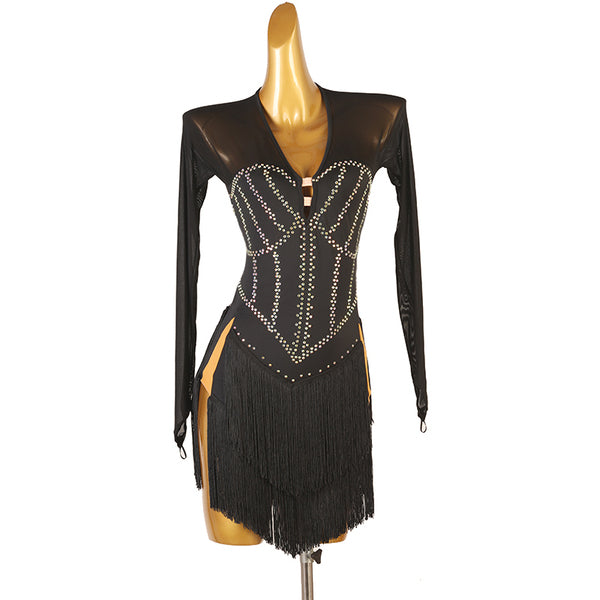
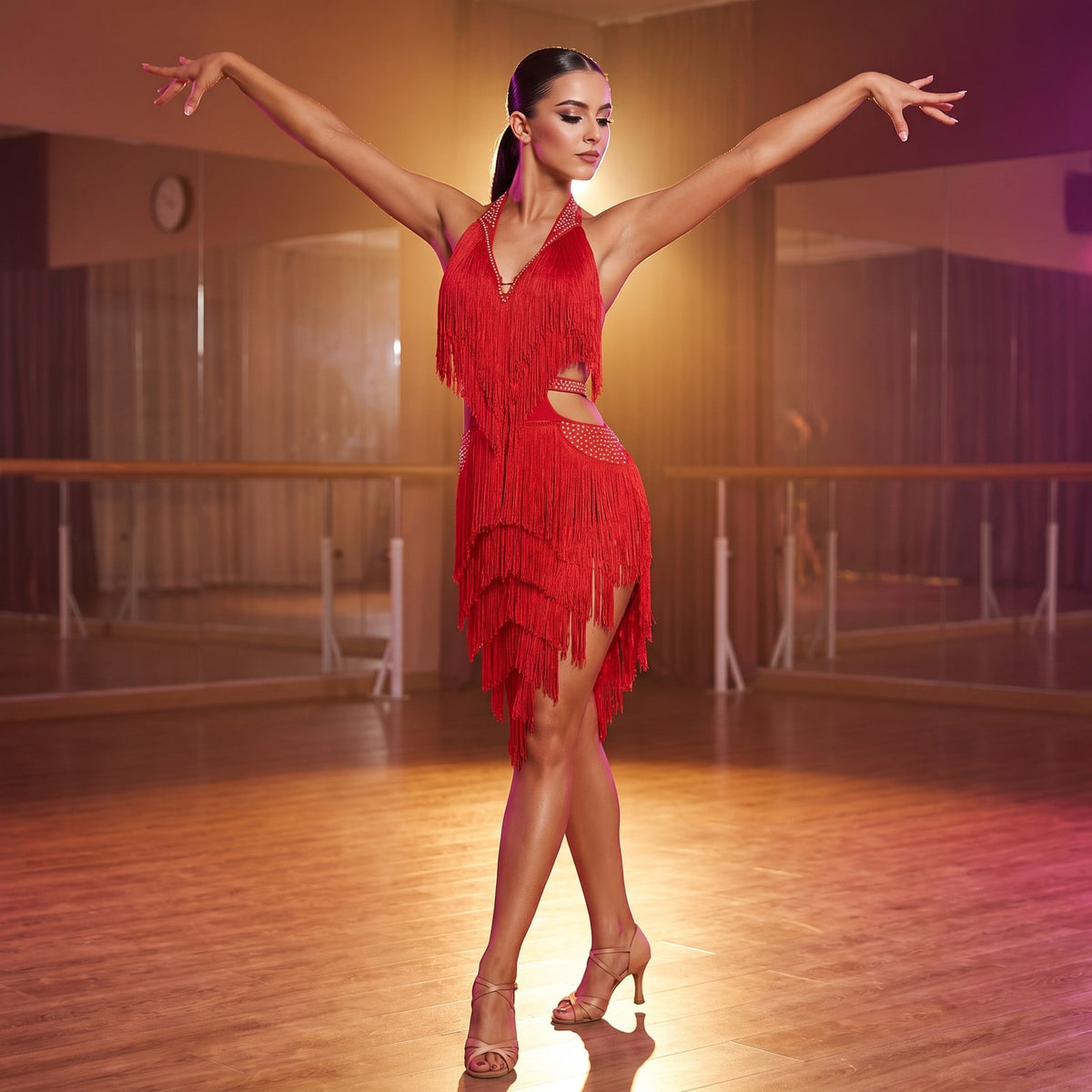
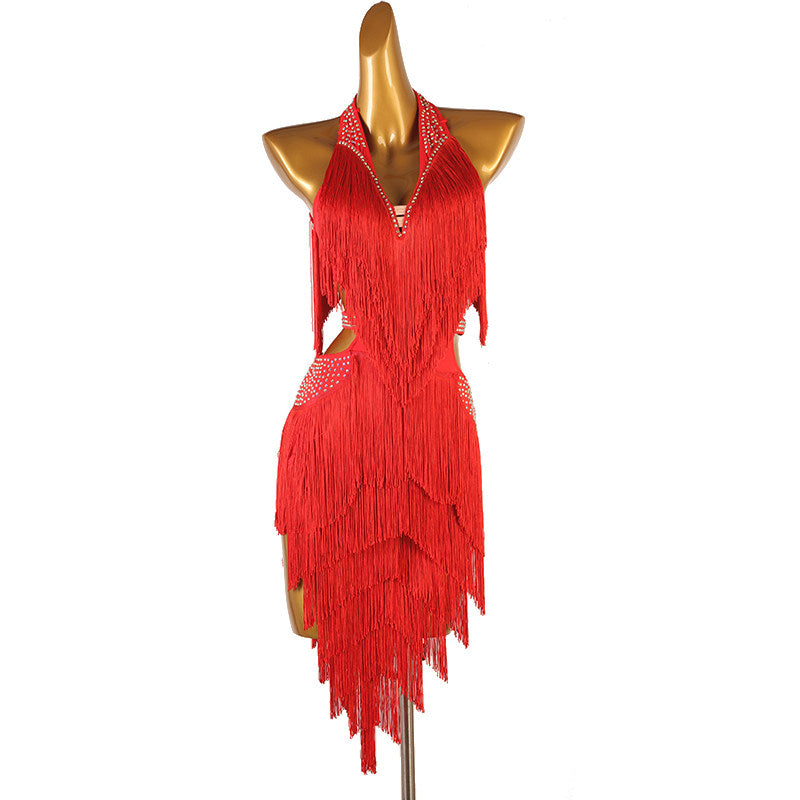
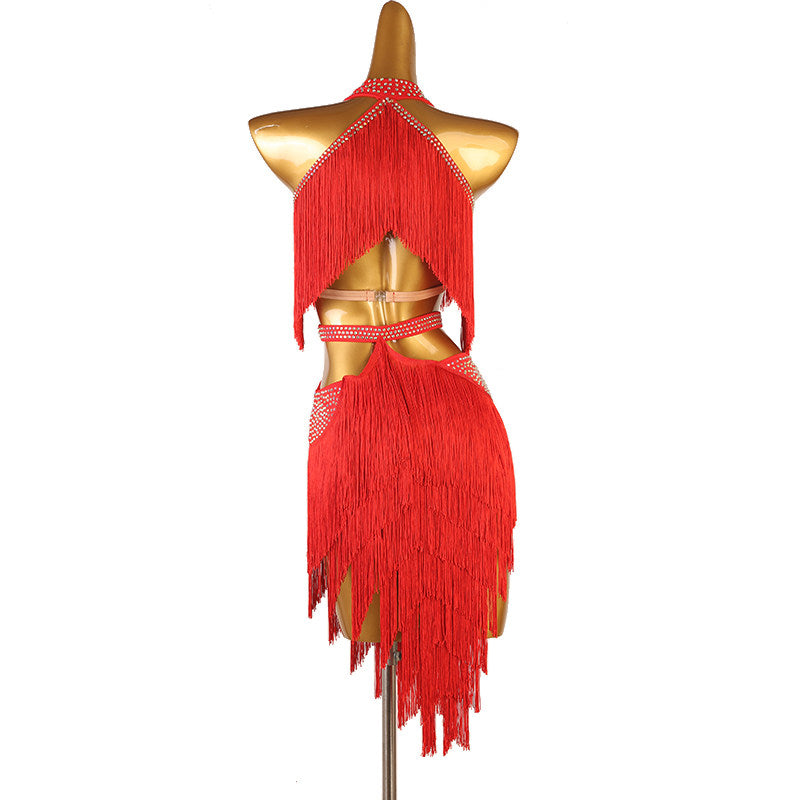
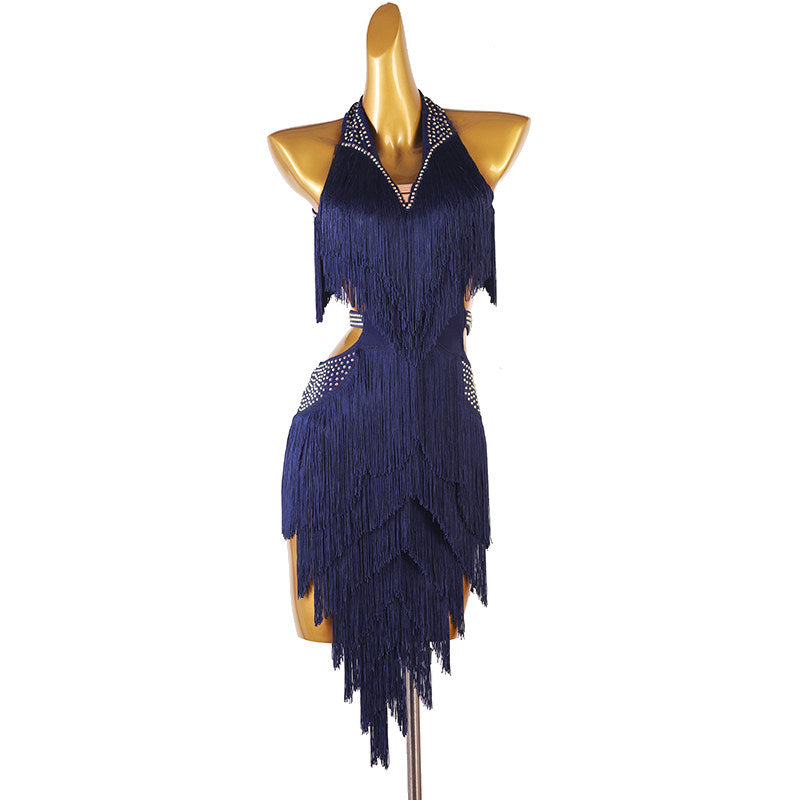
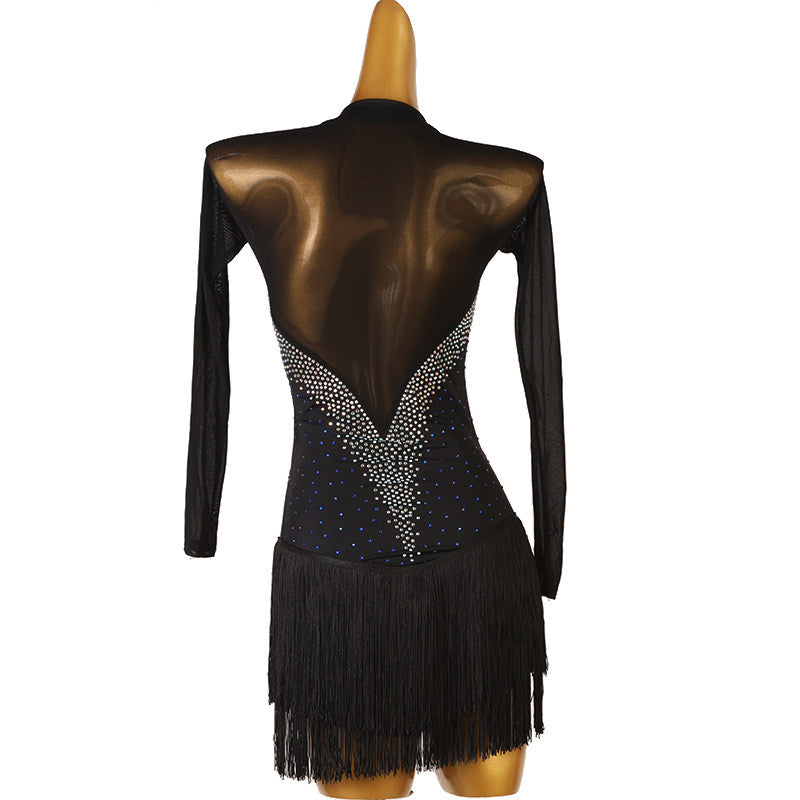
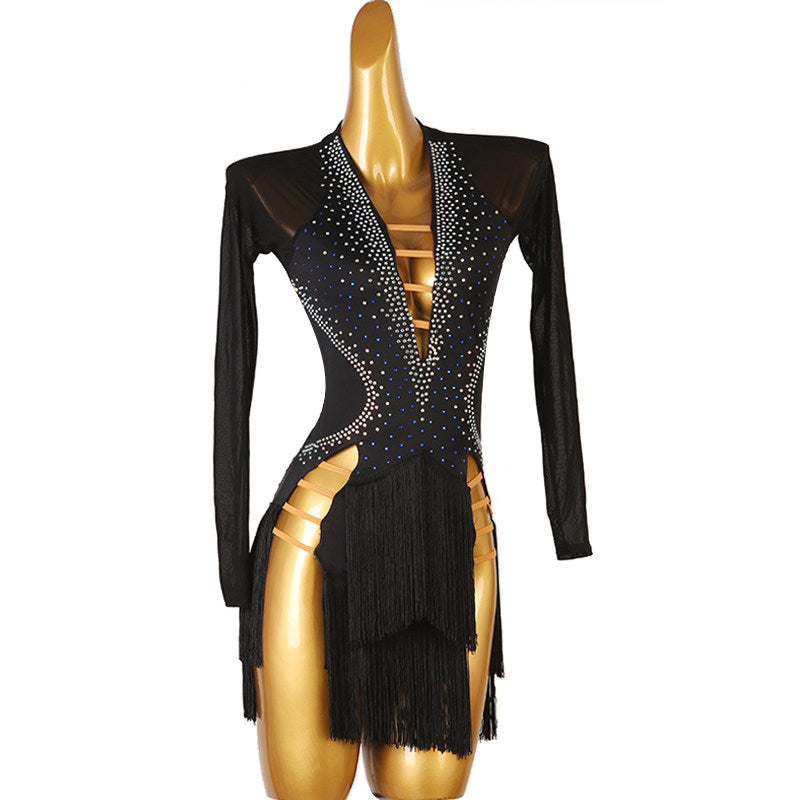
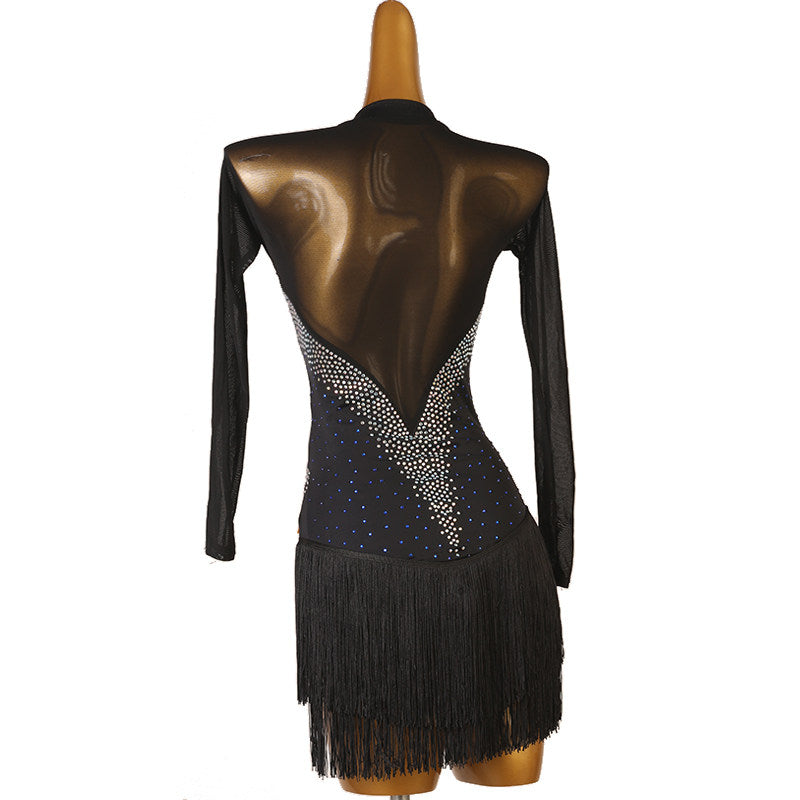
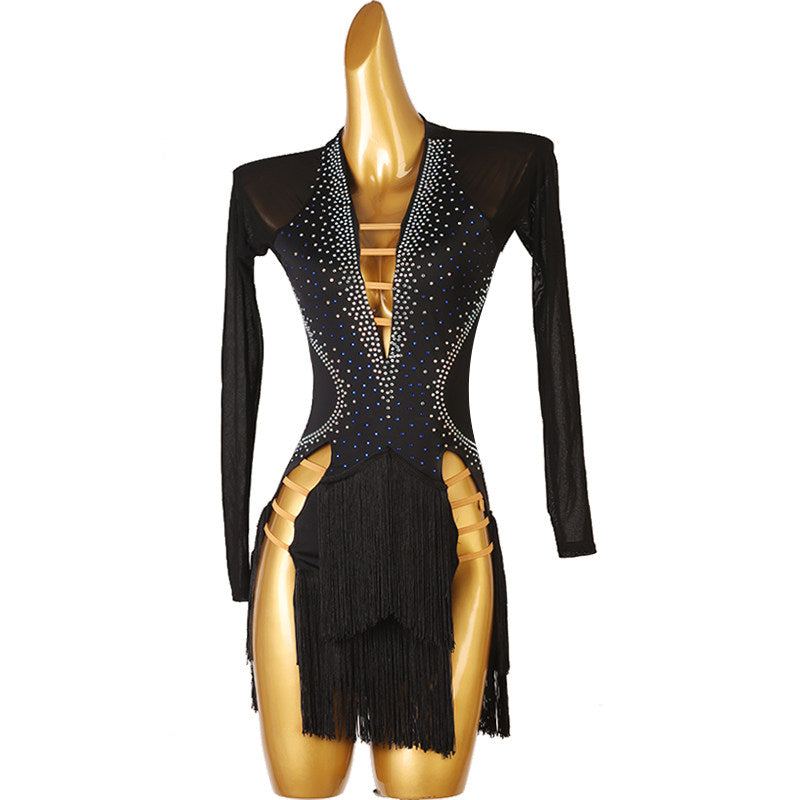
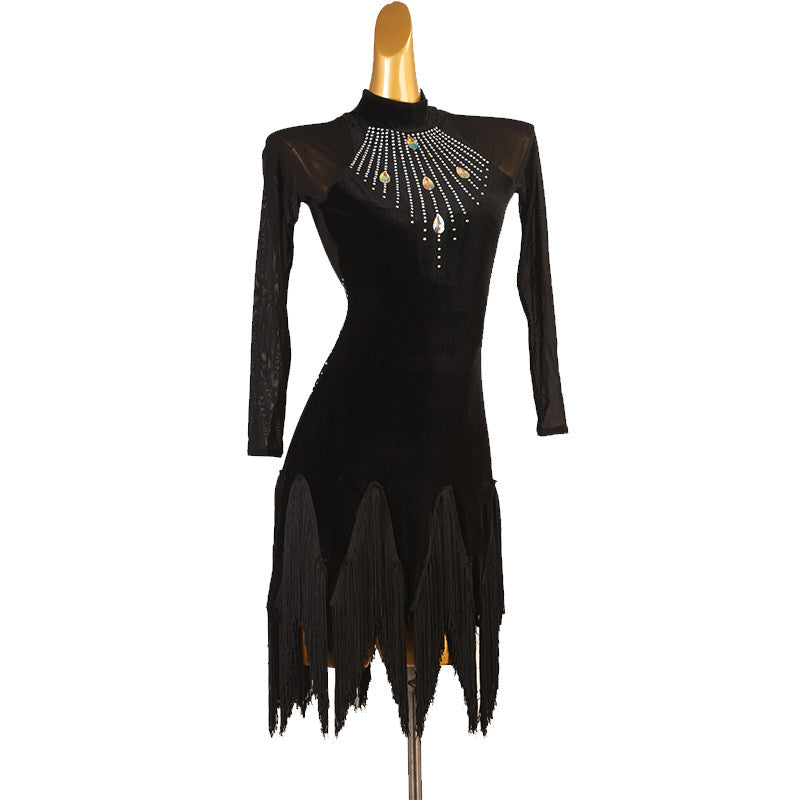
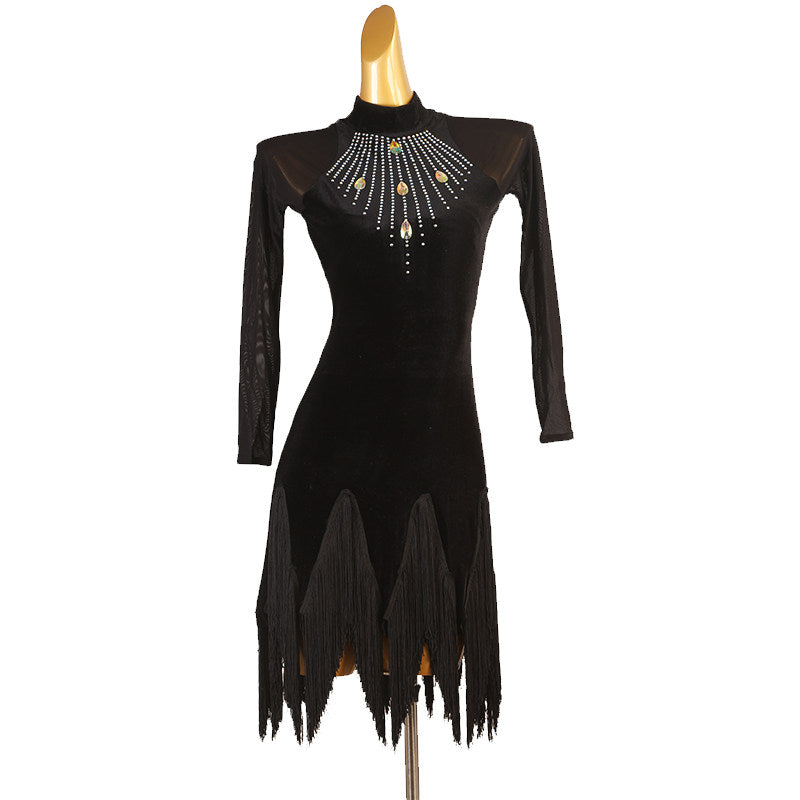
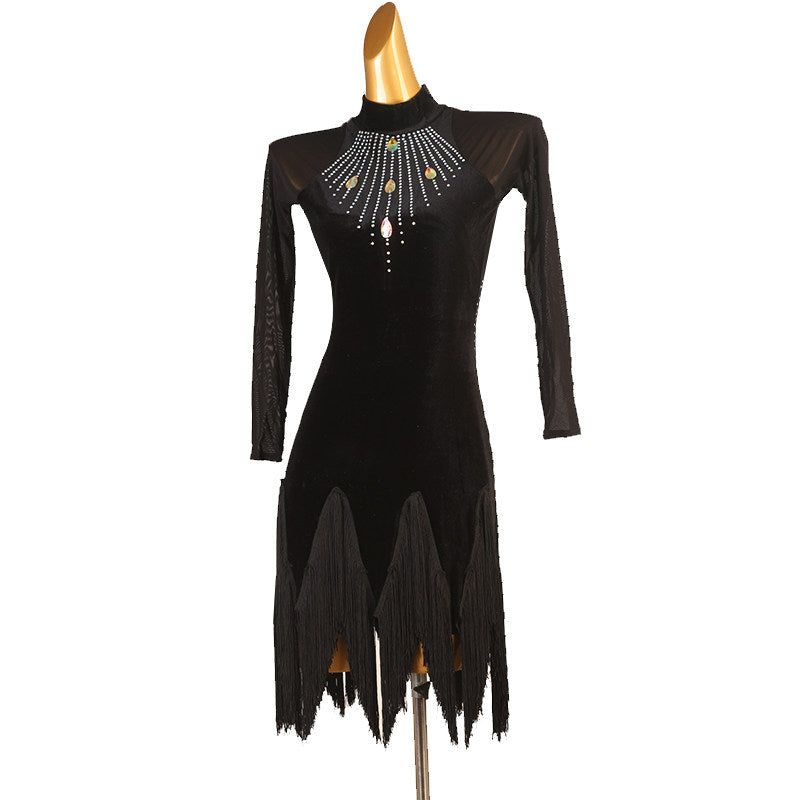
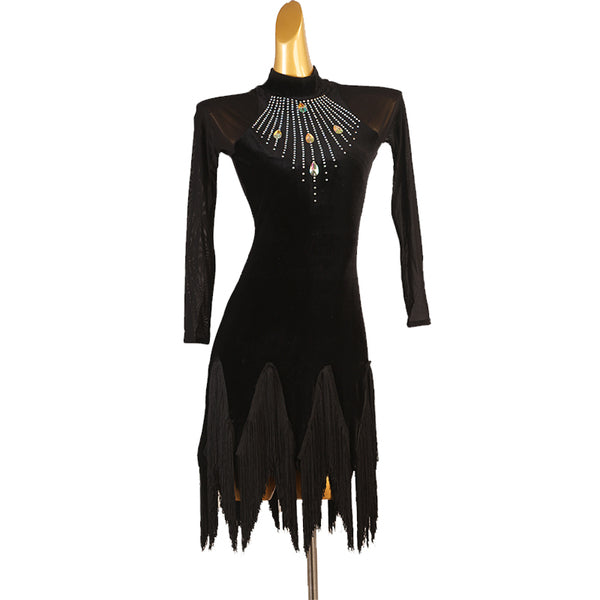
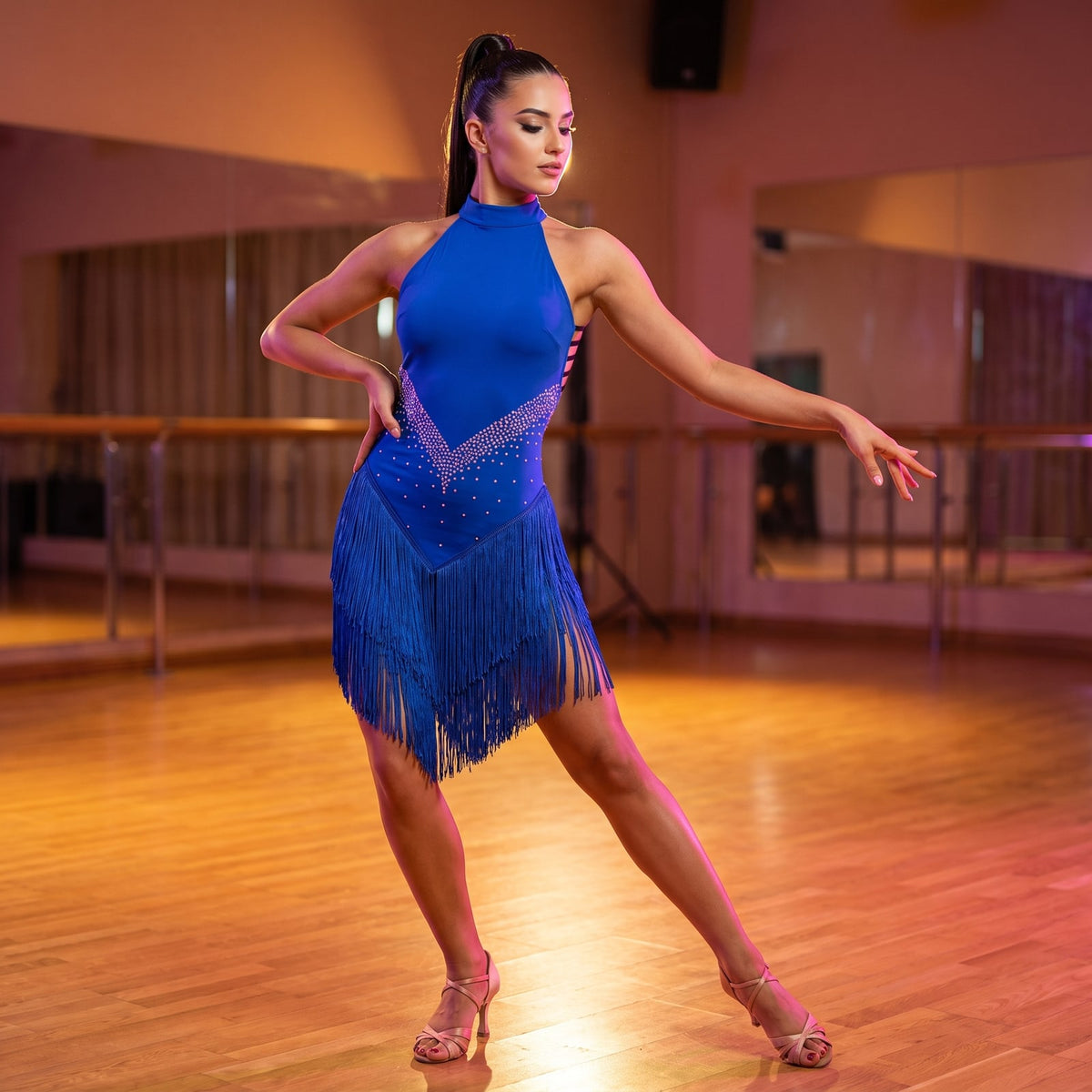
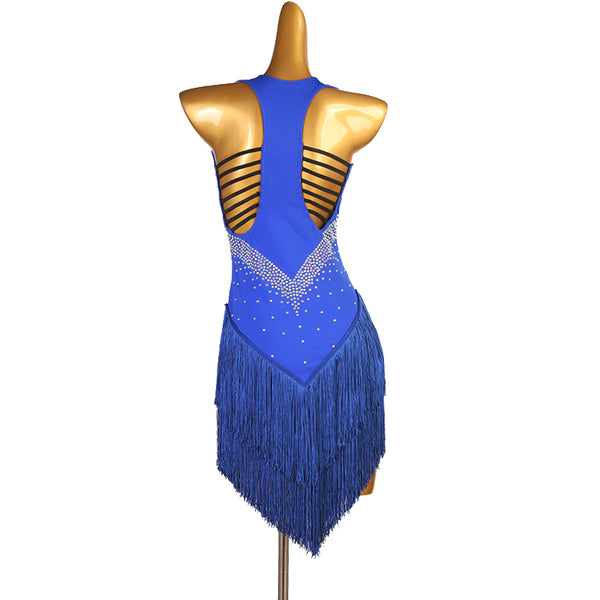
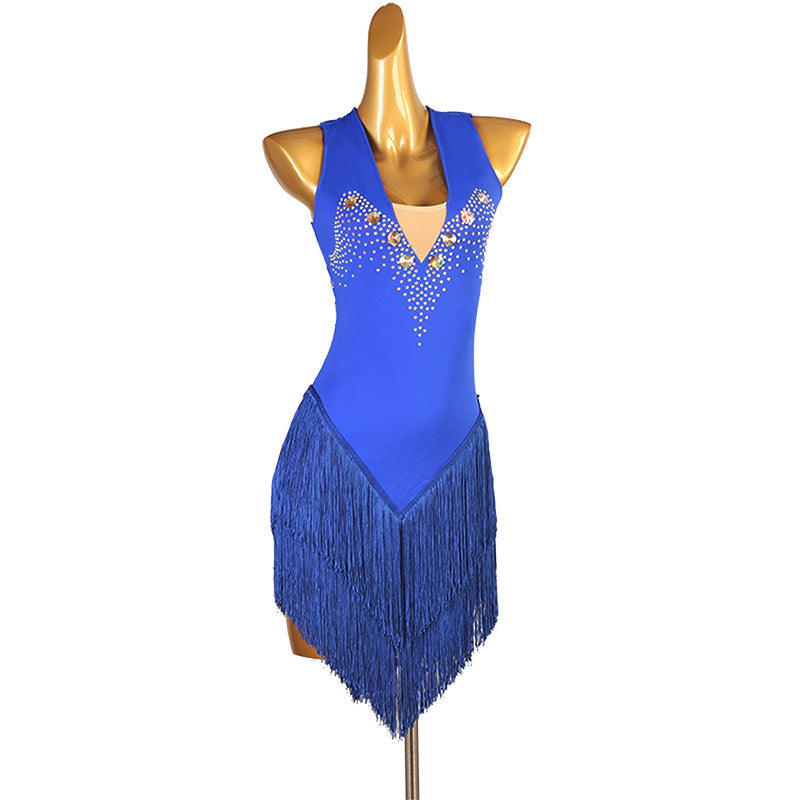
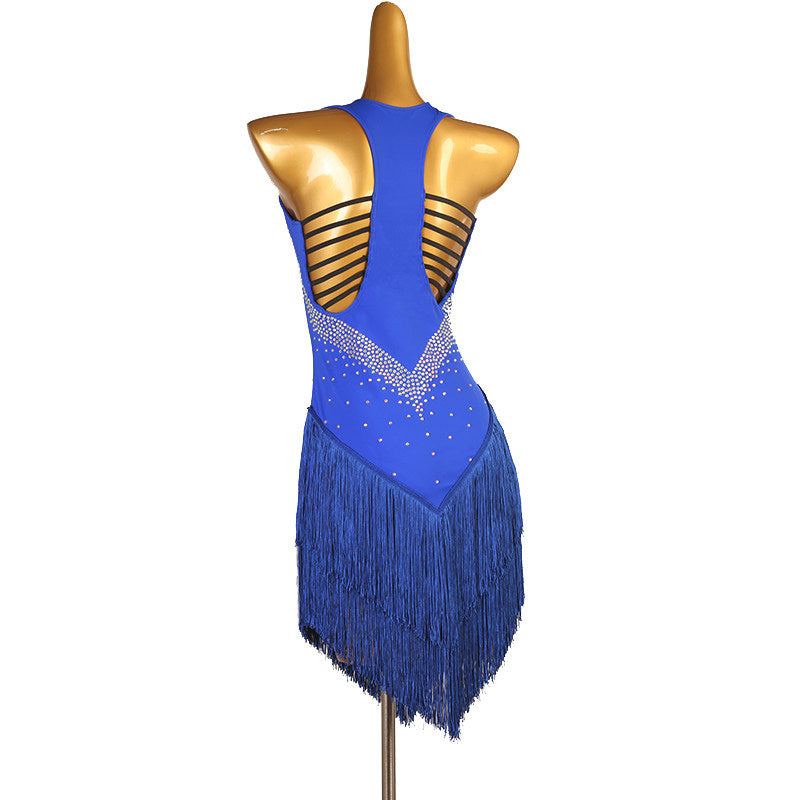
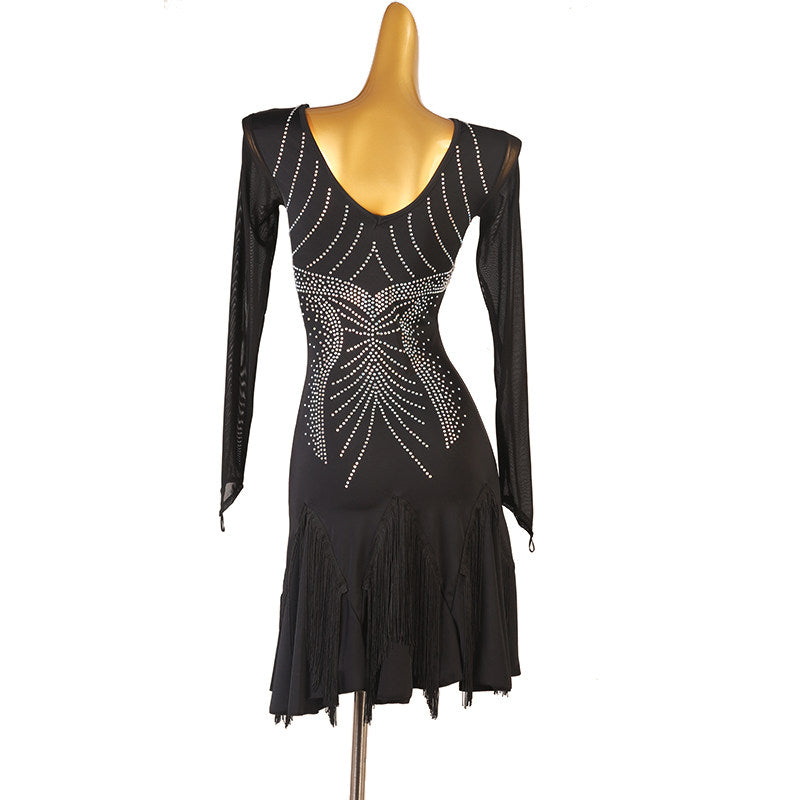
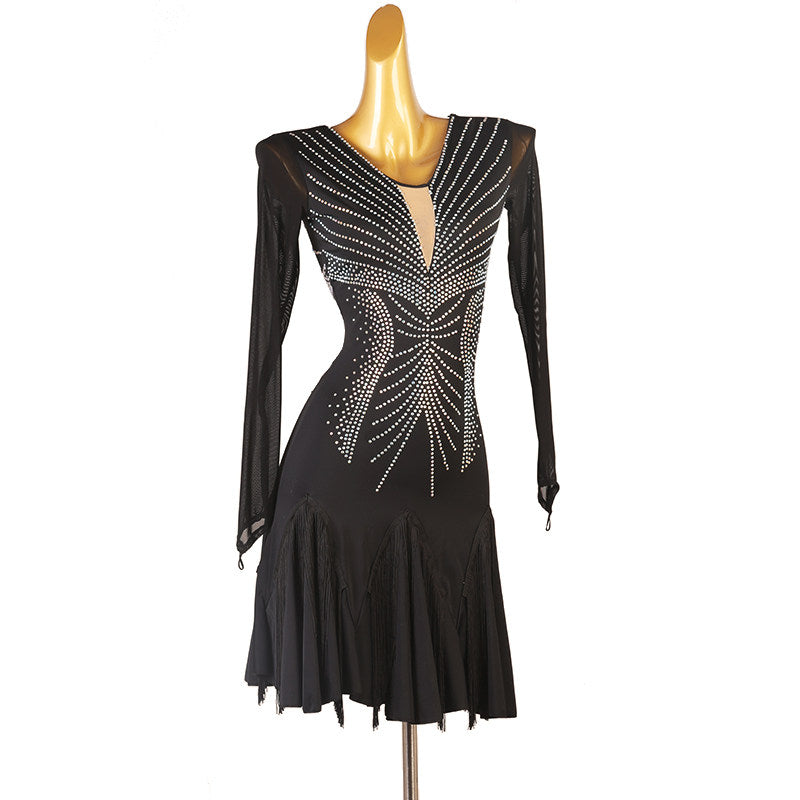
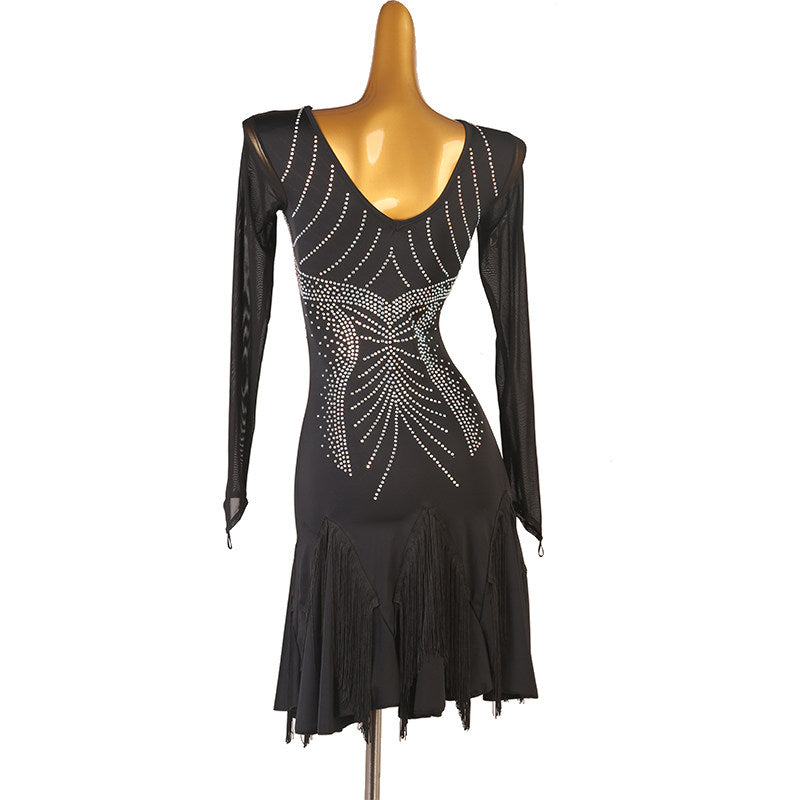
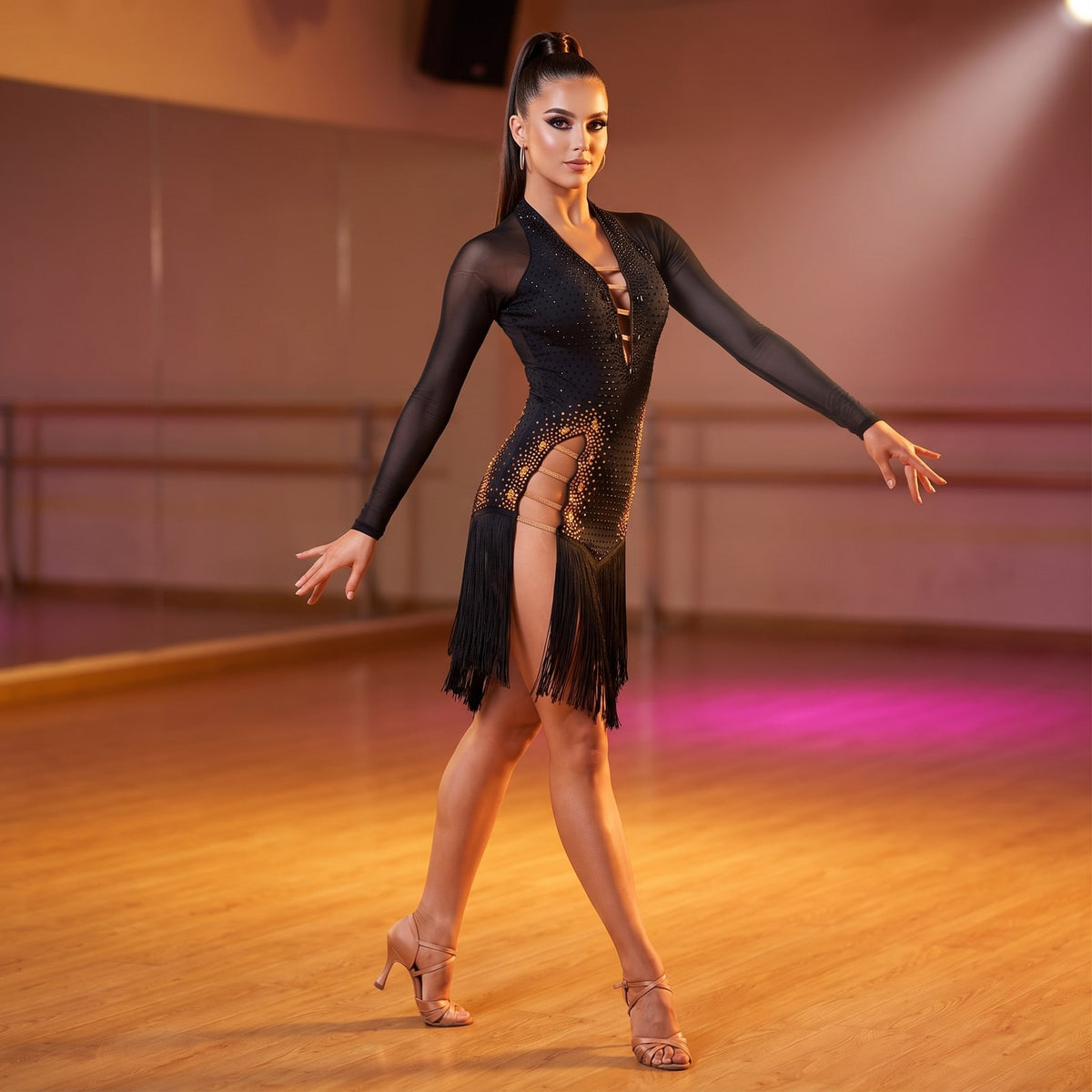
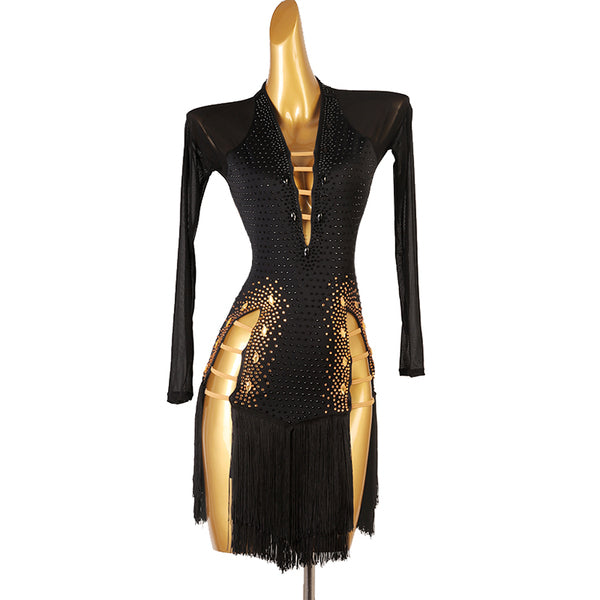
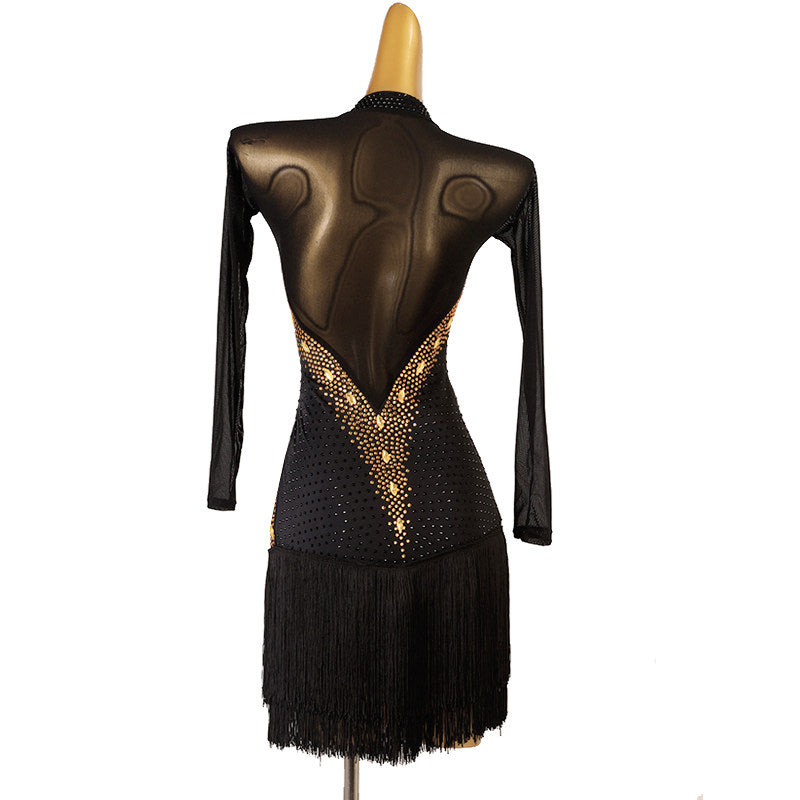
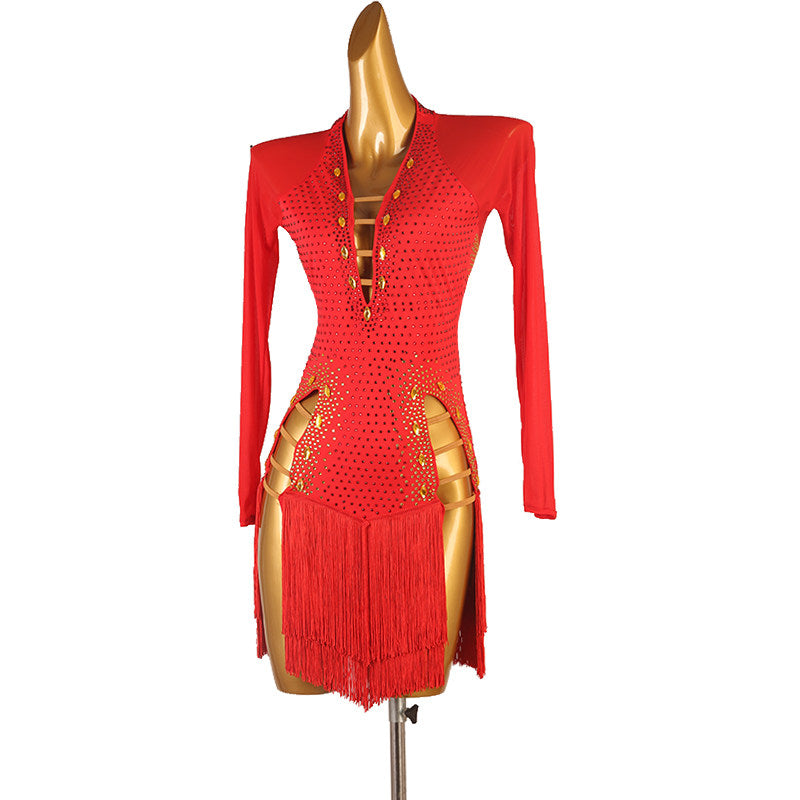
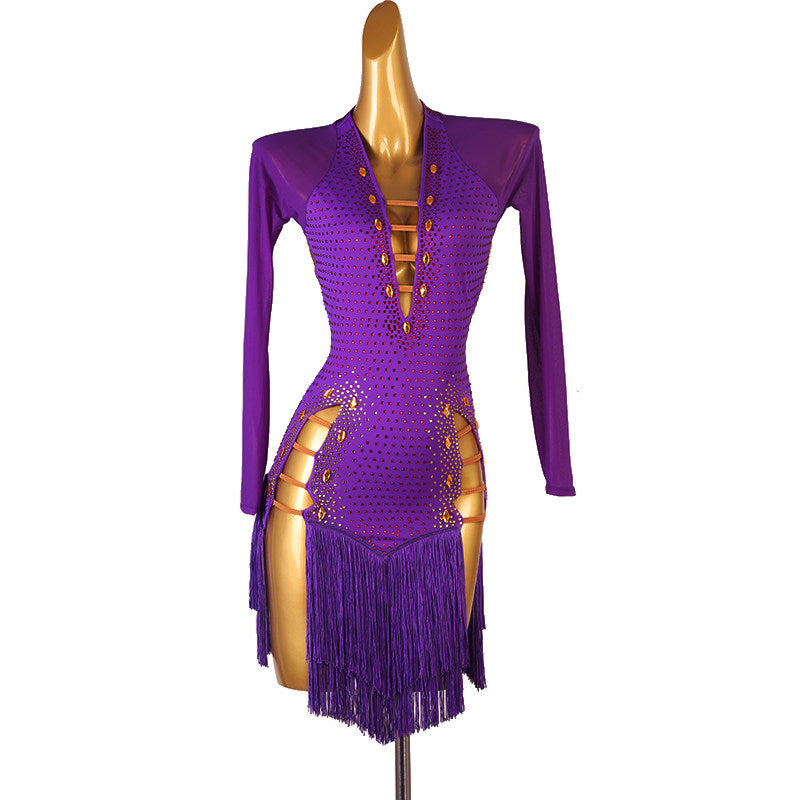
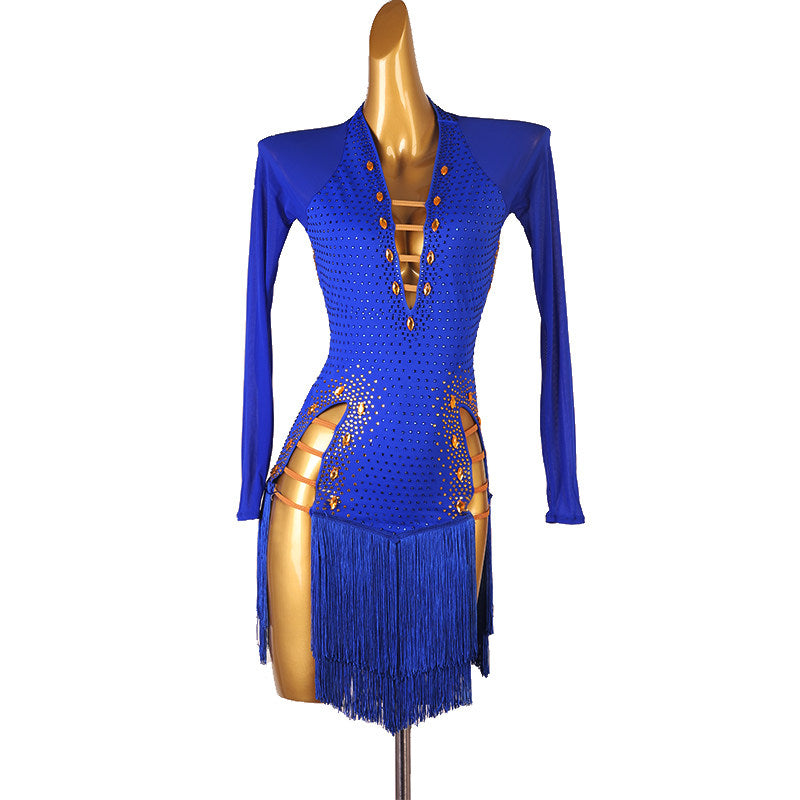
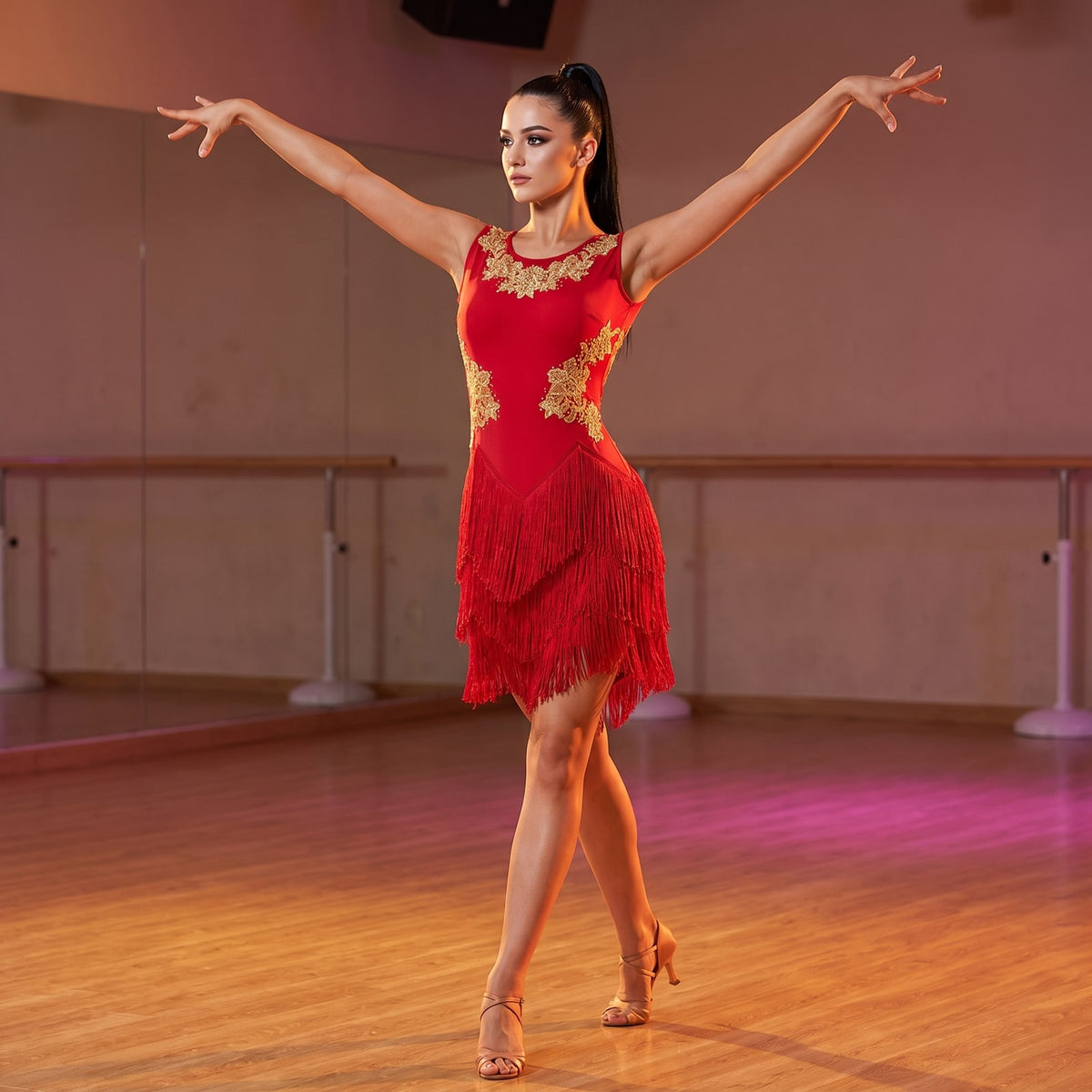
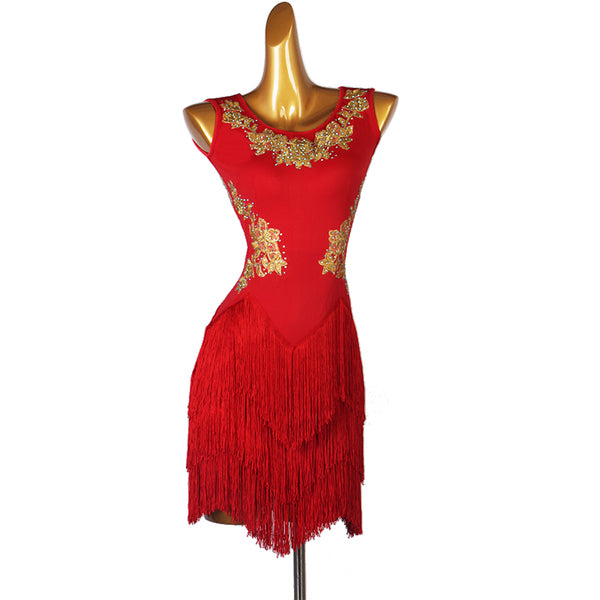
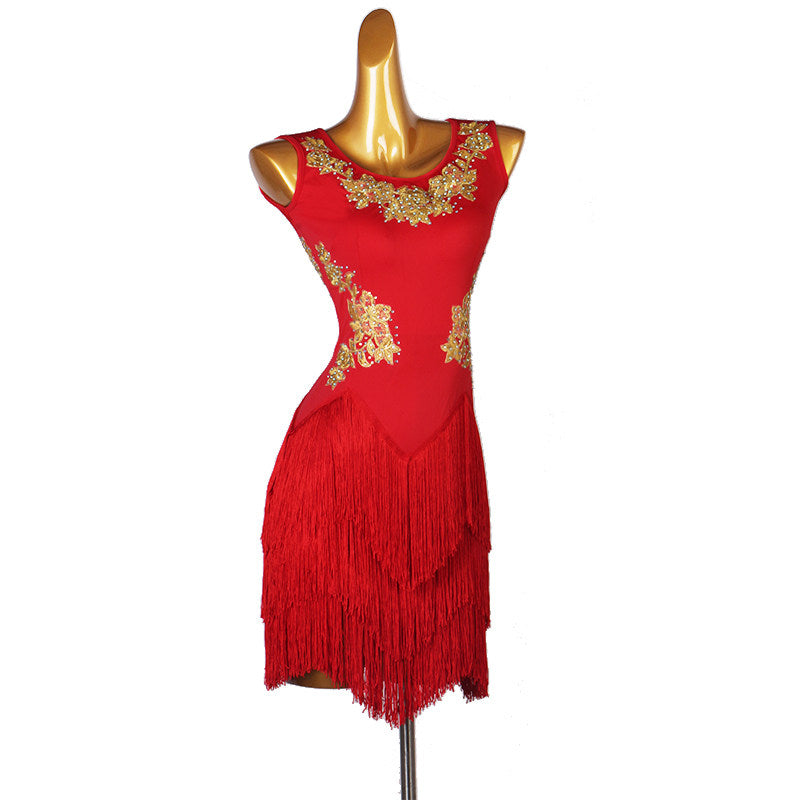
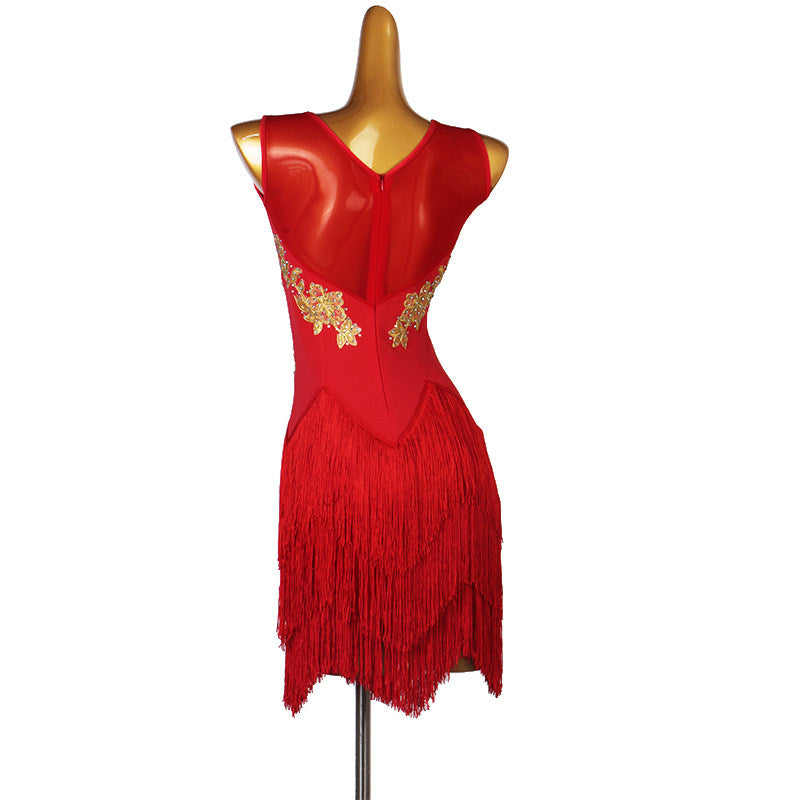
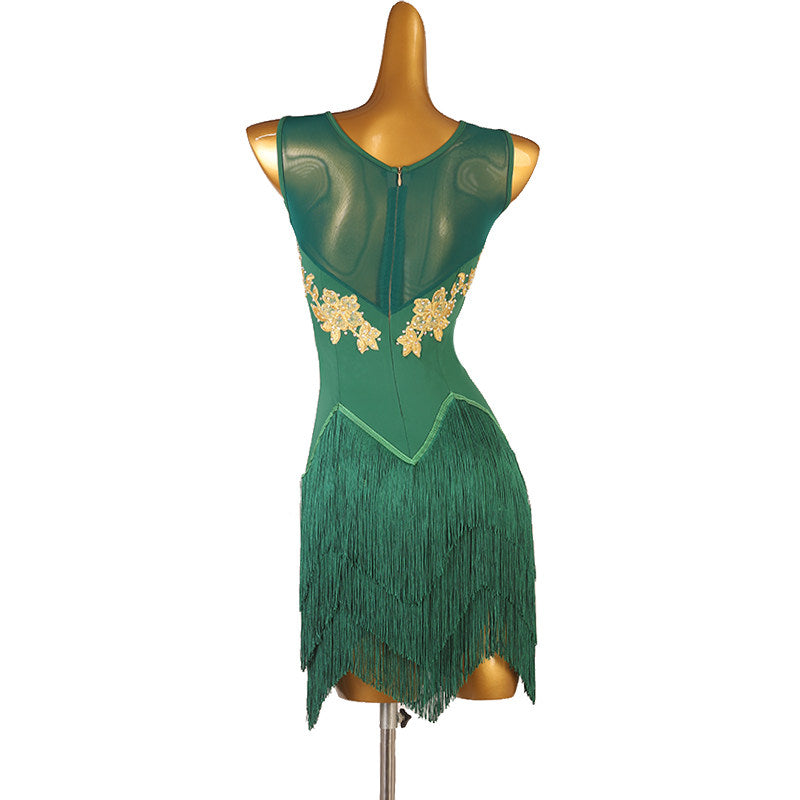
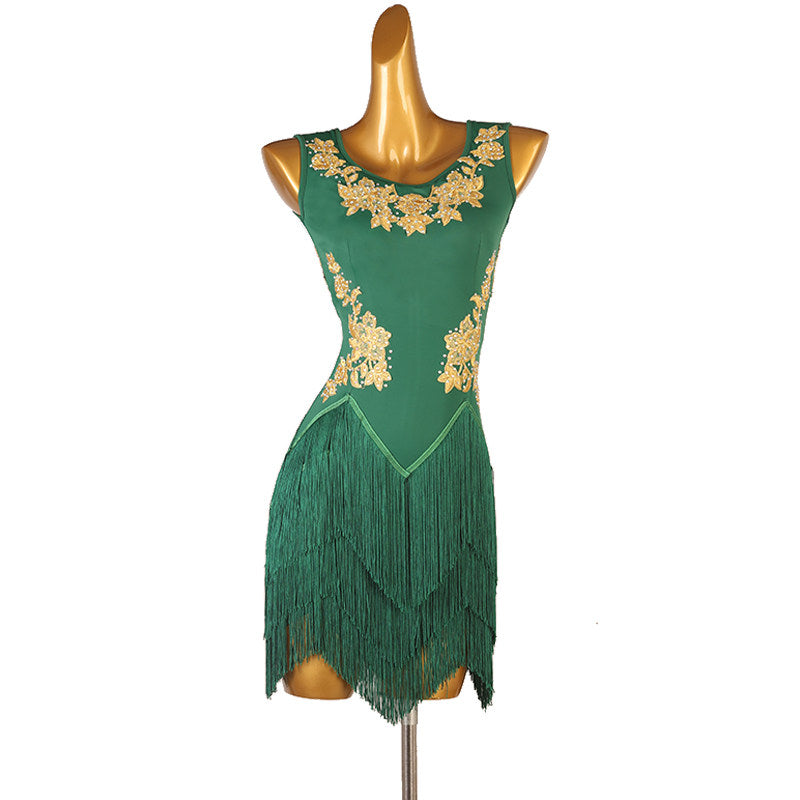
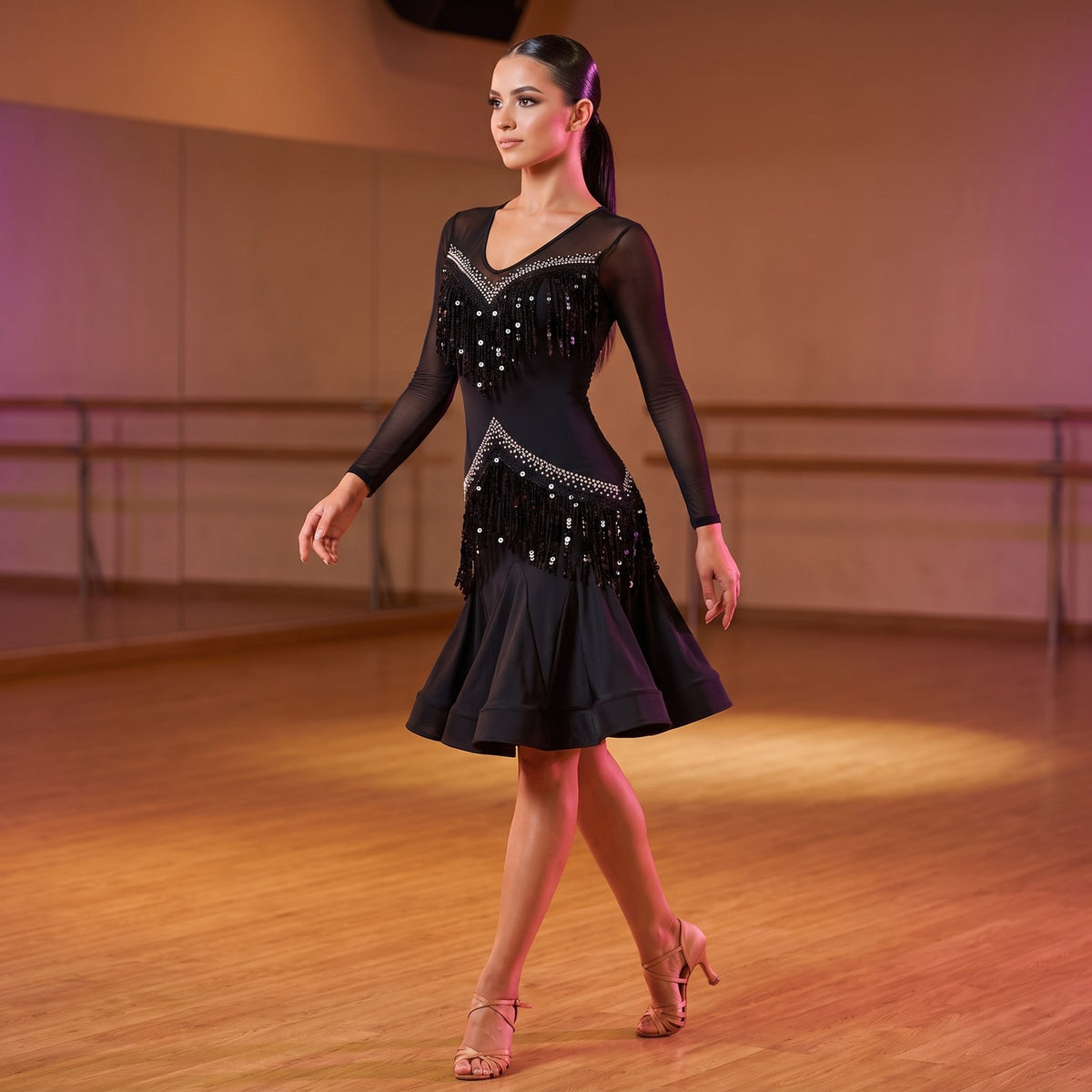
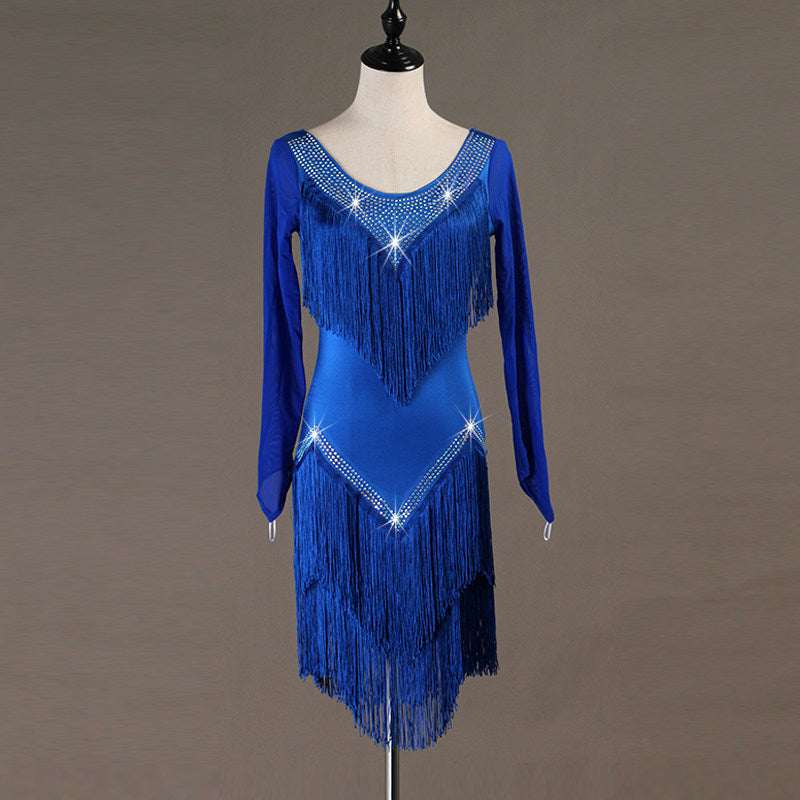
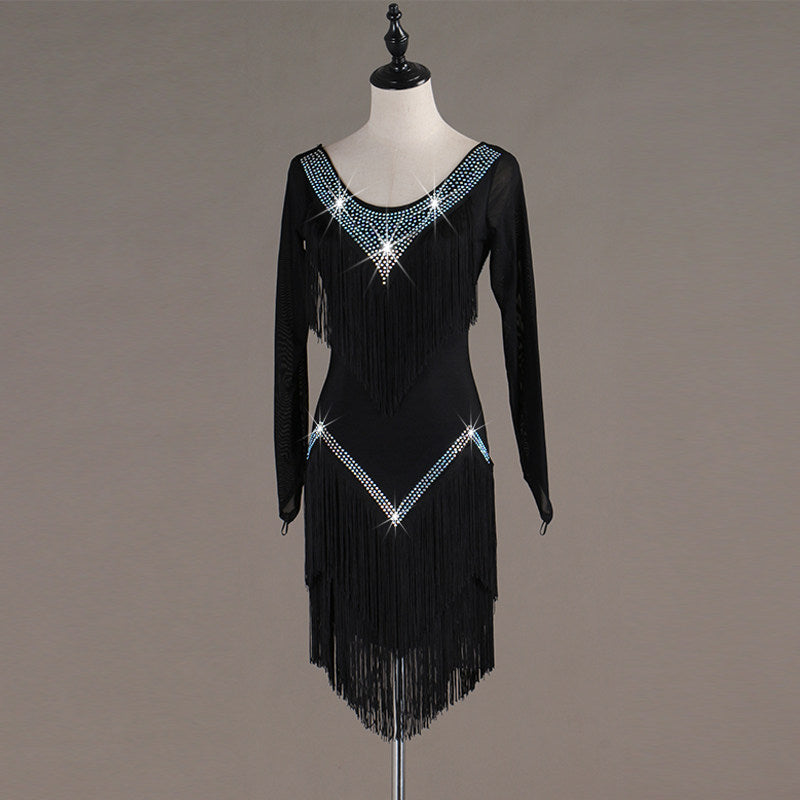
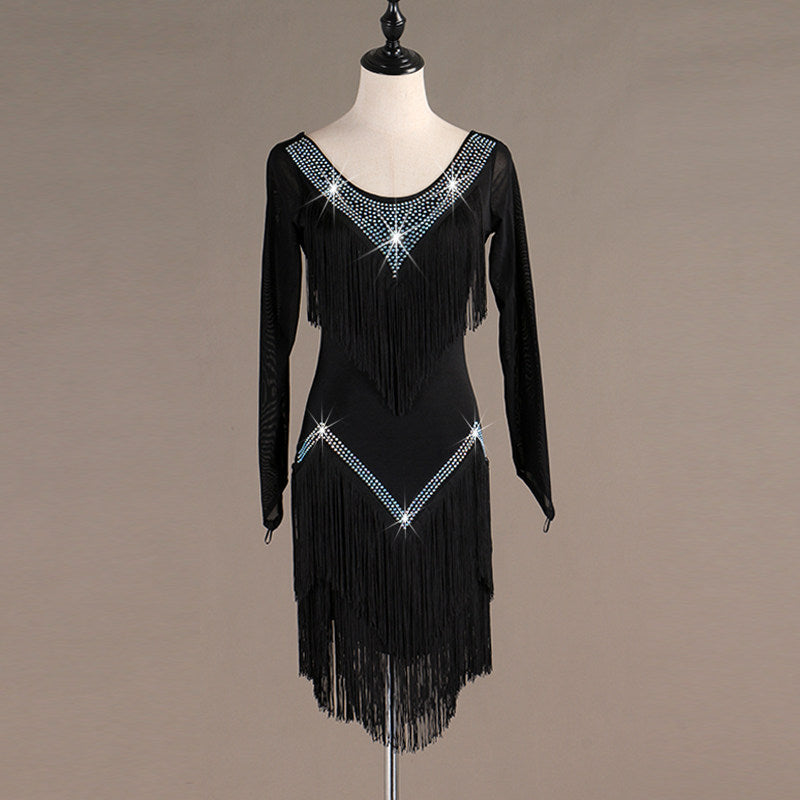
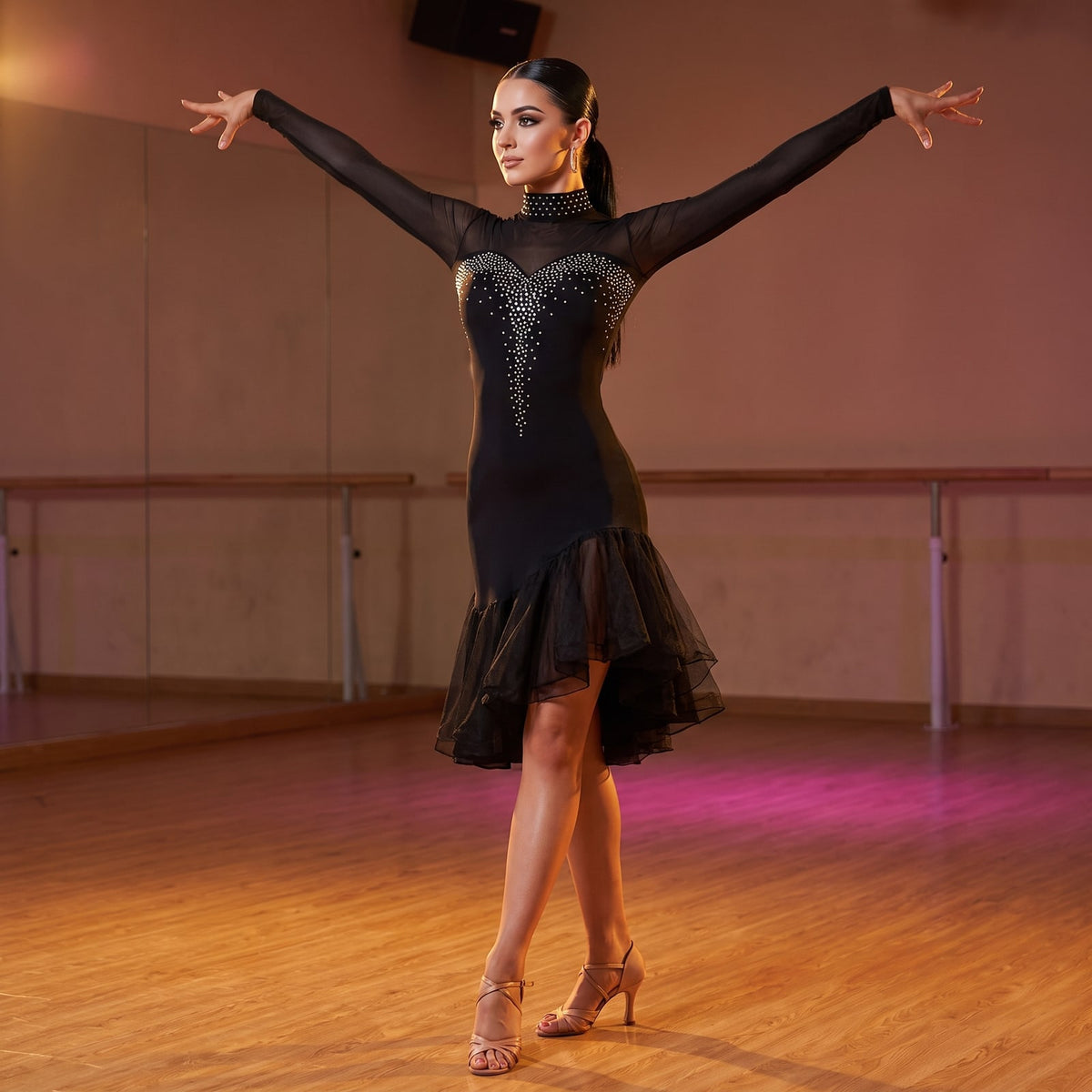
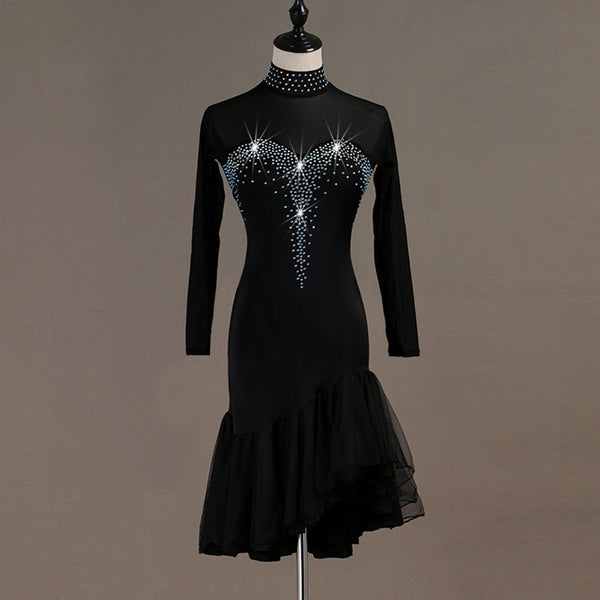
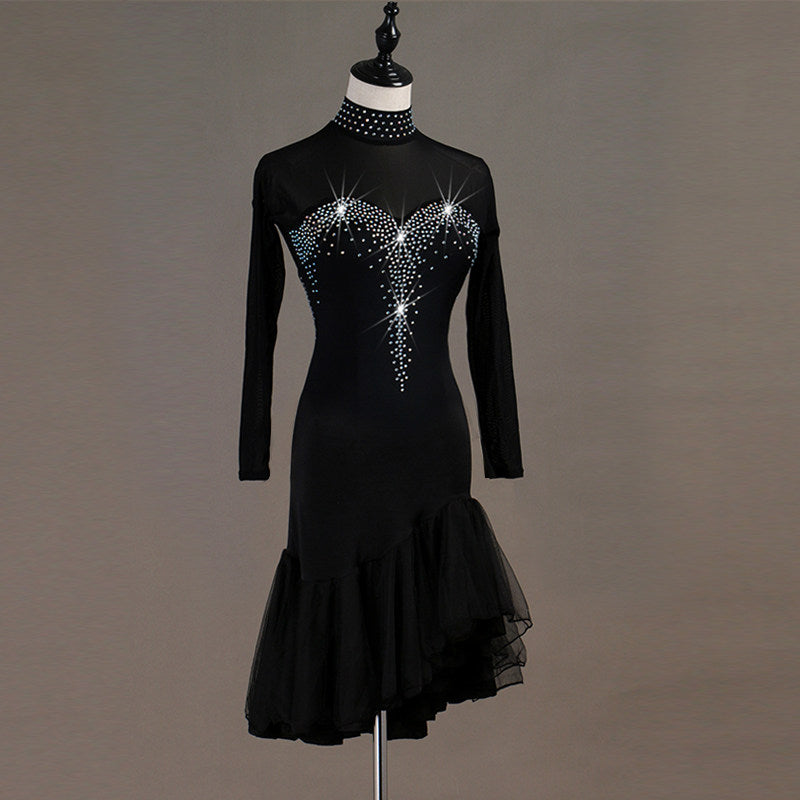
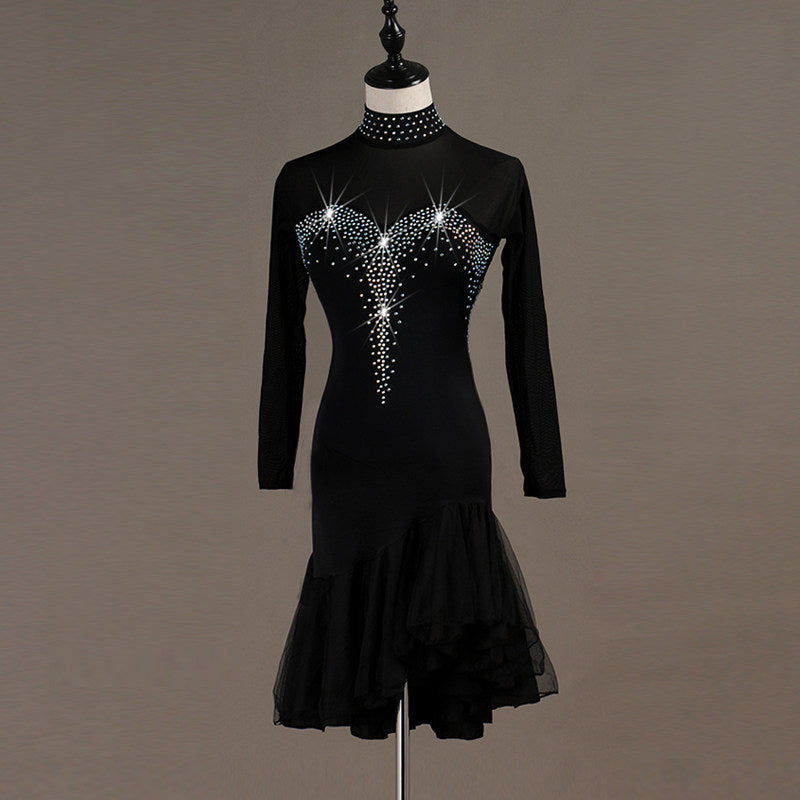
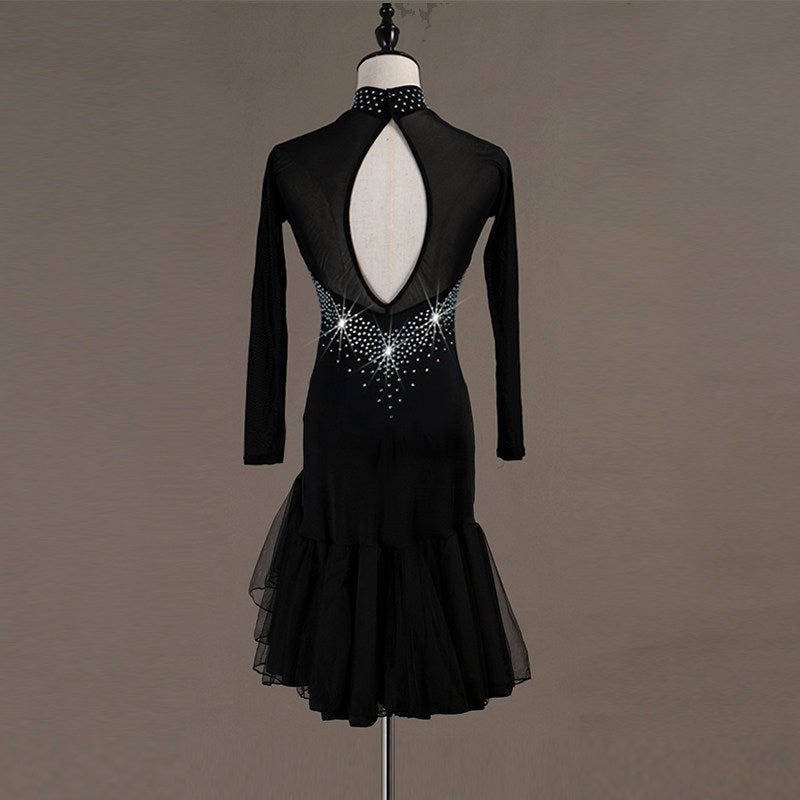
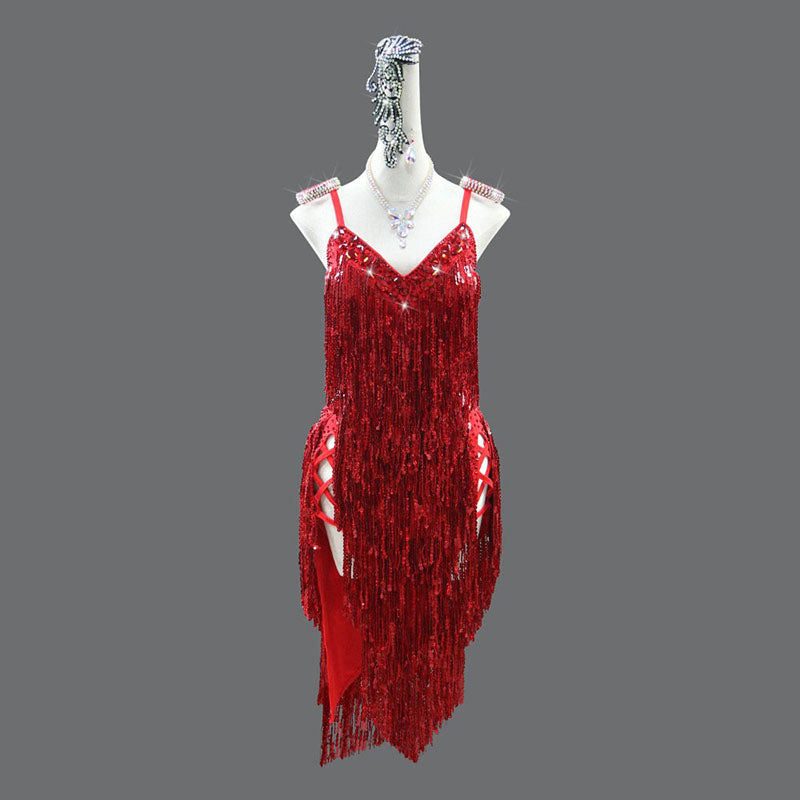
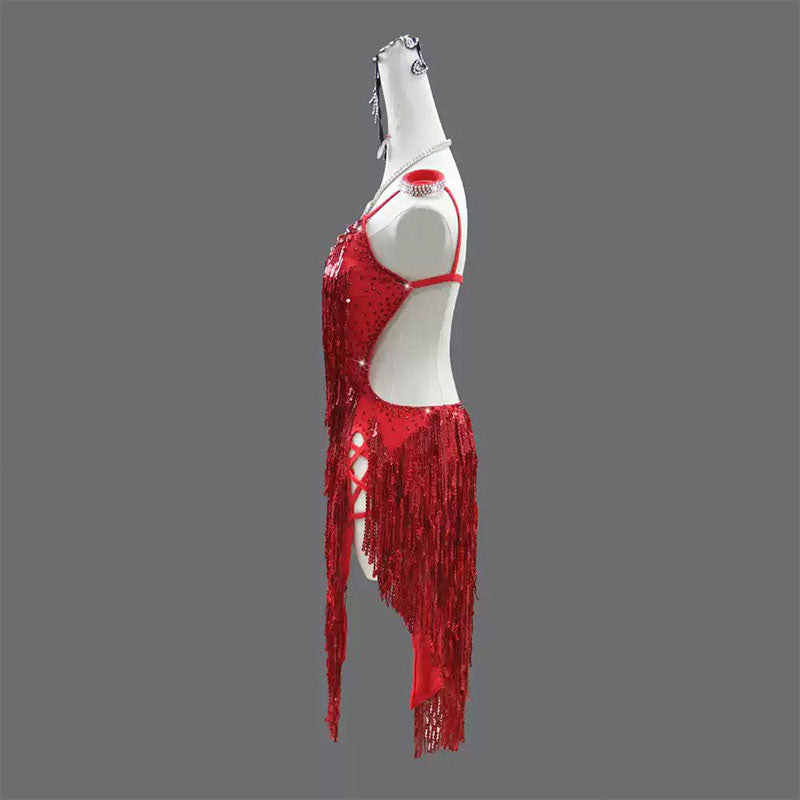
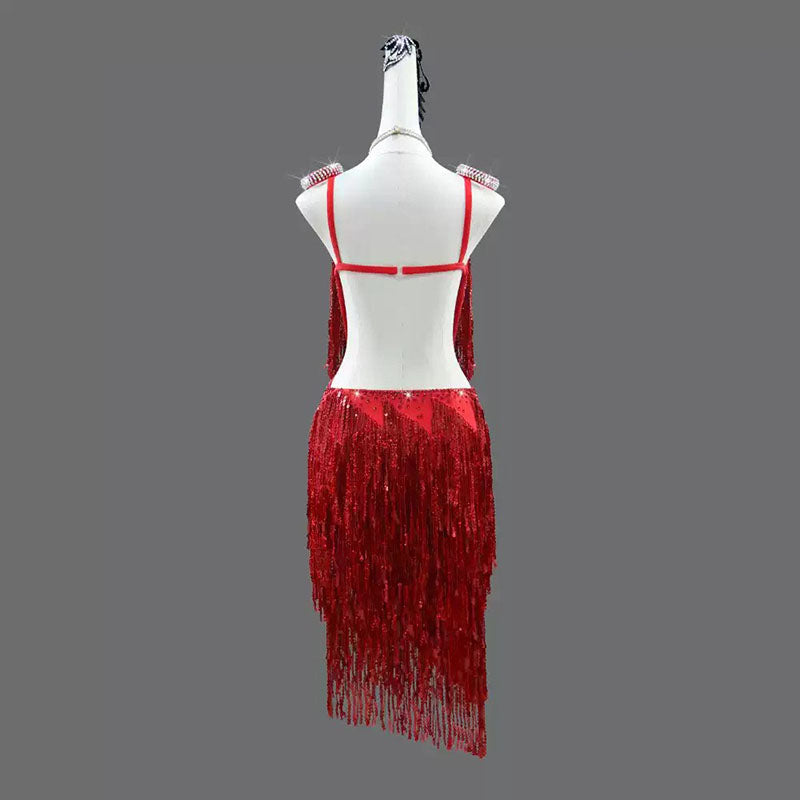



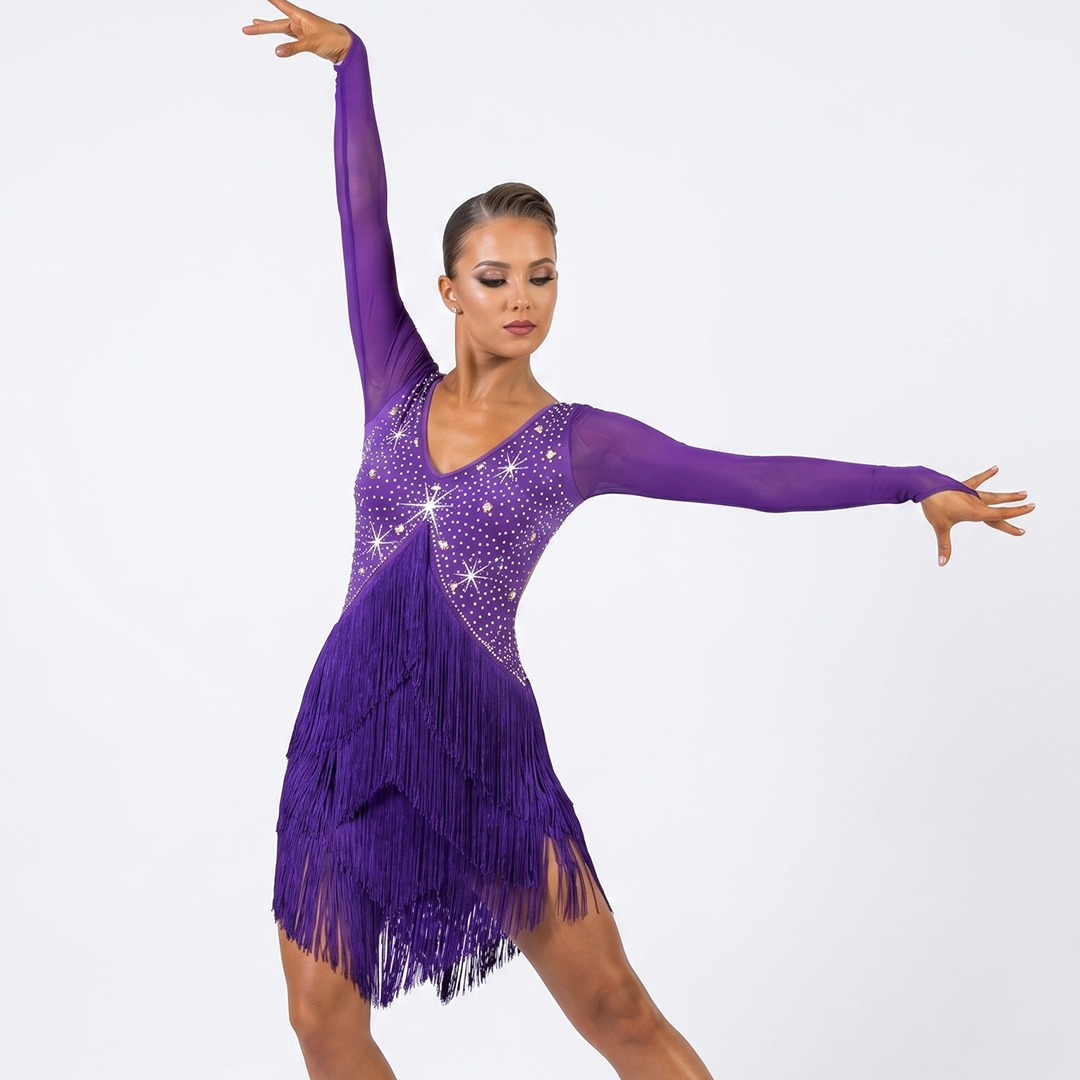
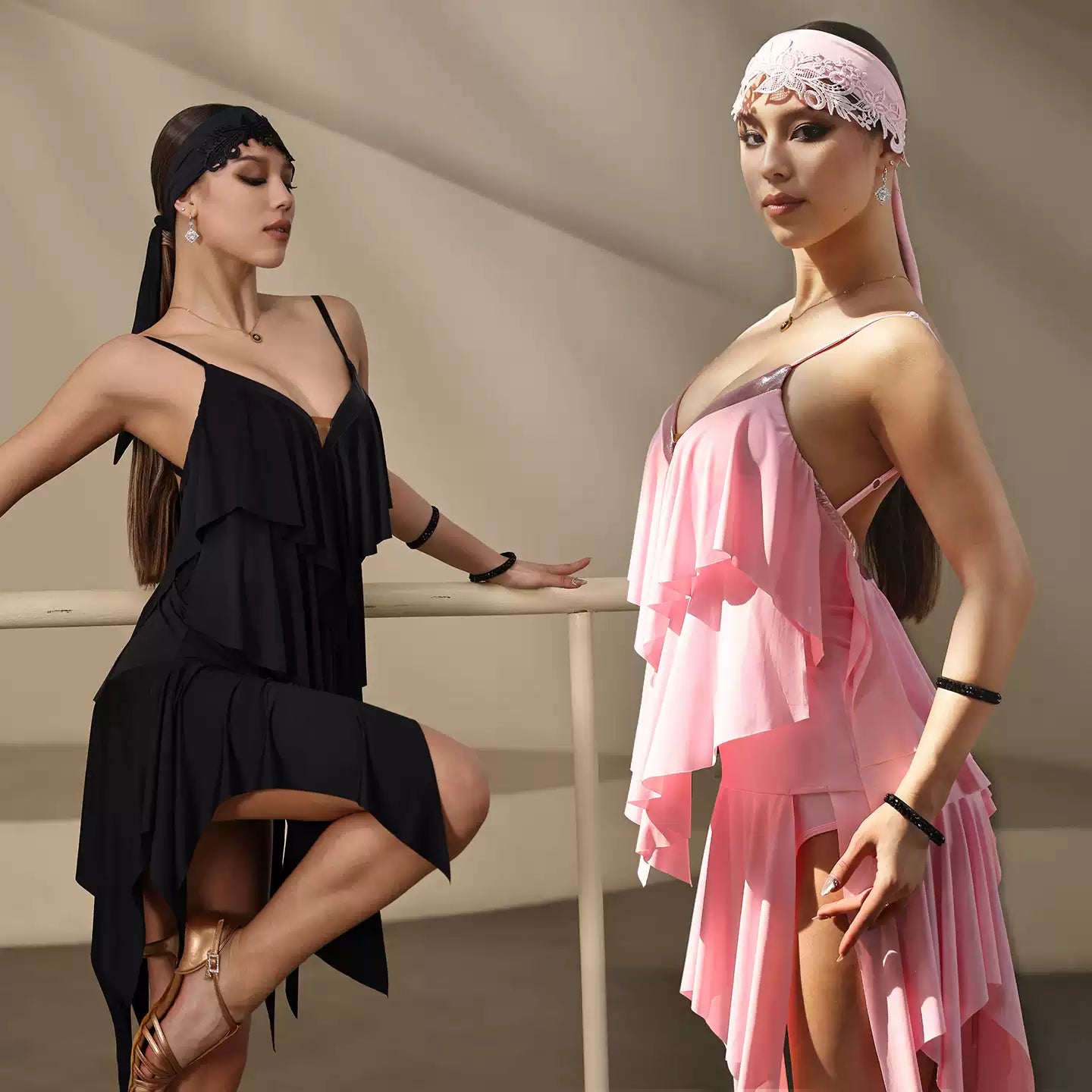
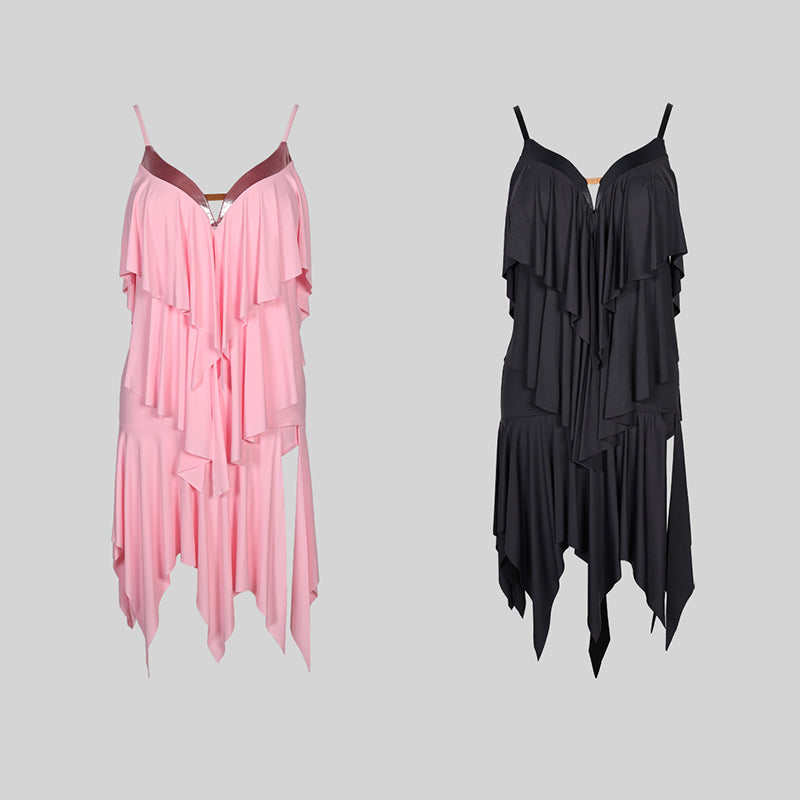
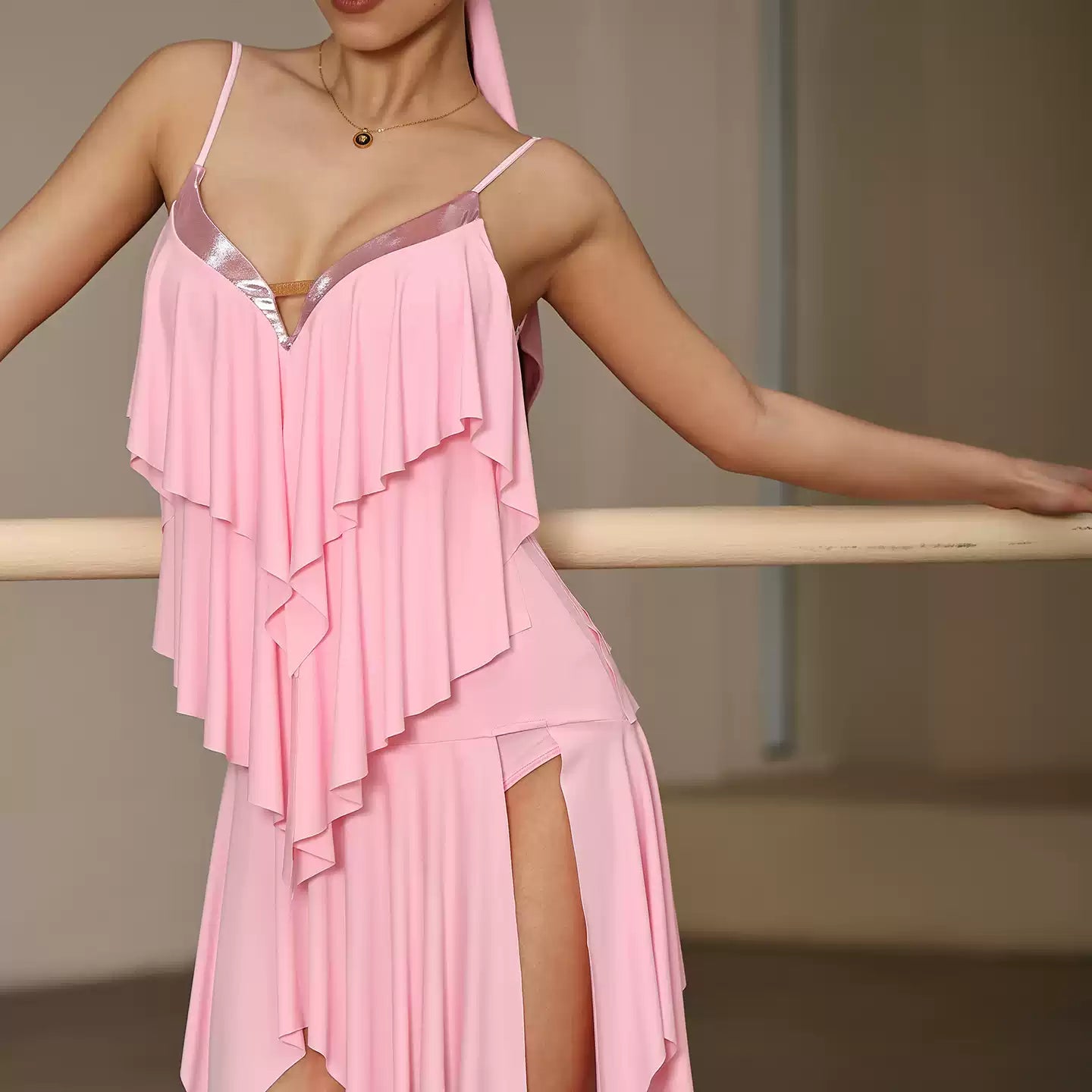
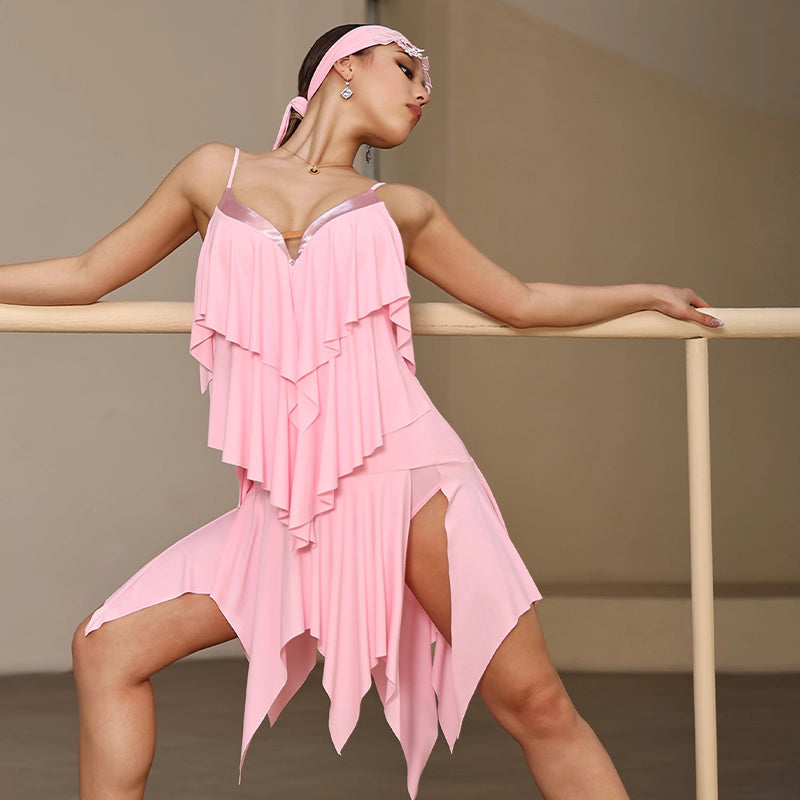
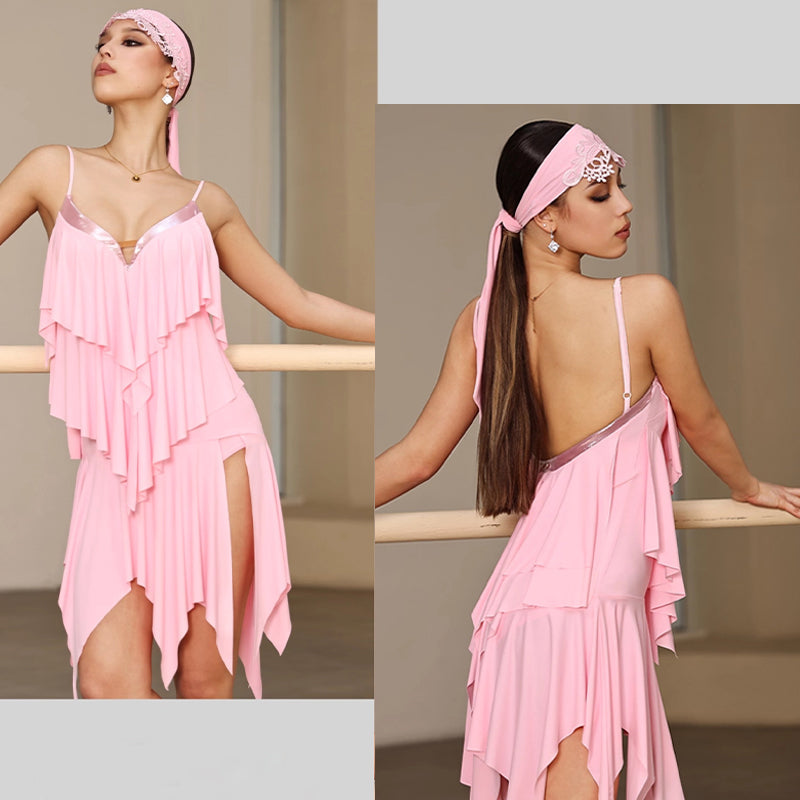
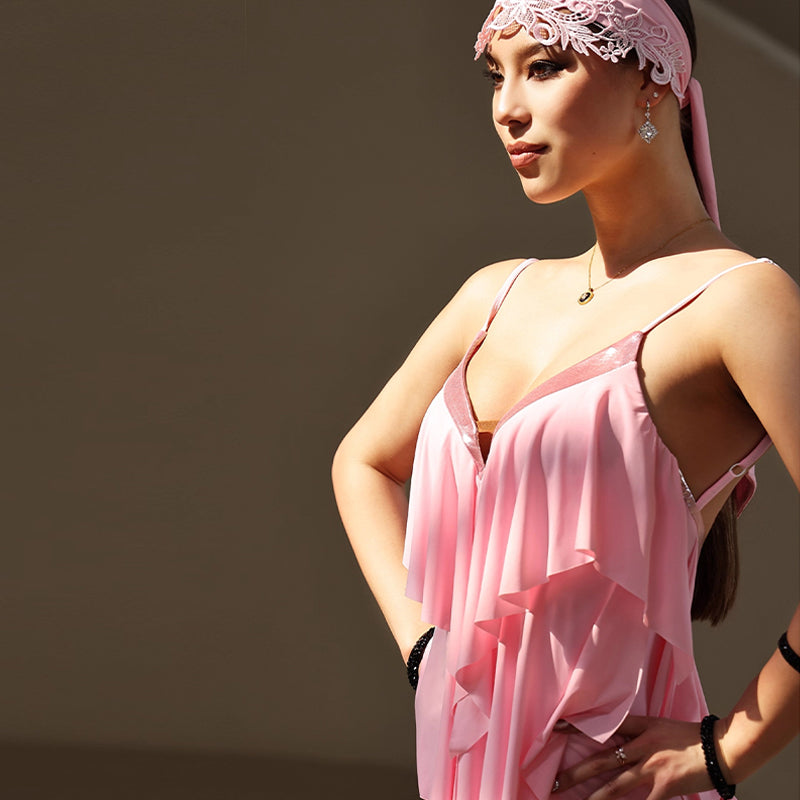

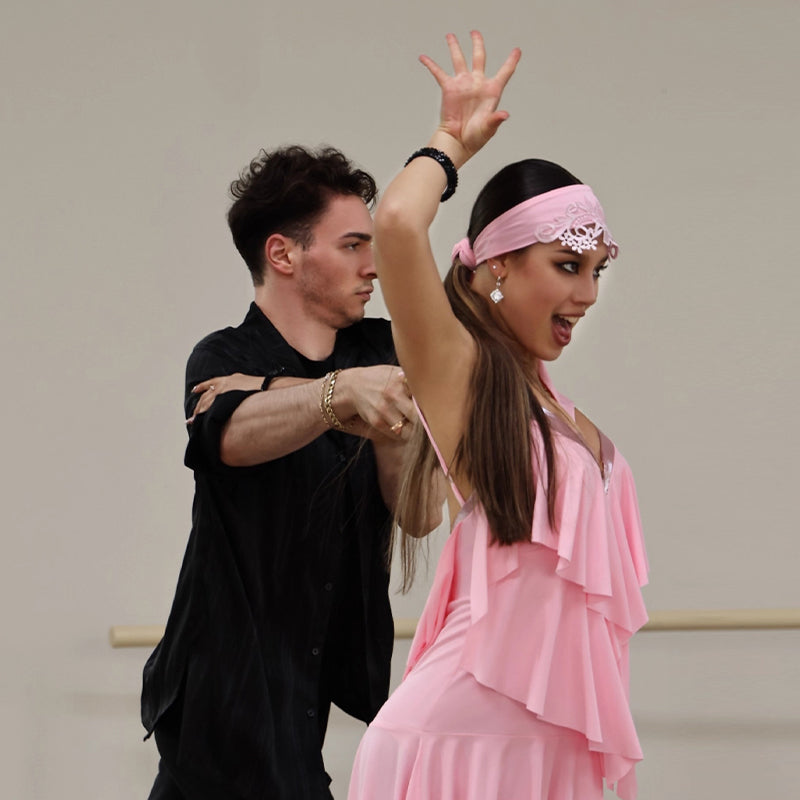
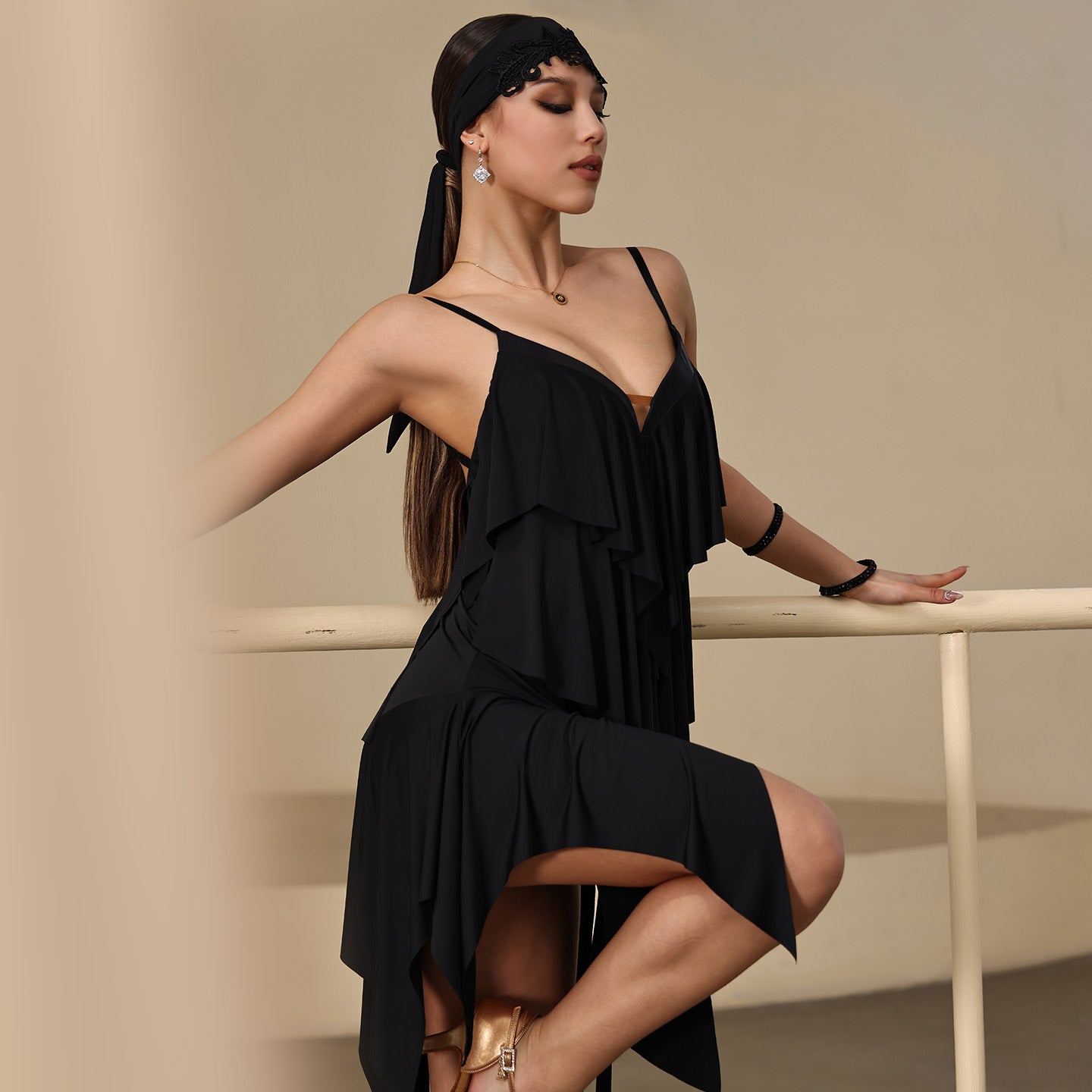
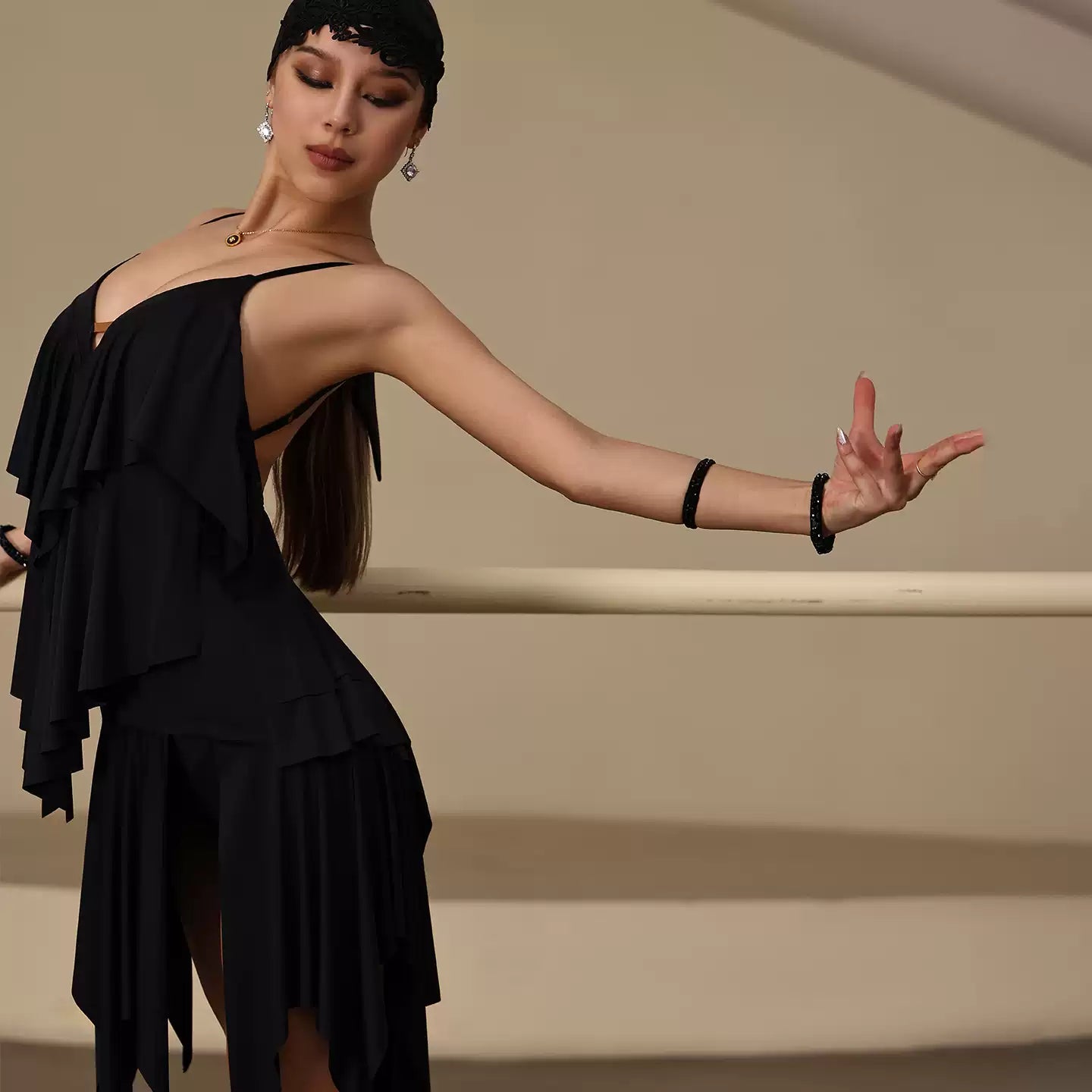
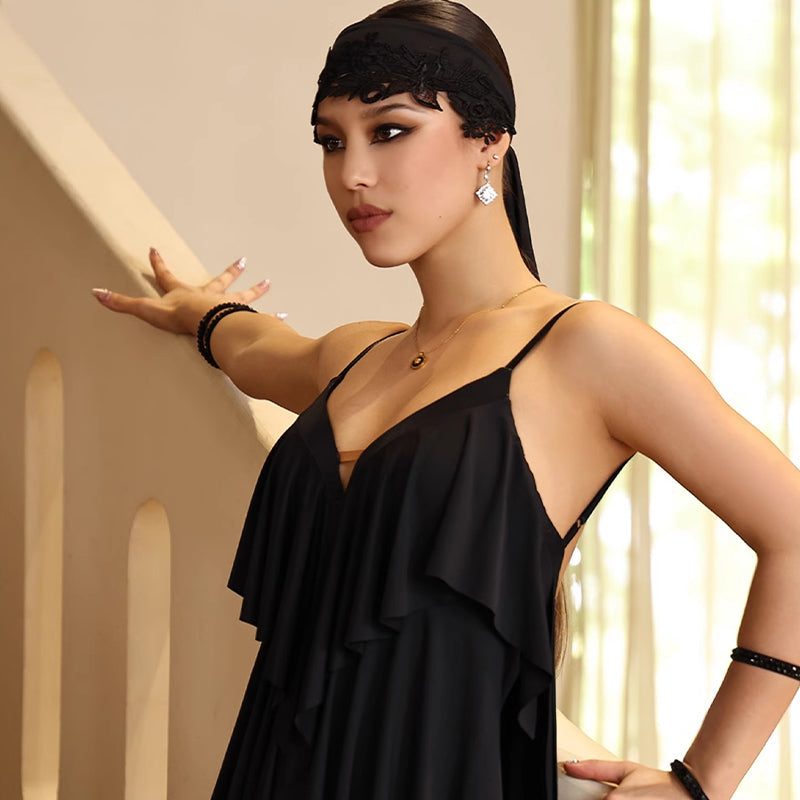
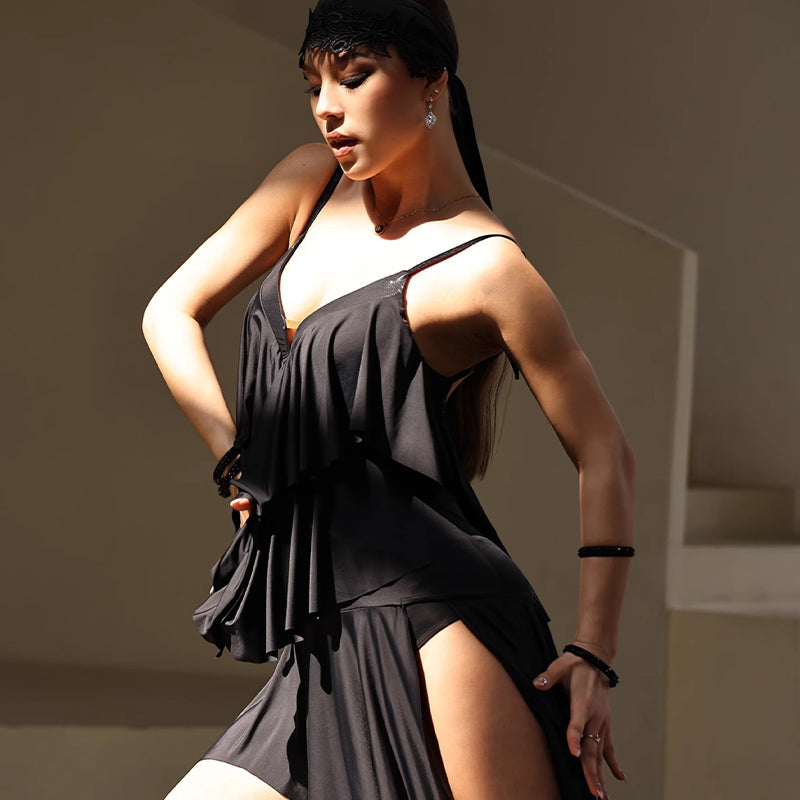
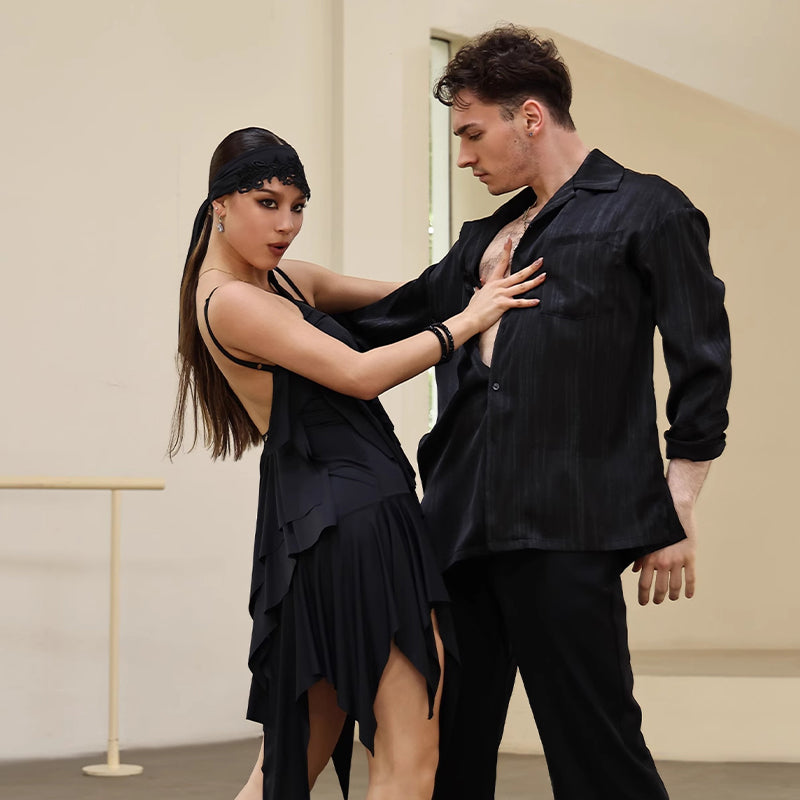
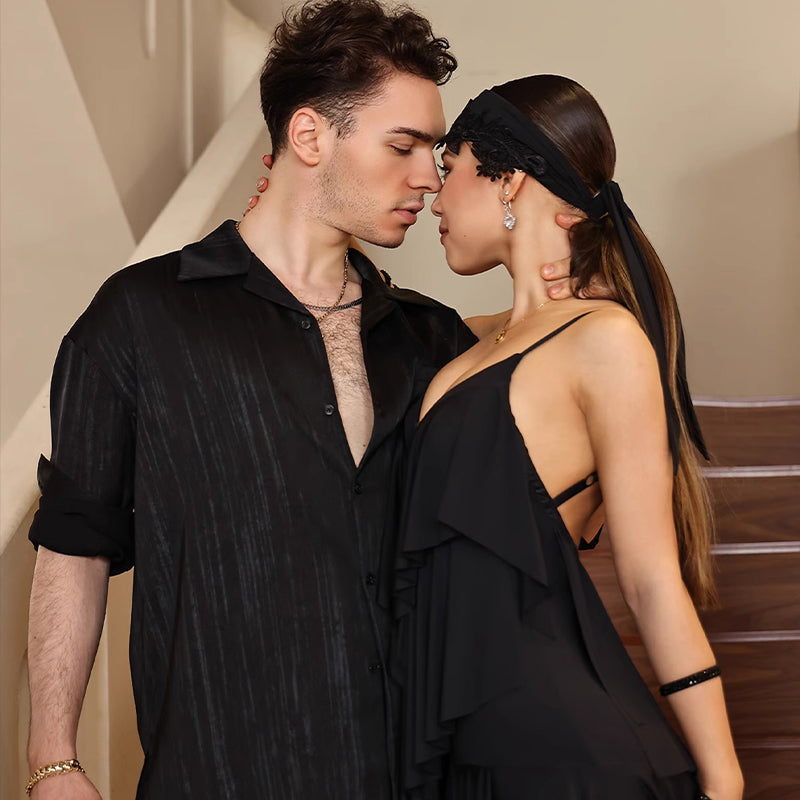
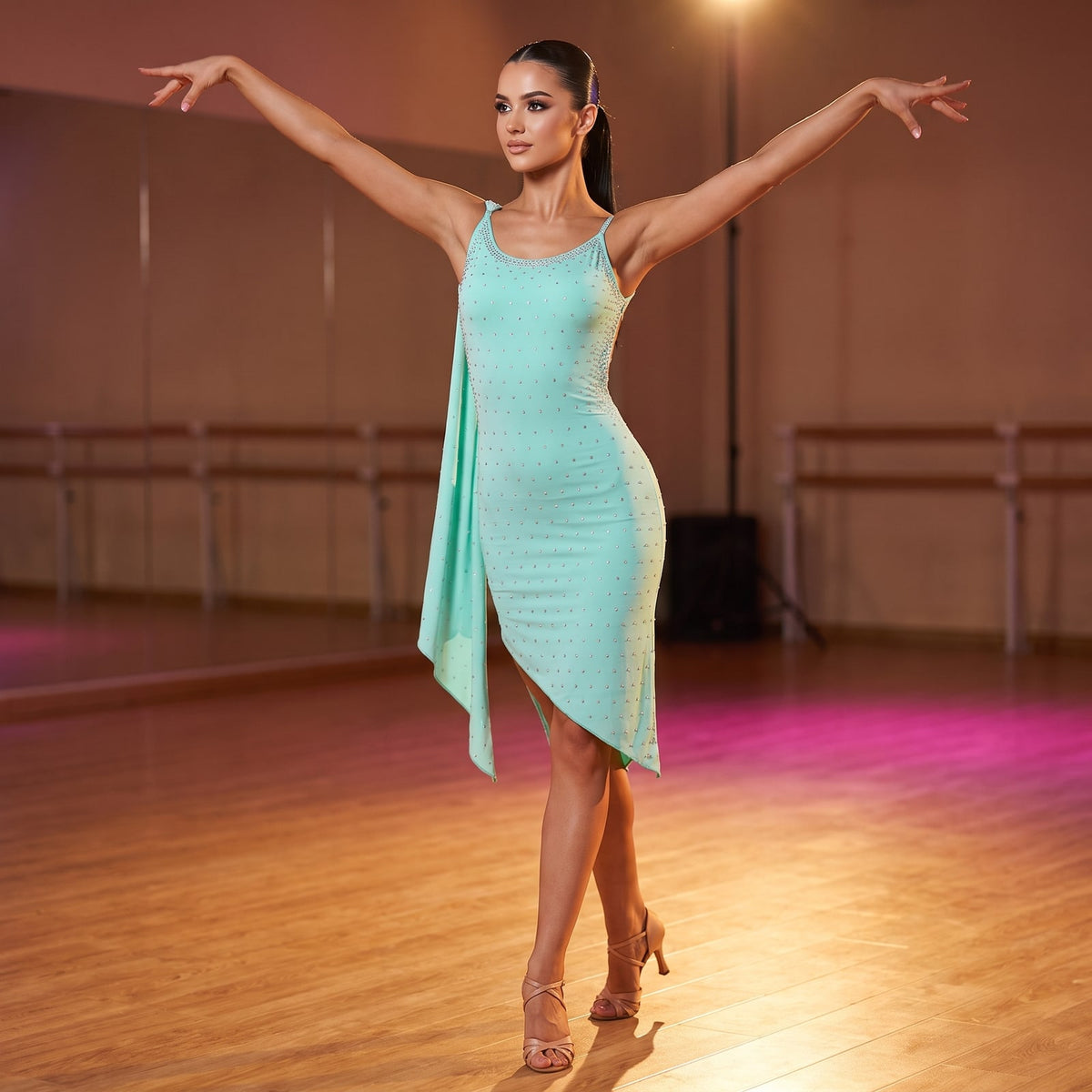
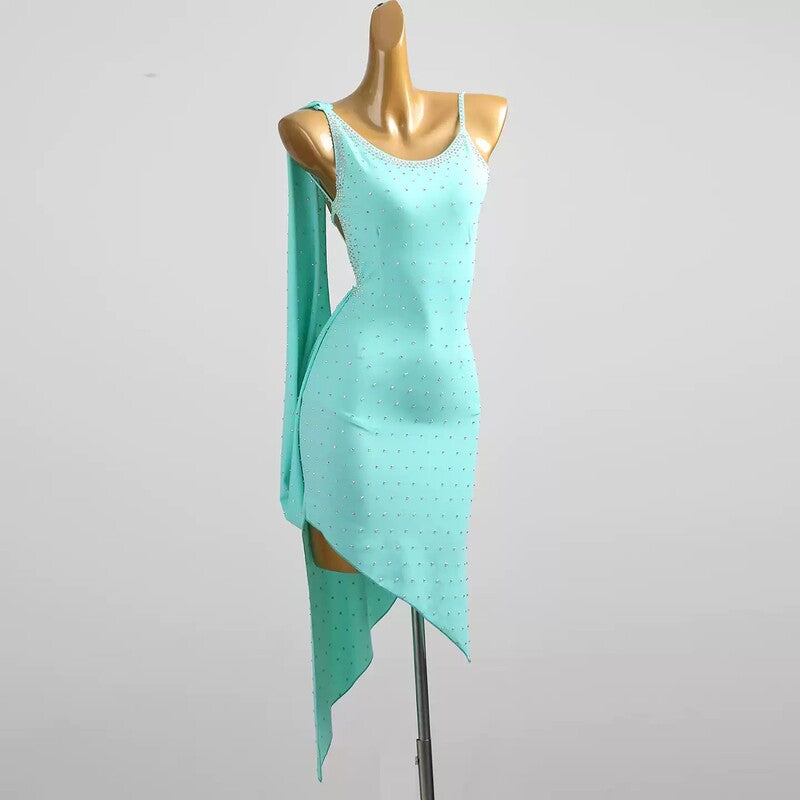
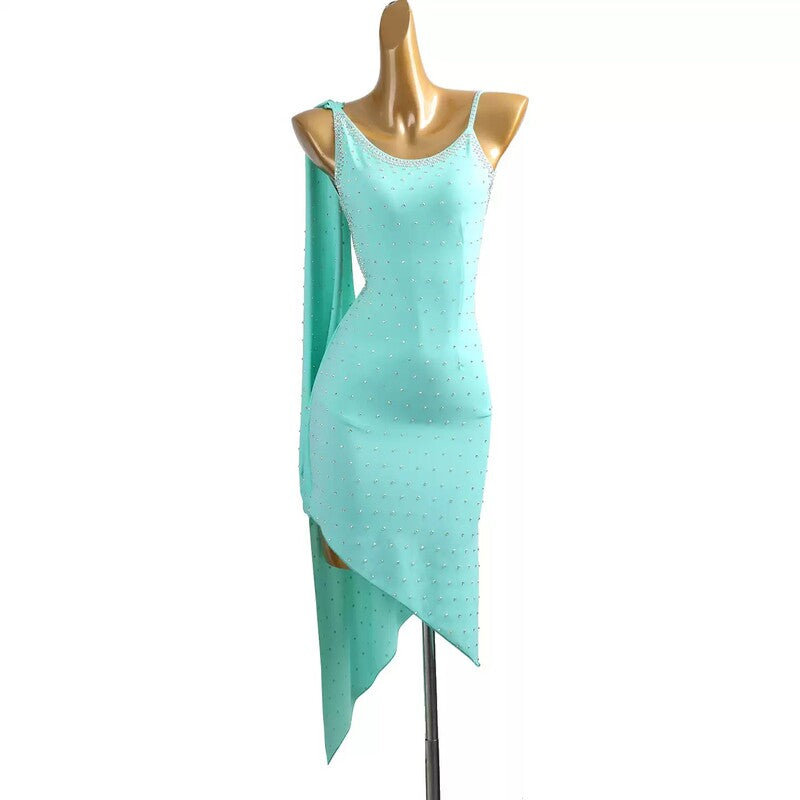
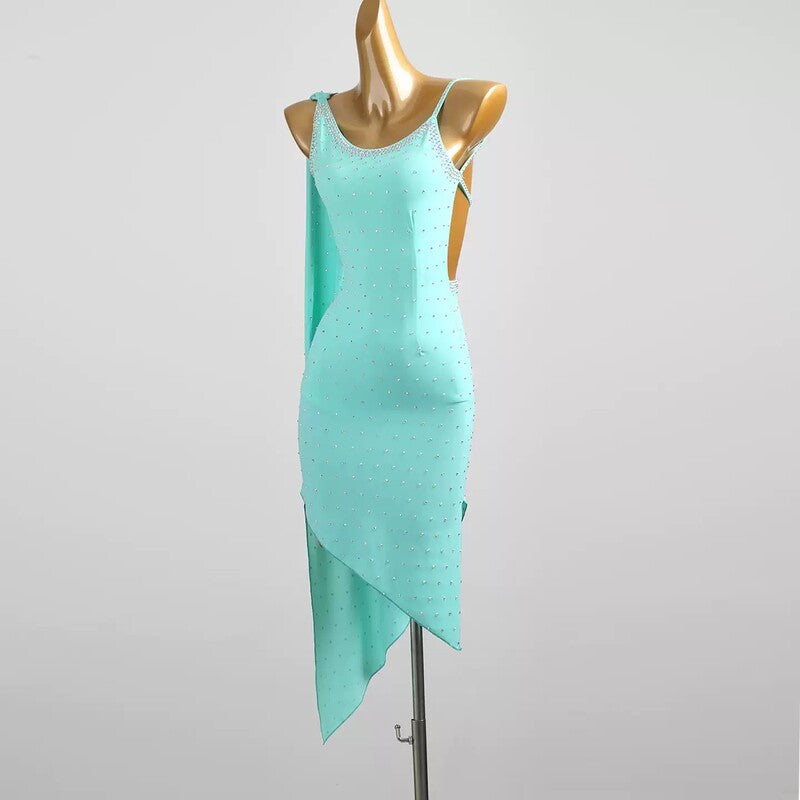
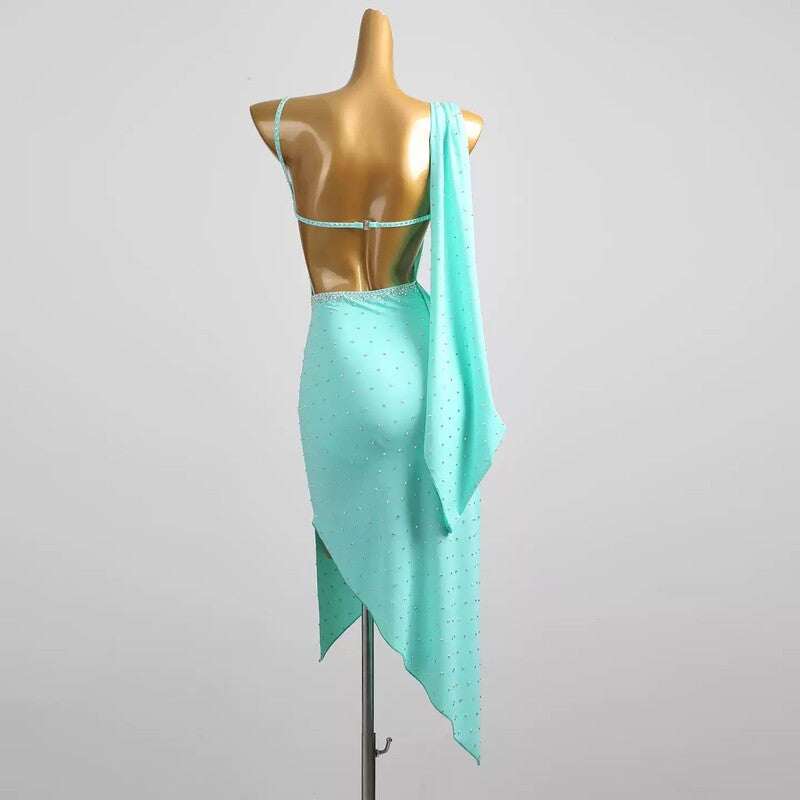







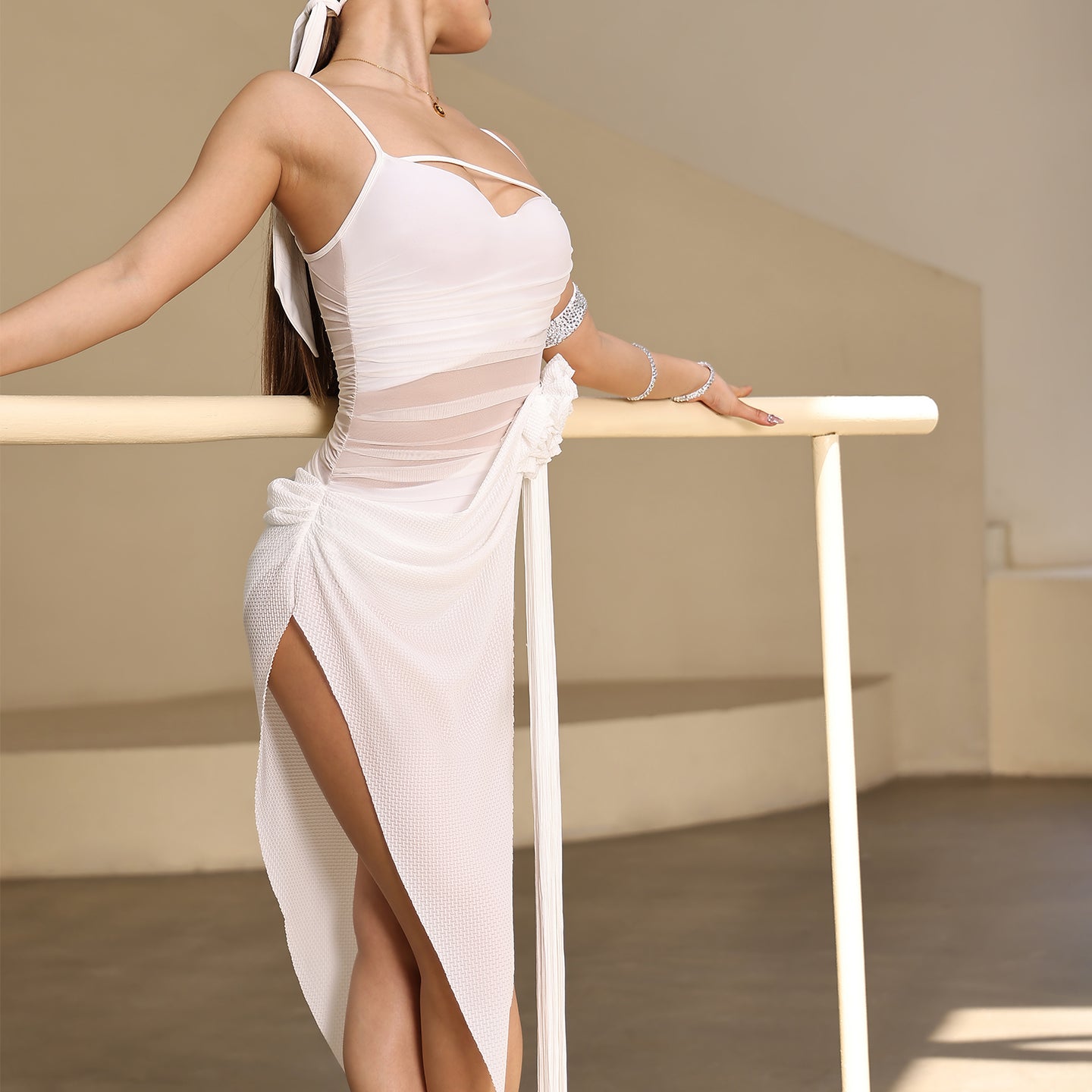
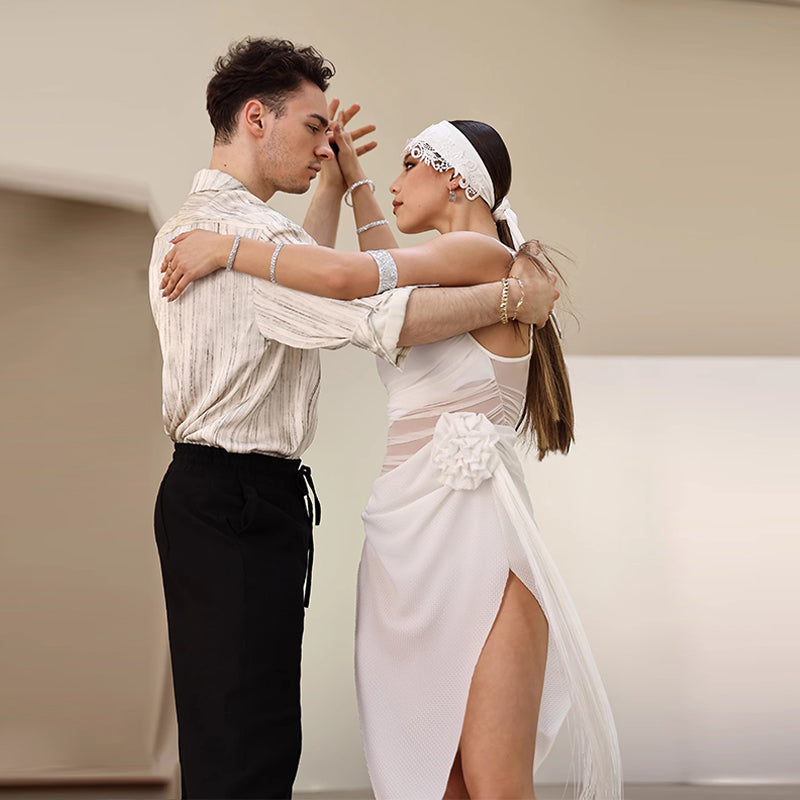

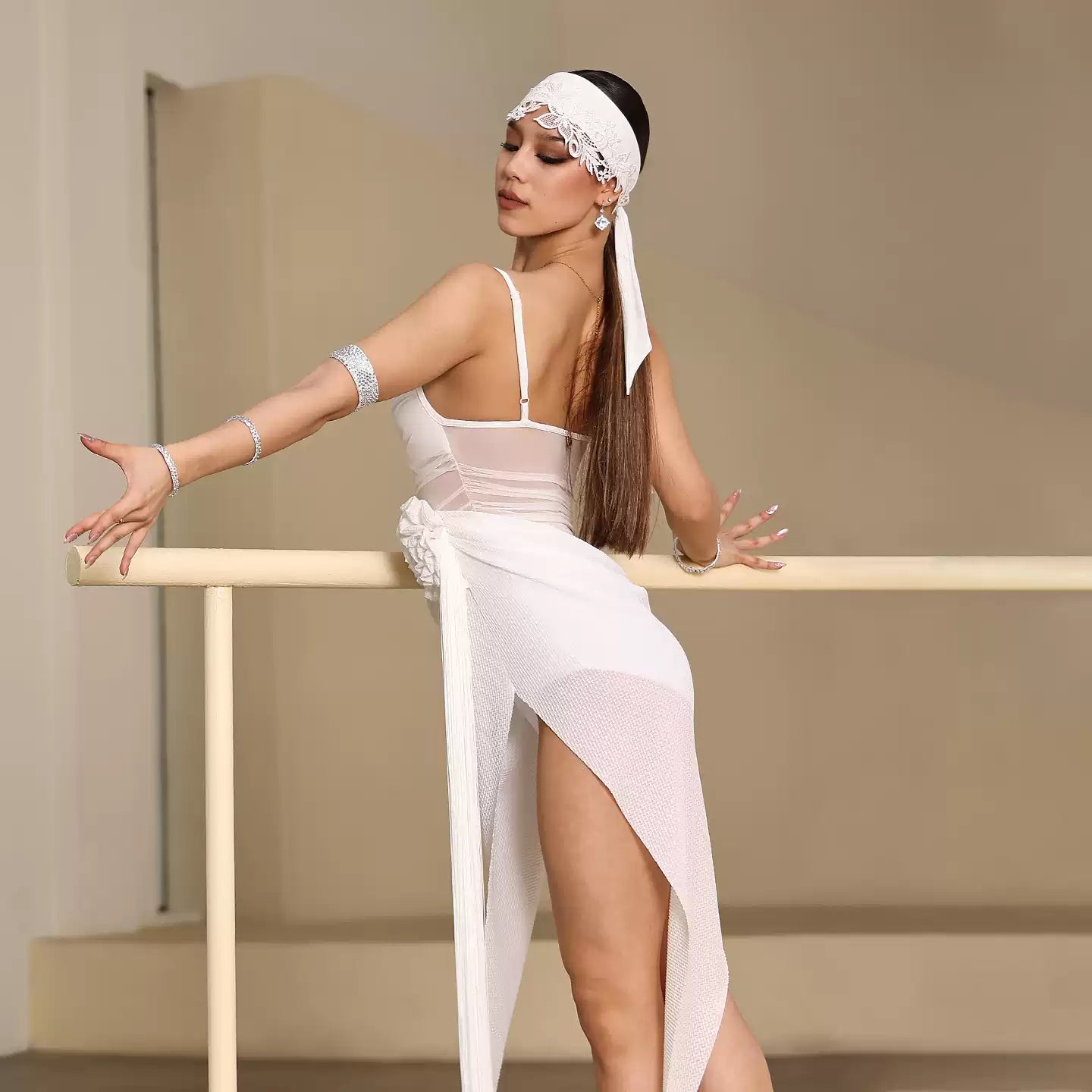

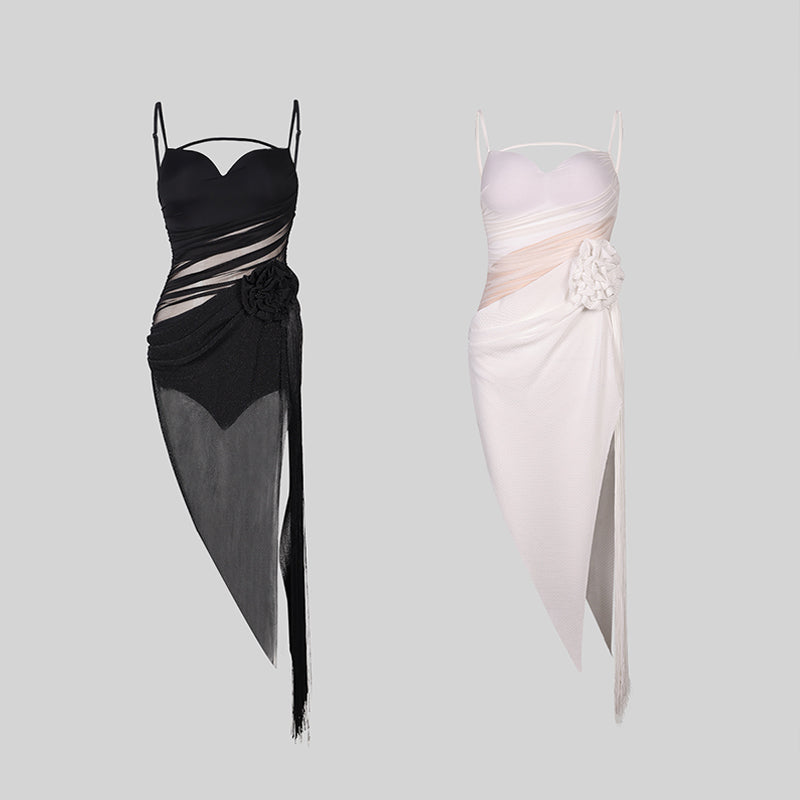
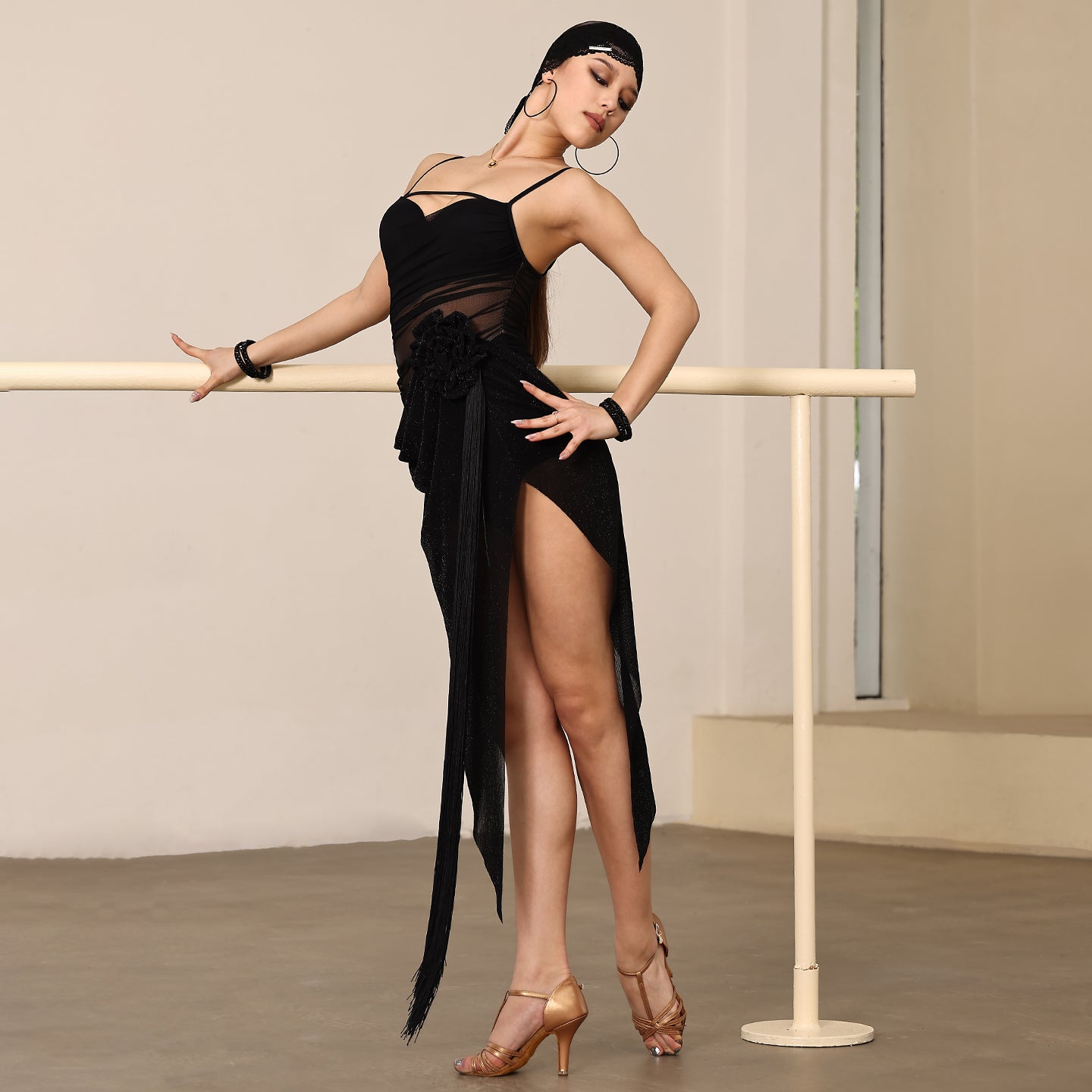
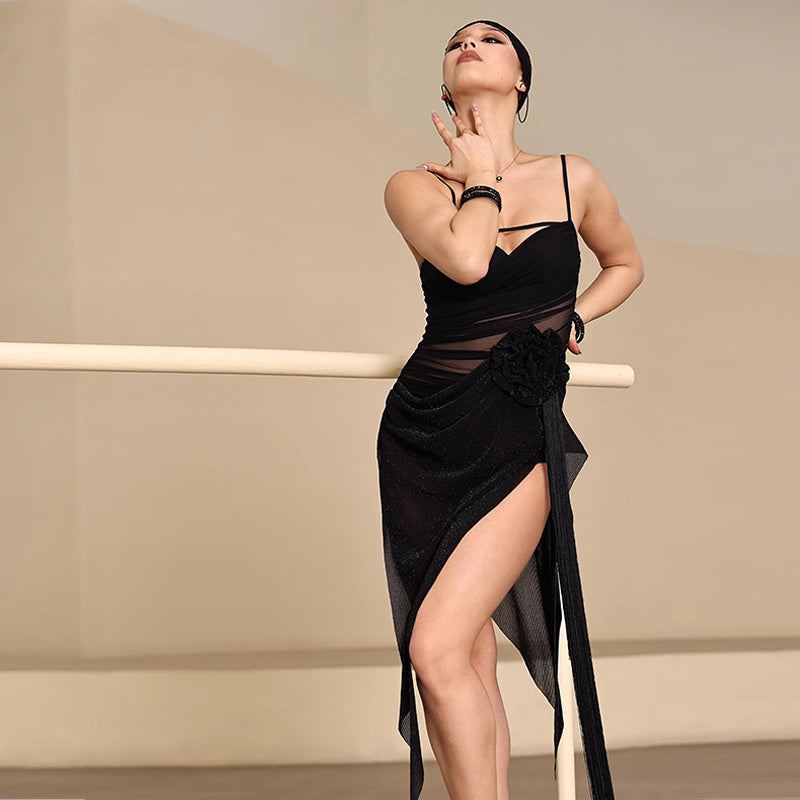
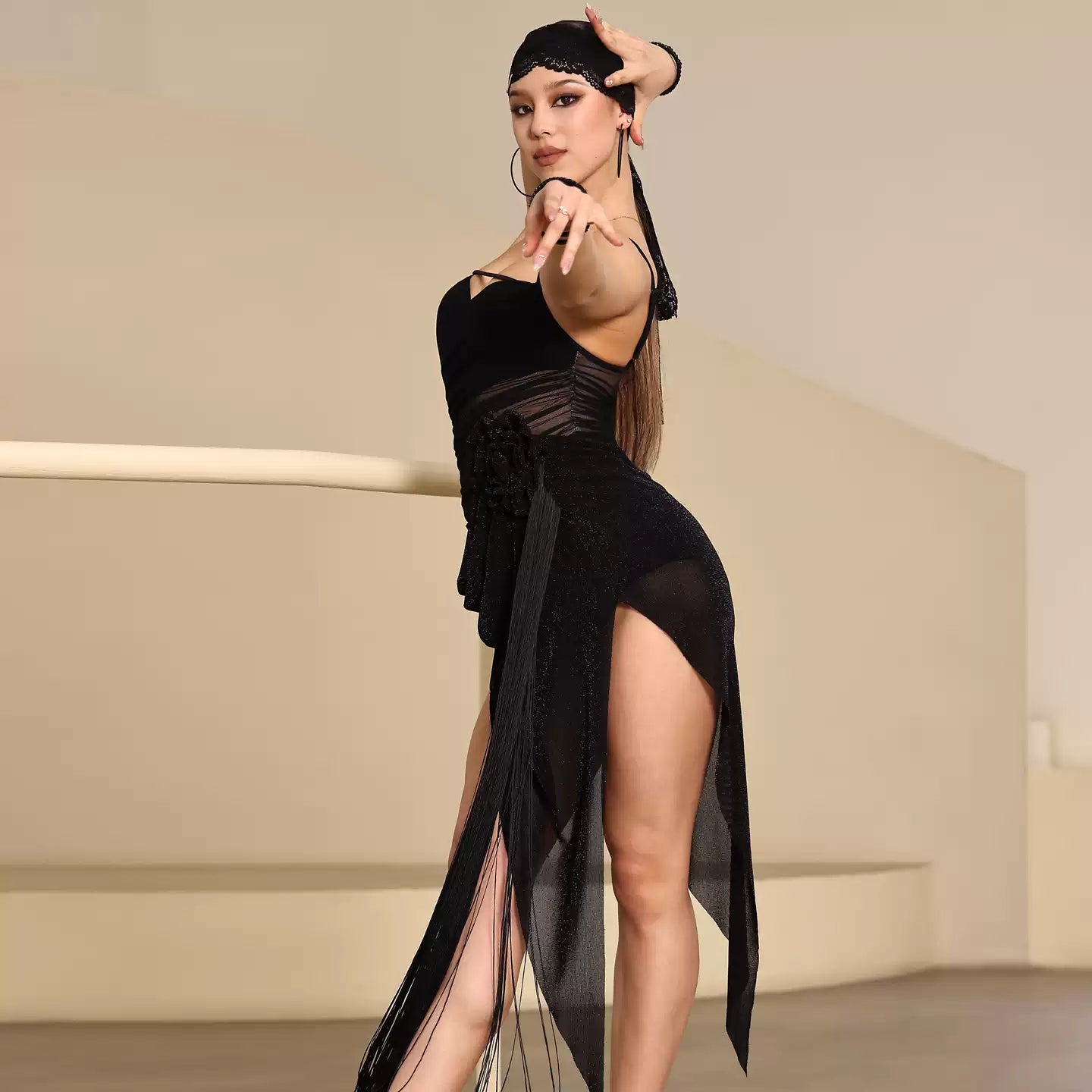
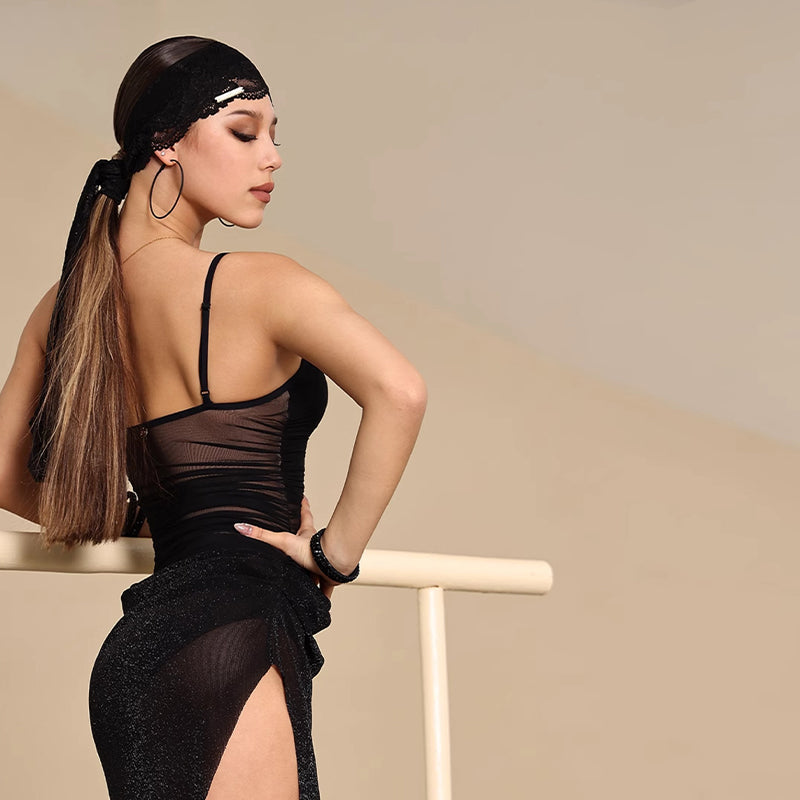



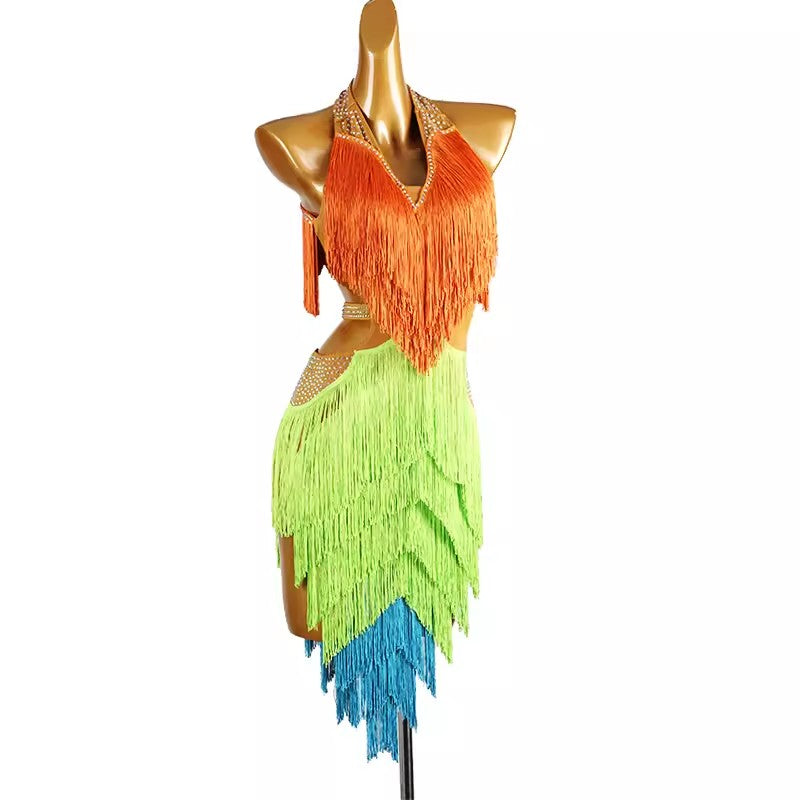
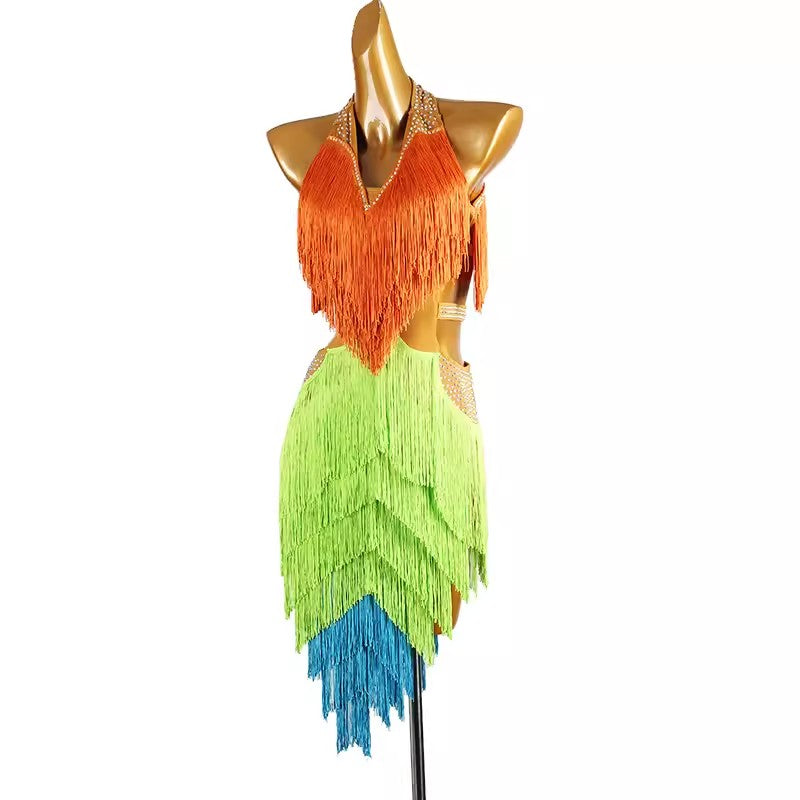
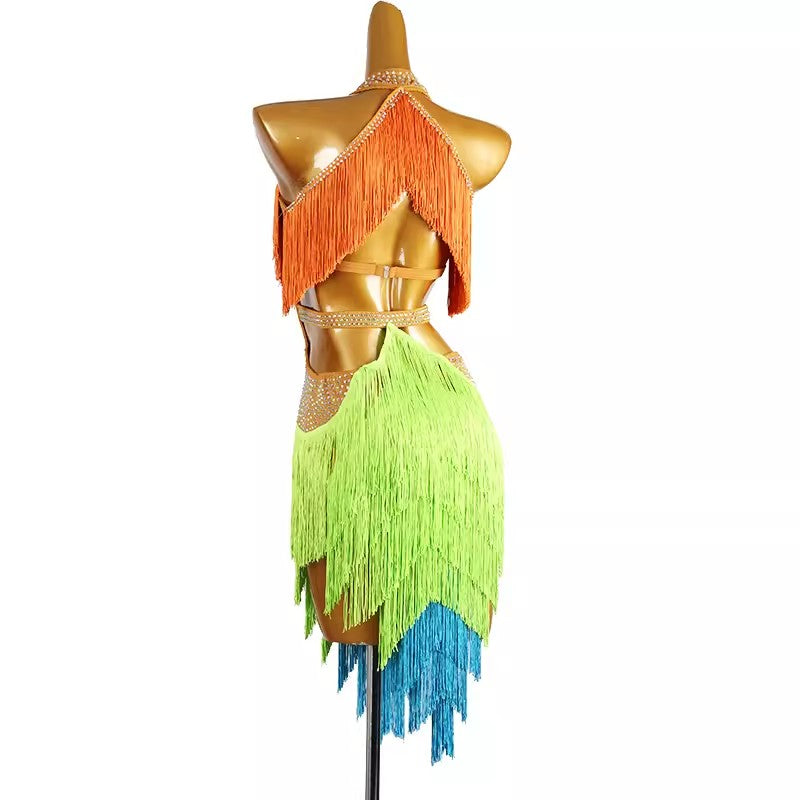
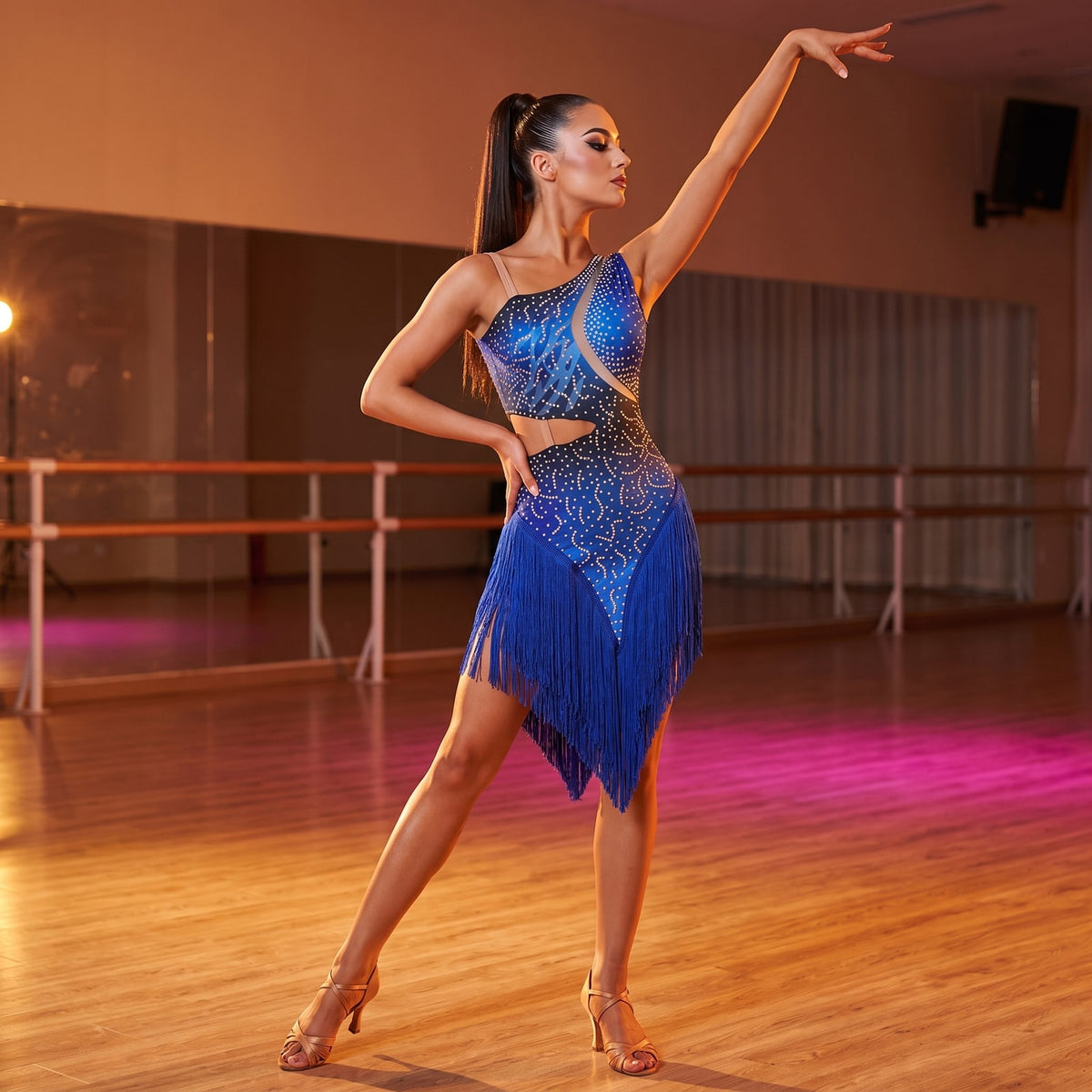













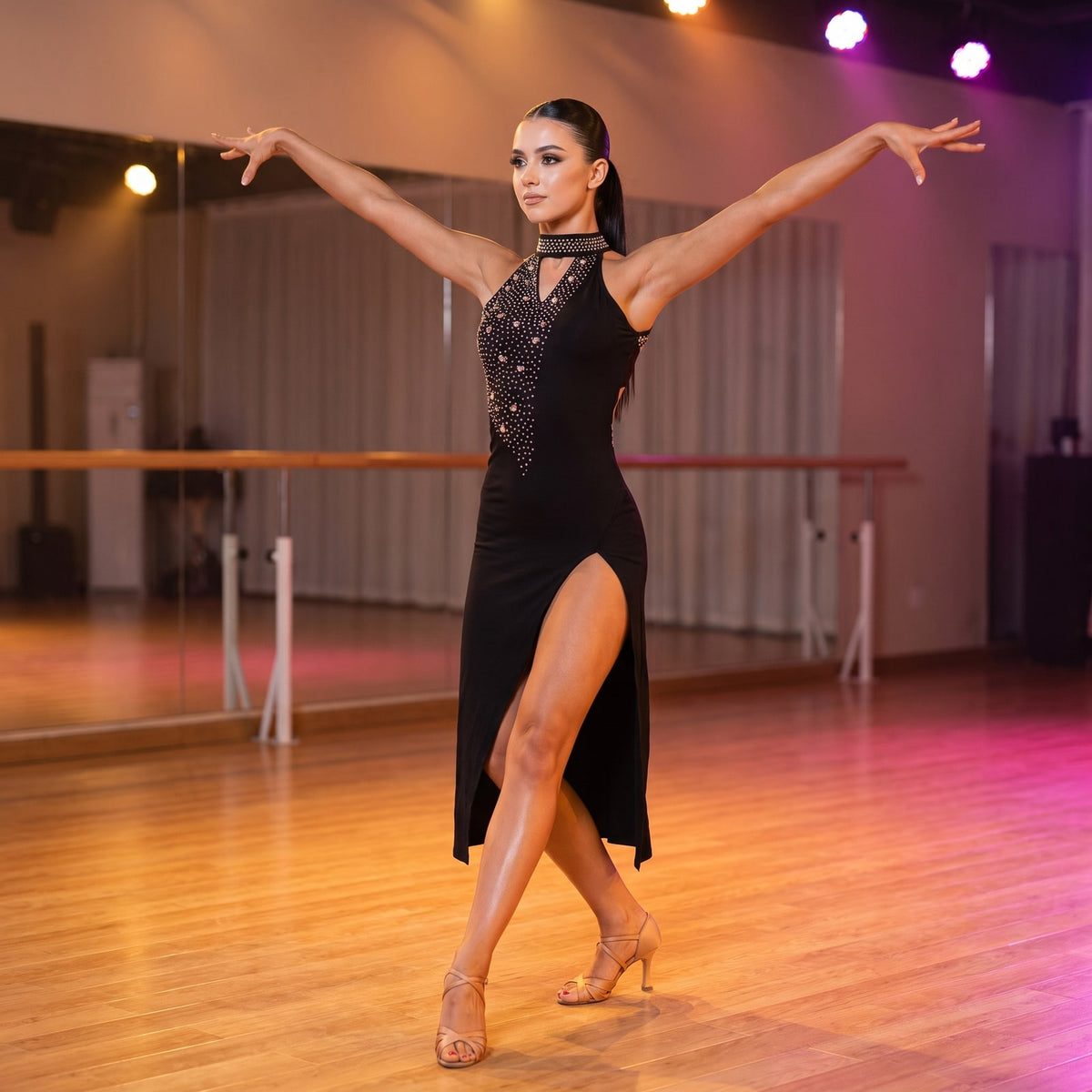
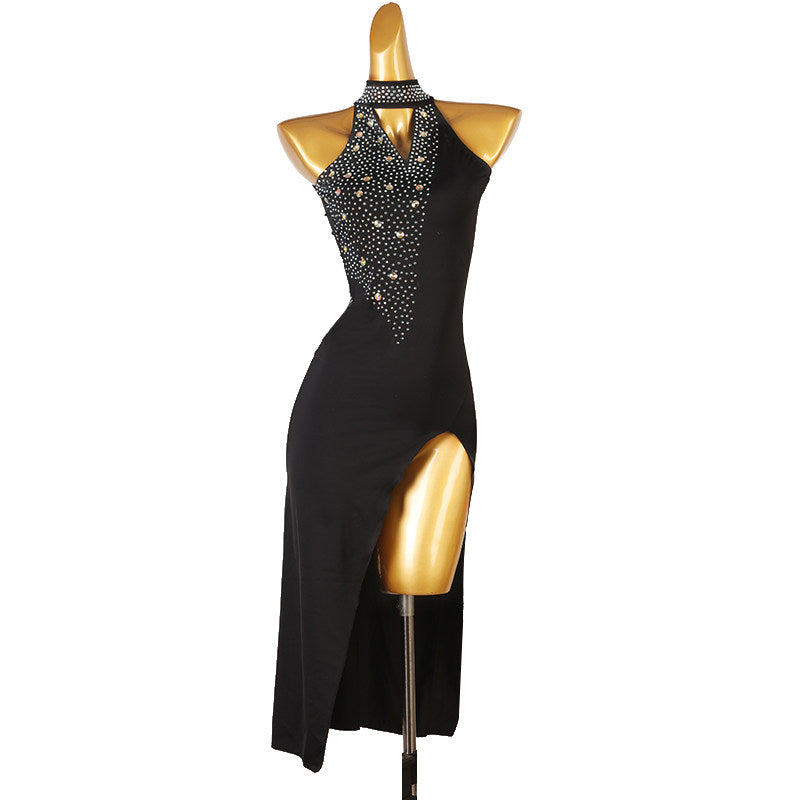


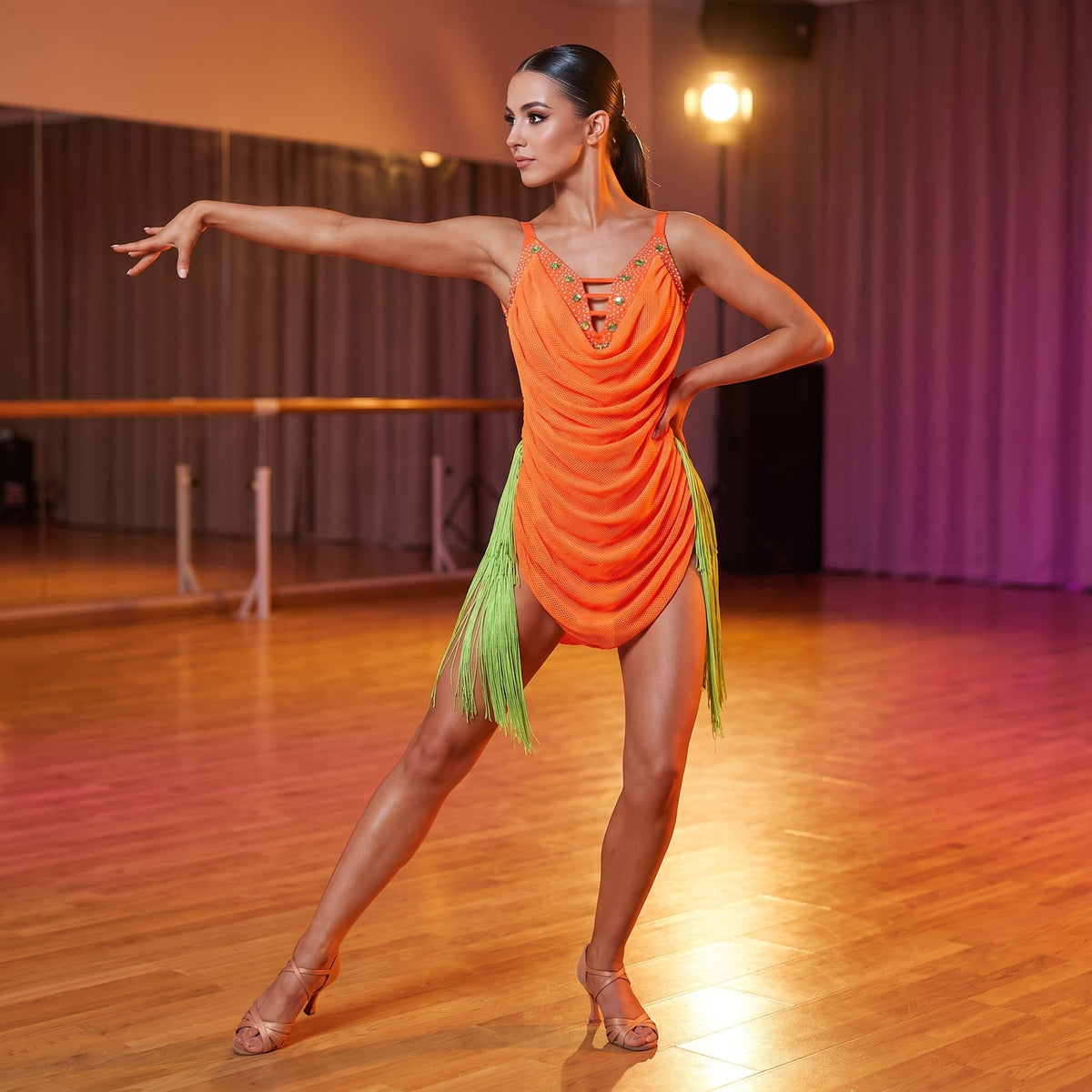
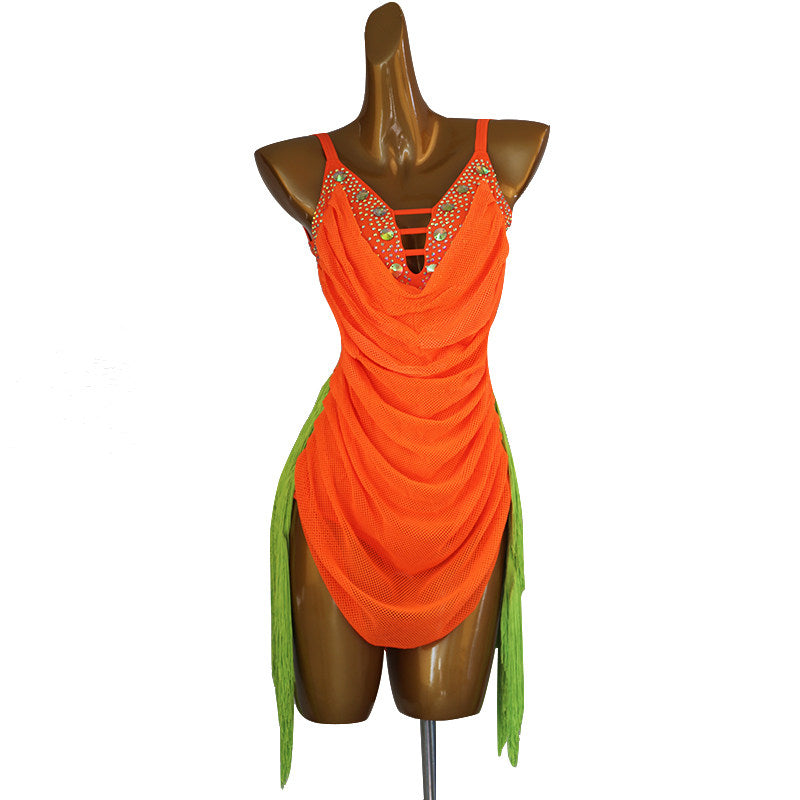



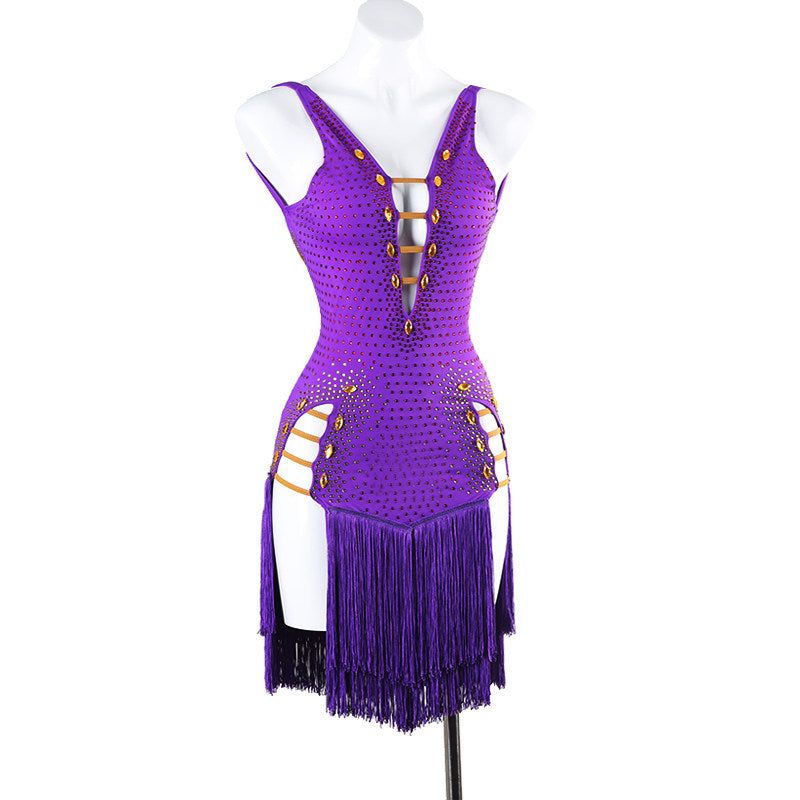
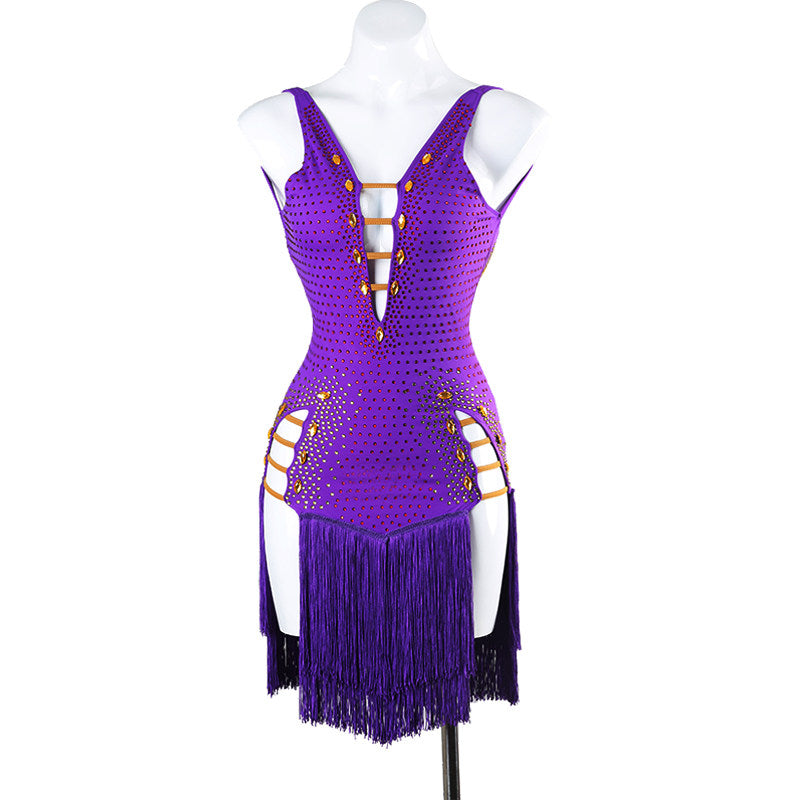


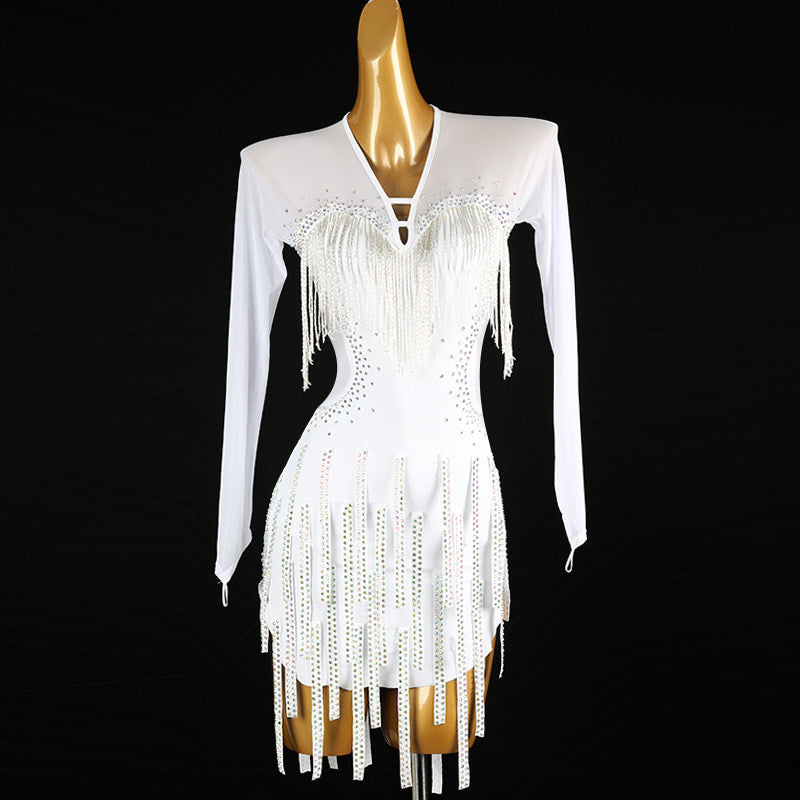


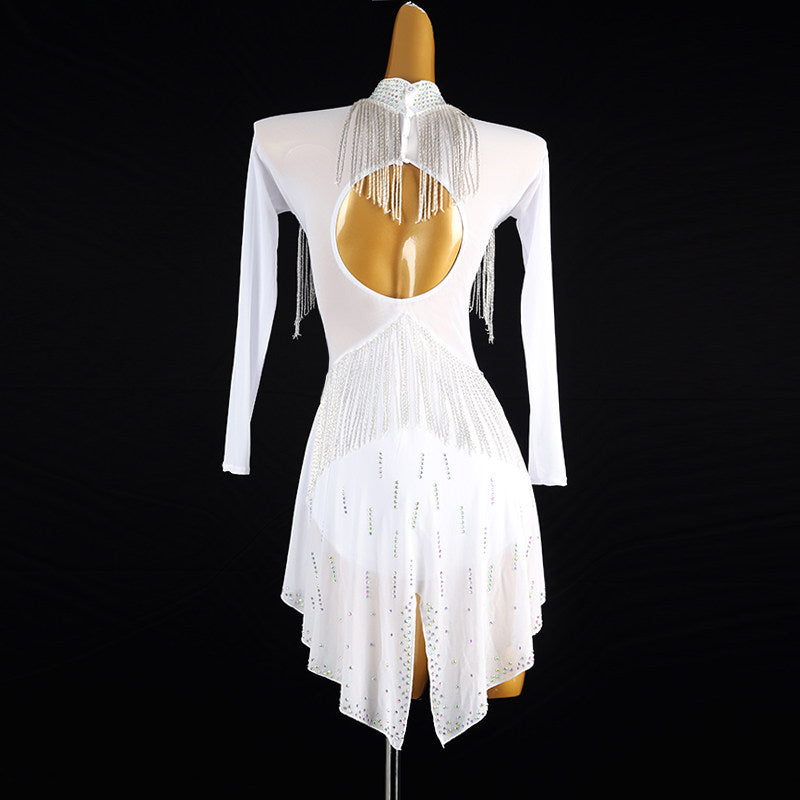
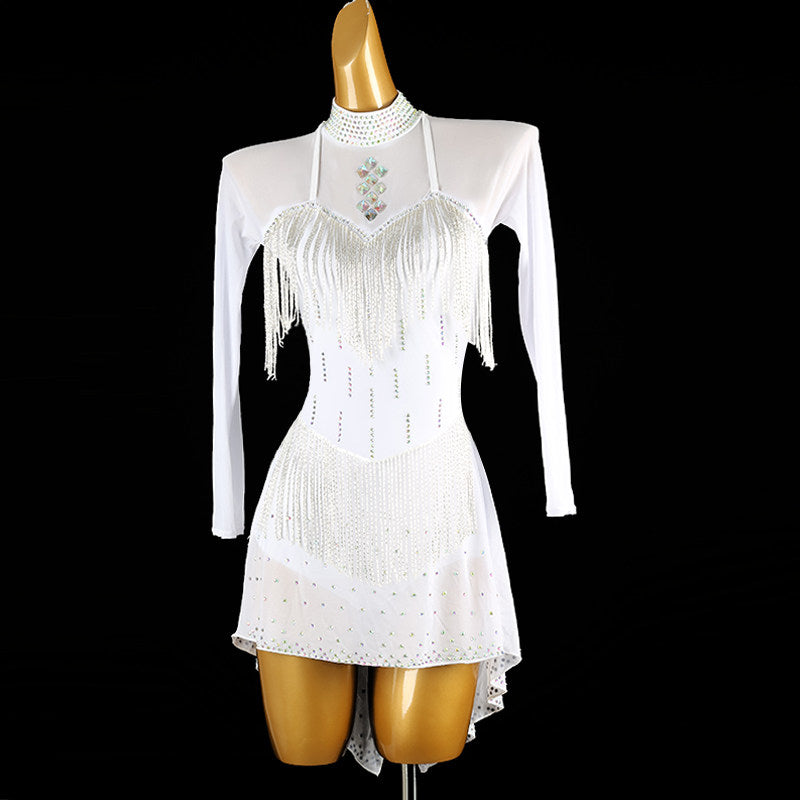


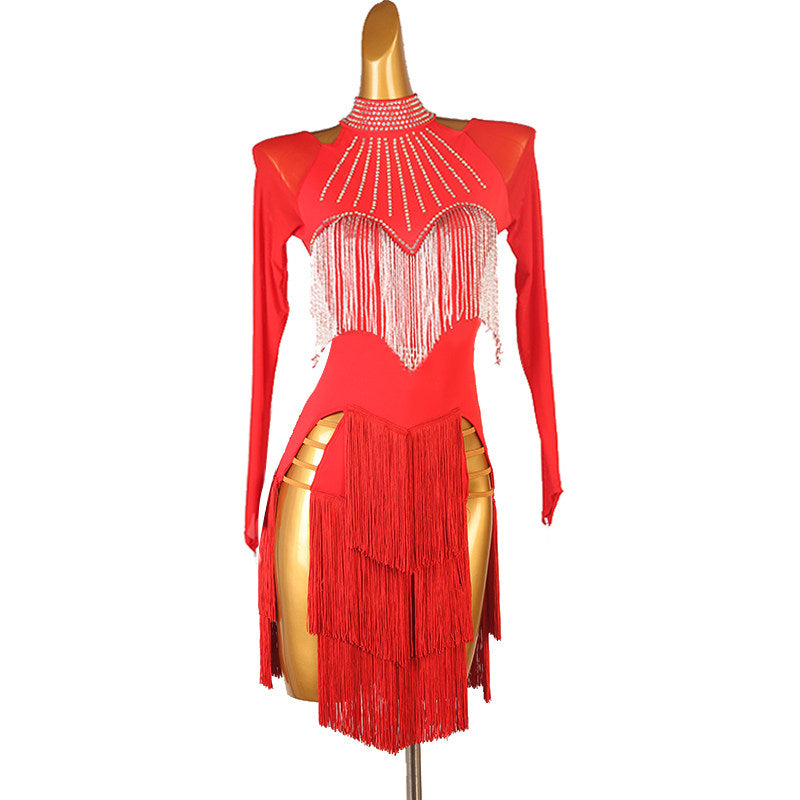


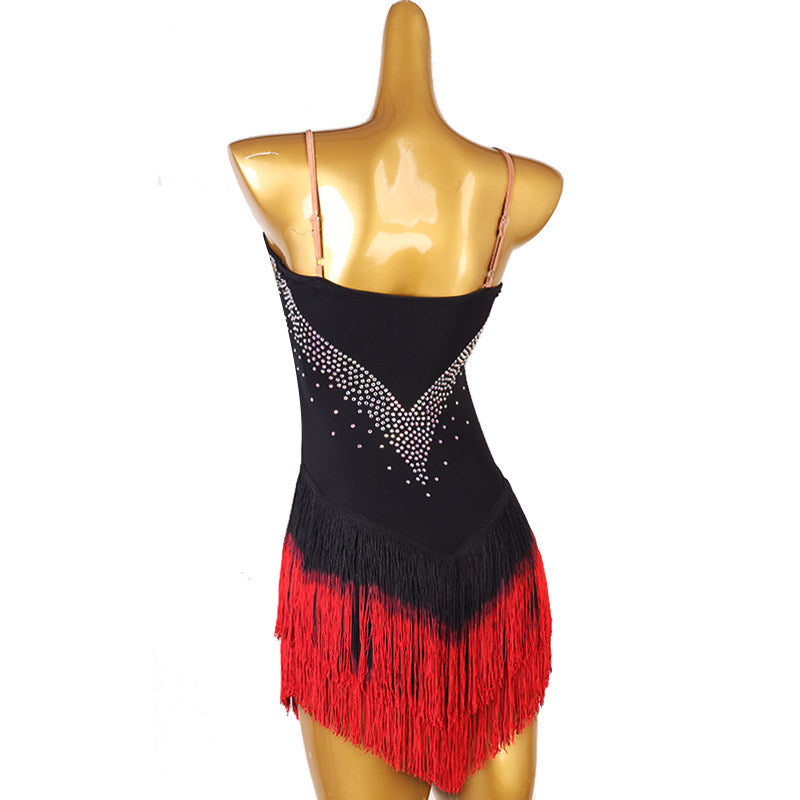


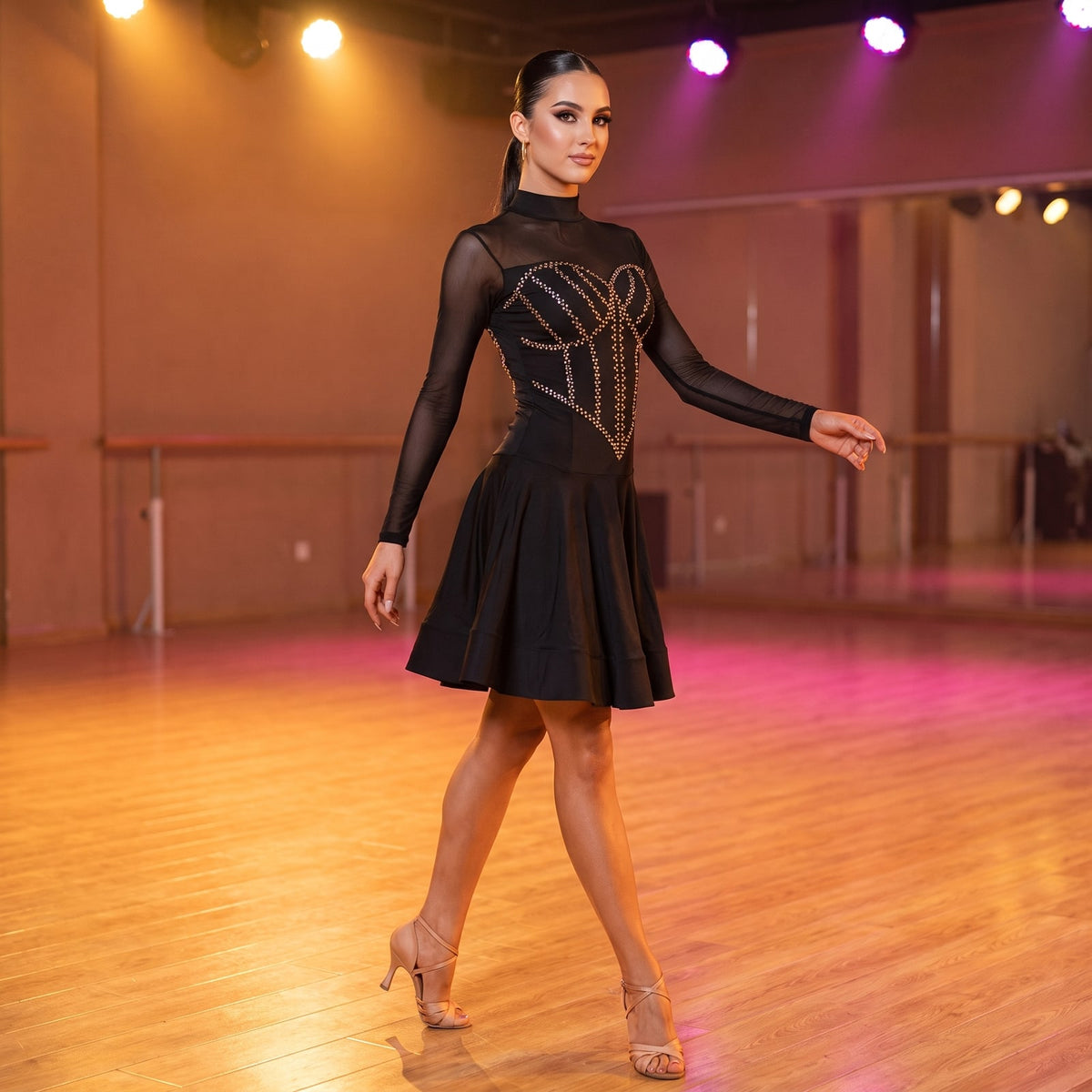


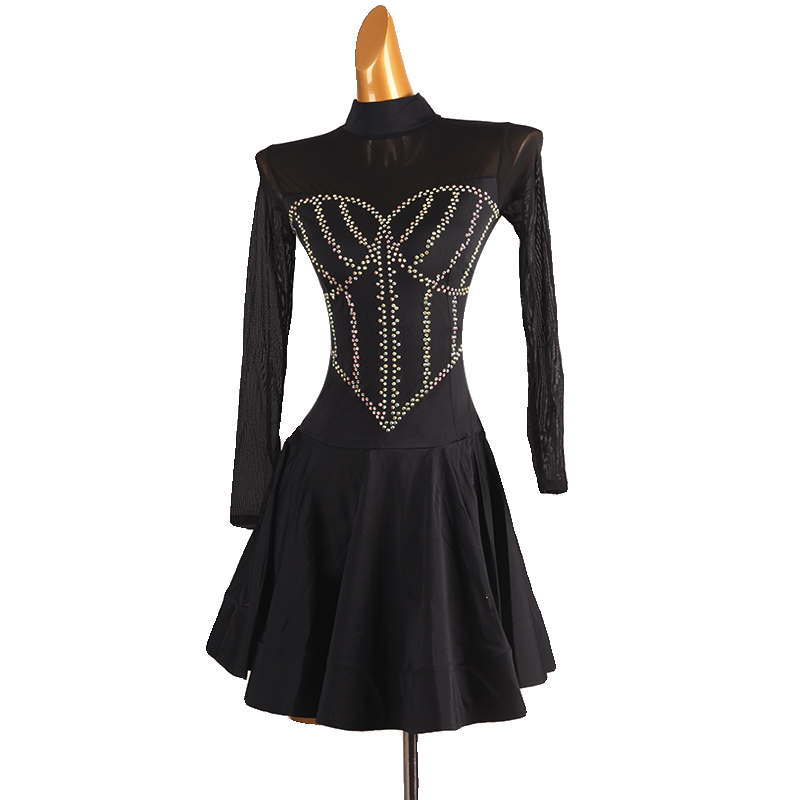
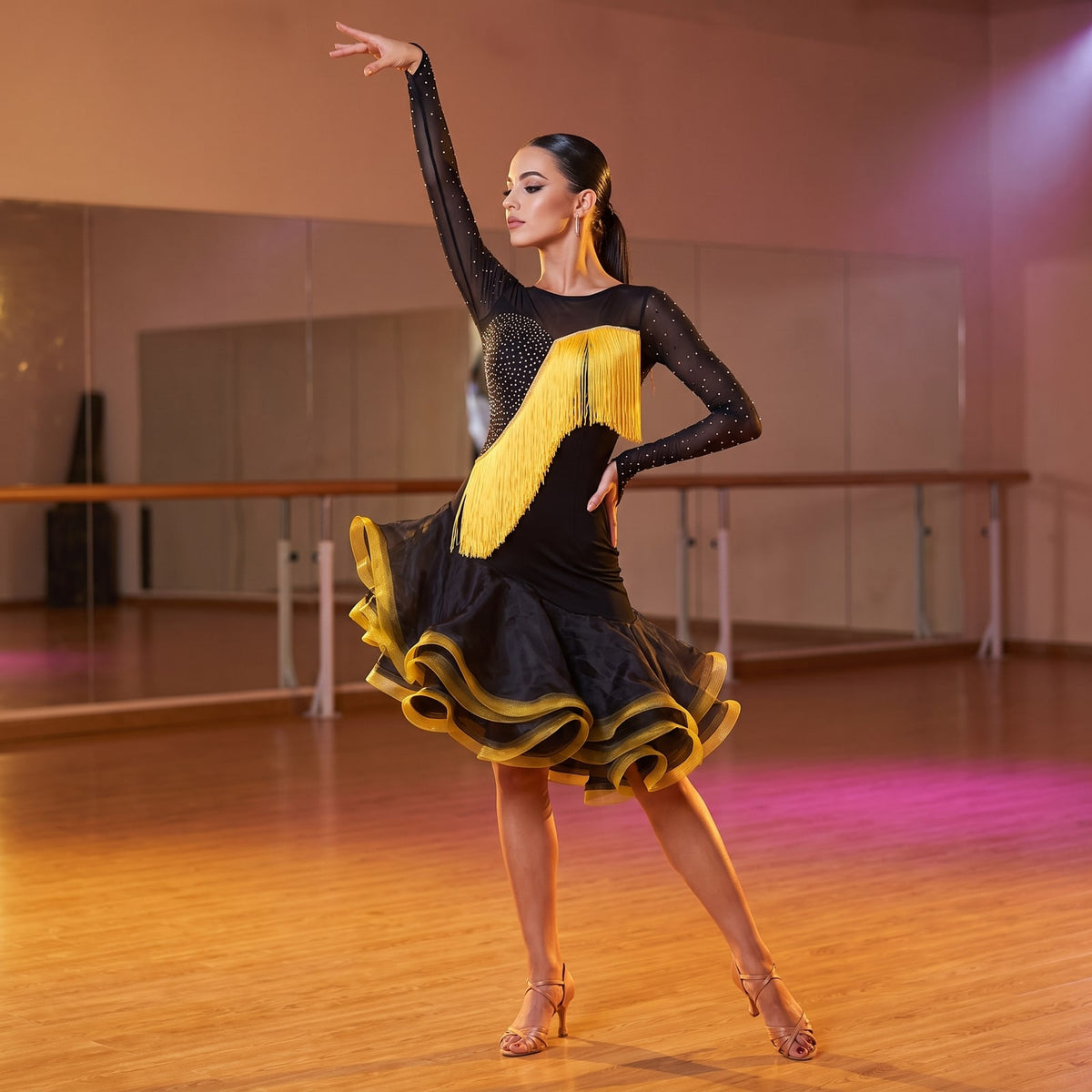
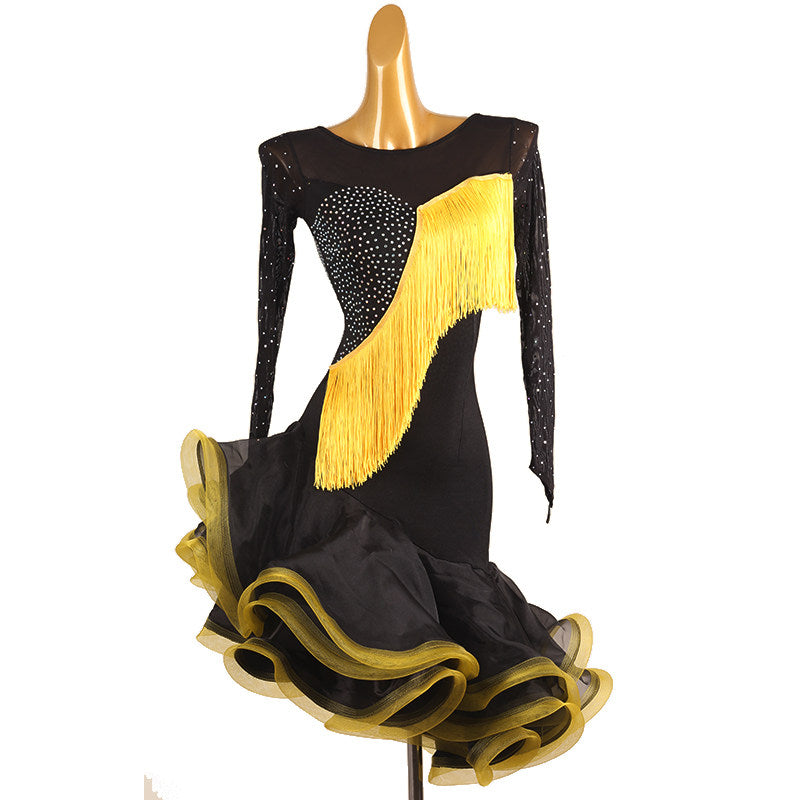
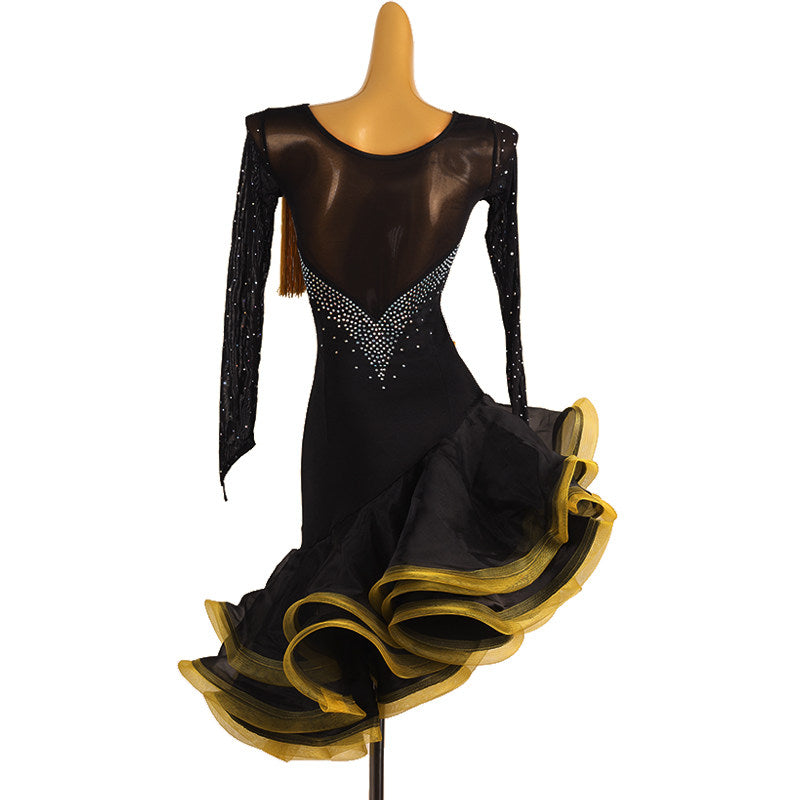
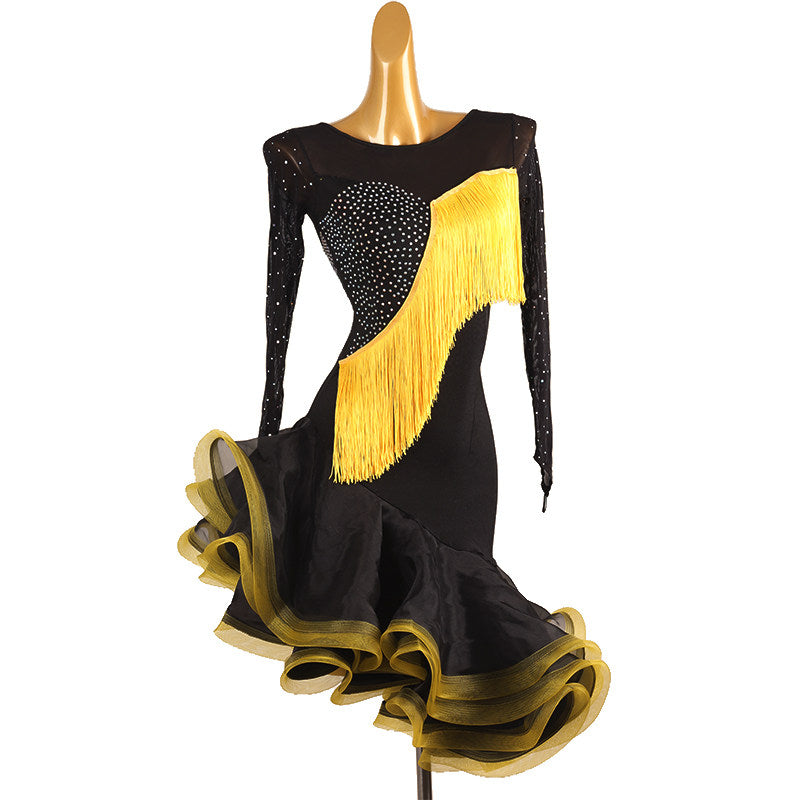
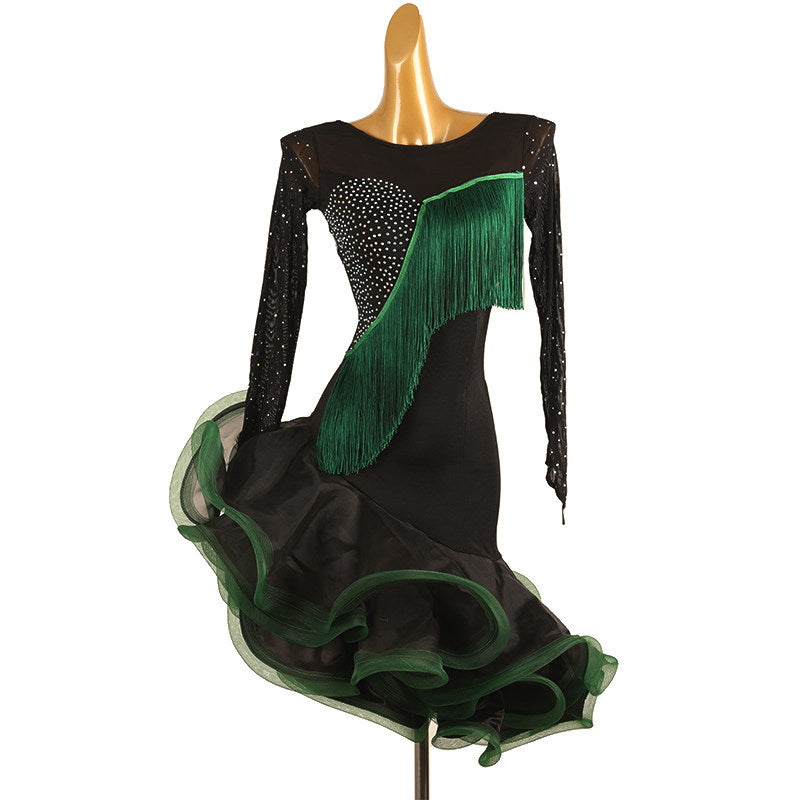
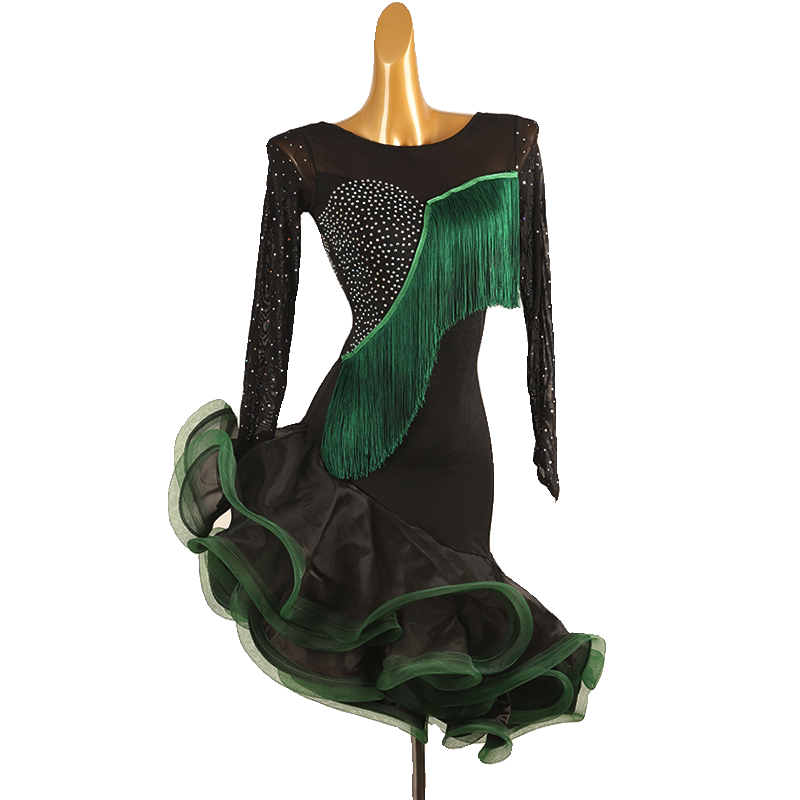
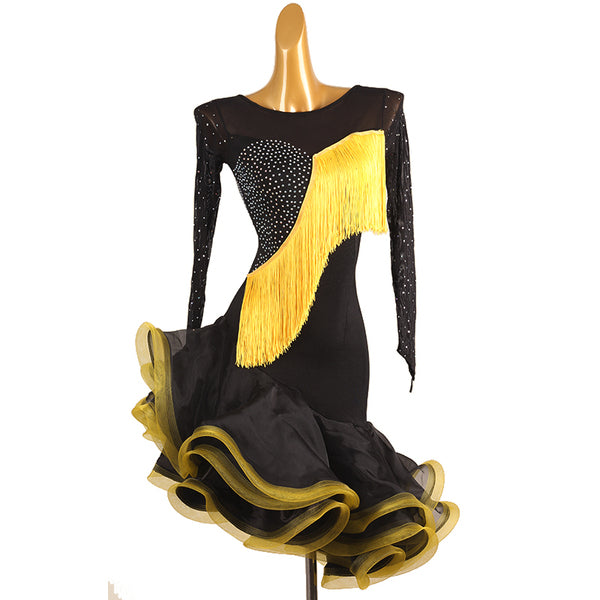
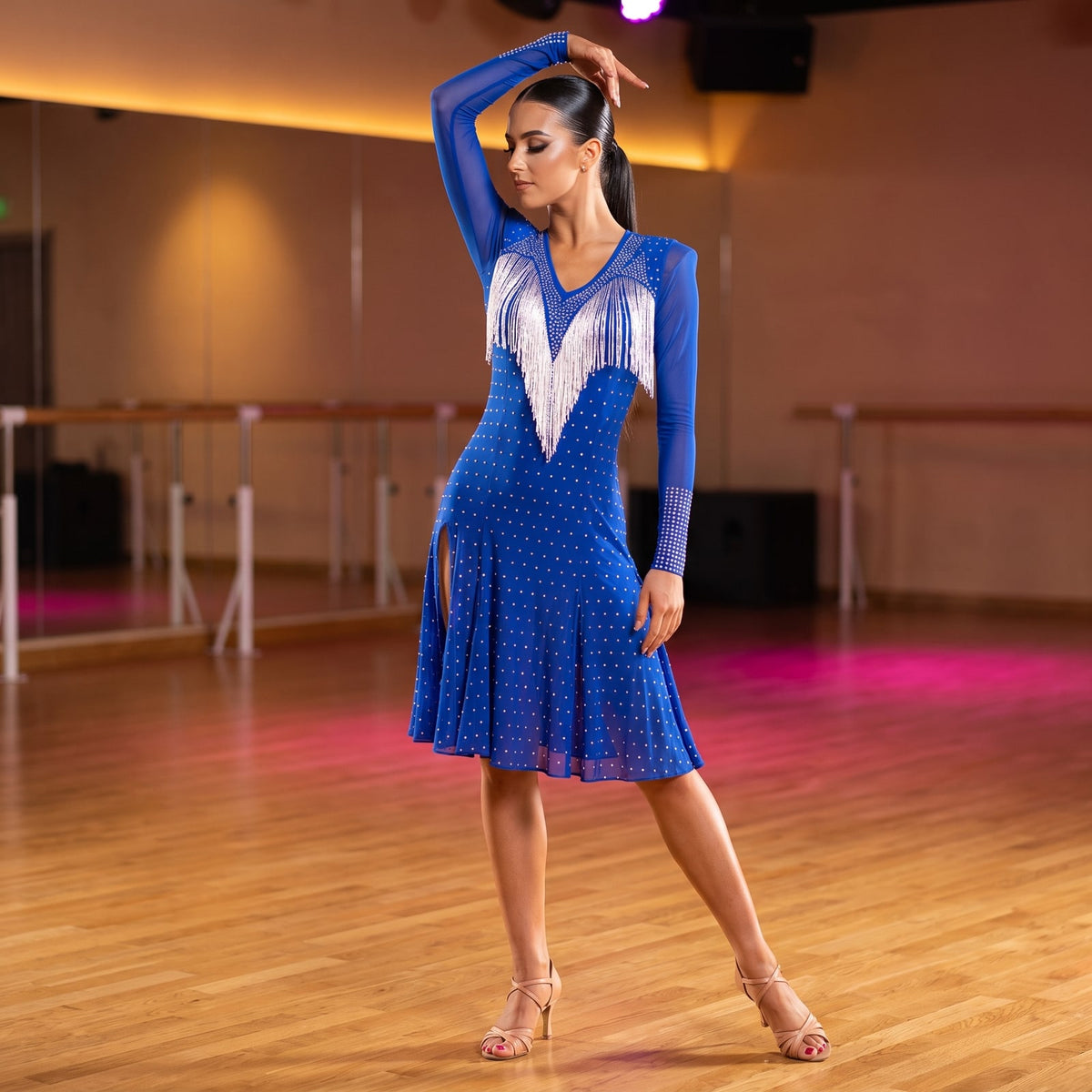
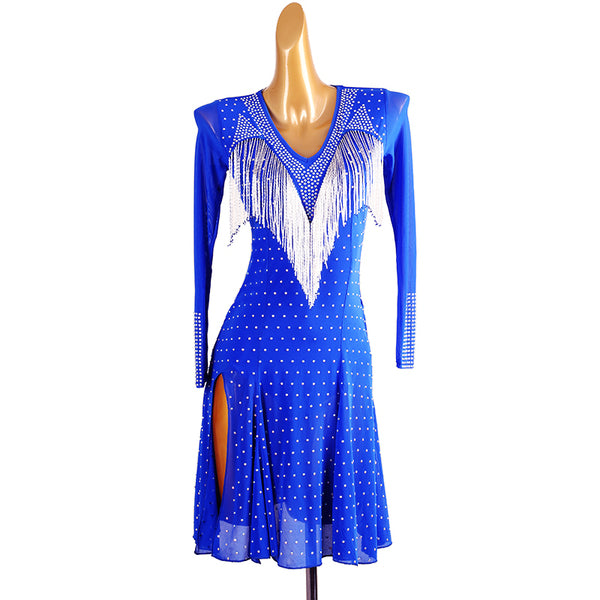
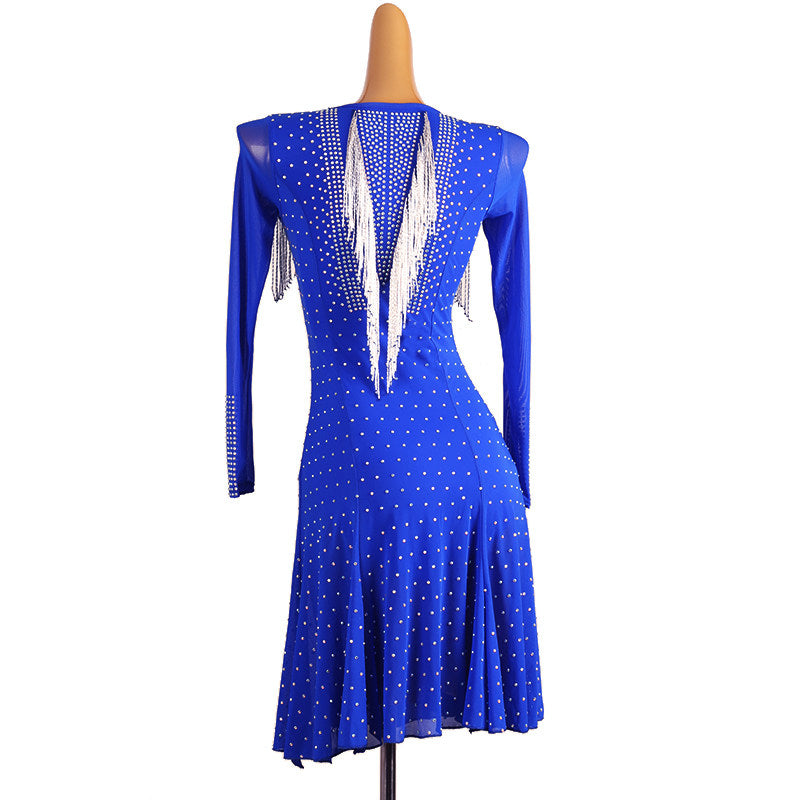
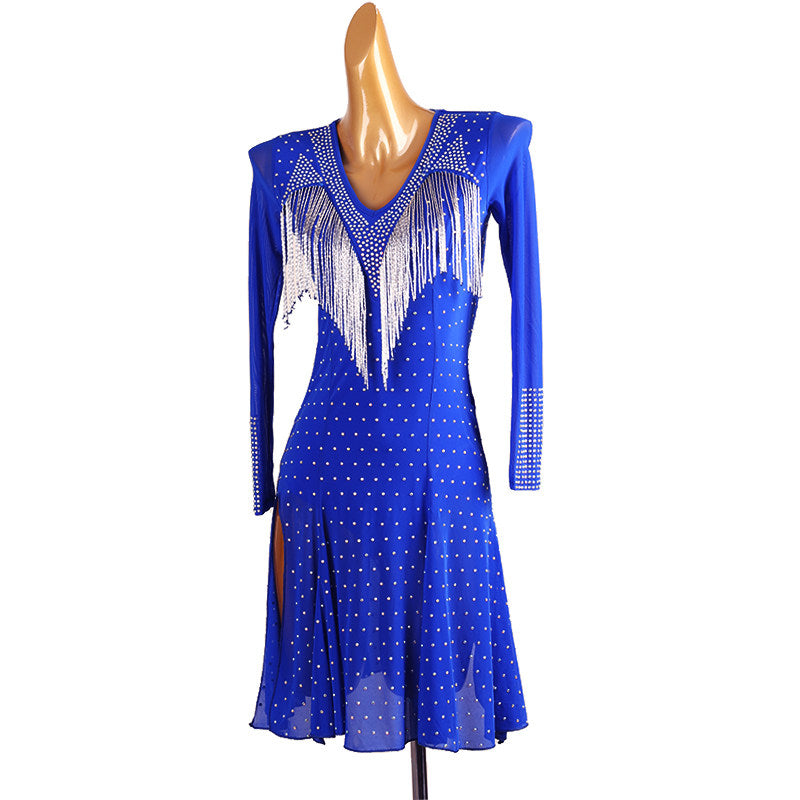
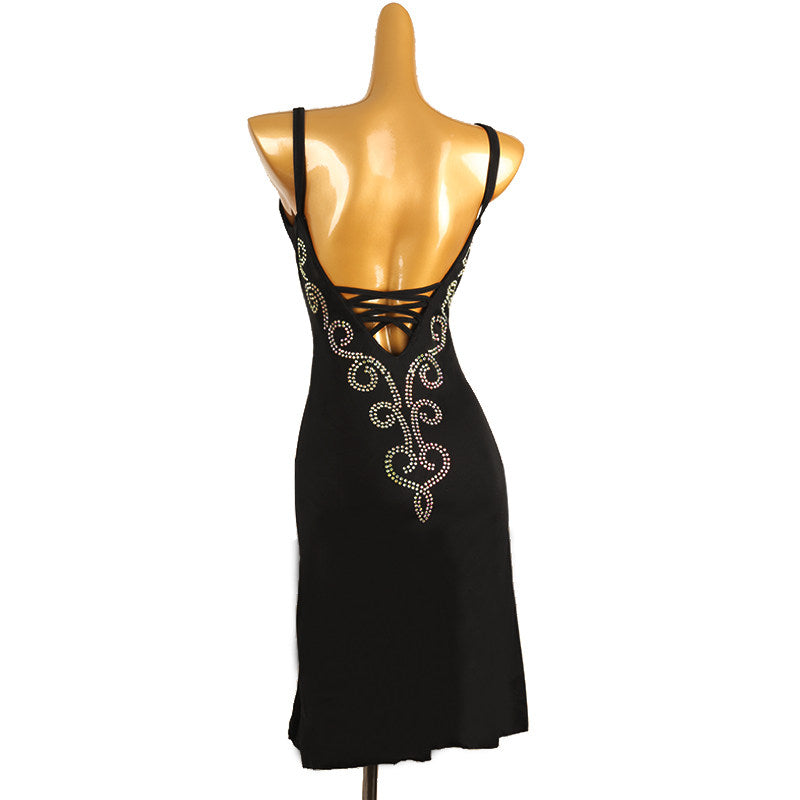
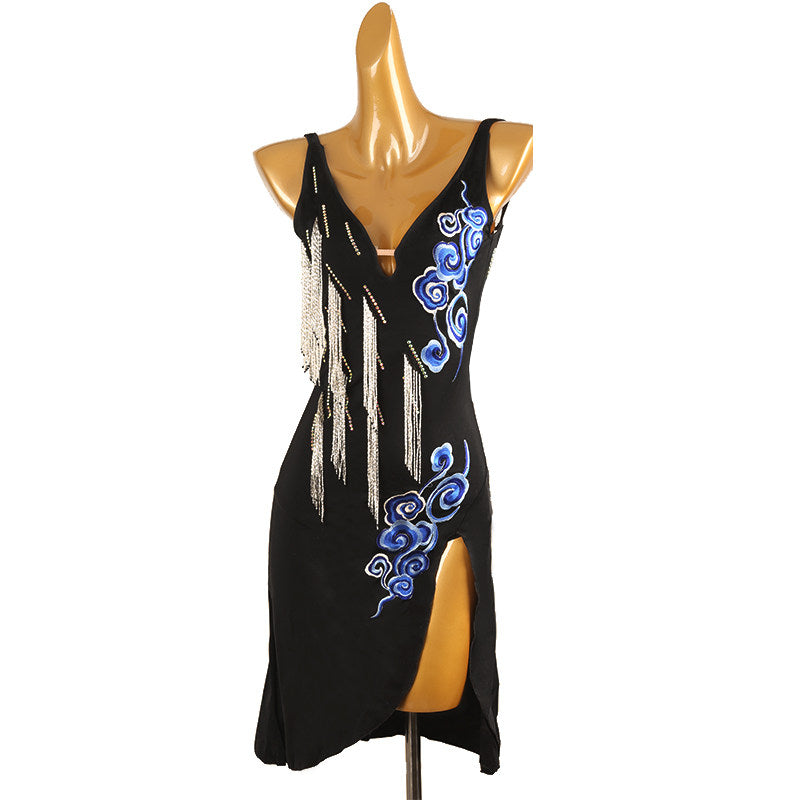
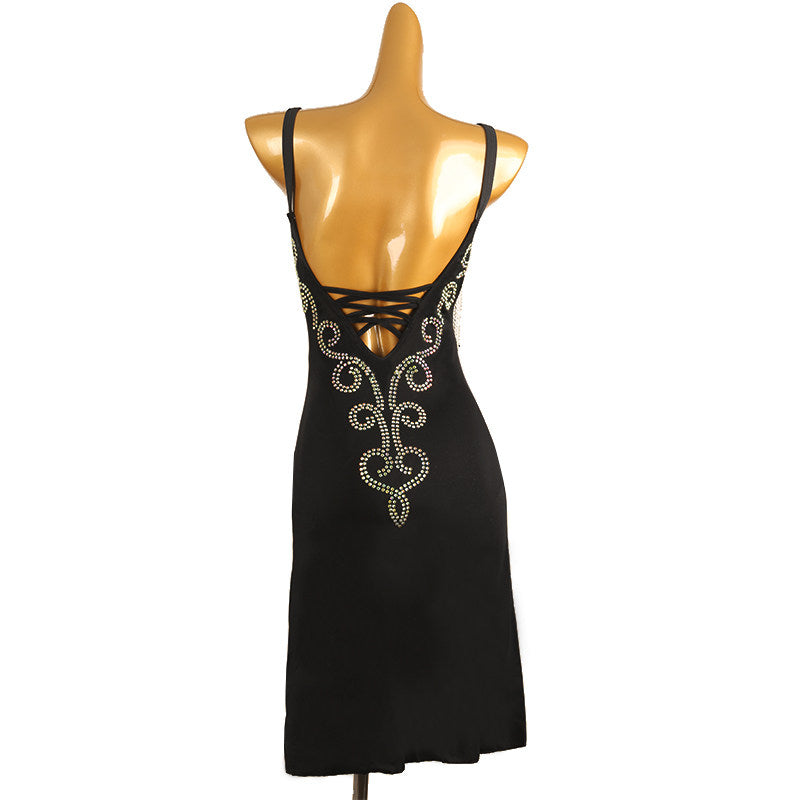
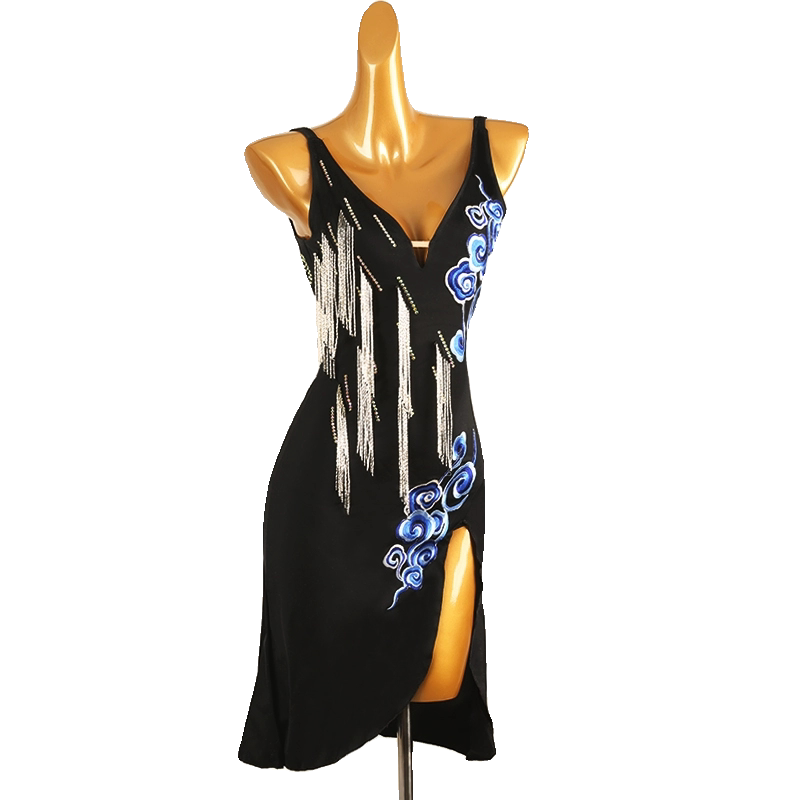
What the Adjudicator Actually Sees
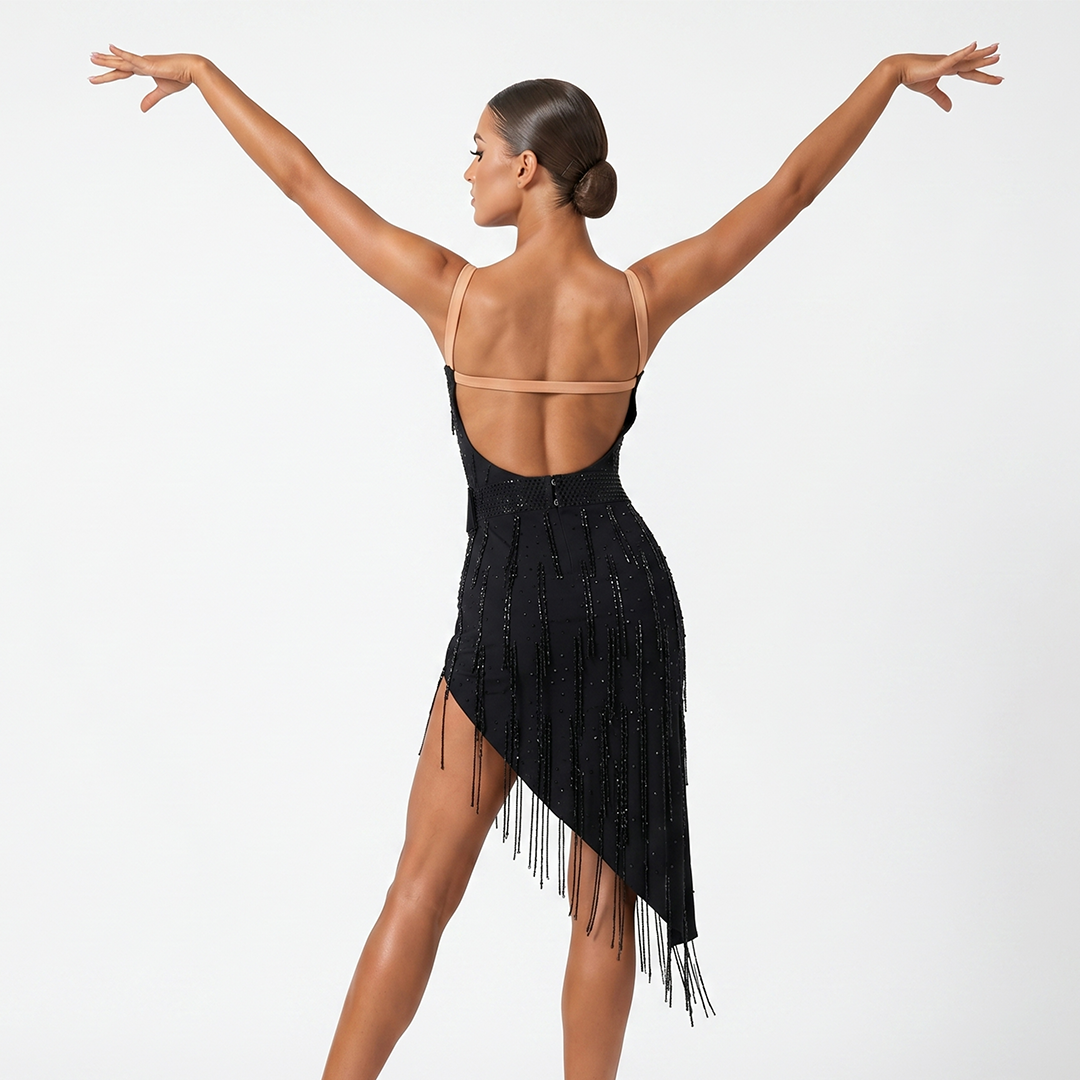
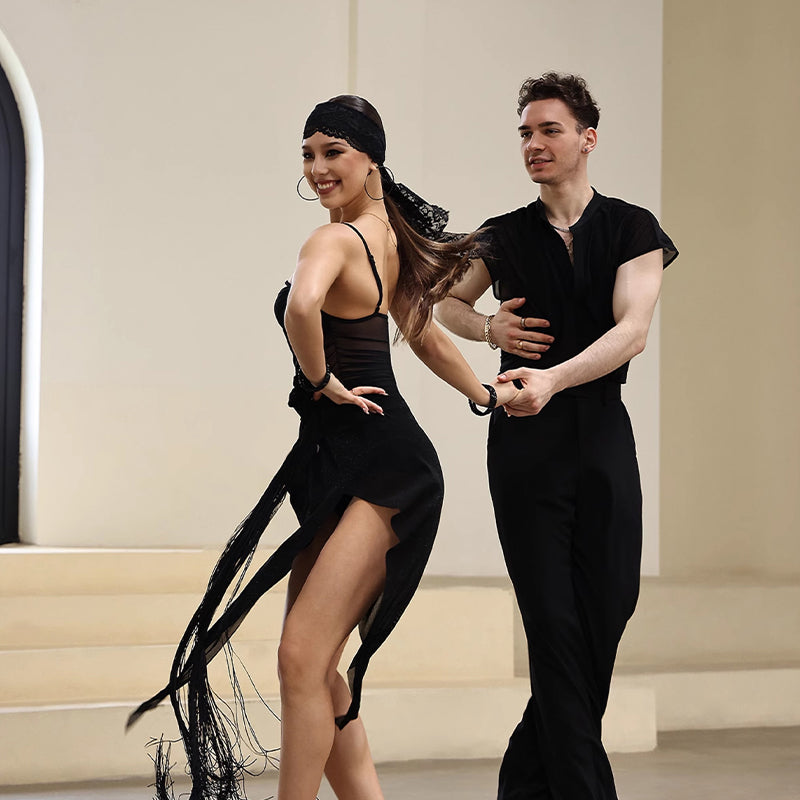
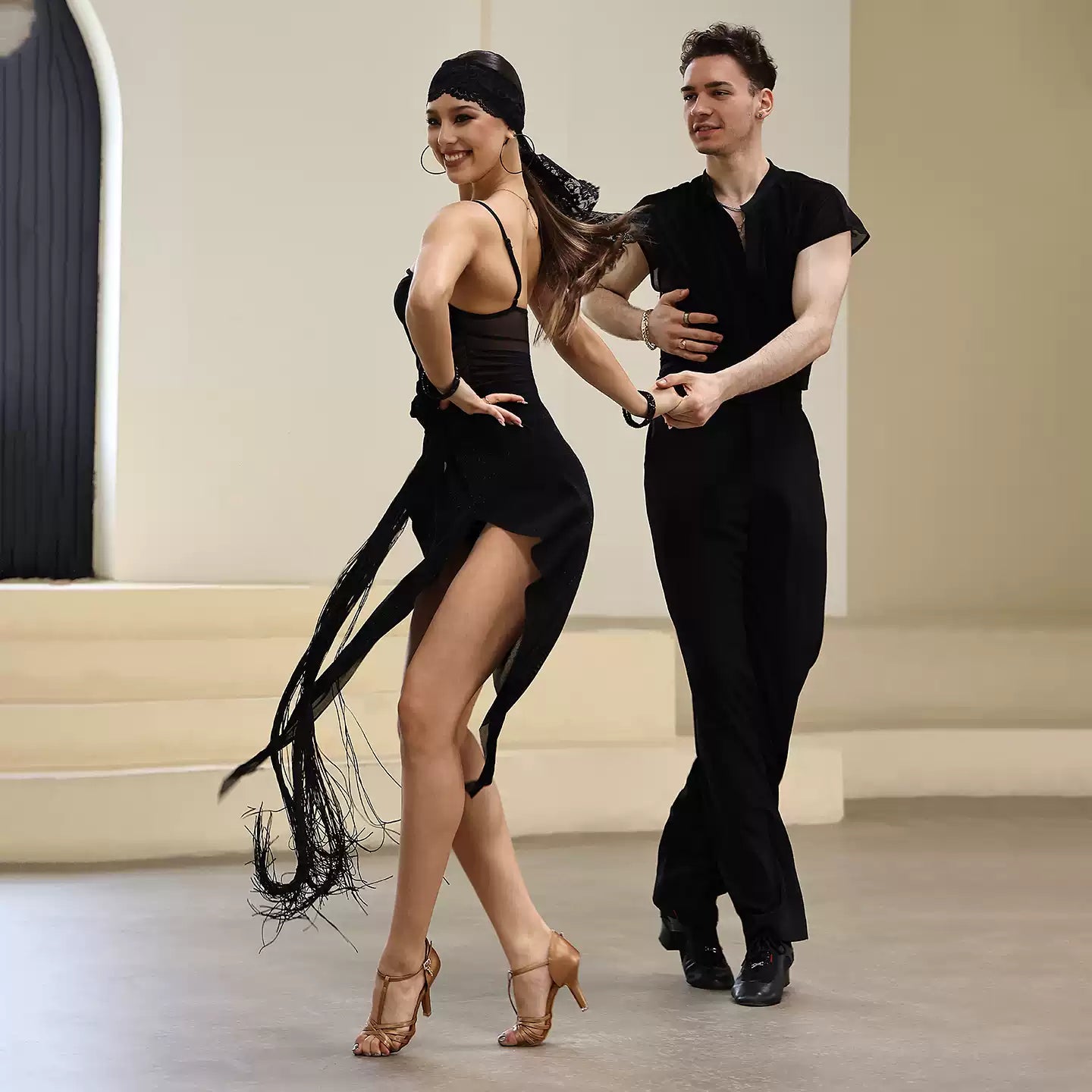
A judge watches a heat from the side of the floor, often thirty feet back, with several couples moving at once and only a few seconds of attention to spare on each. That distance is the whole design brief for a competition dress. Detail that looks exquisite in a photograph — fine beading, tonal embroidery, a subtle two-tone panel — flattens into nothing at that range. What survives is contrast, silhouette and movement: where the light hits, where the hem ends, and what moves when you do. Everything on this page is chosen against that test rather than against a close-up.
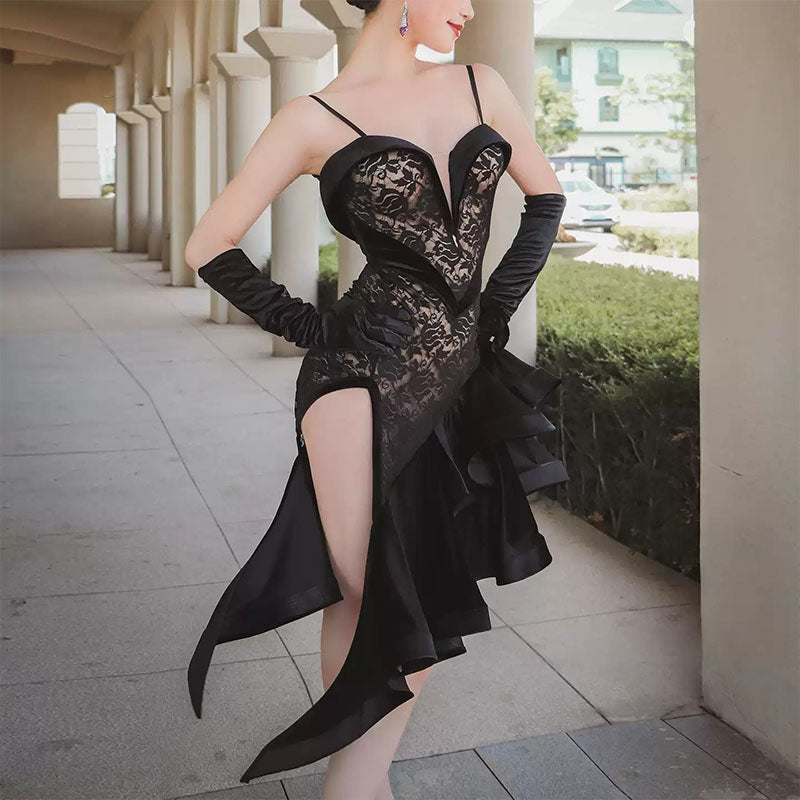
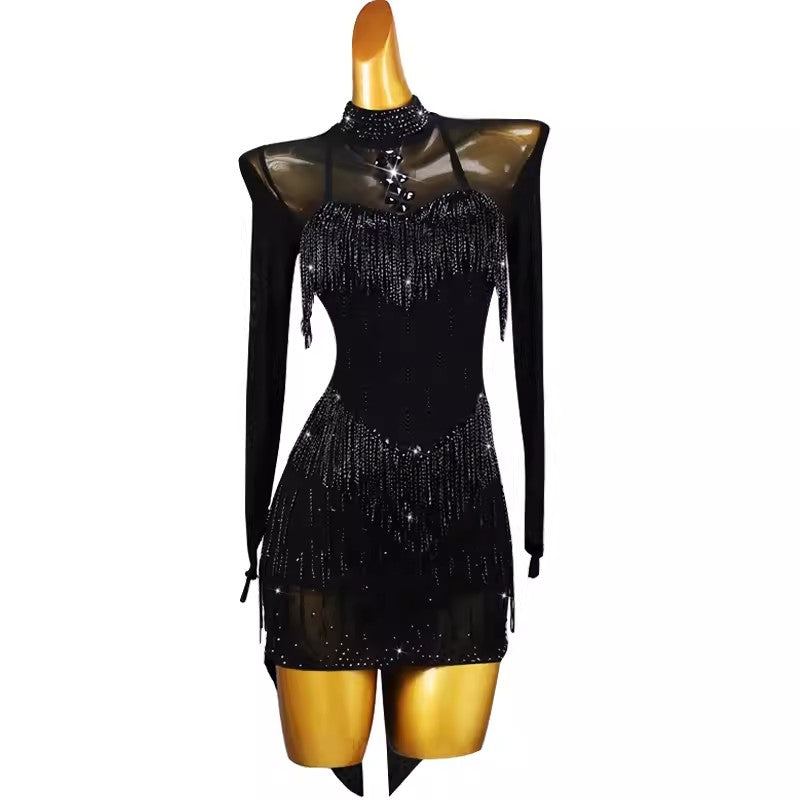
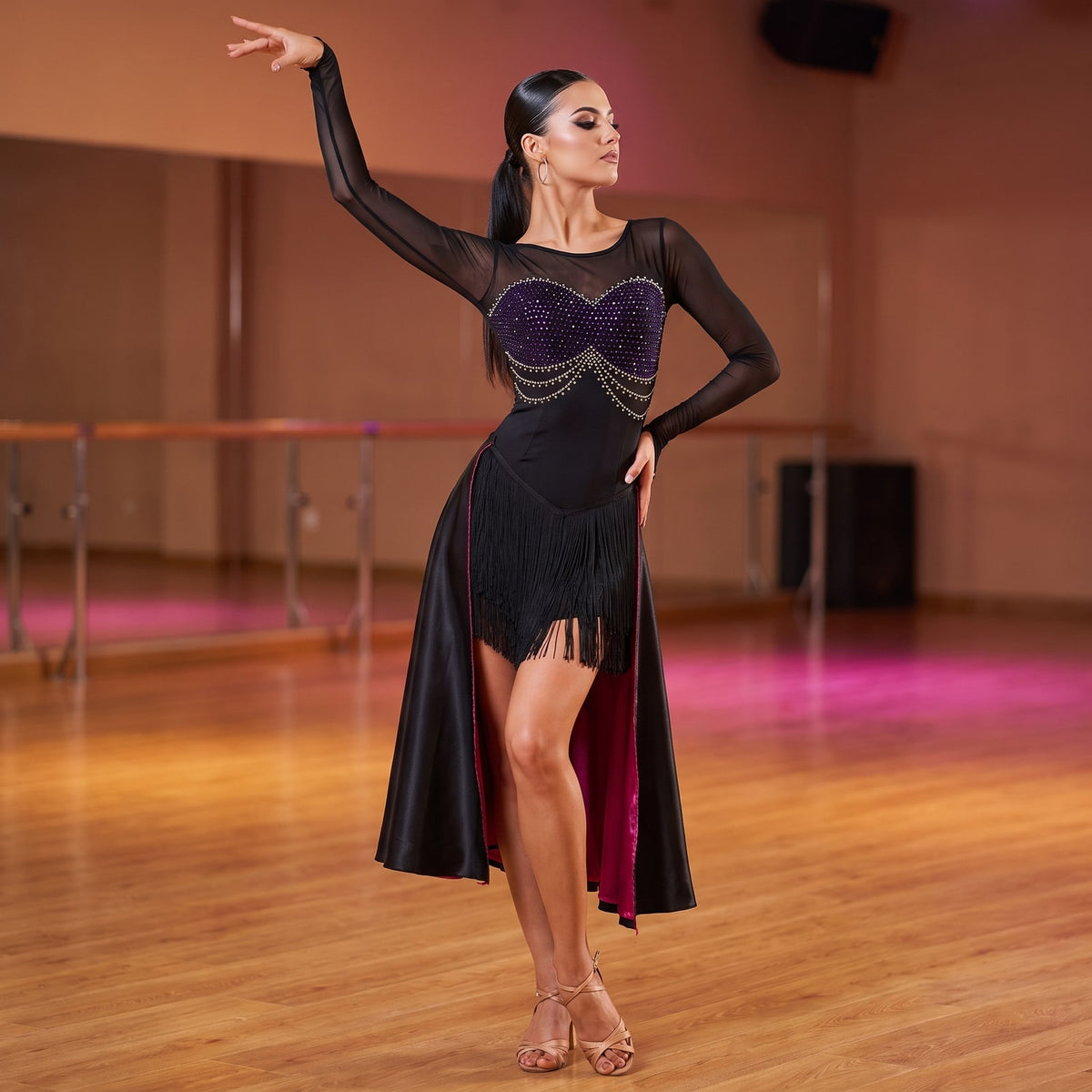
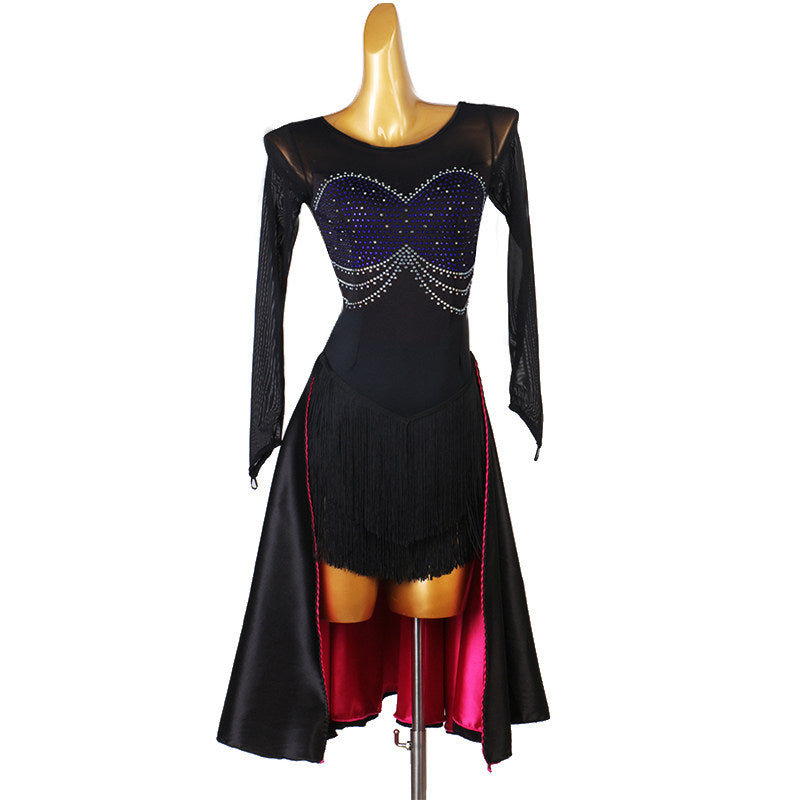
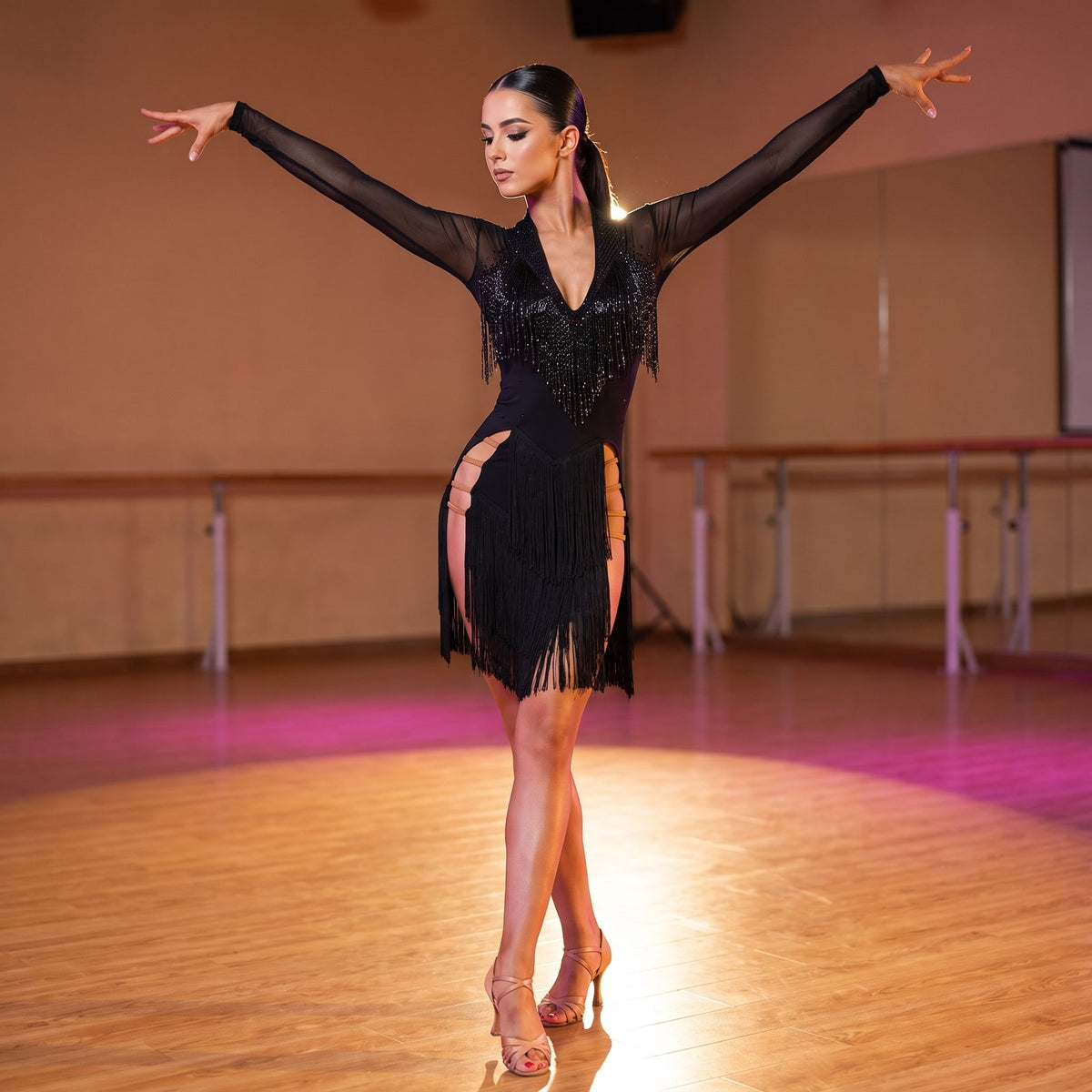
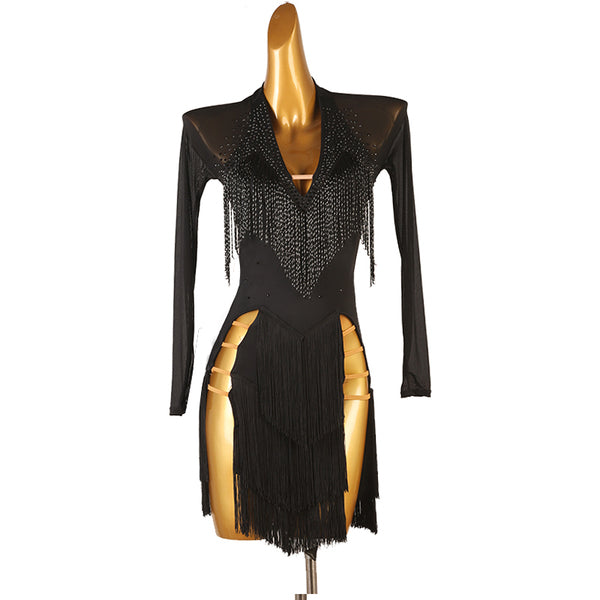
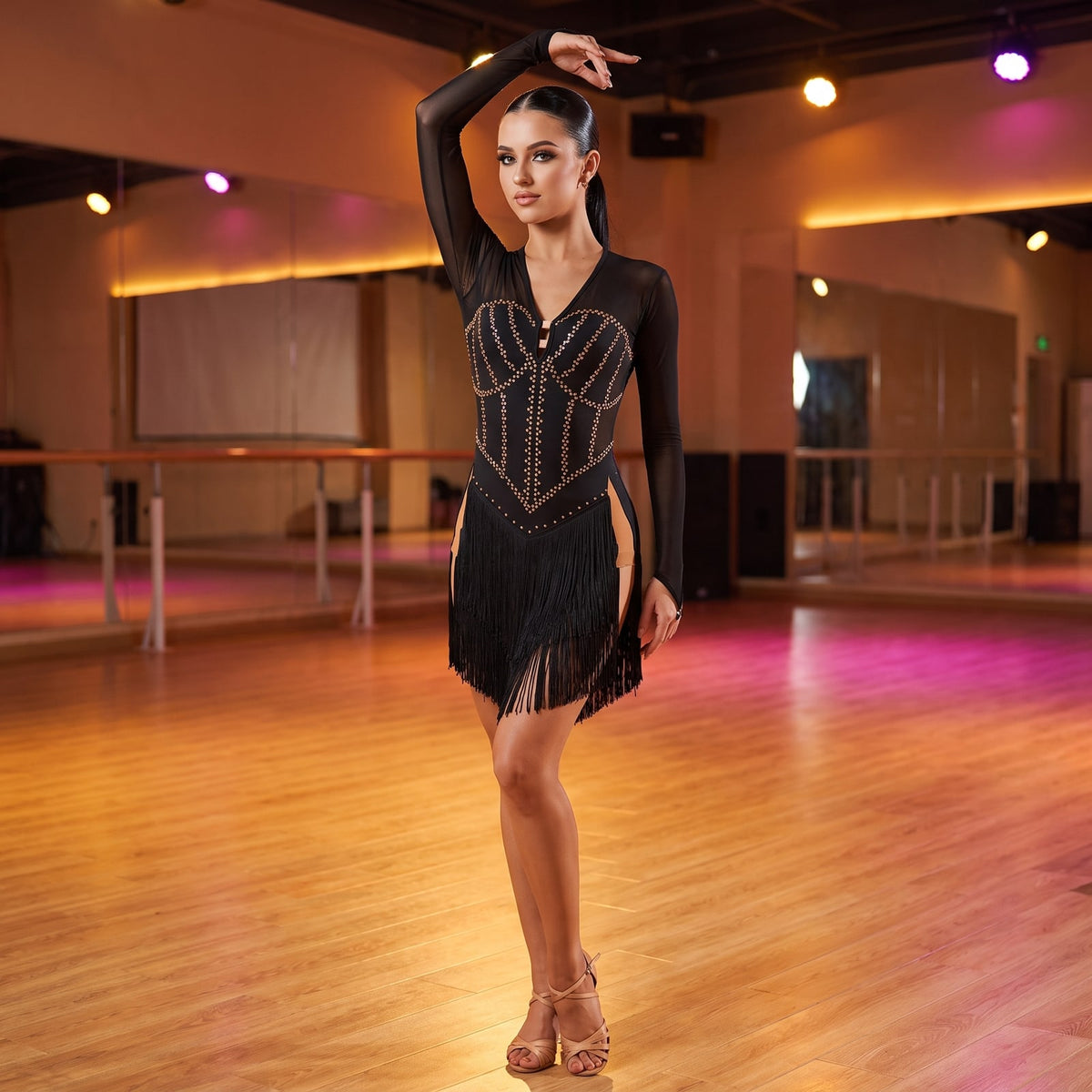
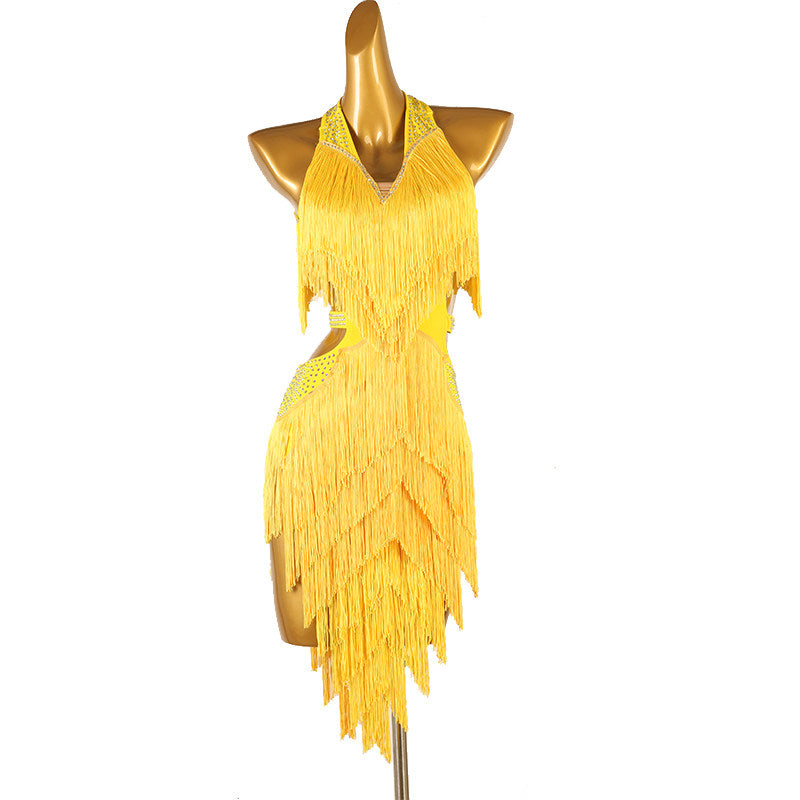
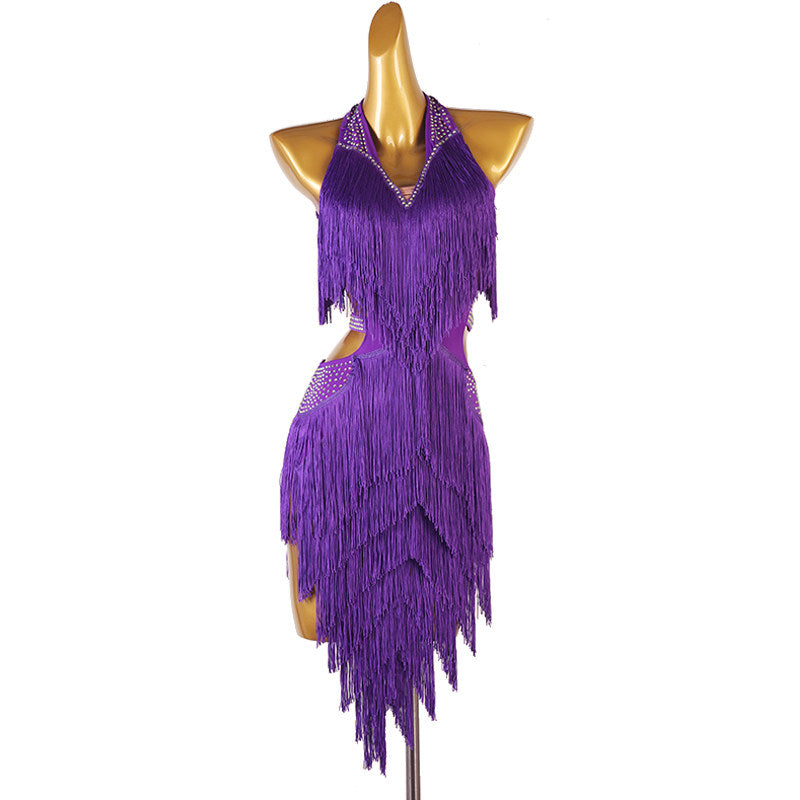
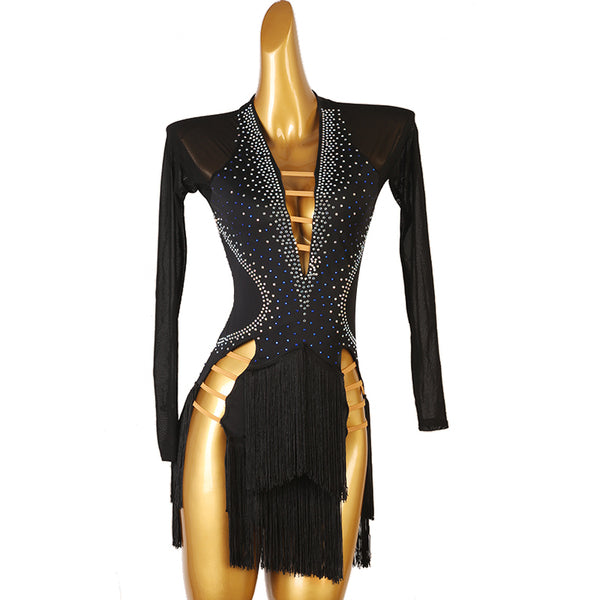
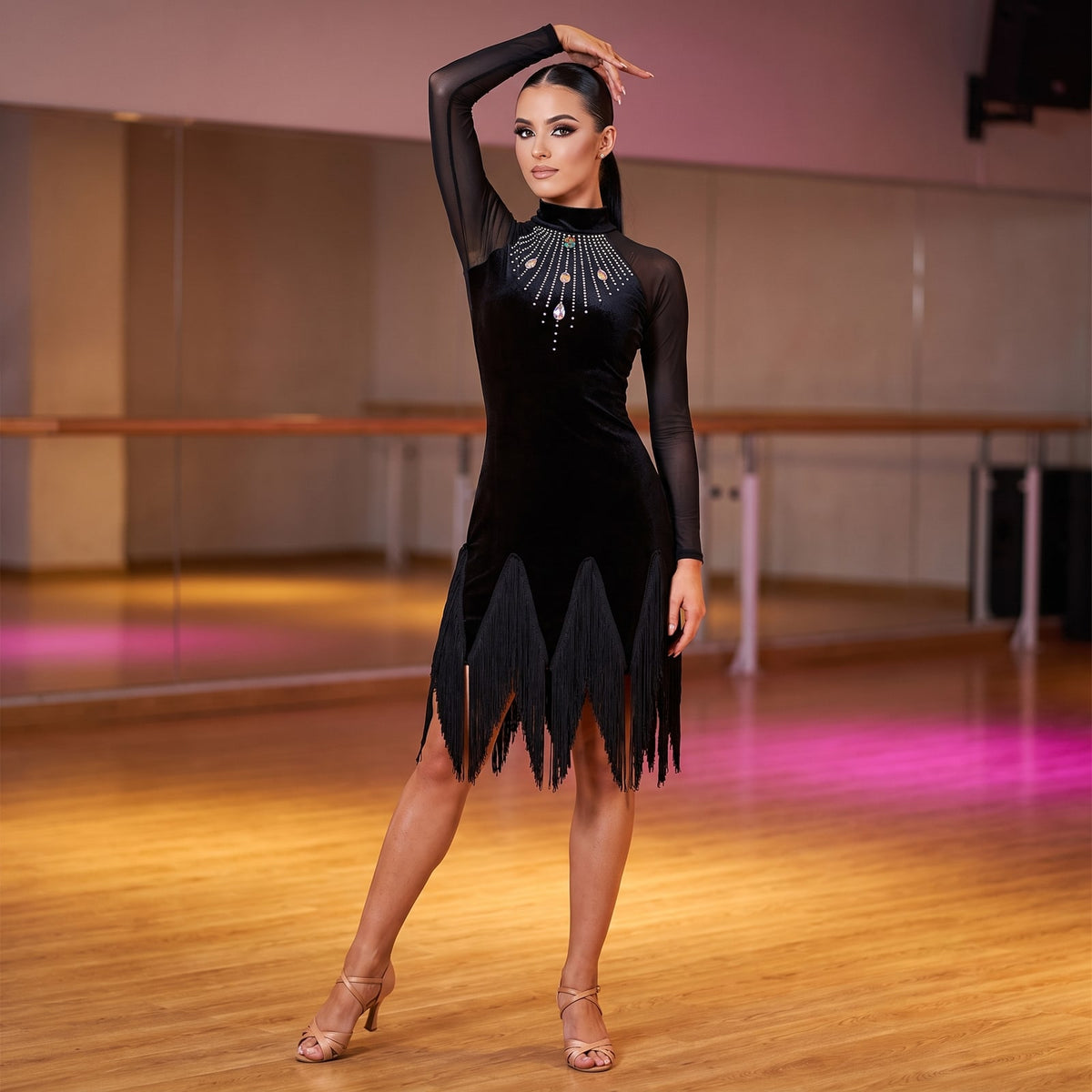
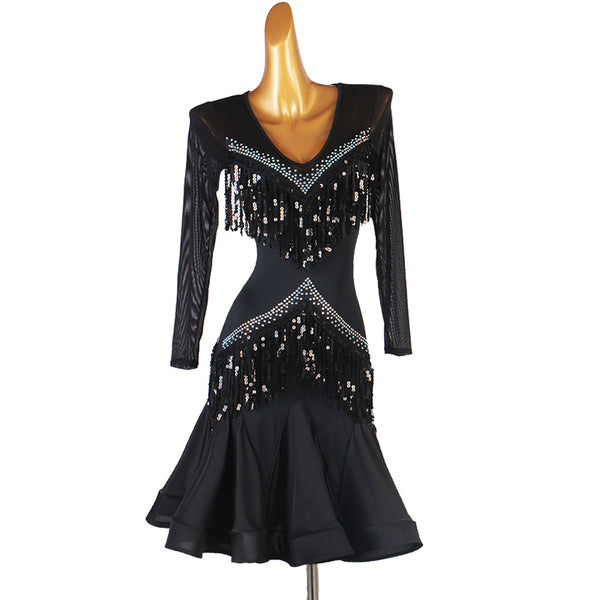
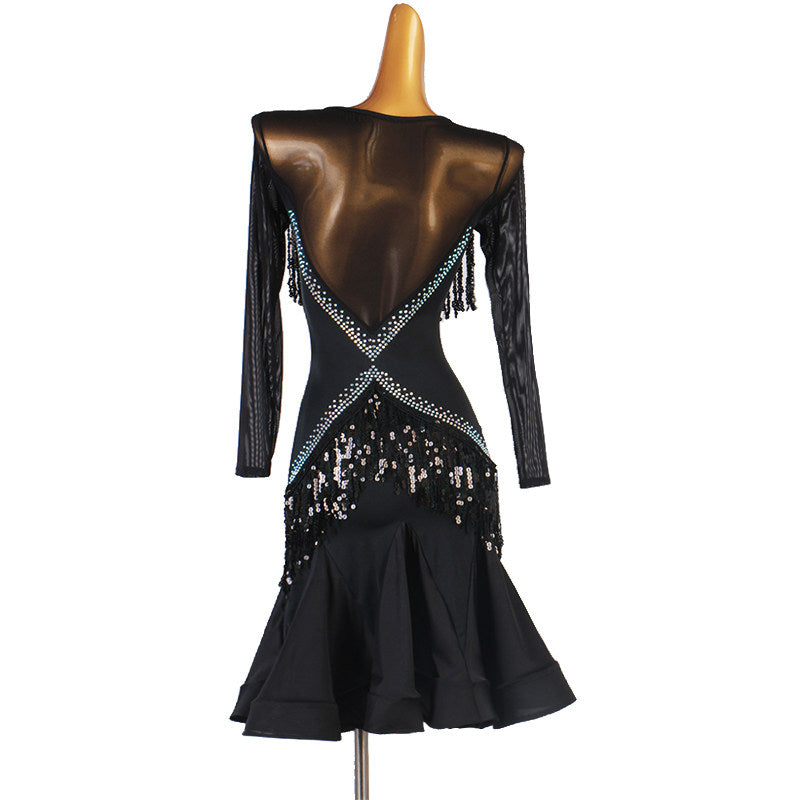
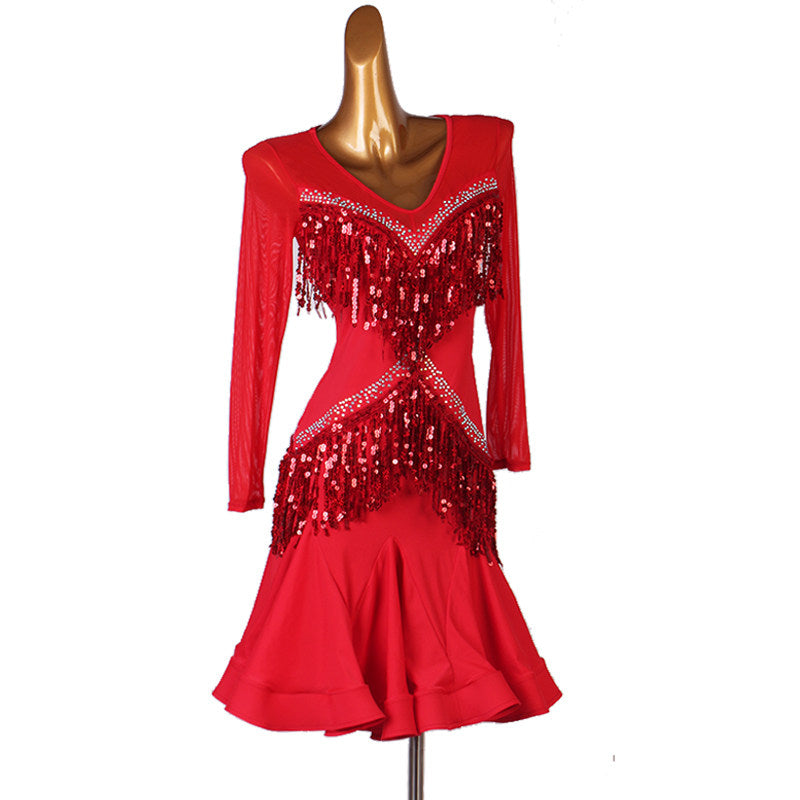
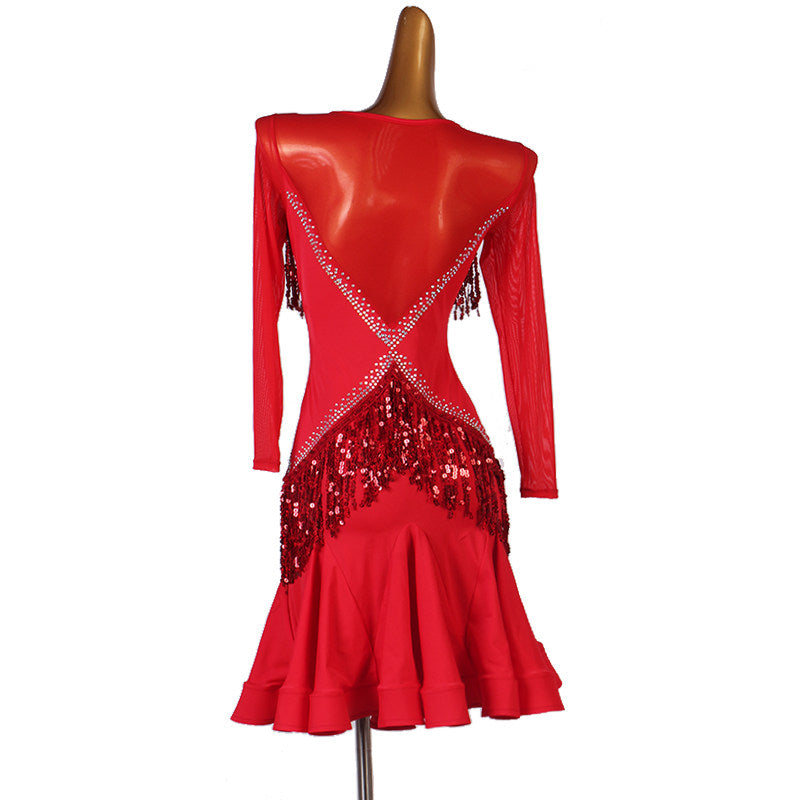
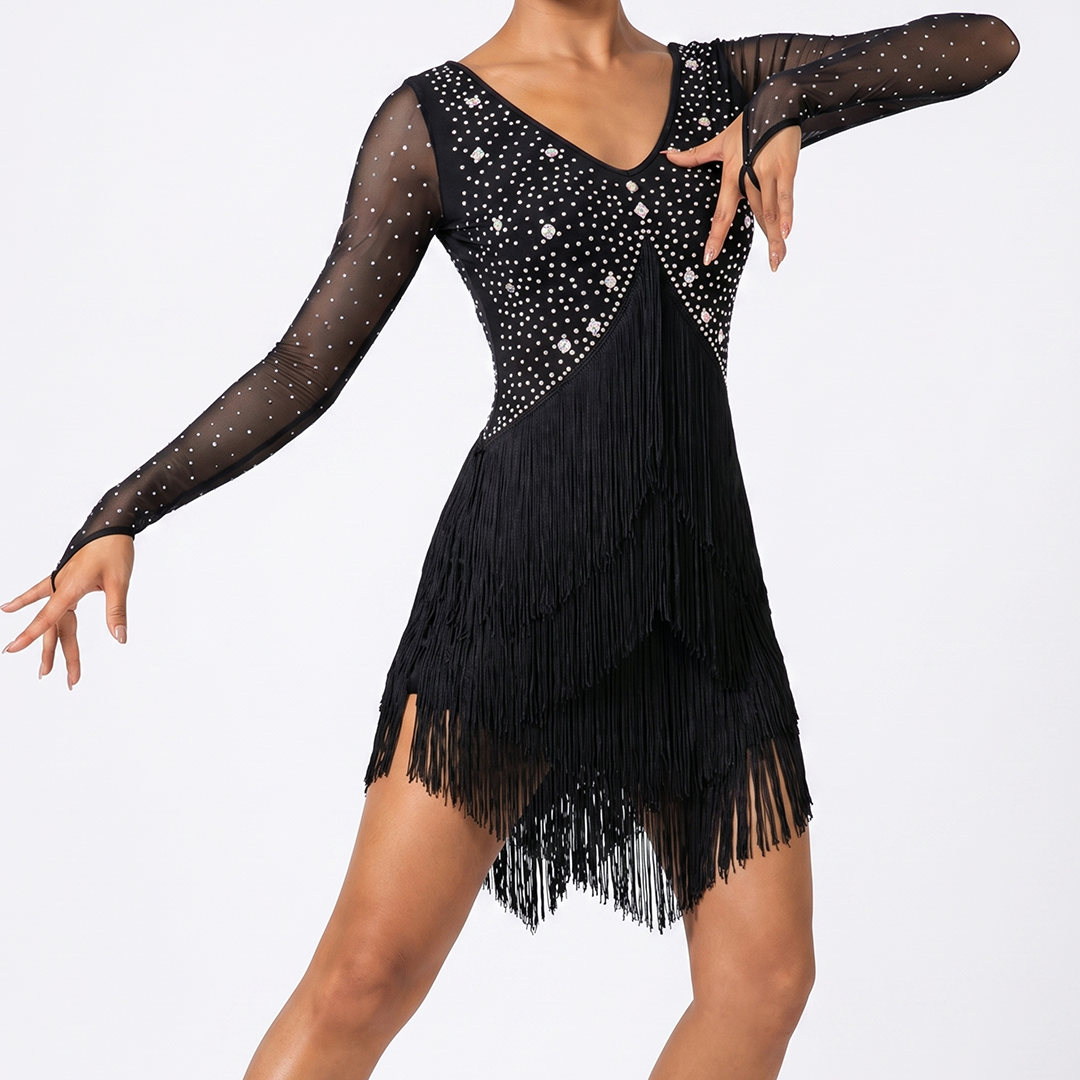
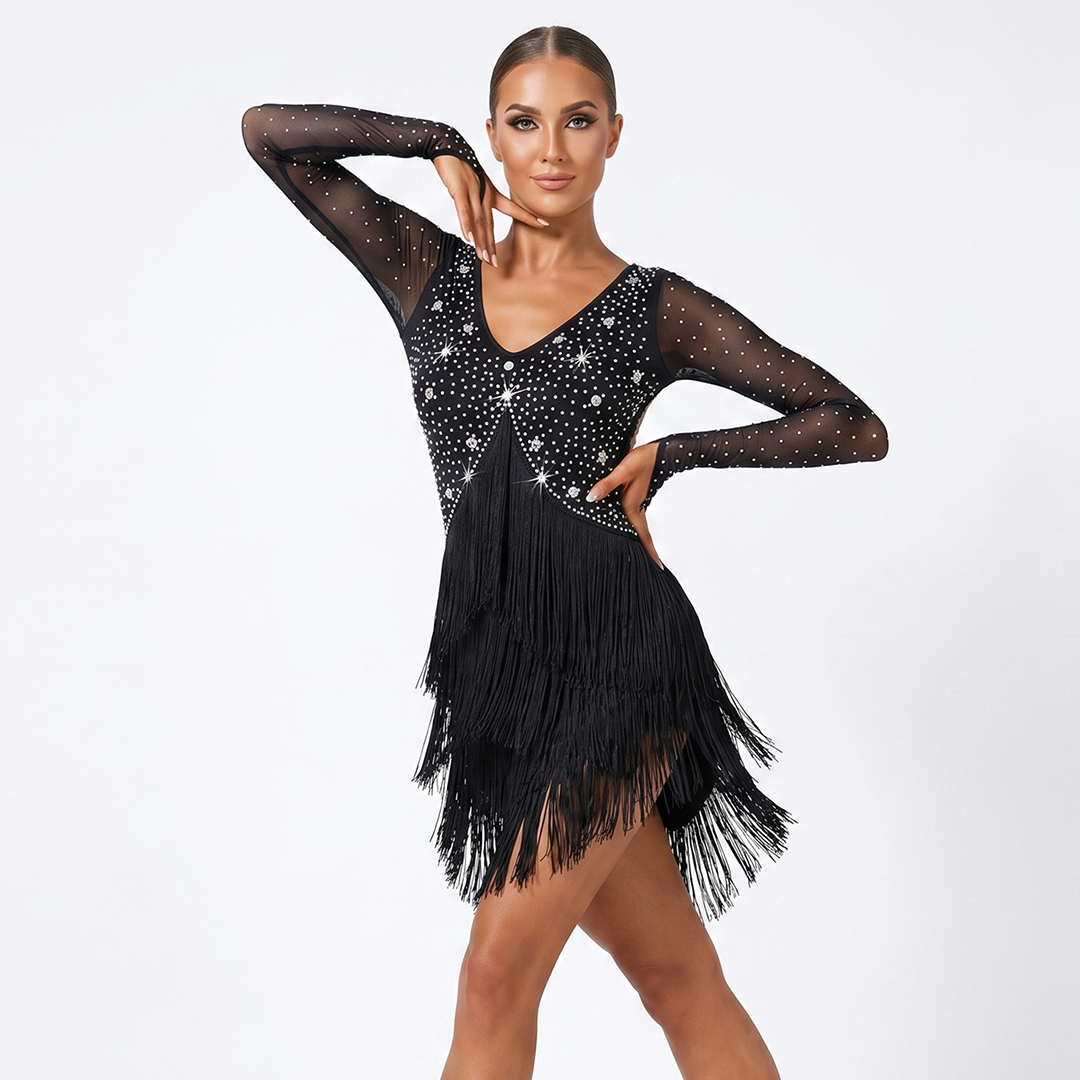
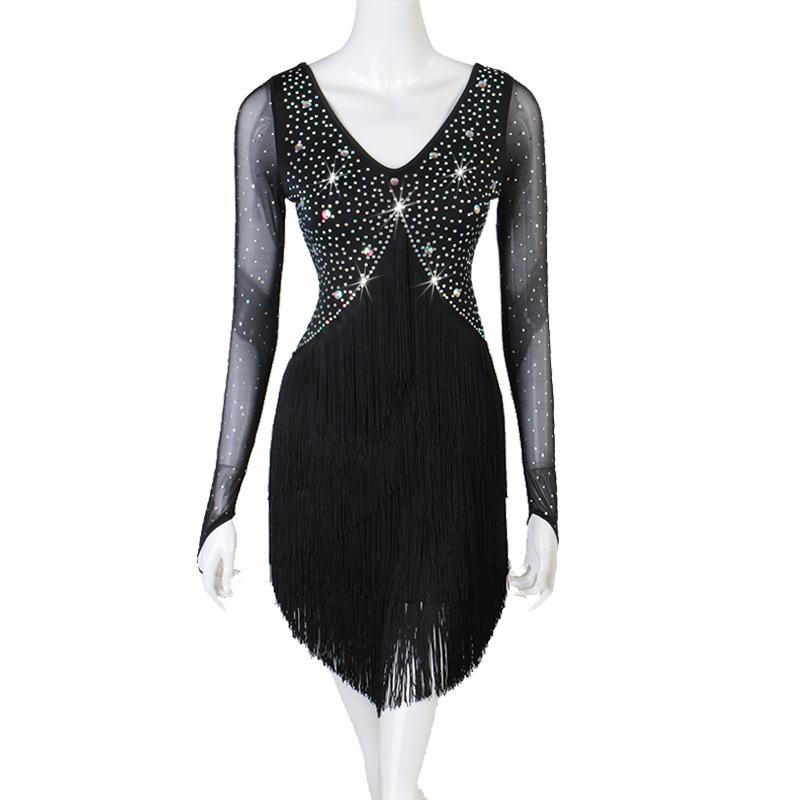
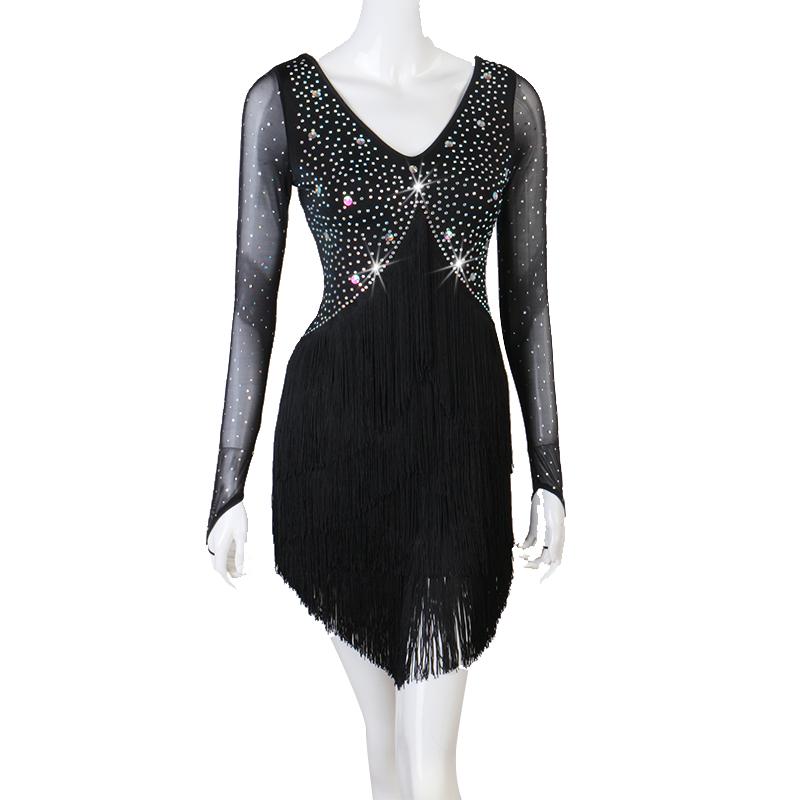
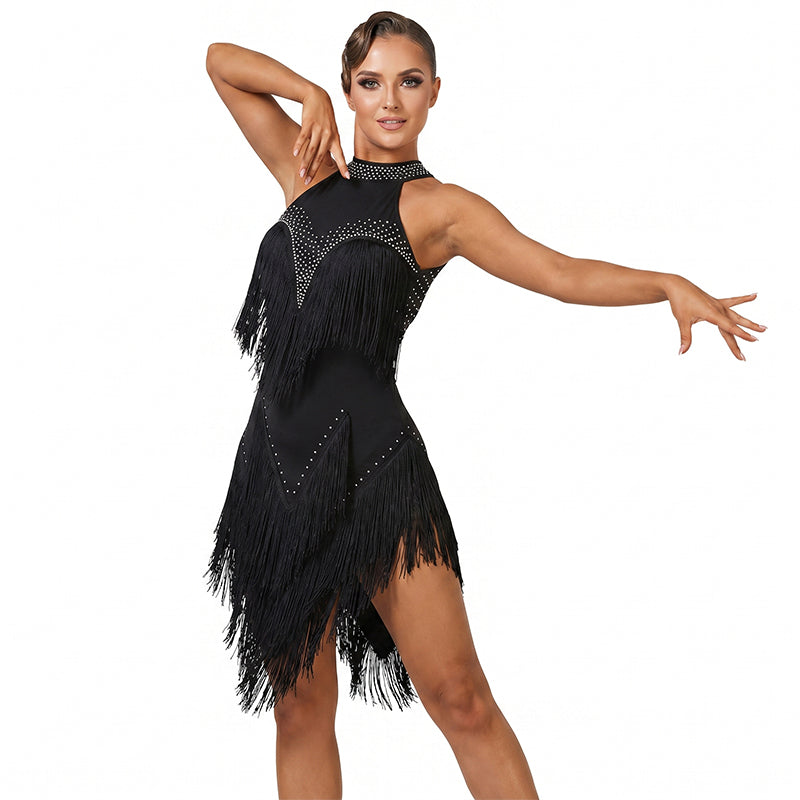
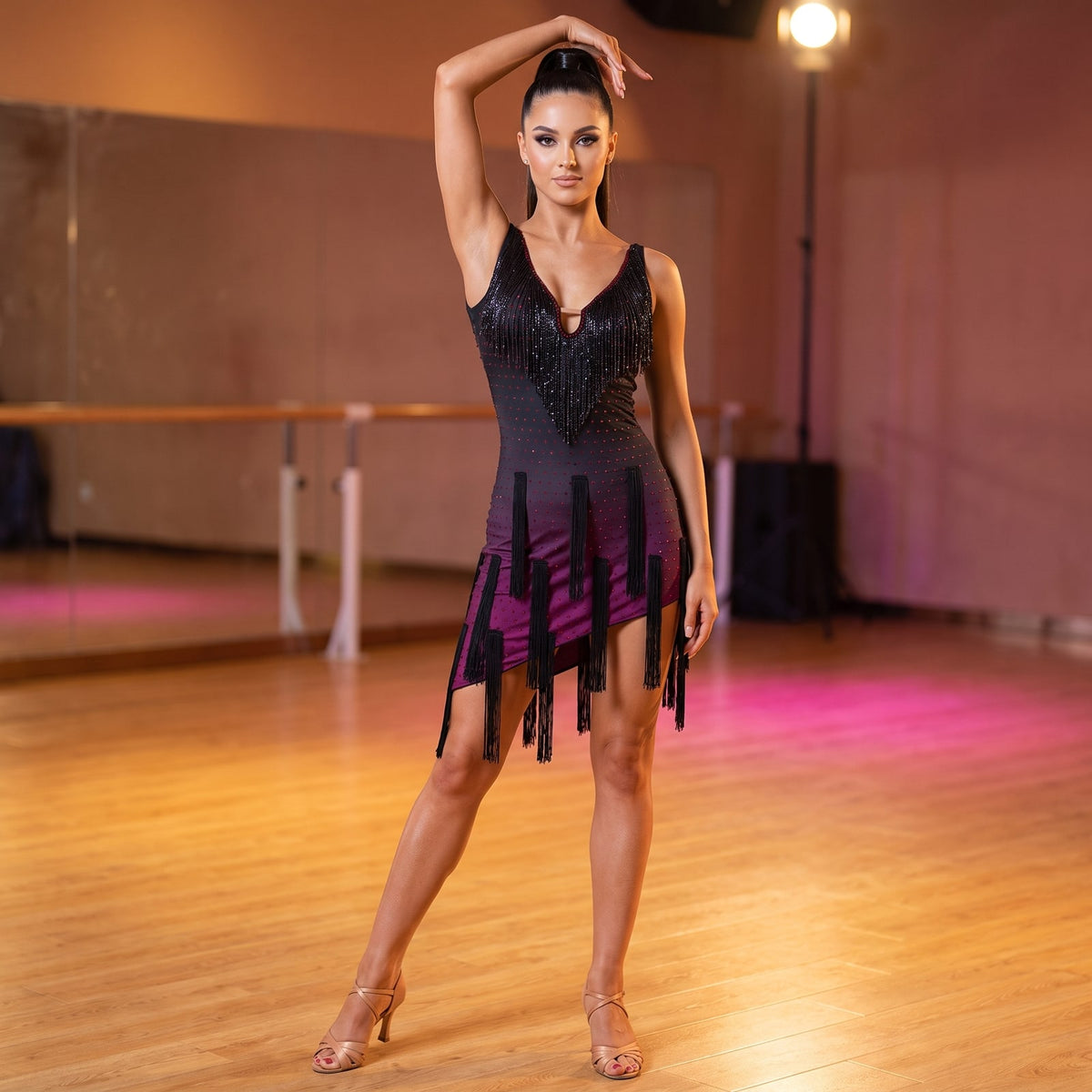
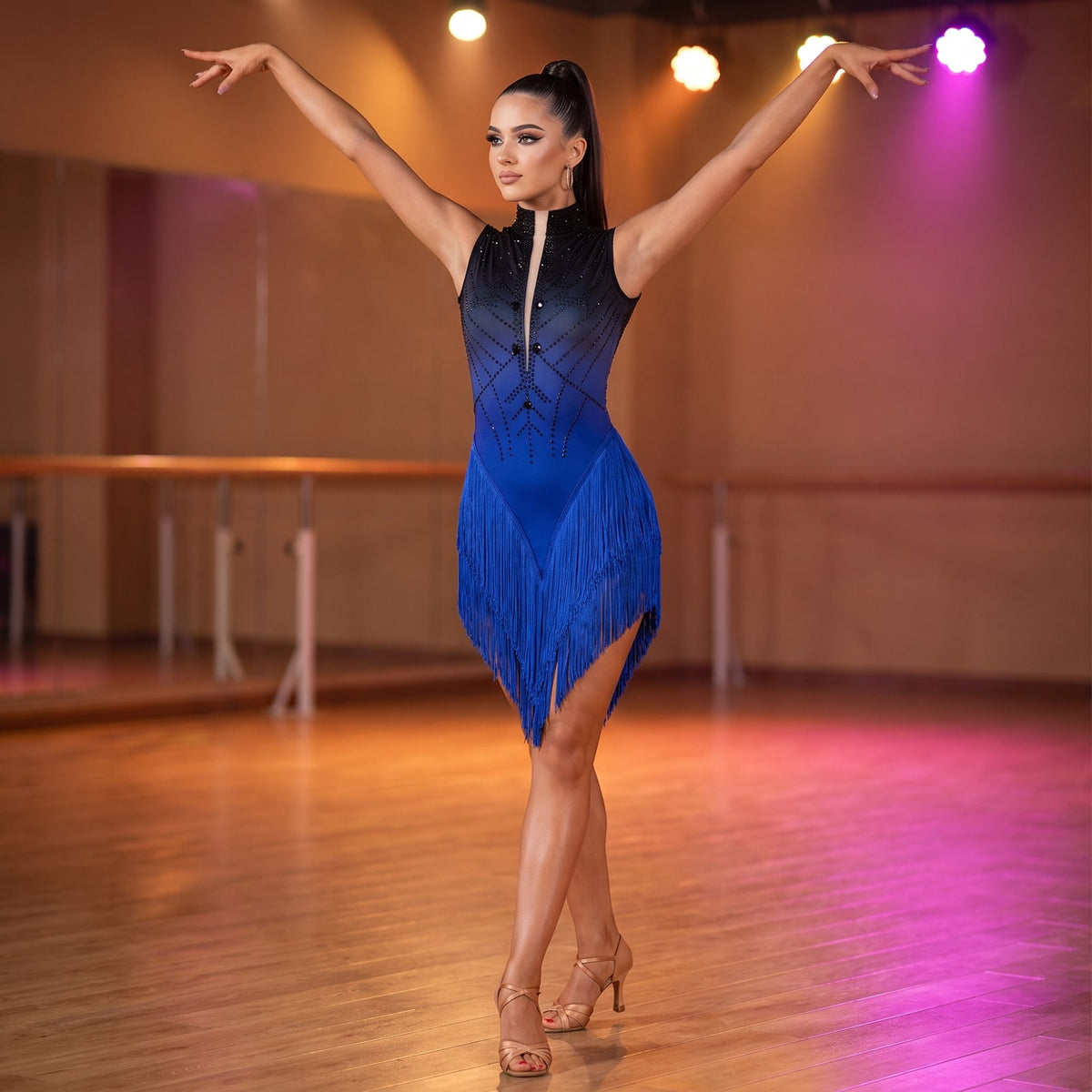
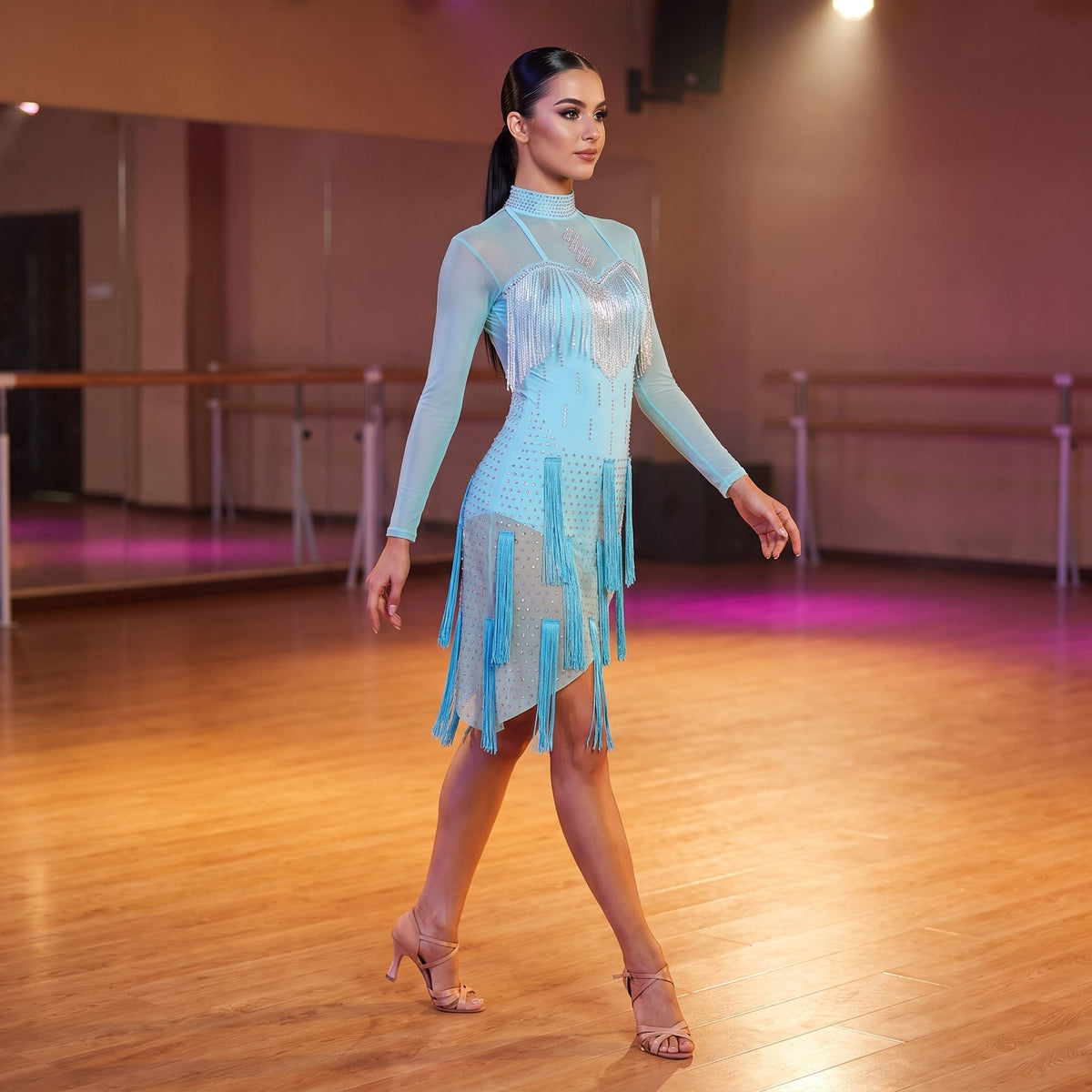
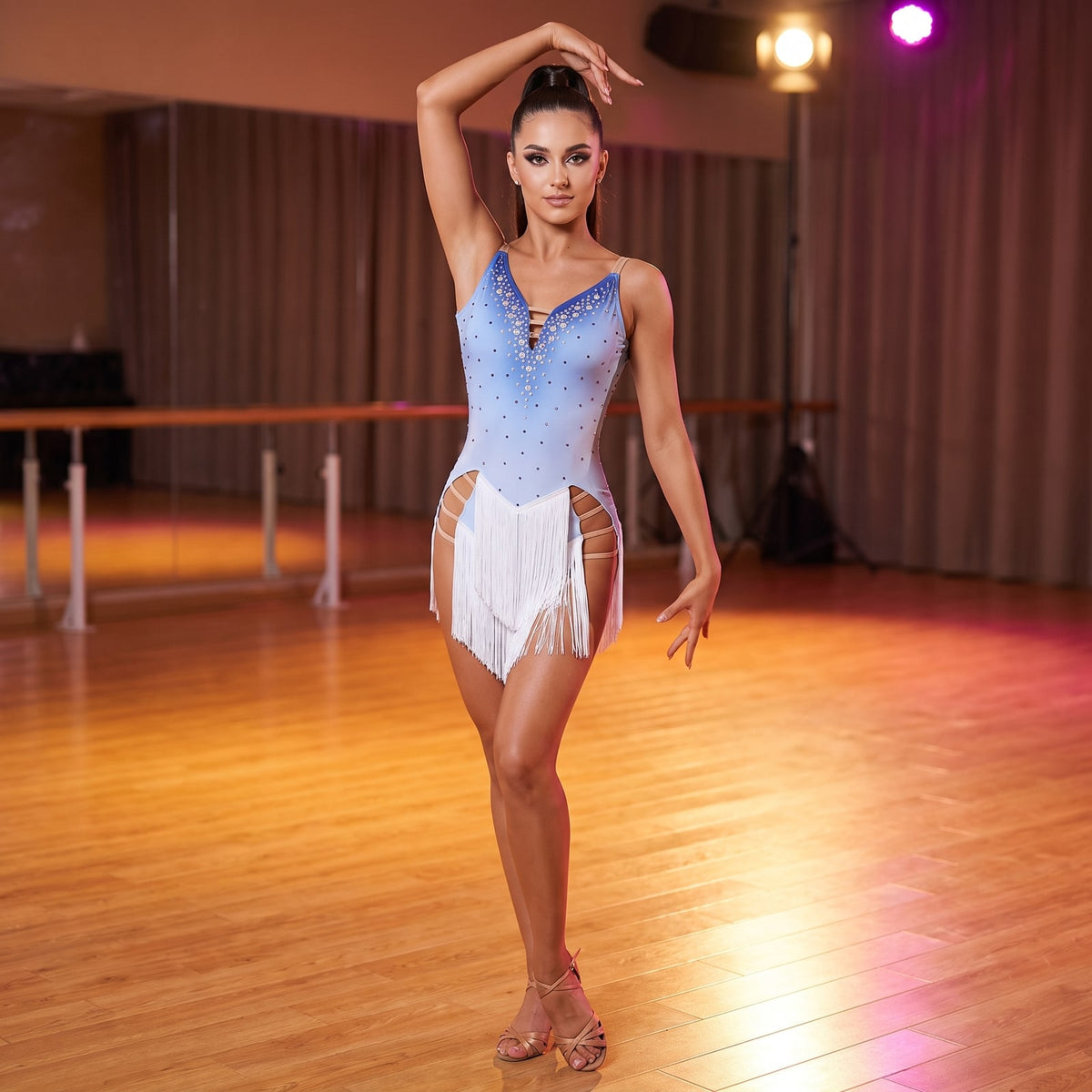
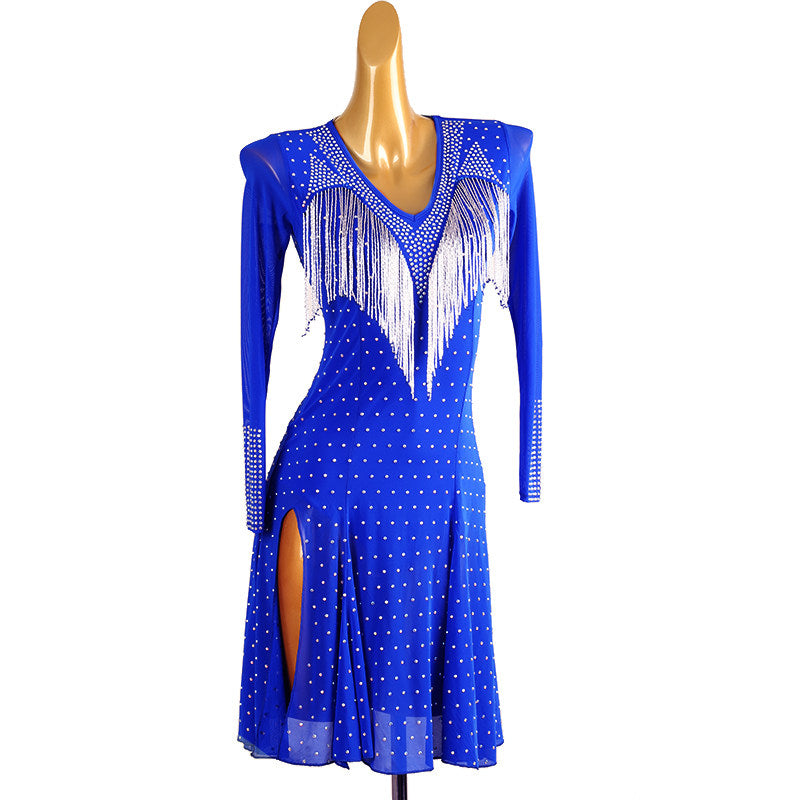
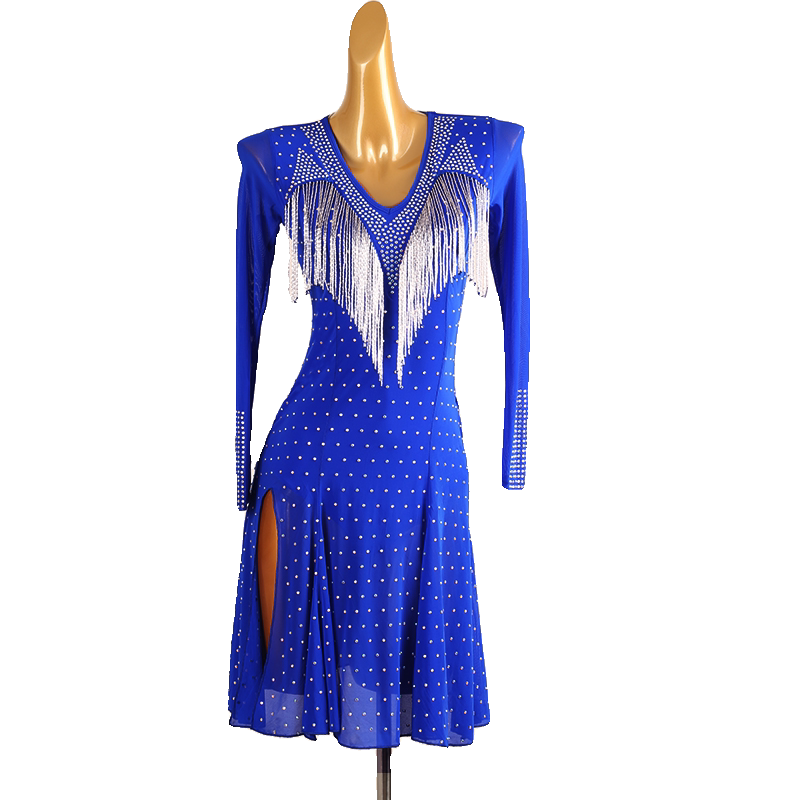
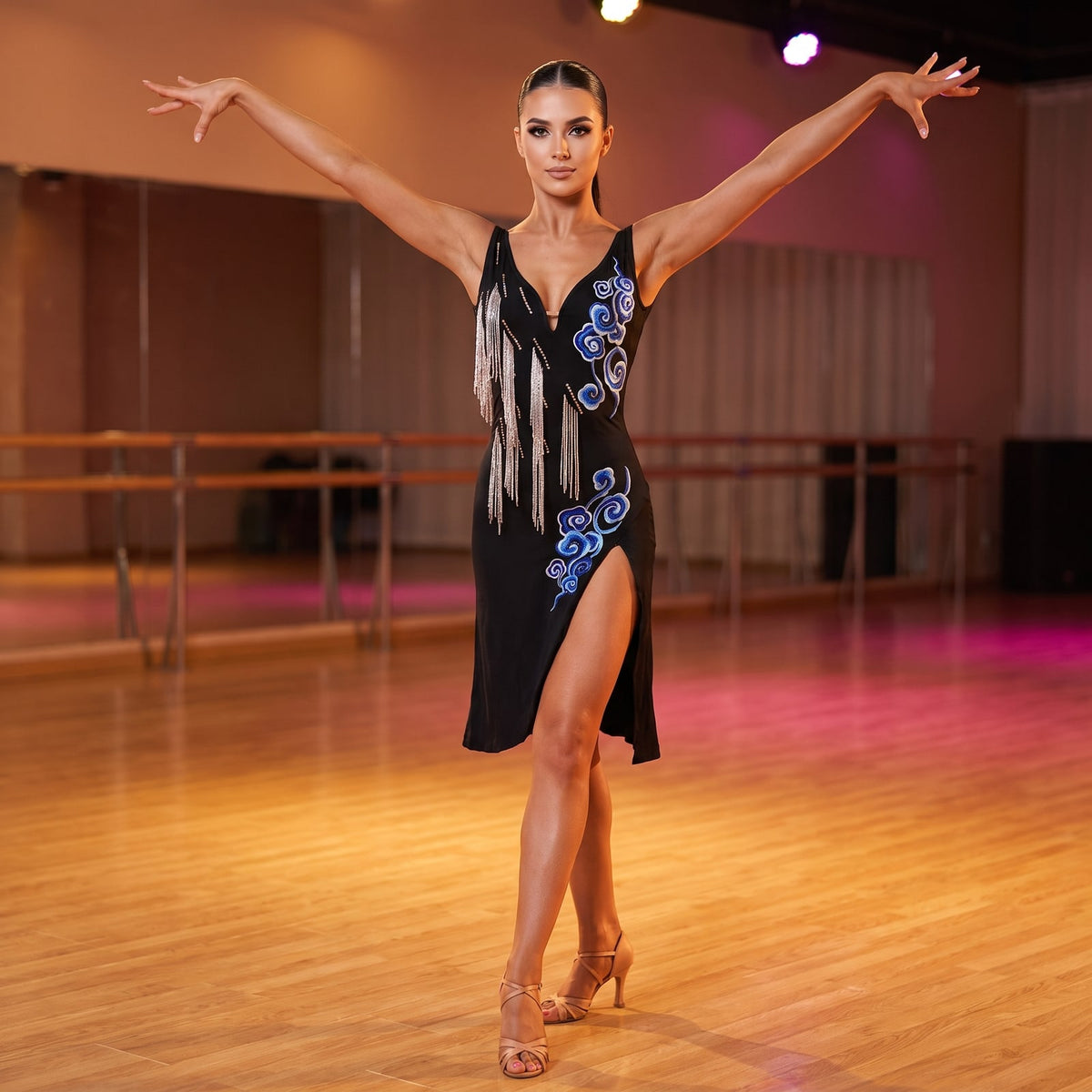
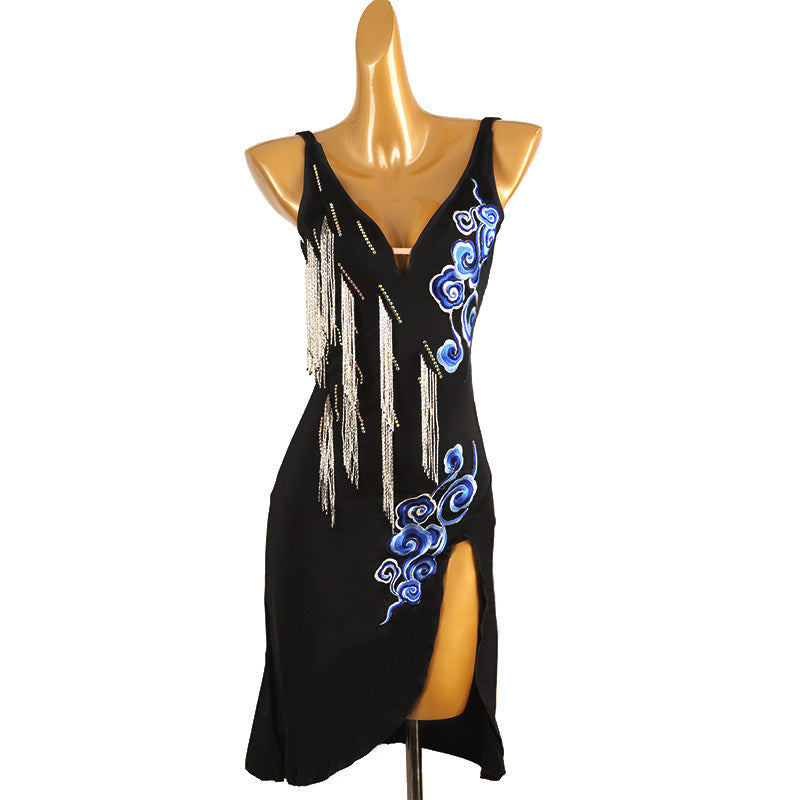
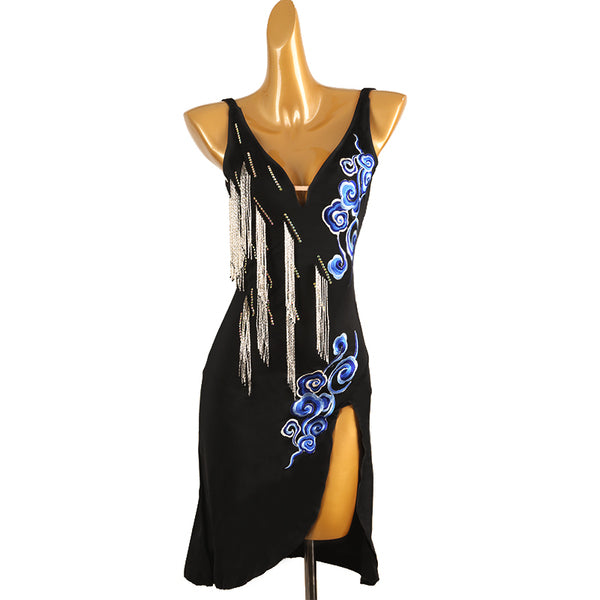
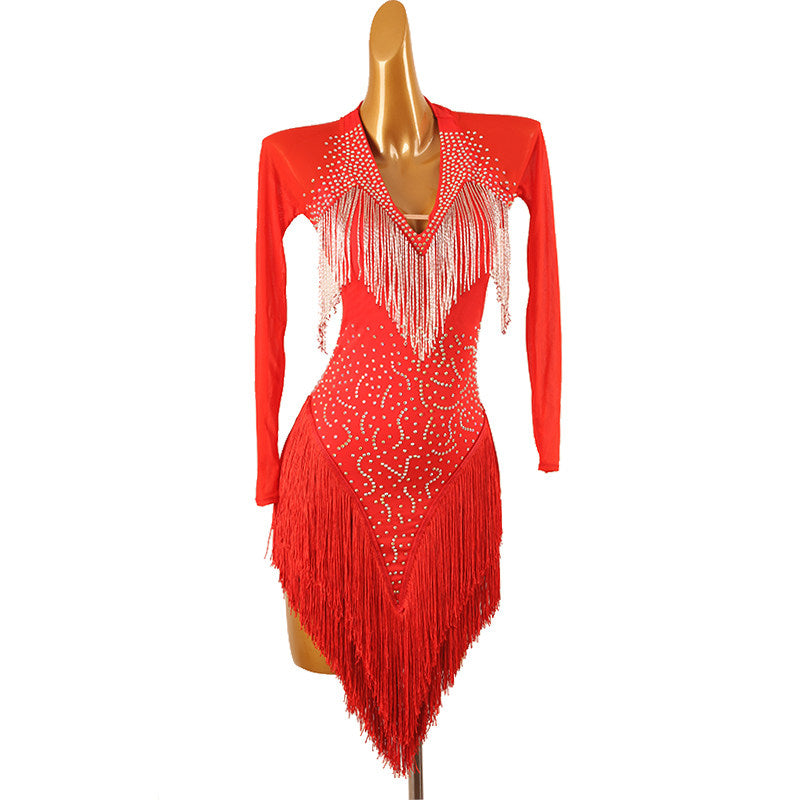
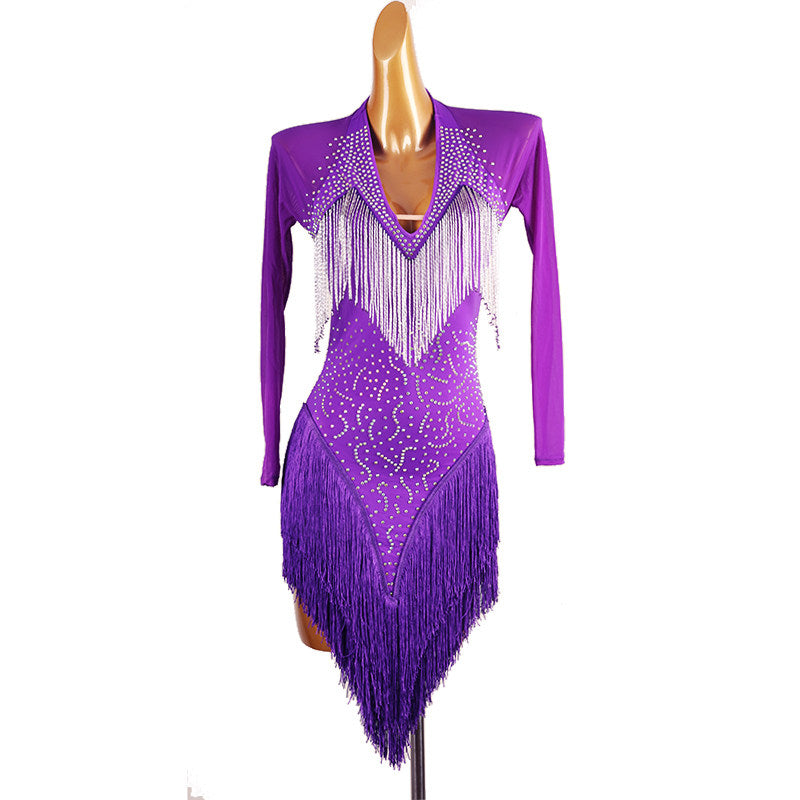
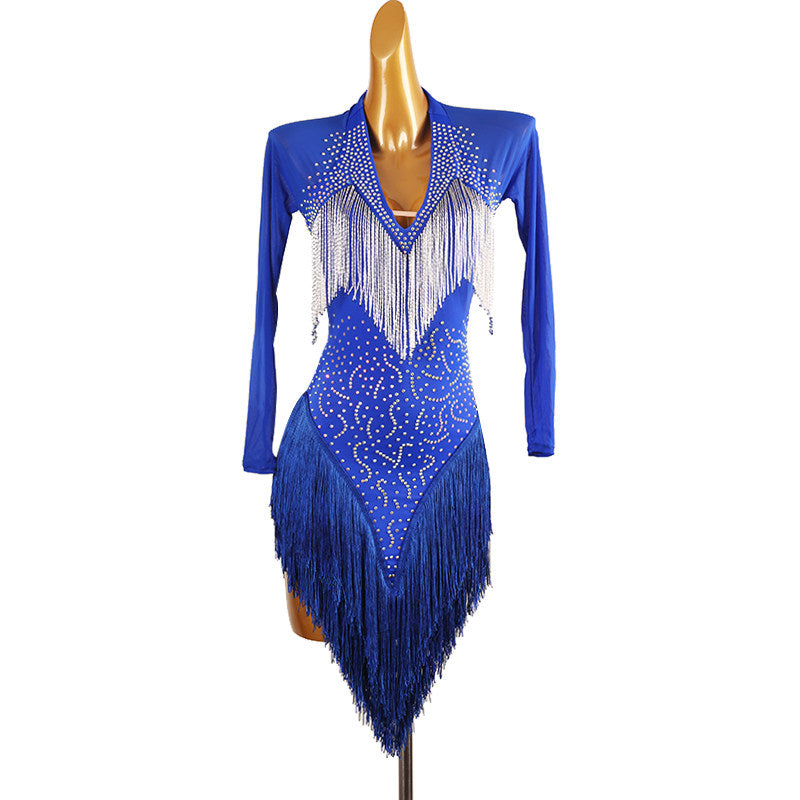
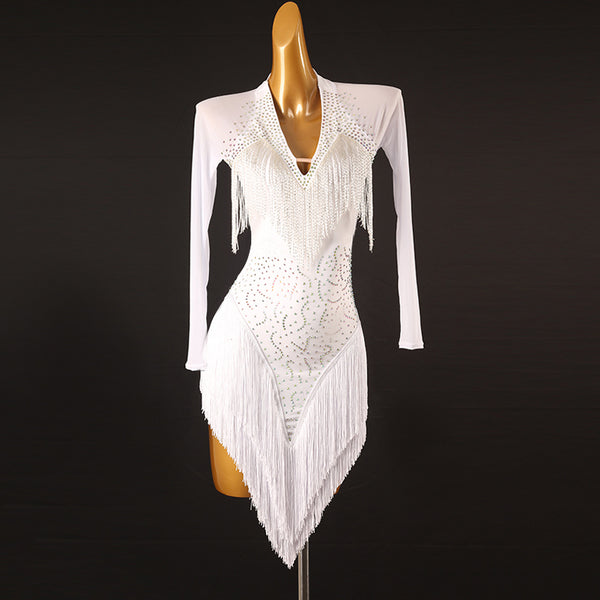
The practical consequence is that Latin dancesport dresses run bolder than most people expect when they first see one on a hanger. Stones cluster instead of scattering. Fringe hangs longer and heavier. Necklines and cutouts are cut to draw a line the eye can follow across a crowded floor. Held up in your hands it can look like too much; under a spotlight at competition distance it reads as exactly enough.
Stone Density, Placement and Weight
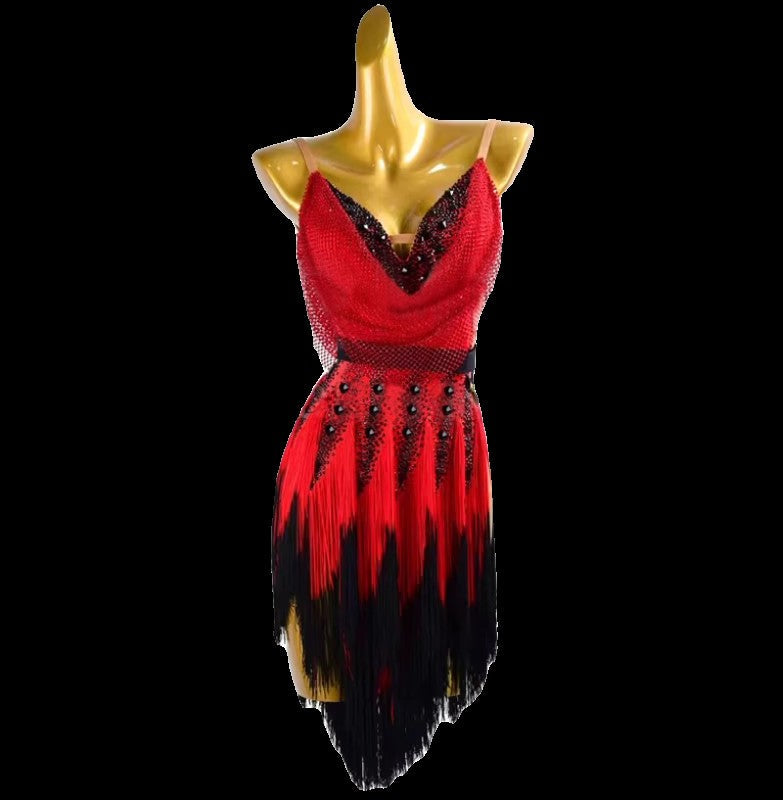
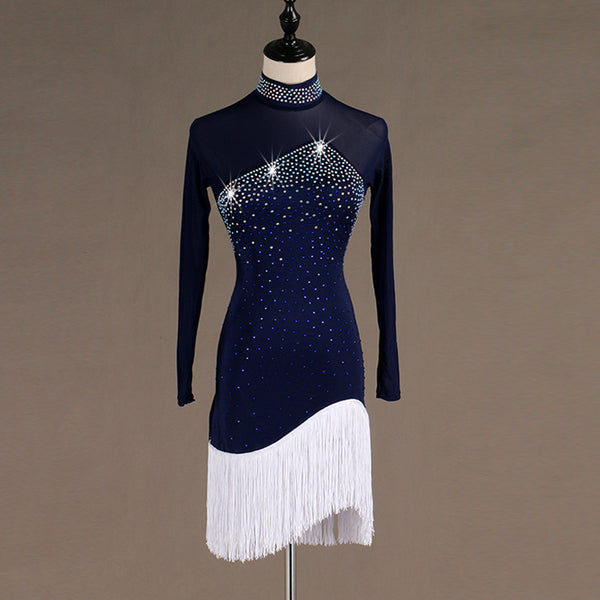
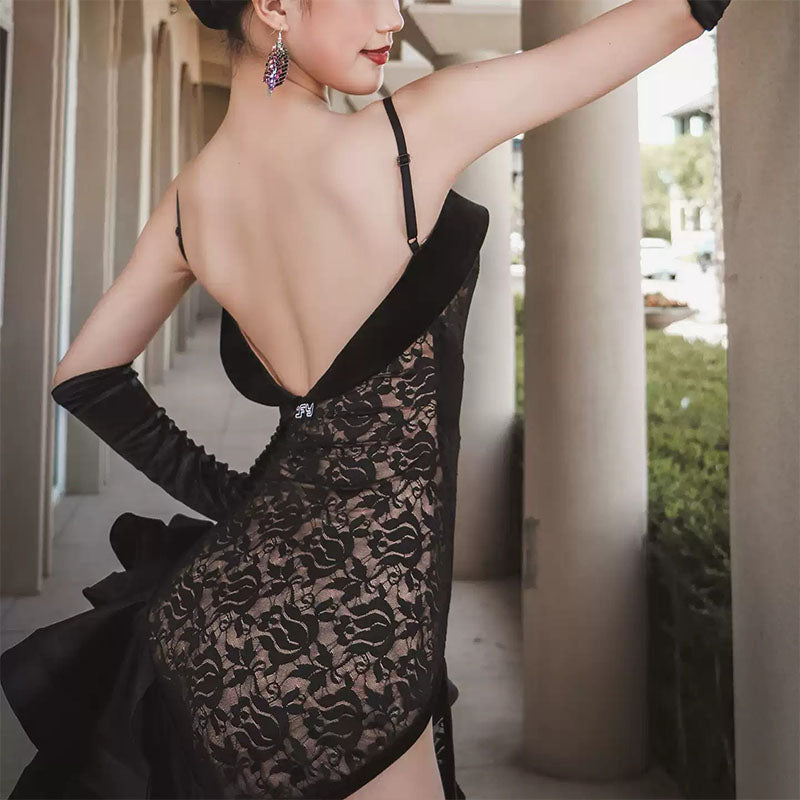
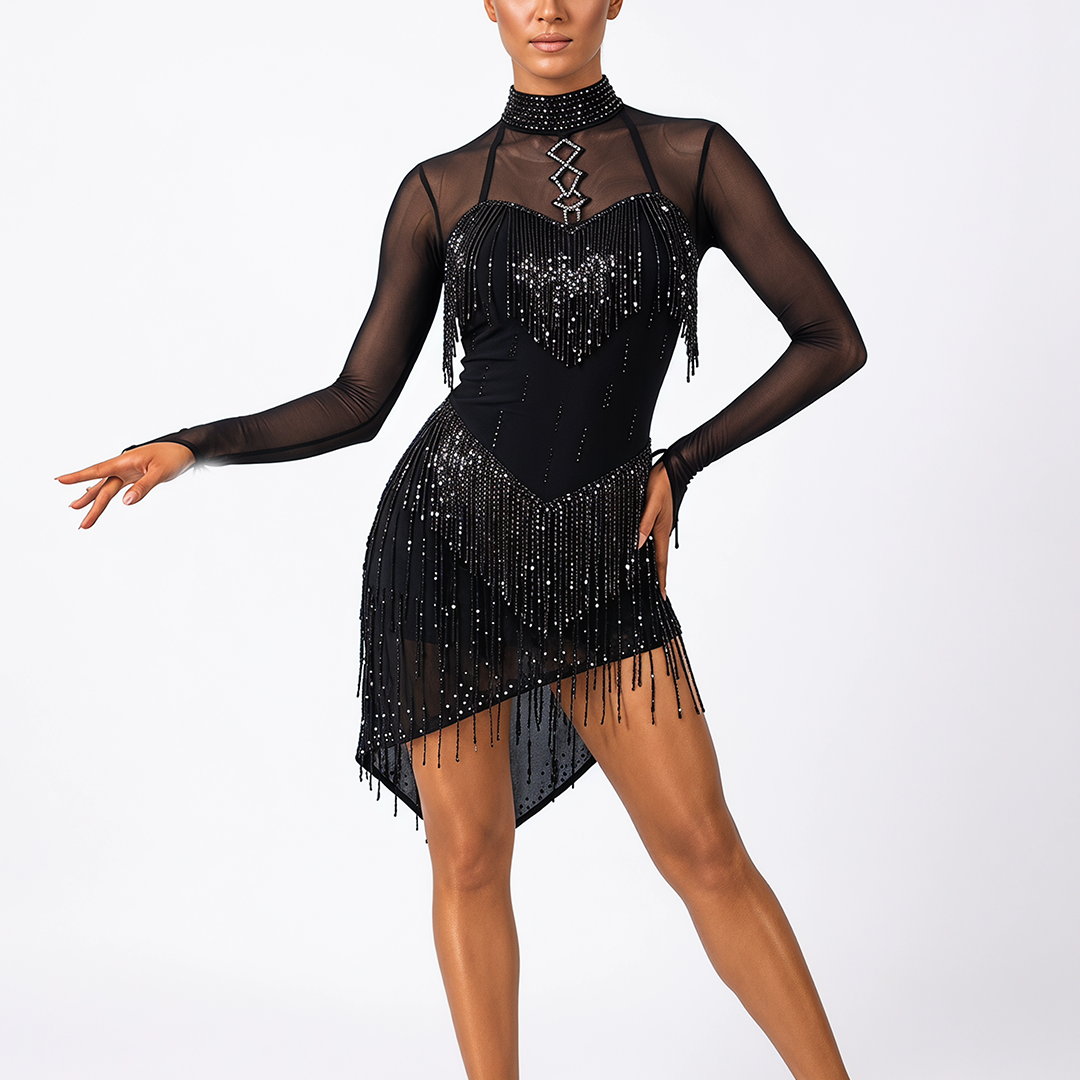
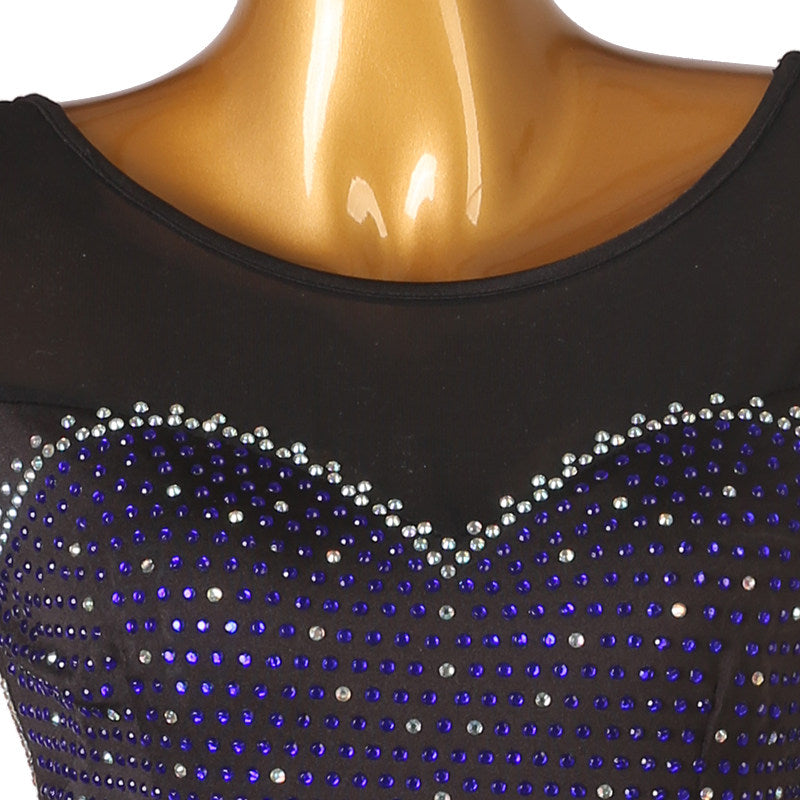
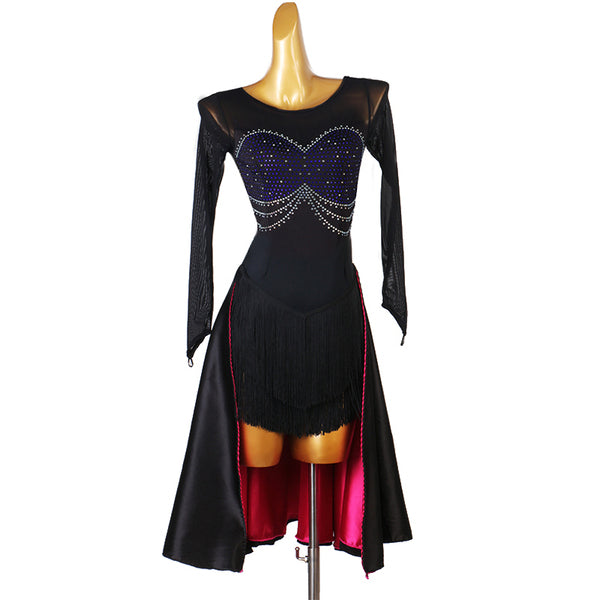
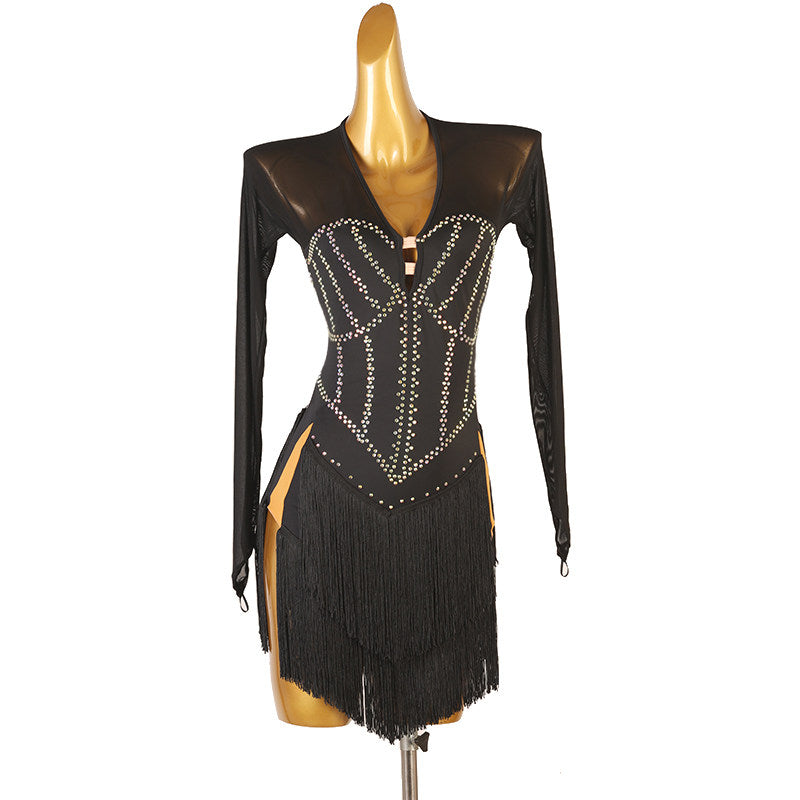
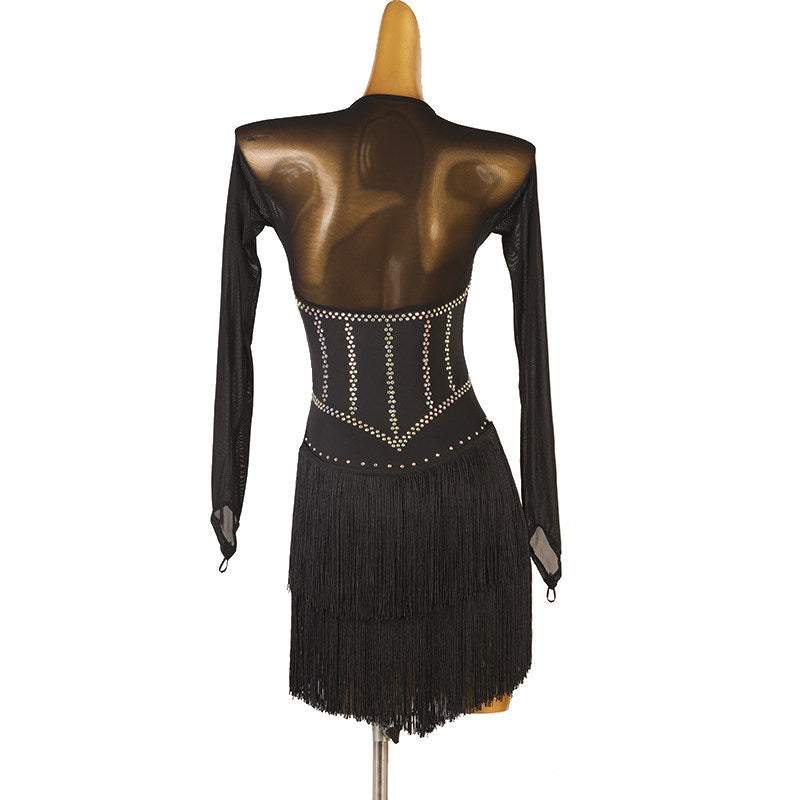
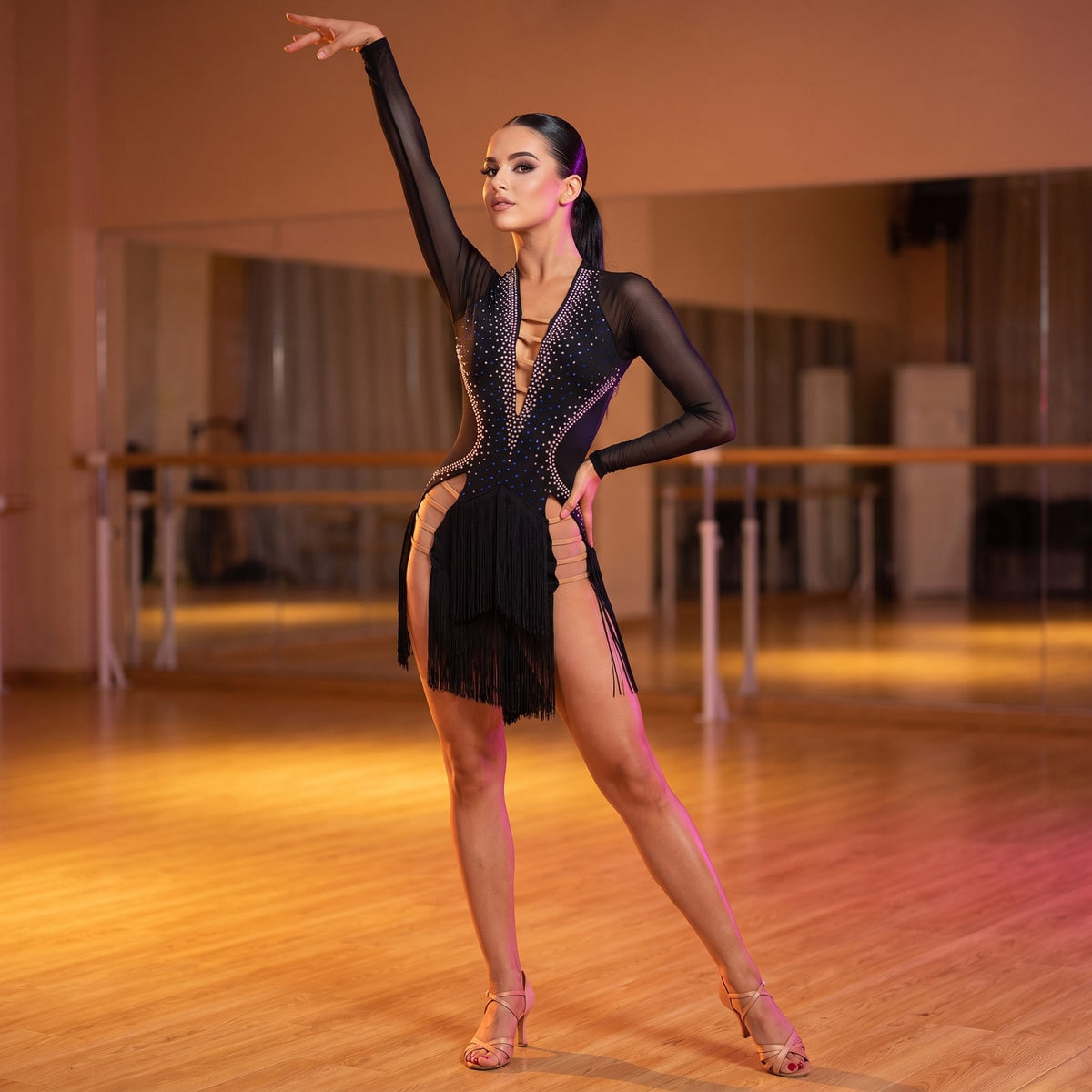
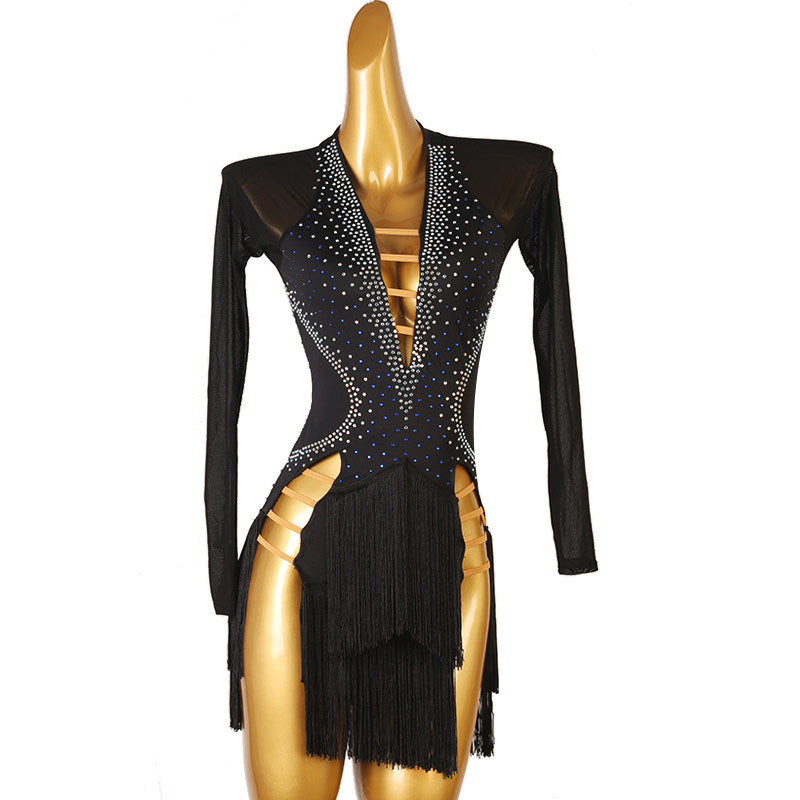
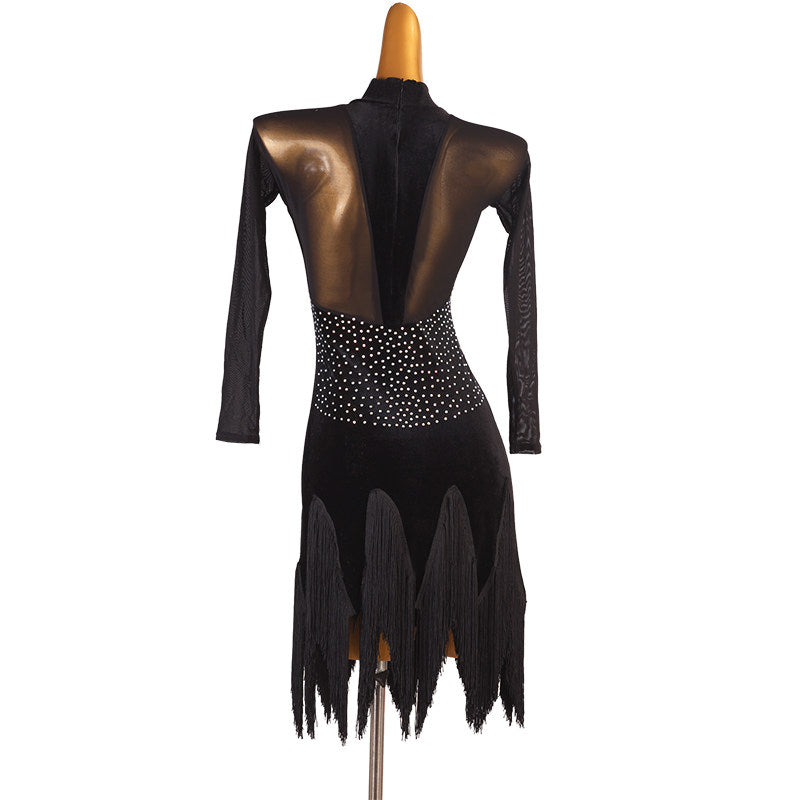
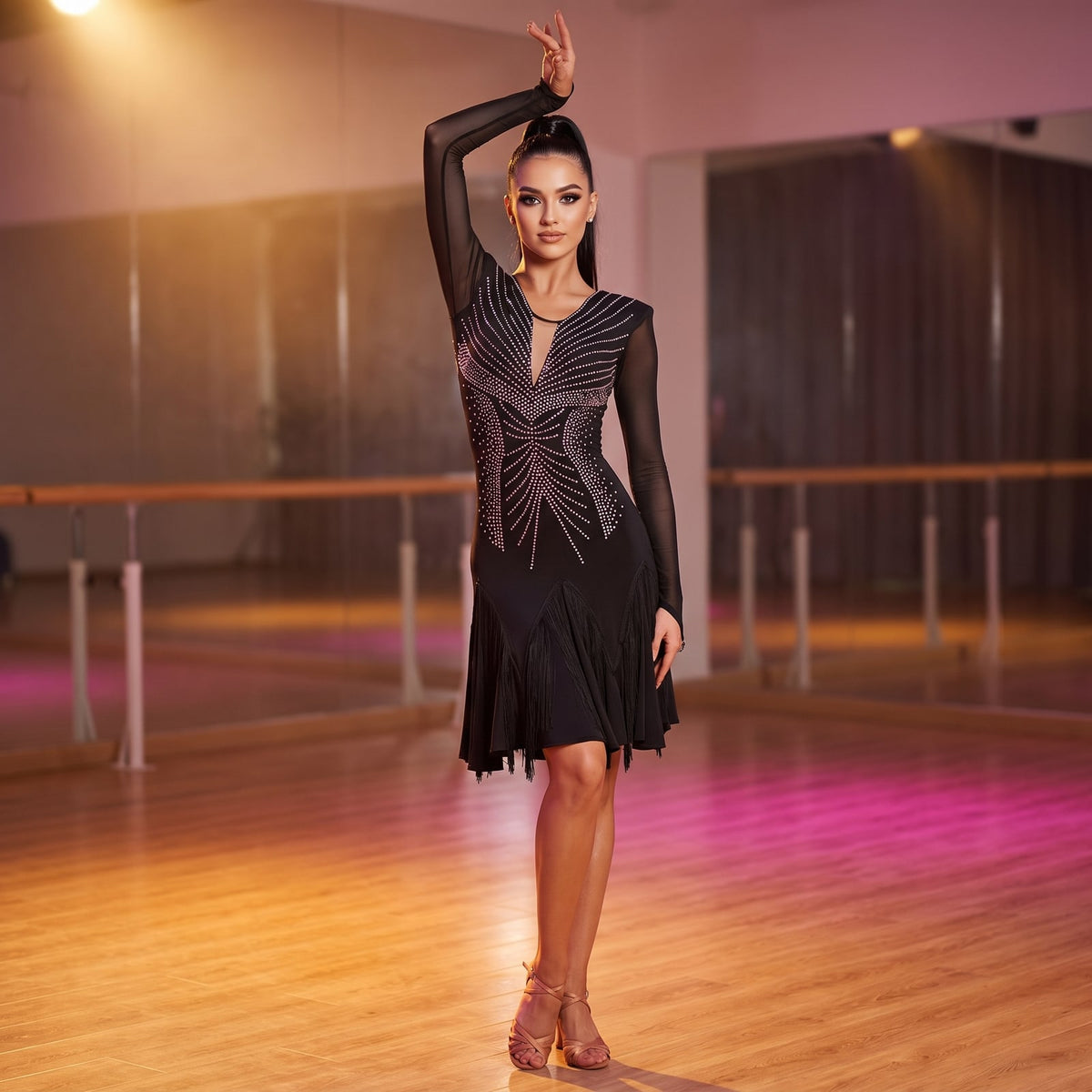
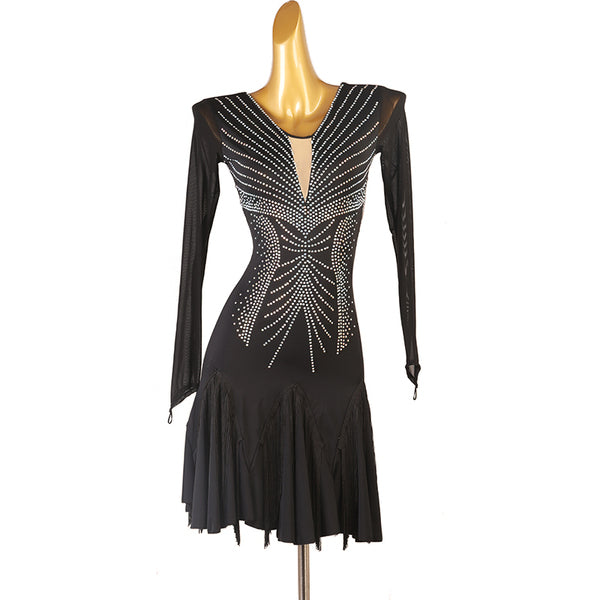
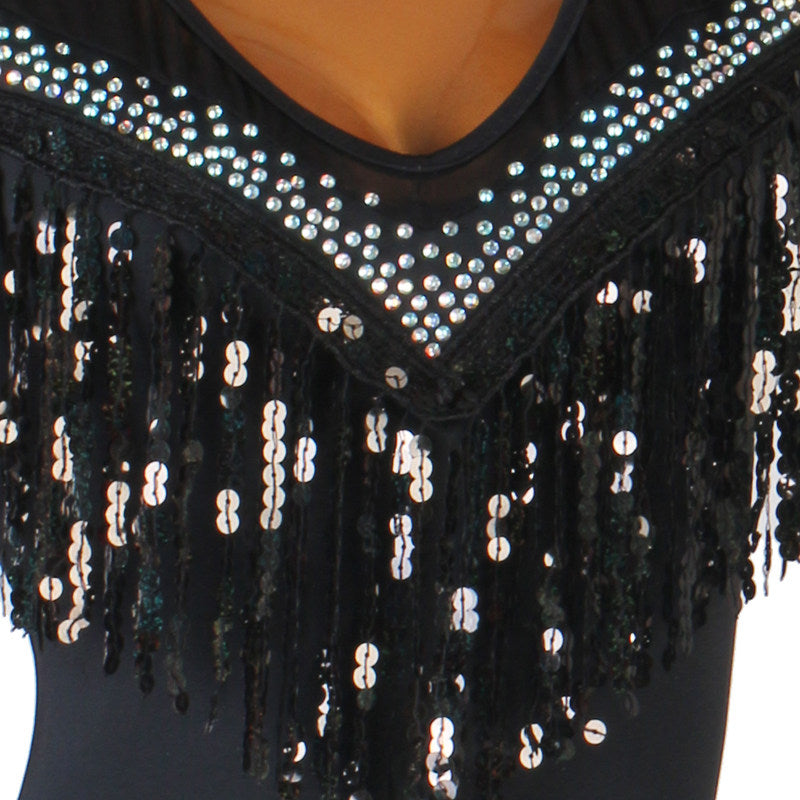
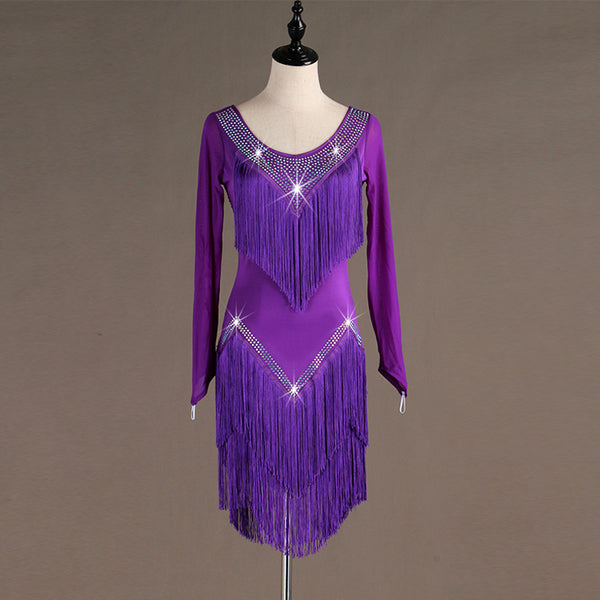
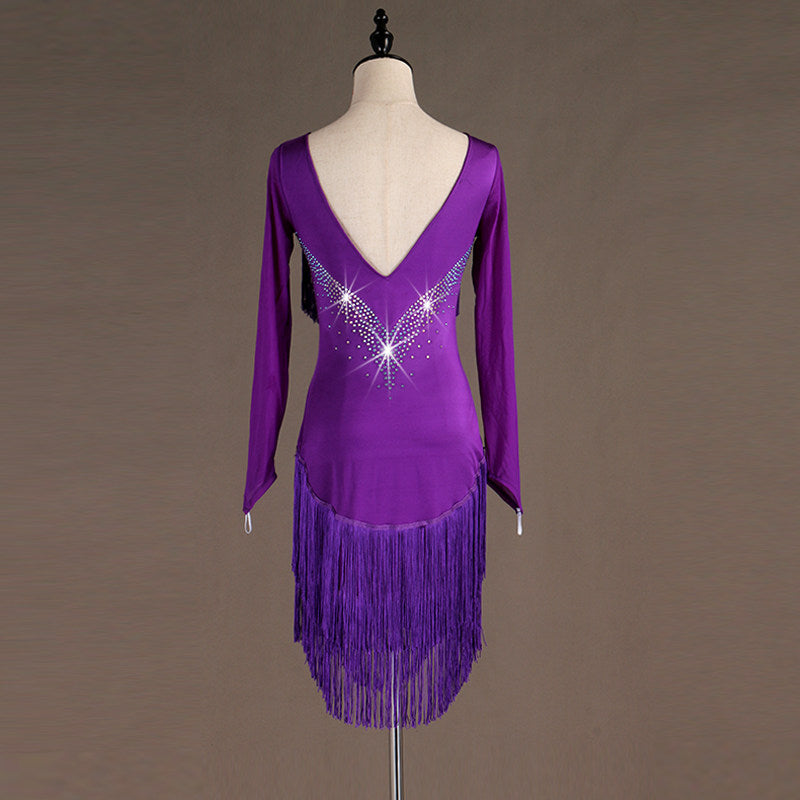
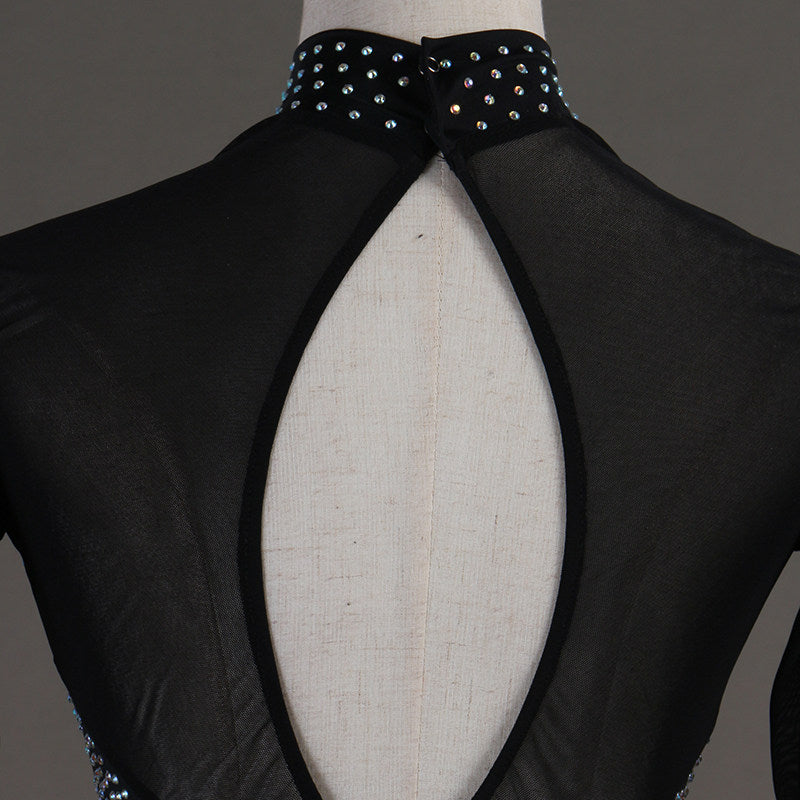
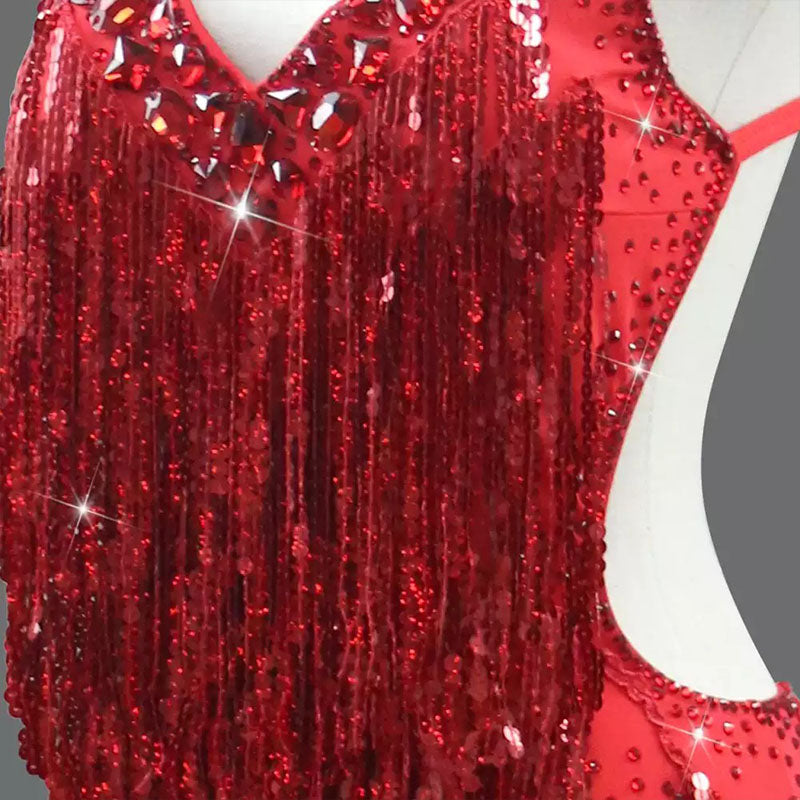
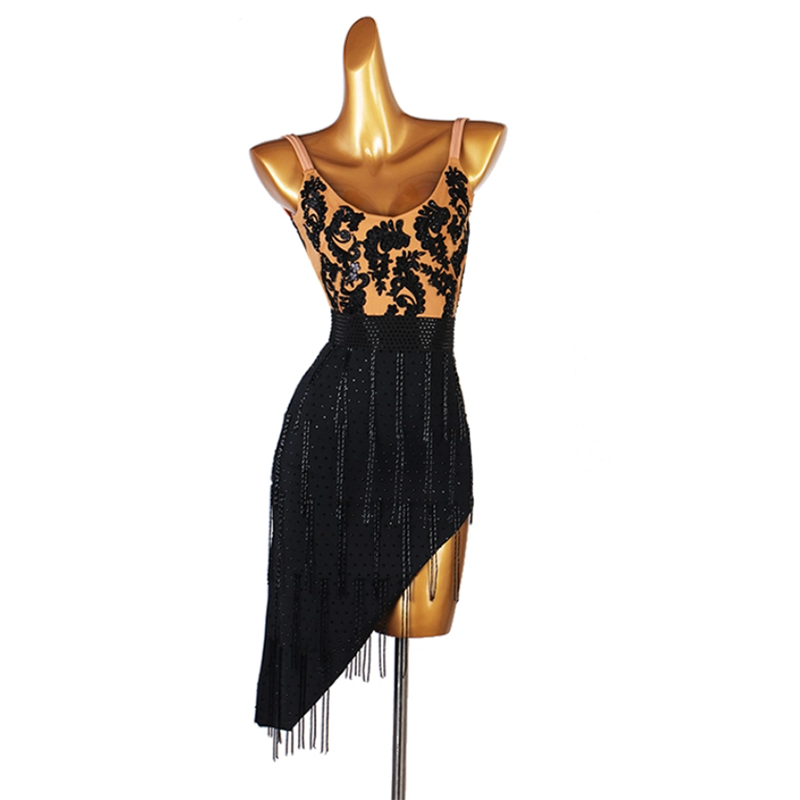
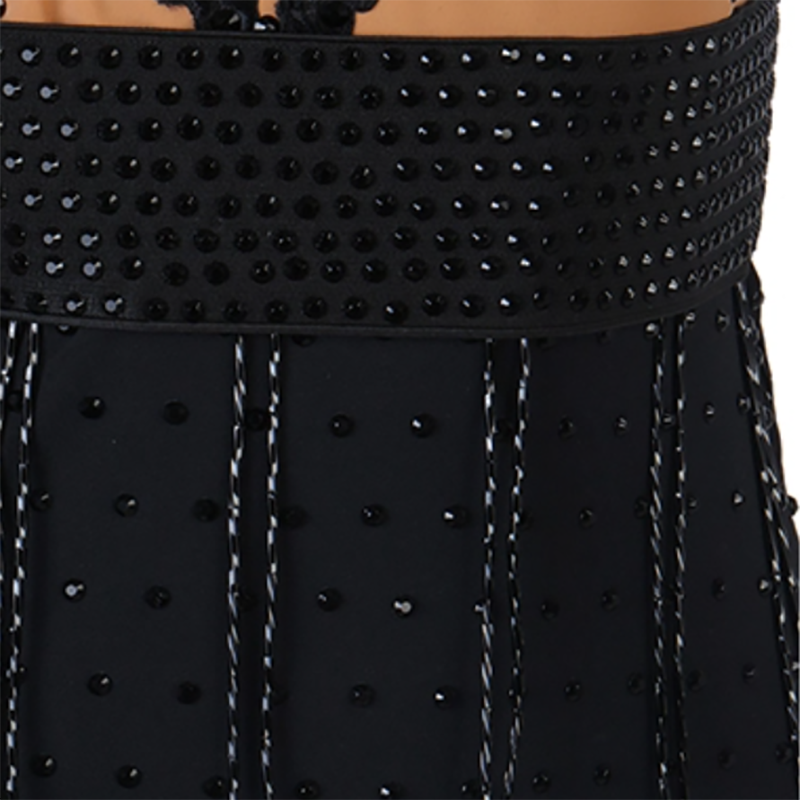
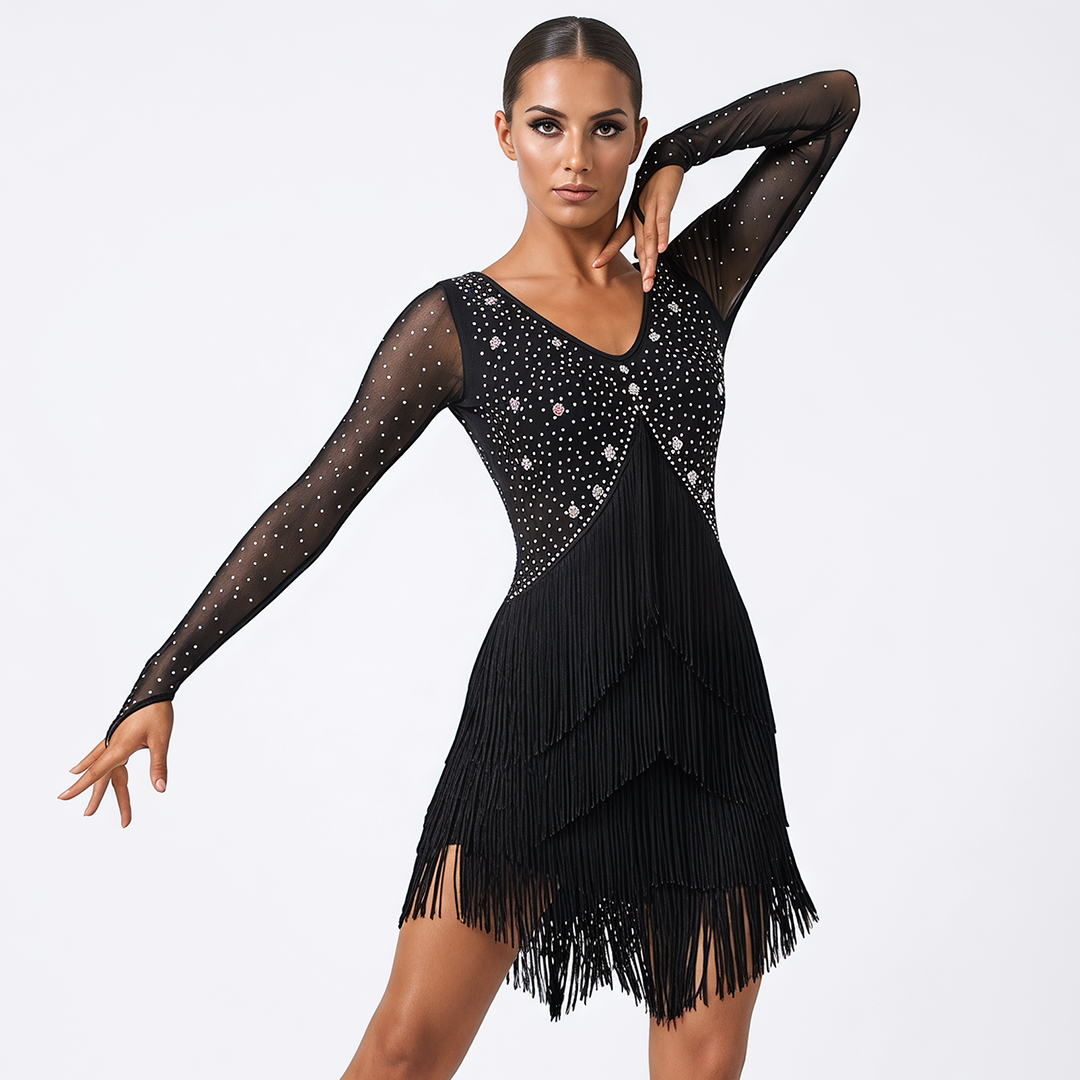
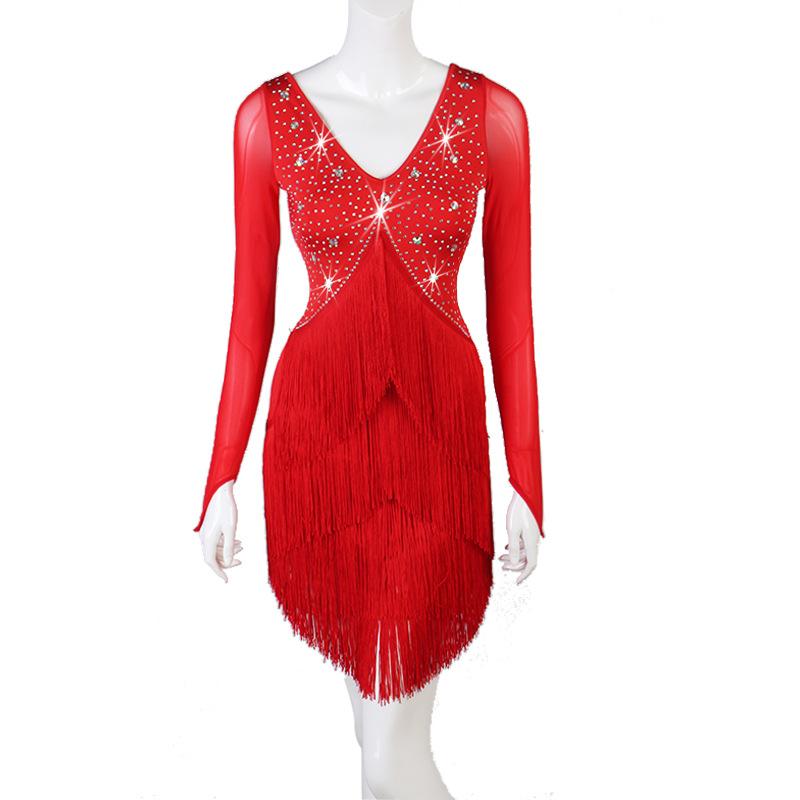
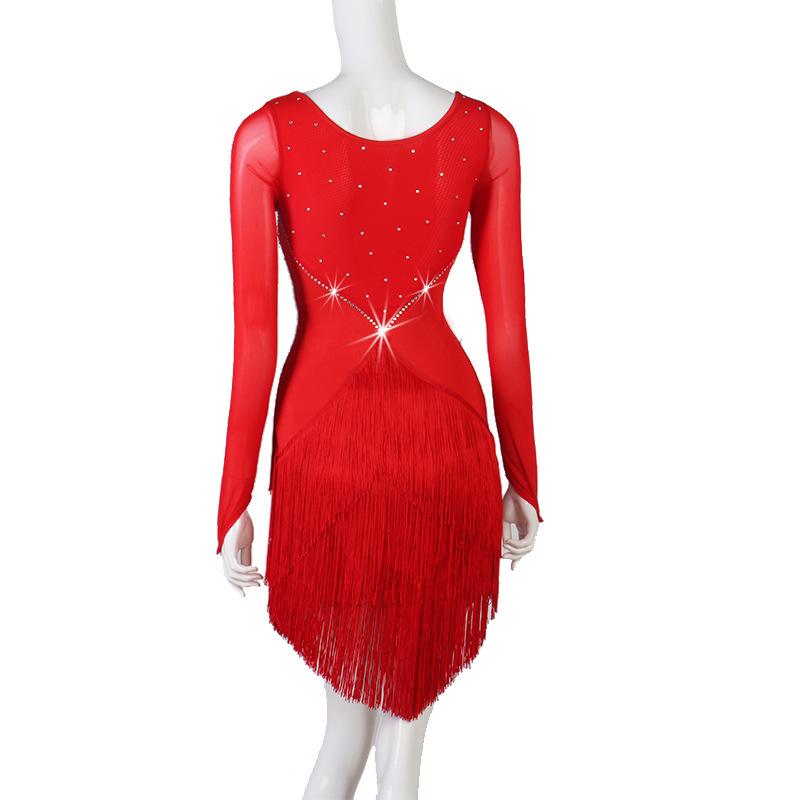
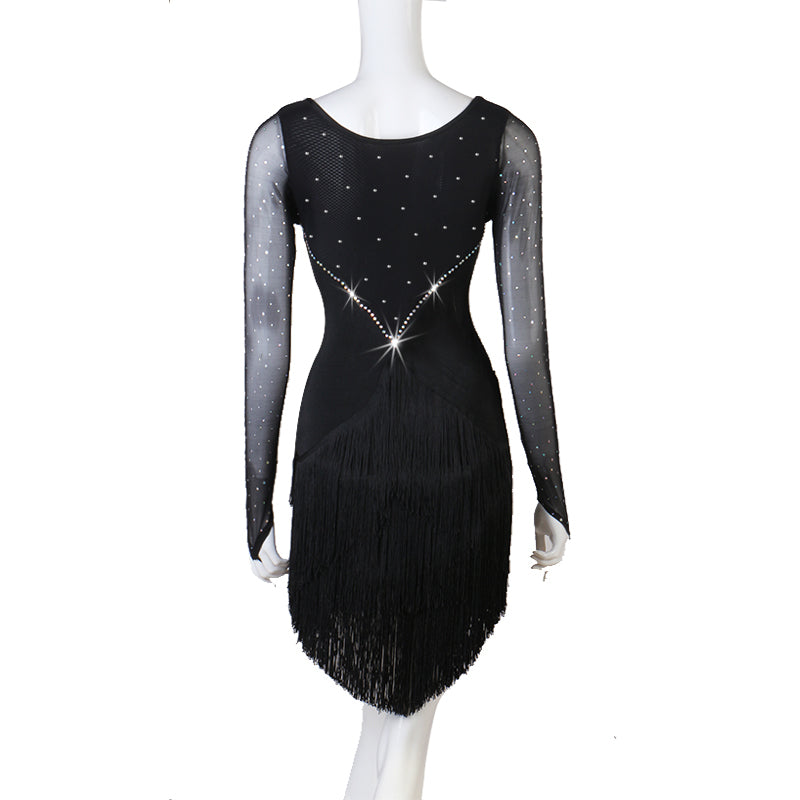
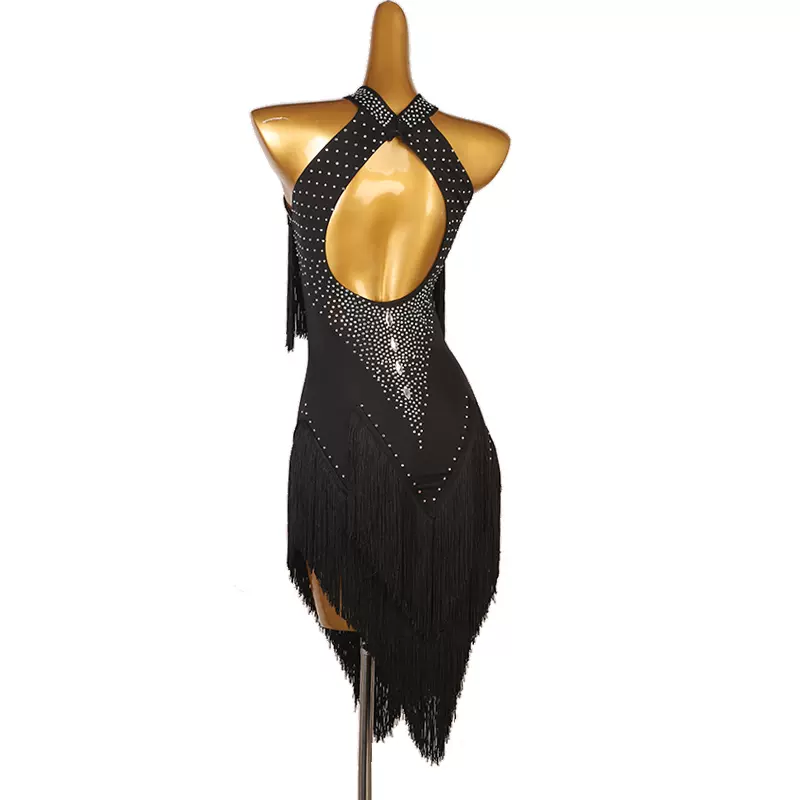
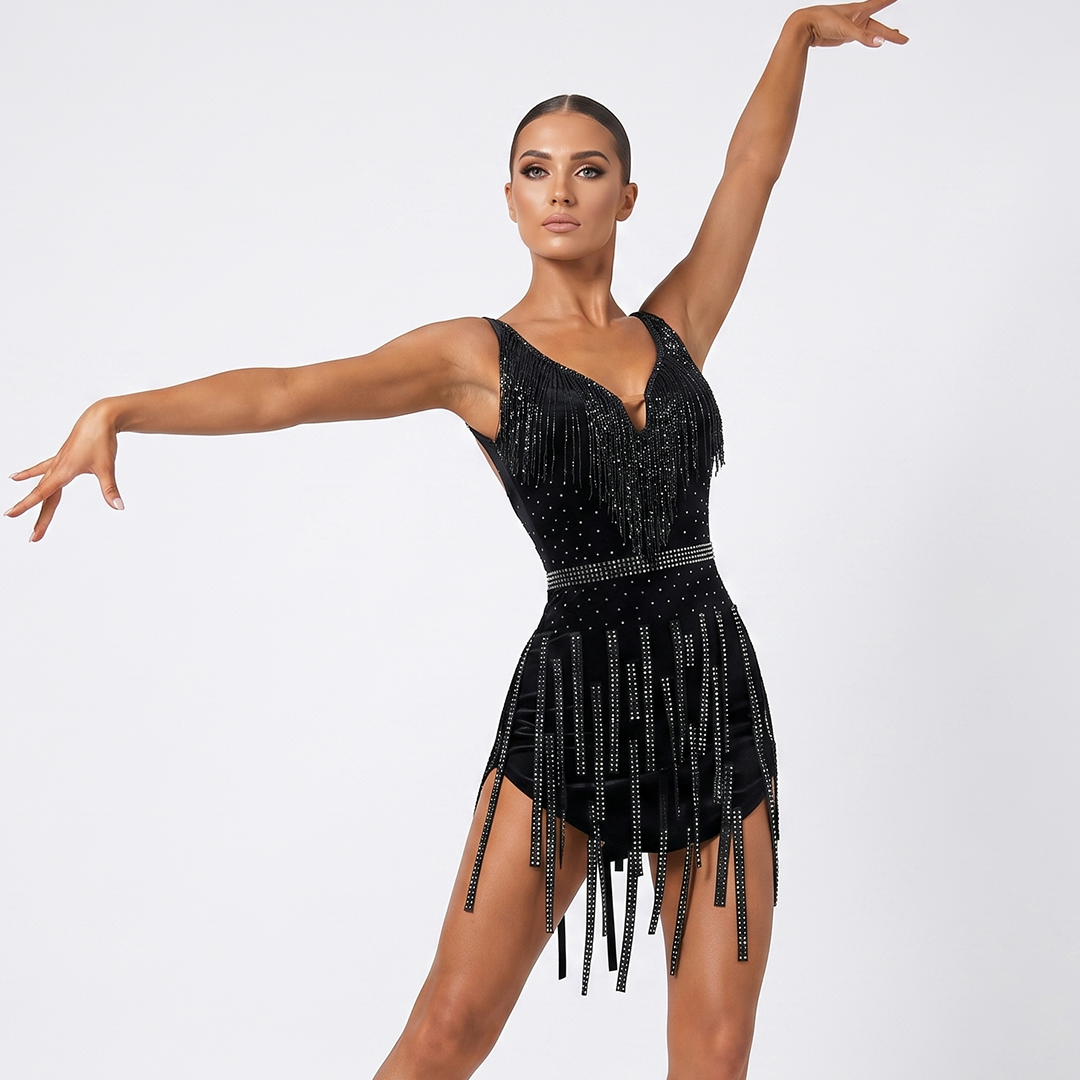
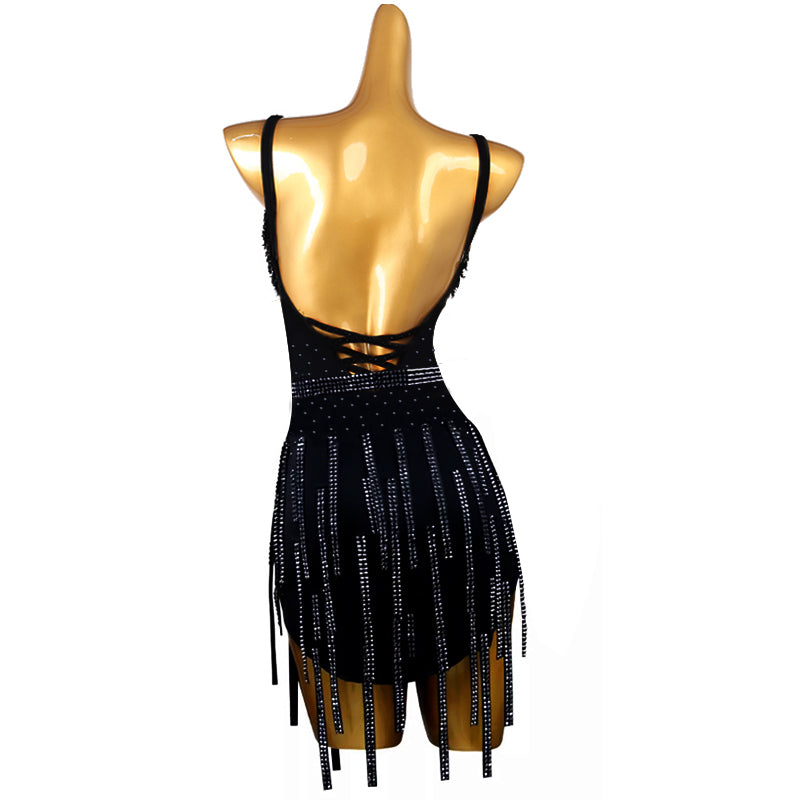
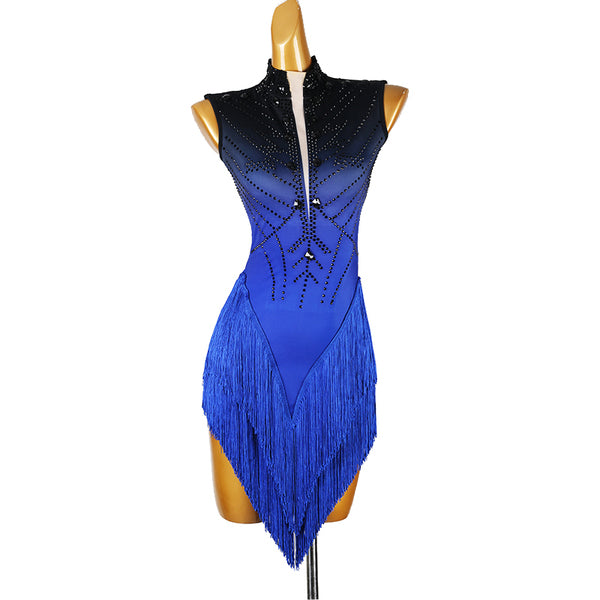
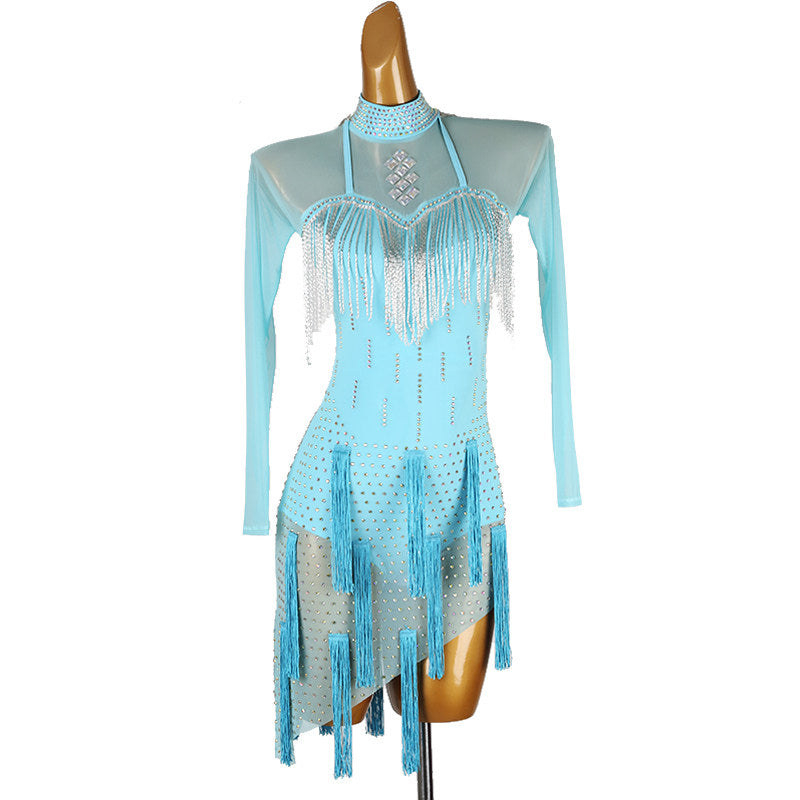
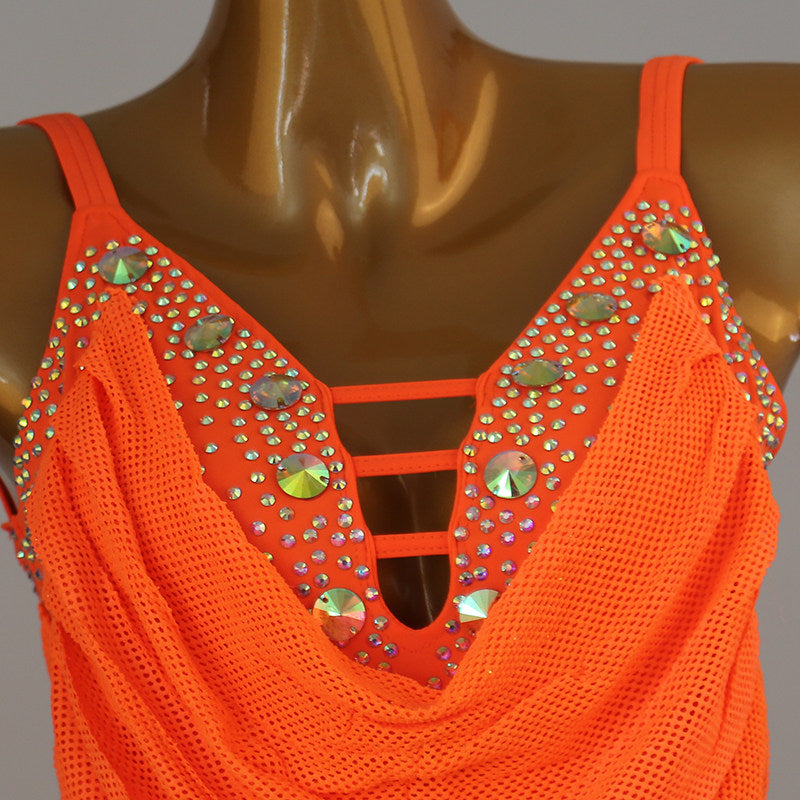
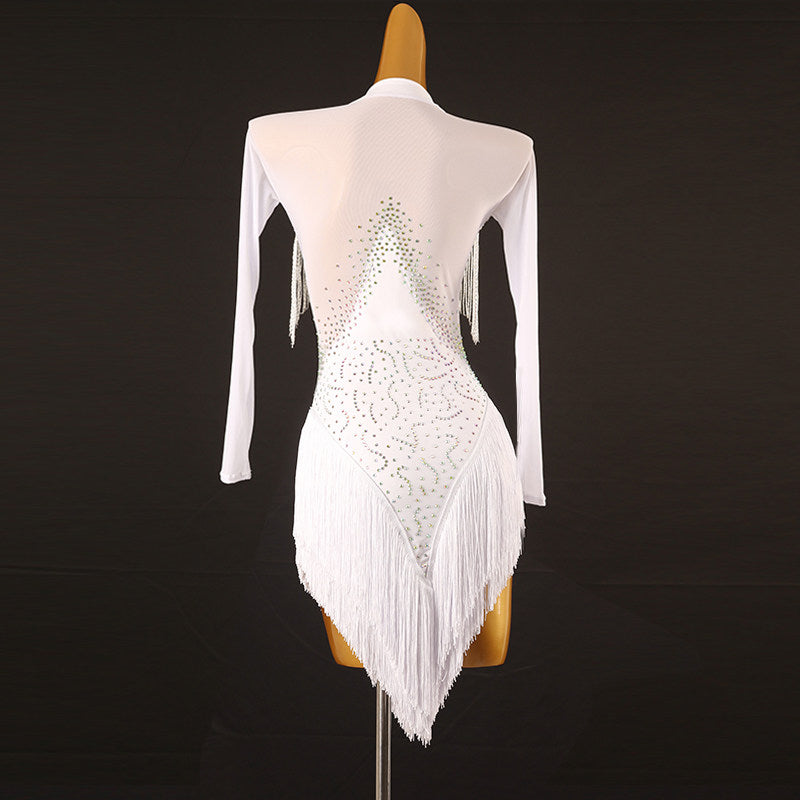
Stoning is not decoration spread evenly over a dress — it is aimed. The bodice, the neckline and the waist carry the heaviest work because that is the part of you a judge tracks. Skirts are stoned more sparingly, partly for weight and partly because a moving skirt scatters light on its own. A dress that is stoned uniformly from shoulder to hem tends to read as a bright blur rather than as a body.
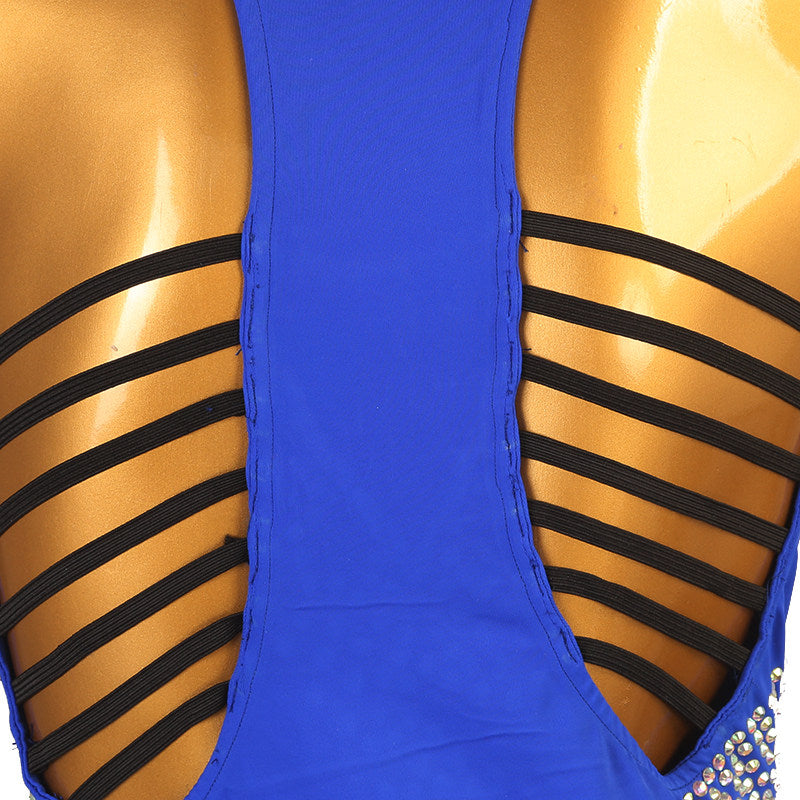
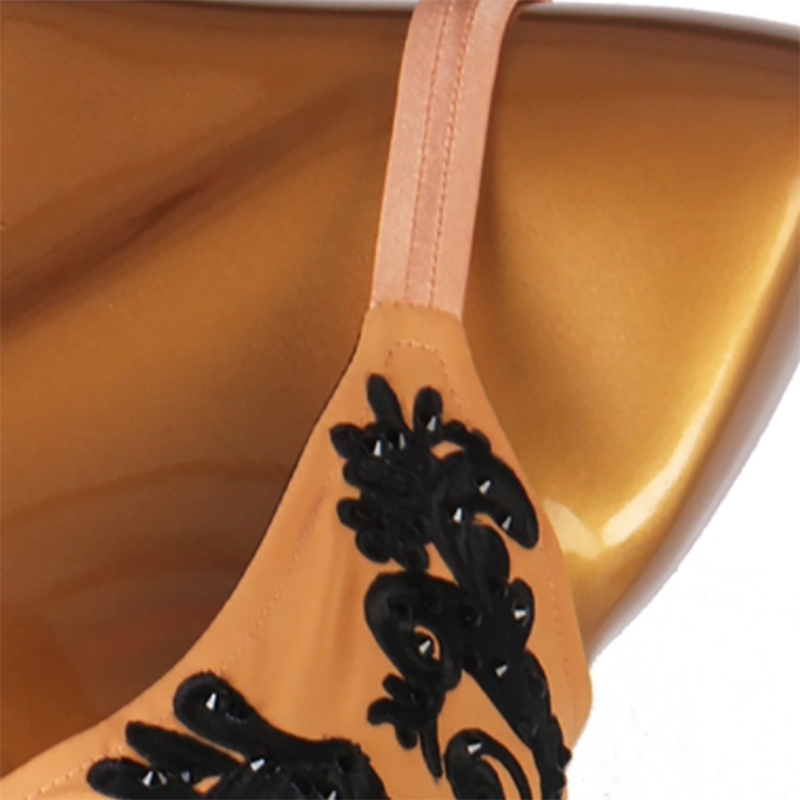
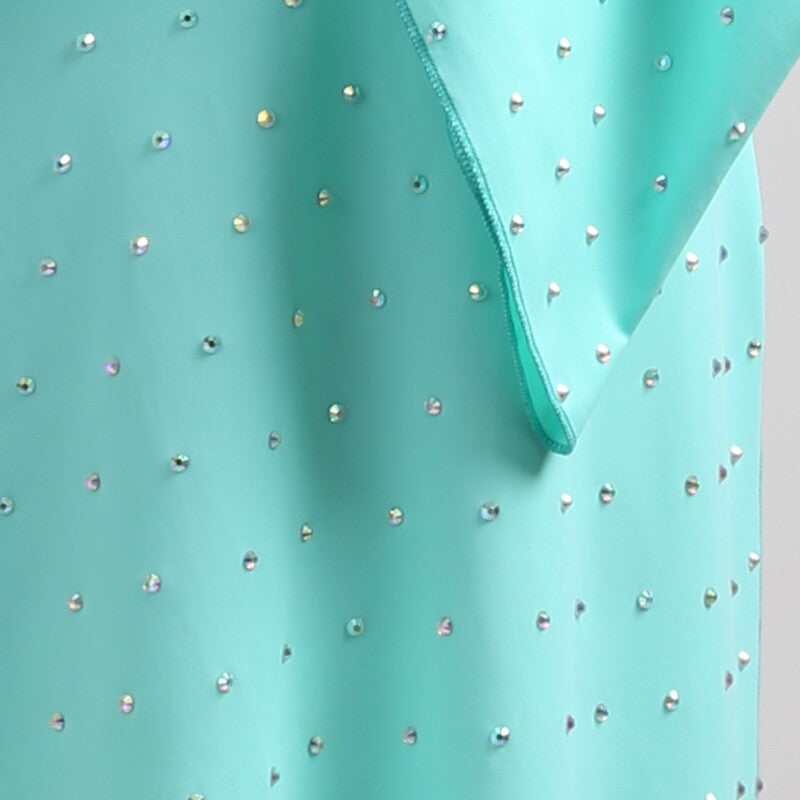
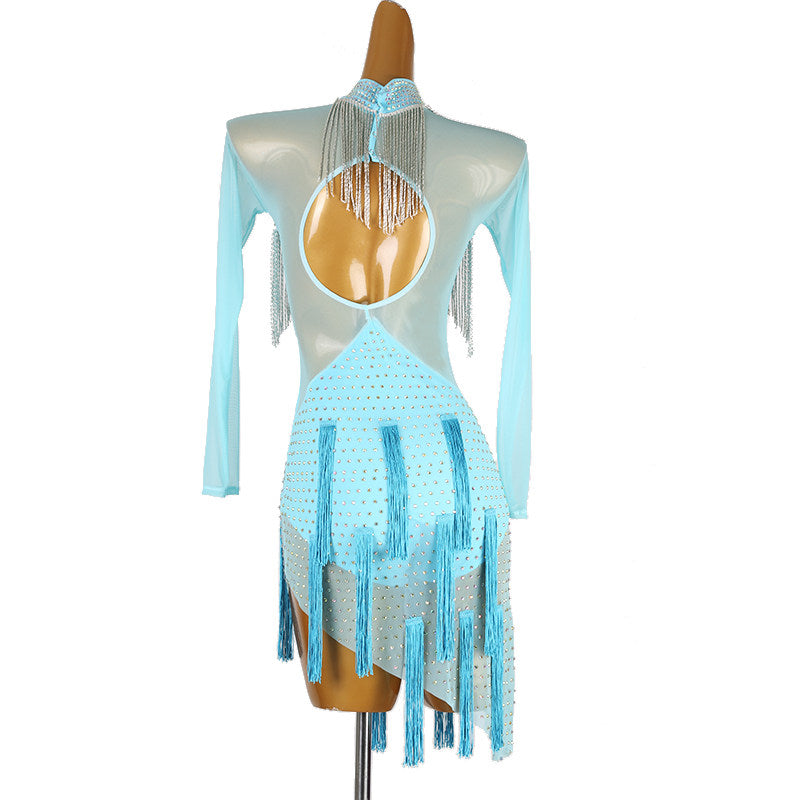
Weight matters more than it sounds. Every stone adds mass to the bodice, and a heavily stoned bodice on thin straps will drag over a long day. Look for the load carried on a proper structured band, a halter that ties rather than hooks, or a built-in body rather than a loose shell. Aurora borealis stones — the ones with the iridescent coating — throw more colour than clear crystal under stage lighting and are the usual choice when a dress needs to register from far back without going to a saturated colour.
Fringe Under Competition Lighting
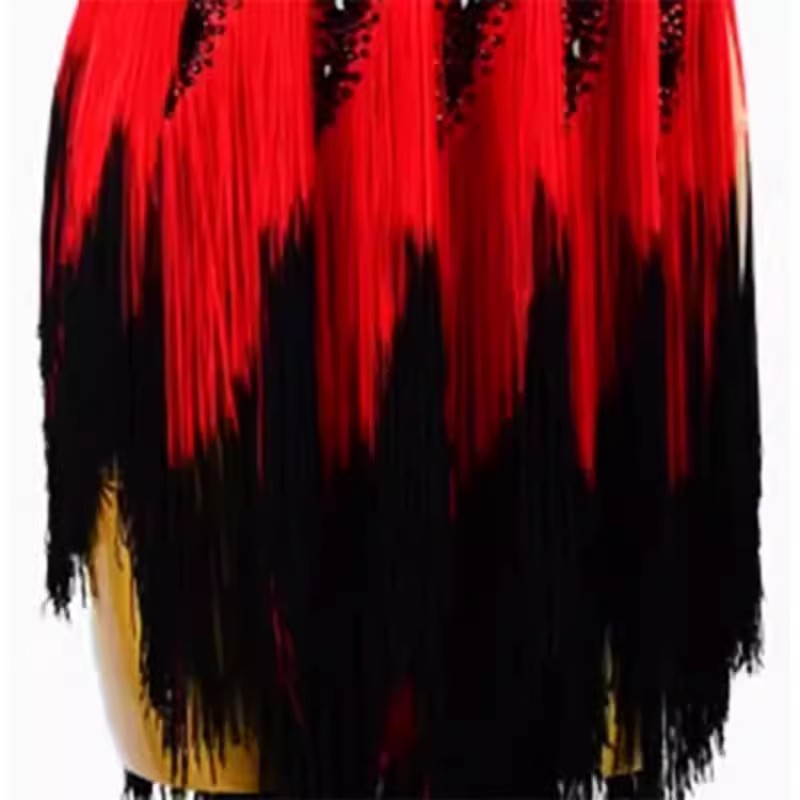
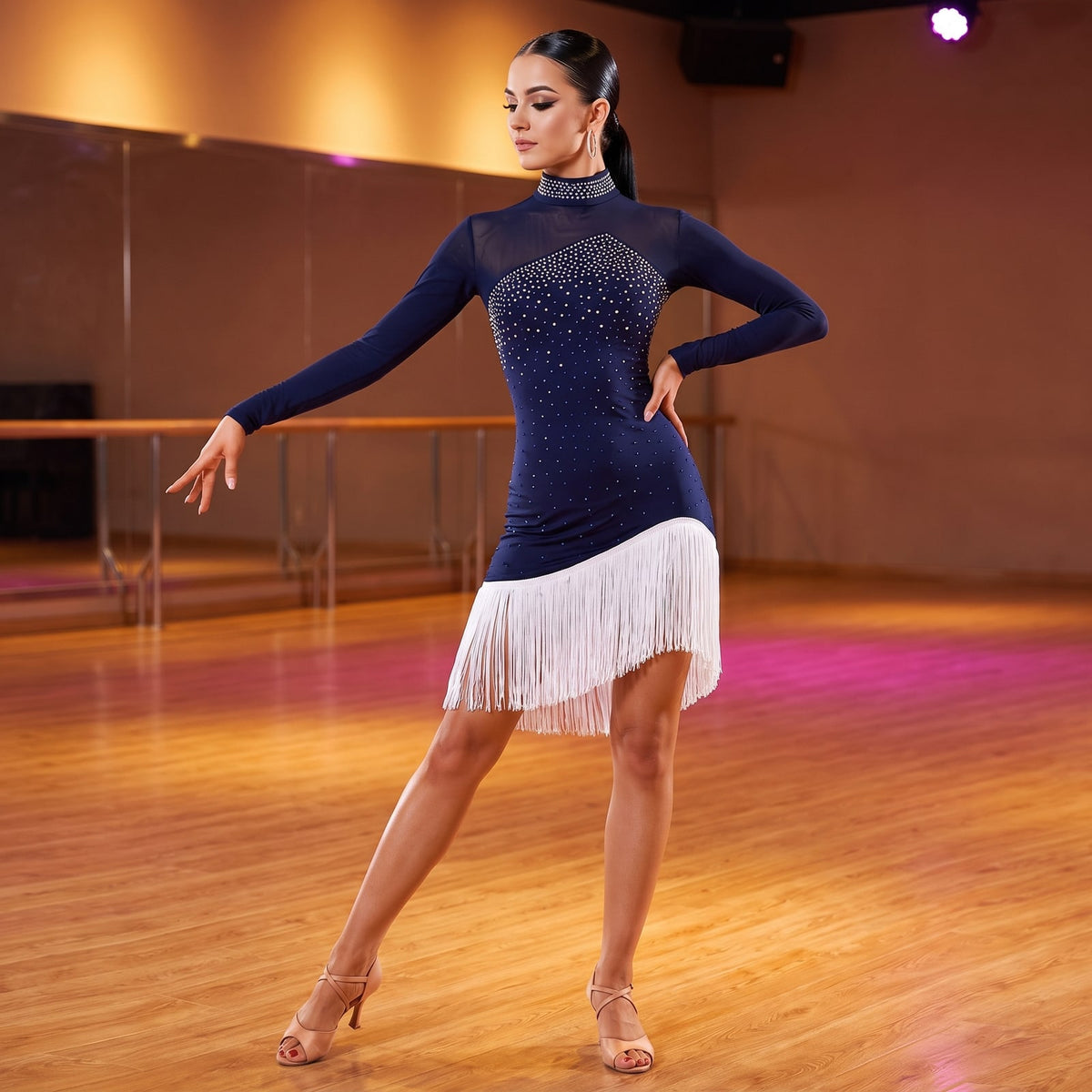
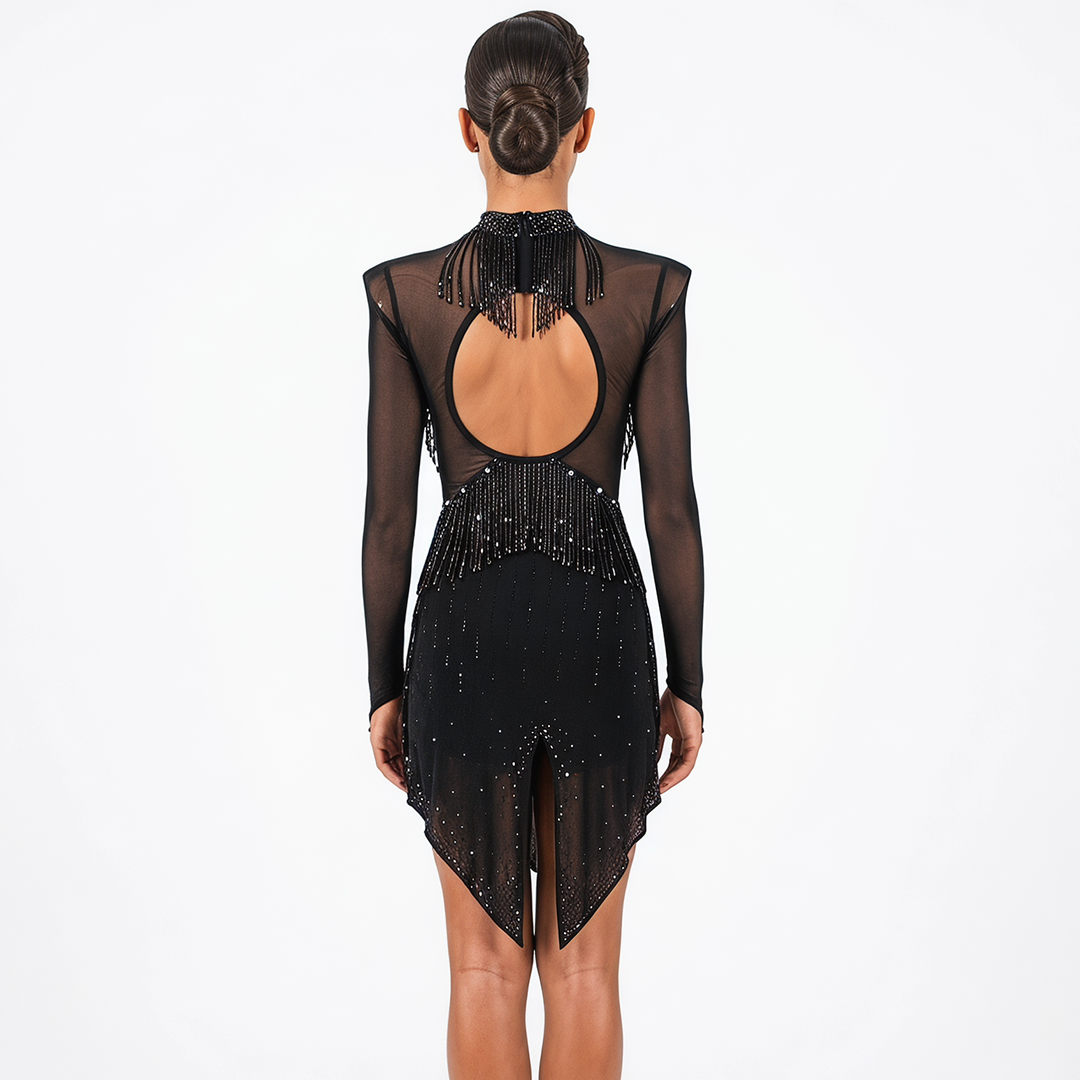
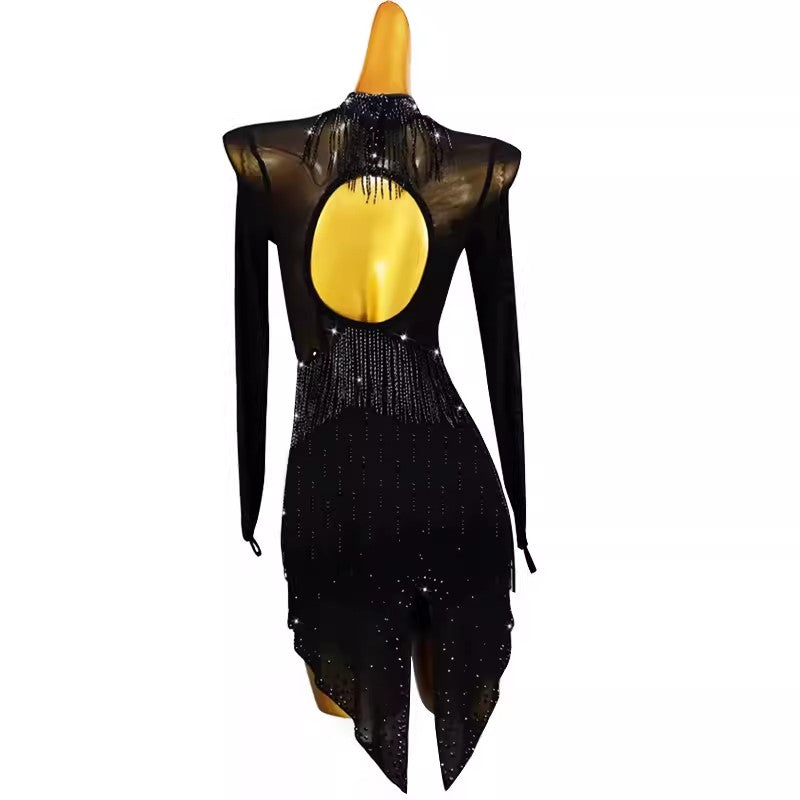
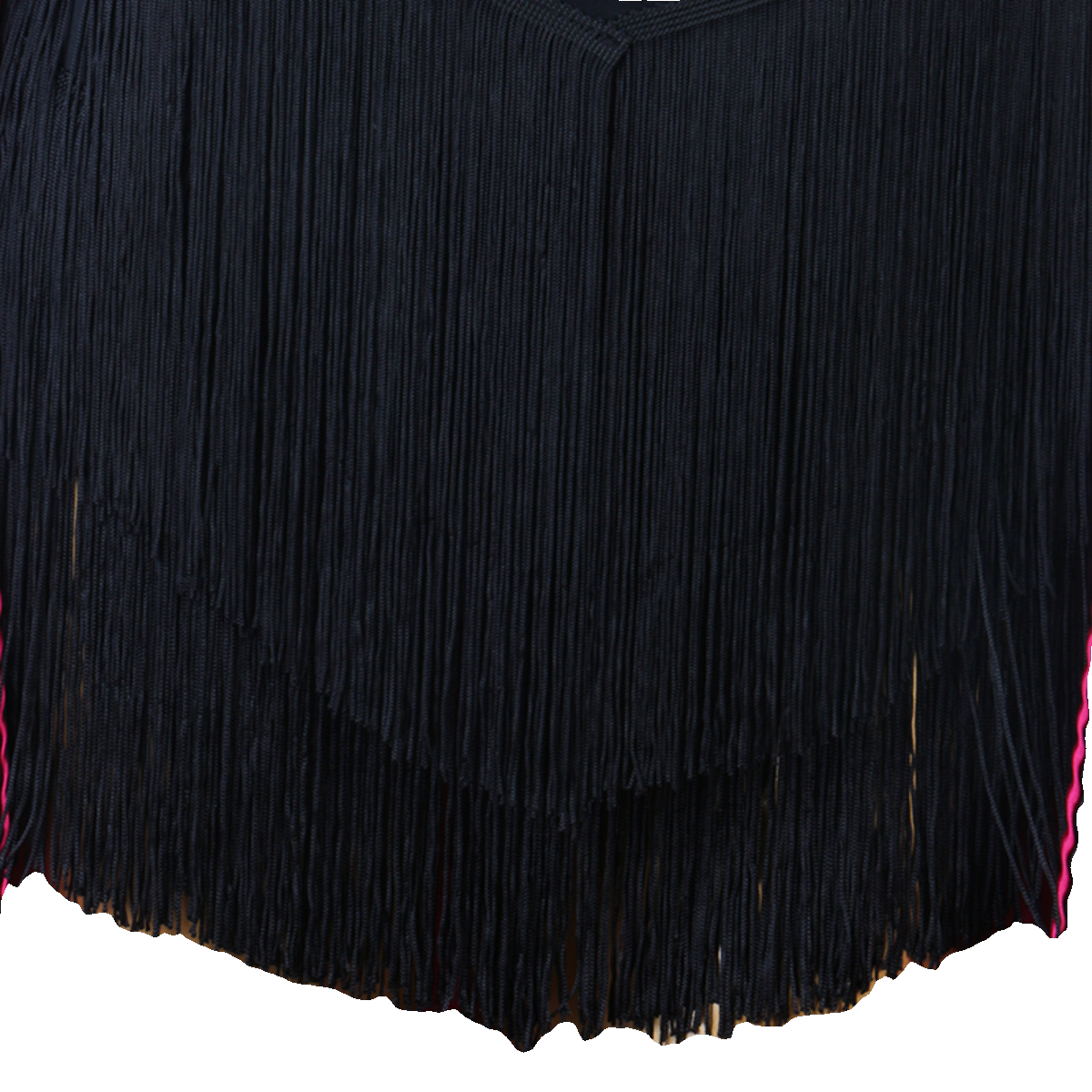
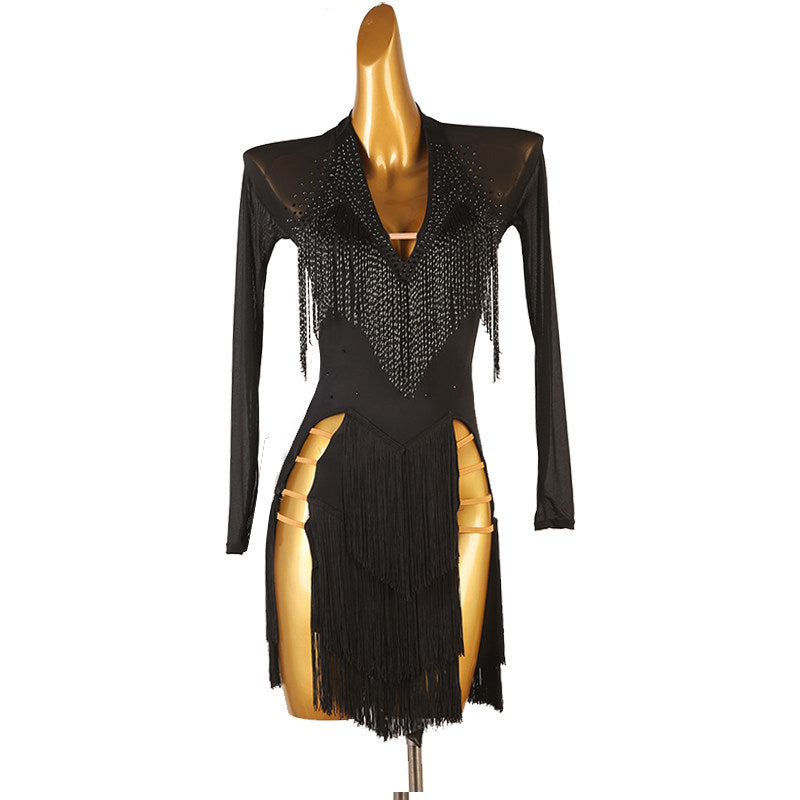
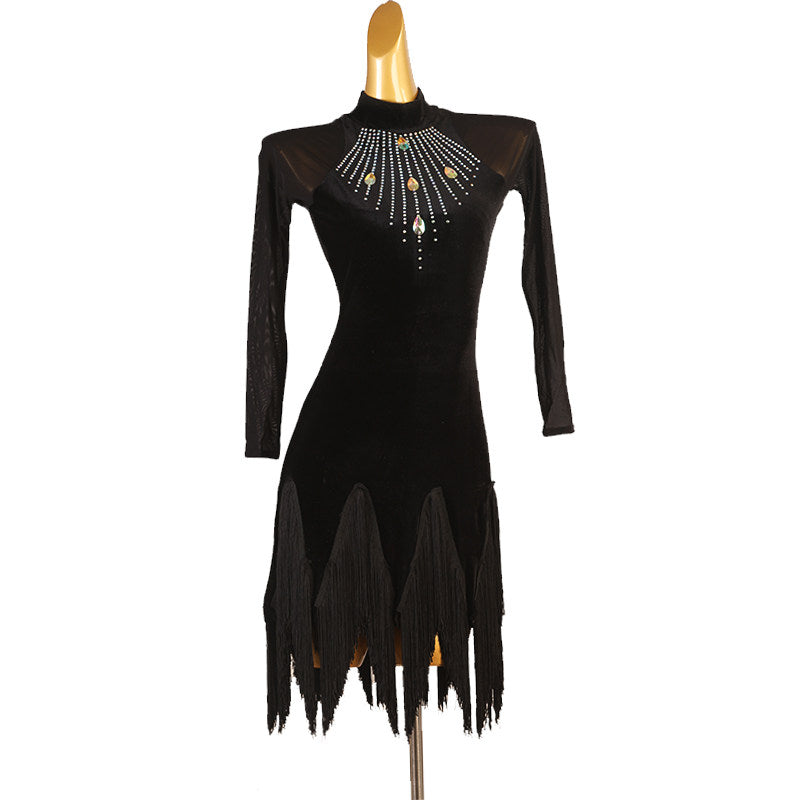
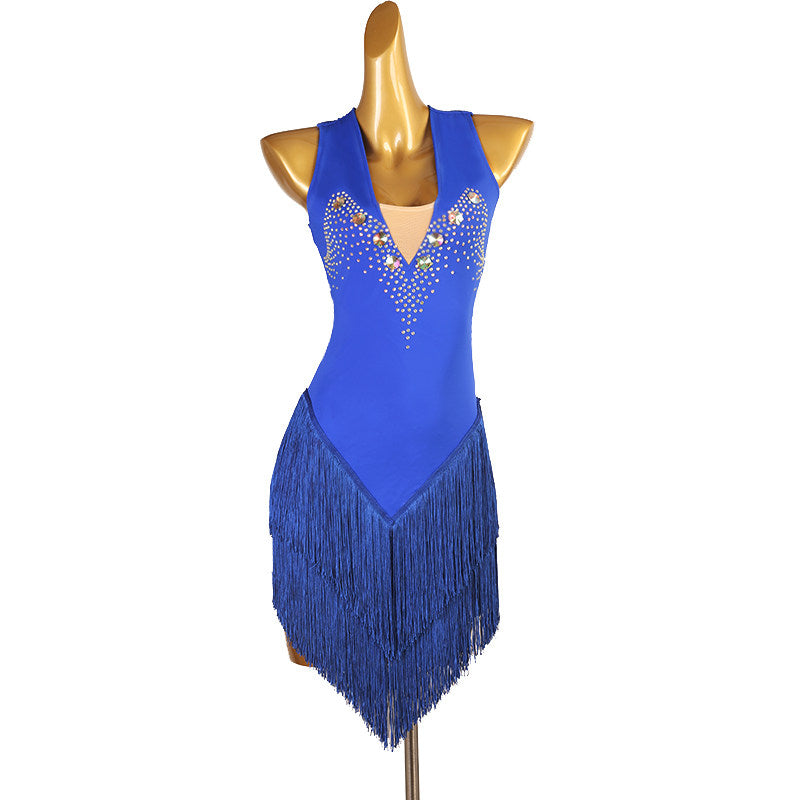
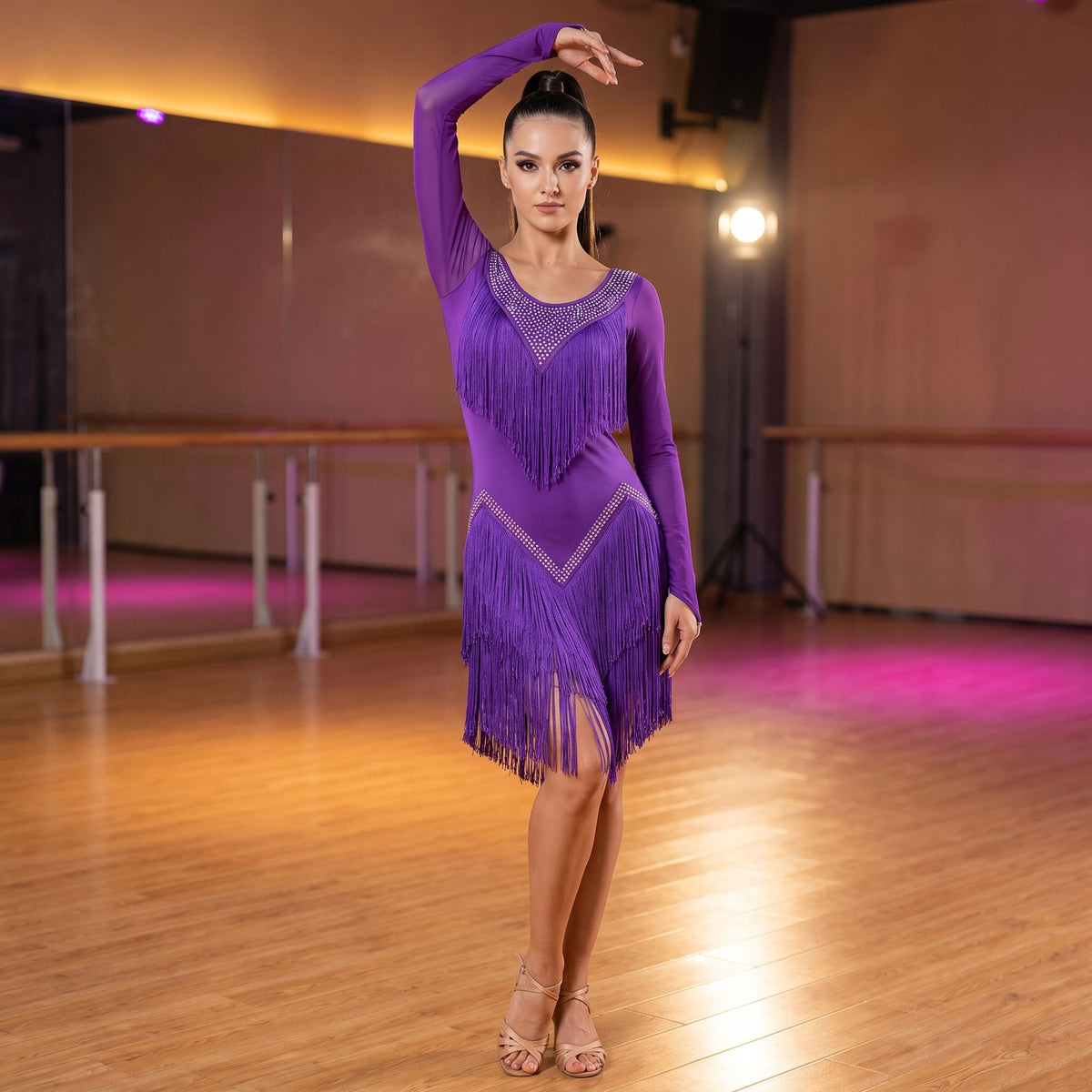
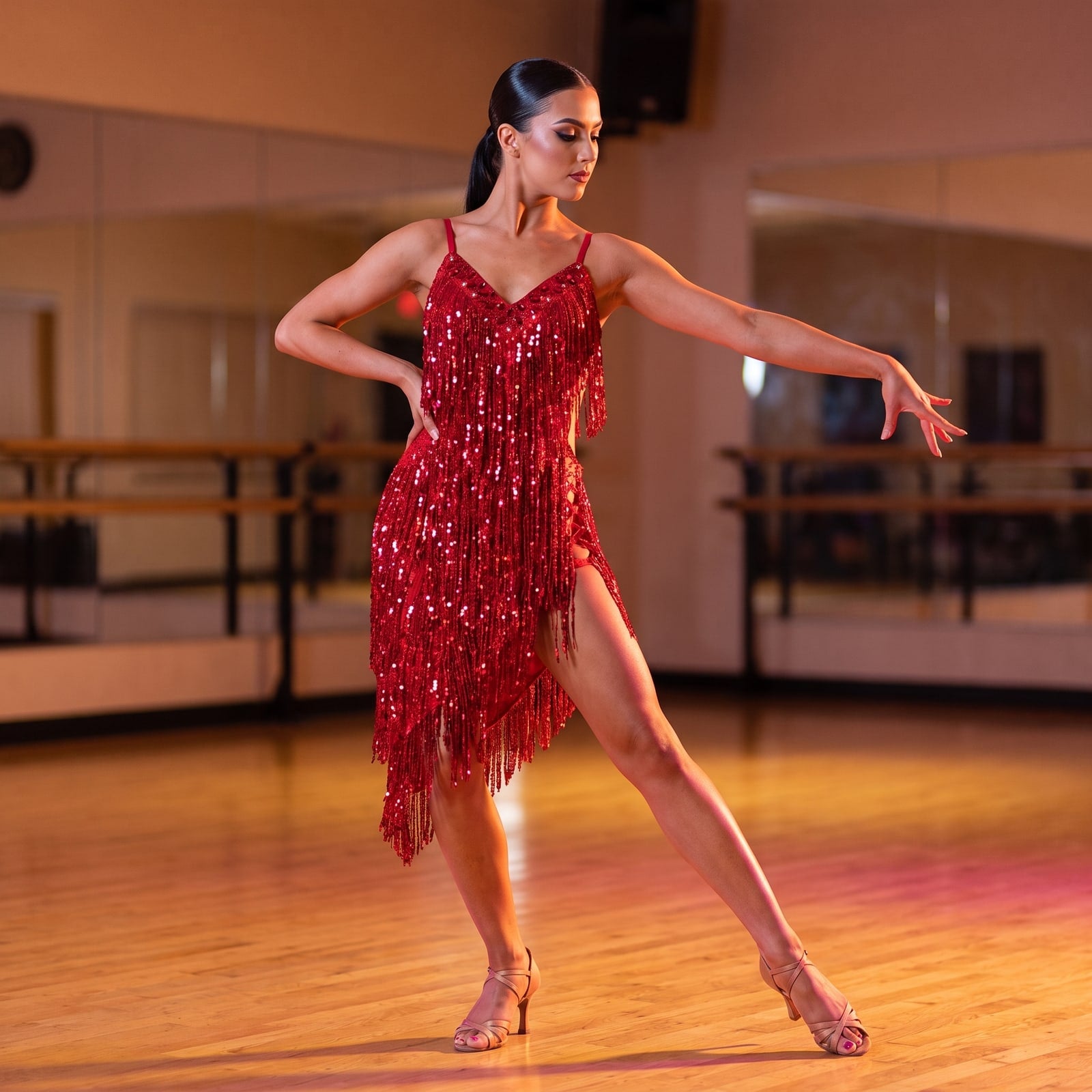
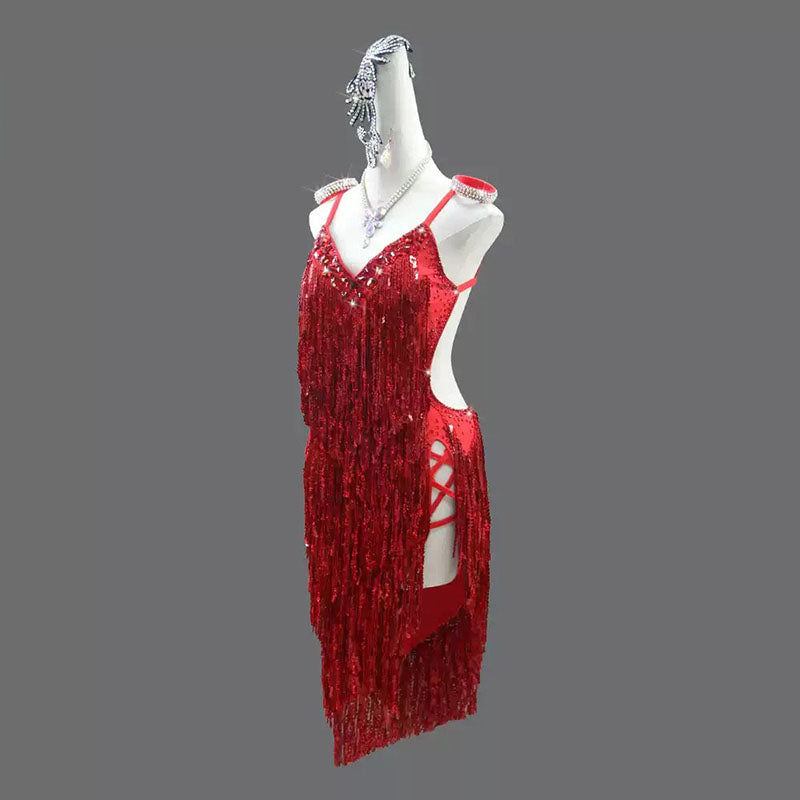
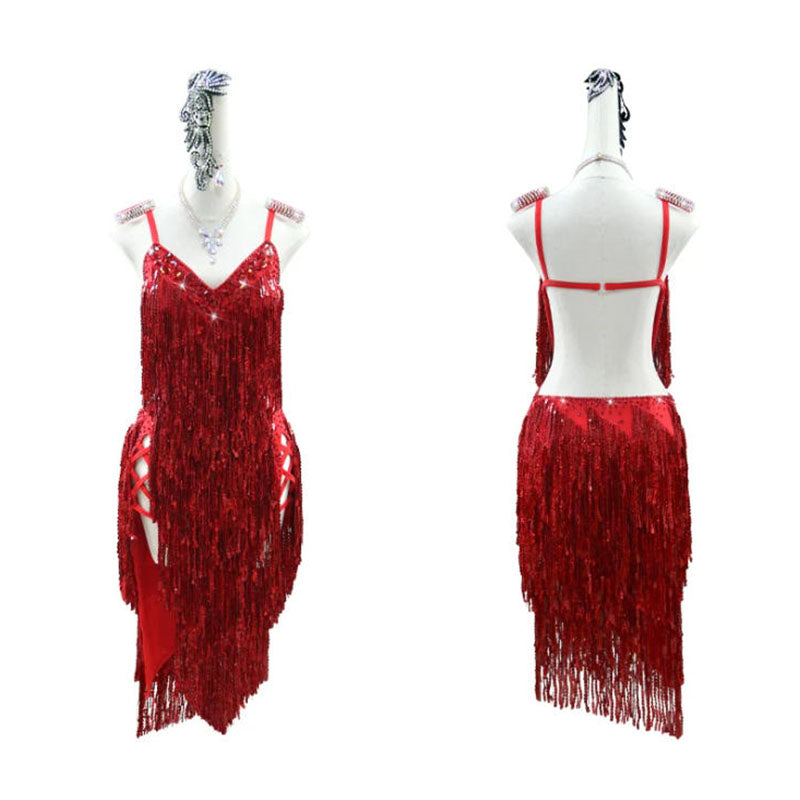
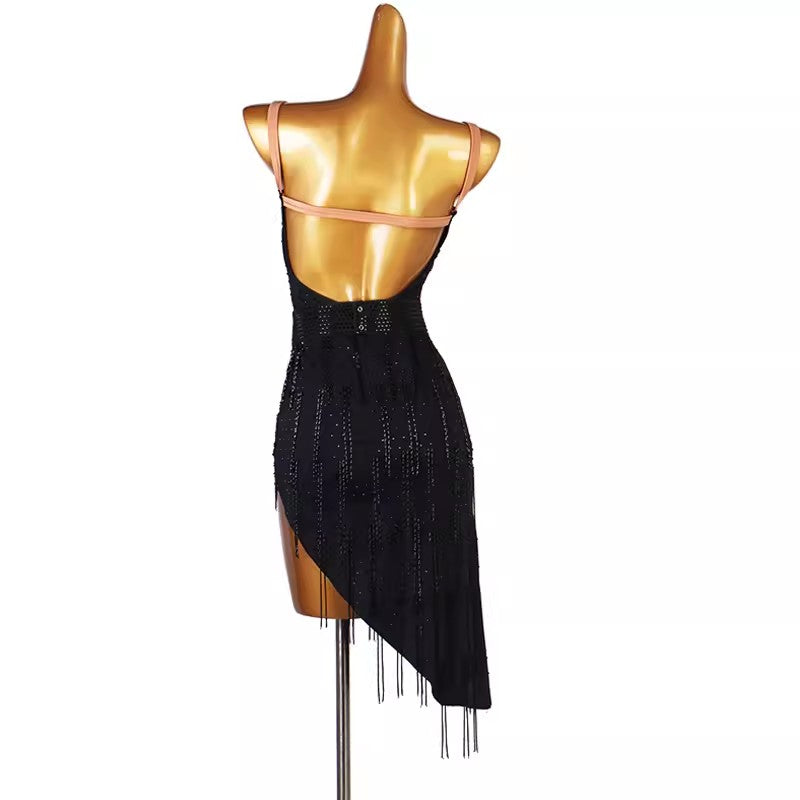
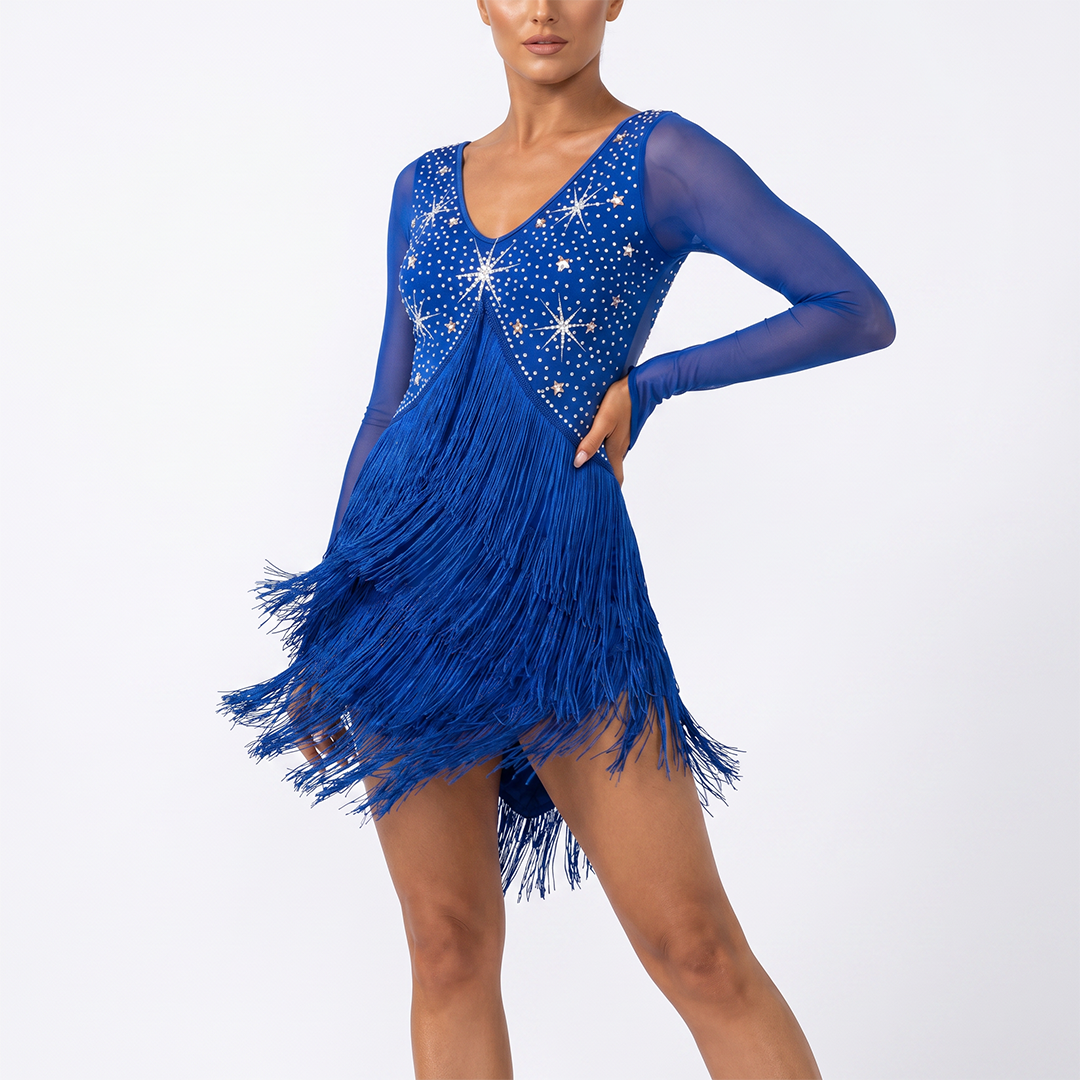
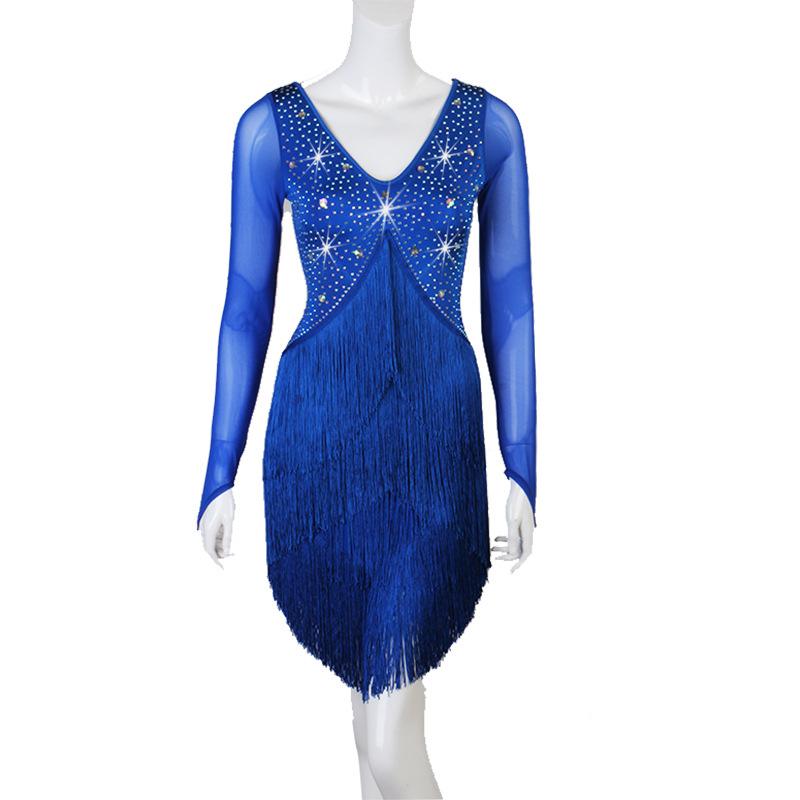
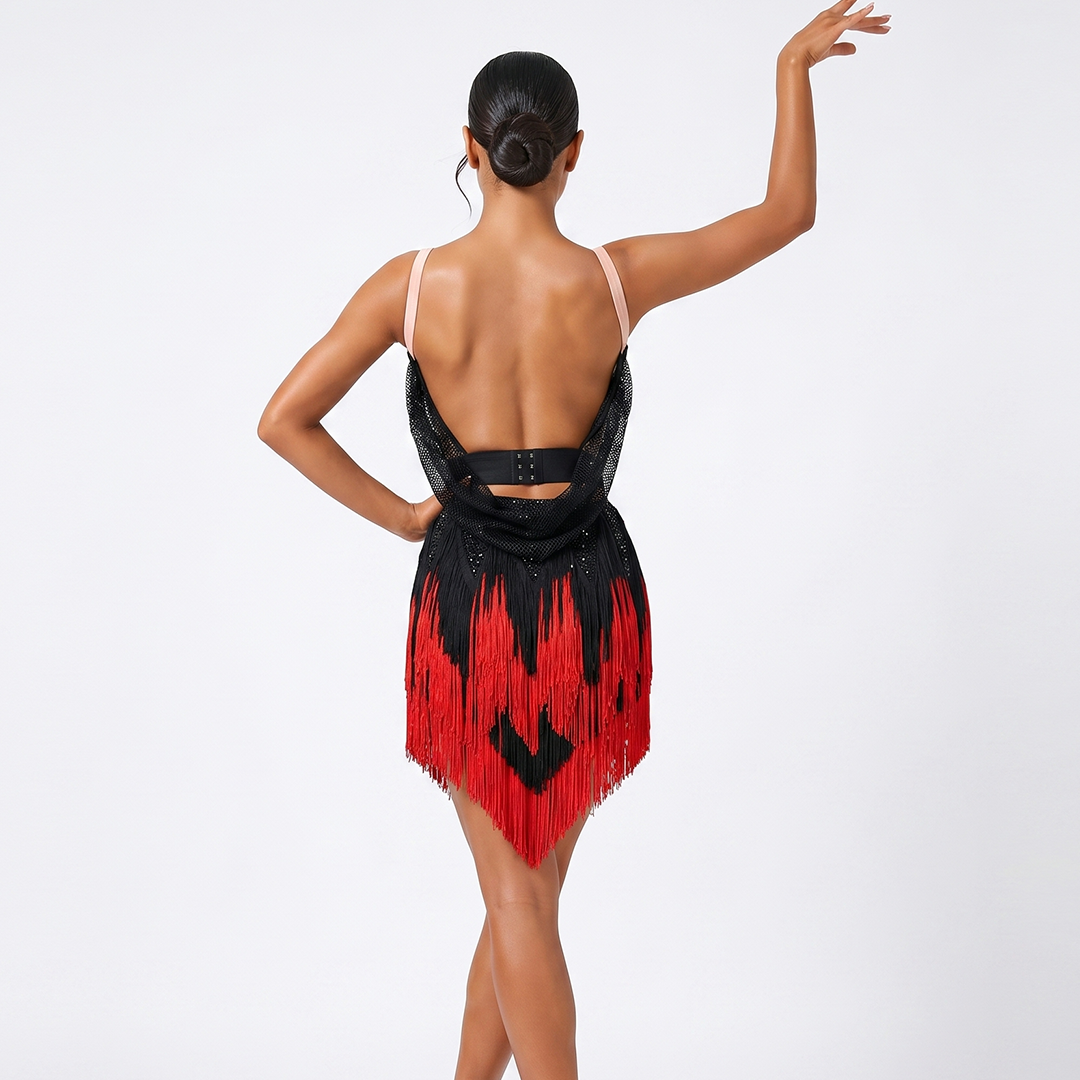
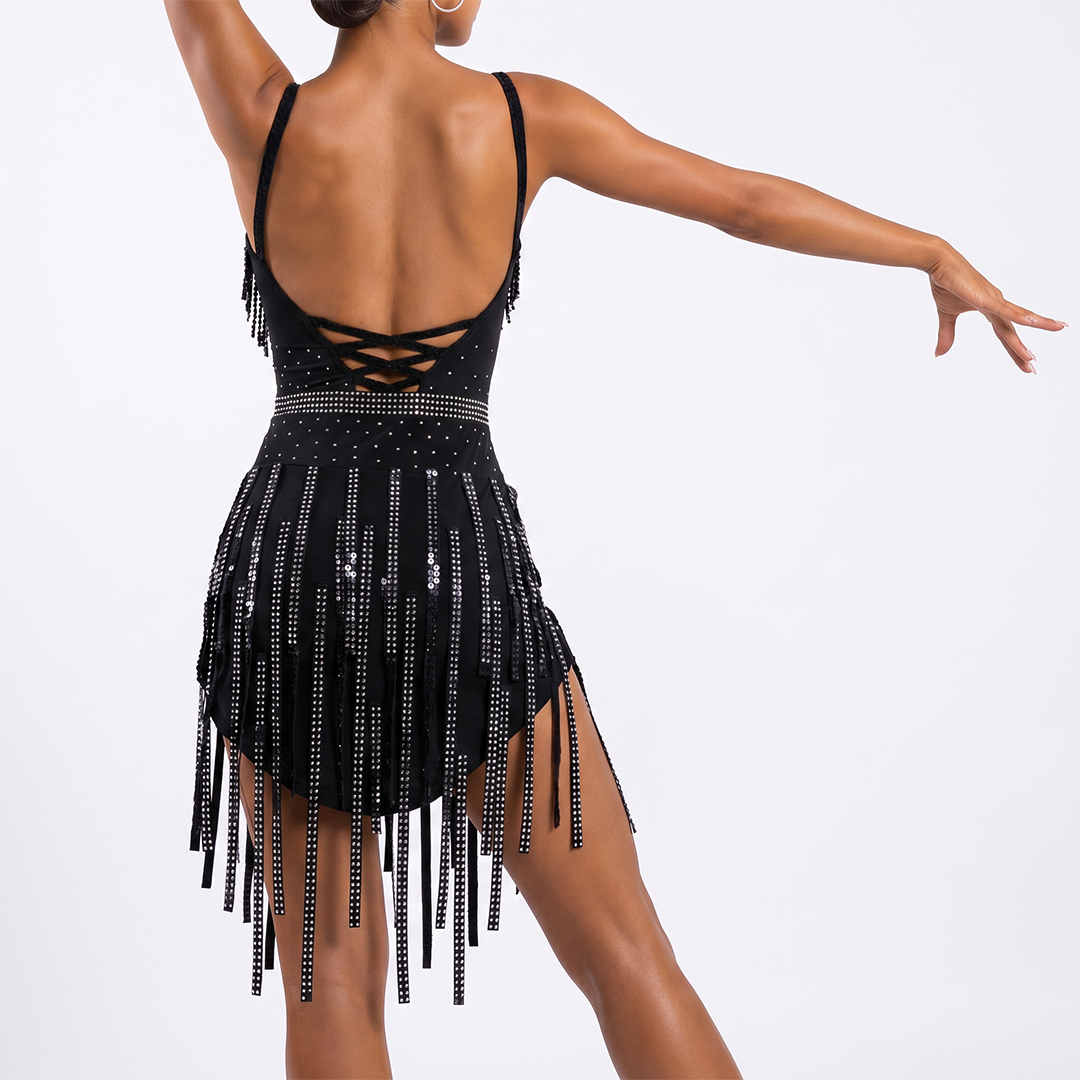
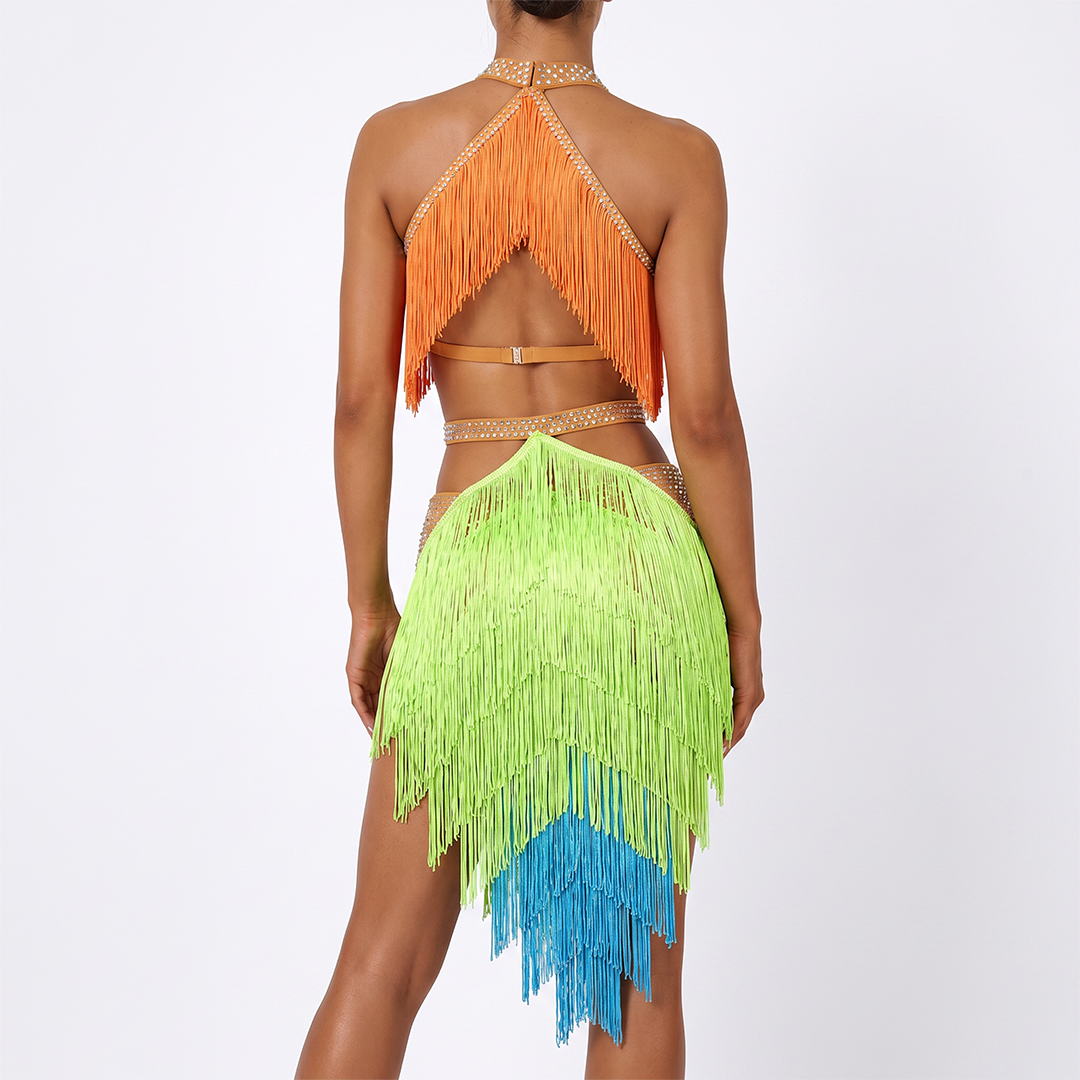
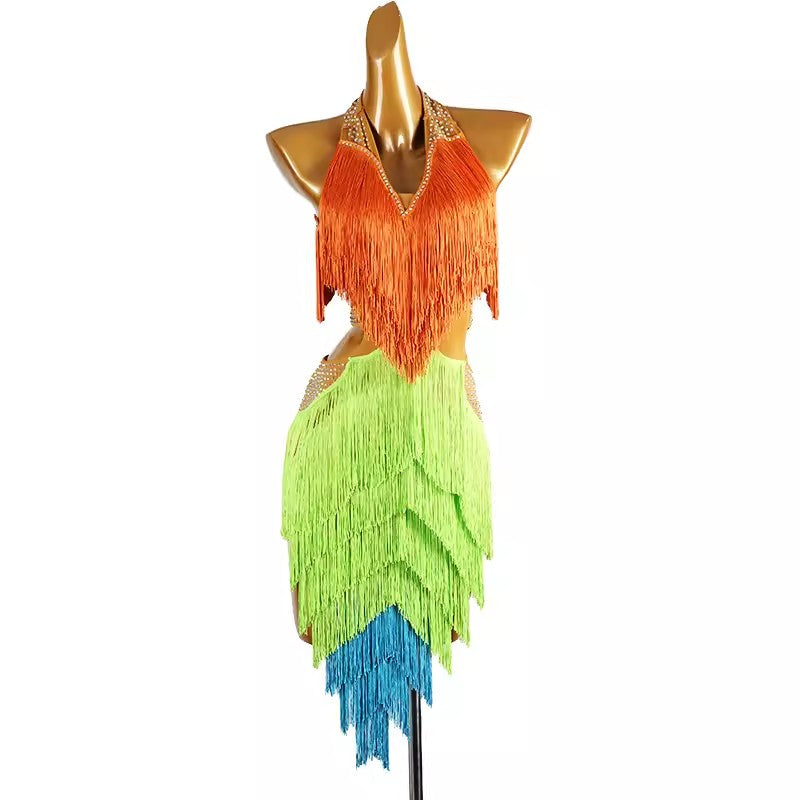
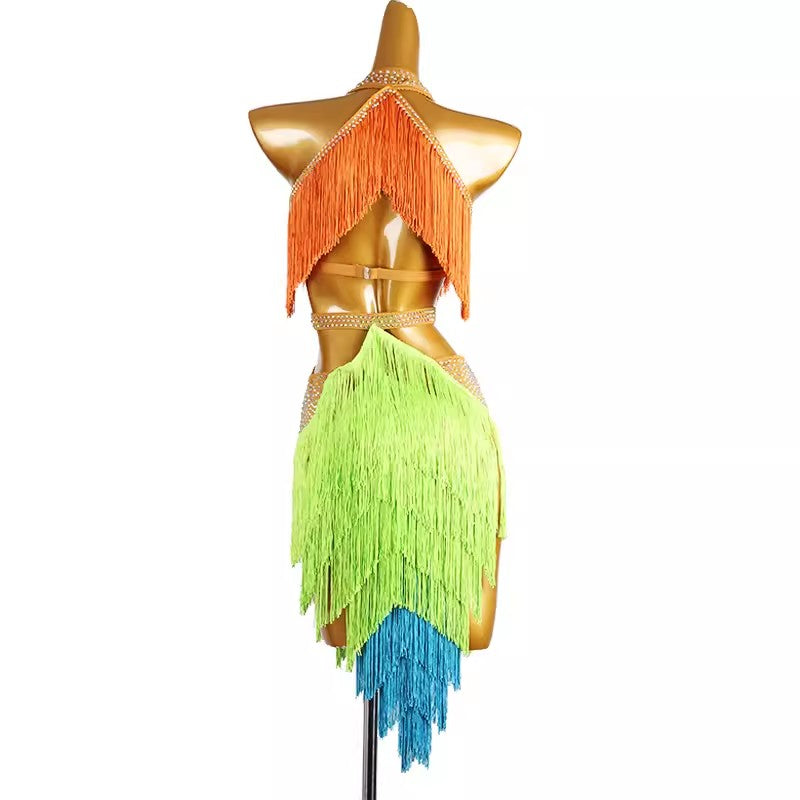
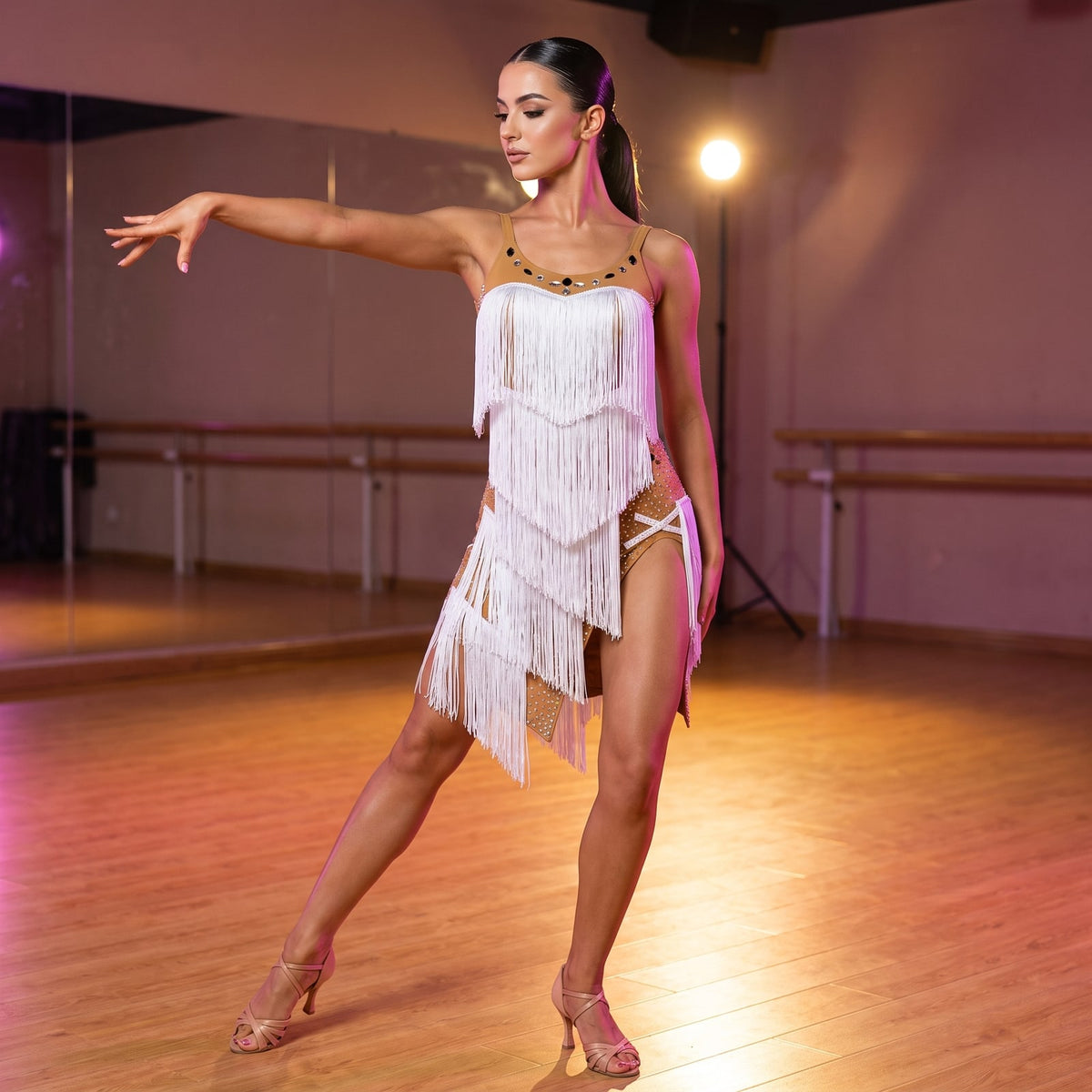
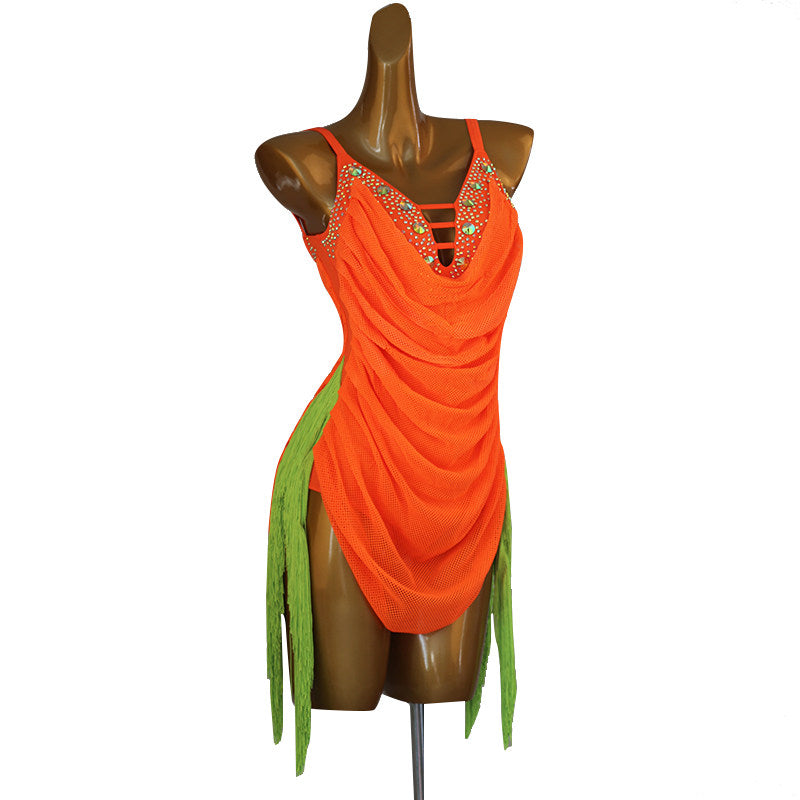
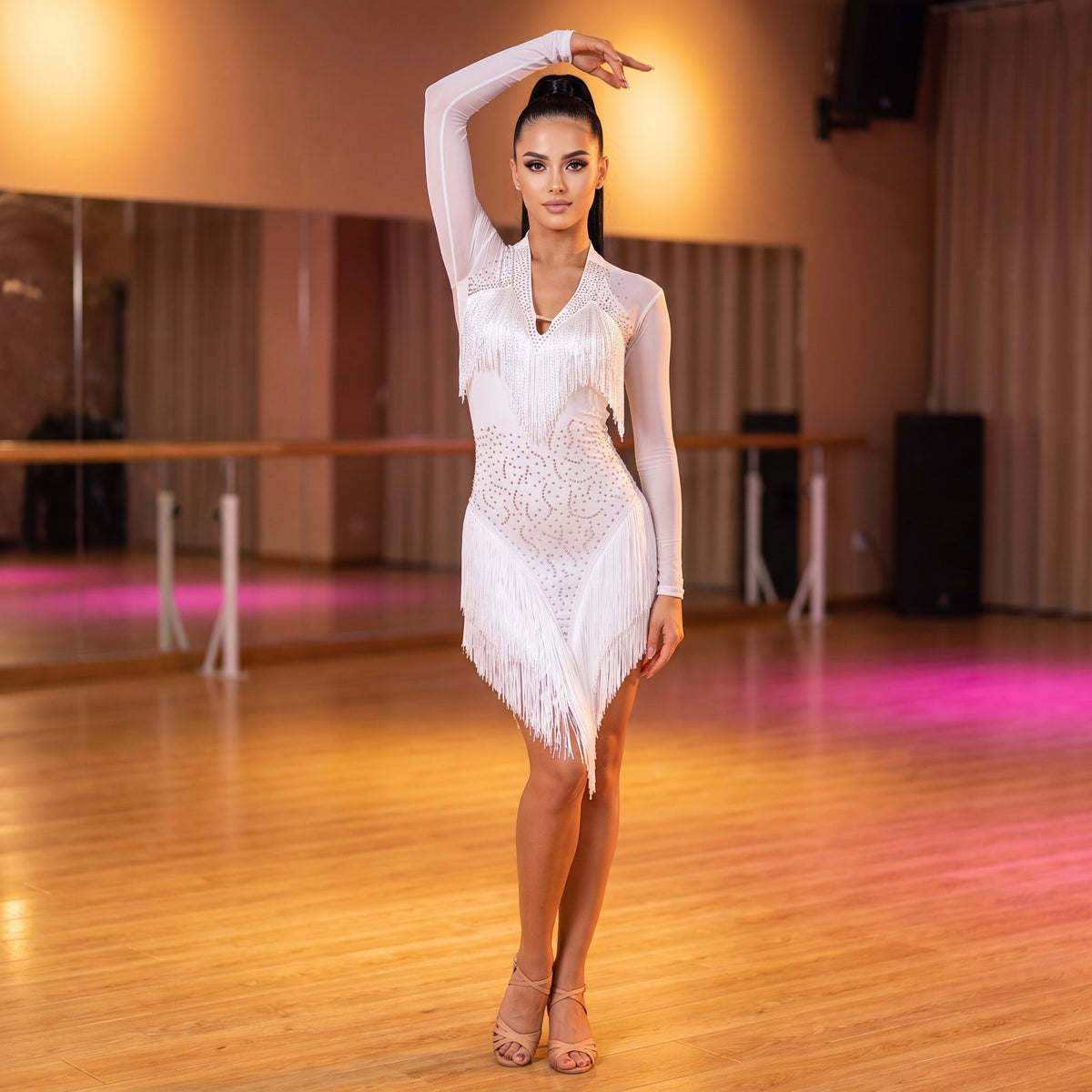
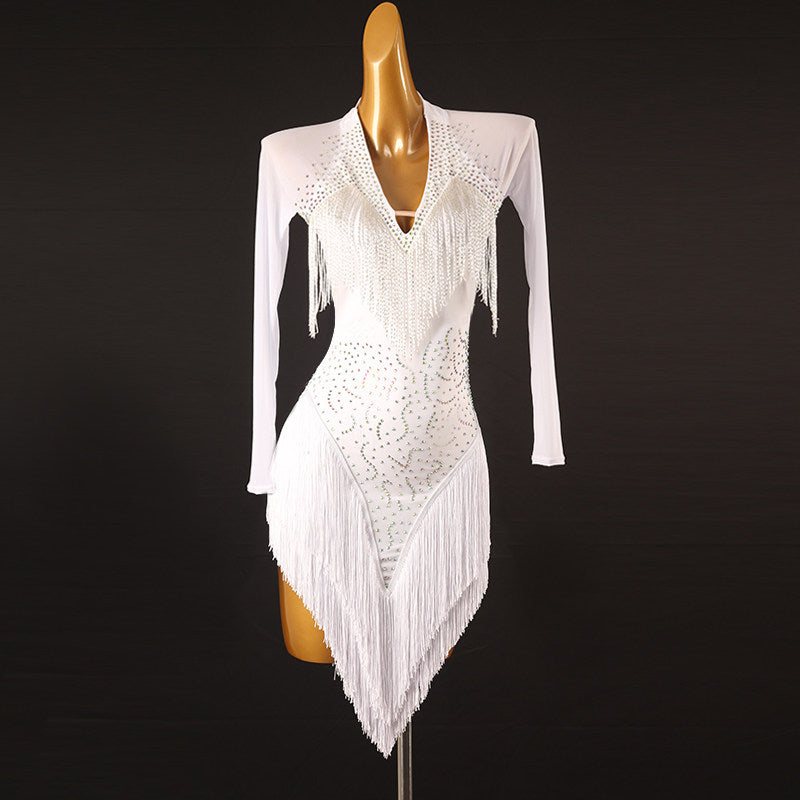
Fringe is the single most useful thing on a Latin competition dress, because it converts hip action into something visible at distance. It also behaves very differently by type. Long chainette tassel throws a wide, slow arc and reads dramatically on rumba and slow rhythm figures. Short dense fringe snaps and stops, which suits cha cha and jive where the accent lands hard. Diagonal and chevron fringe placements exaggerate the tilt of the hip rather than the swing of the skirt.
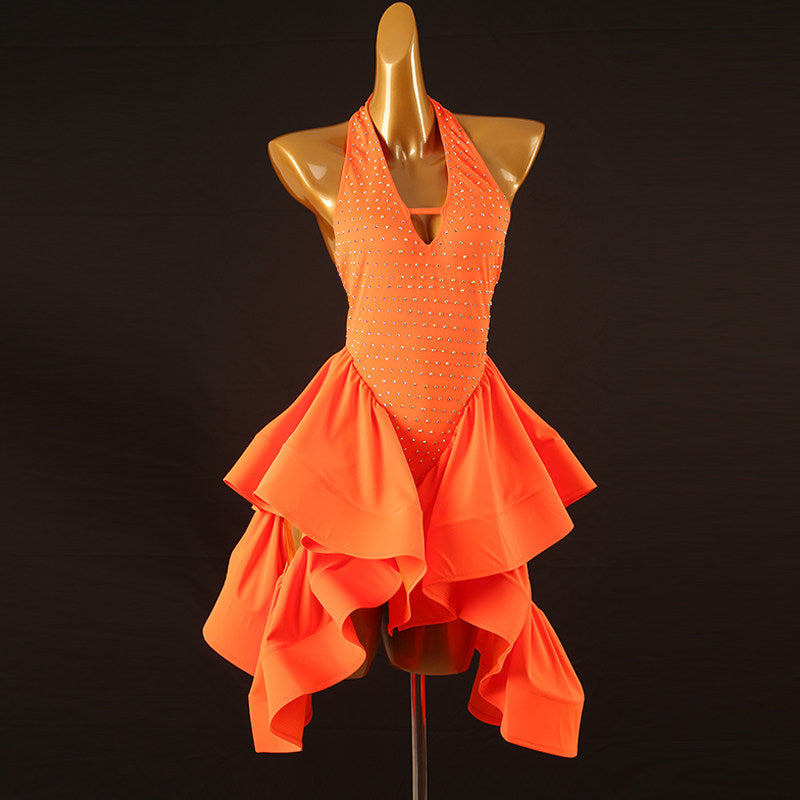
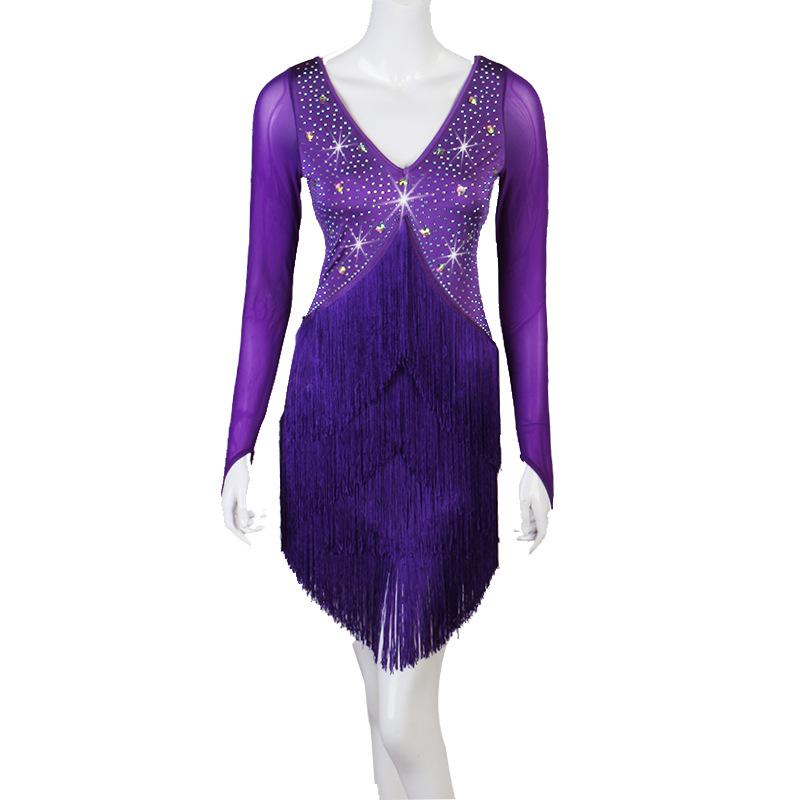
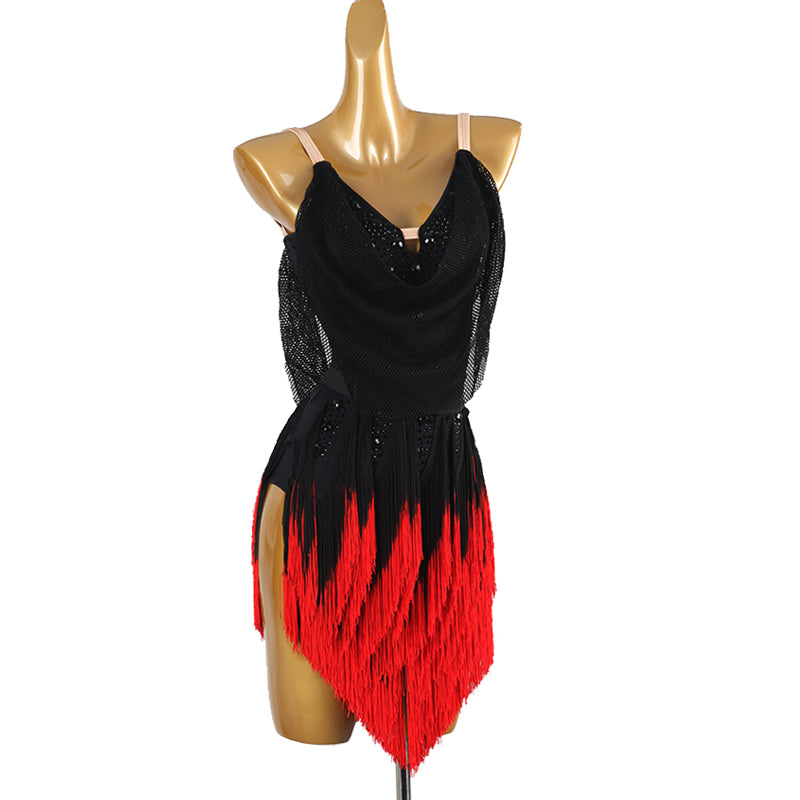
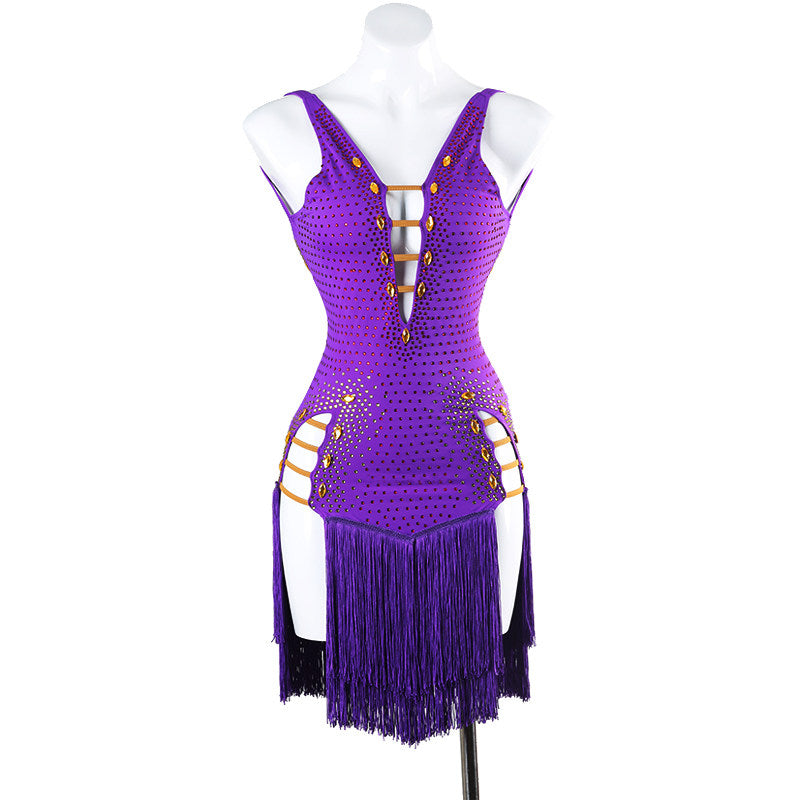
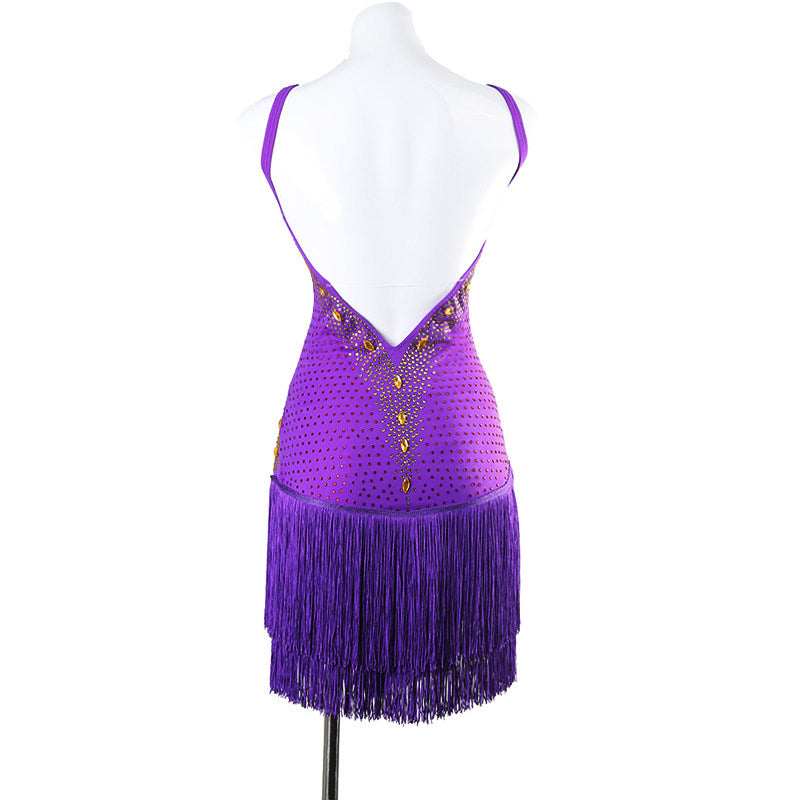
Tiered fringe — several overlapping layers rather than one — keeps moving after the beat has landed, which fills the space between figures. That is flattering on a floor where you are being compared to three other couples doing the same routine at the same time. Beaded and crystal-tipped fringe adds a second layer of light on top of the movement, at the cost of extra weight in the hem.
Dress Restrictions by Level and Age Division
Not every competitor is allowed to wear a fully stoned dress. Many organising bodies restrict decoration at the entry levels — newcomer, bronze and syllabus categories are commonly limited on rhinestones, appliqué and sometimes fringe, and junior and youth divisions carry their own coverage and decoration rules. The details differ by organisation and change between seasons, so the only reliable move is to read the rulebook for the specific event you have entered rather than assume the category means the same thing everywhere.
If you are competing at a restricted level, a plain stretch dress with a strong silhouette and a moving hem is usually the safer buy, and it stays useful afterwards as a practice dress. If you are open or championship level, the restrictions on Latin dancesport dresses largely fall away and the question becomes how much light you want to throw.
Surviving a Full Day of Heats
Competition wear is judged in seconds but worn for hours. A single day can run from a morning round to a late evening final with warm-ups, marshalling and long waits in between, all in the same dress. That is a different demand from an evening out. Straps need to hold without being retied between rounds, linings need to recover rather than stretch out, and any zip or hook has to sit somewhere you can reach without a partner.
High-recovery fabrics — stretch mesh, milk silk, wet-look knits and stretch velvet — are the ones that come back to shape after being sat in and danced in repeatedly. Built-in bodies and attached briefs remove the risk of a hem riding somewhere it should not during a lift or a sharp turn. Practically, anything you have to think about while dancing is one more thing not going into the routine.
Ordering Ahead of a Competition Date
Give yourself margin. Order early enough to dance in the dress at least a few times before the event — not to check that it fits, but to find out how it behaves when you actually move: whether a strap shifts on a spin, whether the fringe catches, whether the hem sits where you want it at the end of a figure. Those things only show up in motion.
Sizing on competition wear runs closer than street sizing by design, because a dress that is loose anywhere will migrate. Measure and compare against the size chart on each product rather than ordering the size you normally wear, and where a custom option is offered it is worth taking for anything you plan to compete in seriously. Amazon's Choice with a money-back guarantee since 2012.
Not a Standard or Smooth Gown
These are Latin dresses, not ballroom gowns. Standard and Smooth are danced in long full-skirted gowns with float, built for a closed hold and a travelling line down the floor. Latin is danced short and close, with the leg visible and the hip readable, and the dress is cut to expose the action rather than to trail behind it. The two are judged on different things and the wardrobes do not cross over. If you compete in Standard or Smooth, the ballroom competition dresses page is the one you want.
For everyday training in the same styles, without the stonework or the price of competition wear, the Latin dance dresses page covers practice cuts. For social nights, congresses and performance rather than adjudicated rounds, the salsa dance dresses page is built around that floor instead.
If you also compete in Standard or Smooth, our dancesport dresses page shows Latin competition dresses and ballroom gowns together.
Latin Dance Competition Dresses: Frequently Asked Questions
What makes a Latin competition dress different from a practice dress?
Readability at distance and construction for a long day. A competition dress carries denser stonework aimed at the bodice and waist, a heavier or more layered hem for visible movement, and a build that holds through repeated rounds. A practice dress prioritises comfort and washability and skips most of the decoration.
How heavily should a Latin competition dress be stoned?
Enough that the bodice registers from the judging line, concentrated rather than spread evenly. Stones clustered on the bodice, neckline and waist do more work than the same number scattered across the whole dress, and keeping the skirt lighter saves weight where it would otherwise drag.
Are rhinestones allowed at every competitive level?
No. Newcomer, bronze and syllabus categories are commonly restricted on rhinestones and appliqué, and junior and youth divisions have their own decoration and coverage rules. The restrictions vary by organising body and are revised between seasons, so check the rulebook for the event you have entered.
How short is a Latin competition dress?
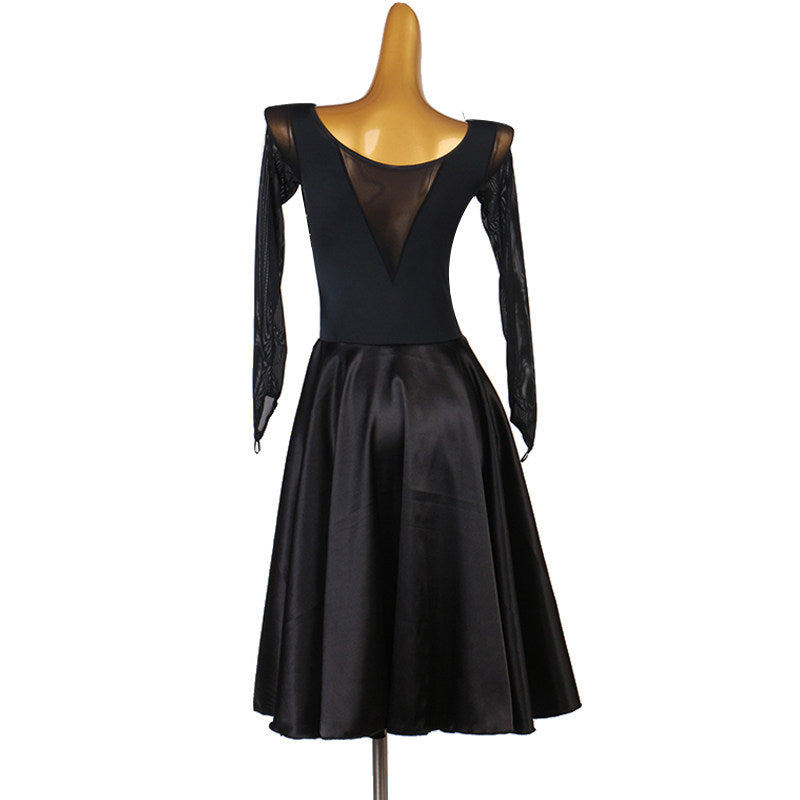
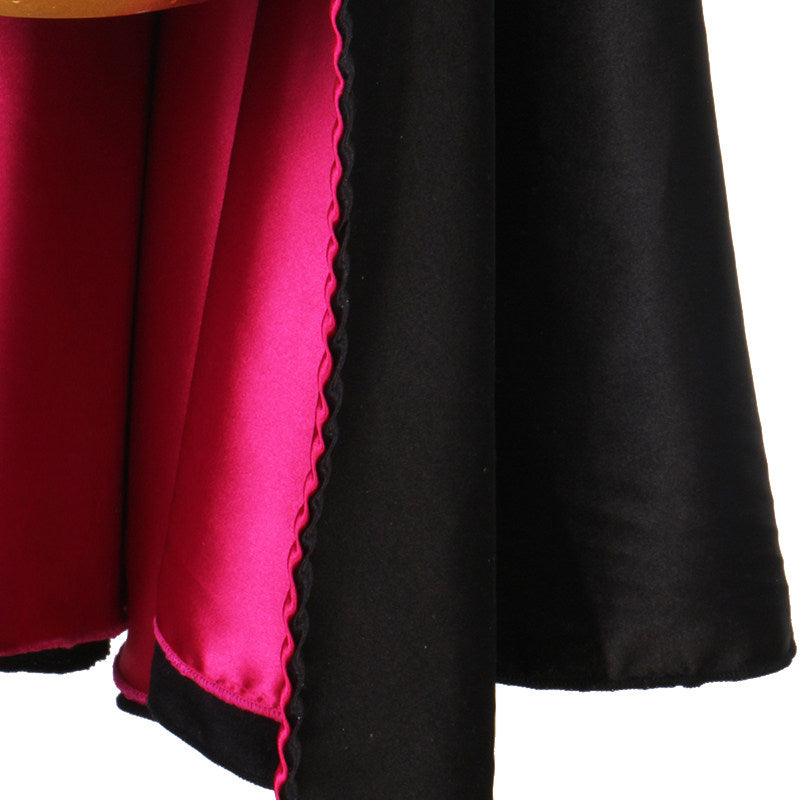
Short enough that the knee and the line of the leg stay visible through the figures, which is what the technique is judged on. Most sit well above the knee, often with a high slit or an asymmetric hem that opens further in movement. Built-in briefs or an attached body are standard for that reason.
What colour reads best under competition lighting?
Whatever separates you from the floor and from the other couples in your heat. Saturated colour reads further than pastel, black needs strong stonework or a contrast trim to avoid disappearing against dark backdrops, and aurora borealis stones throw more colour than clear crystal under stage lights.
Can I wear a Latin competition dress for Standard or Smooth?
No. Standard and Smooth require a long full-skirted gown suited to a closed hold, and a short Latin dress will not meet the expectation of those categories. They are separate wardrobes with separate rules.
How far ahead of a competition should I order?
Early enough to dance in the dress several times first. Fit can be judged standing still, but how a strap, a hem or a length of fringe behaves only shows up once you are moving through the routine, and that is the part you want to discover before the day rather than on it.
Do you ship Latin competition dresses internationally?
Yes. We ship worldwide, and every order is covered by our money-back guarantee.