
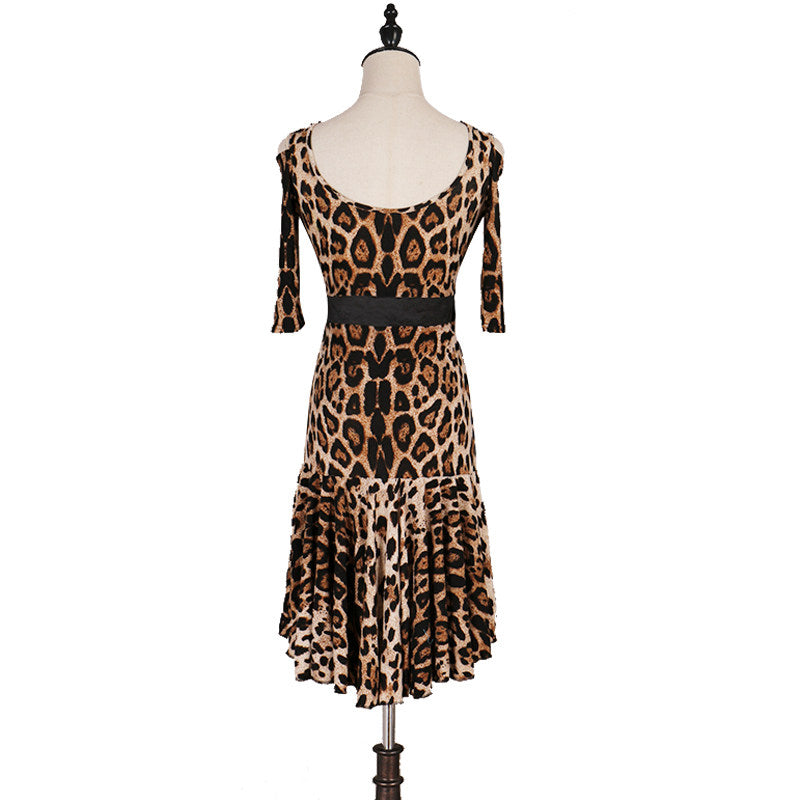
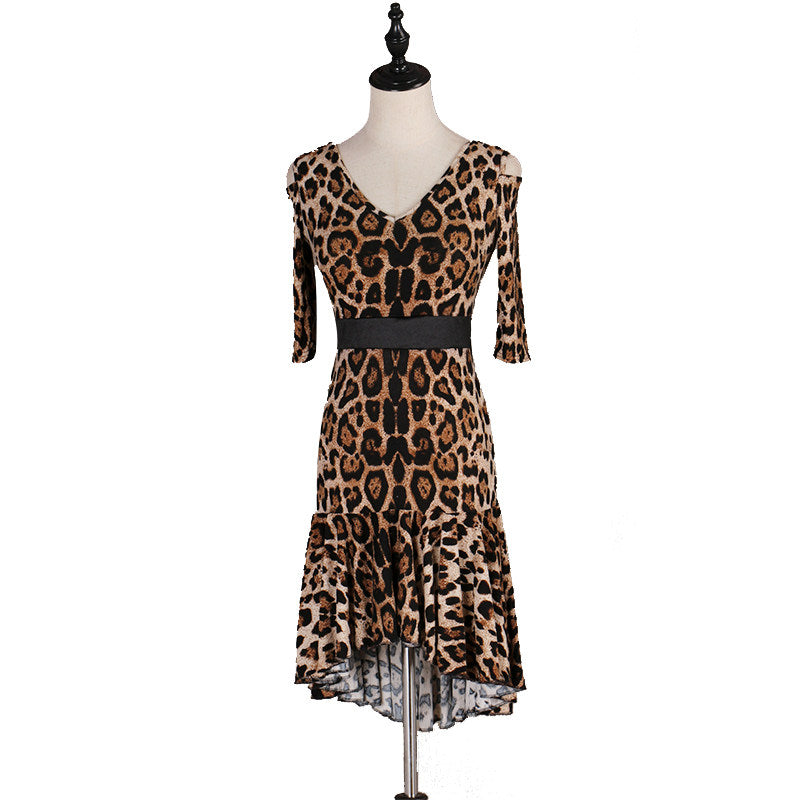
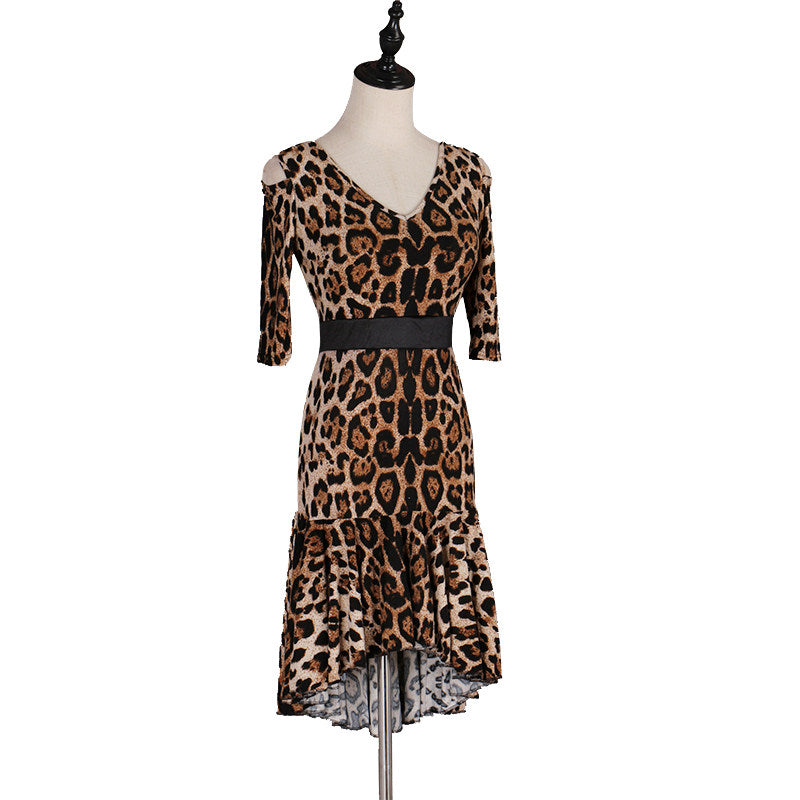

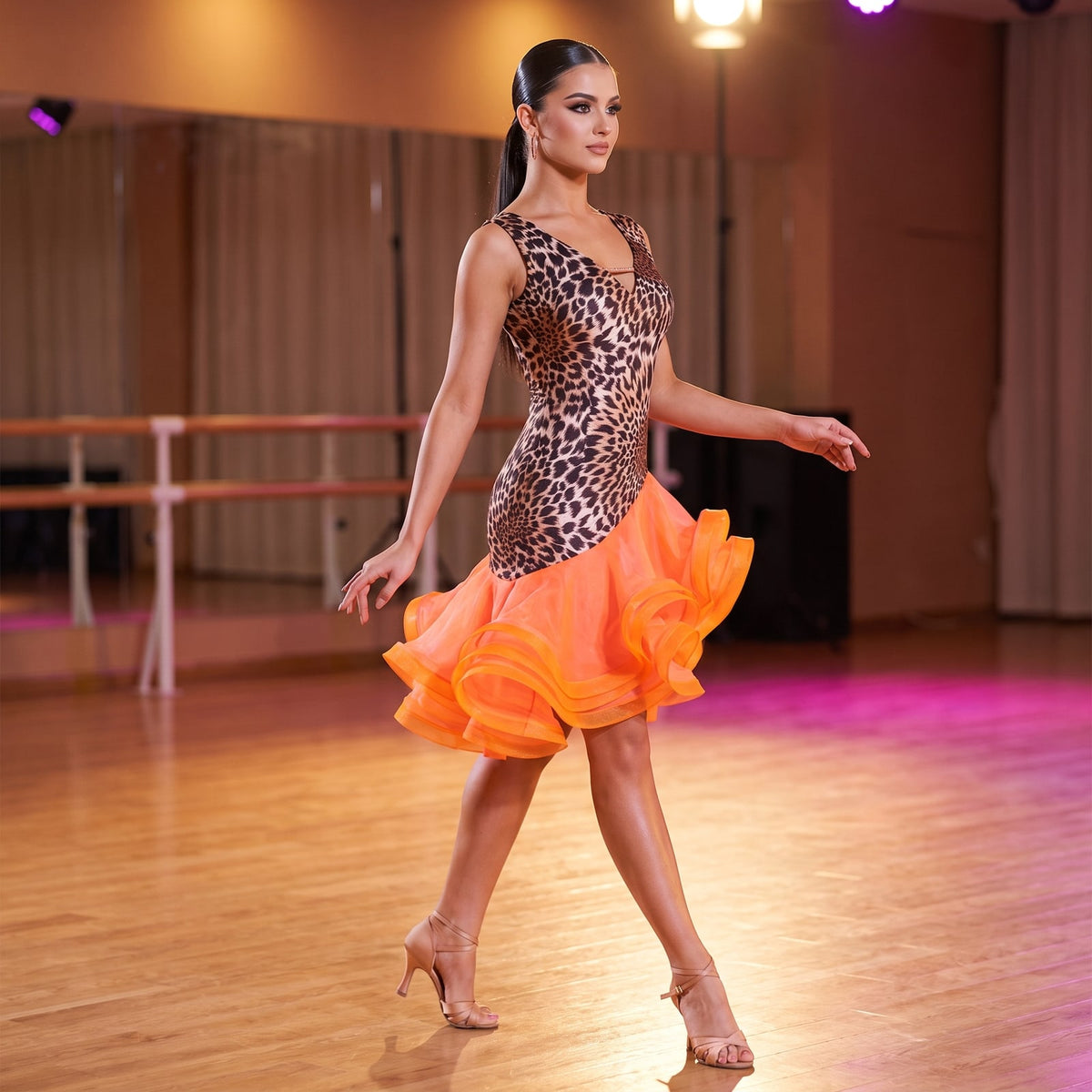
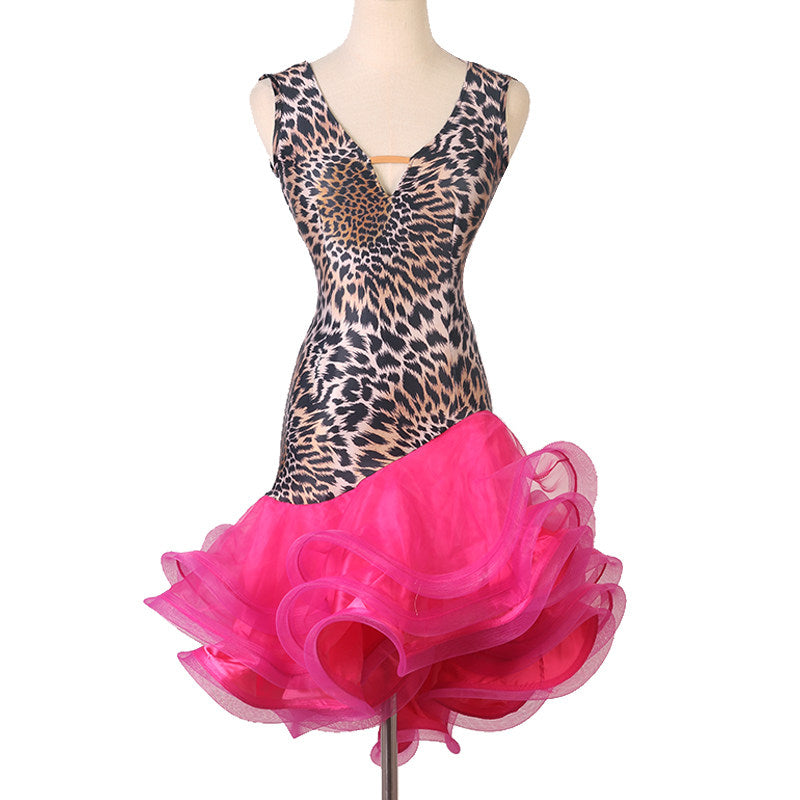
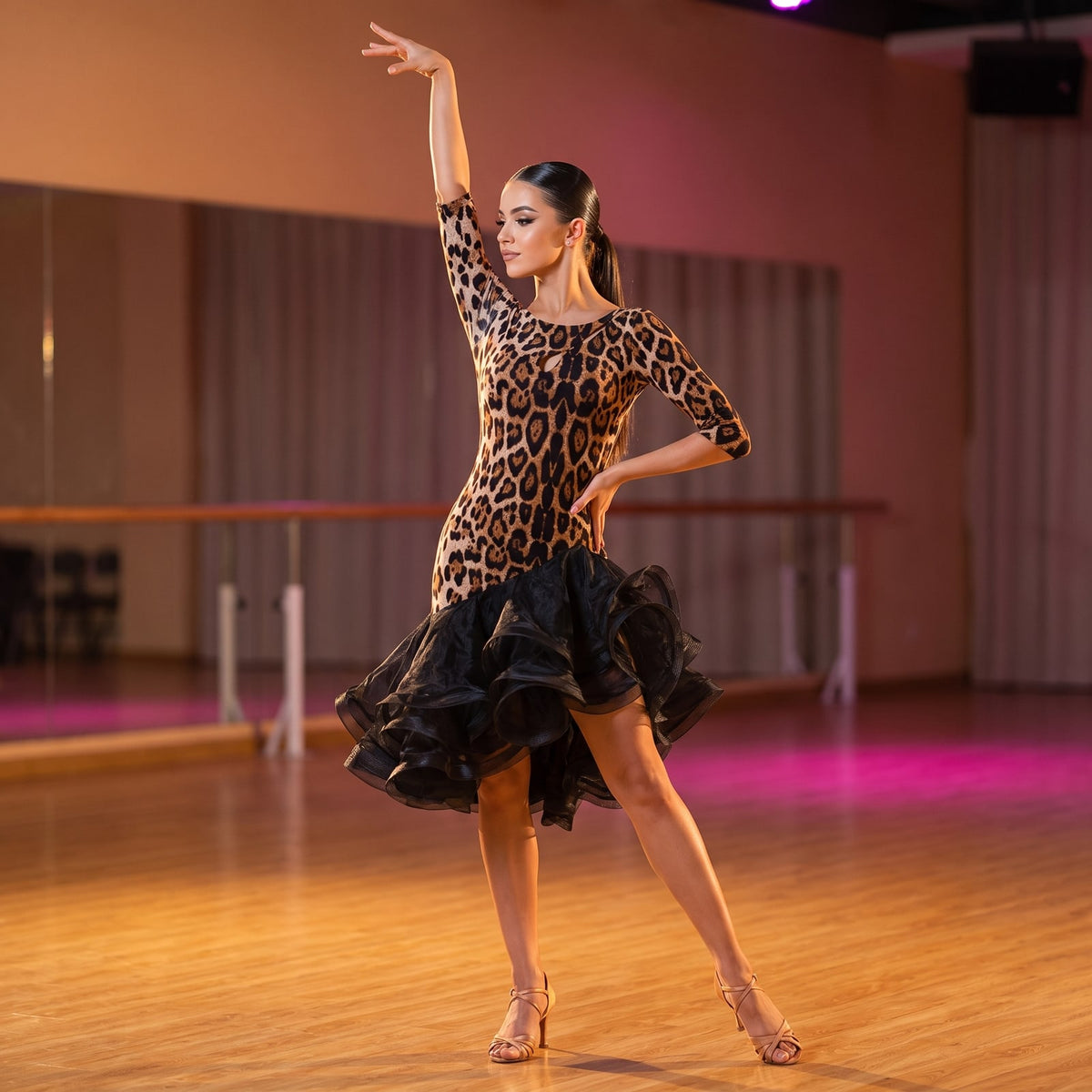
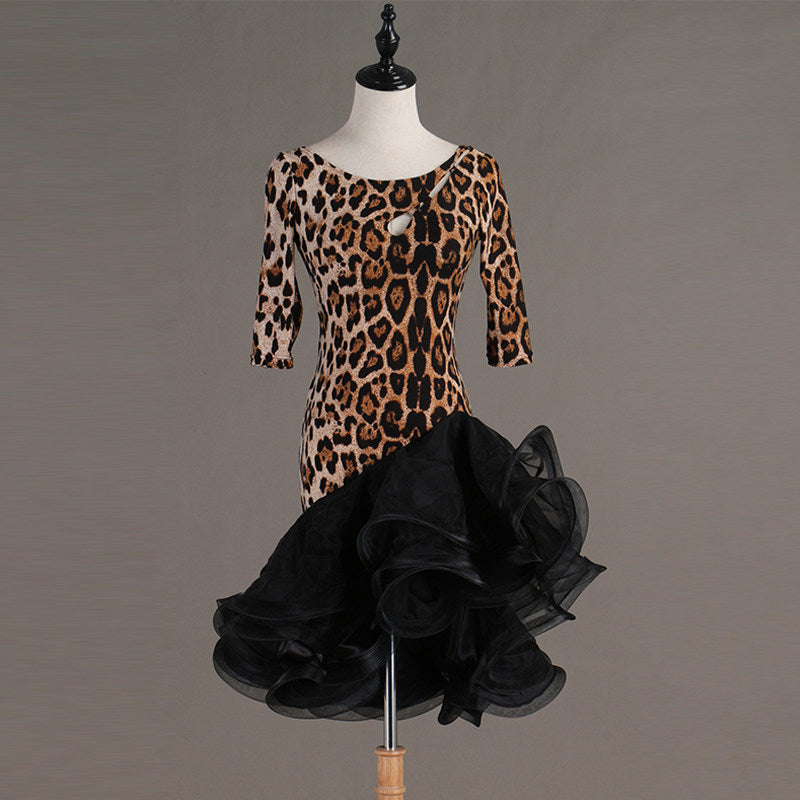
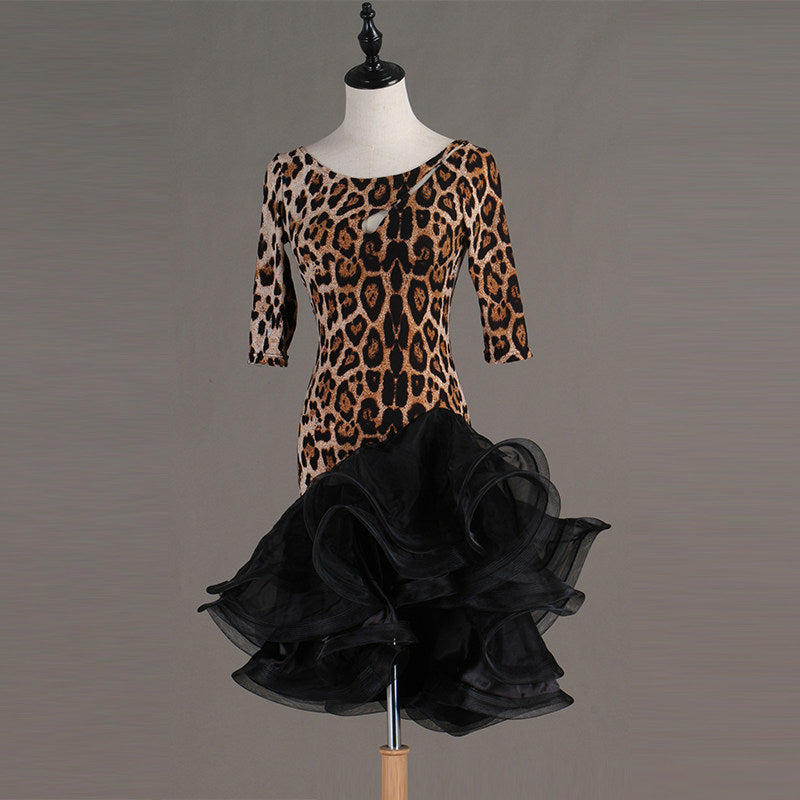
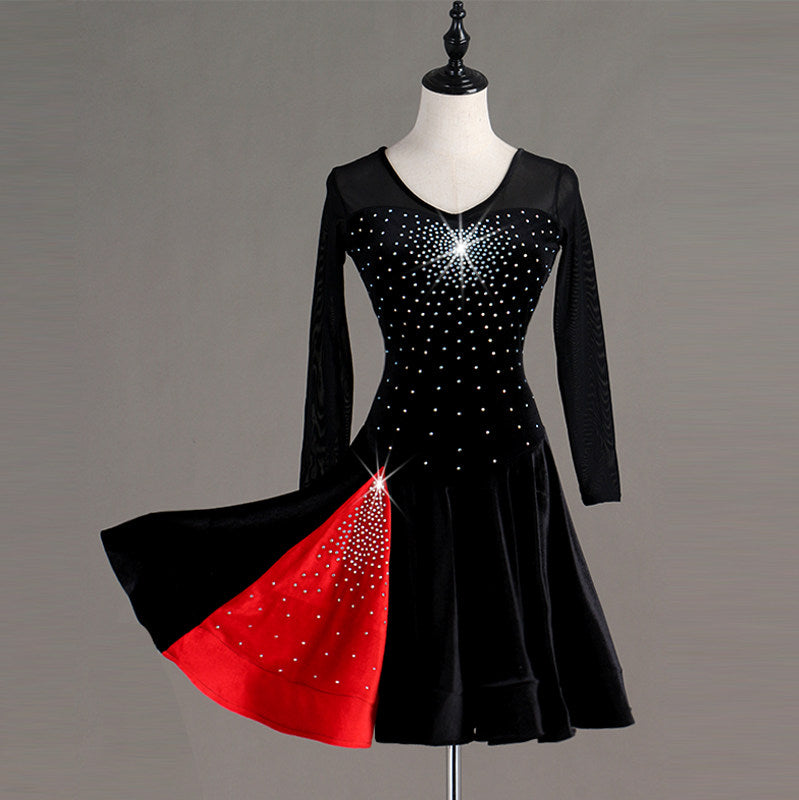
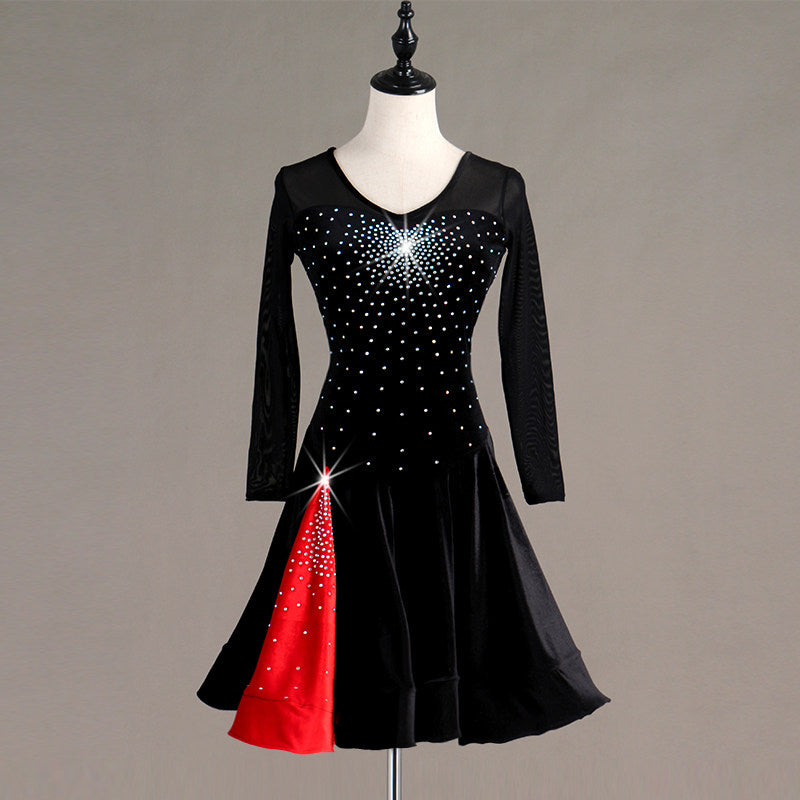
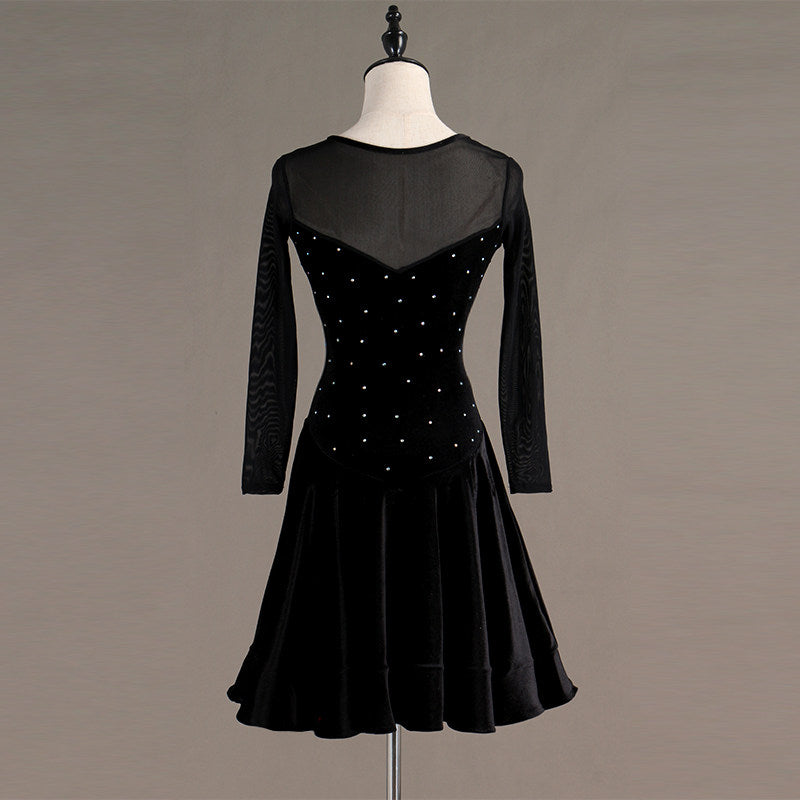
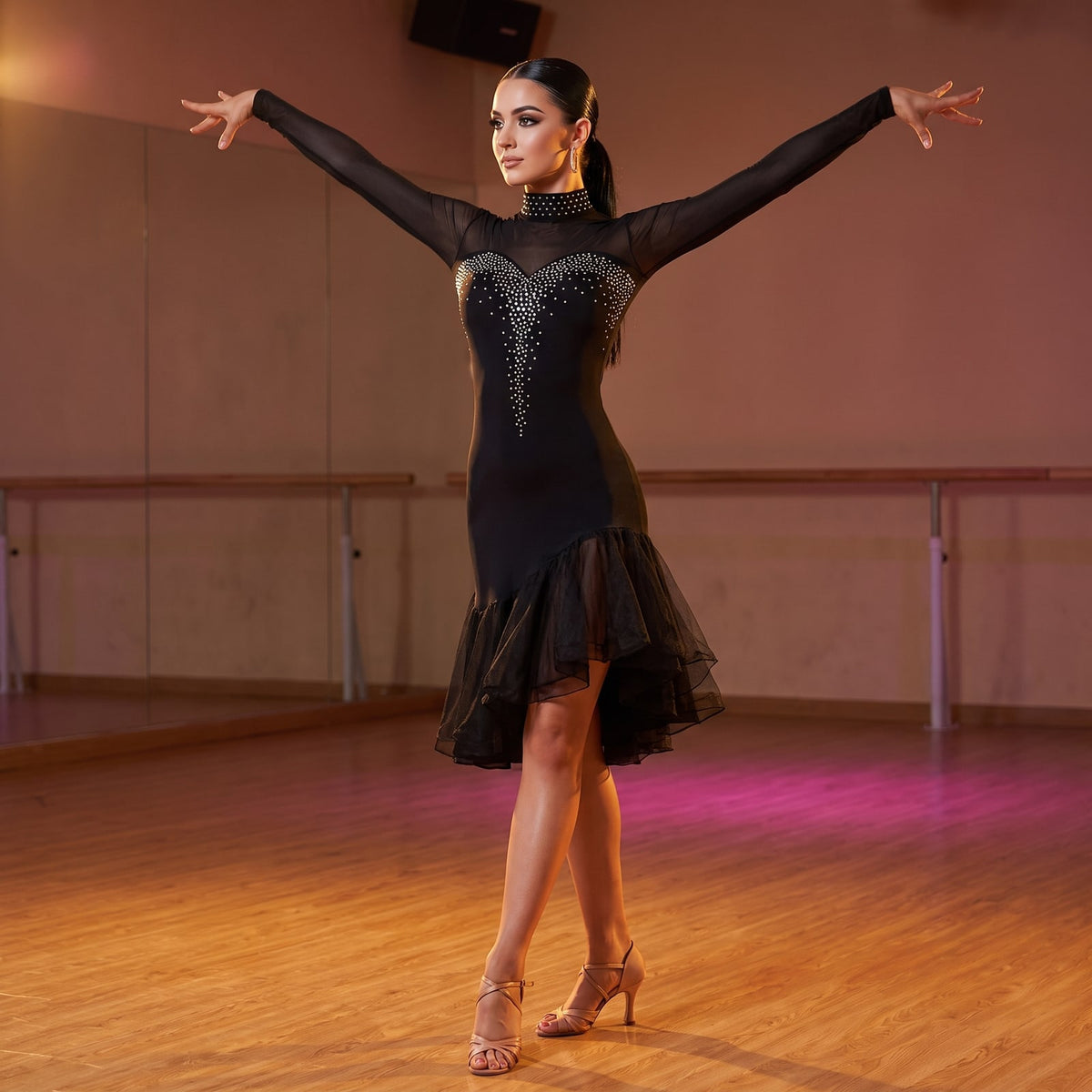
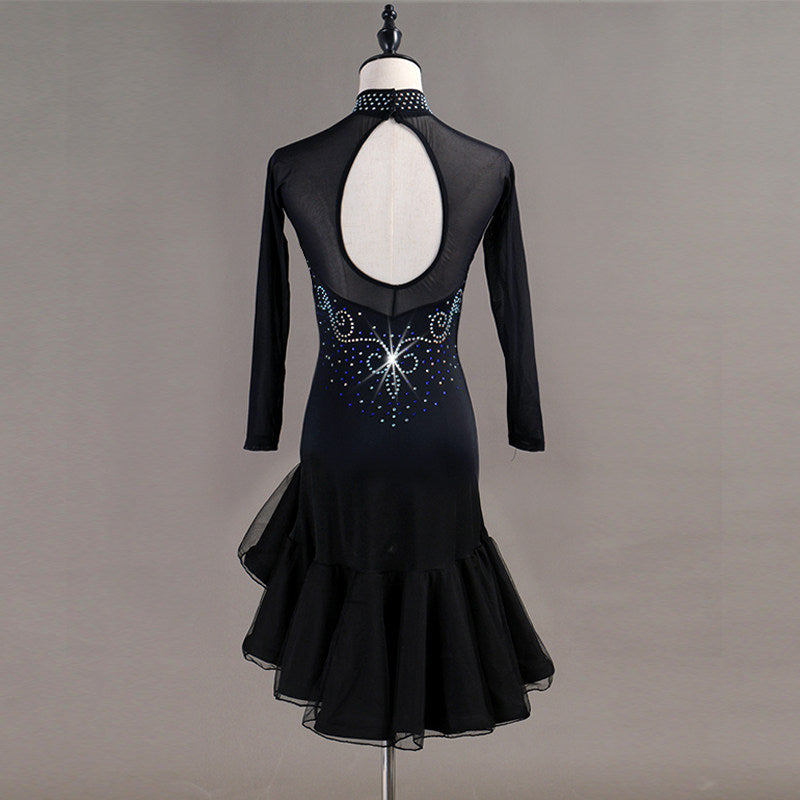
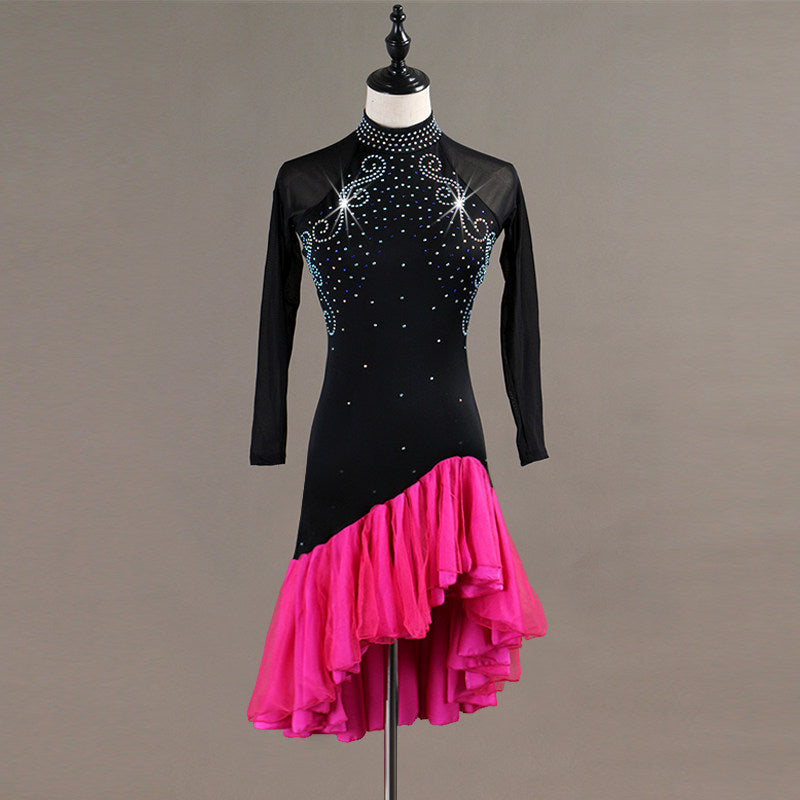
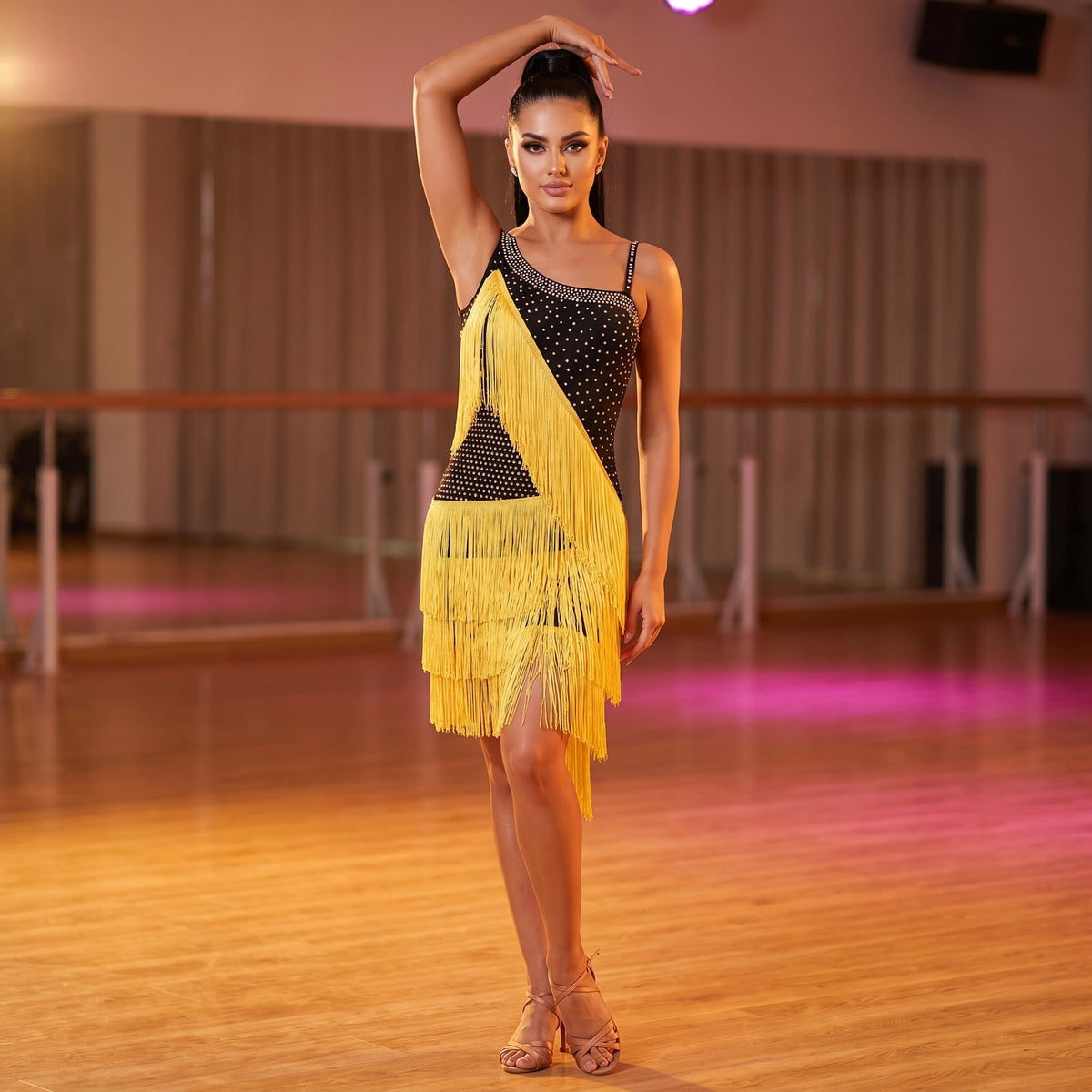

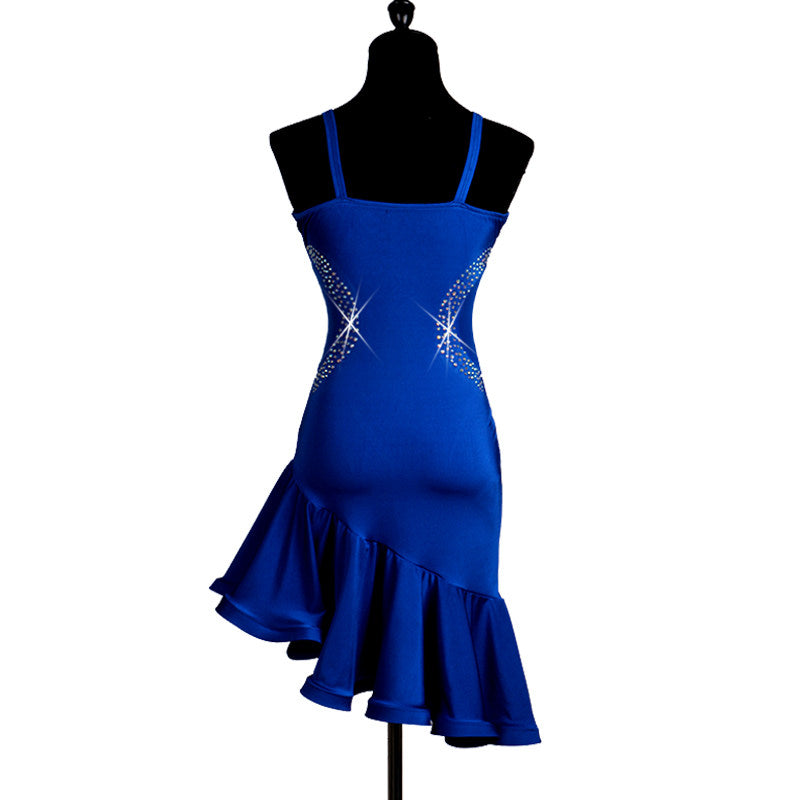
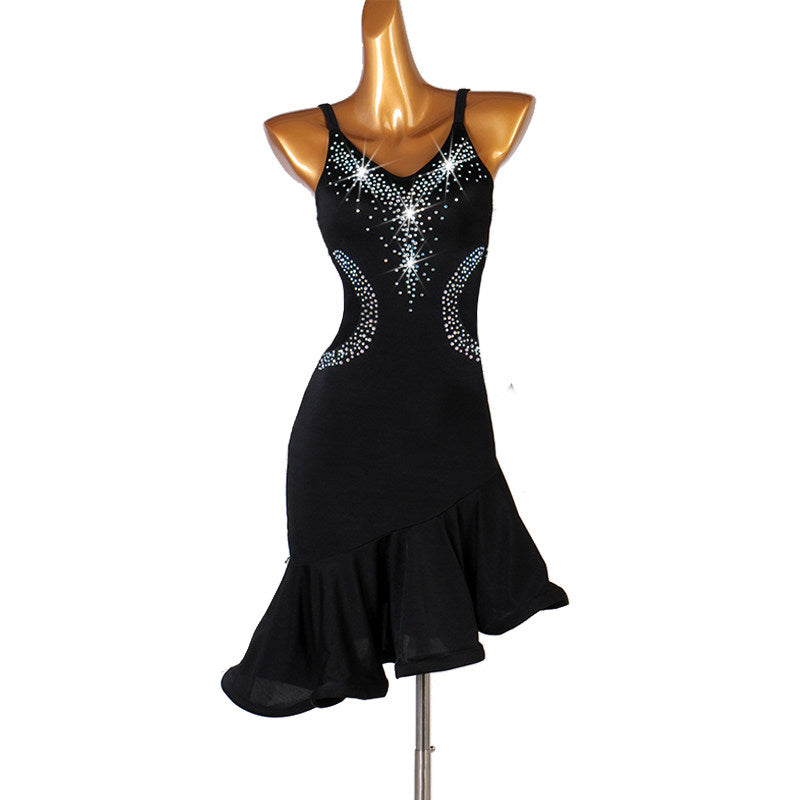
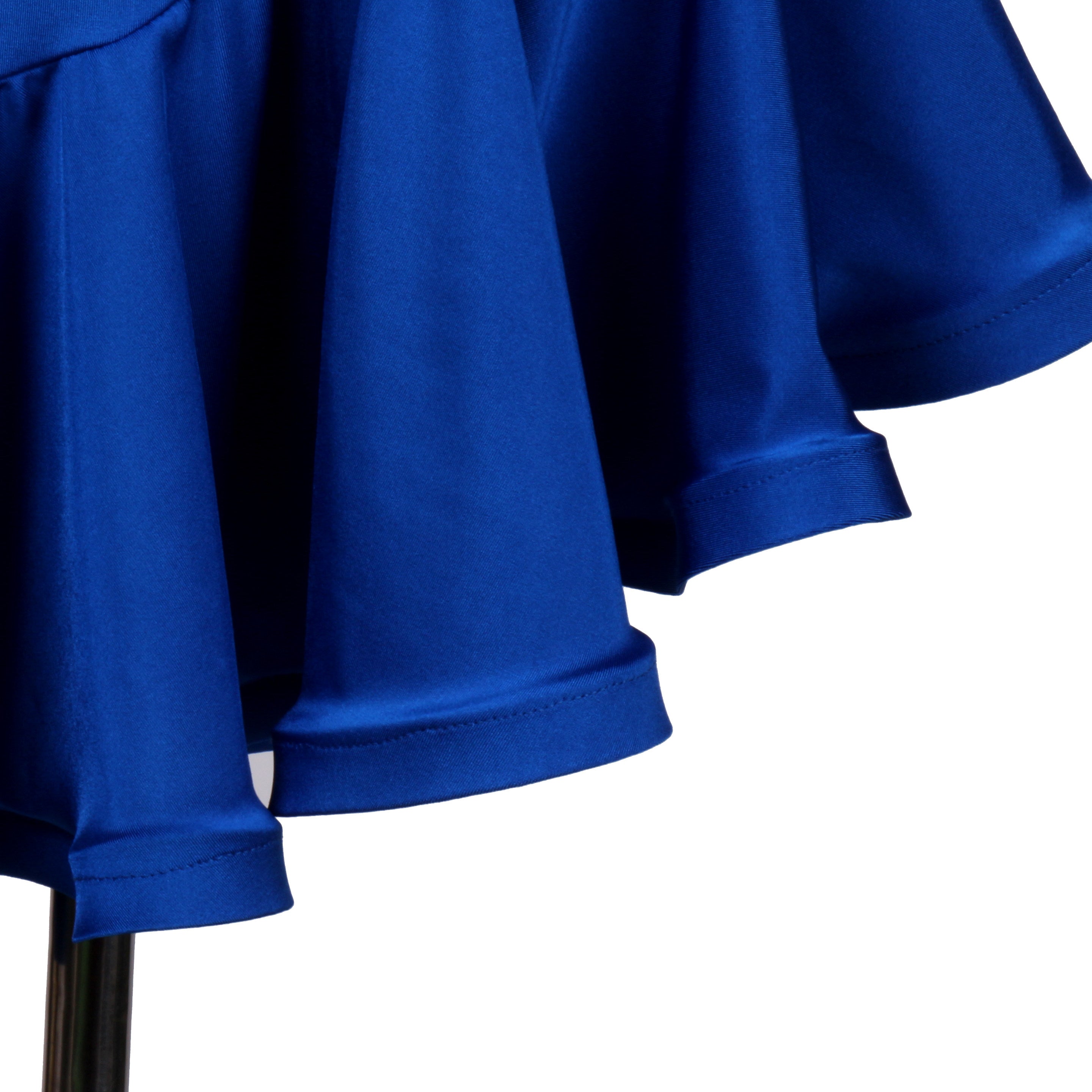
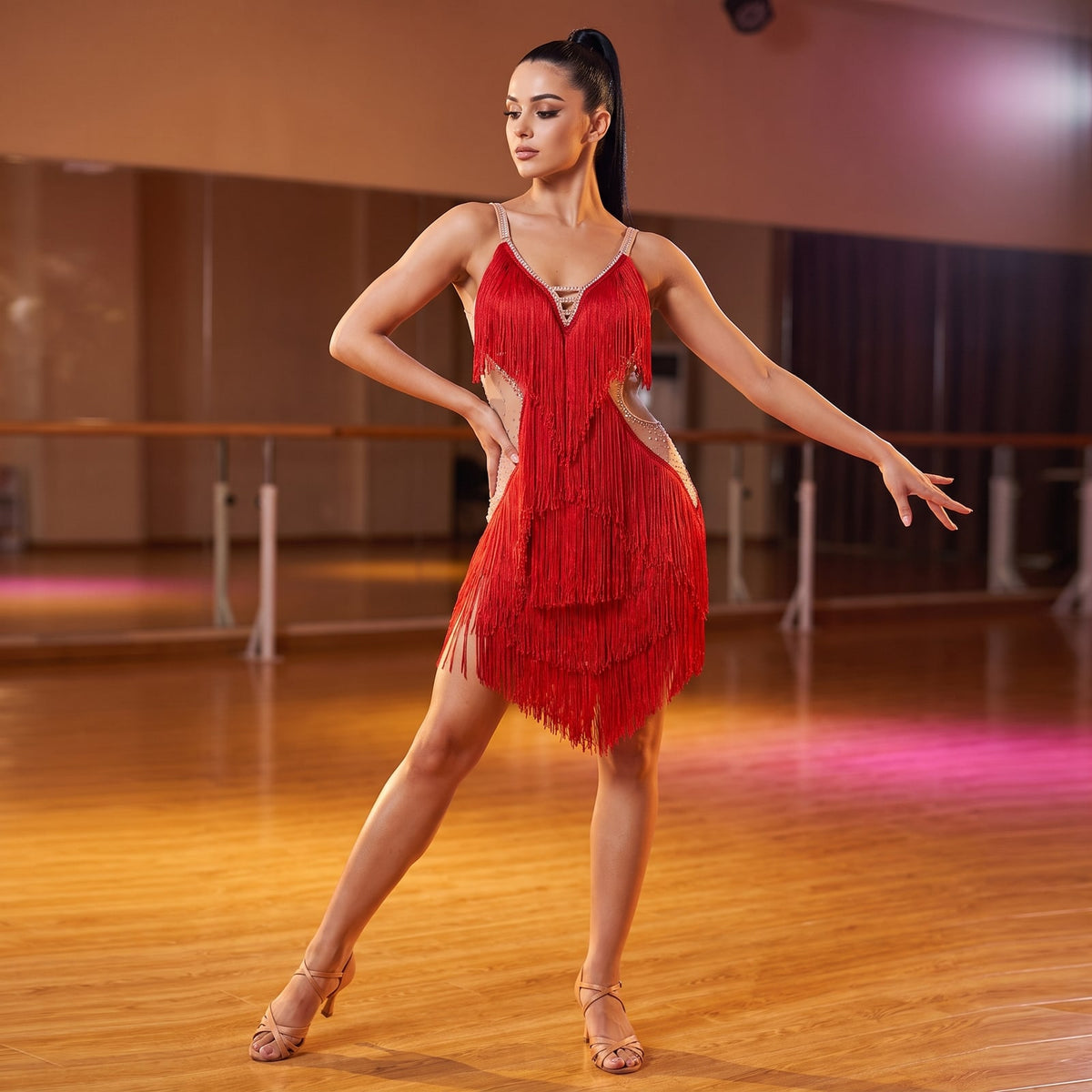
Start With the Dance, Not the Dress
Searching for a dance dress turns up three garments that barely resemble each other, and the reason is that they are built for three different jobs. A dress cut for travelling figures in a closed hold behaves badly on a salsa floor. A dress cut to snap on the beat looks unfinished under the long line Standard asks for. Before anything else — colour, sparkle, the picture on the model — the useful question is which floor you are dressing for. Everything below is arranged to answer that, and each family has its own page once you know which one you want.
Ballroom, Latin and Salsa Ask for Different Dresses
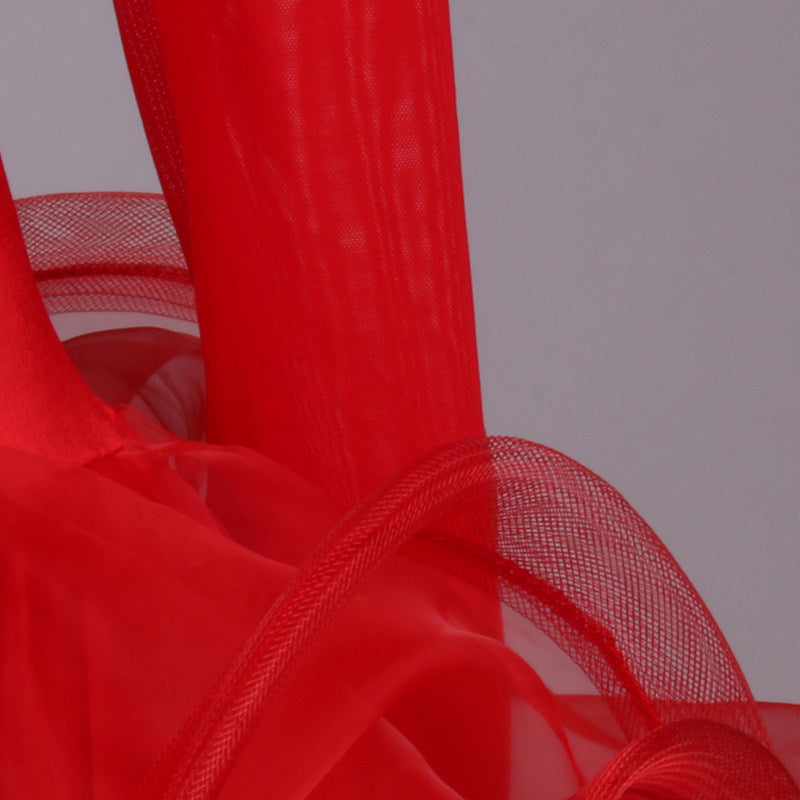
Ballroom, or Standard, is danced in a closed hold with continuous travel. The dress works with you rather than against you: a full skirt, often floated with godets or horsehair, long enough to move with rise and fall. That family lives in ballroom dresses.
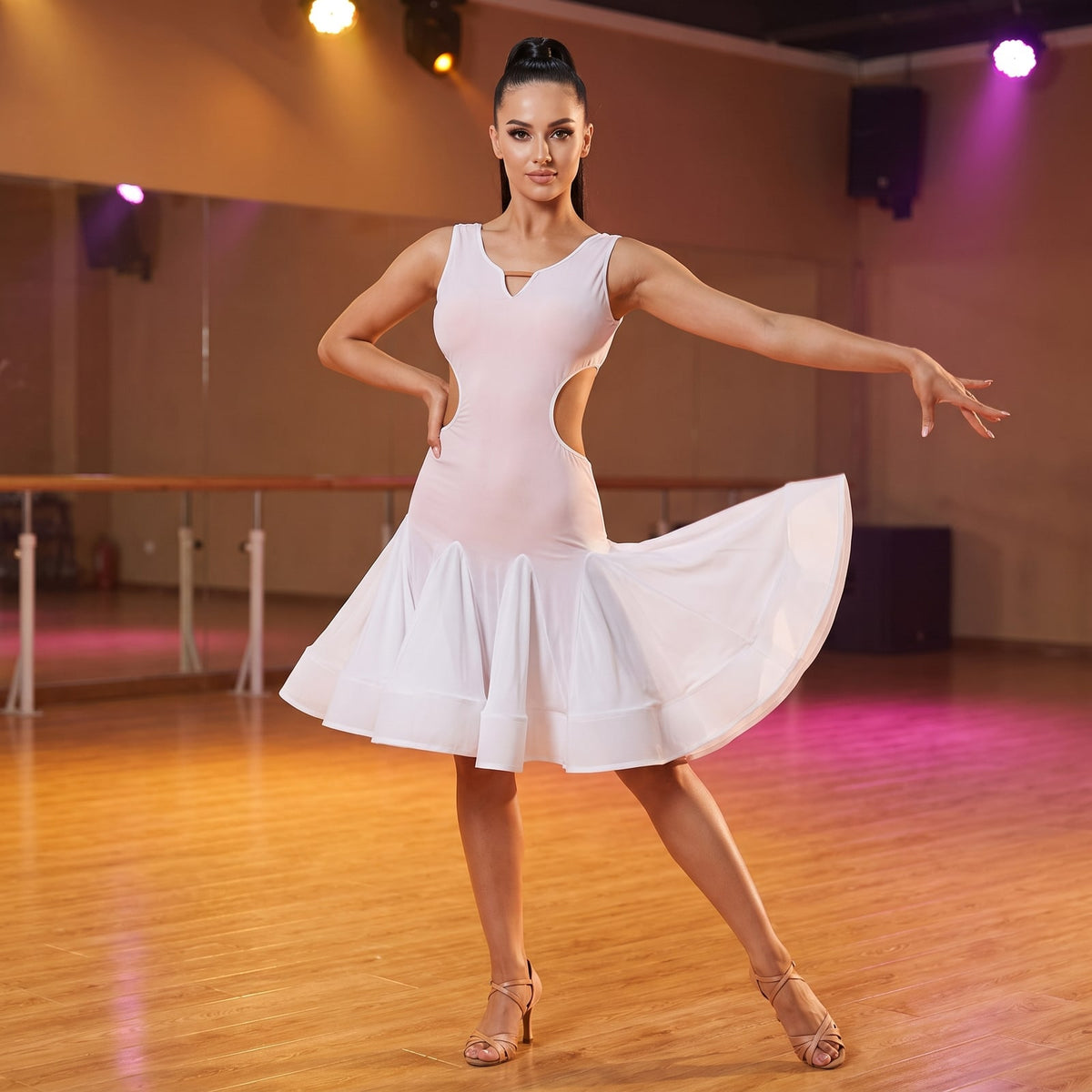
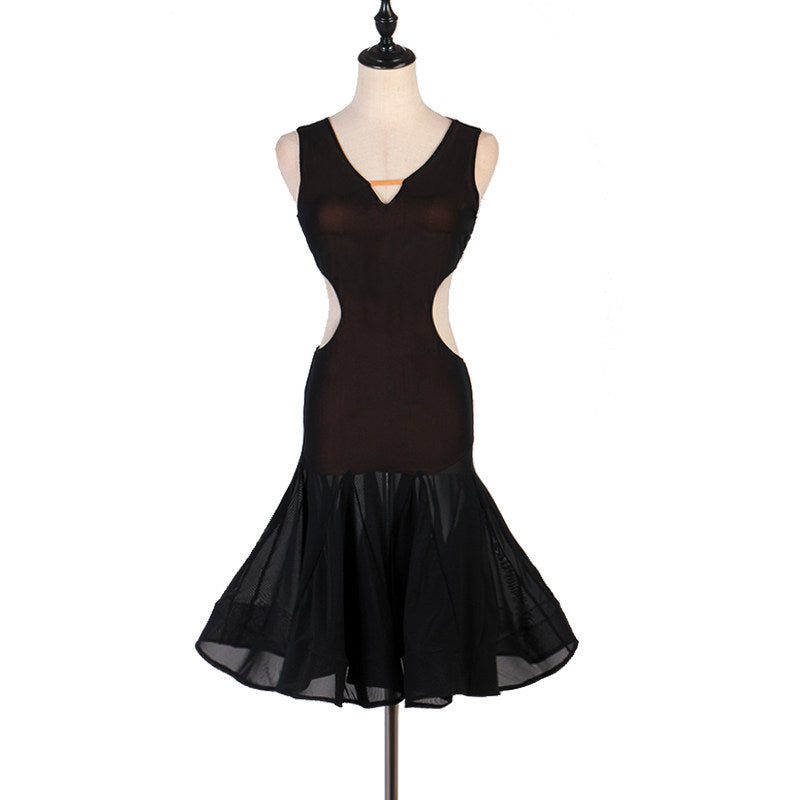
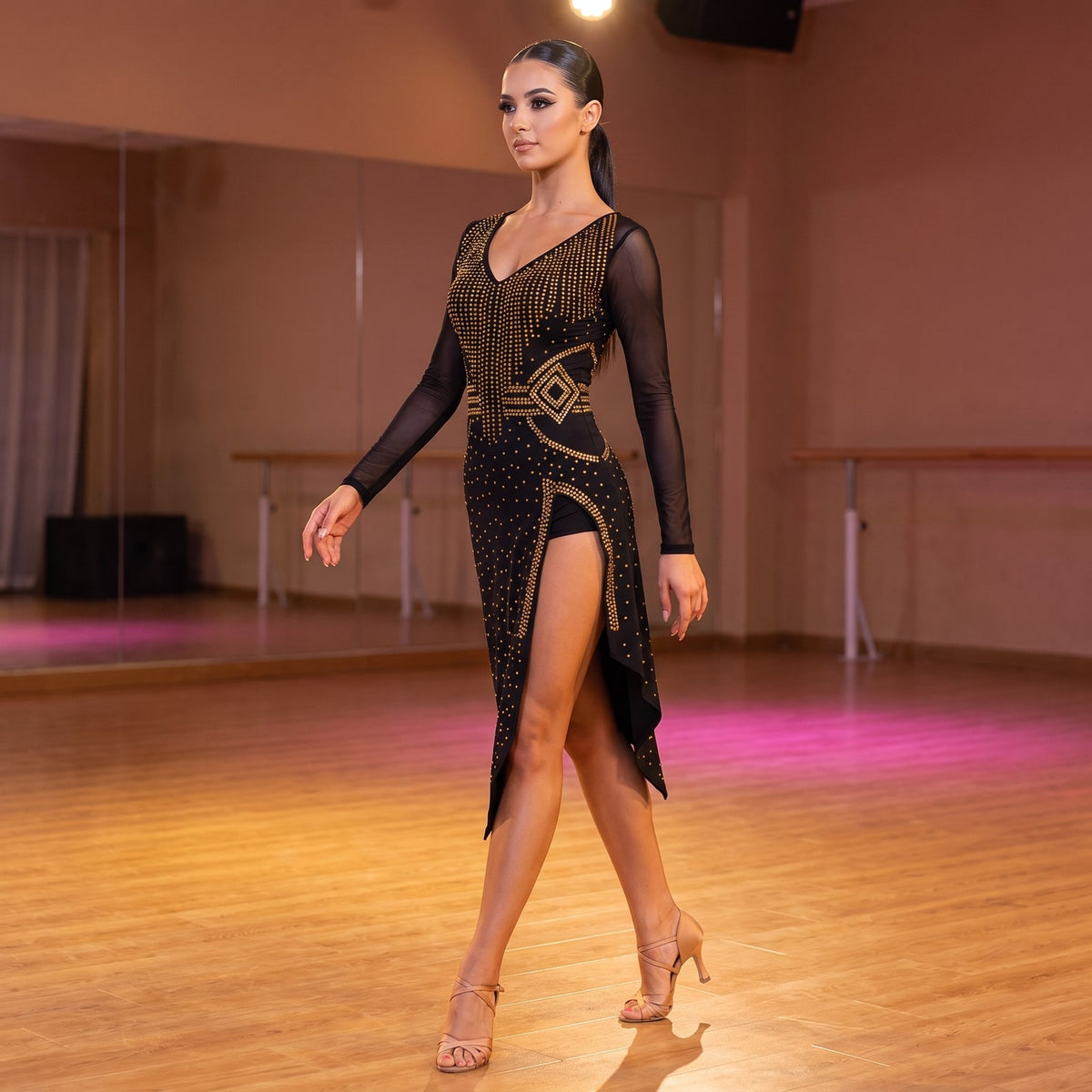
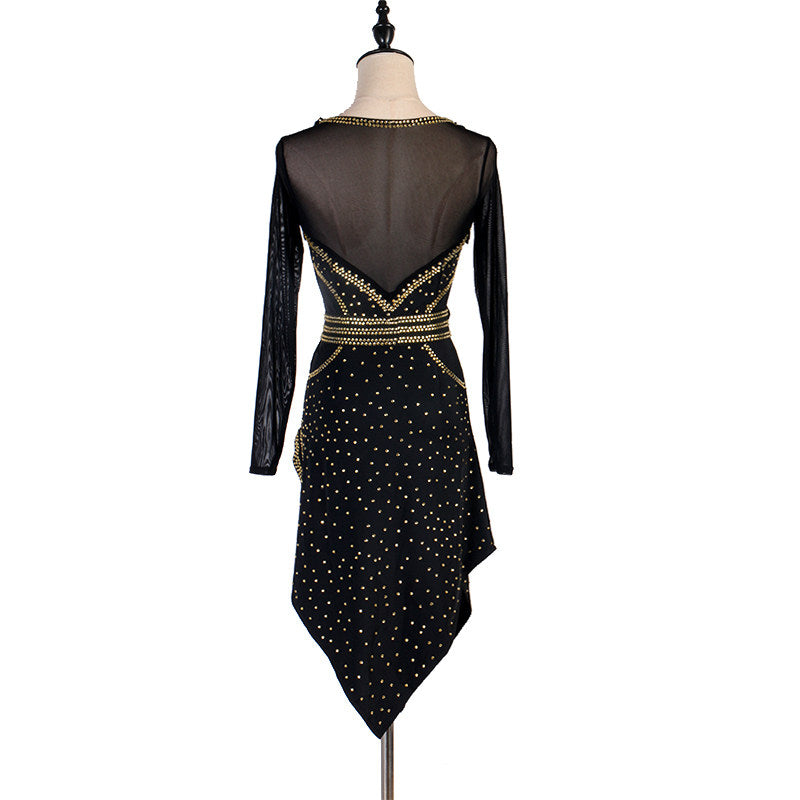
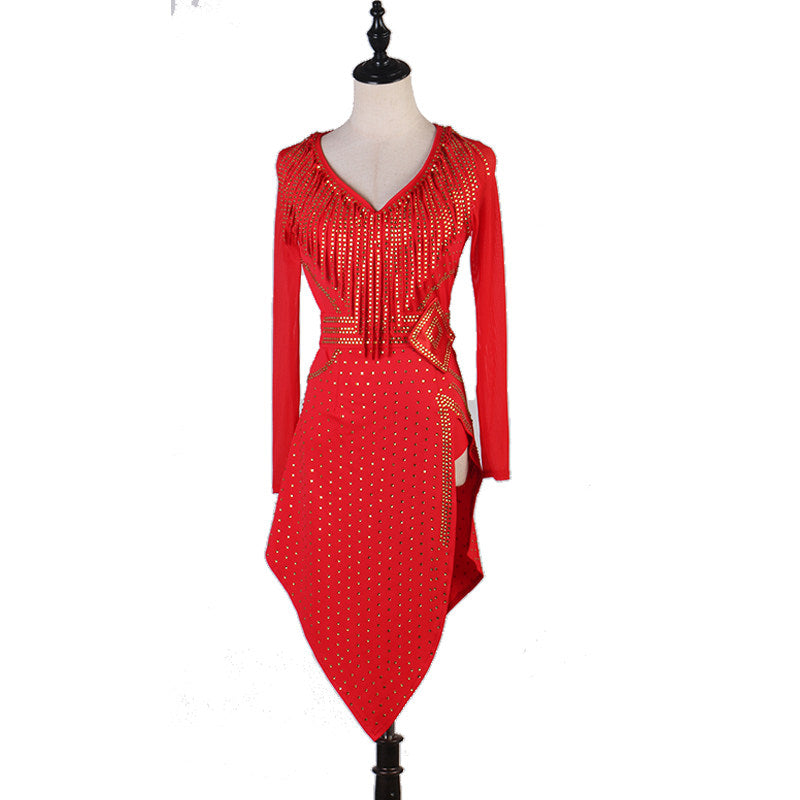
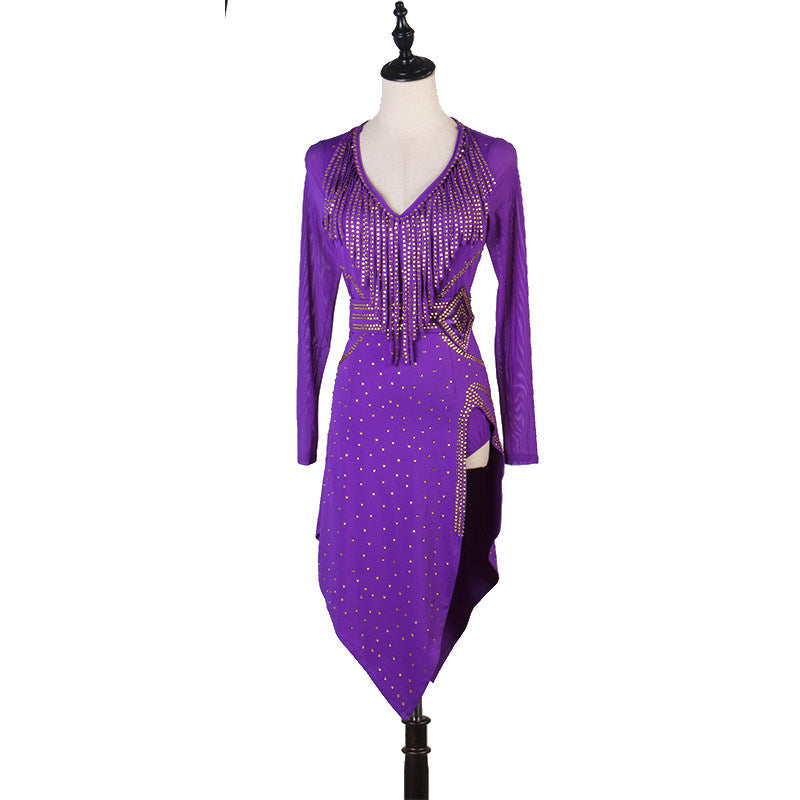
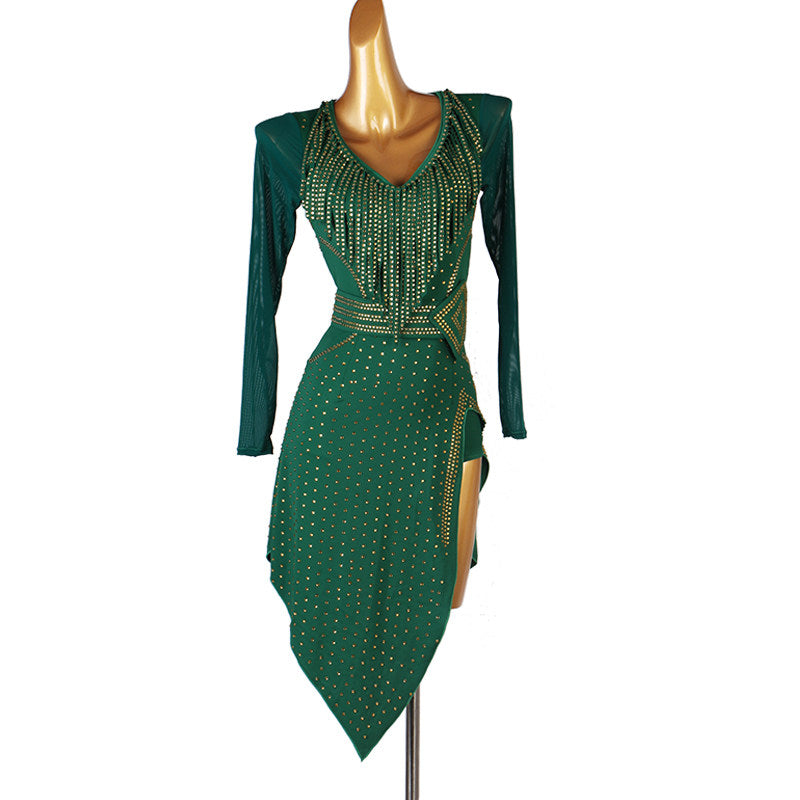
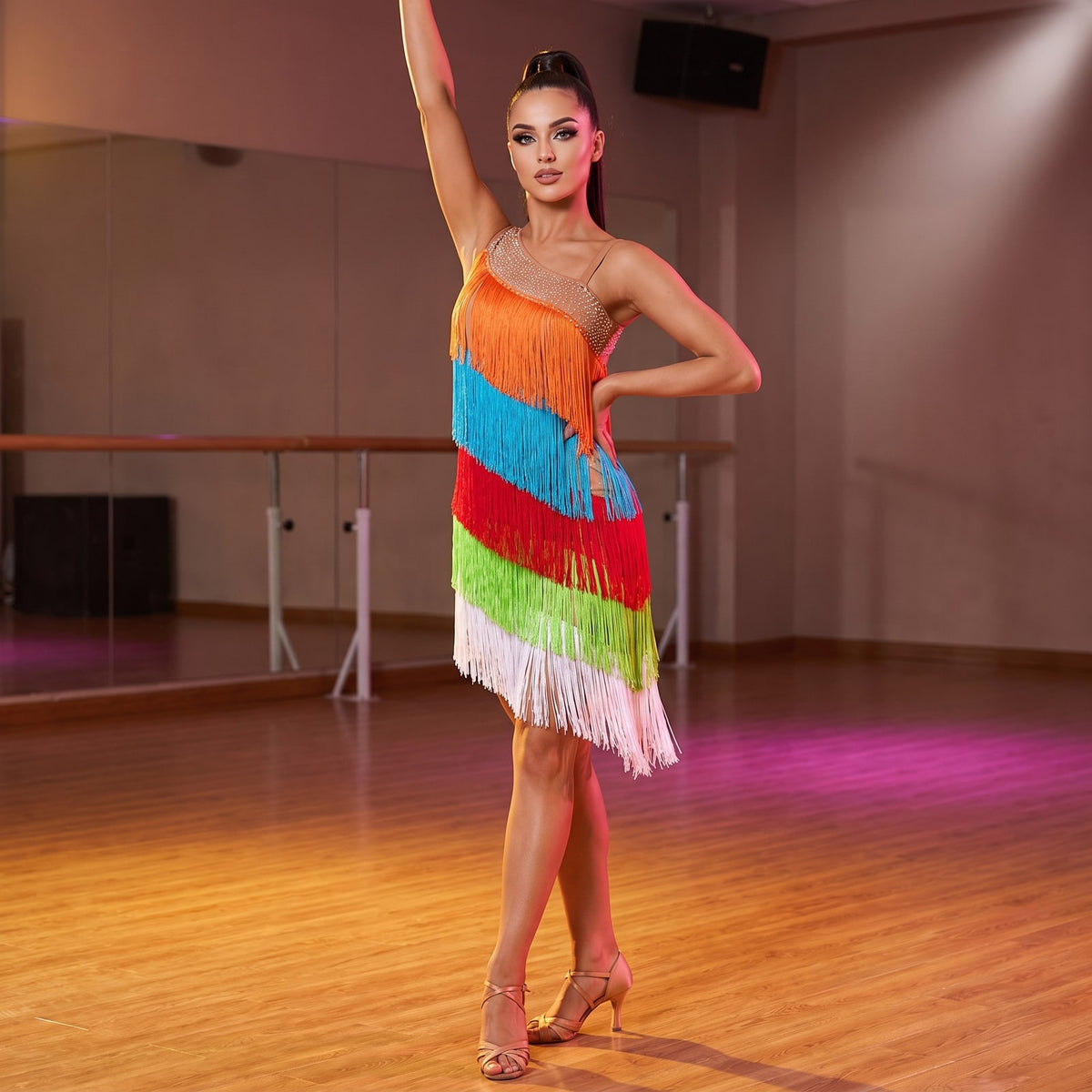
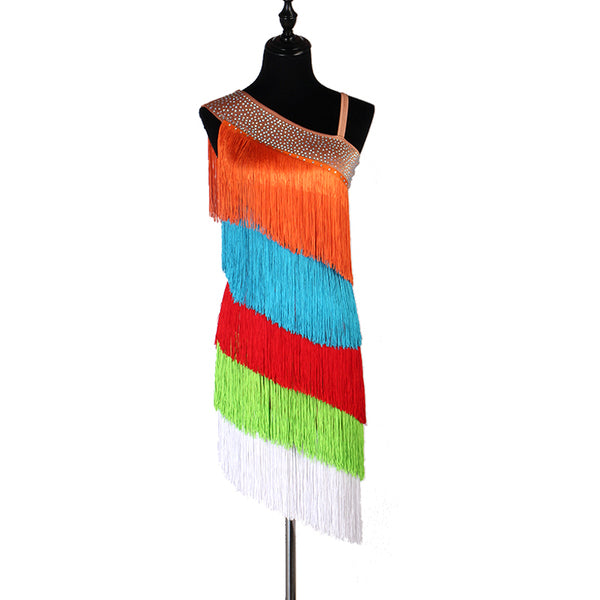
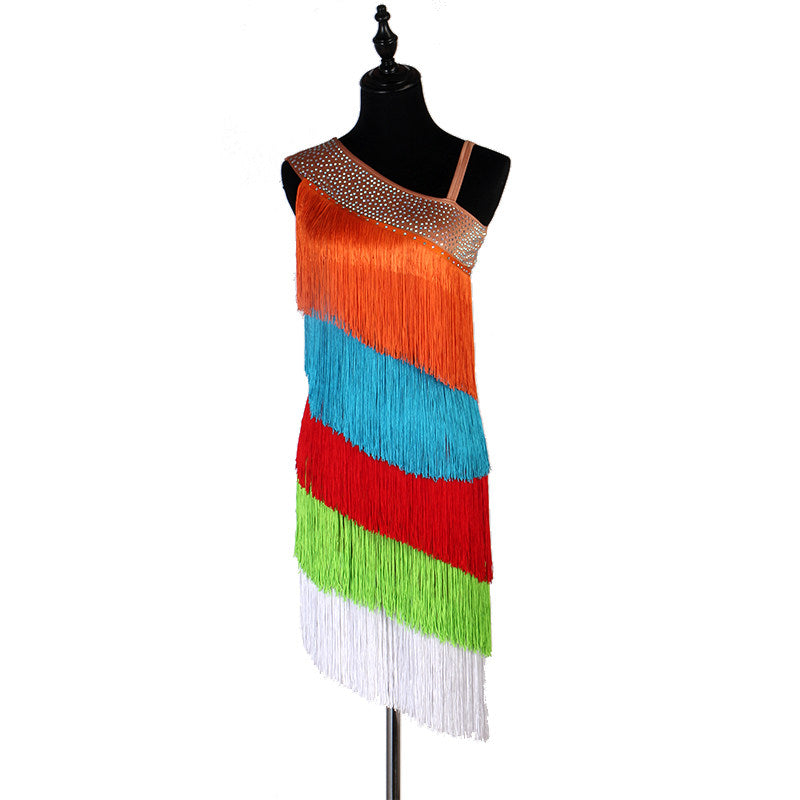
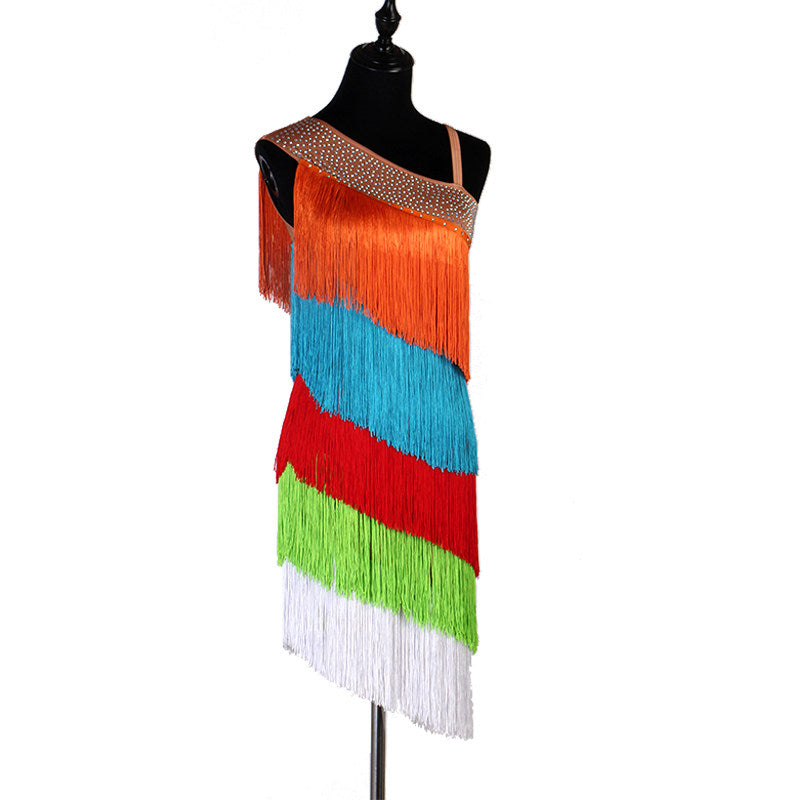
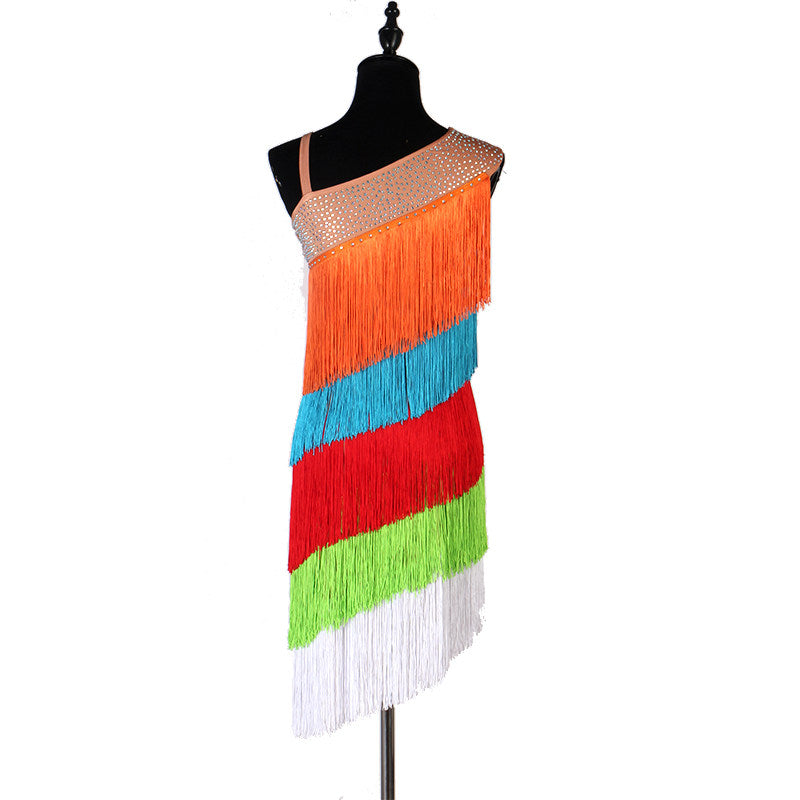
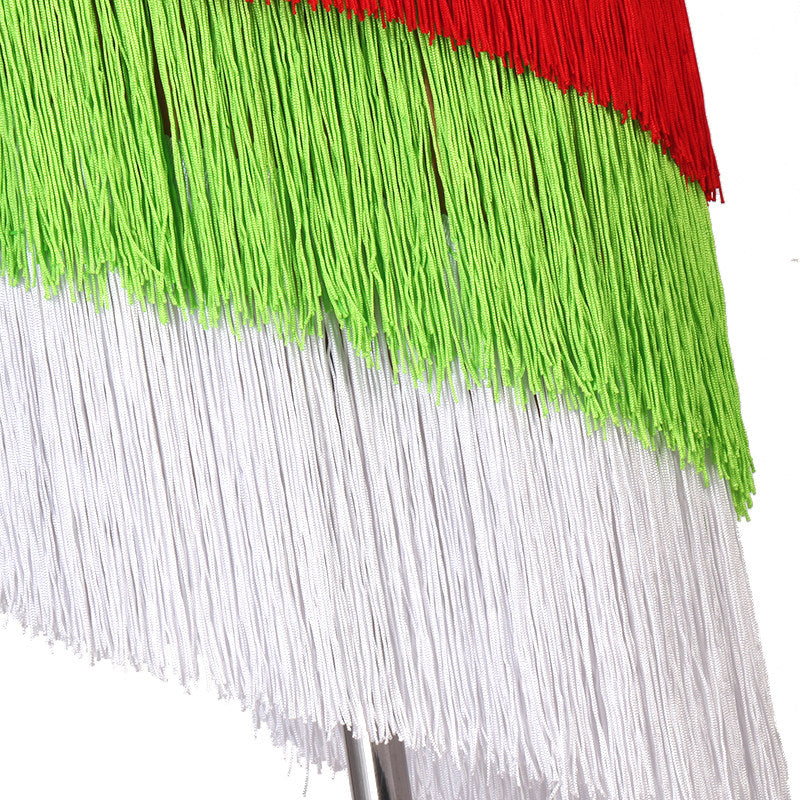
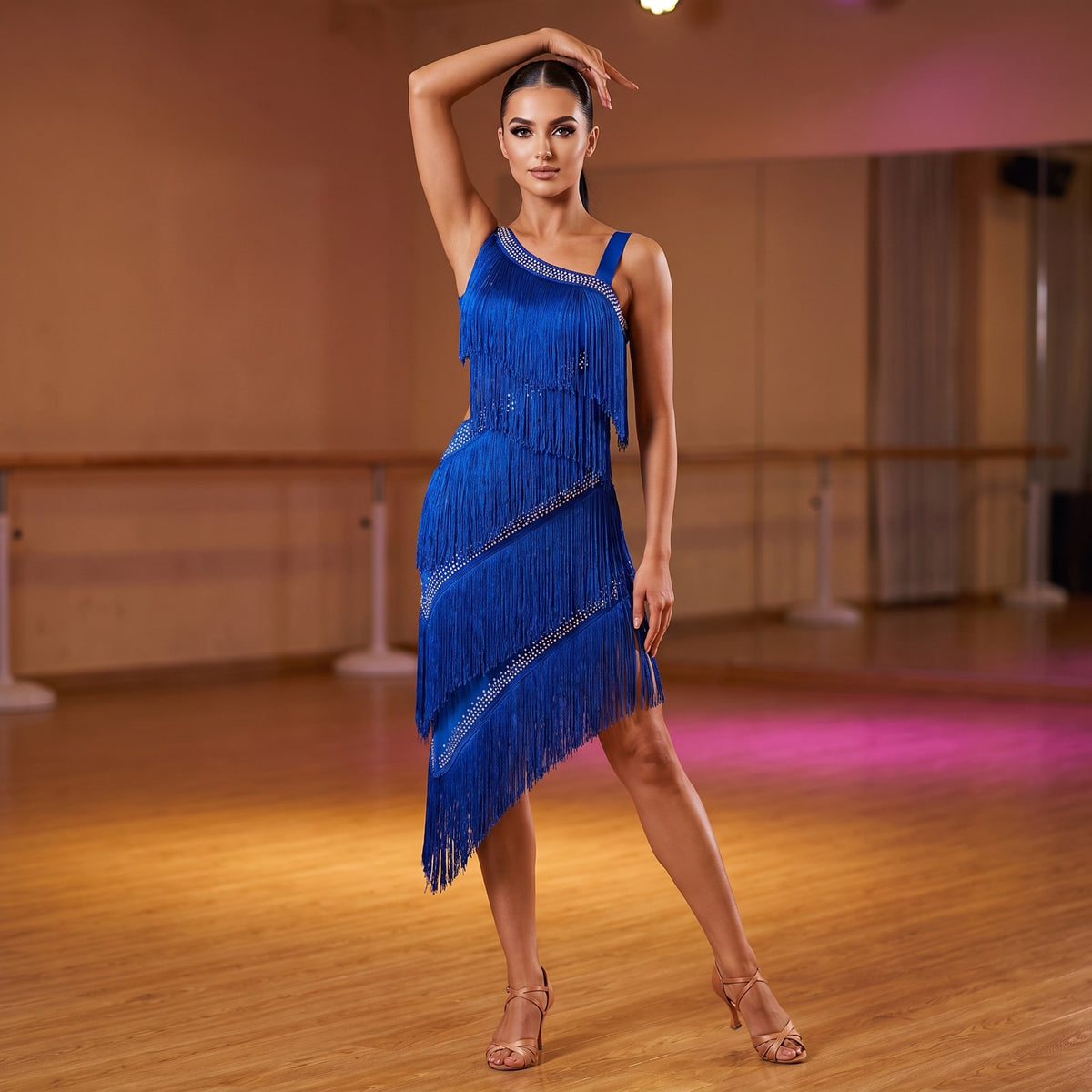
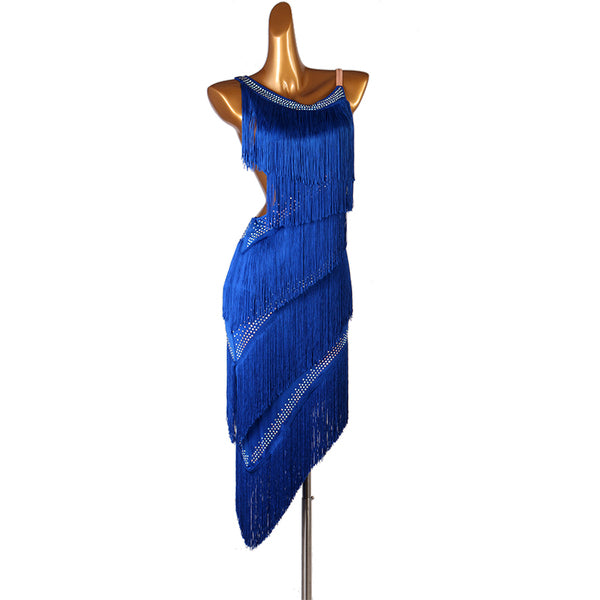
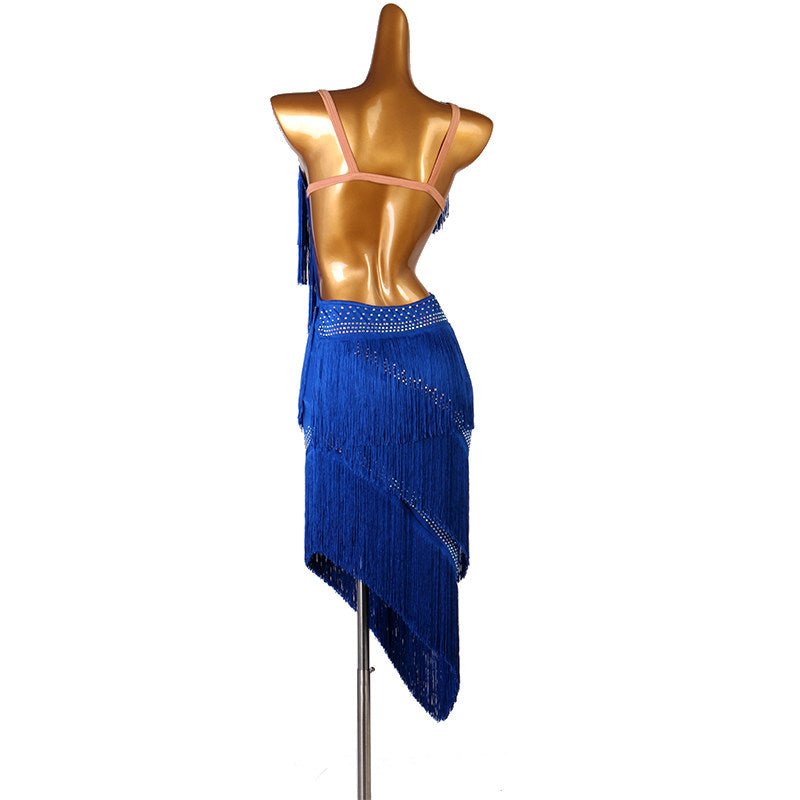
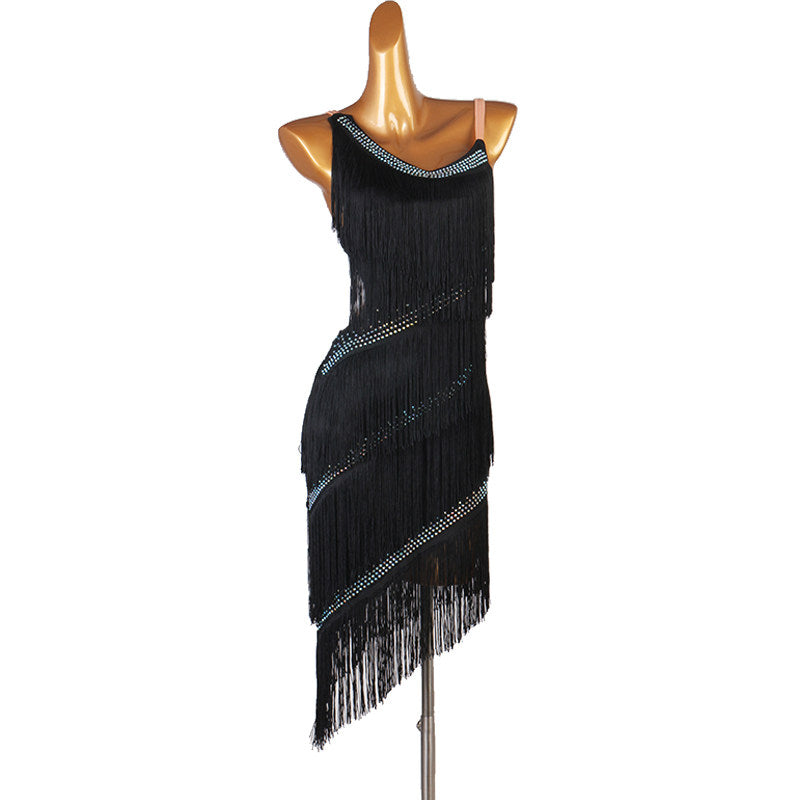
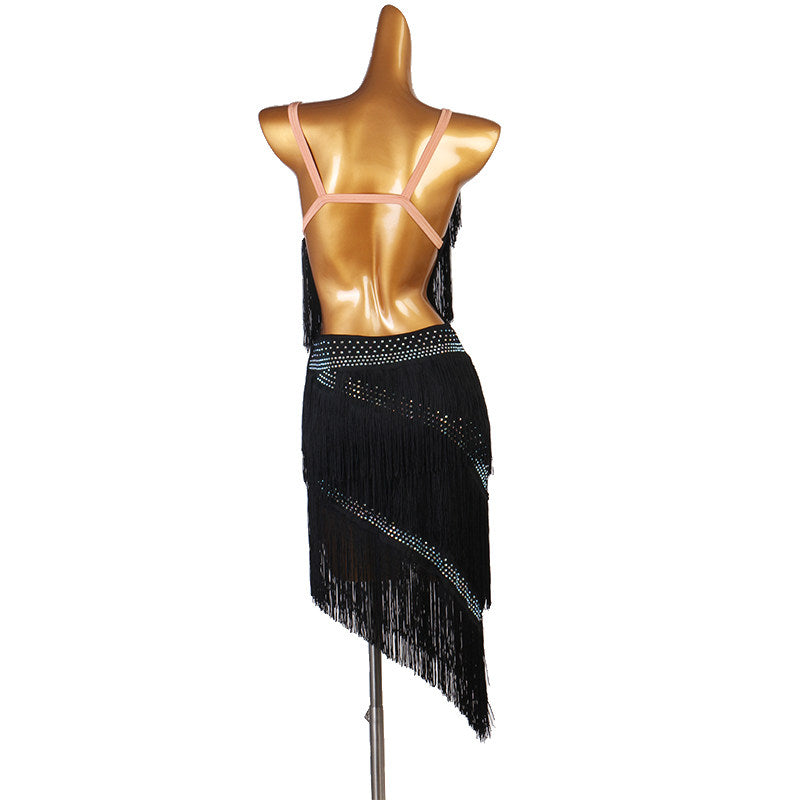
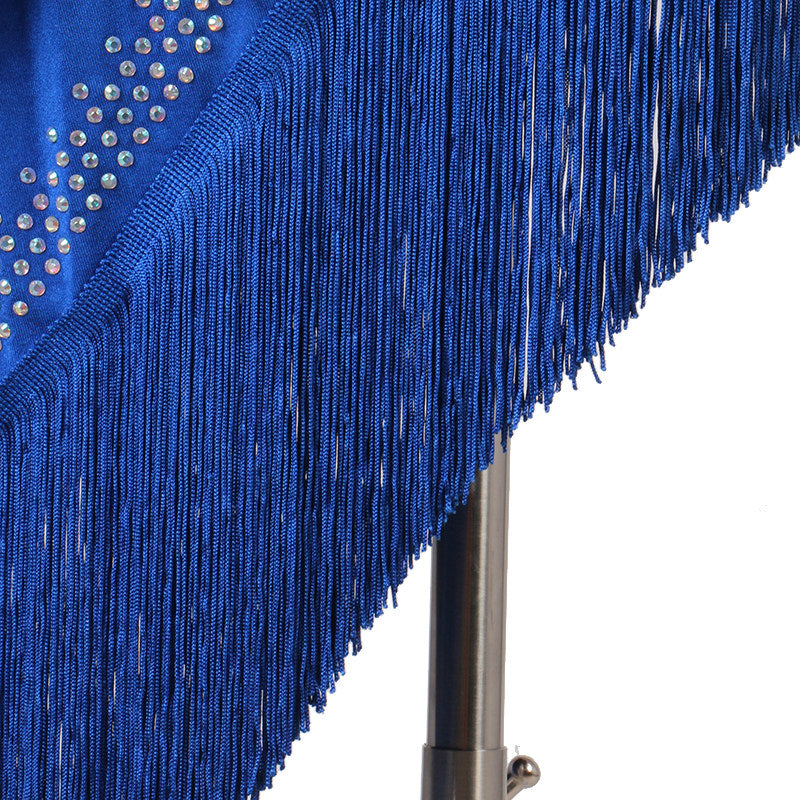
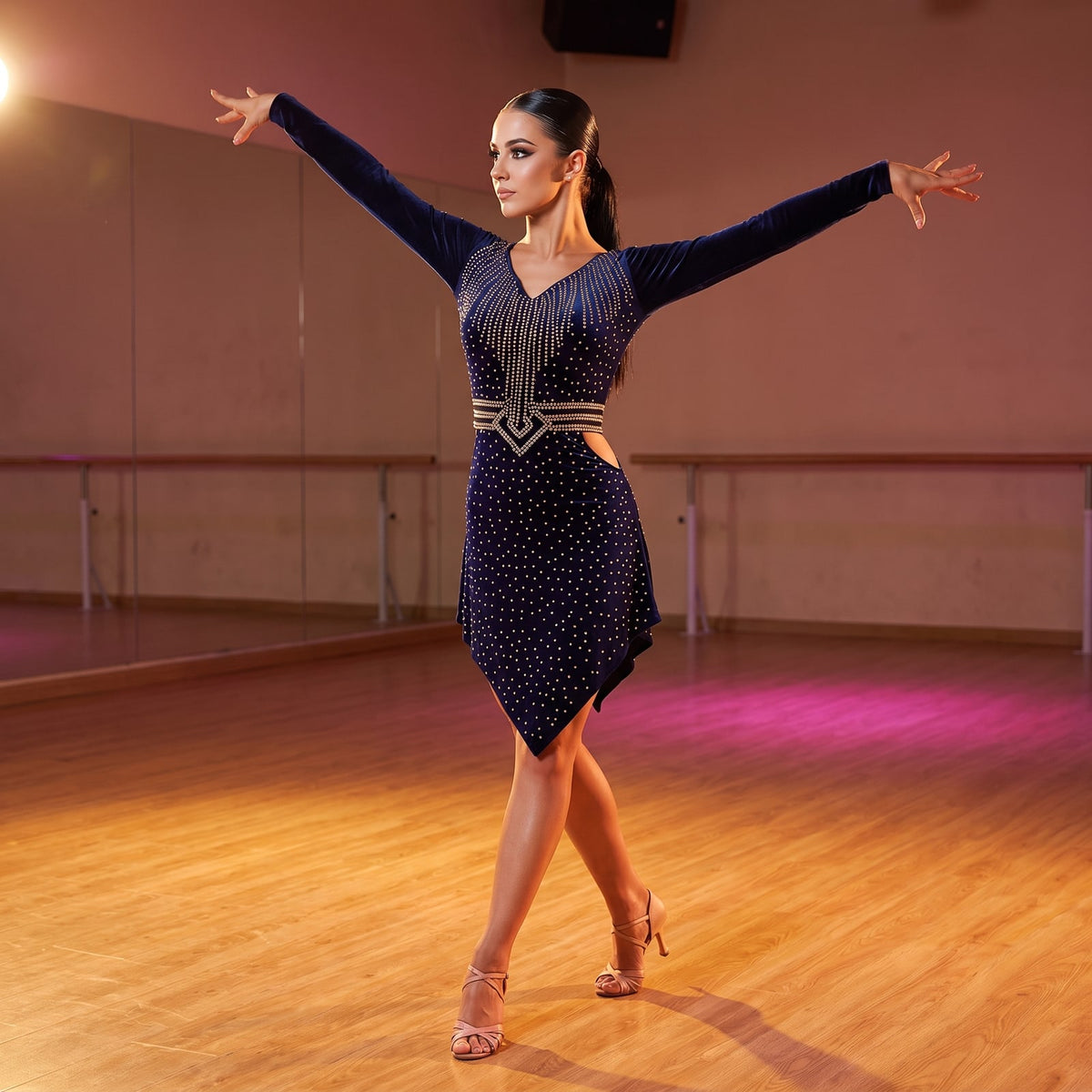
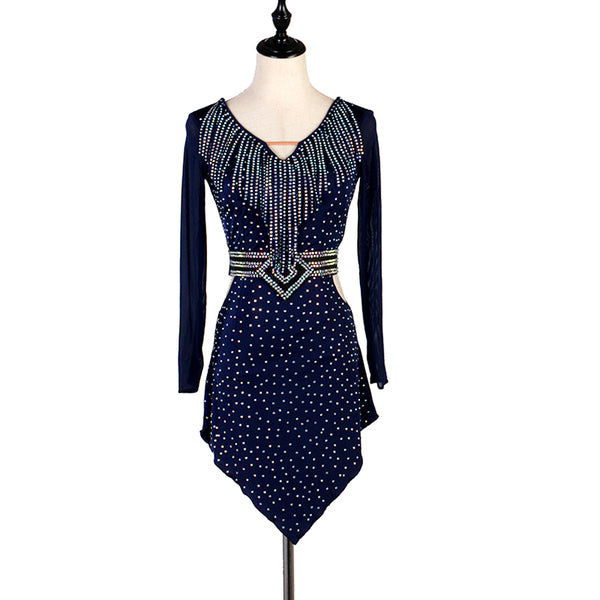
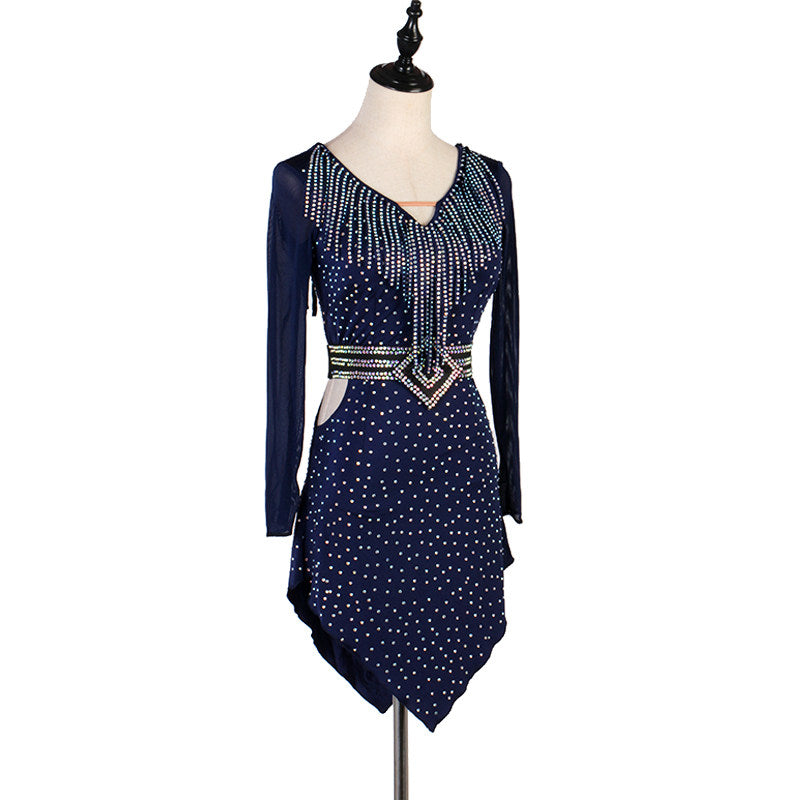
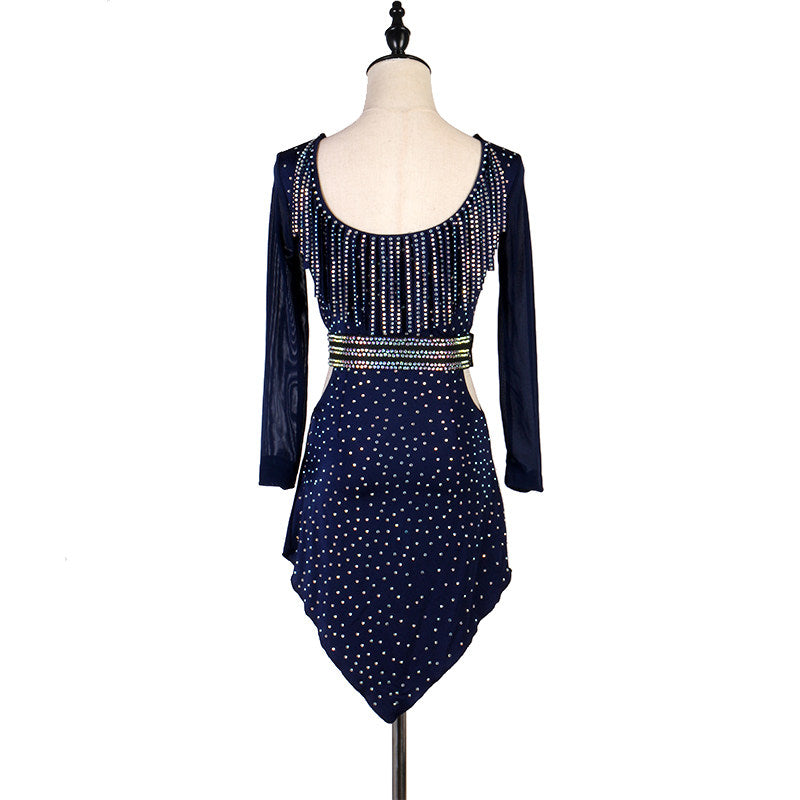
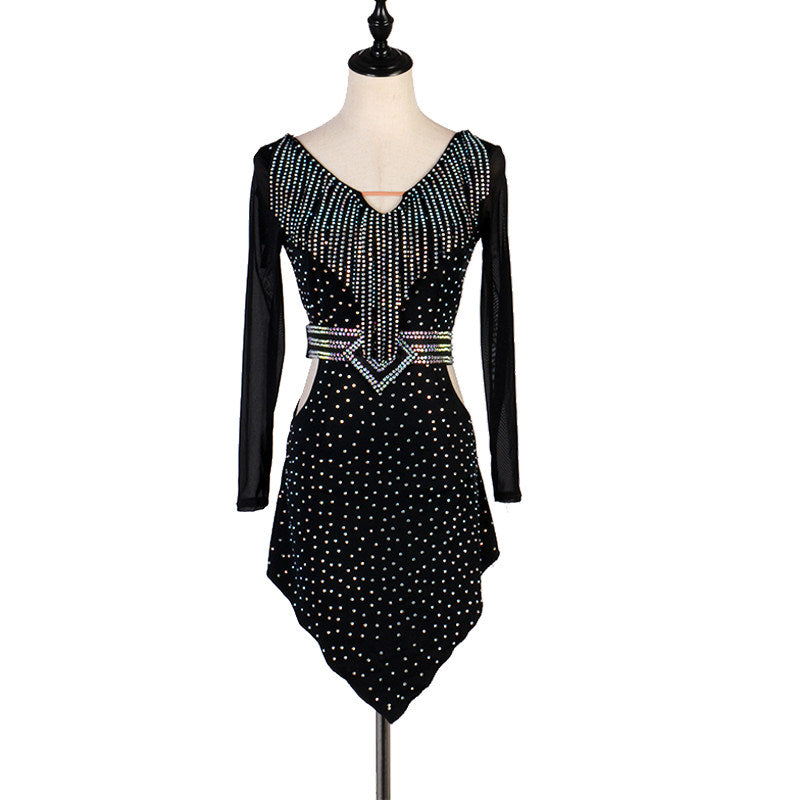
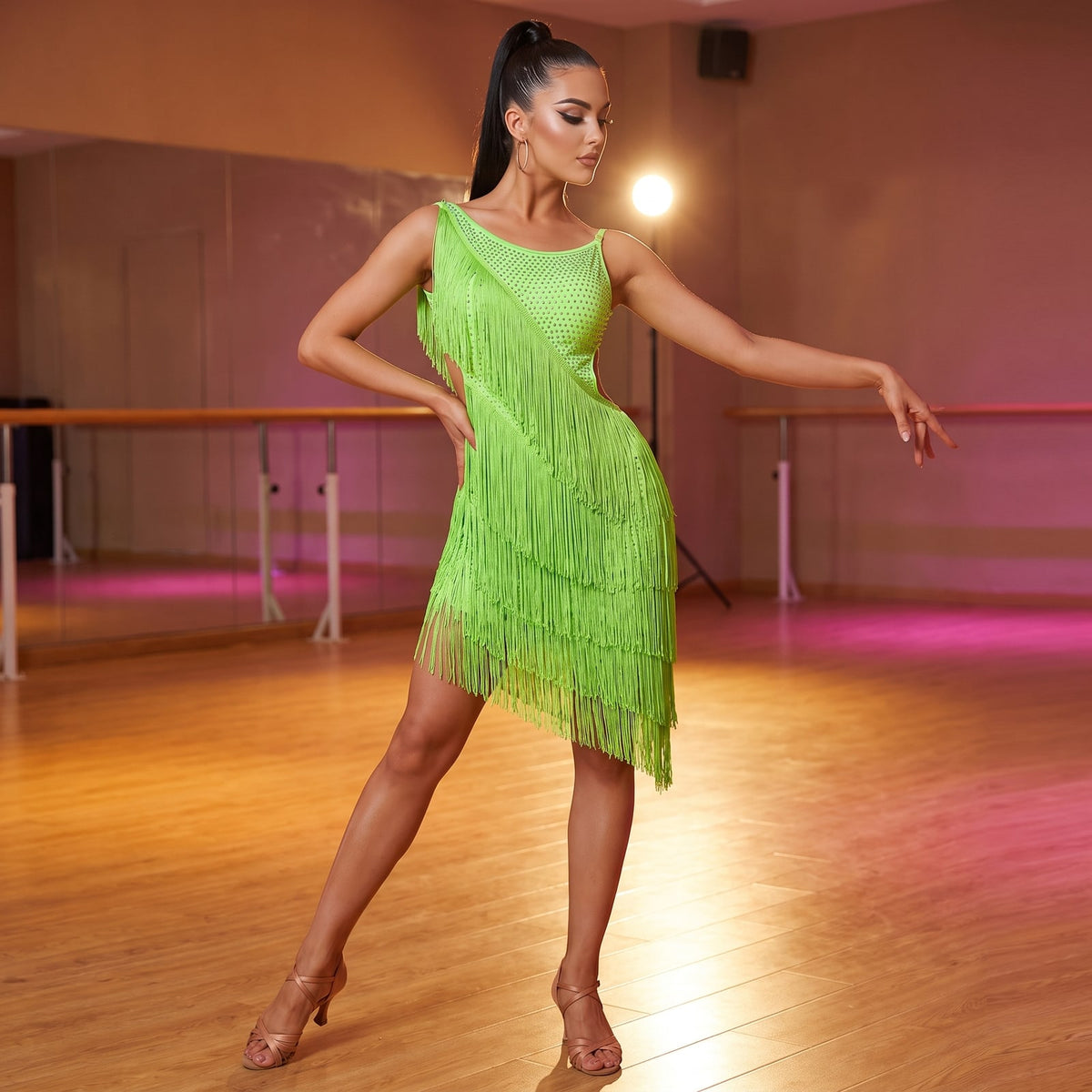
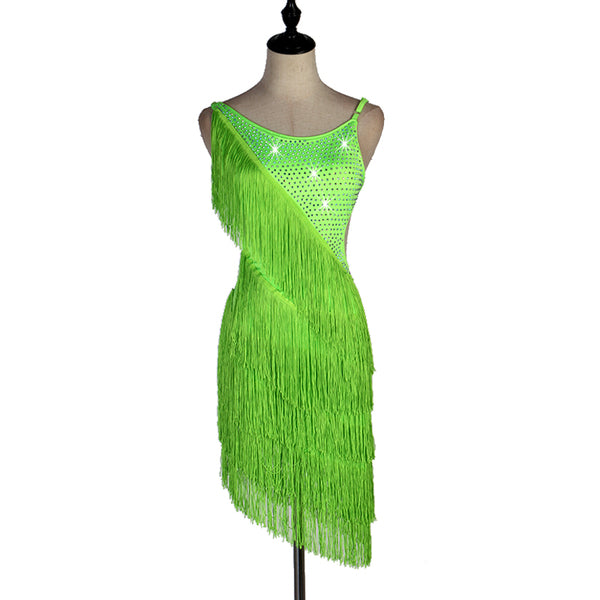
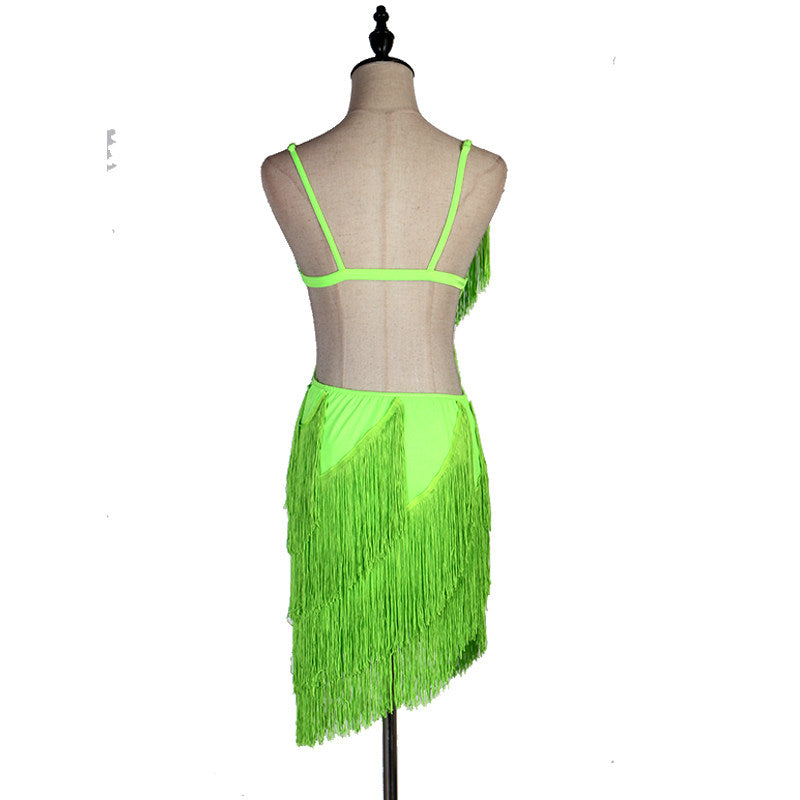
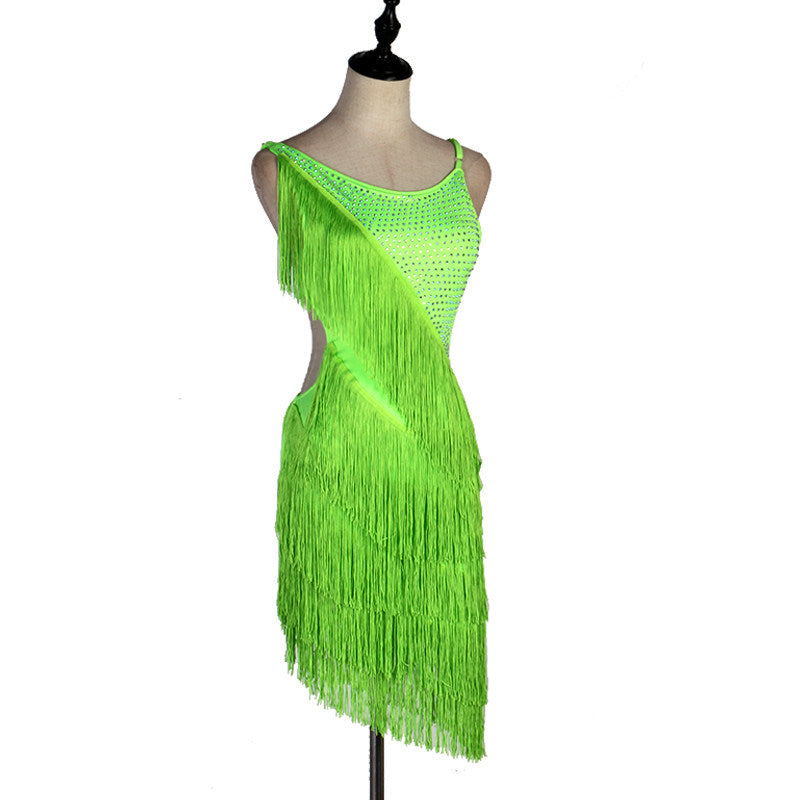
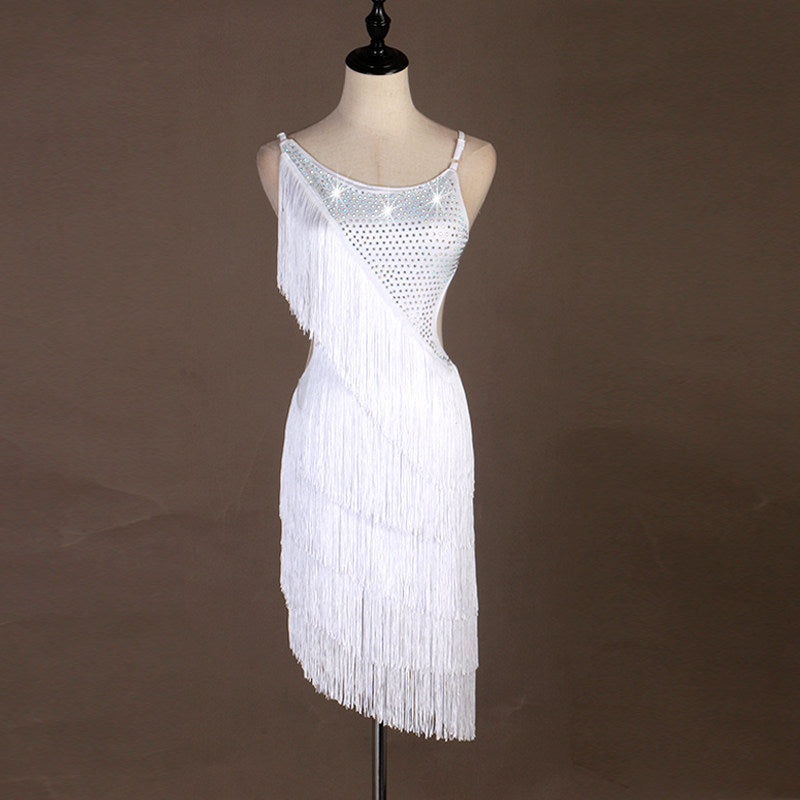
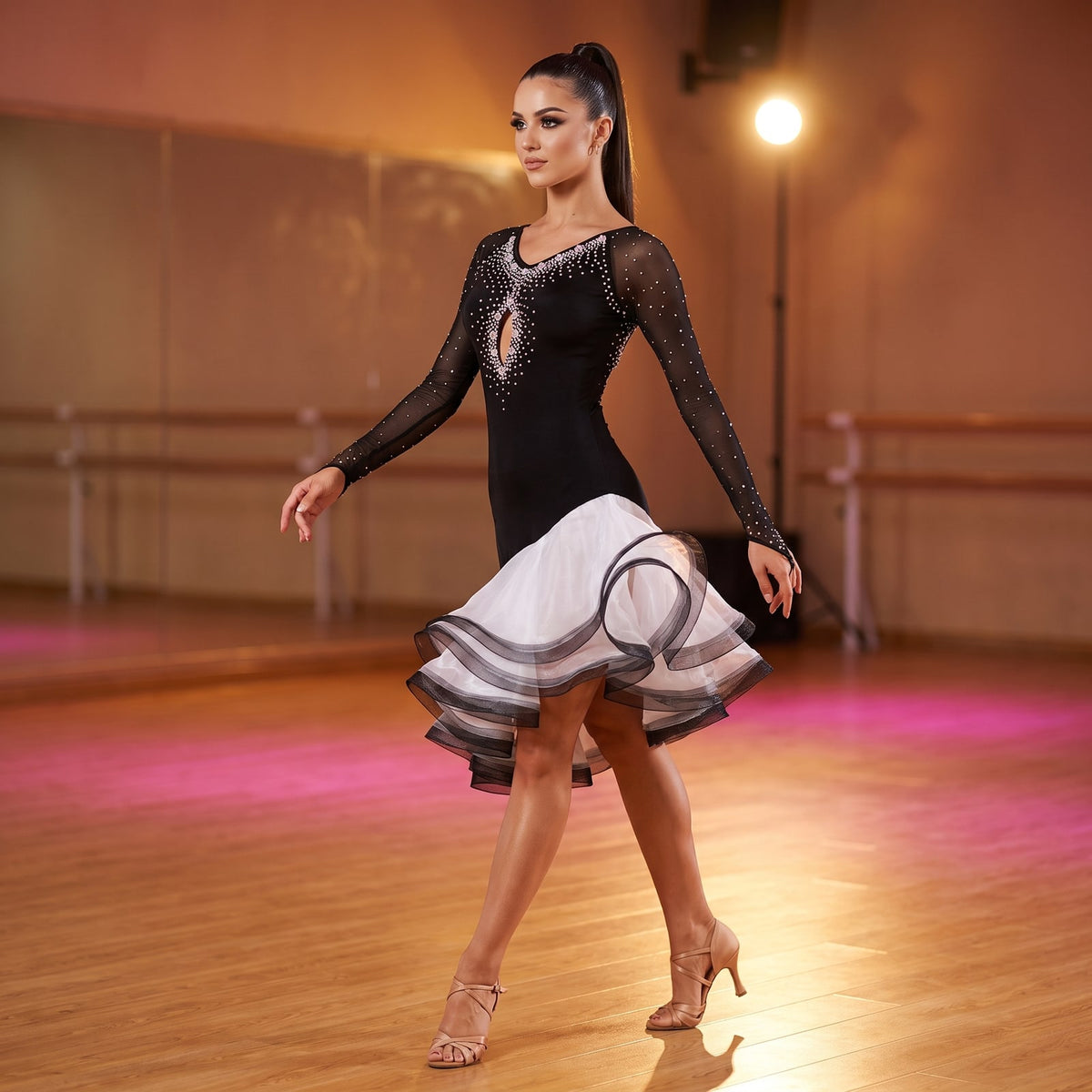
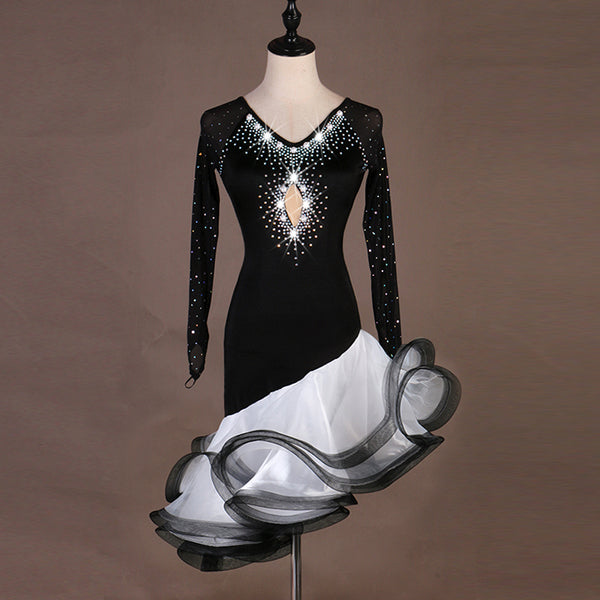
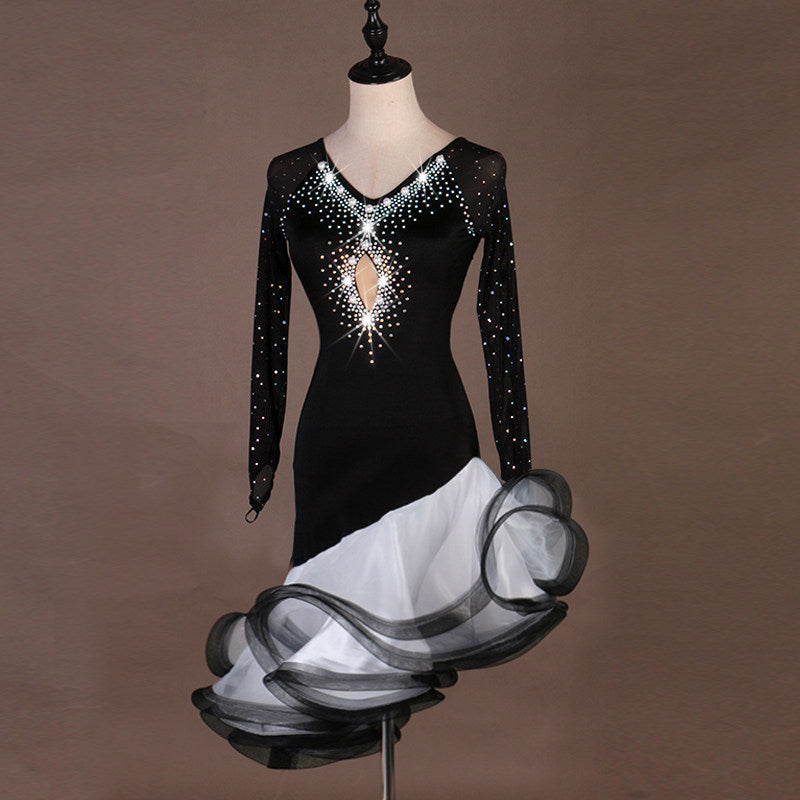
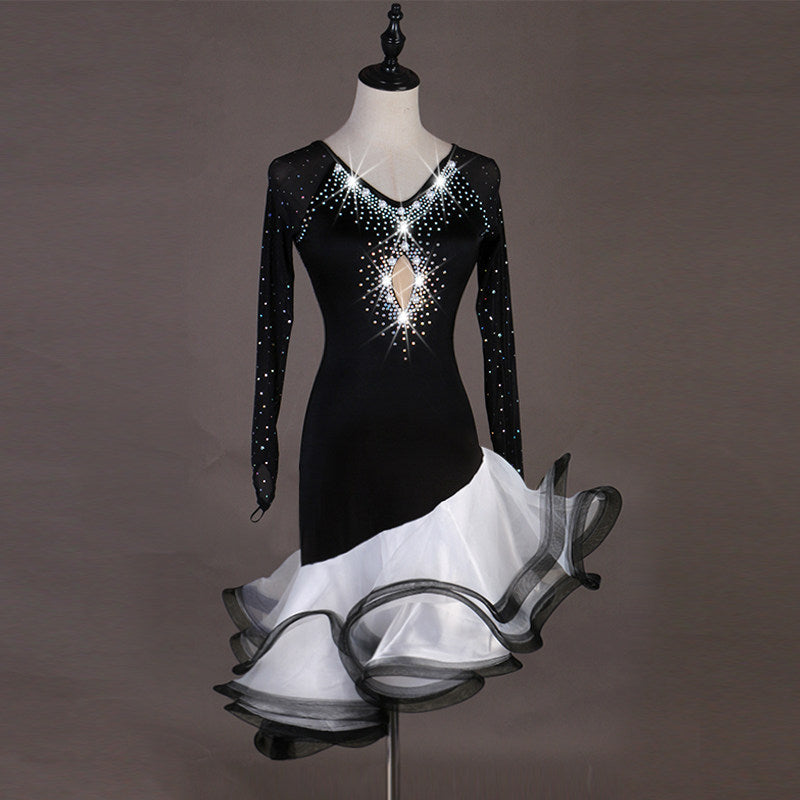
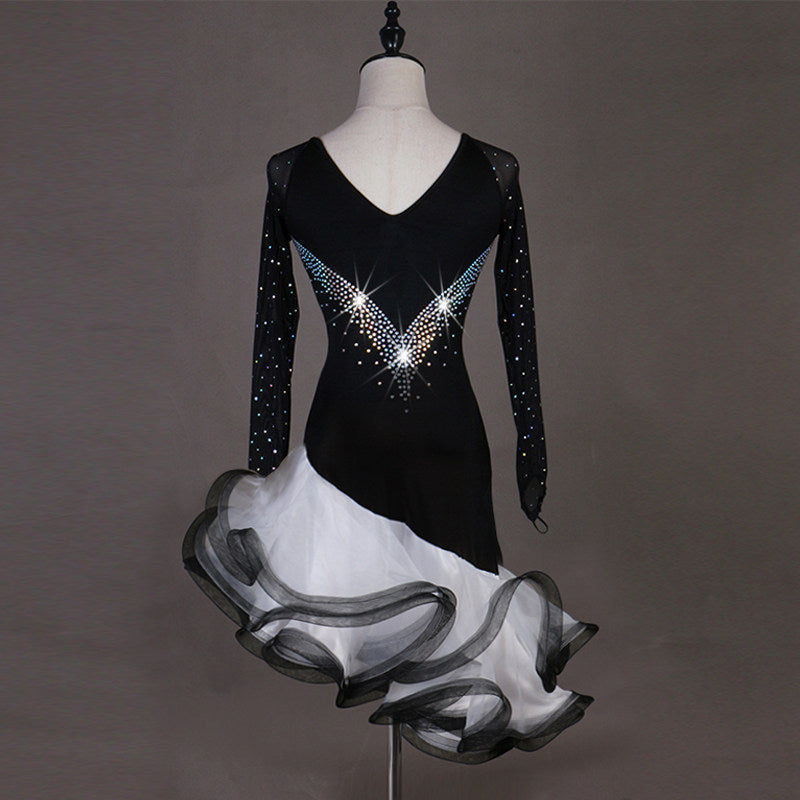
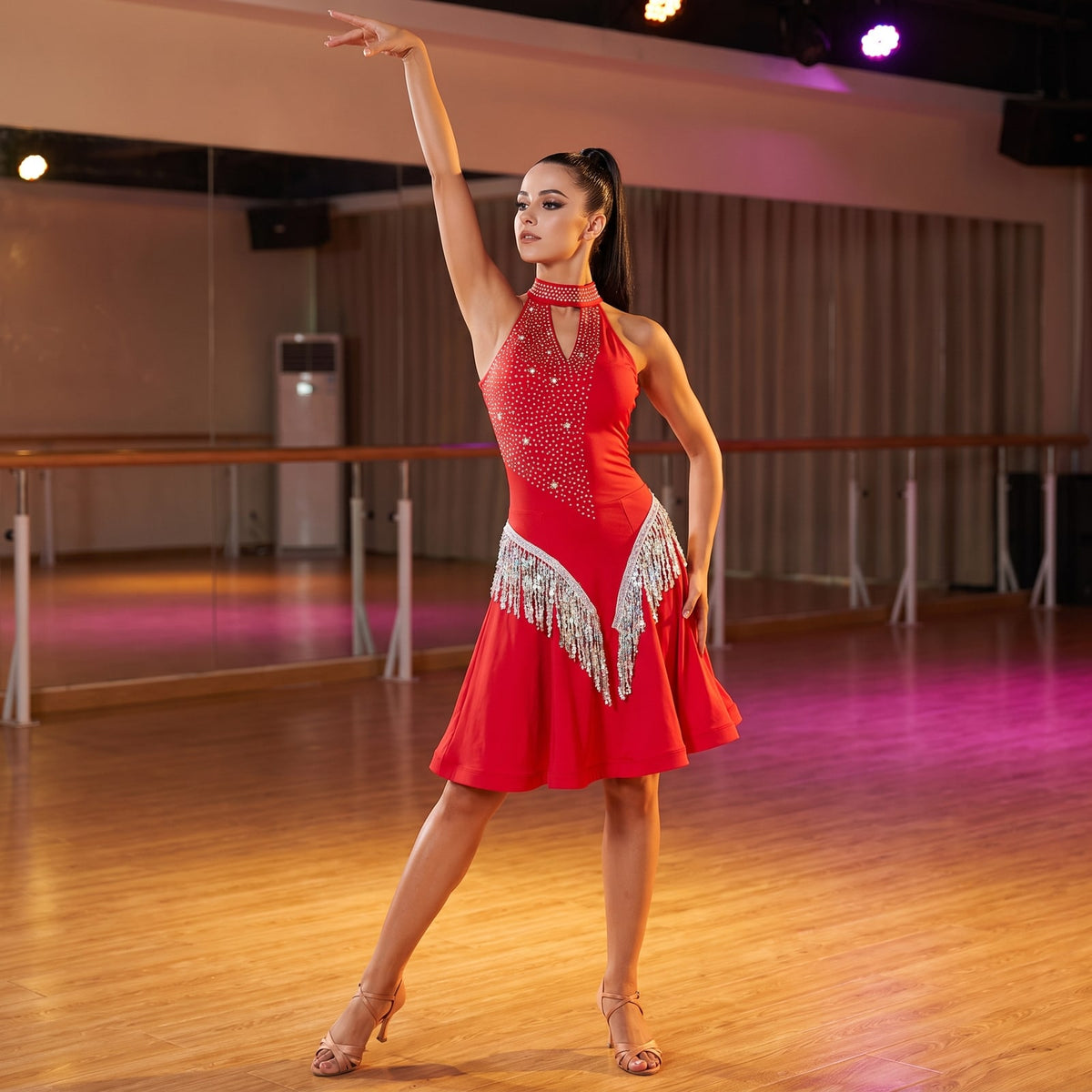
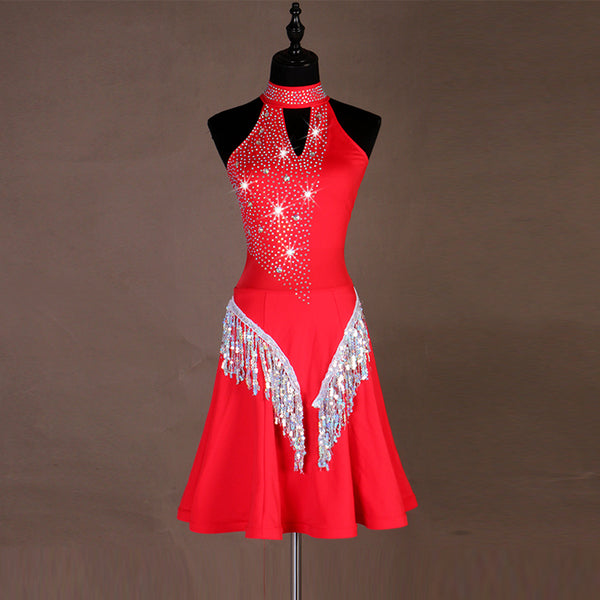
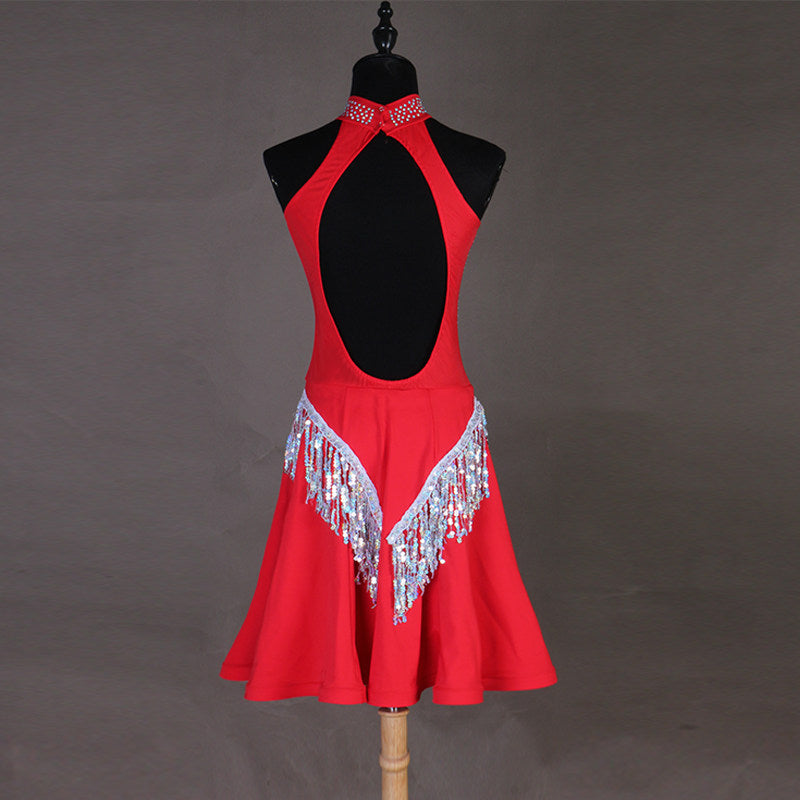
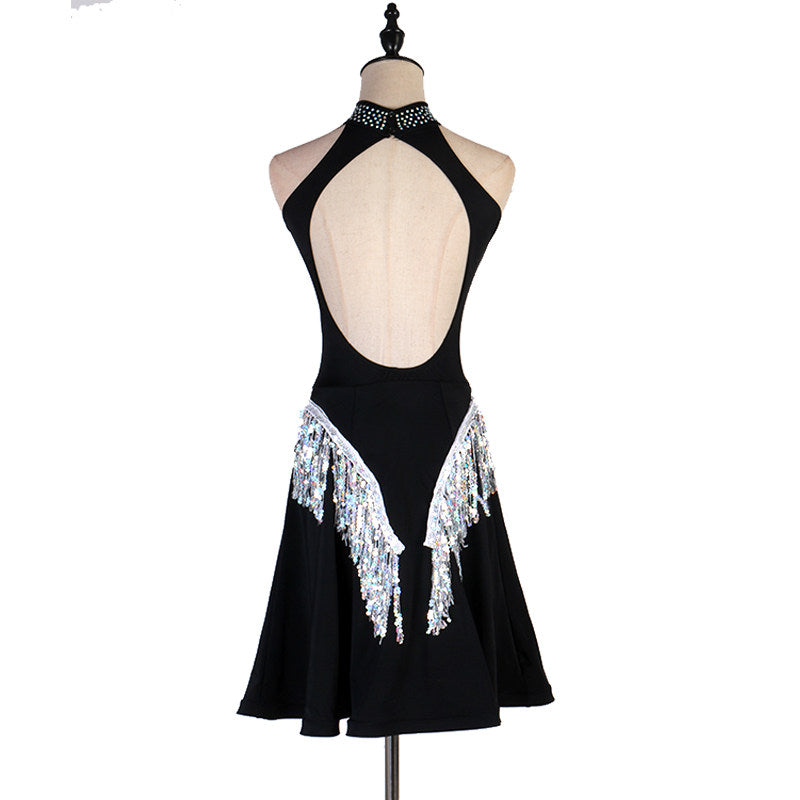
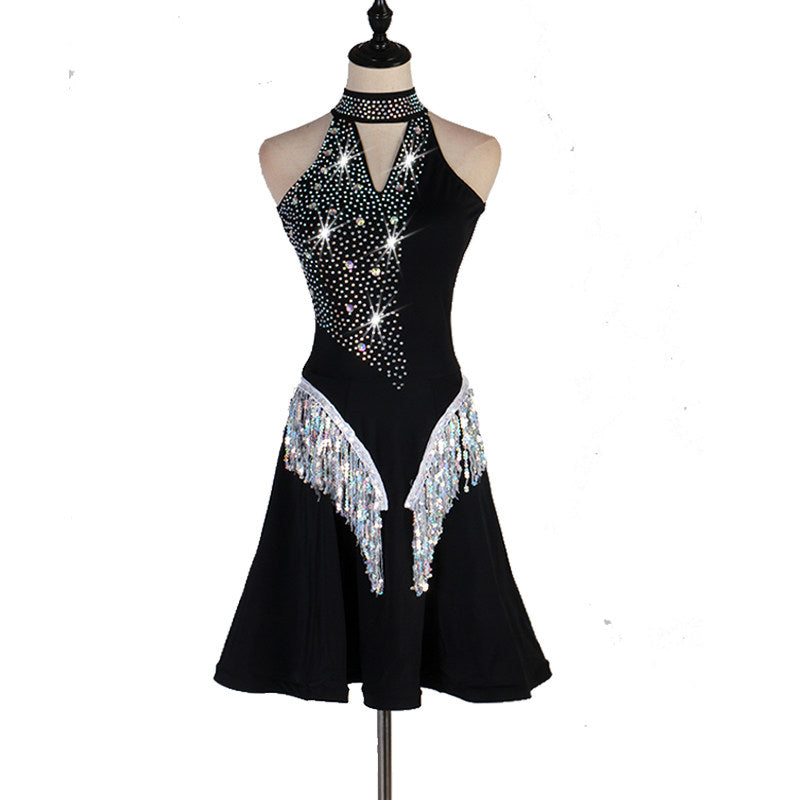
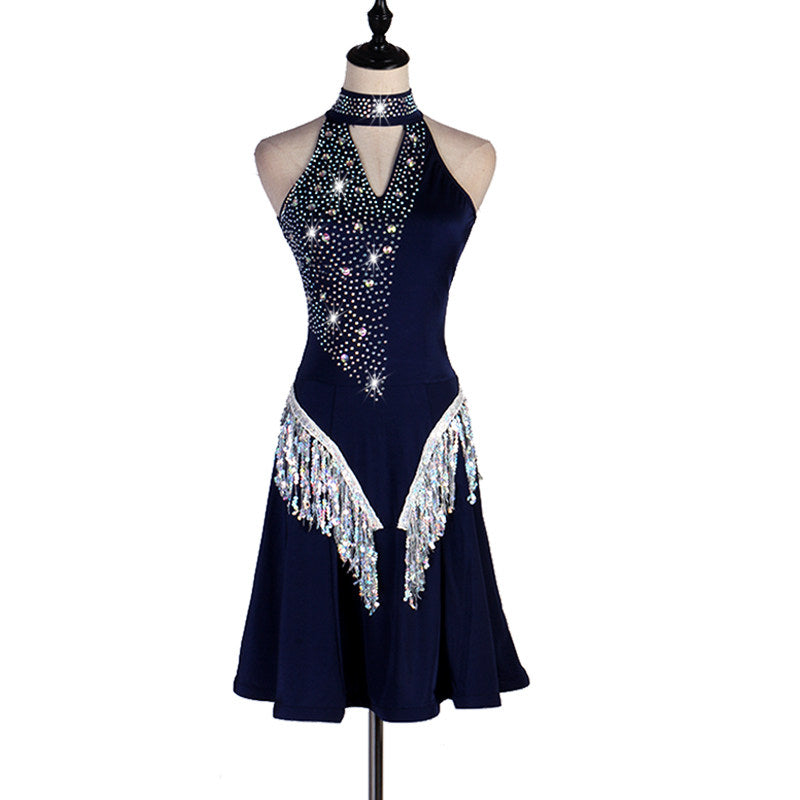
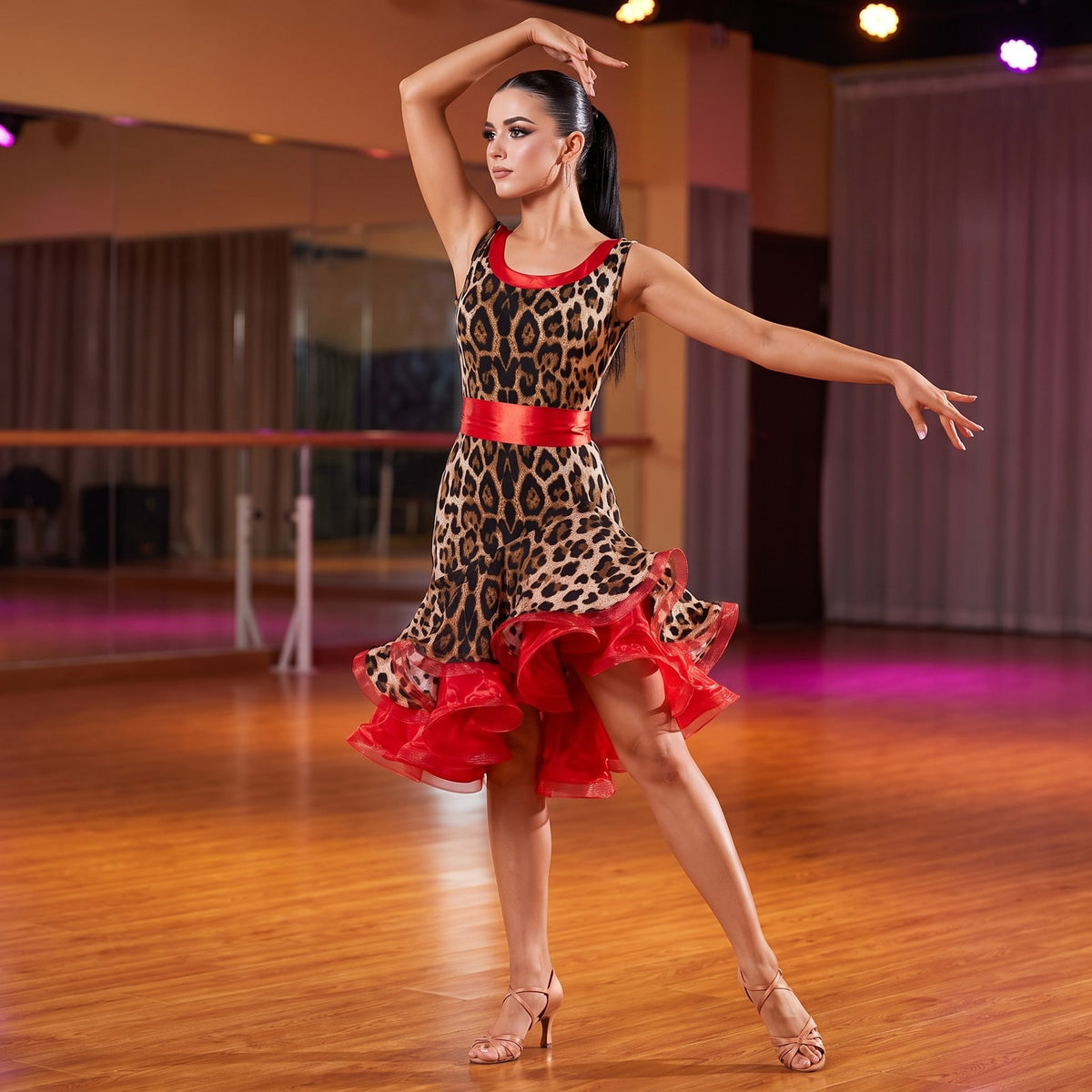
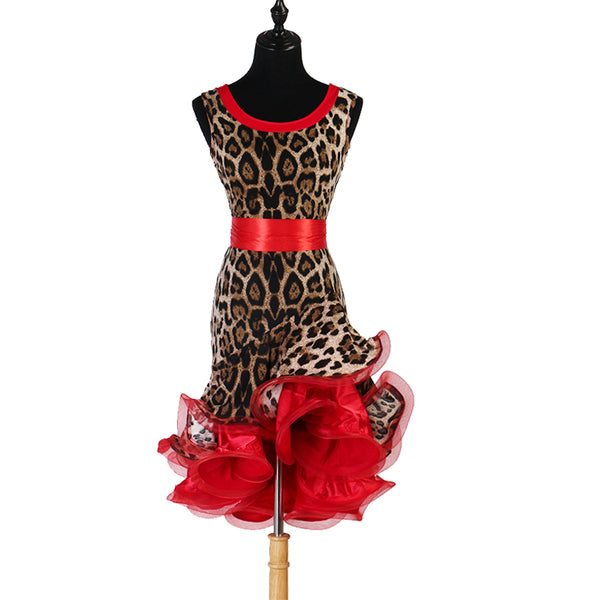
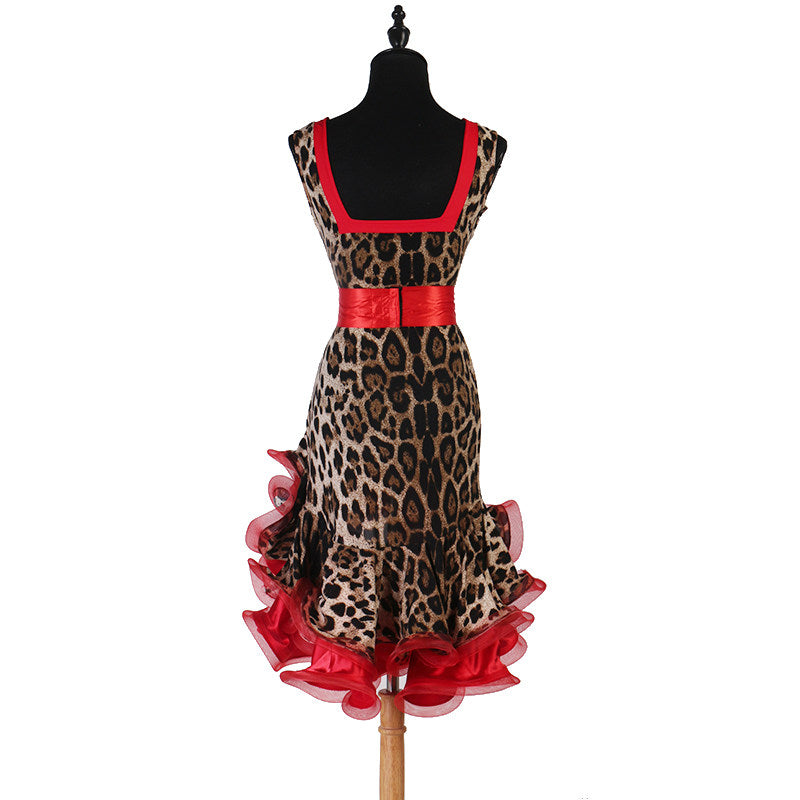
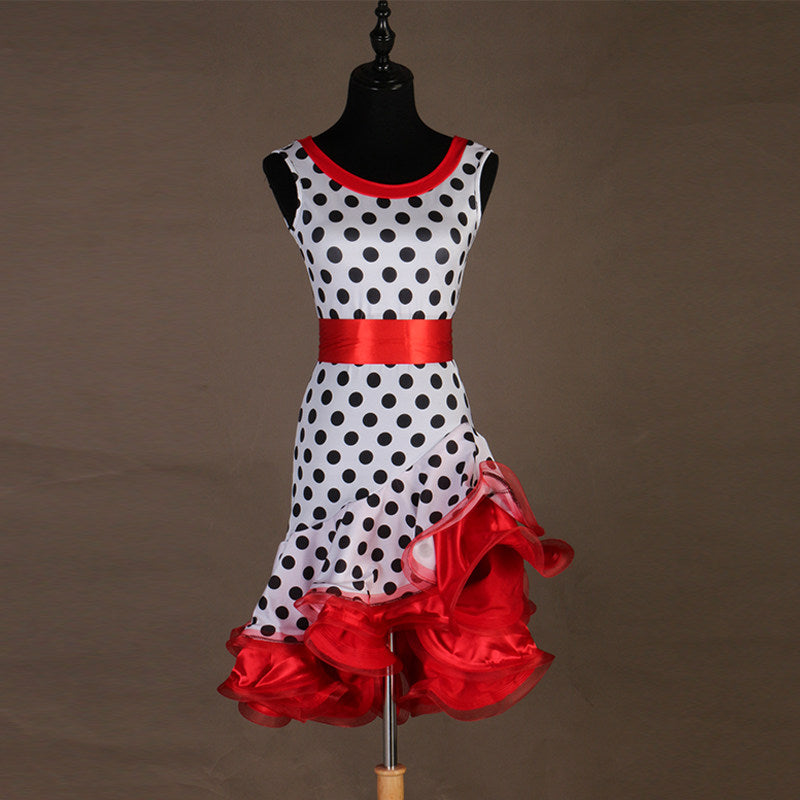
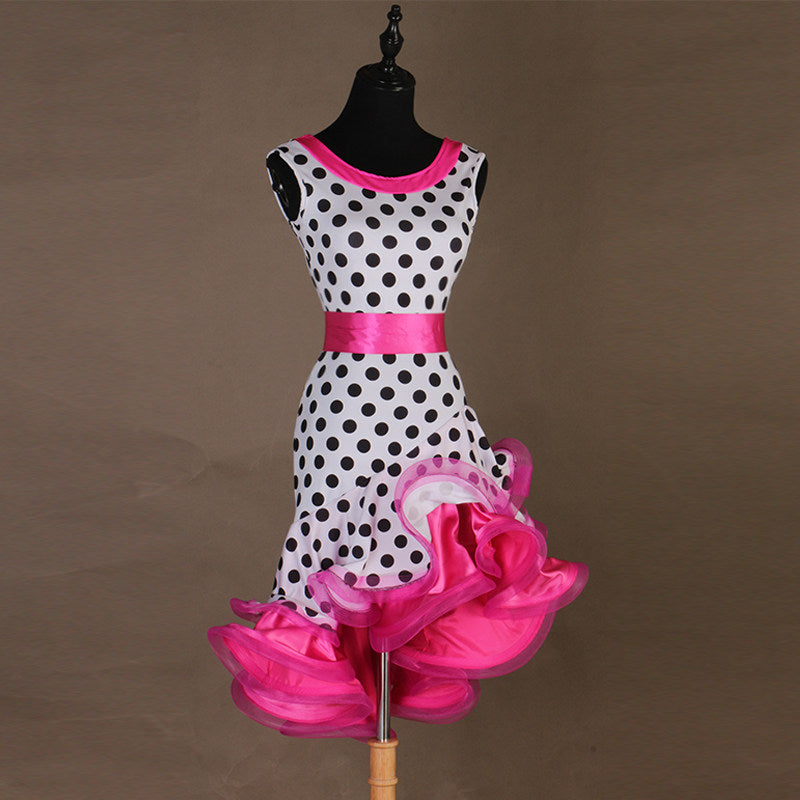
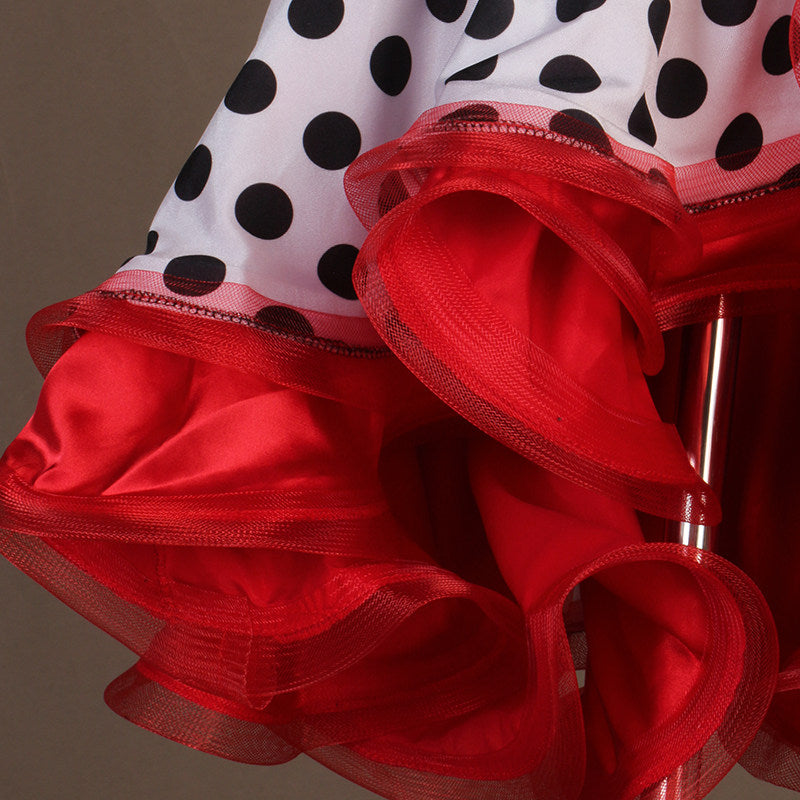
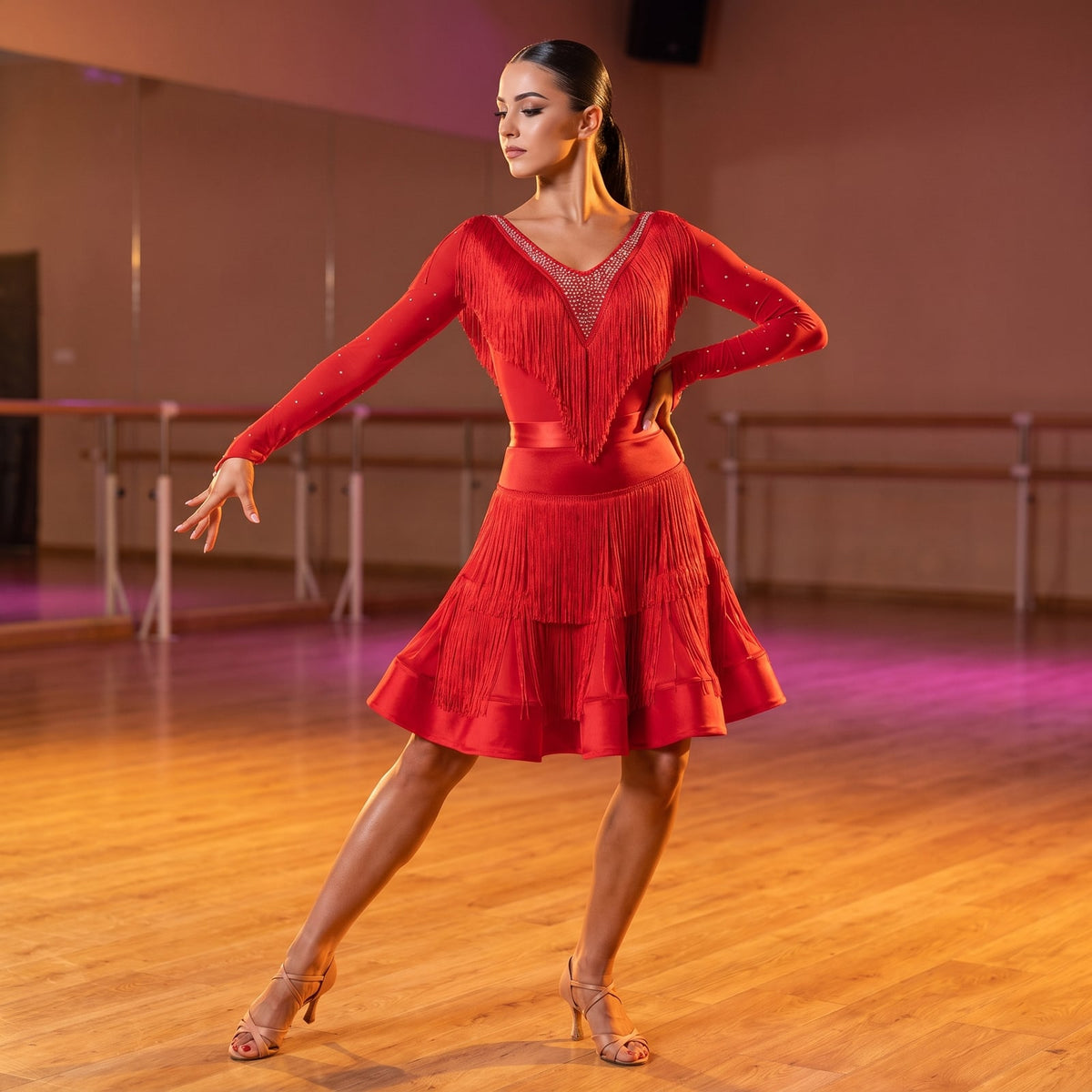
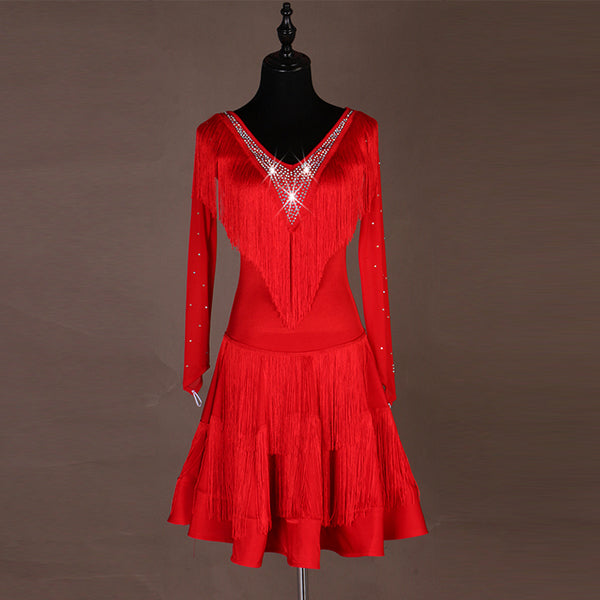
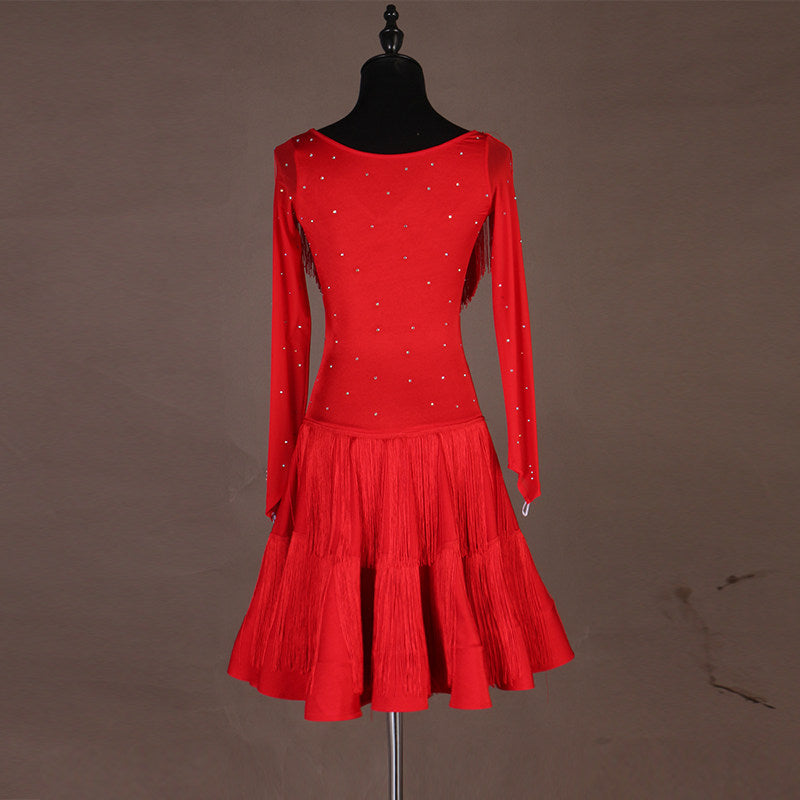
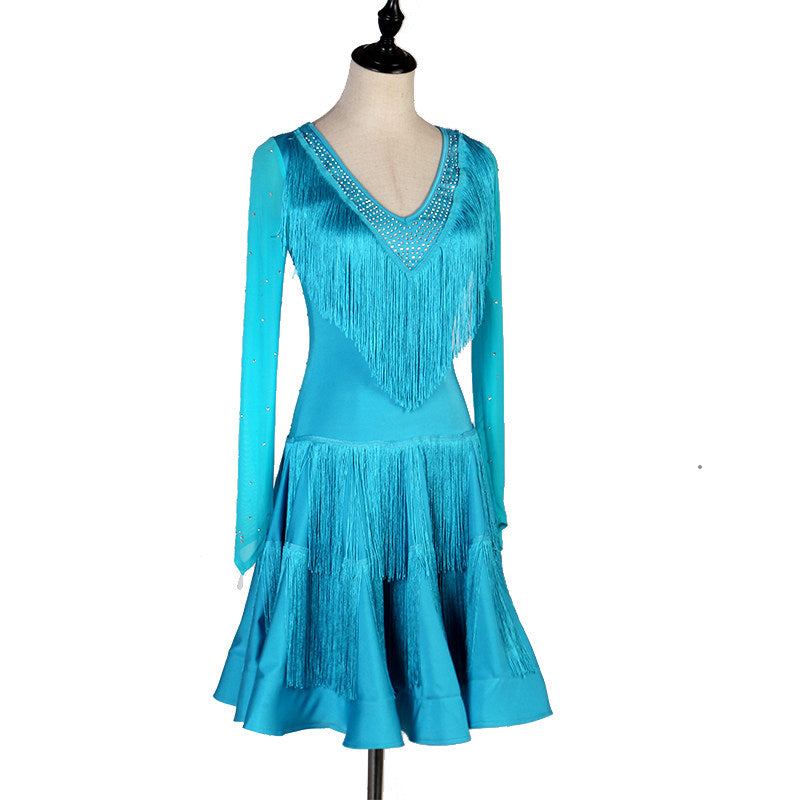
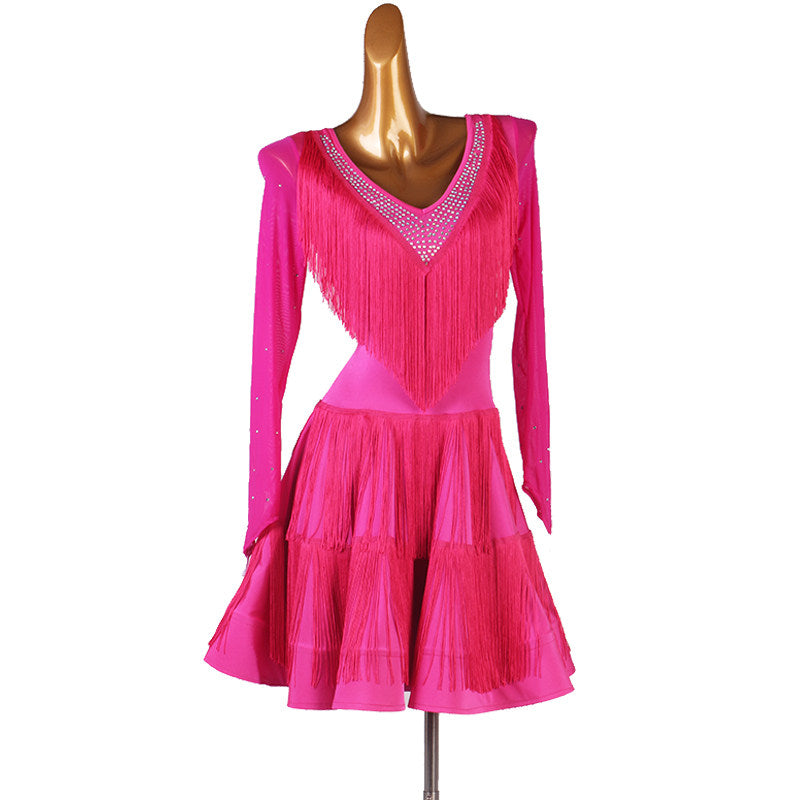
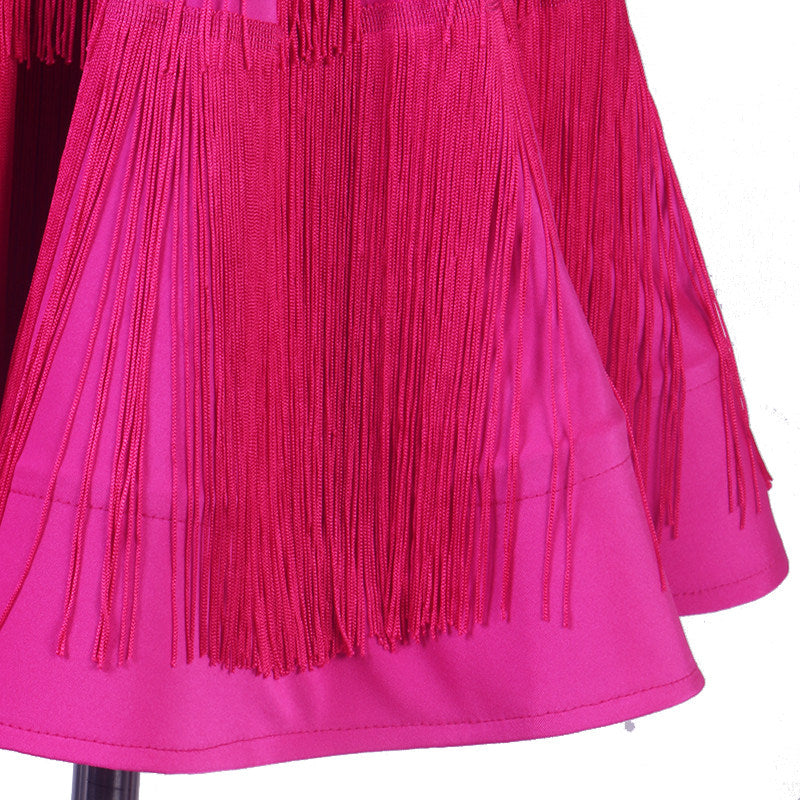
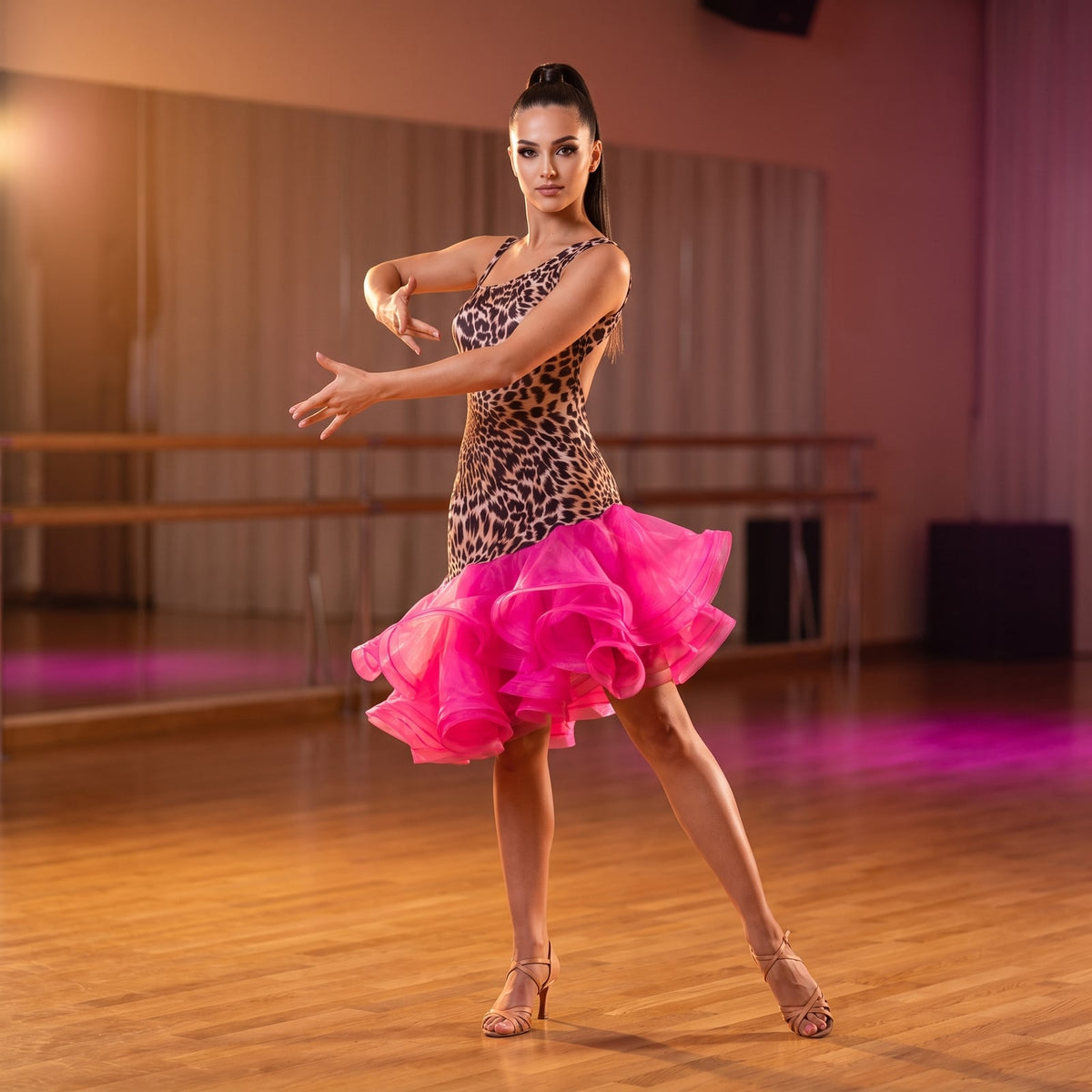
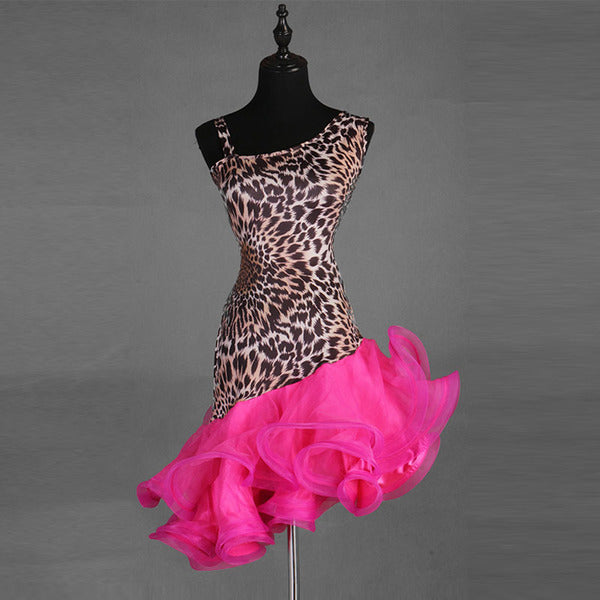
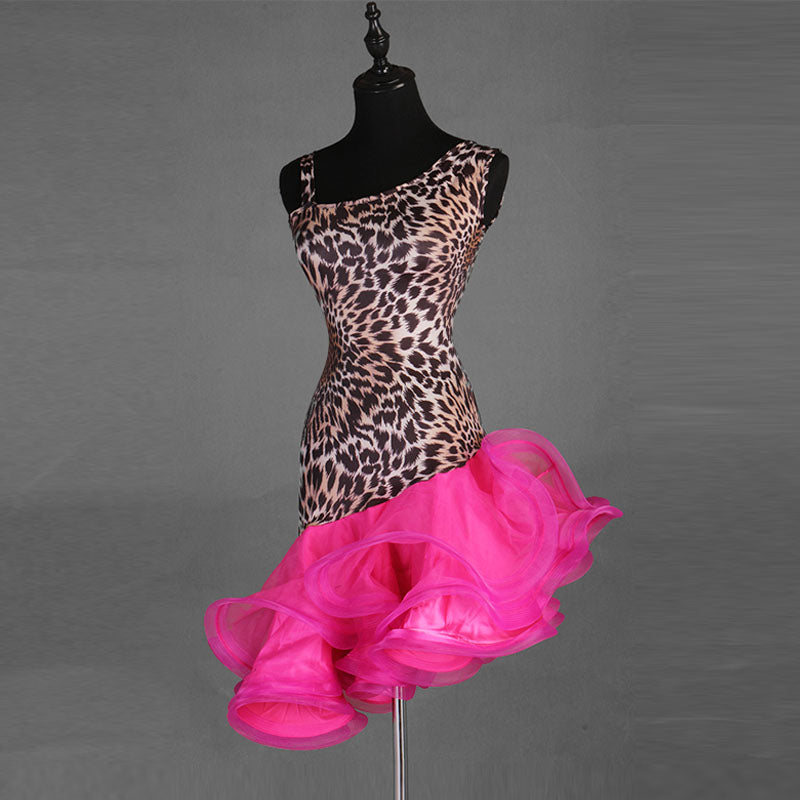
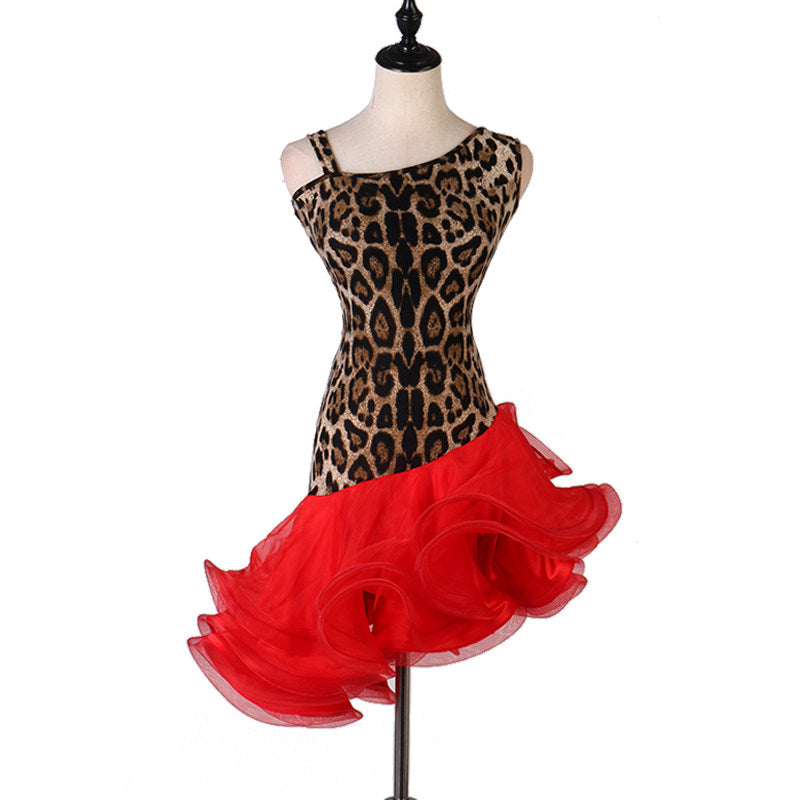
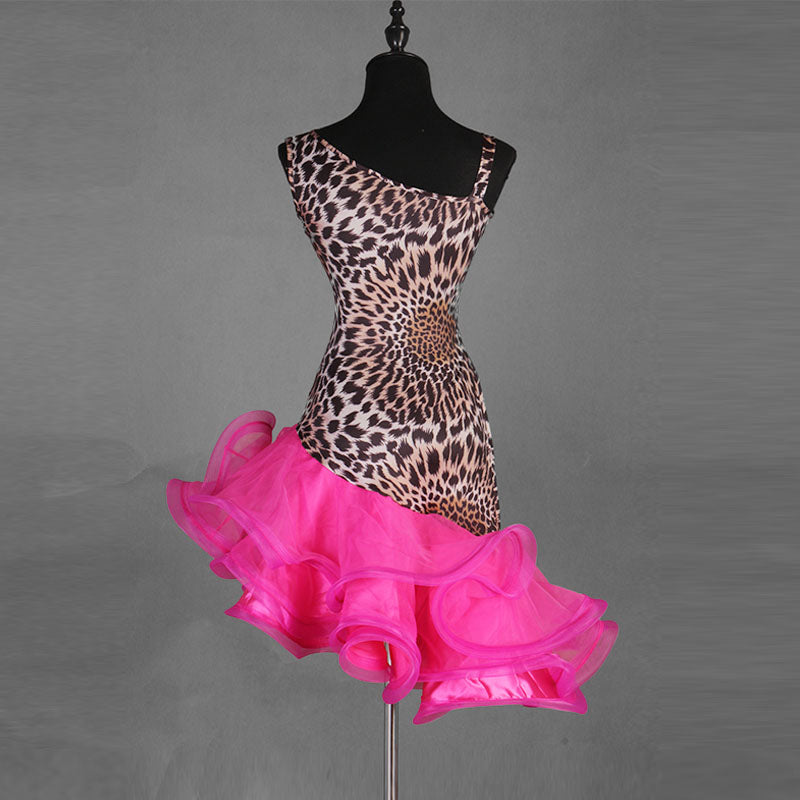
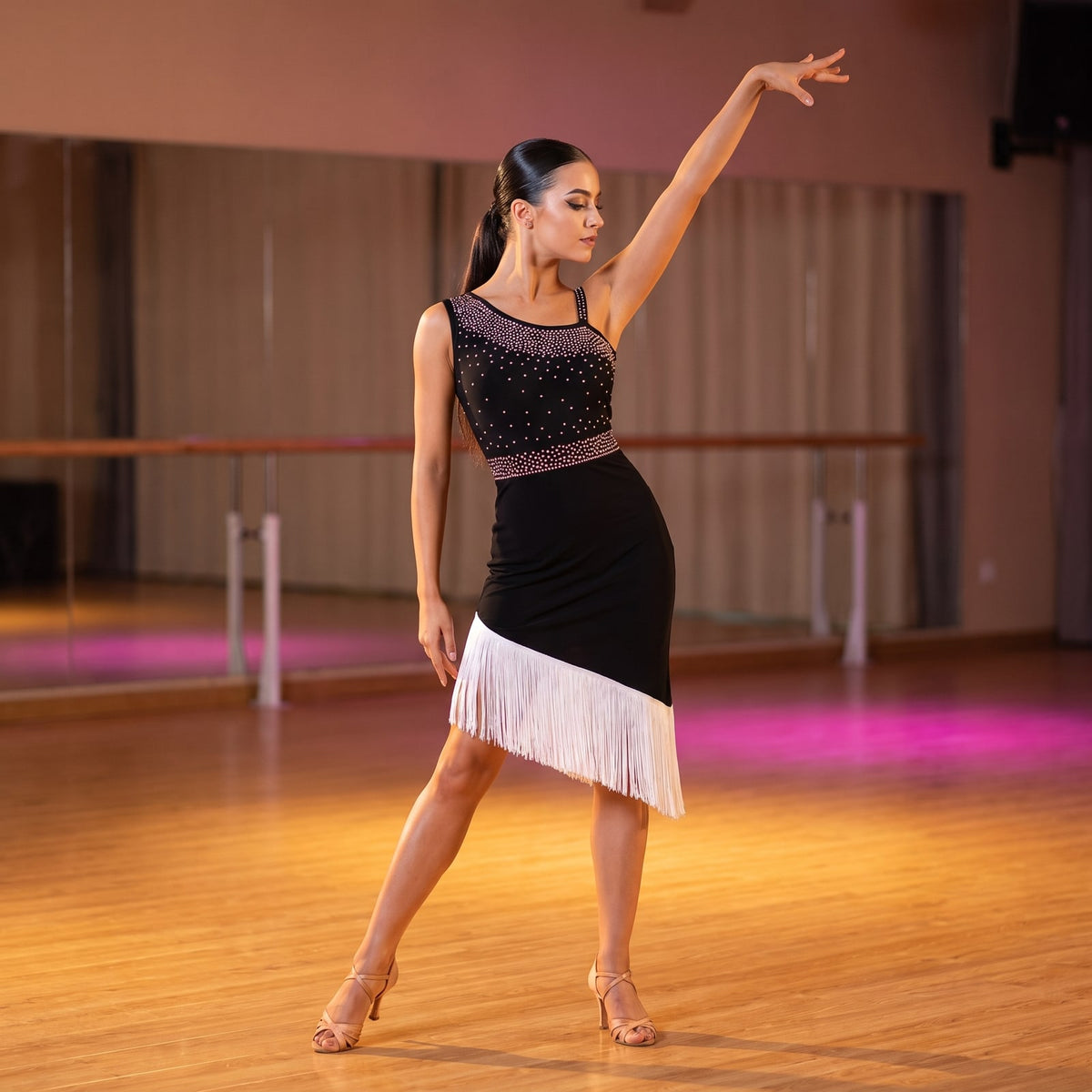
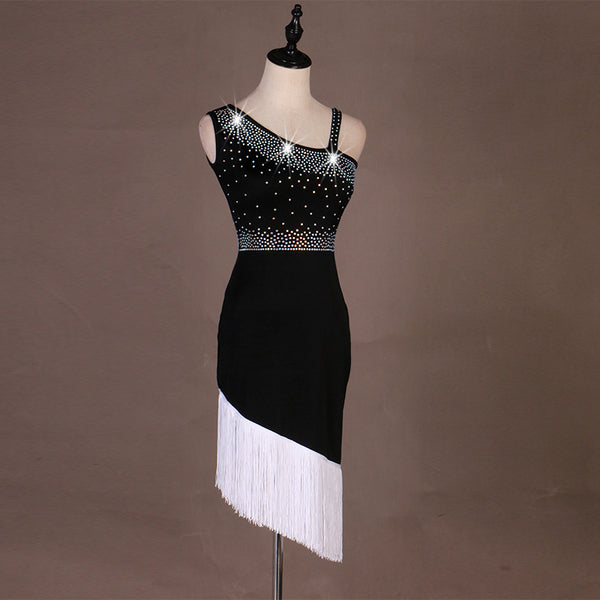
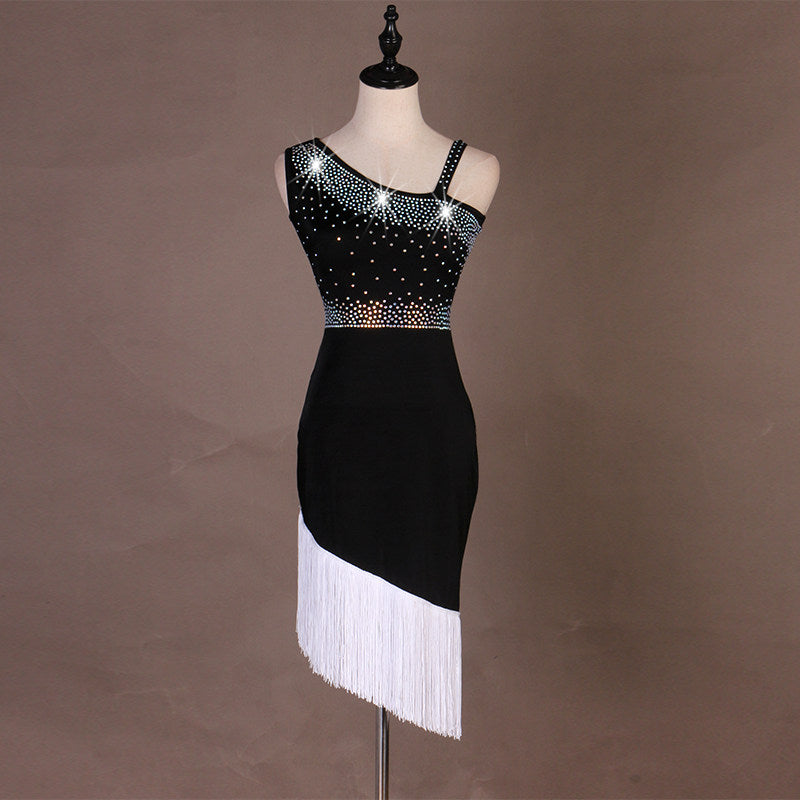
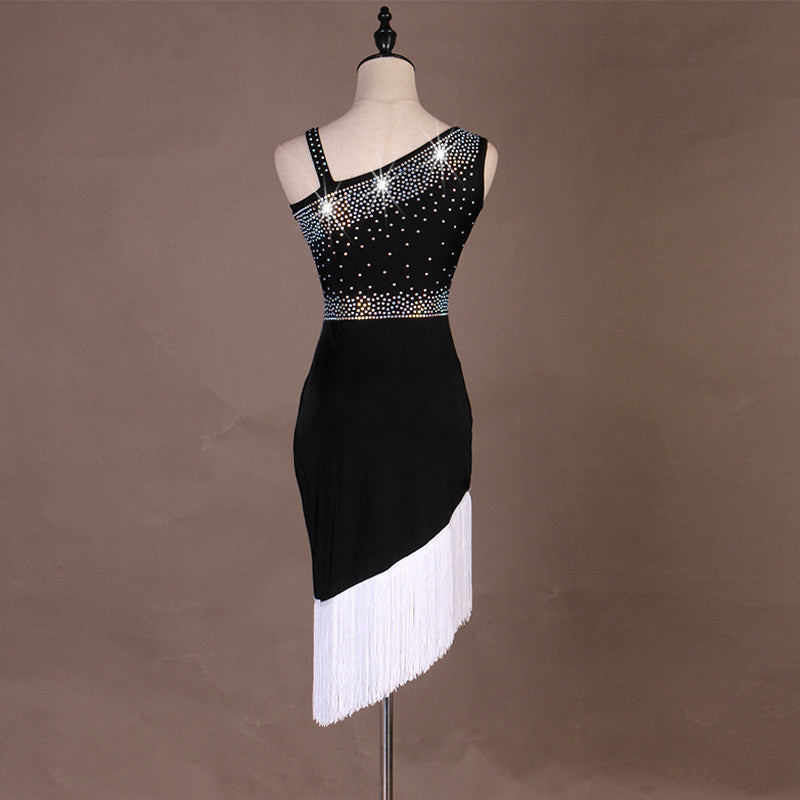
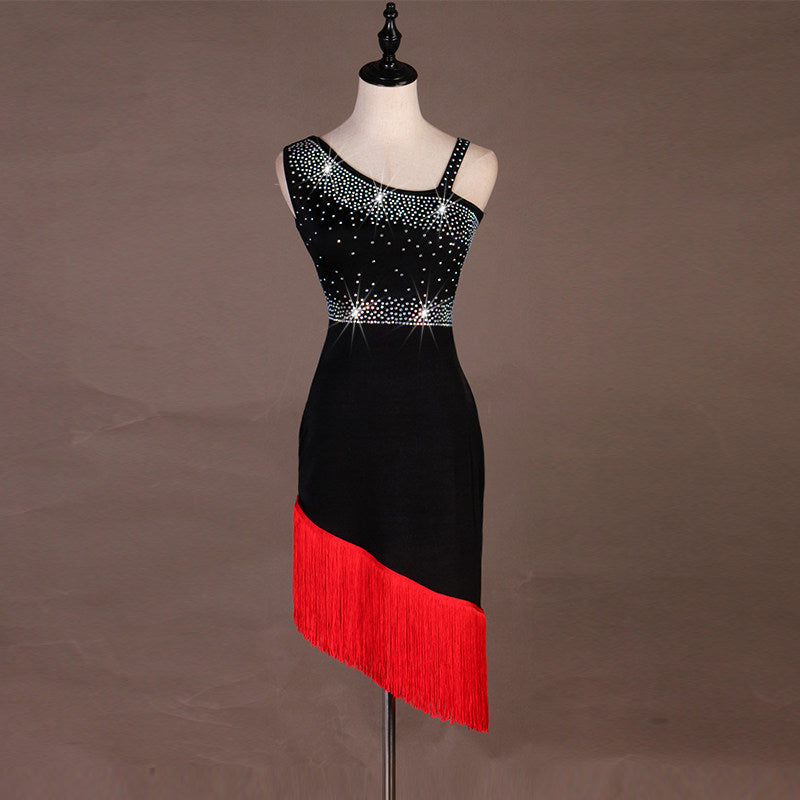
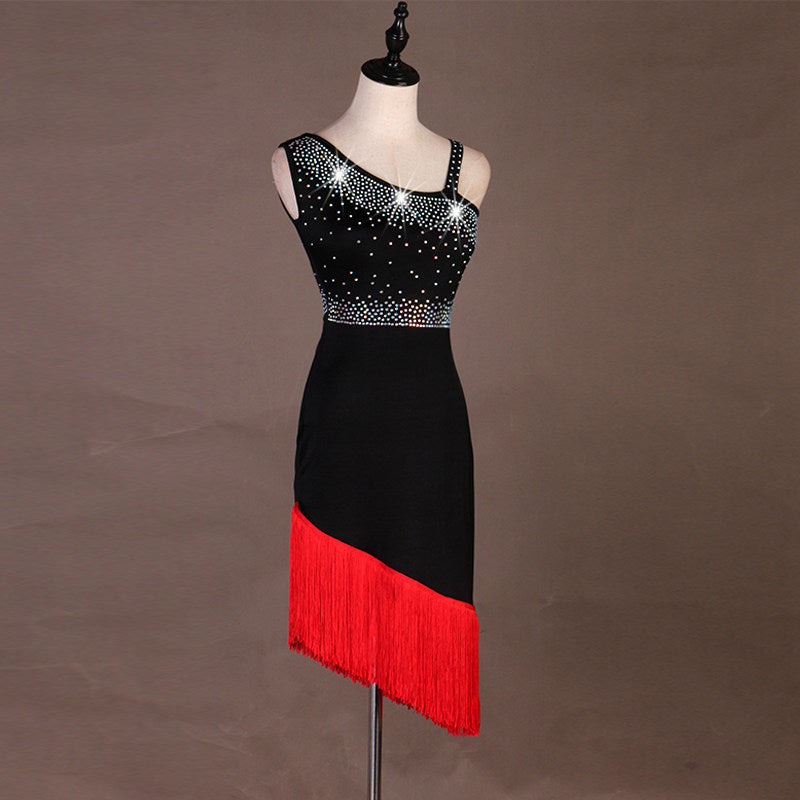
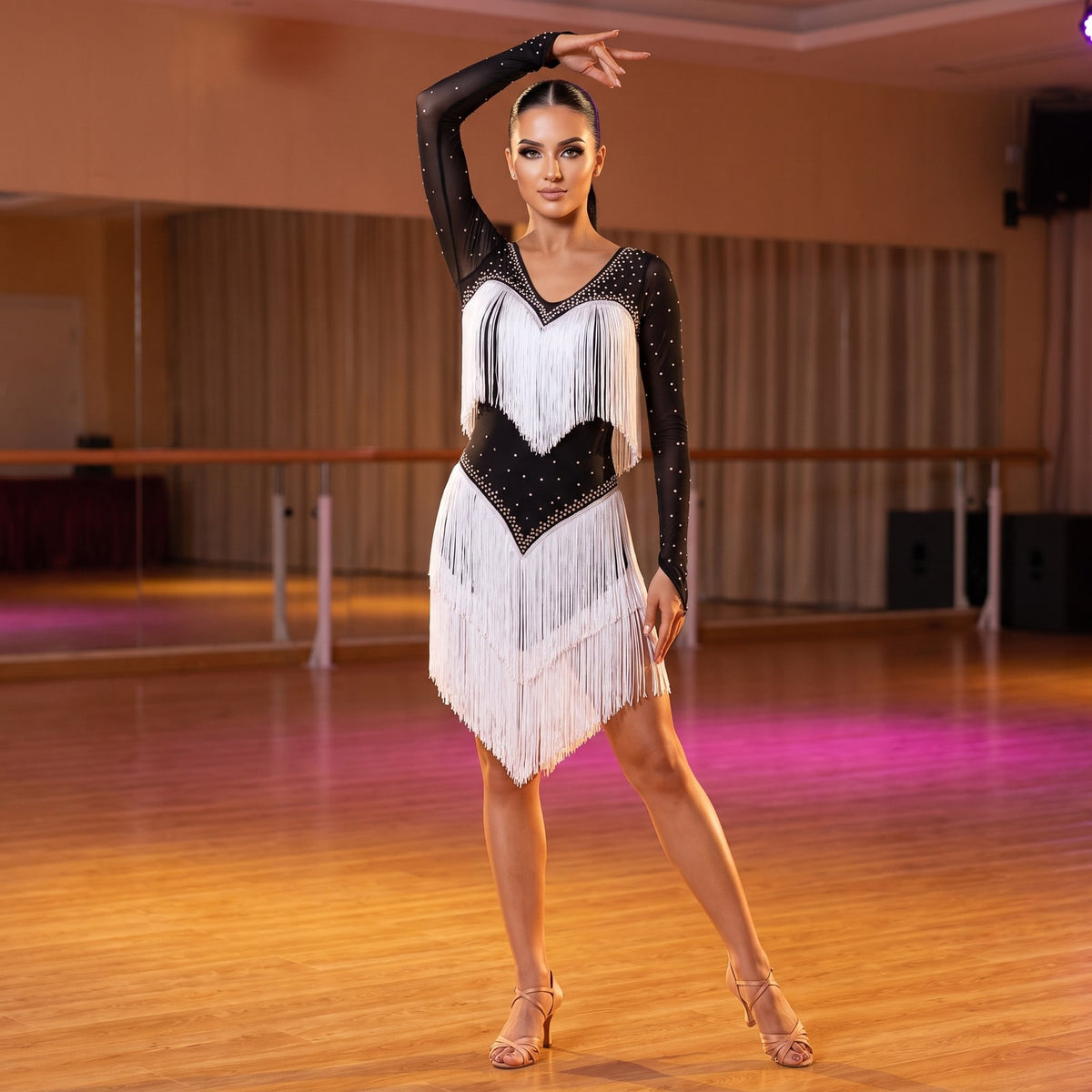
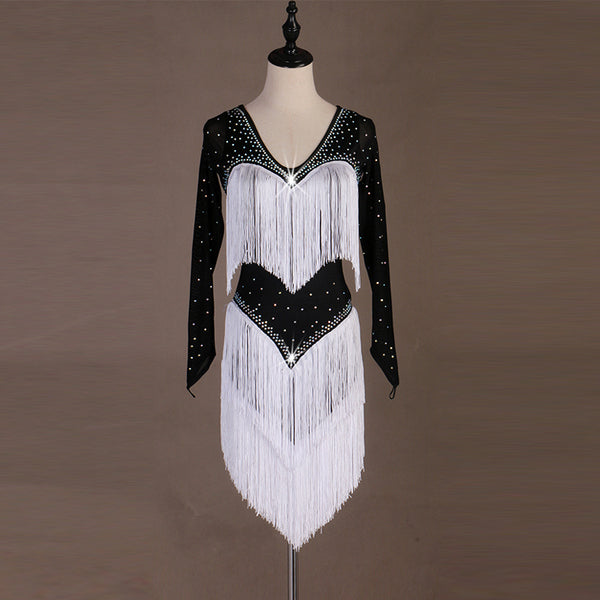
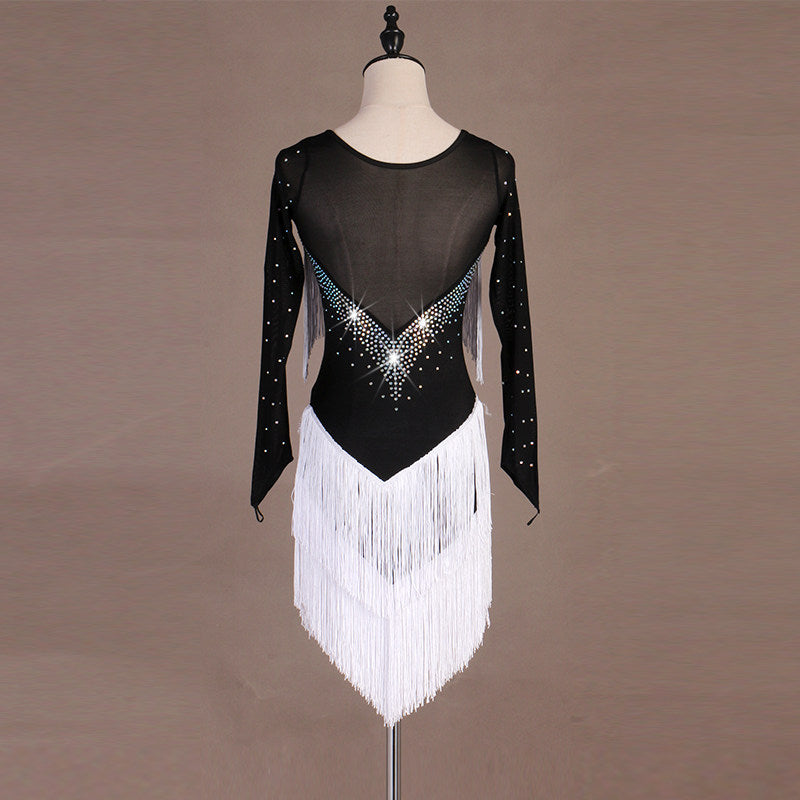
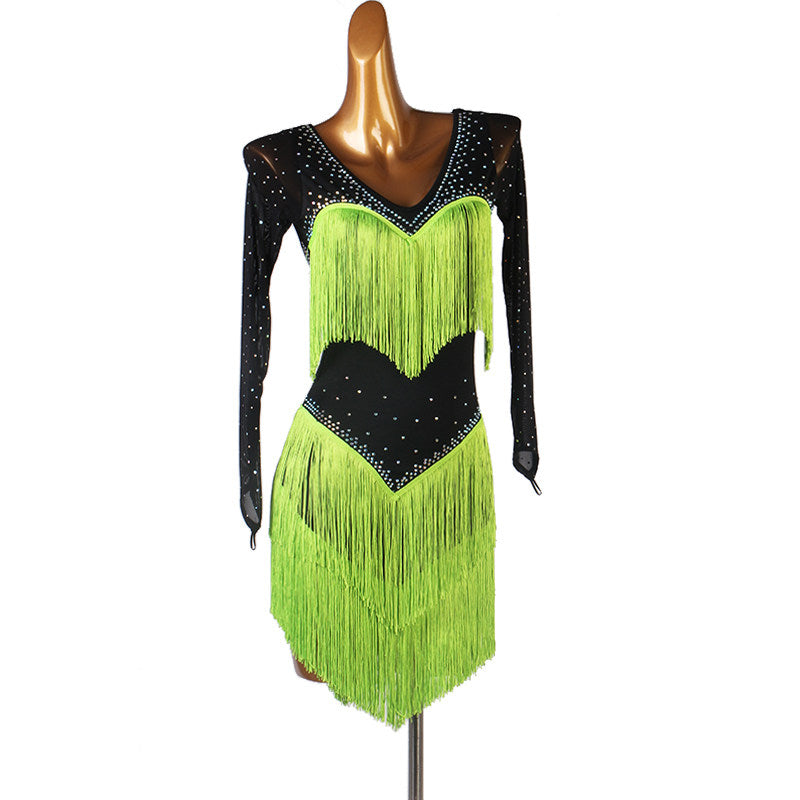
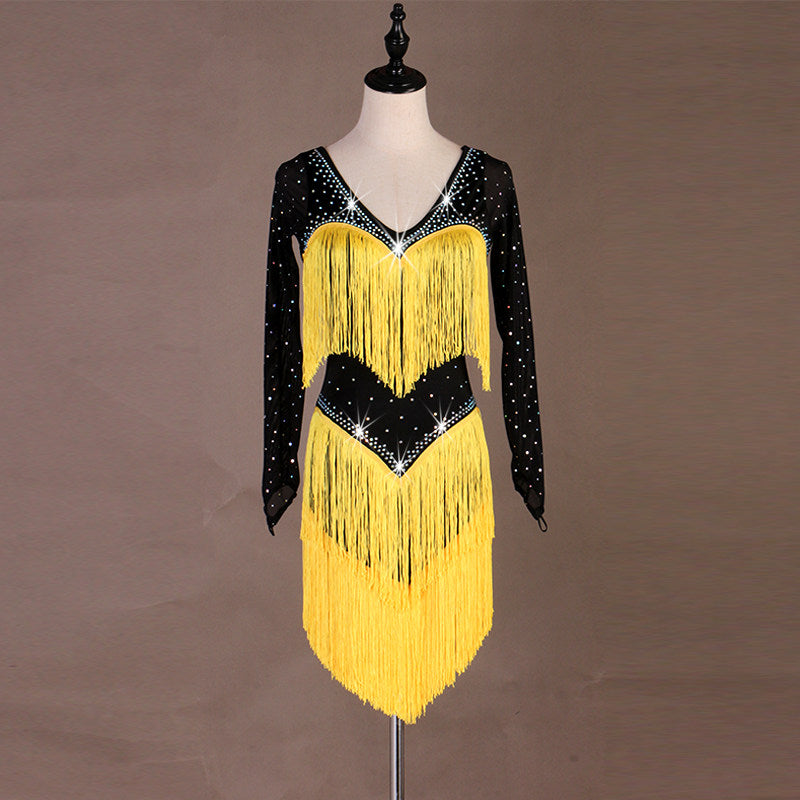
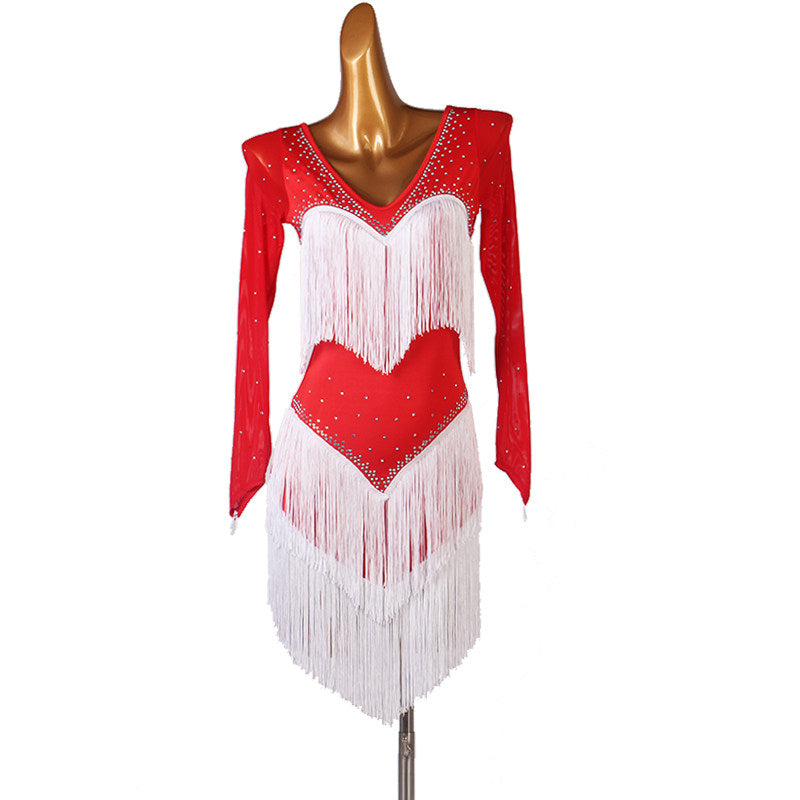
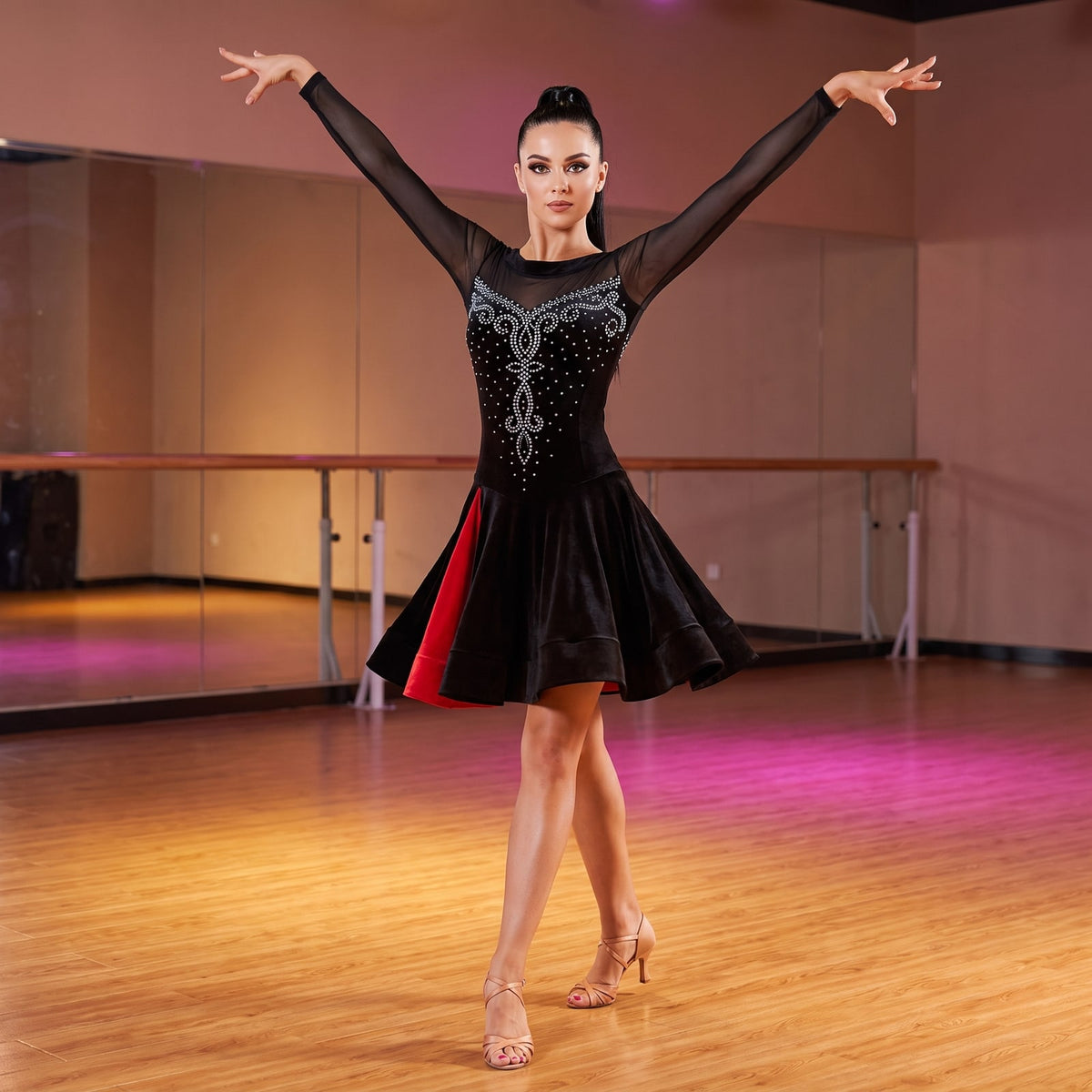
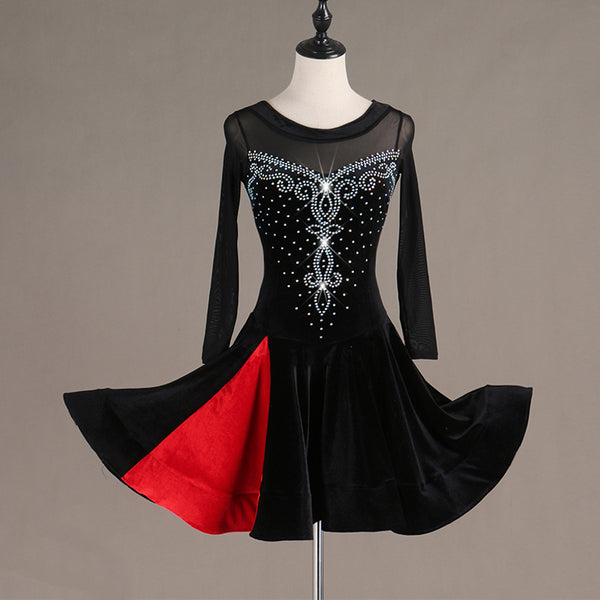
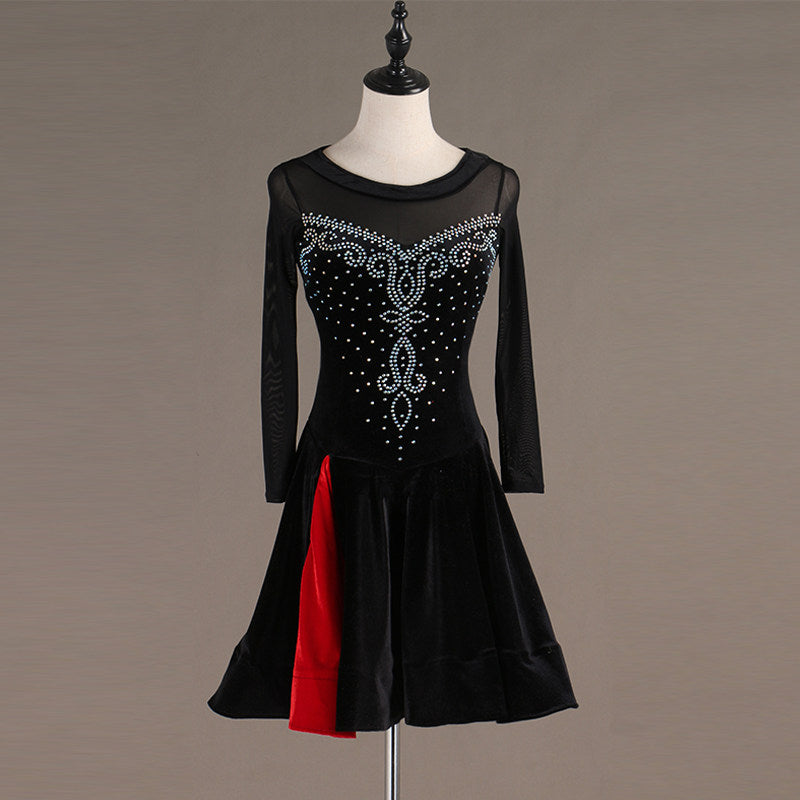
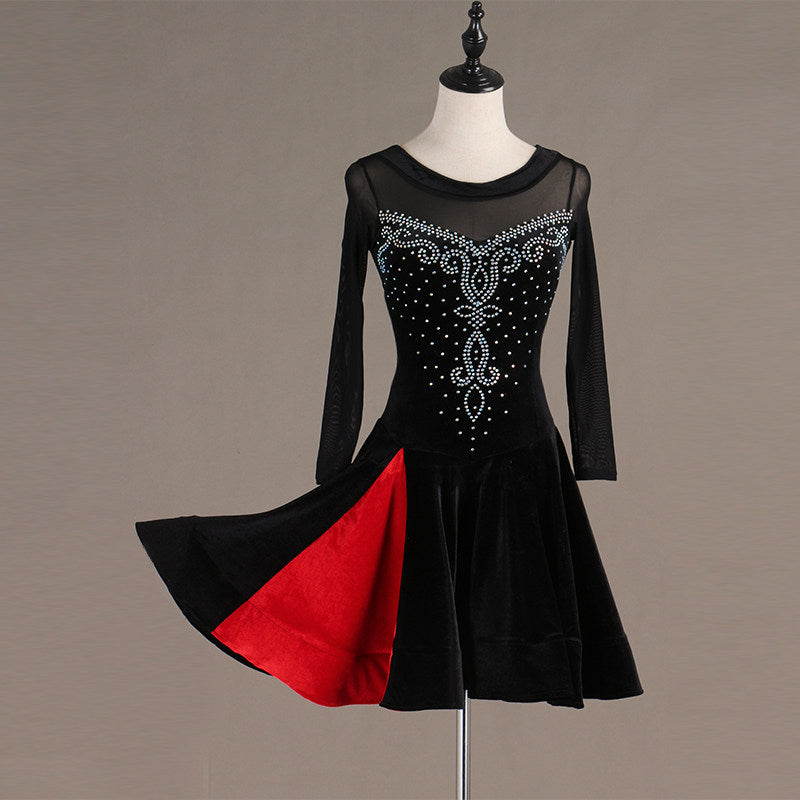
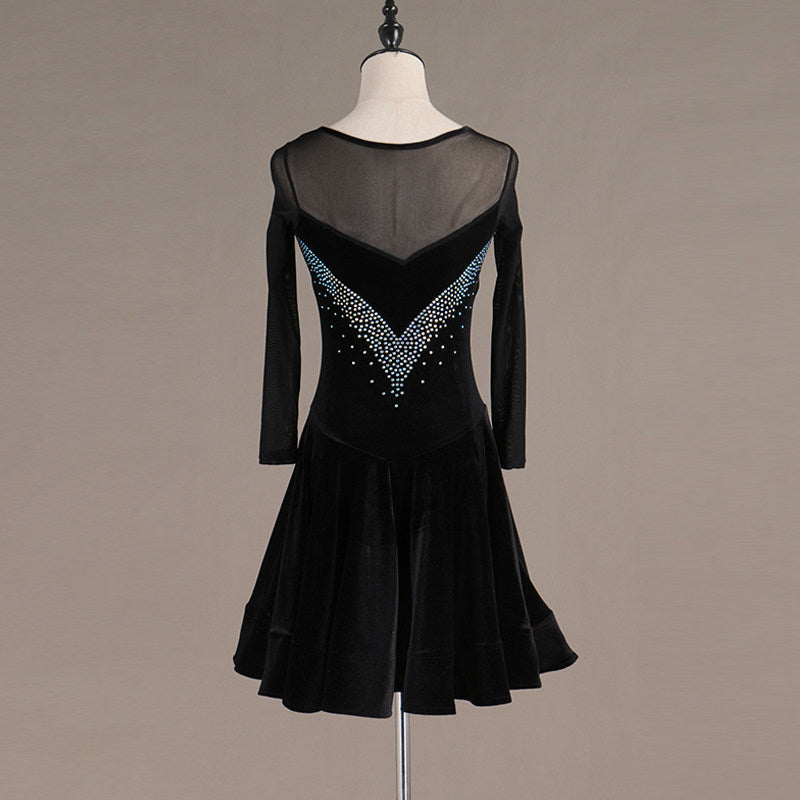
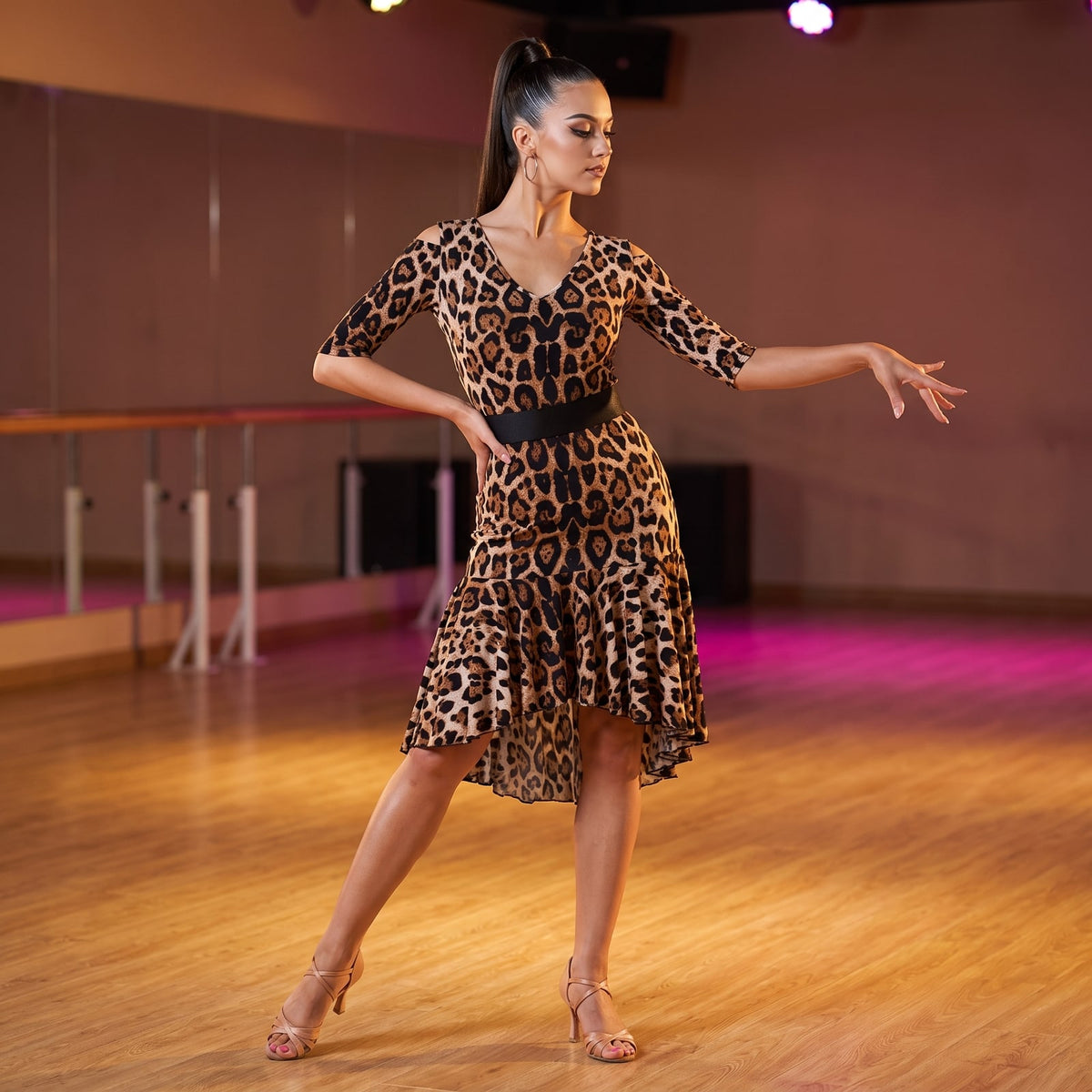
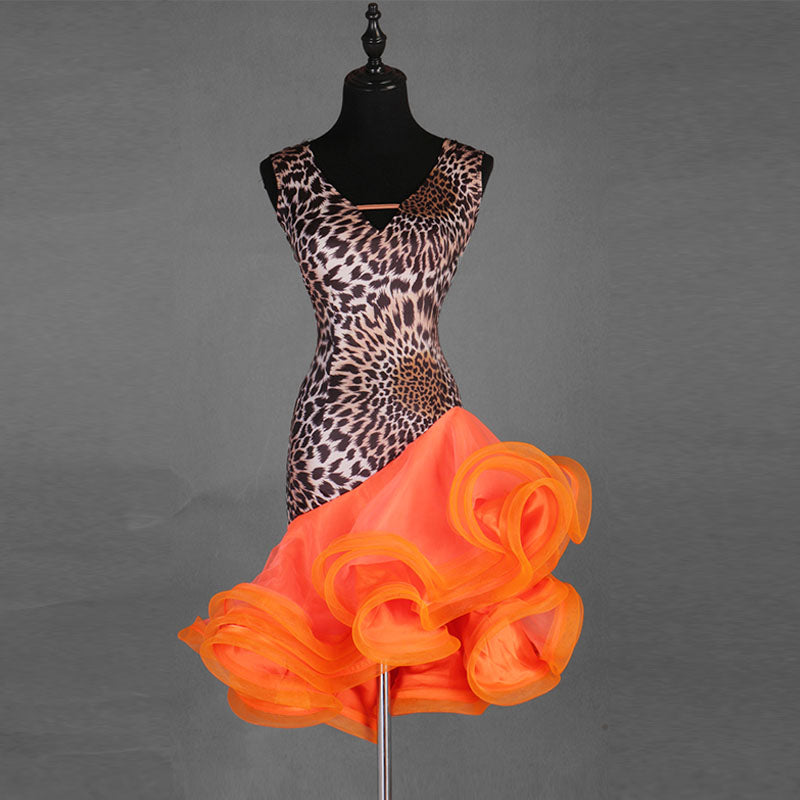
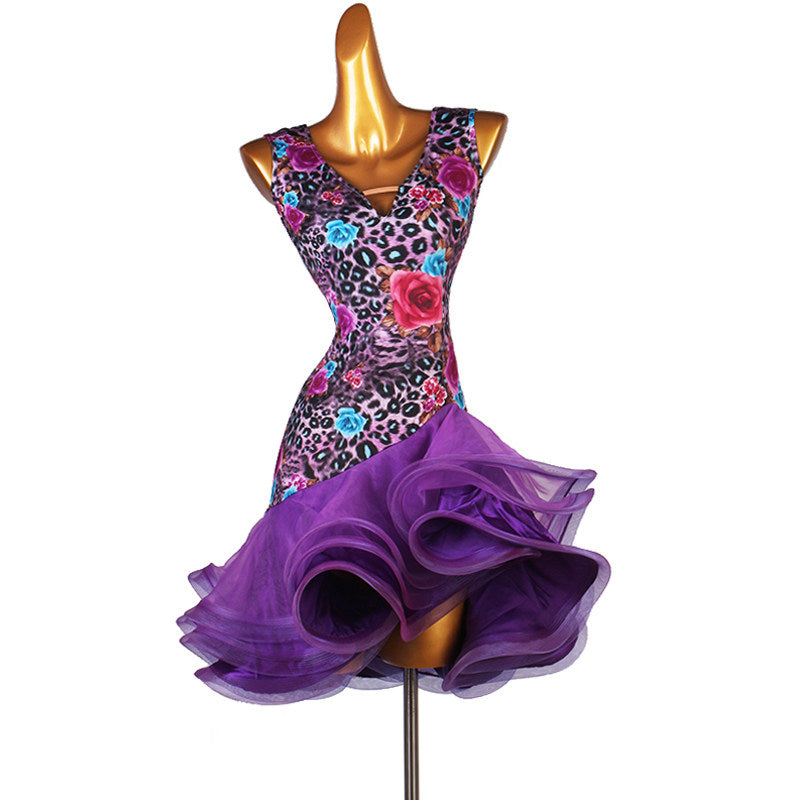
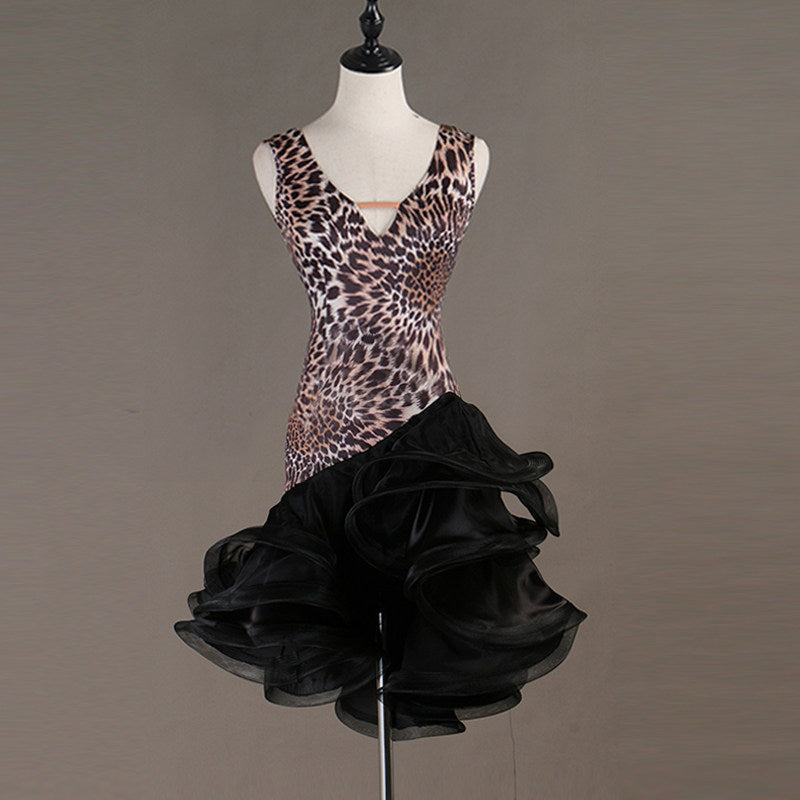
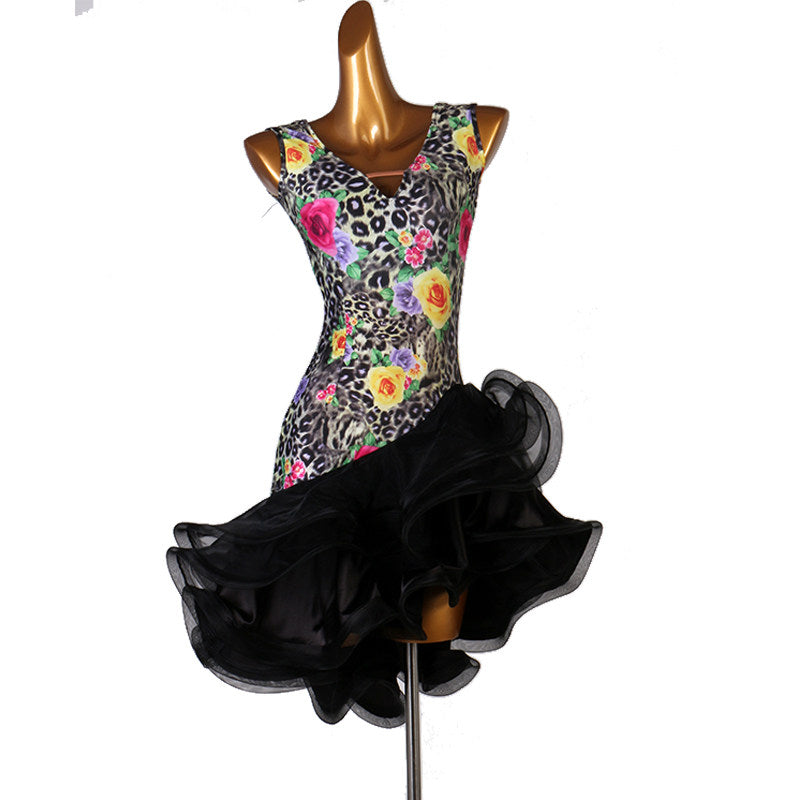
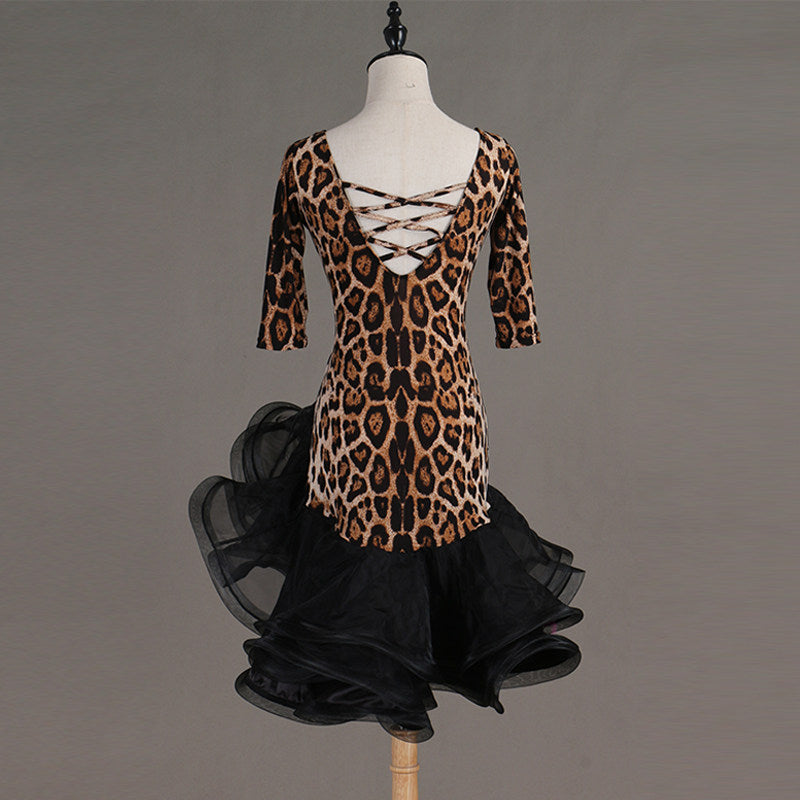
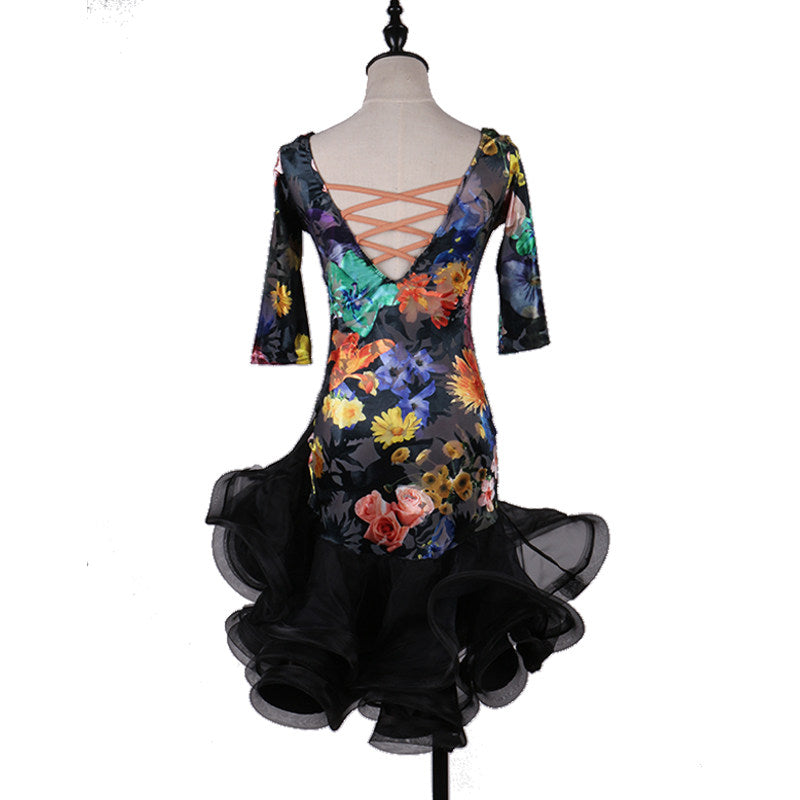
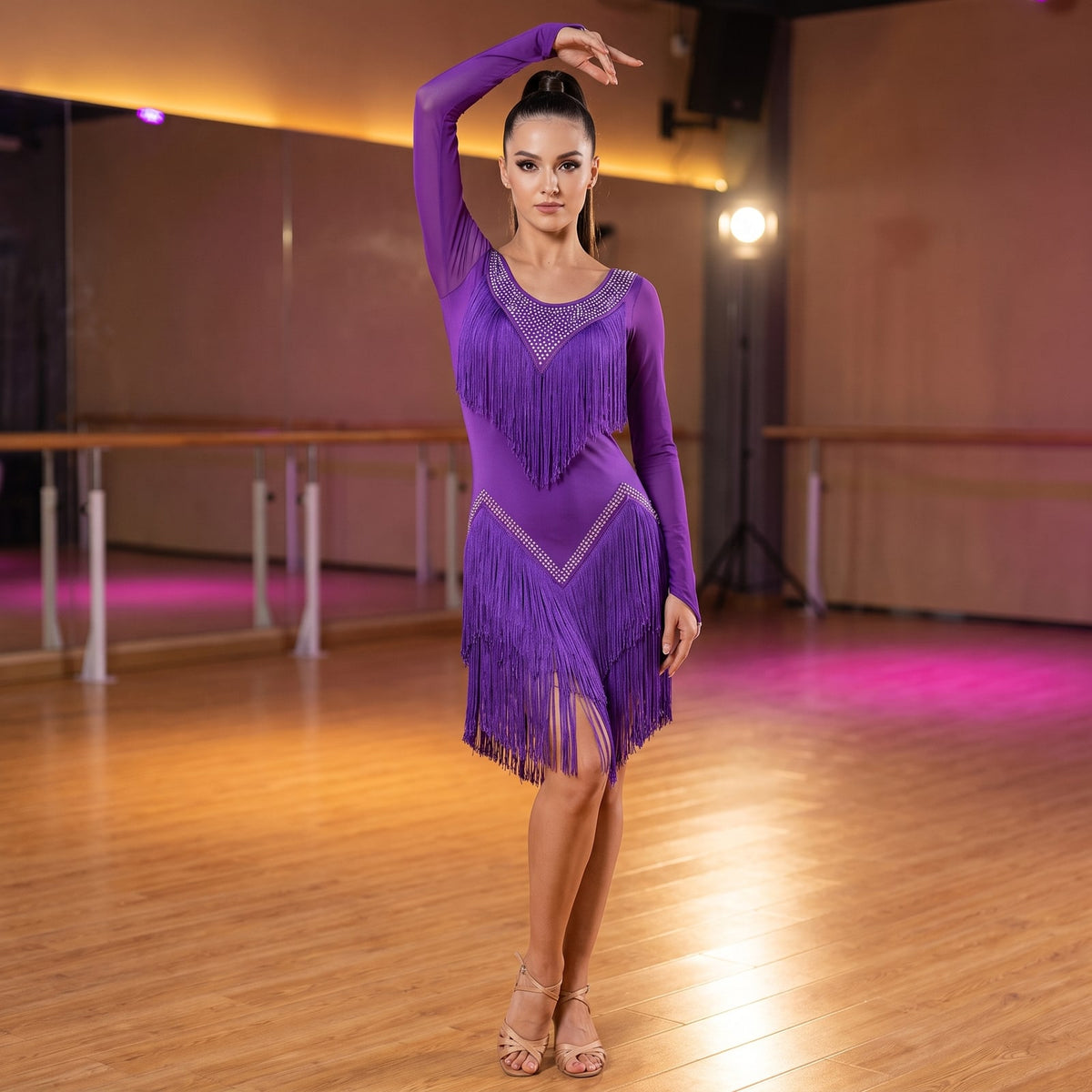
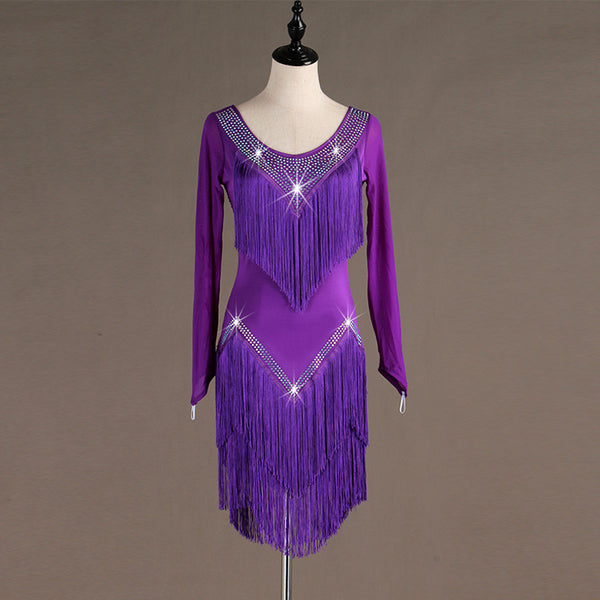
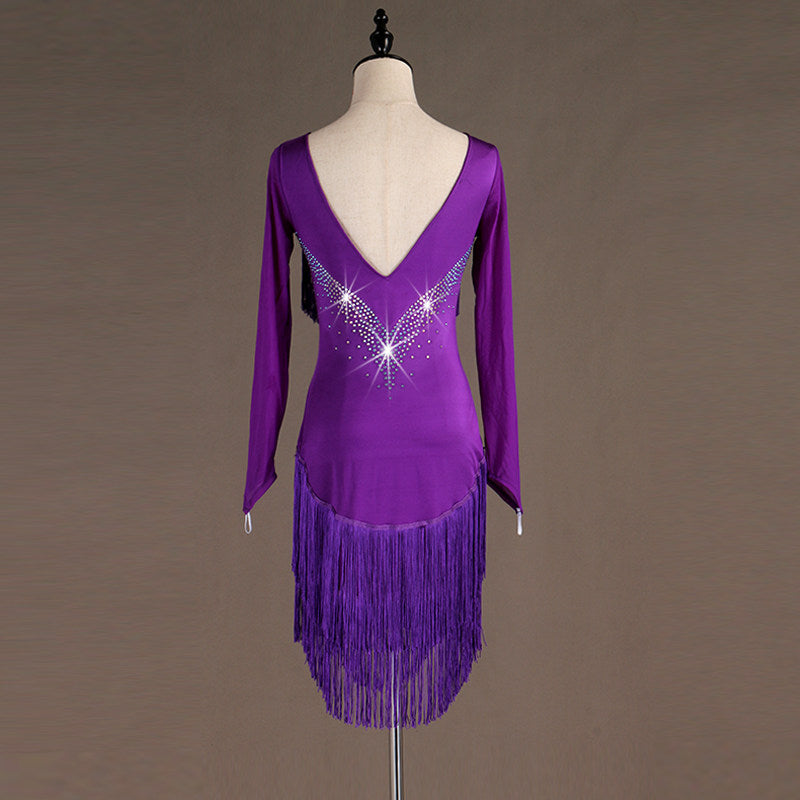
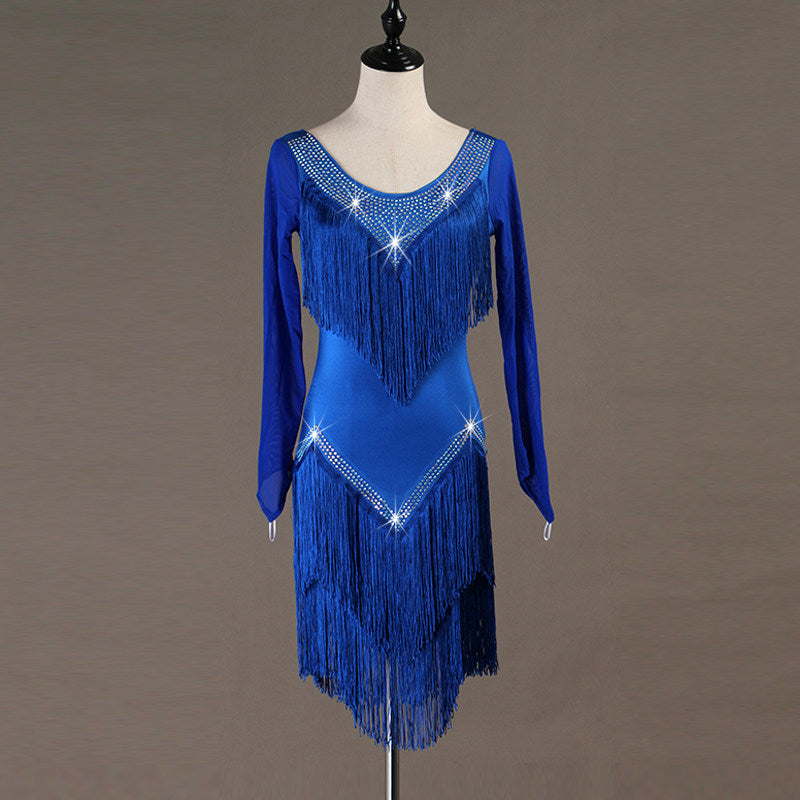
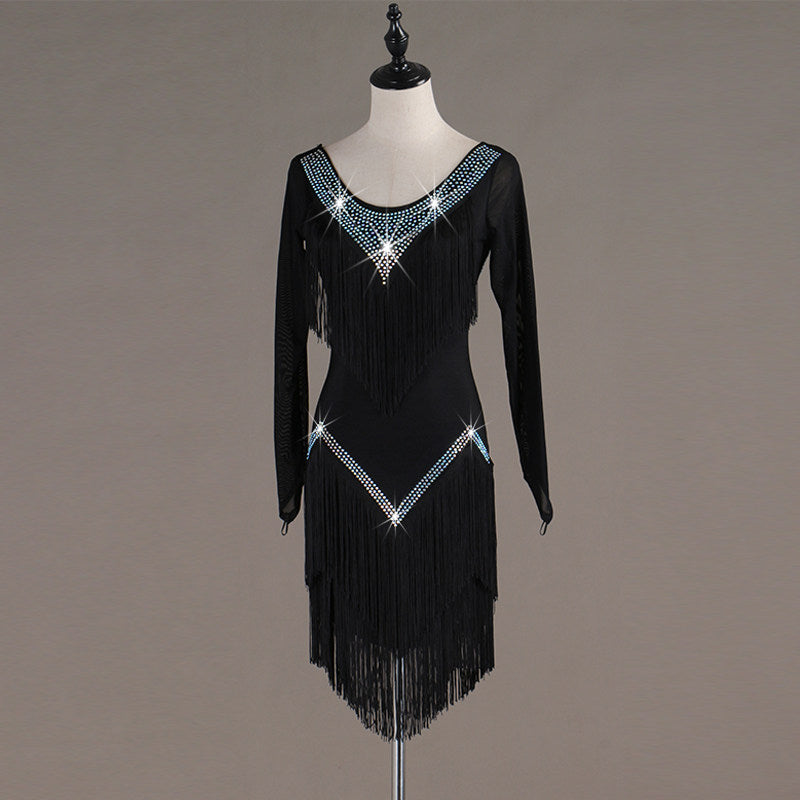
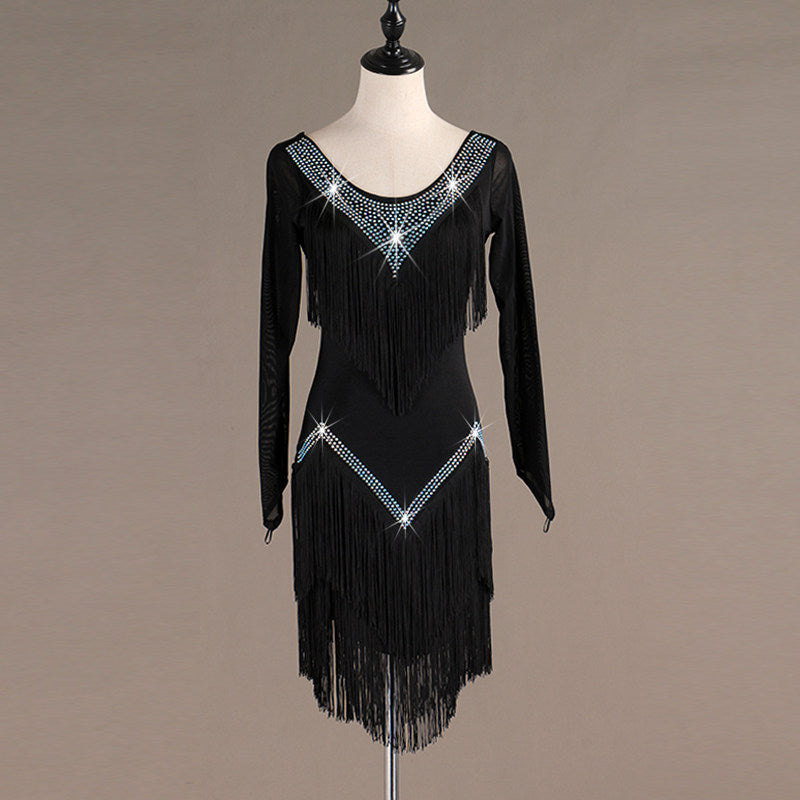
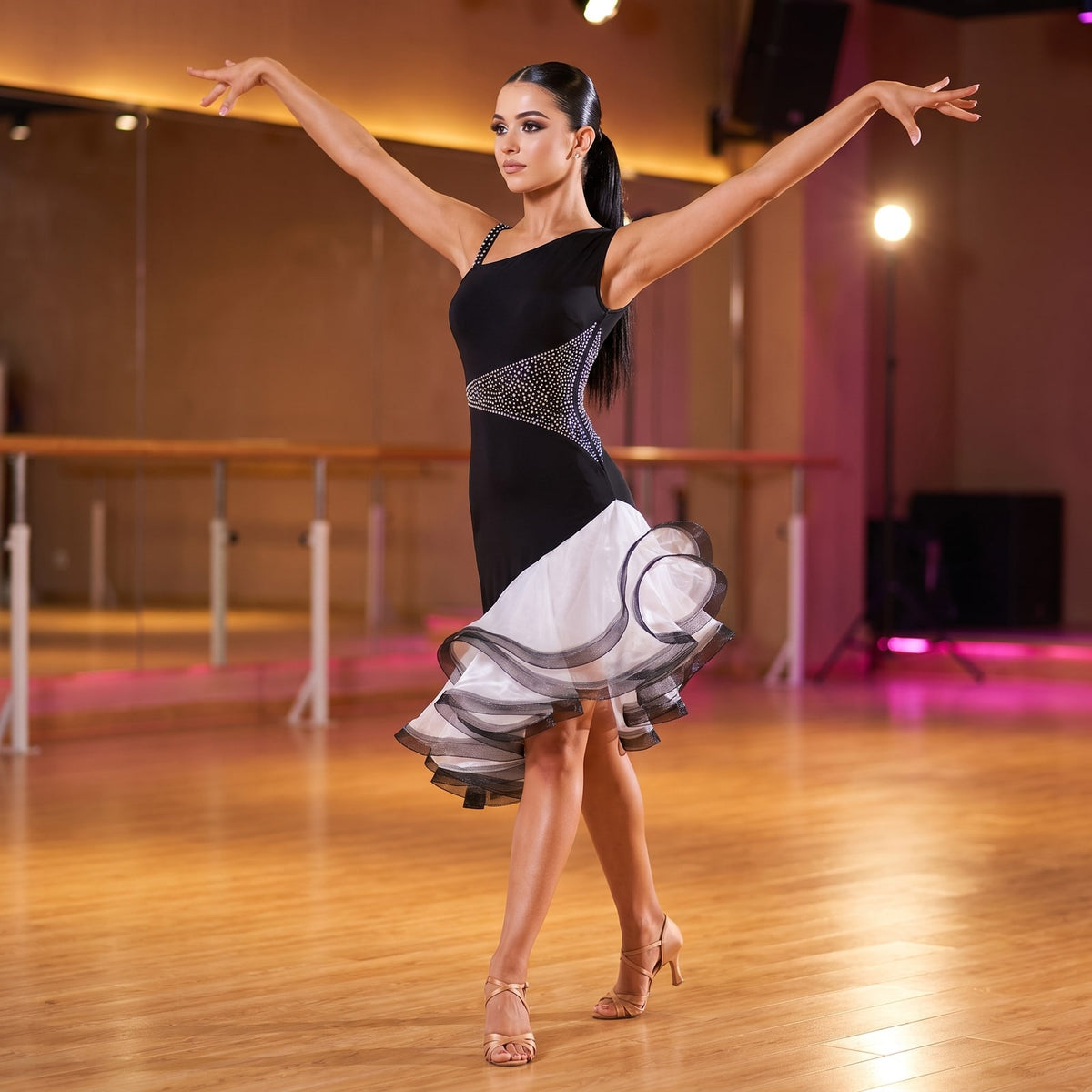
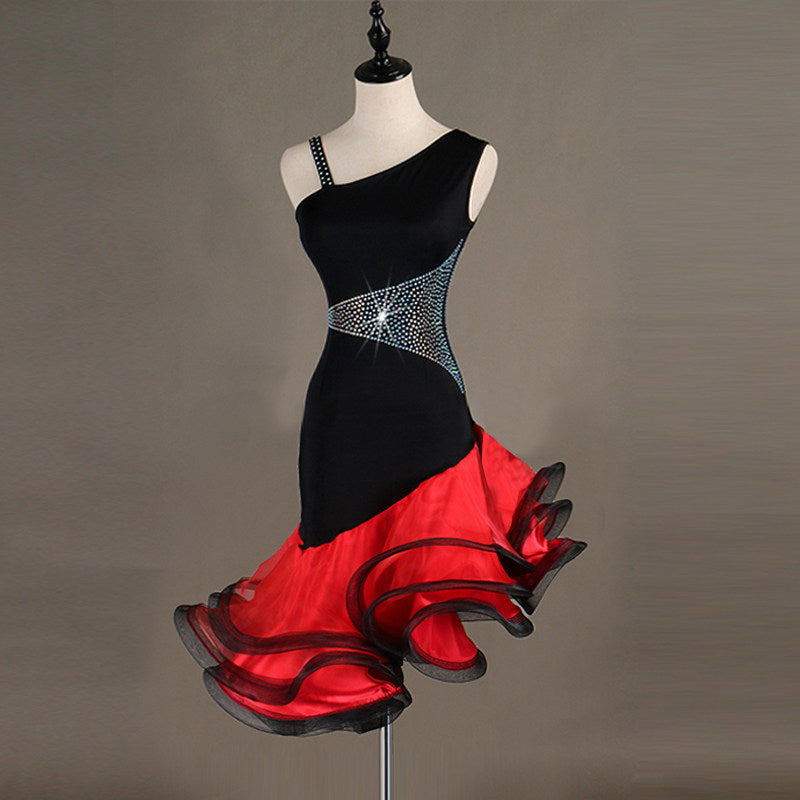
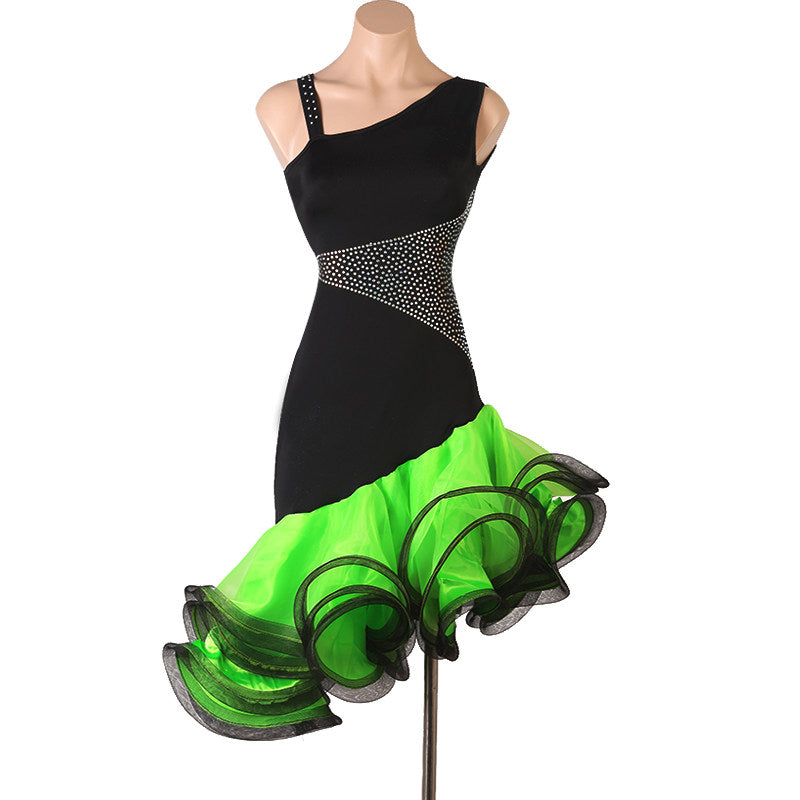
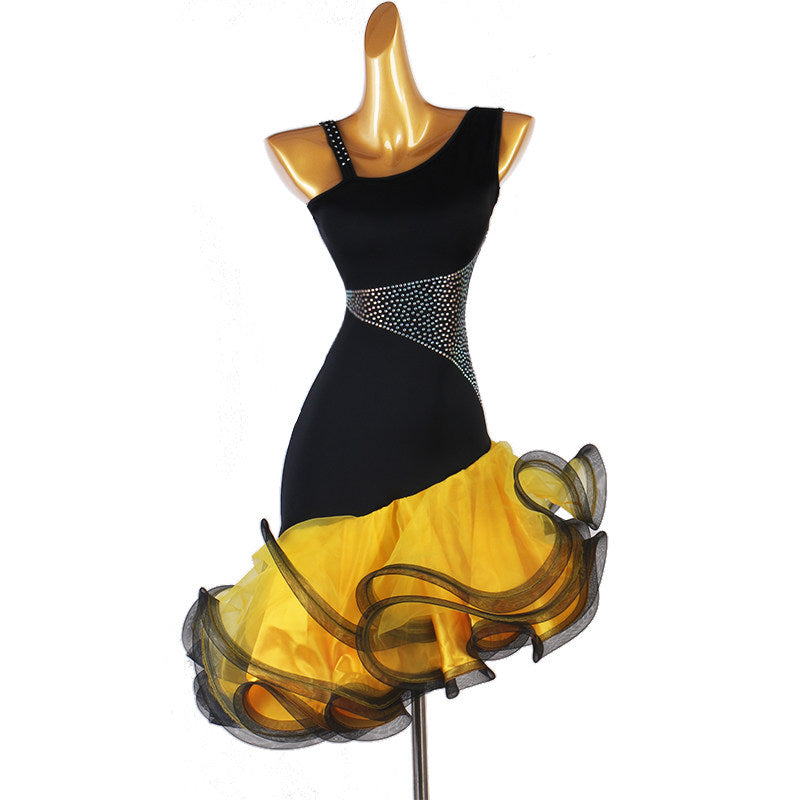
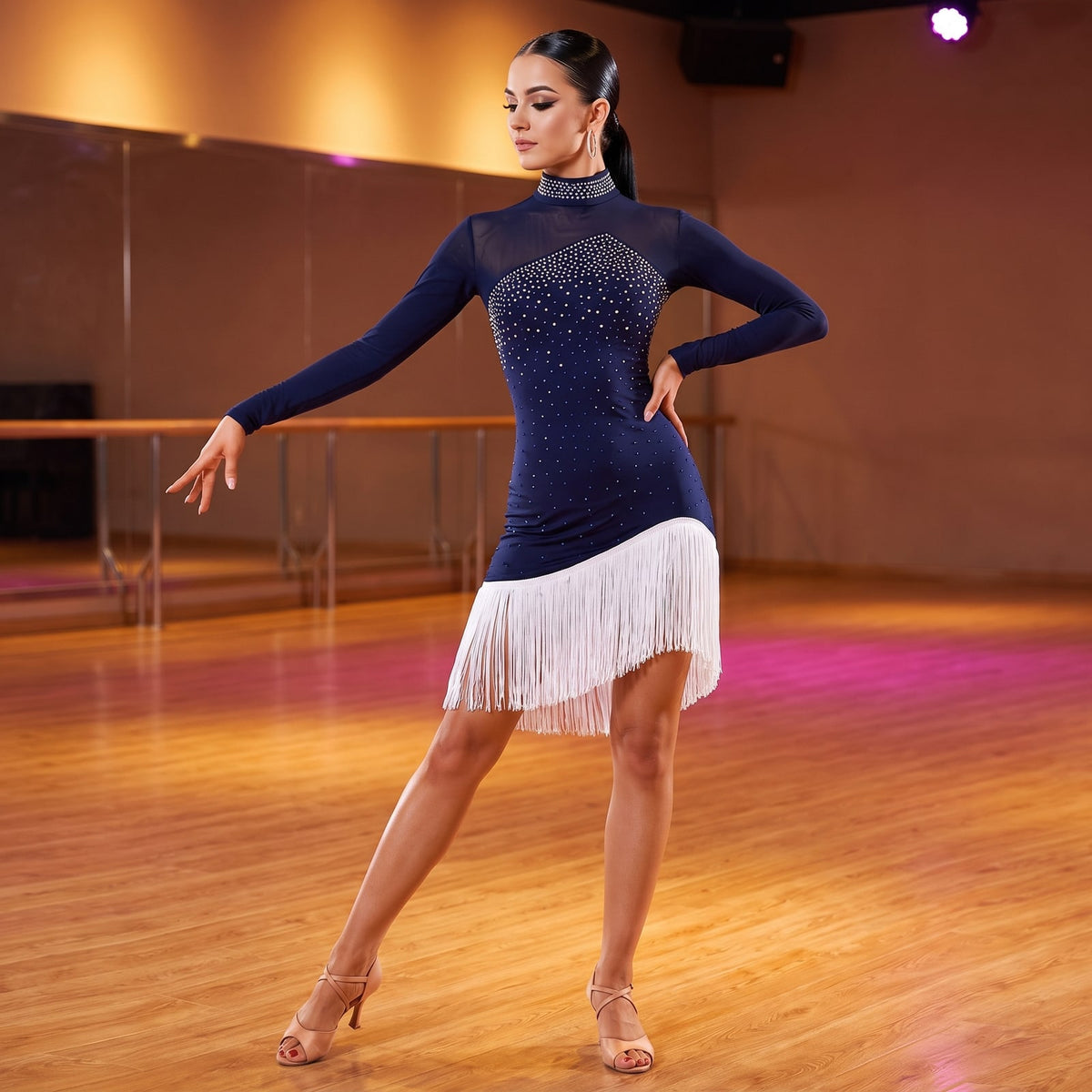
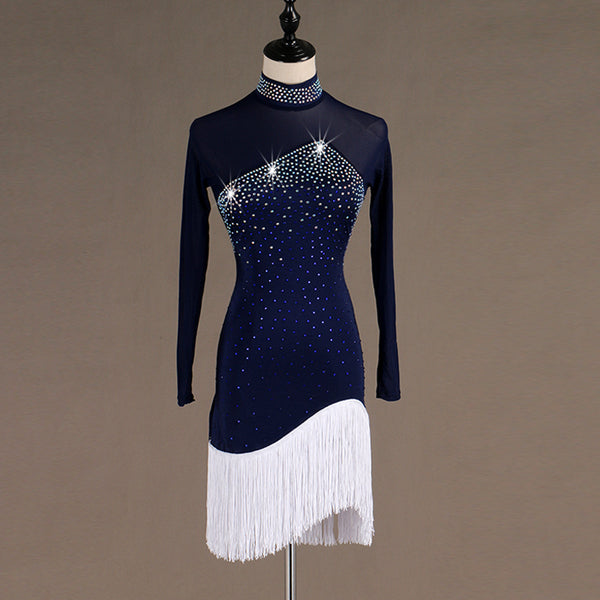
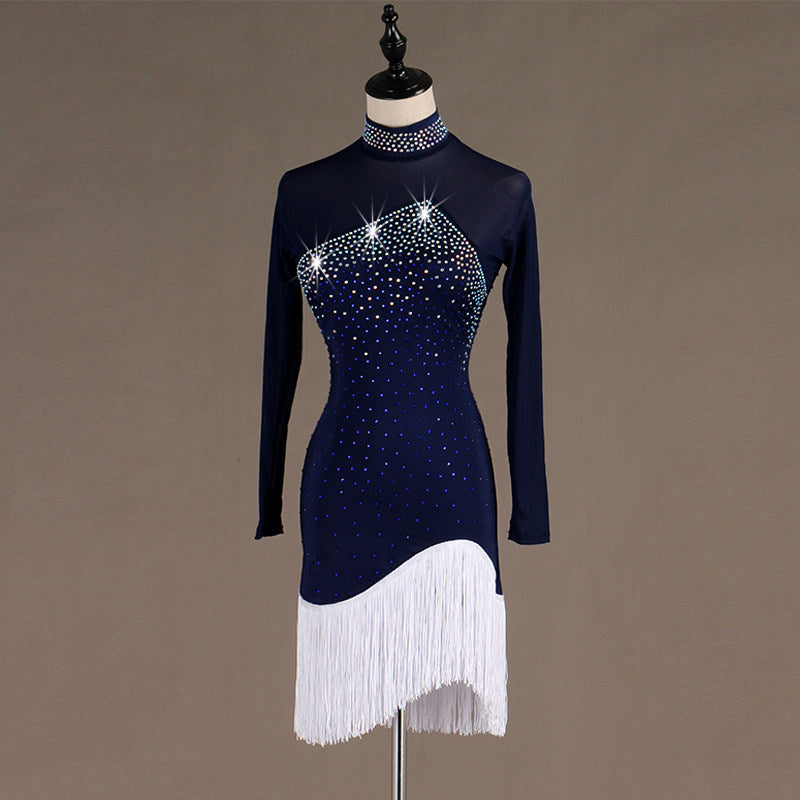
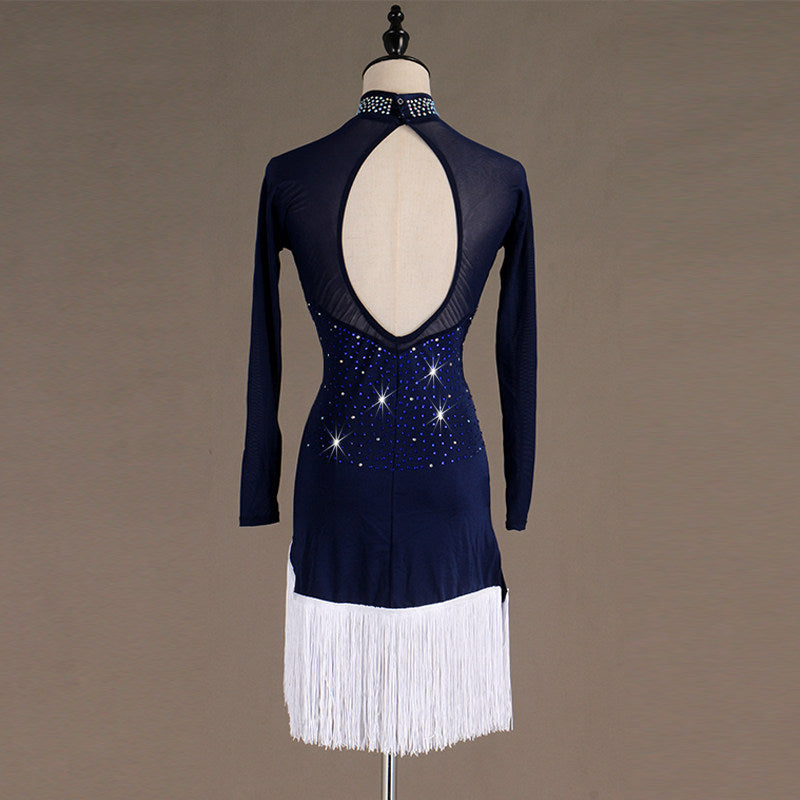
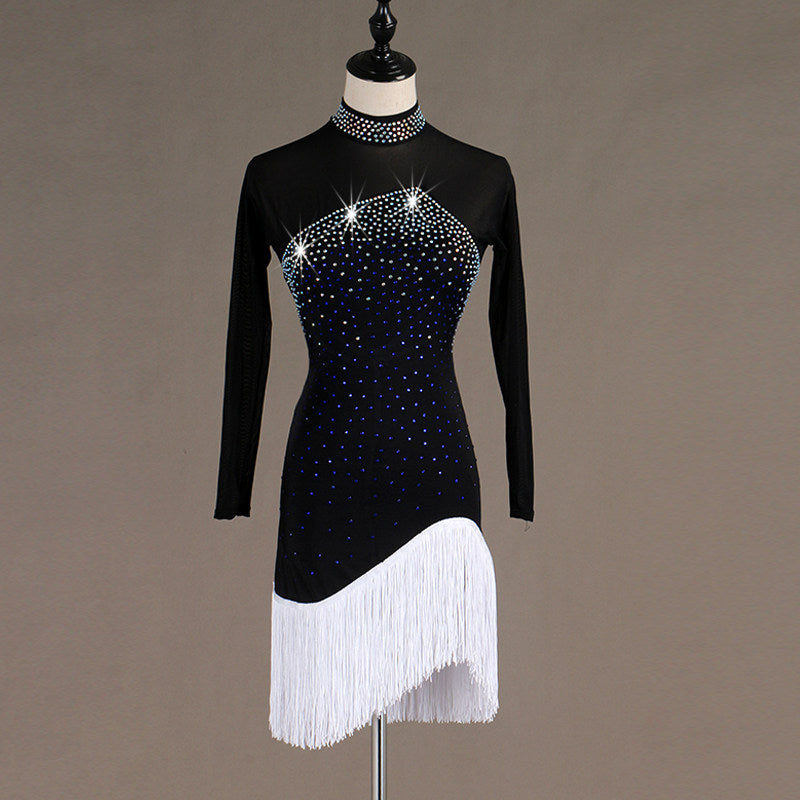
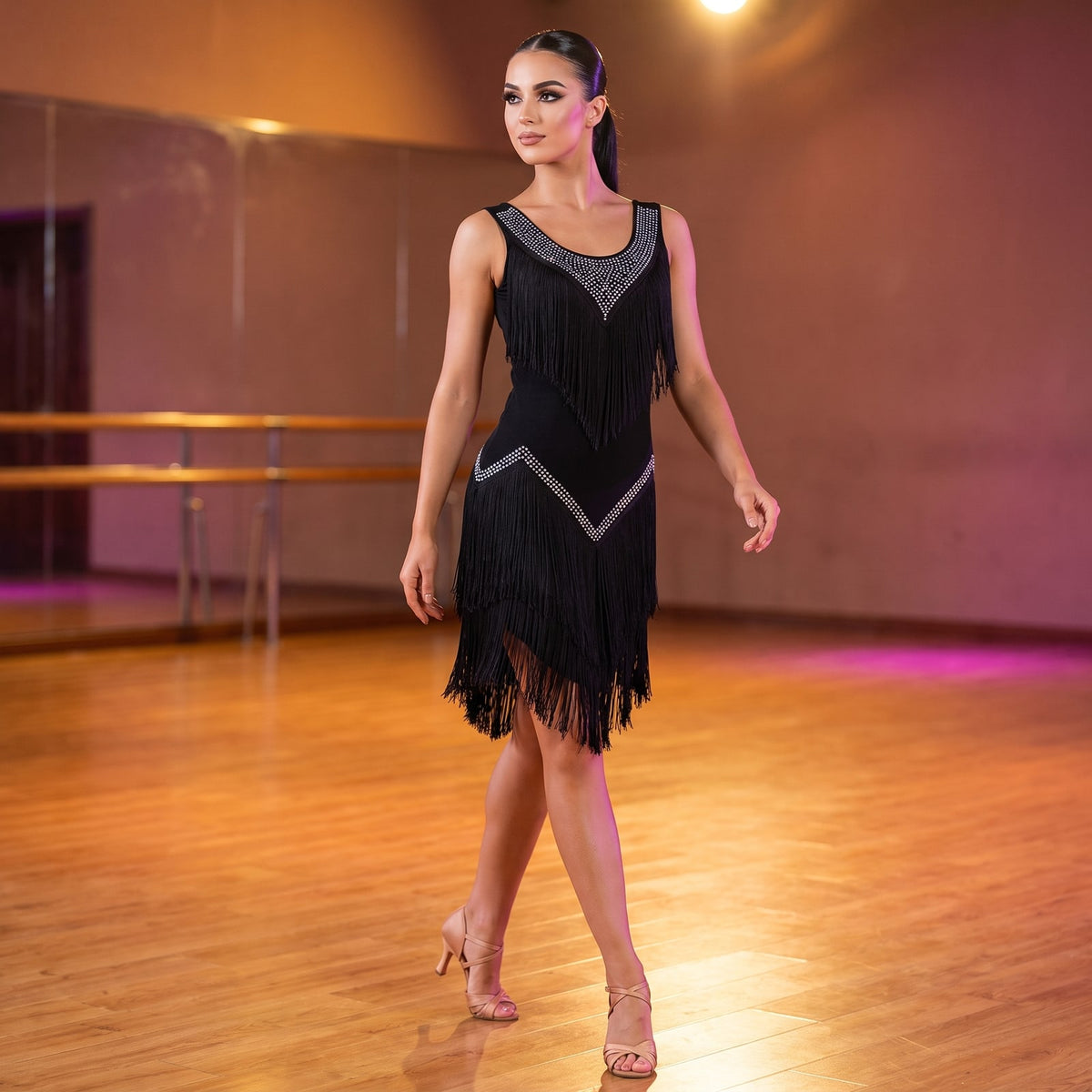
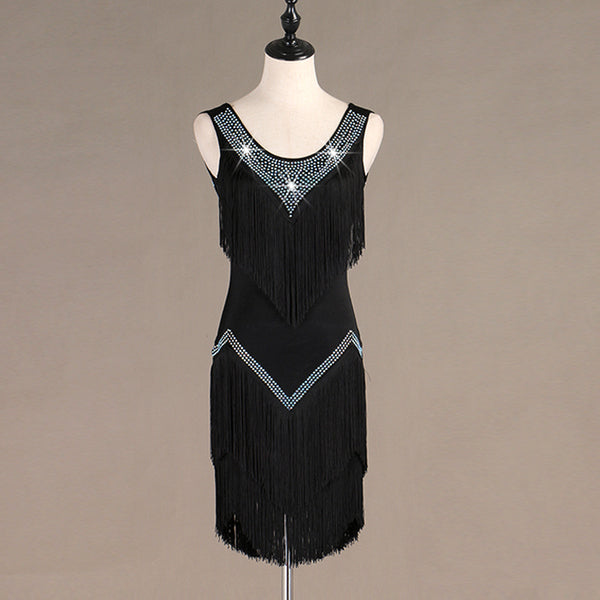
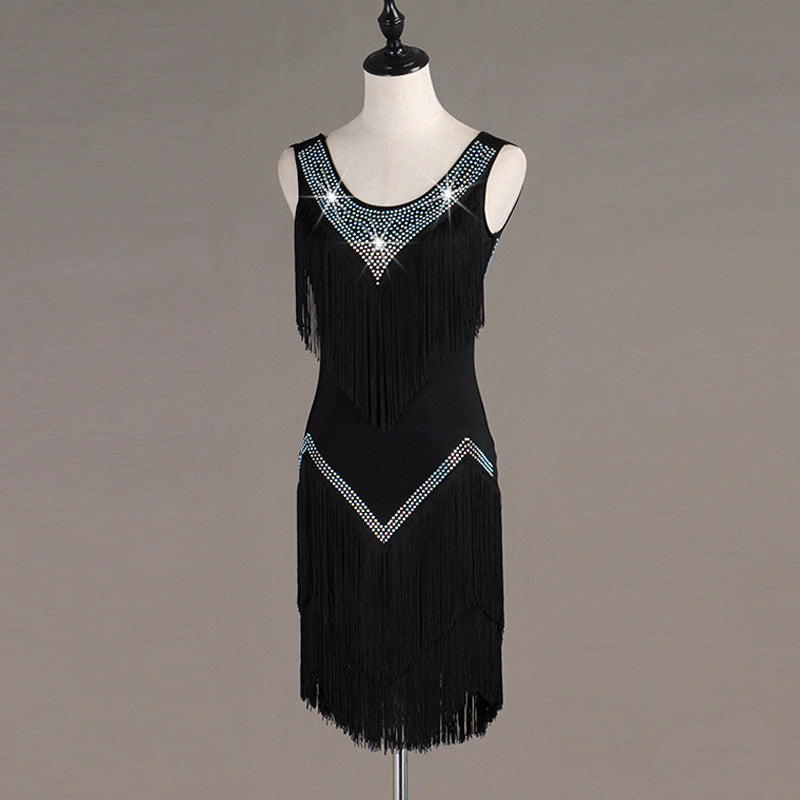
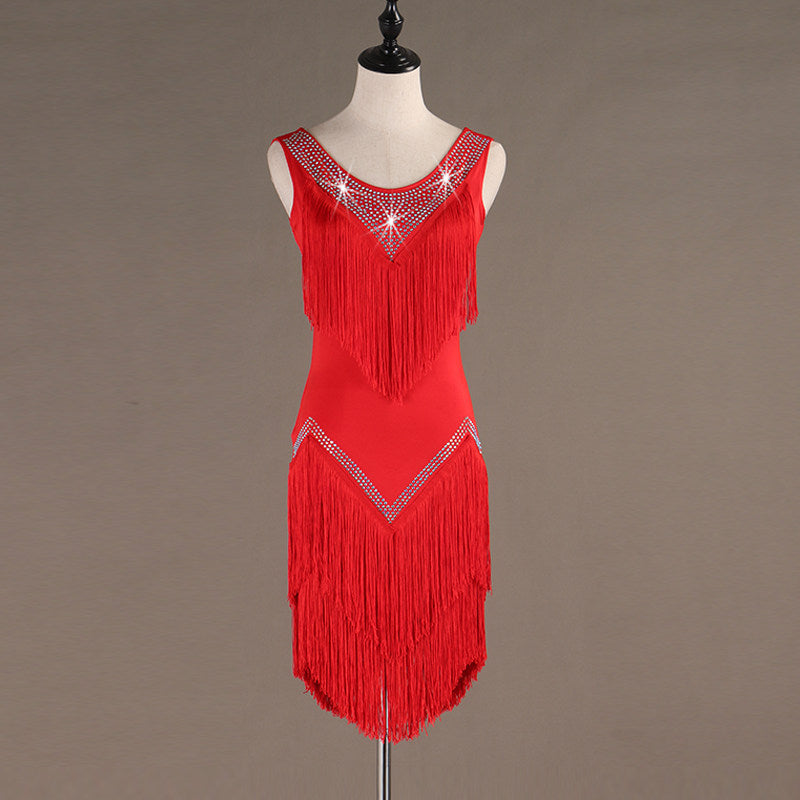
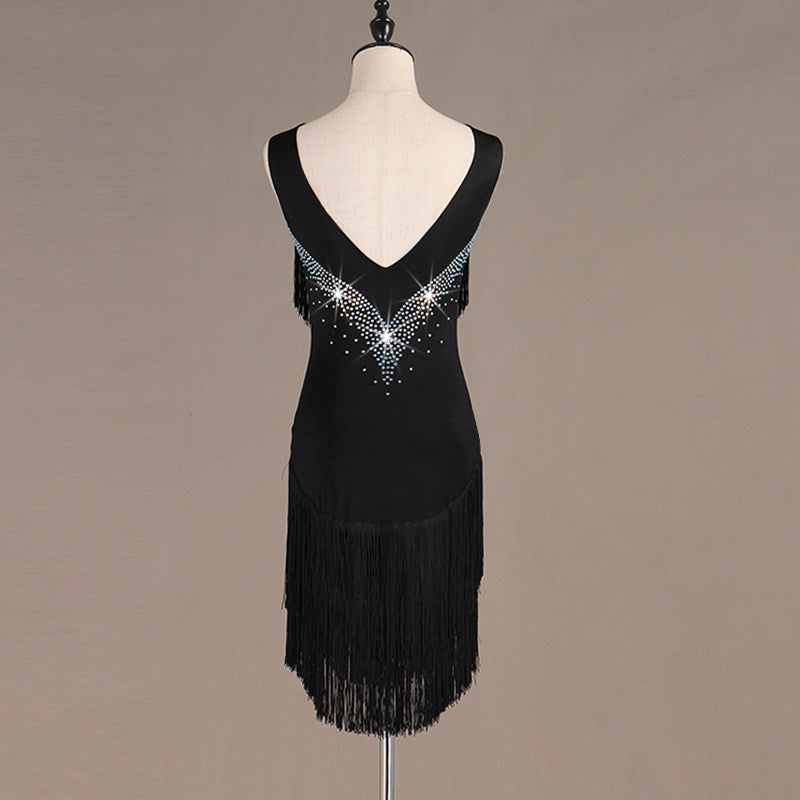
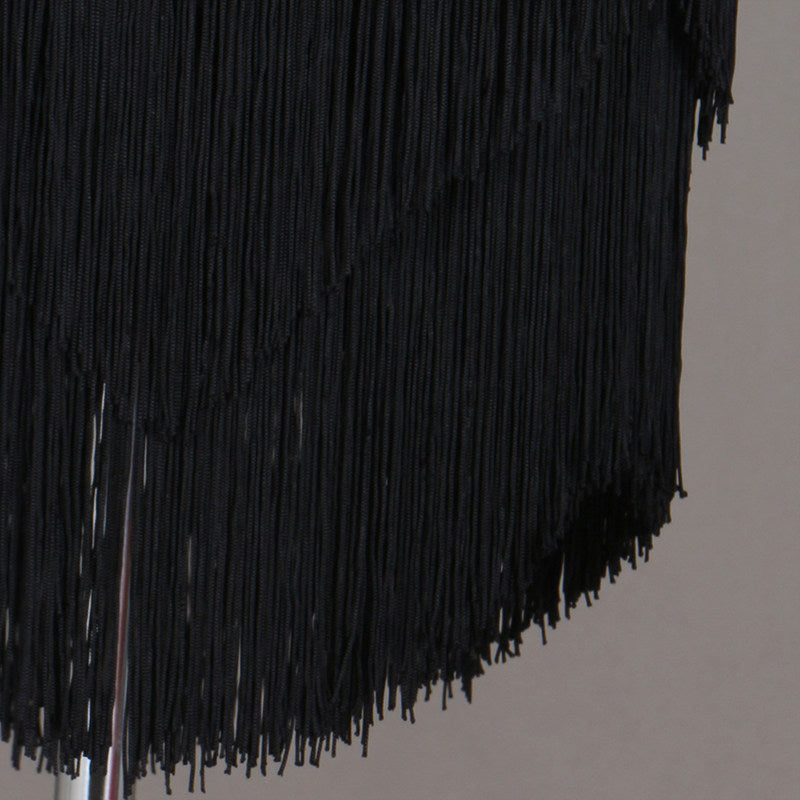
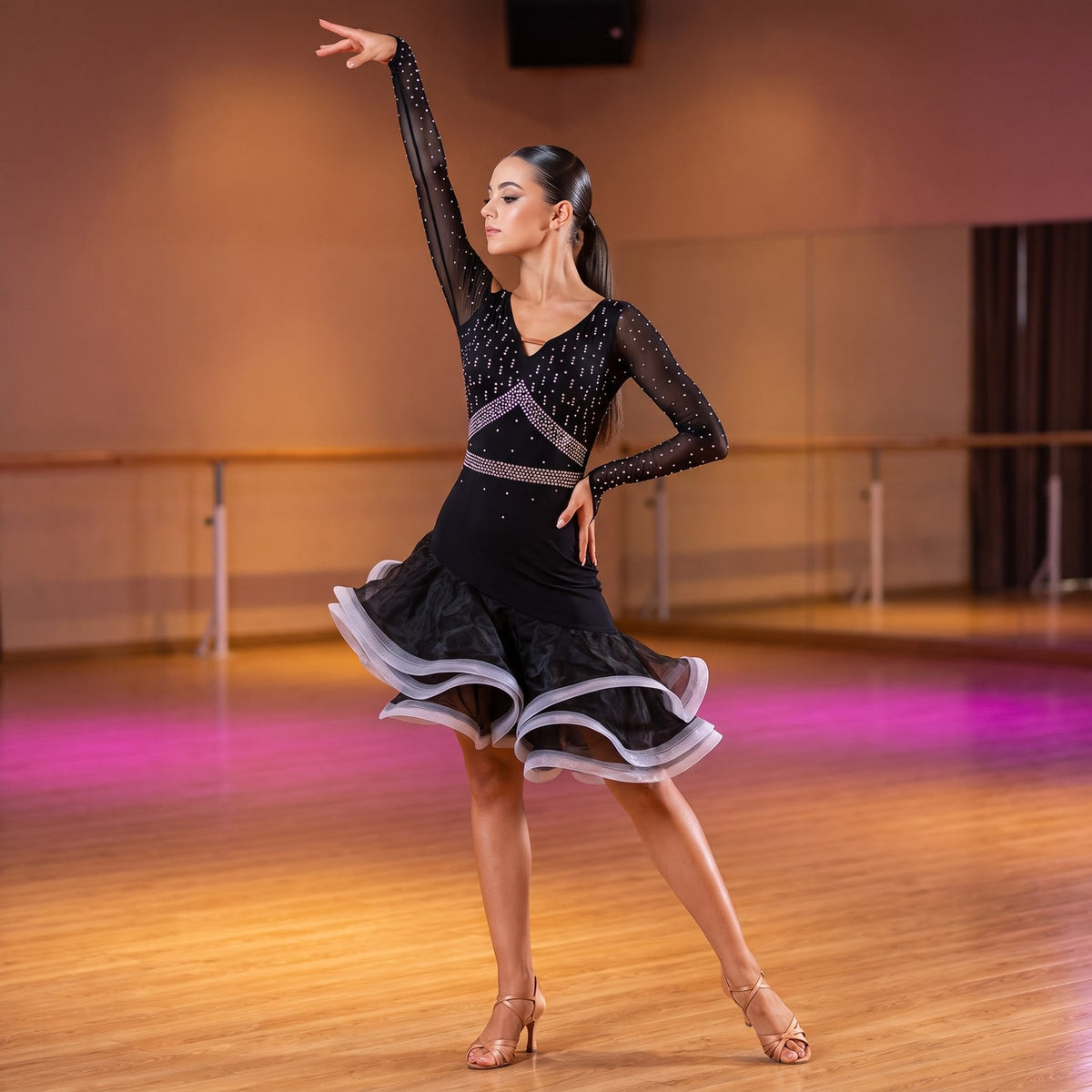
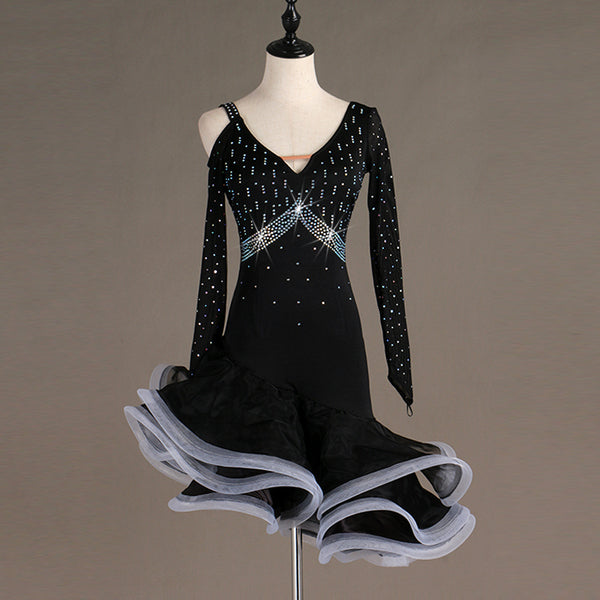
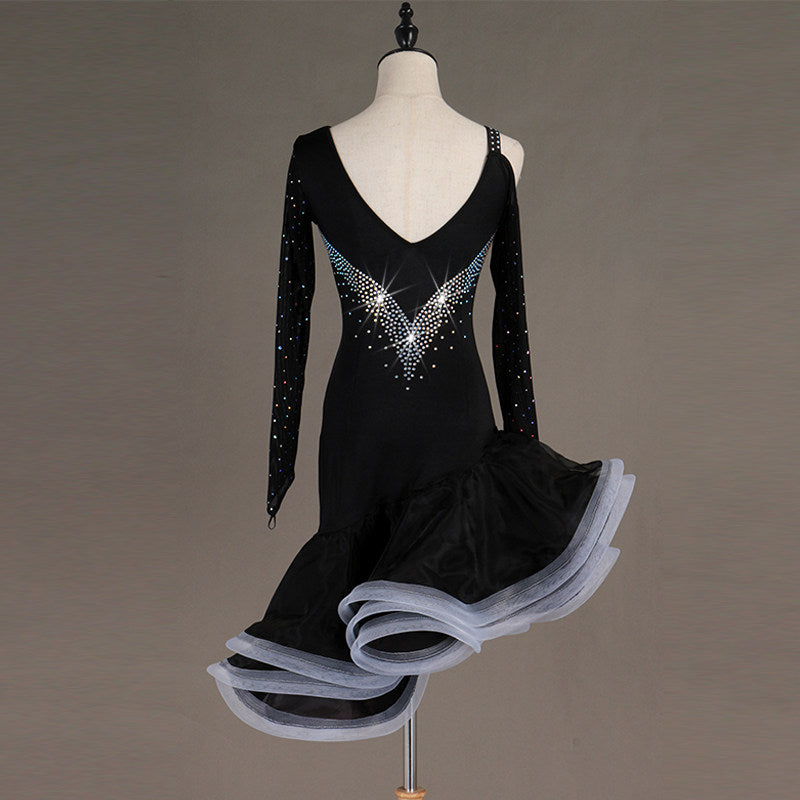
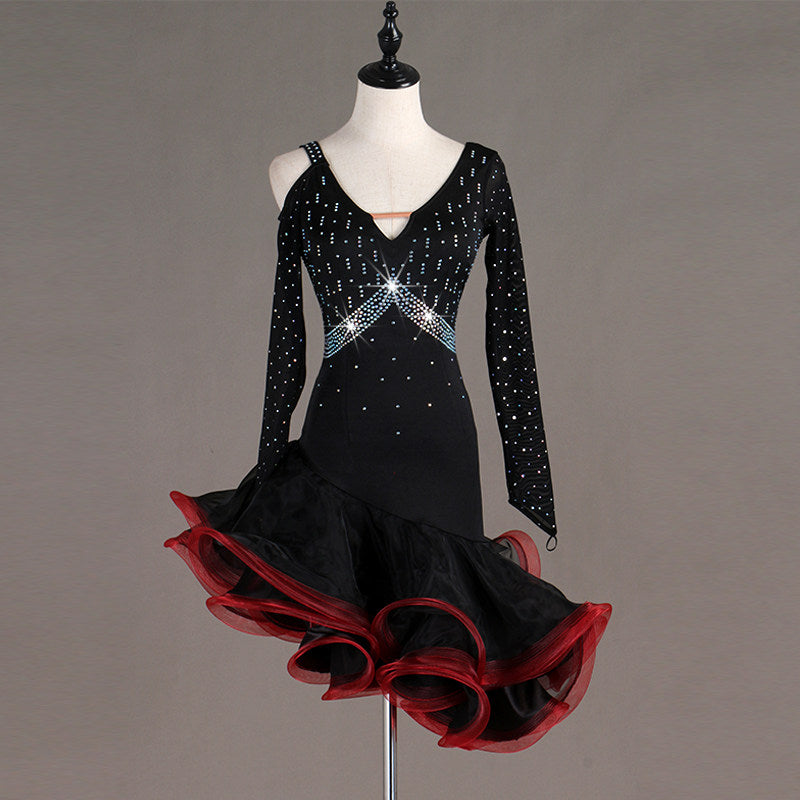
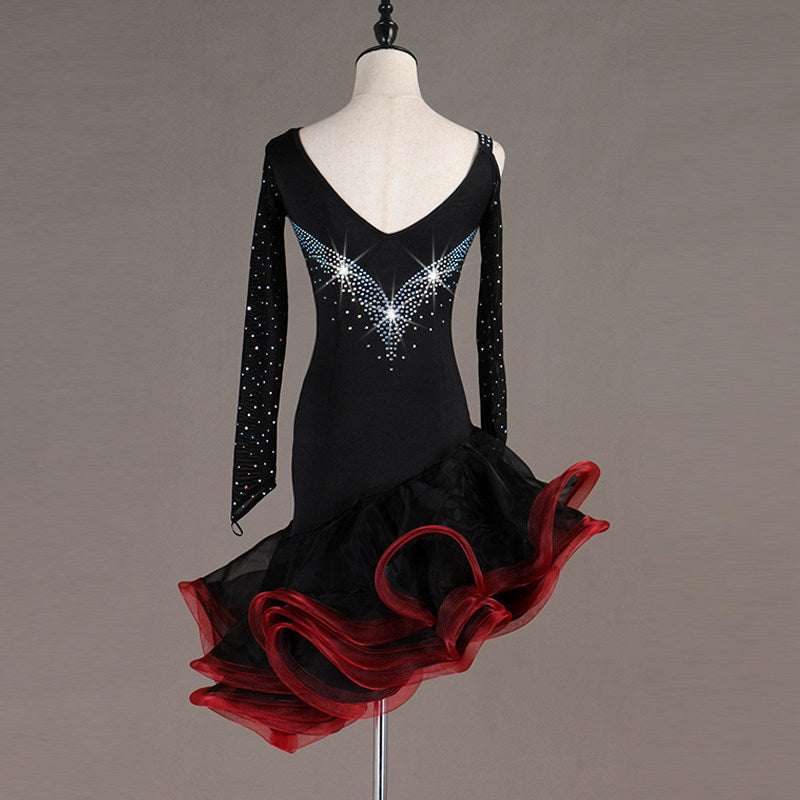
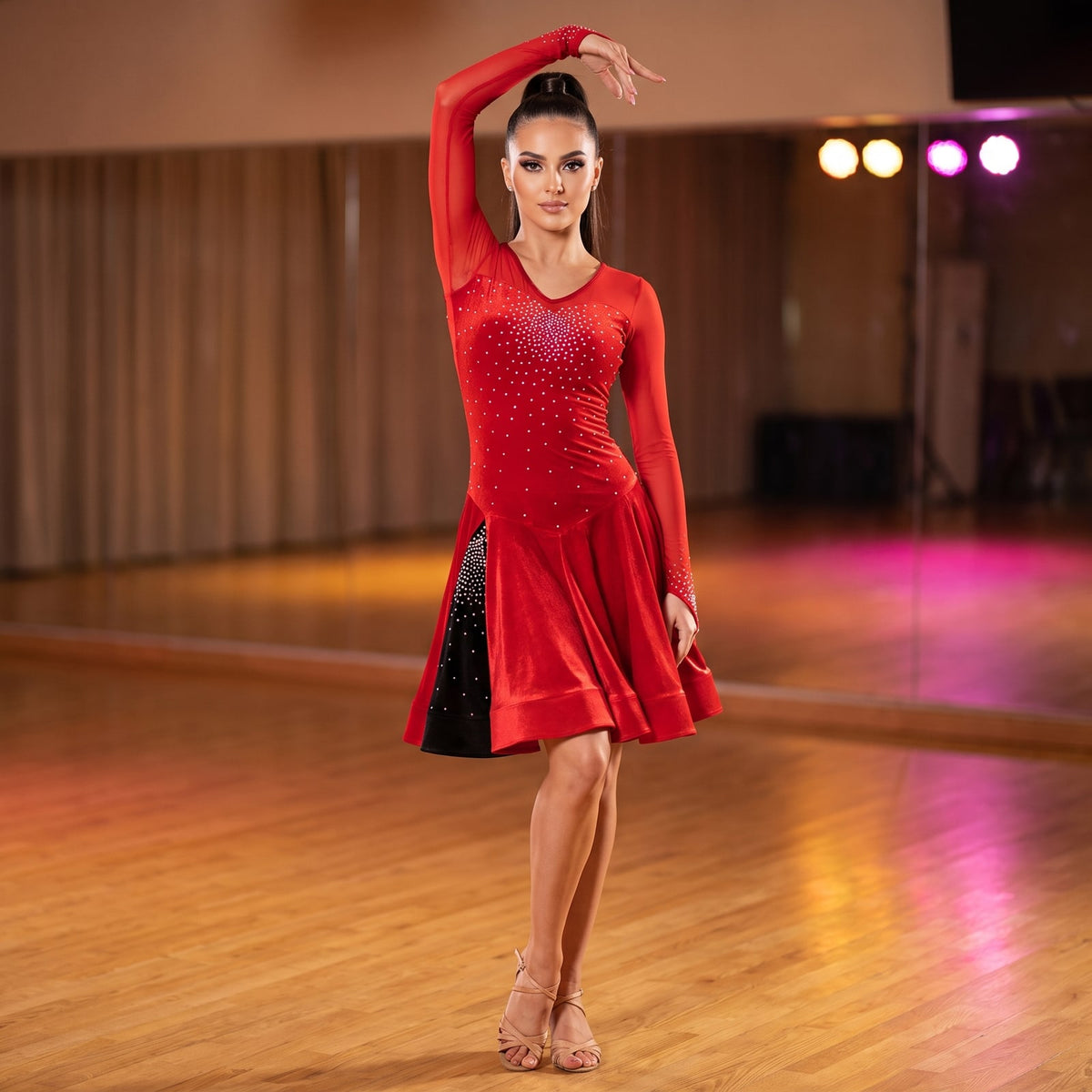
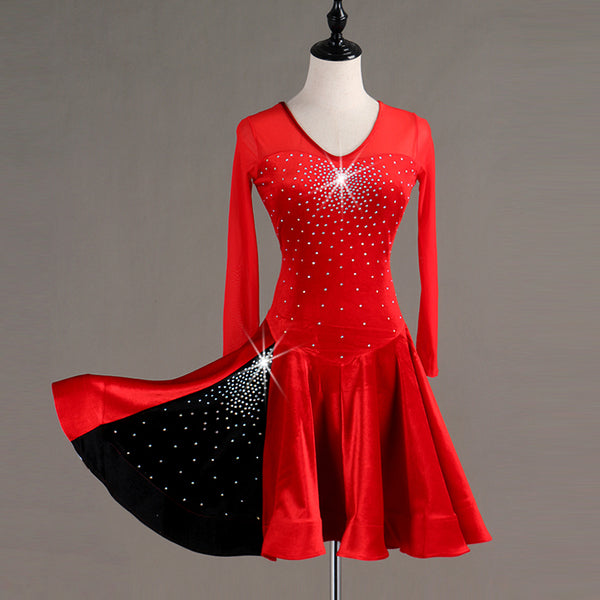
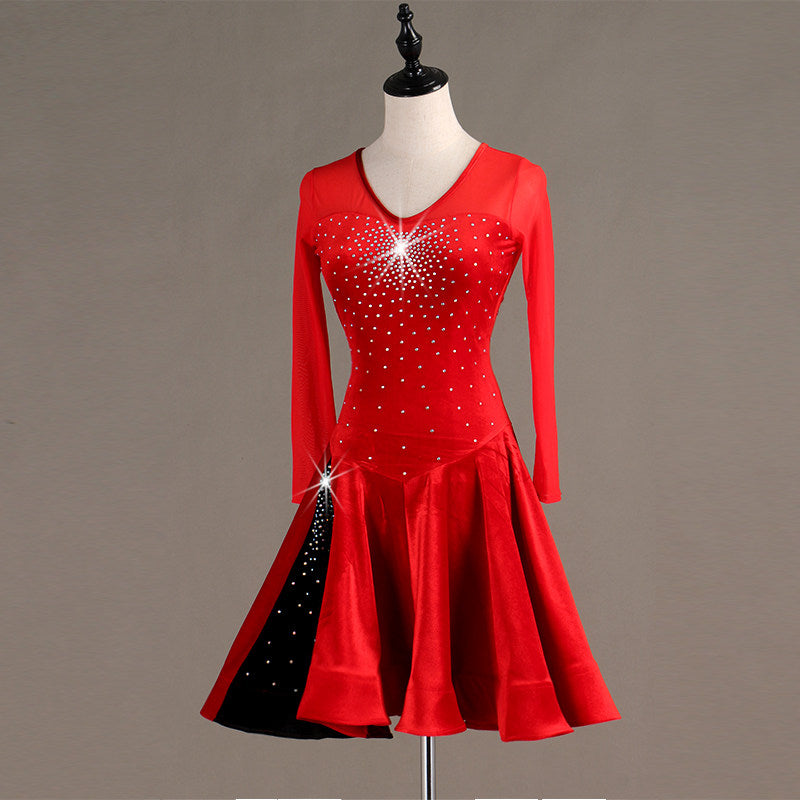
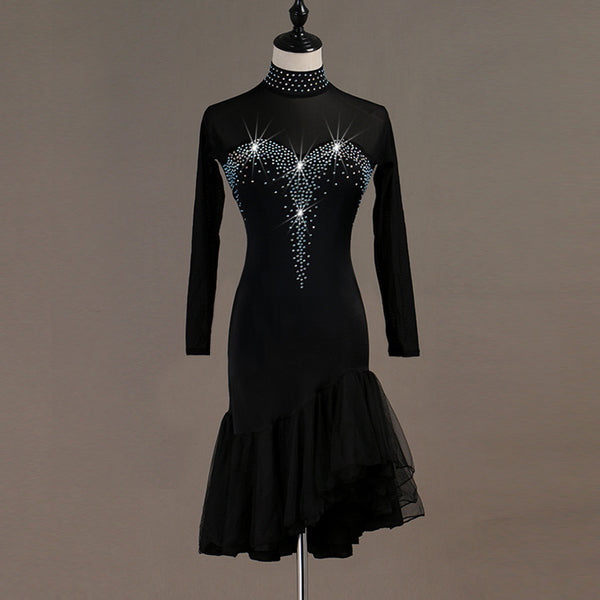
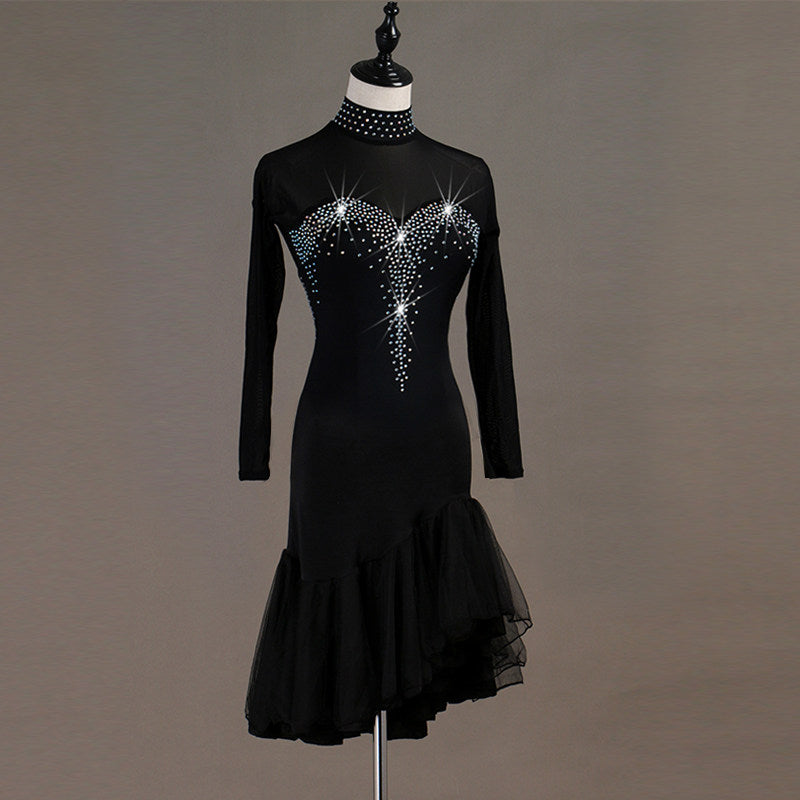
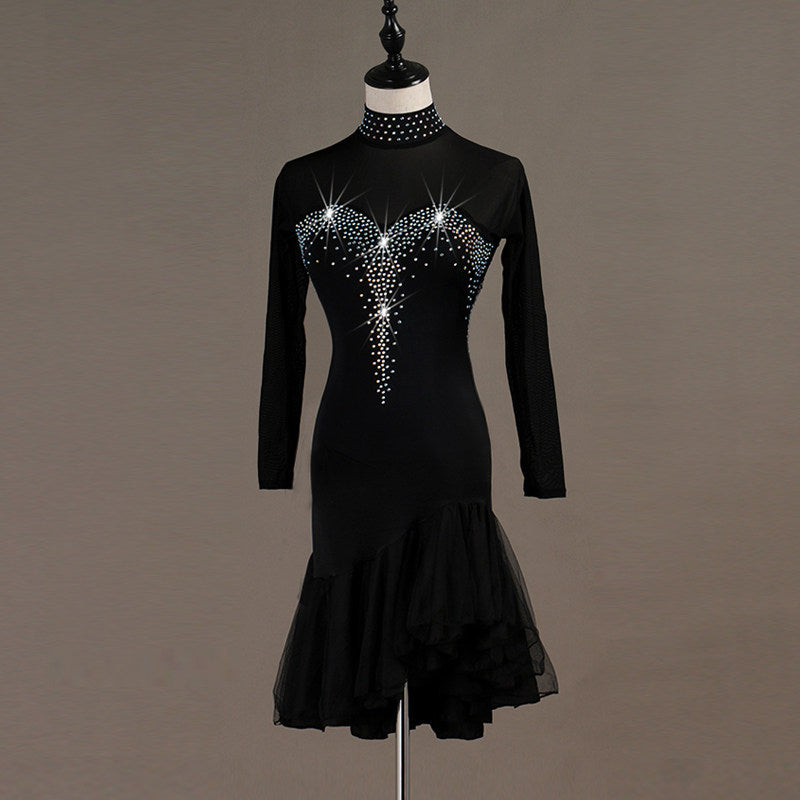
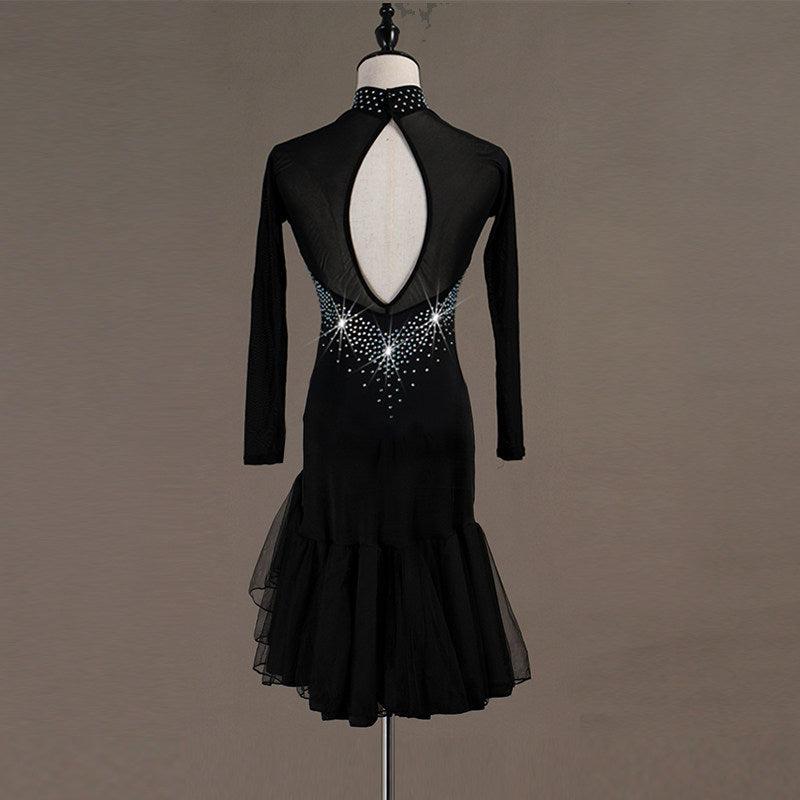
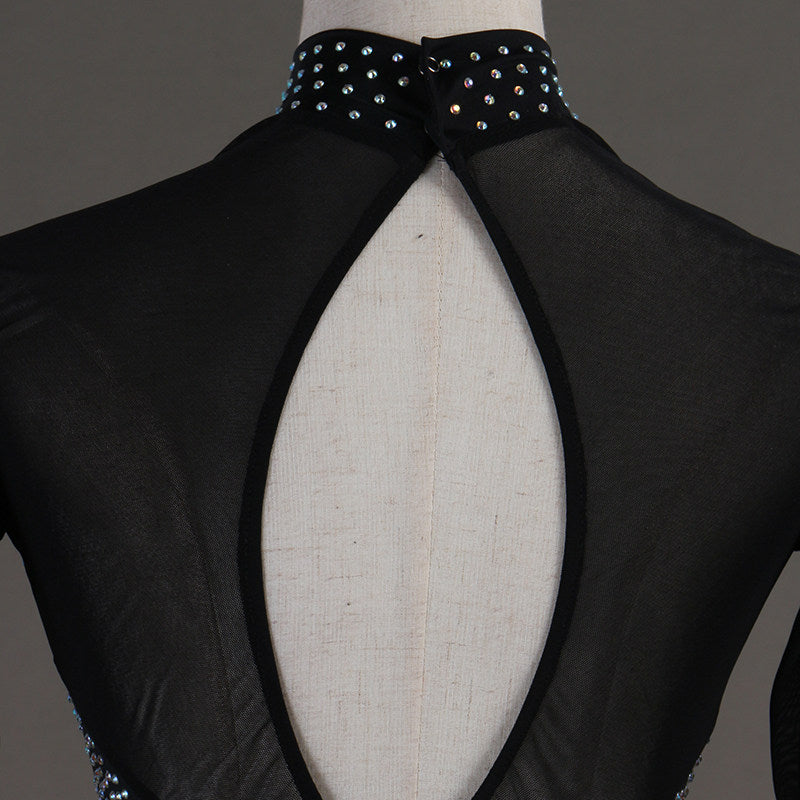
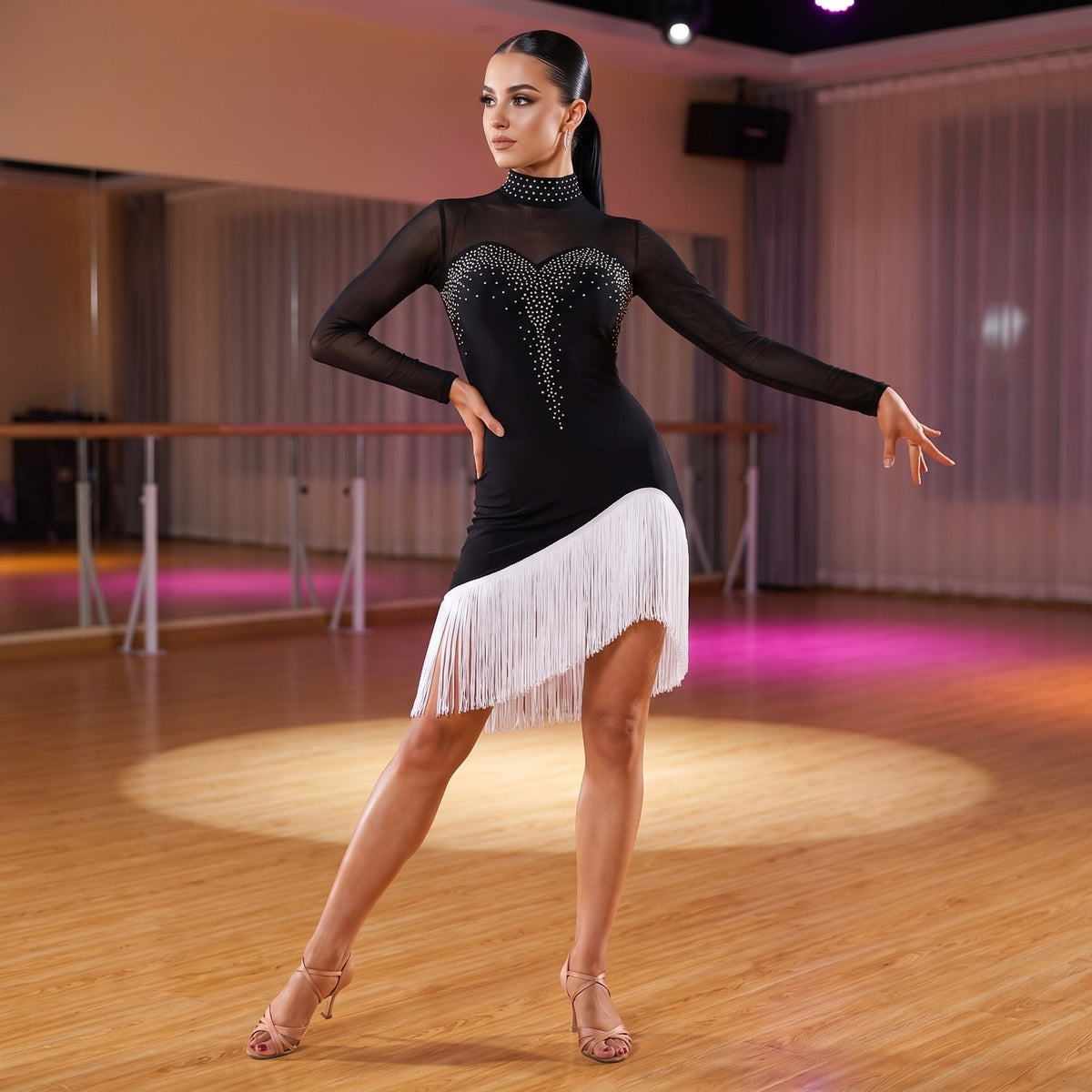
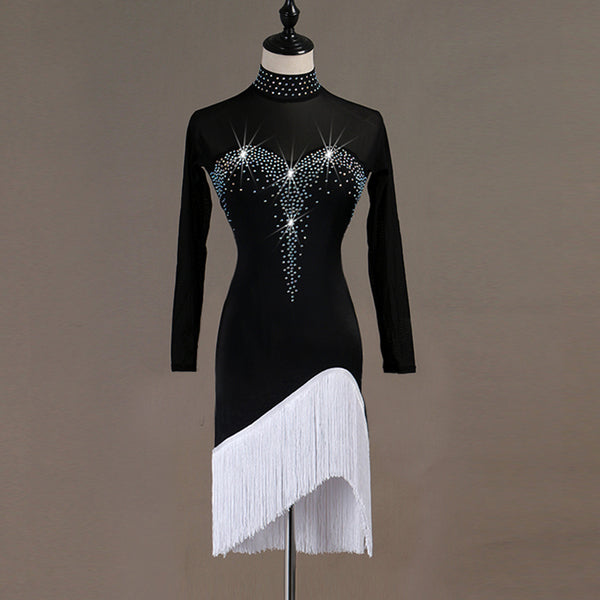
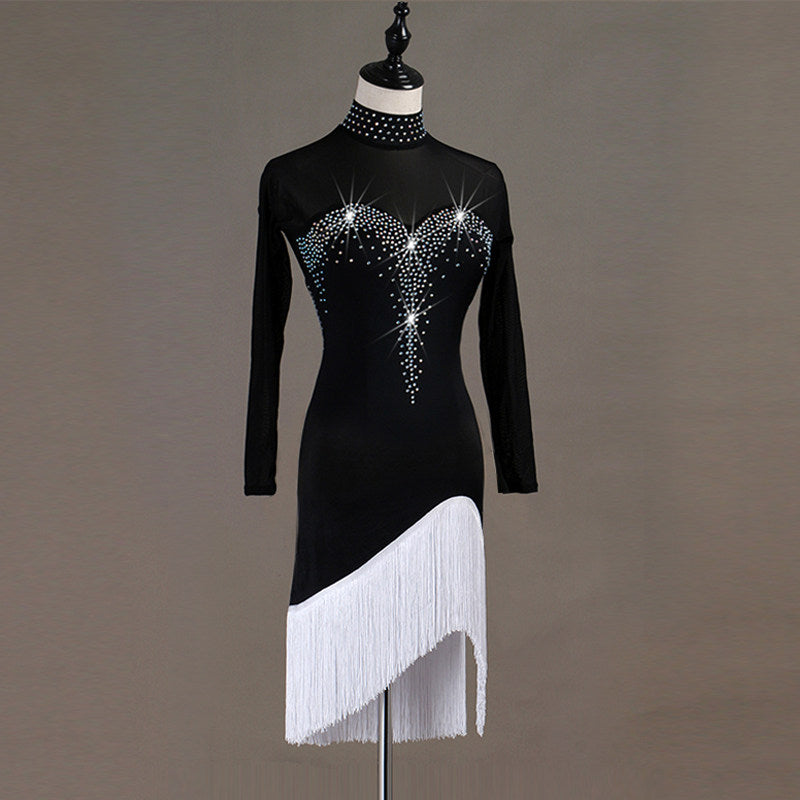
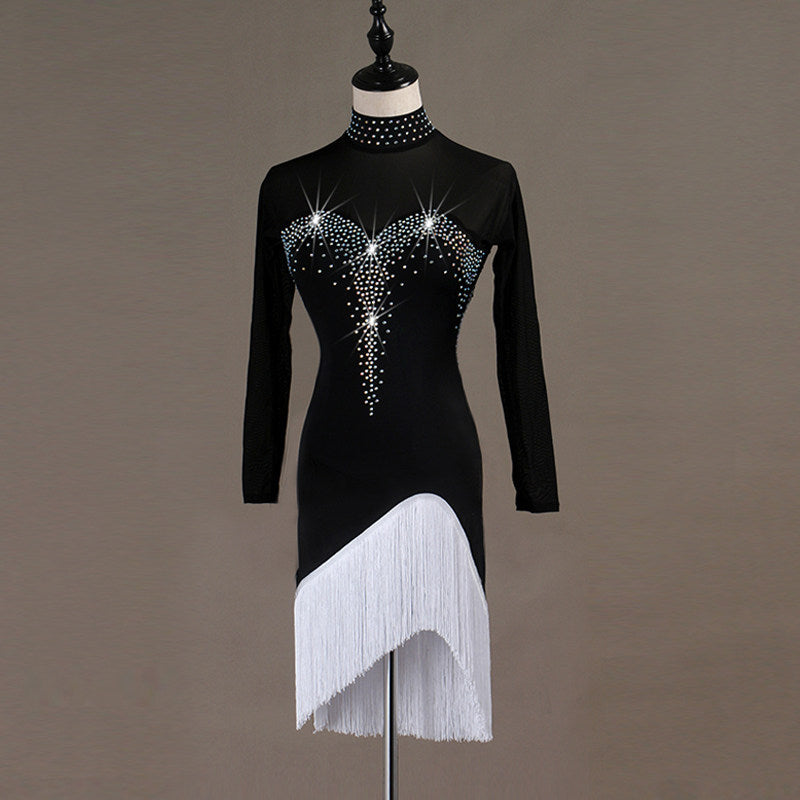
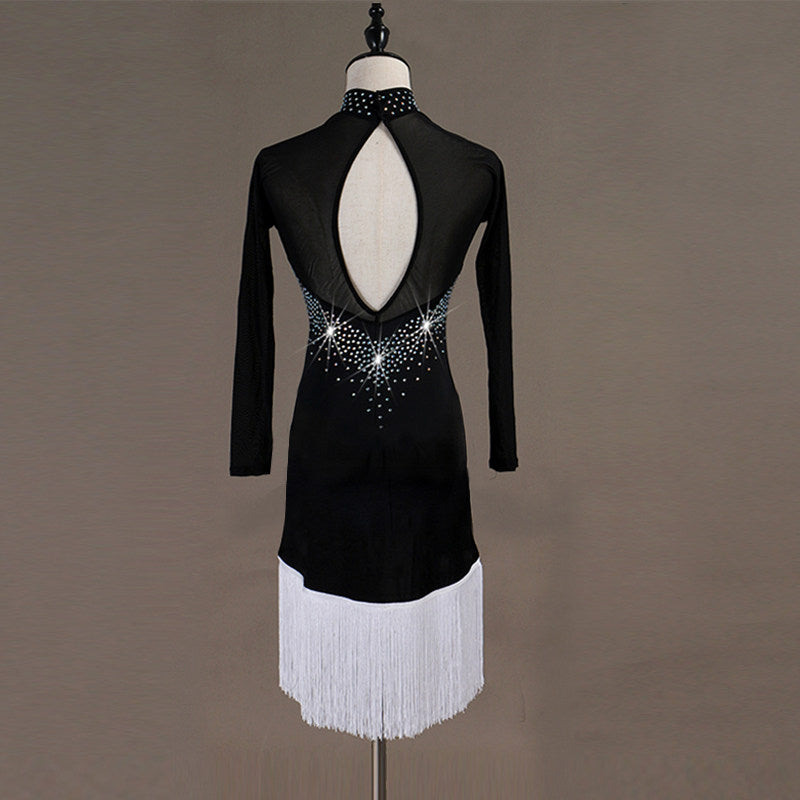
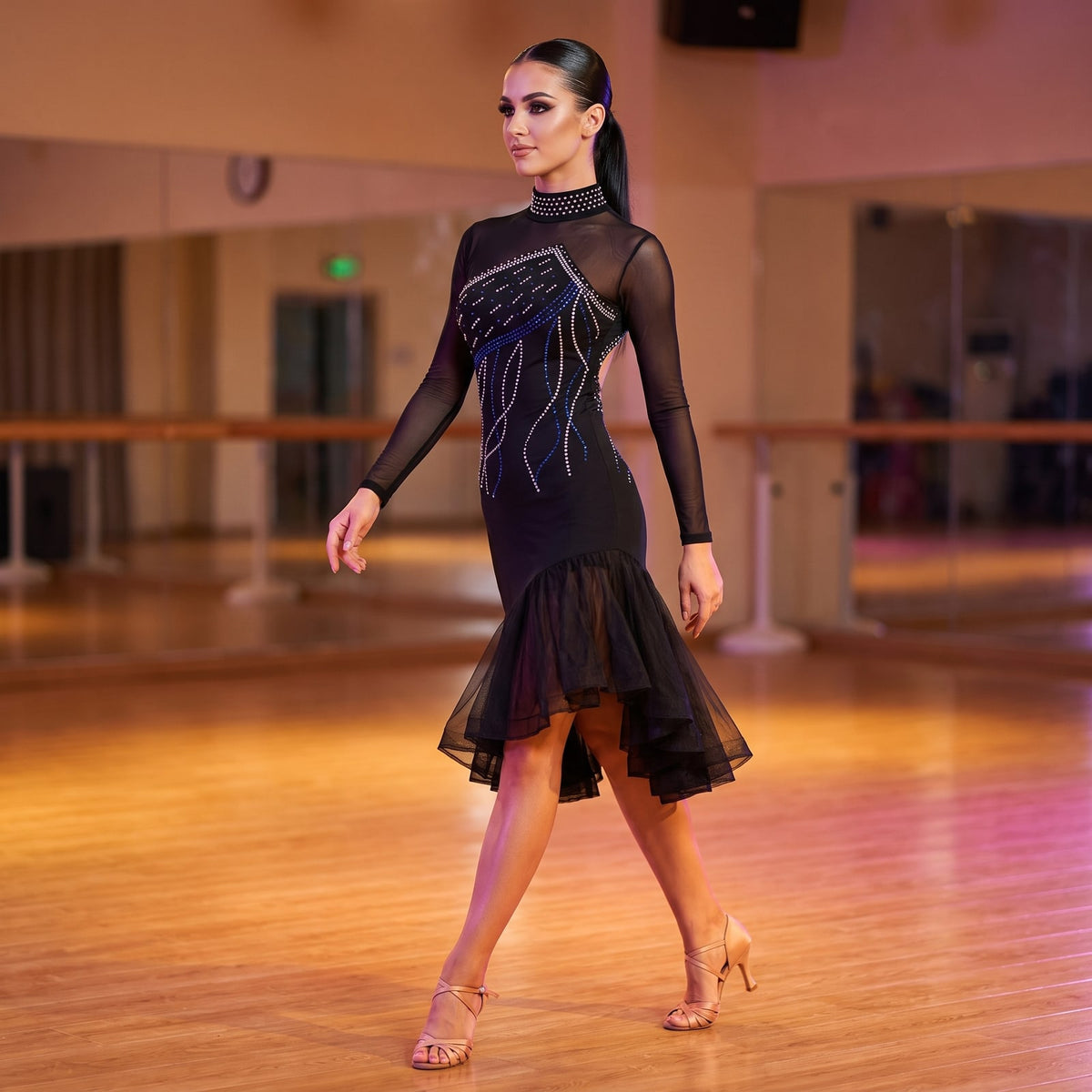
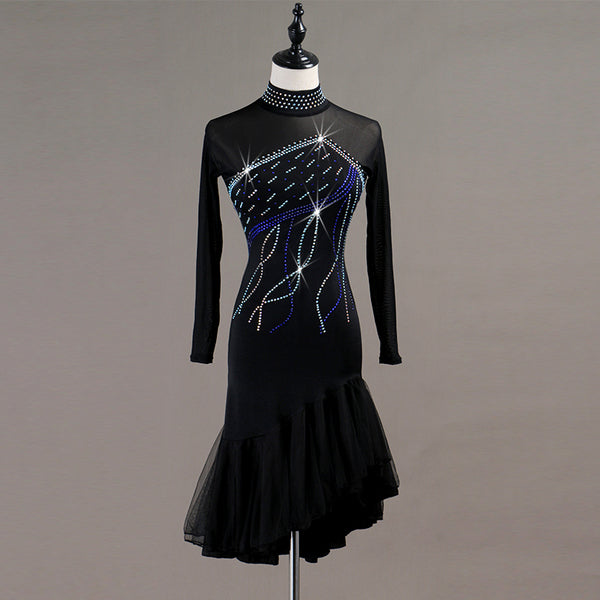
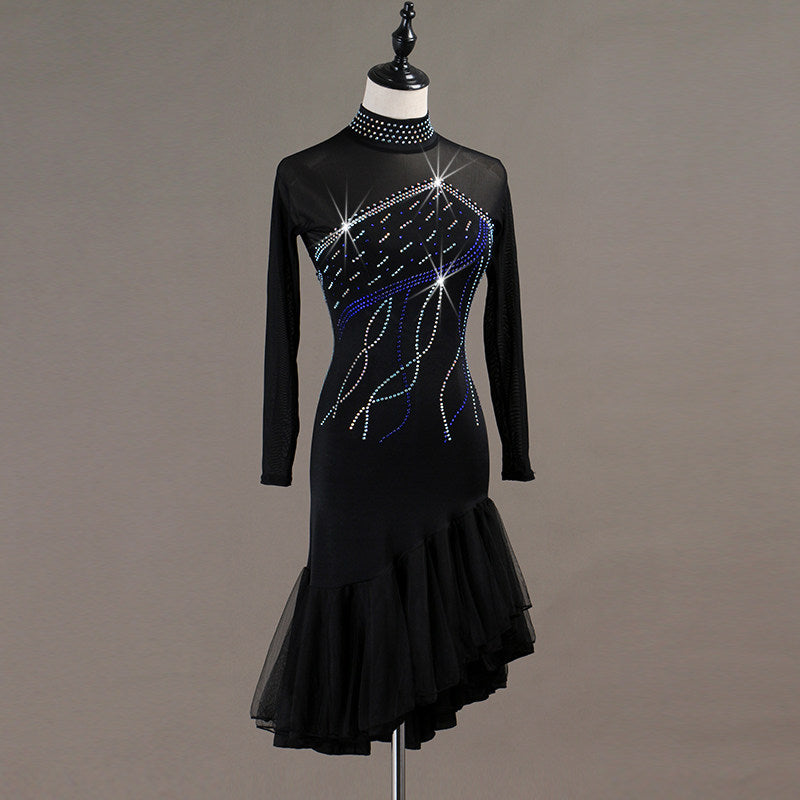
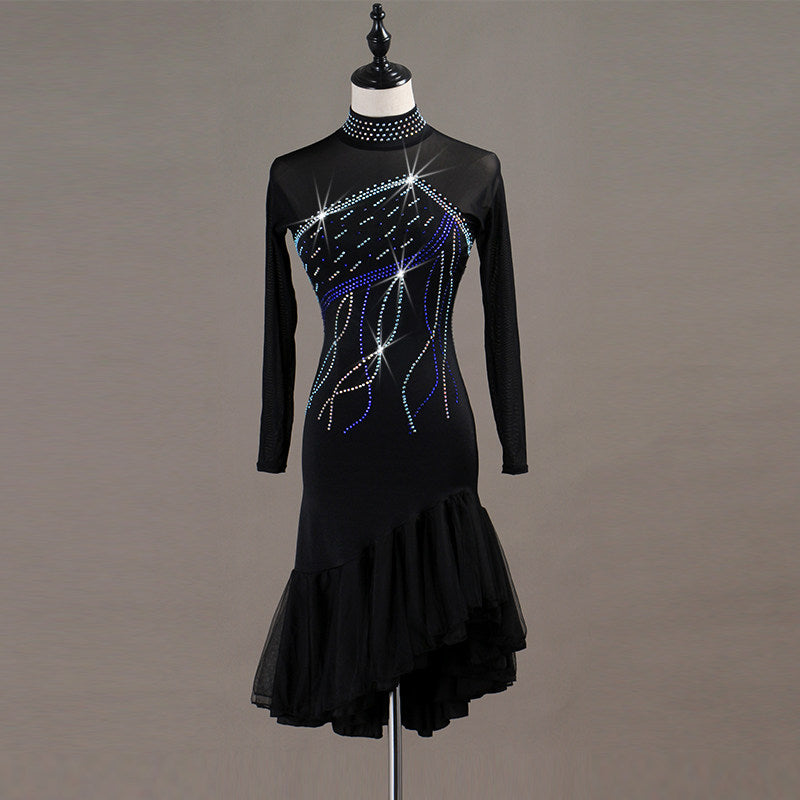
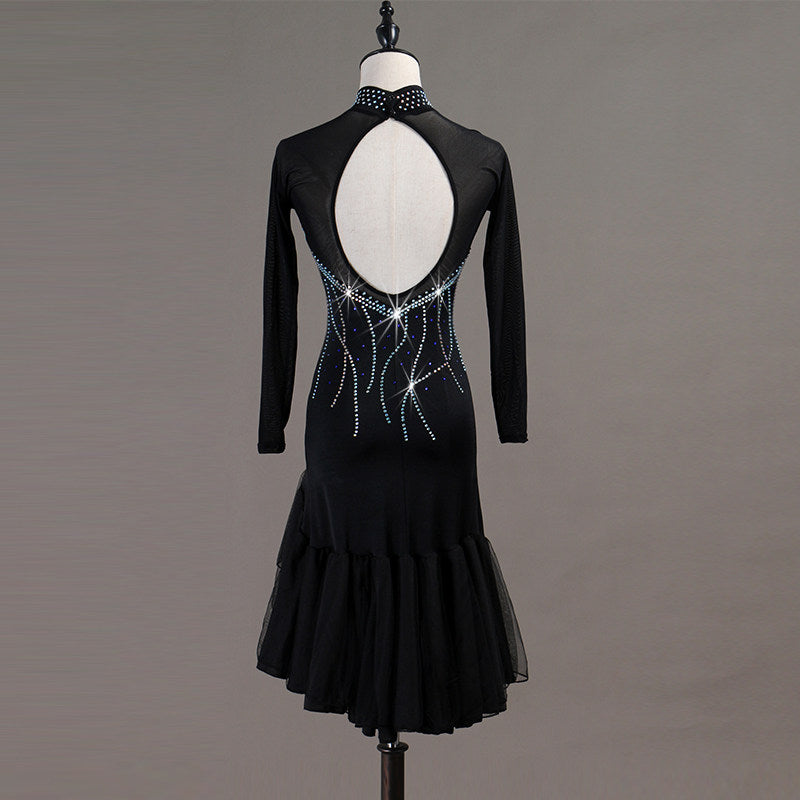
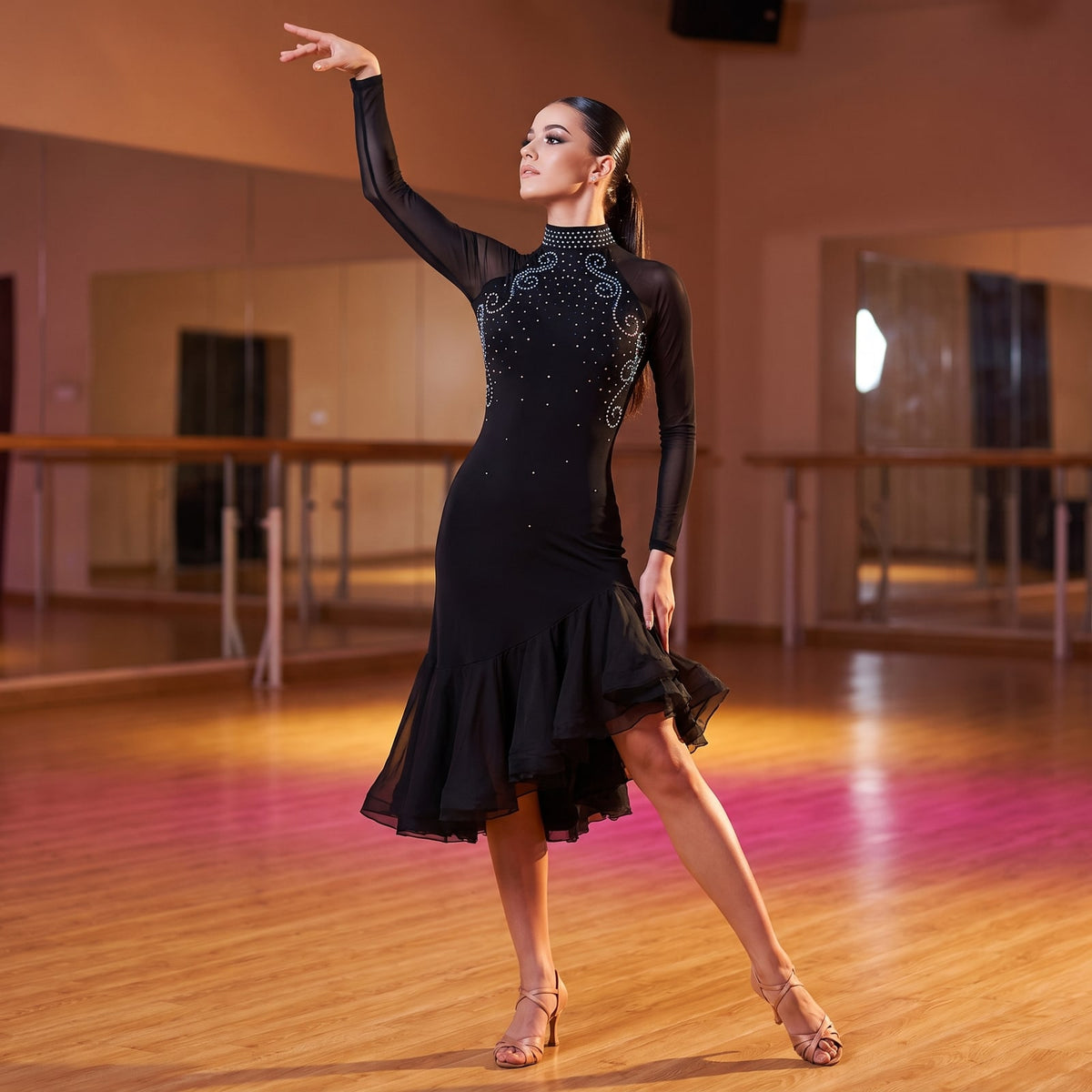
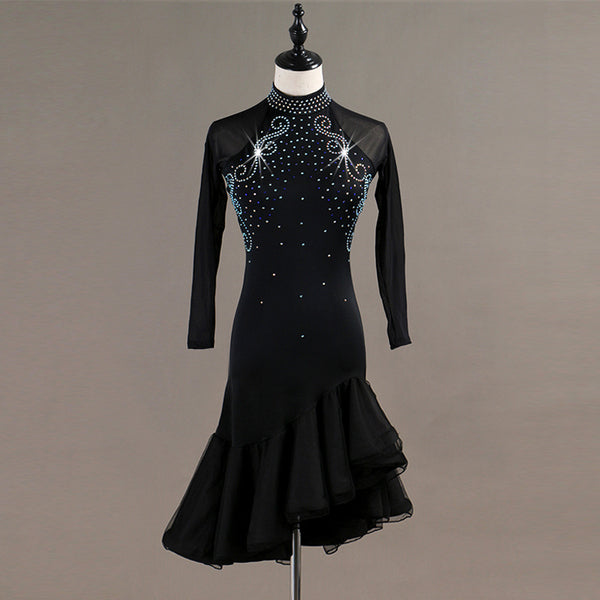
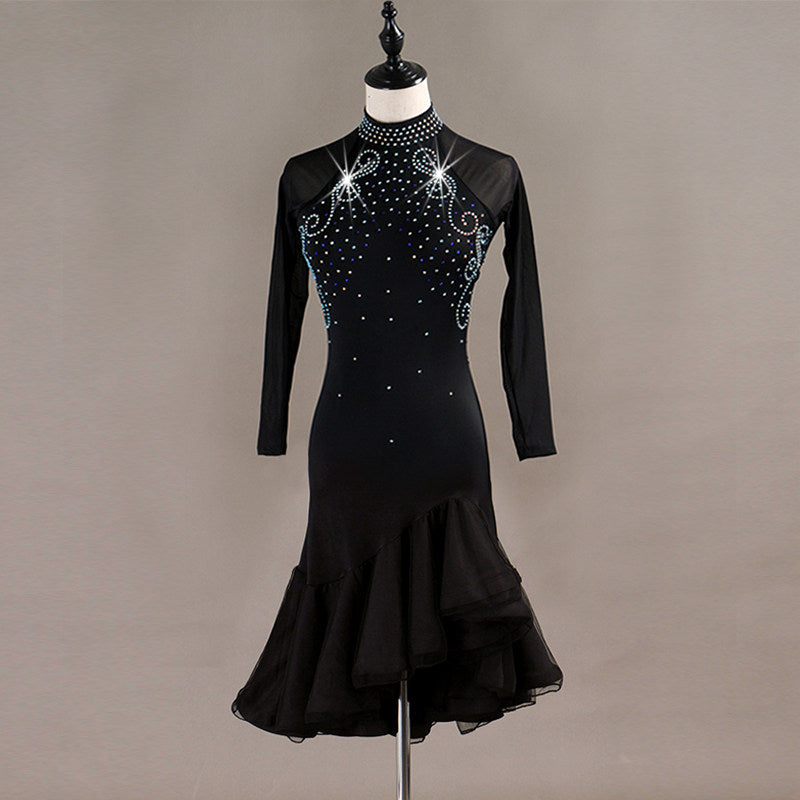
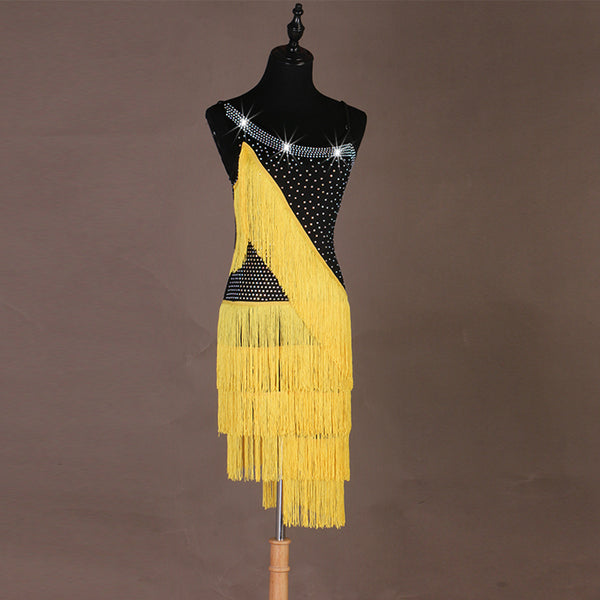
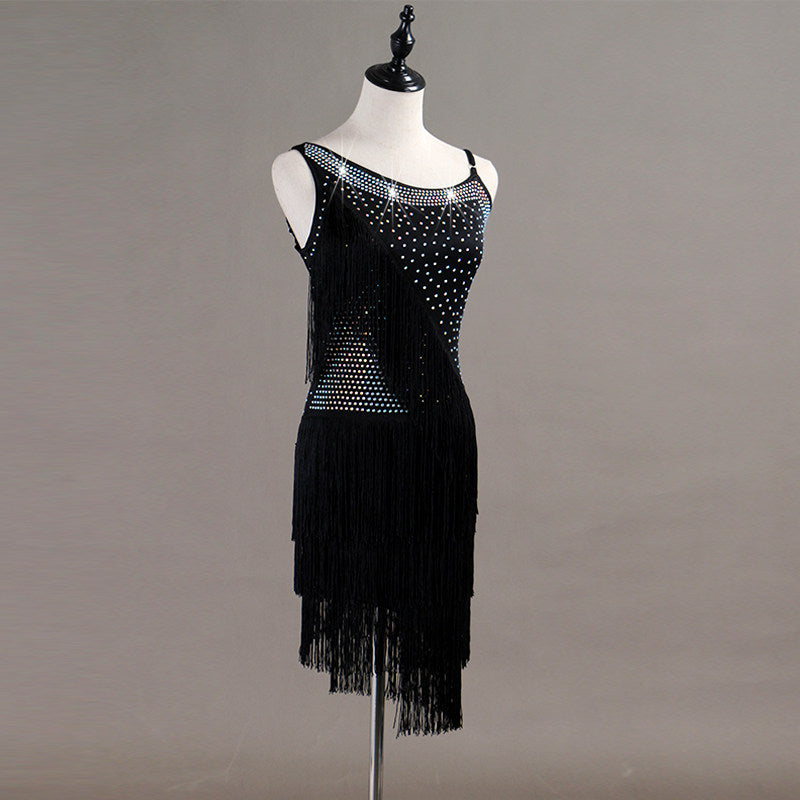
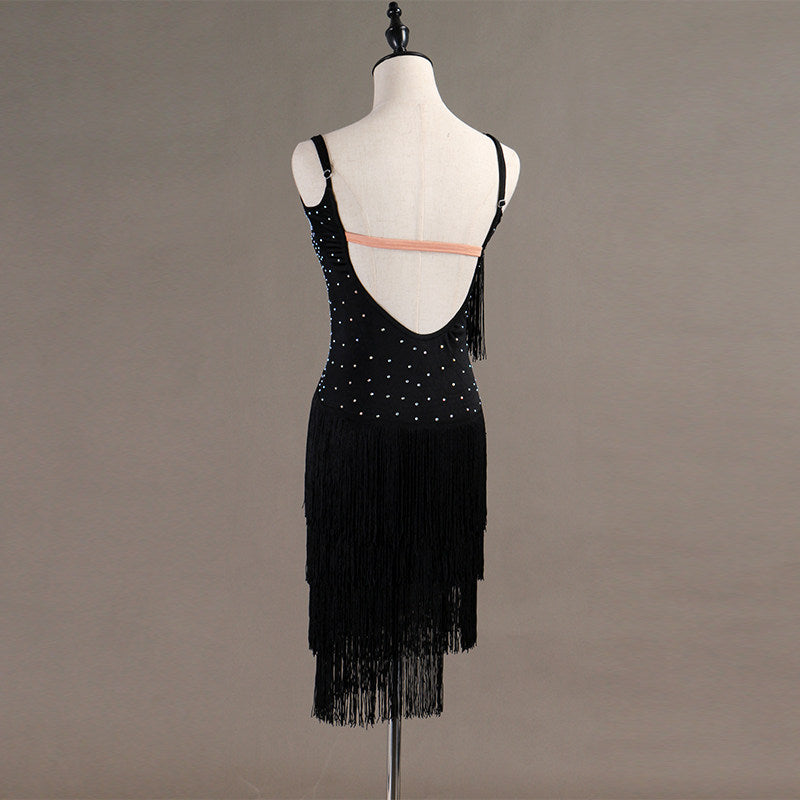
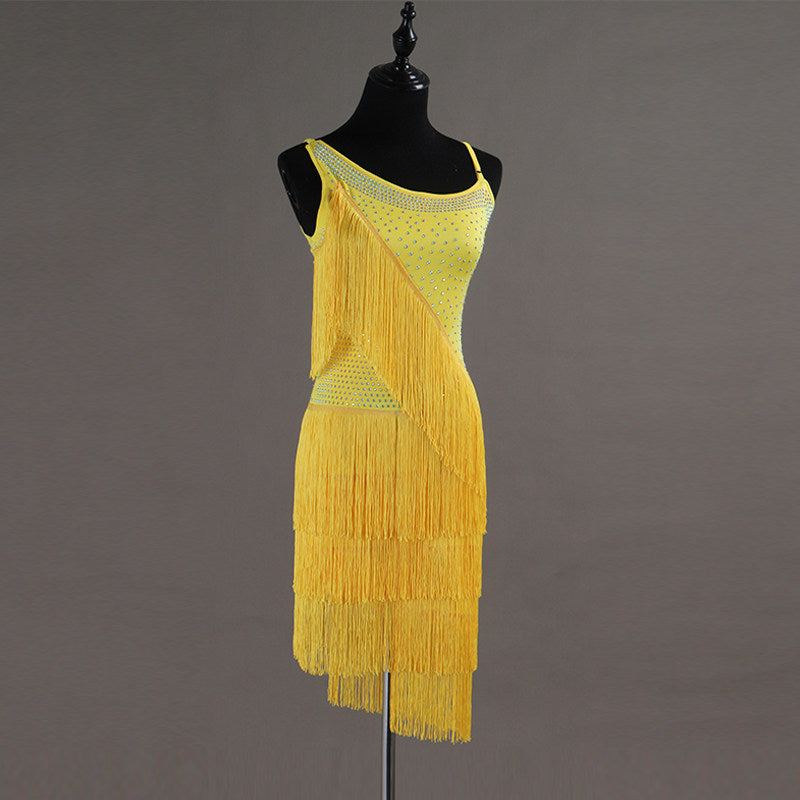
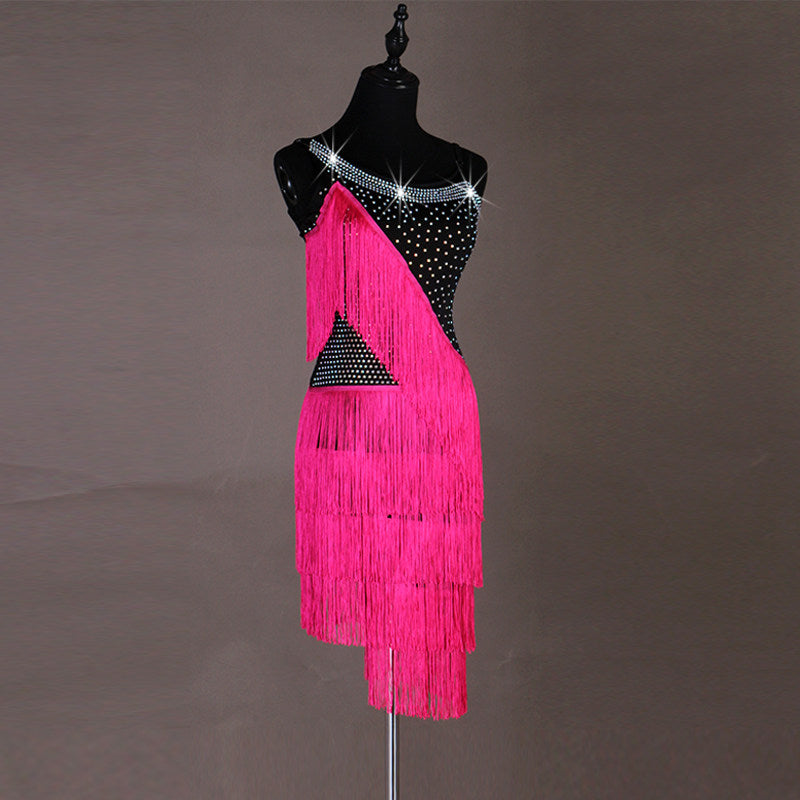
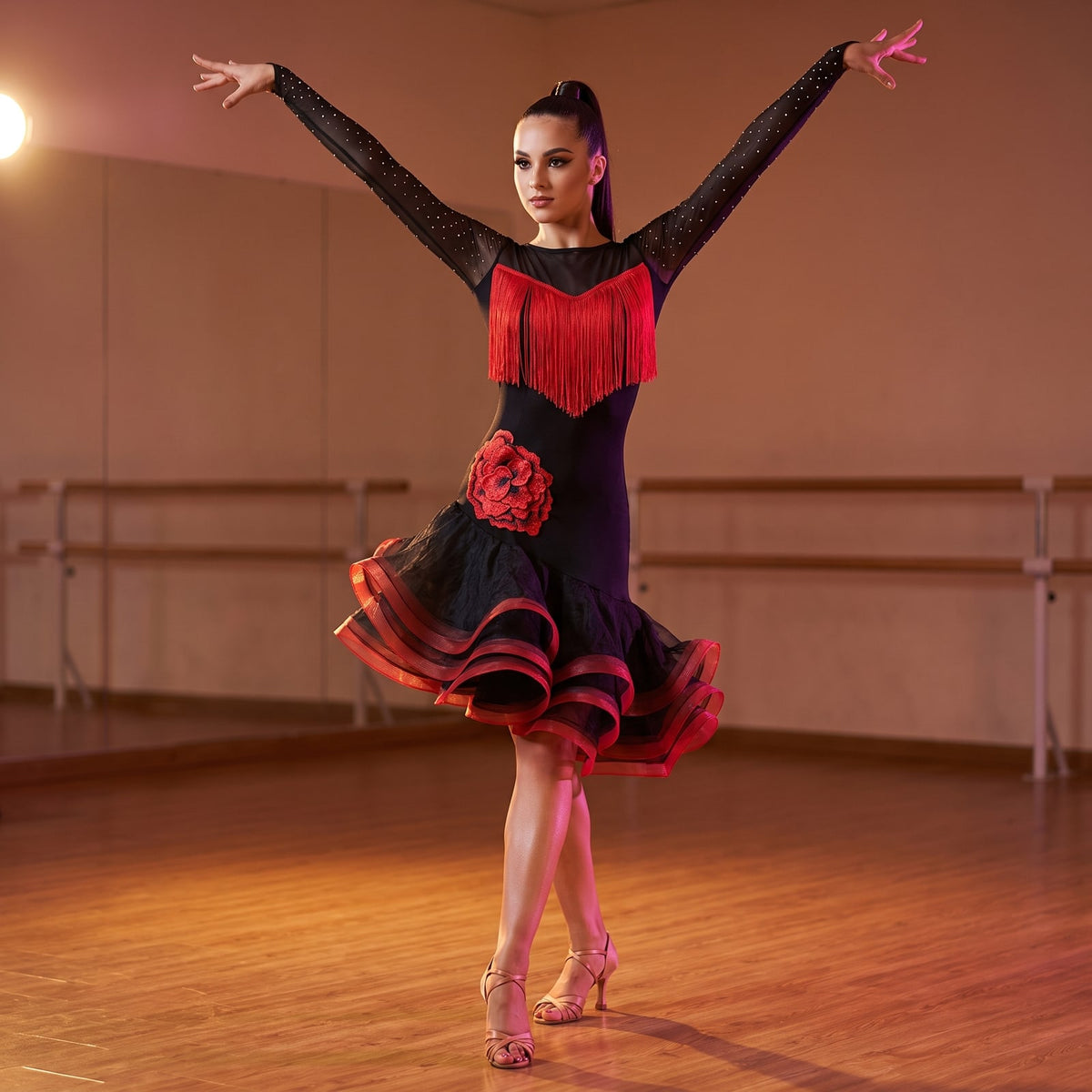
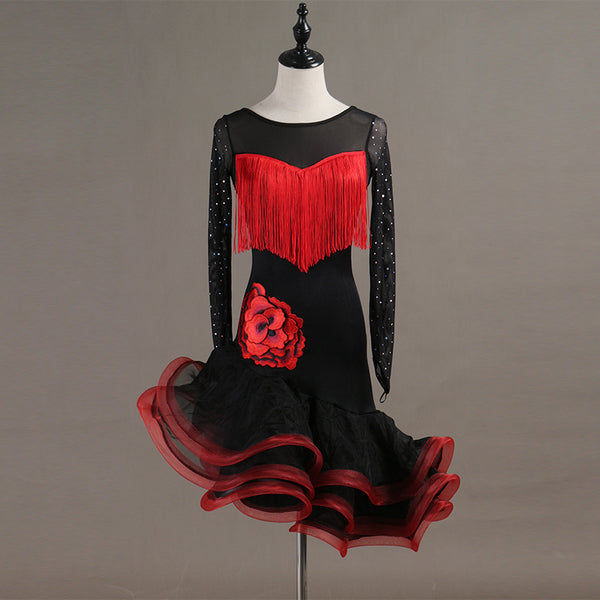
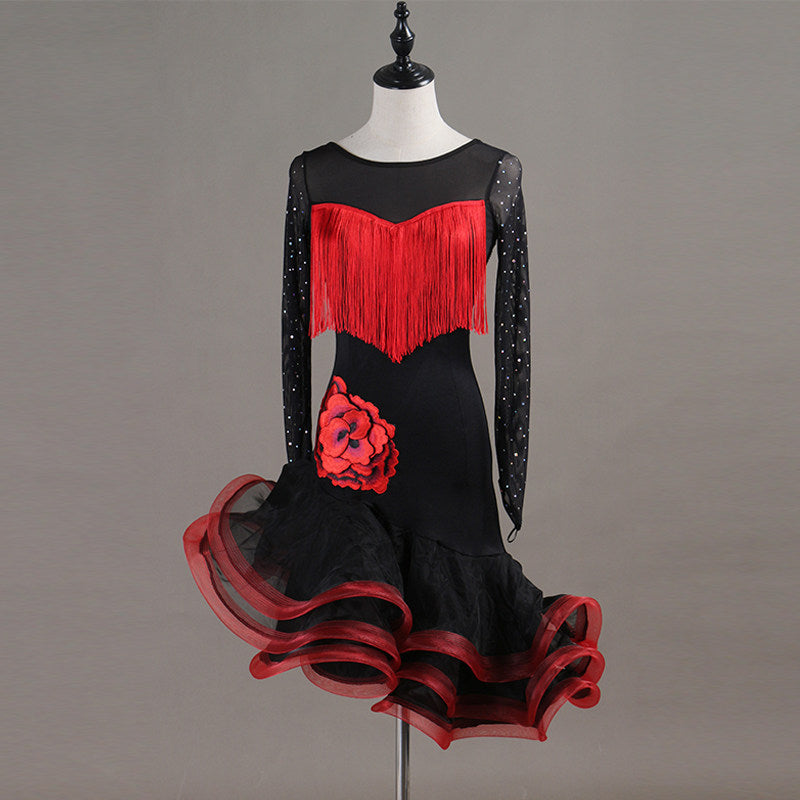
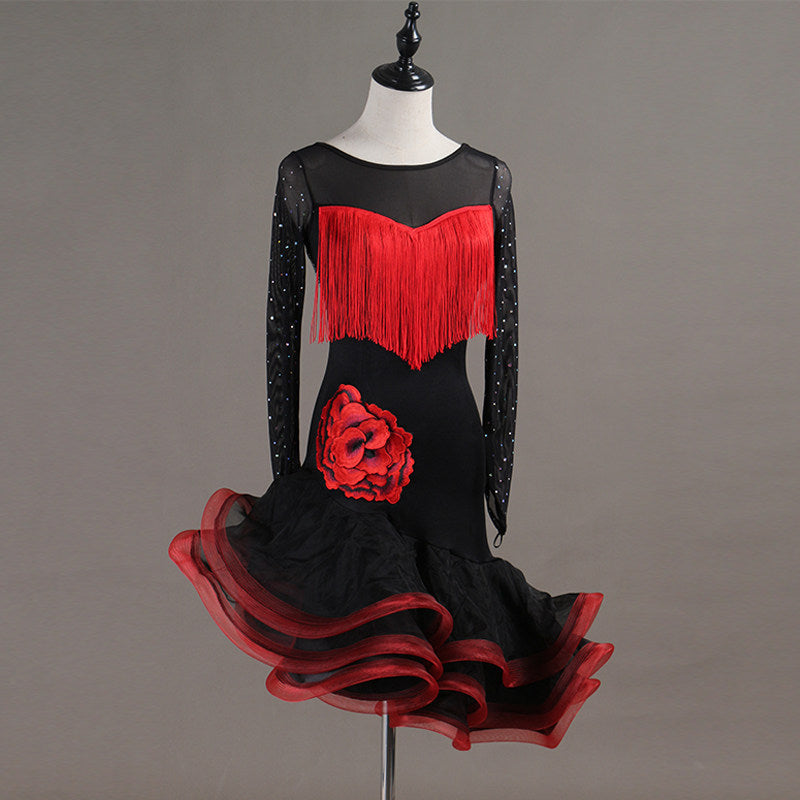
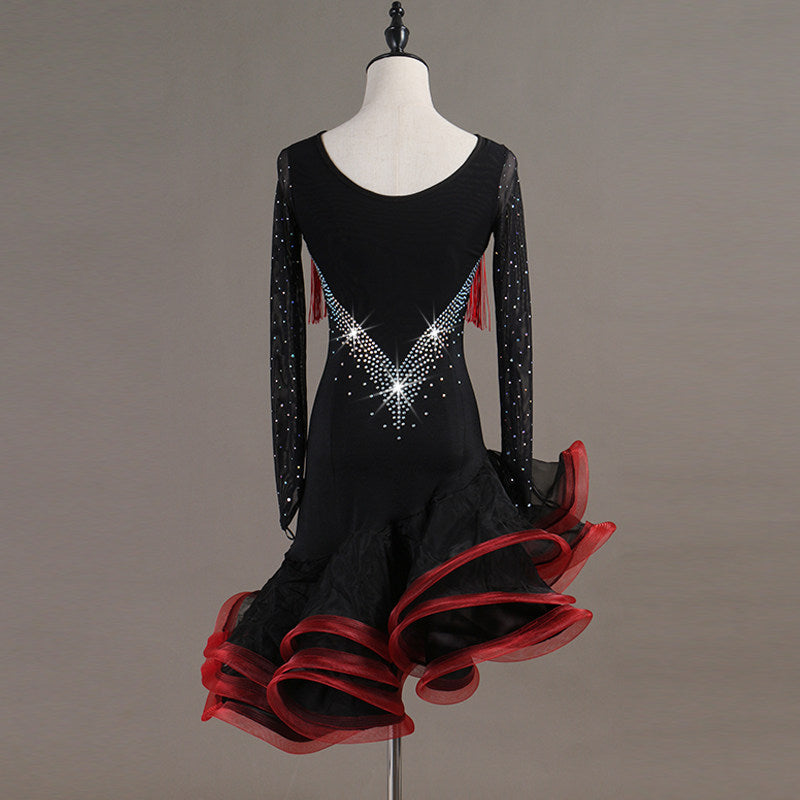
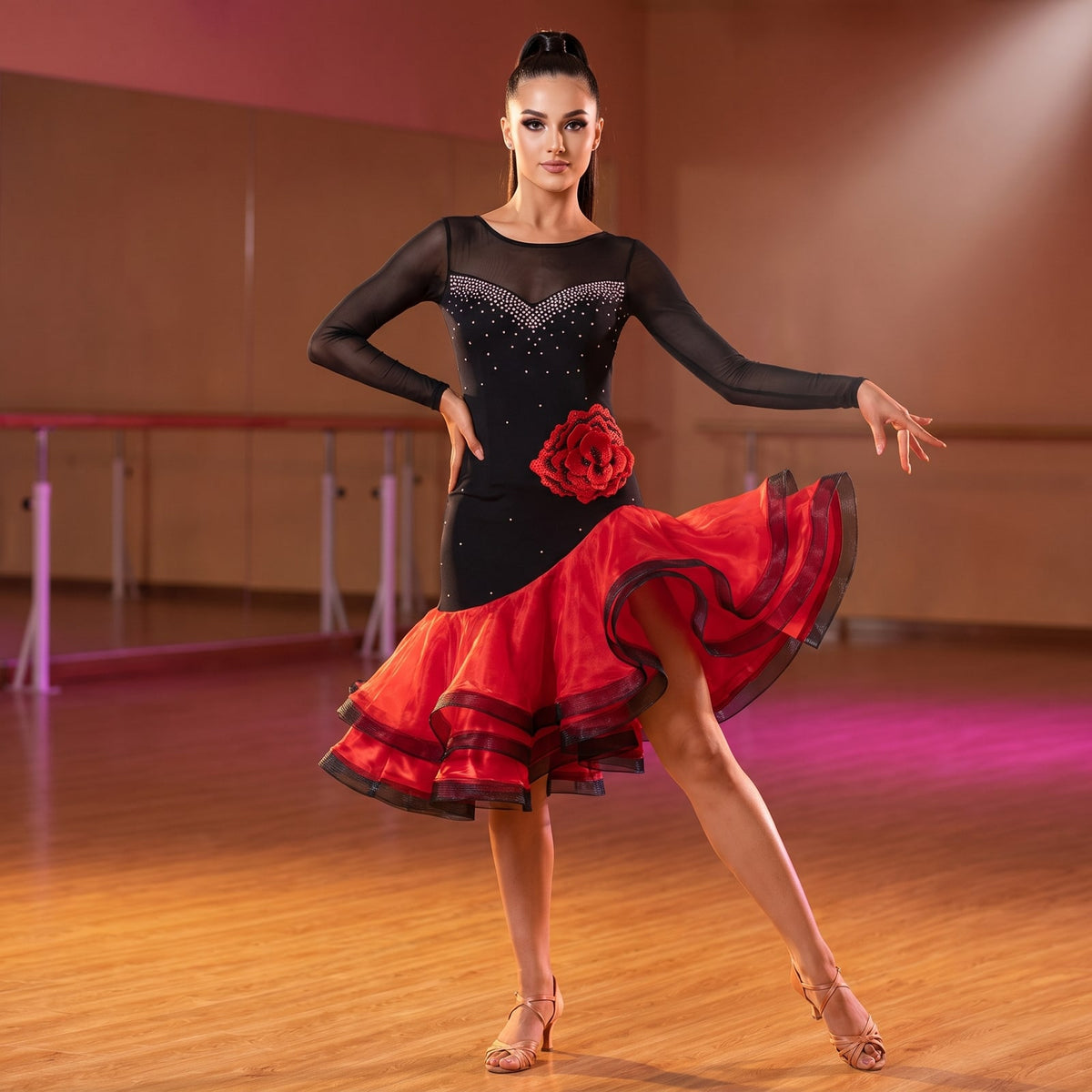
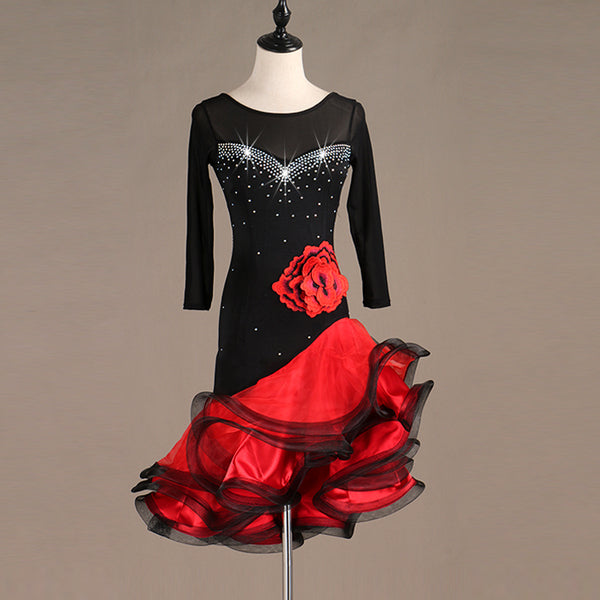
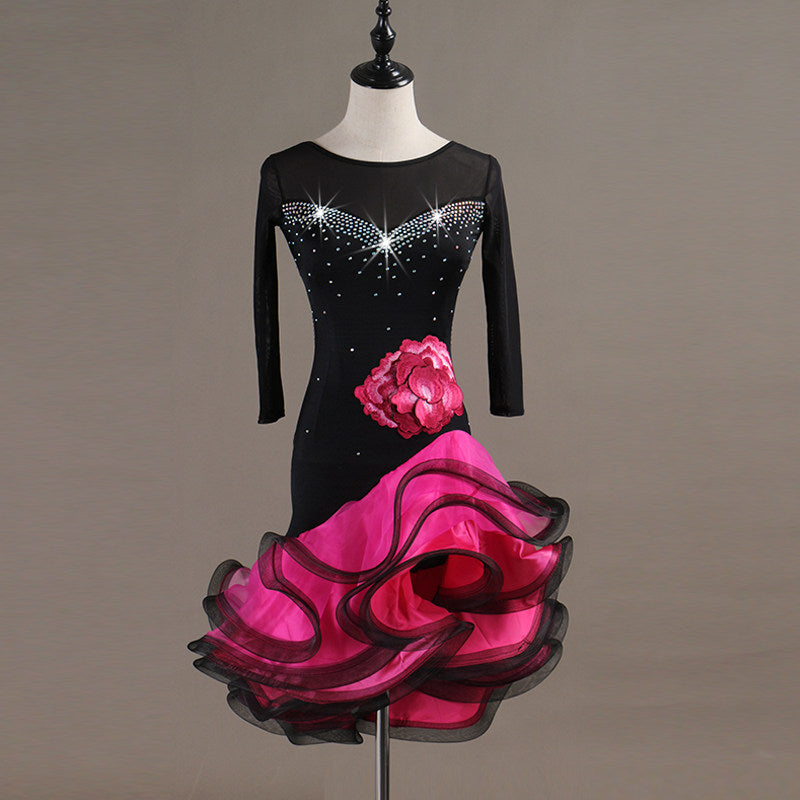
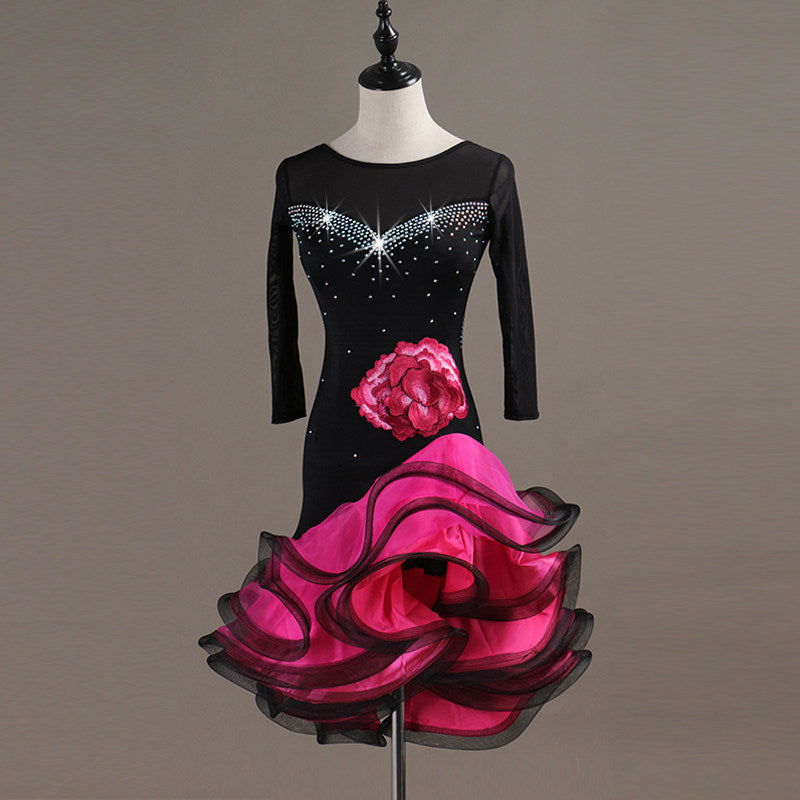
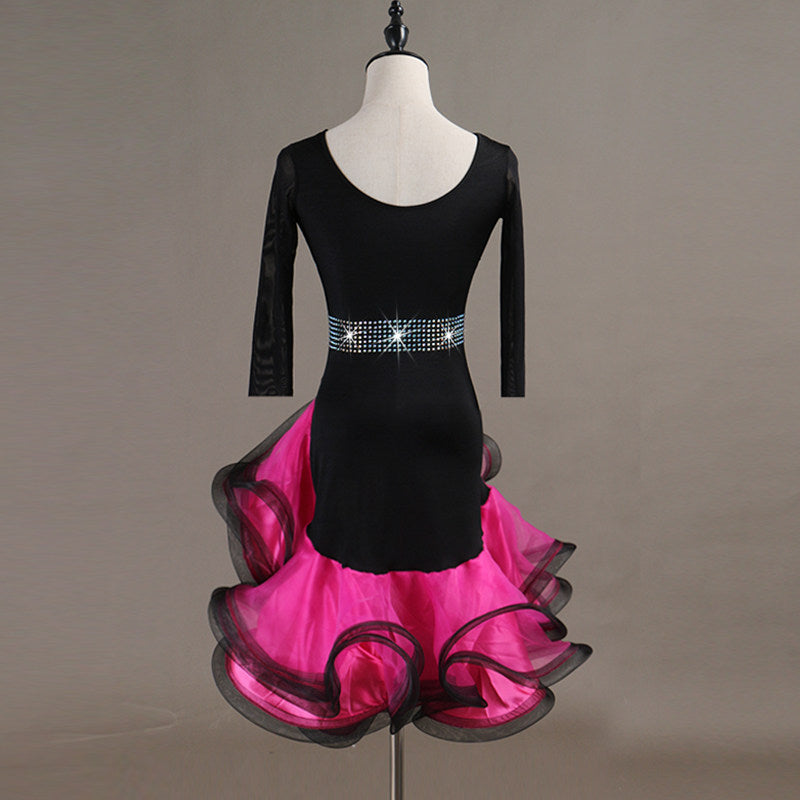
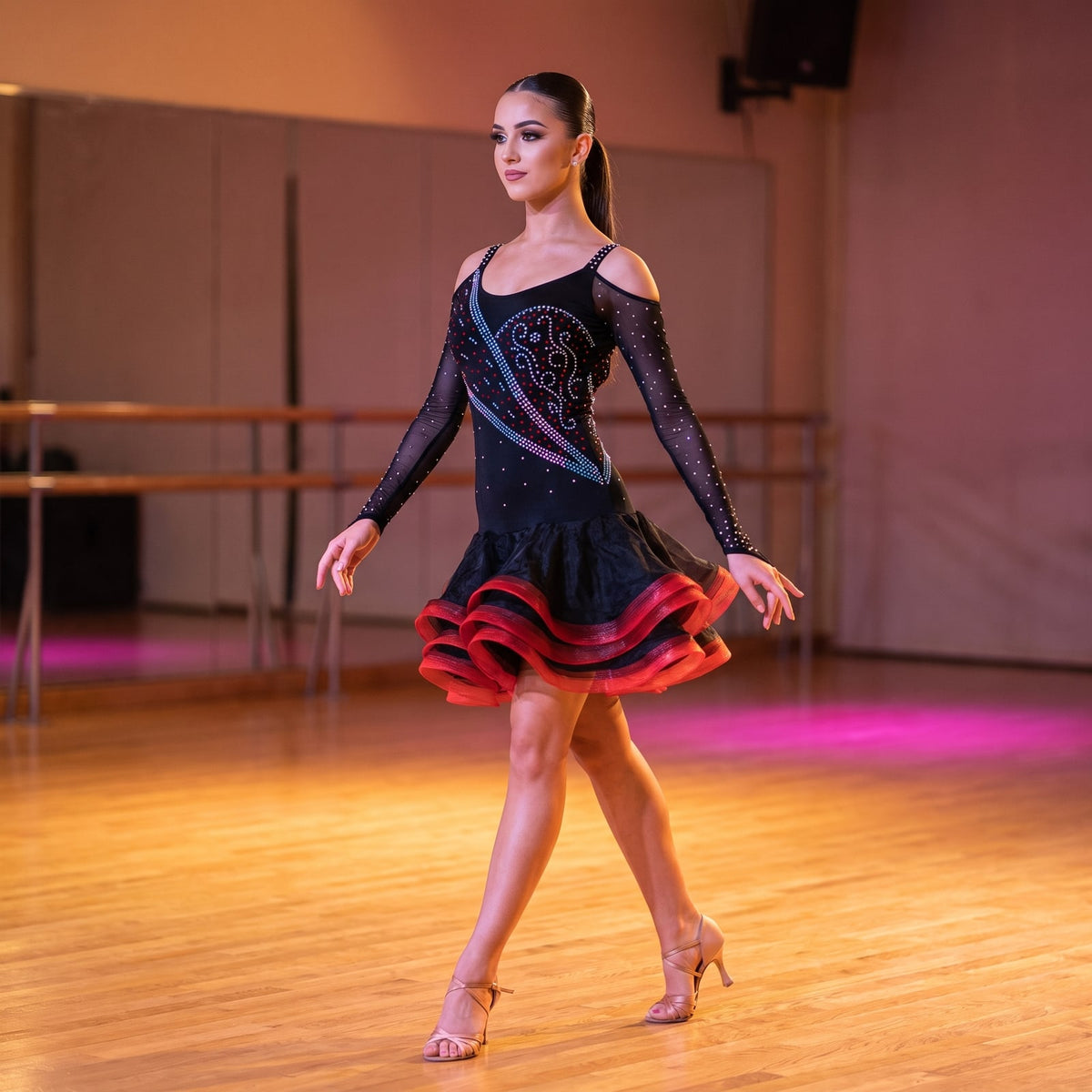
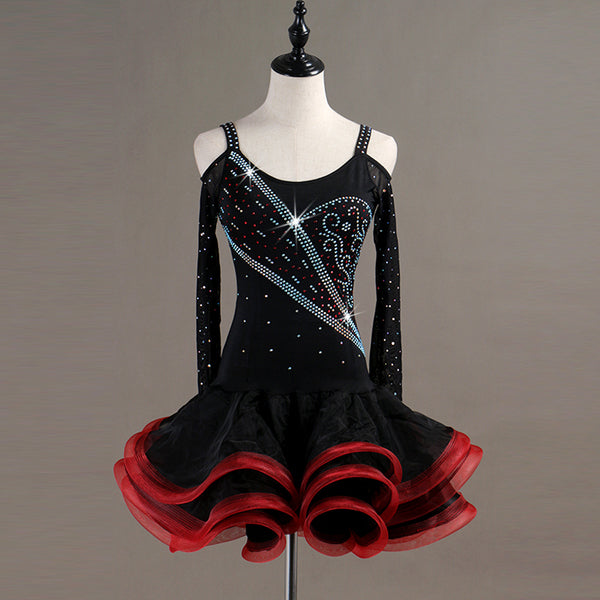
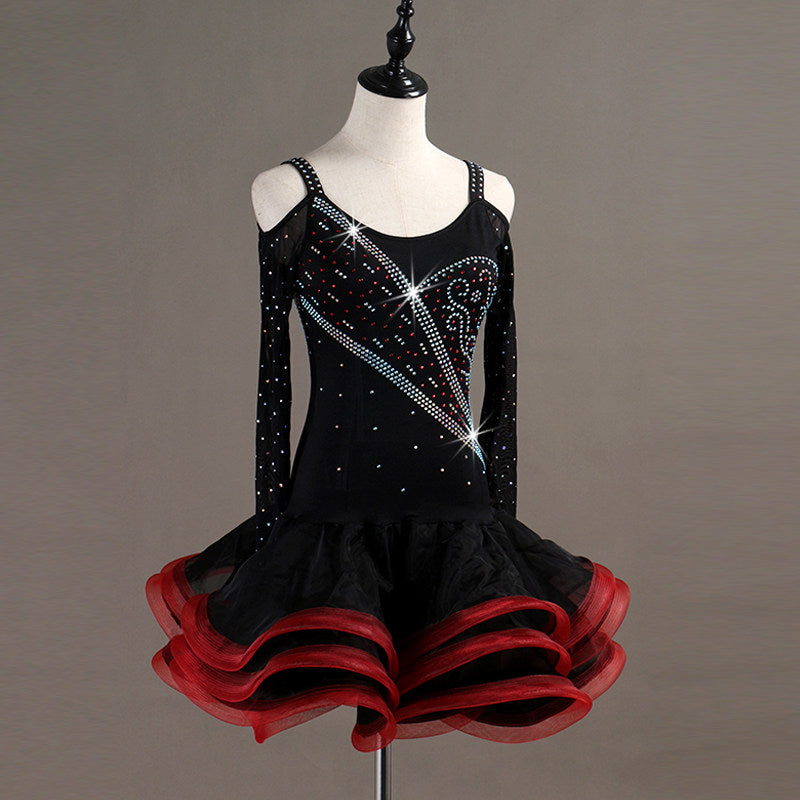
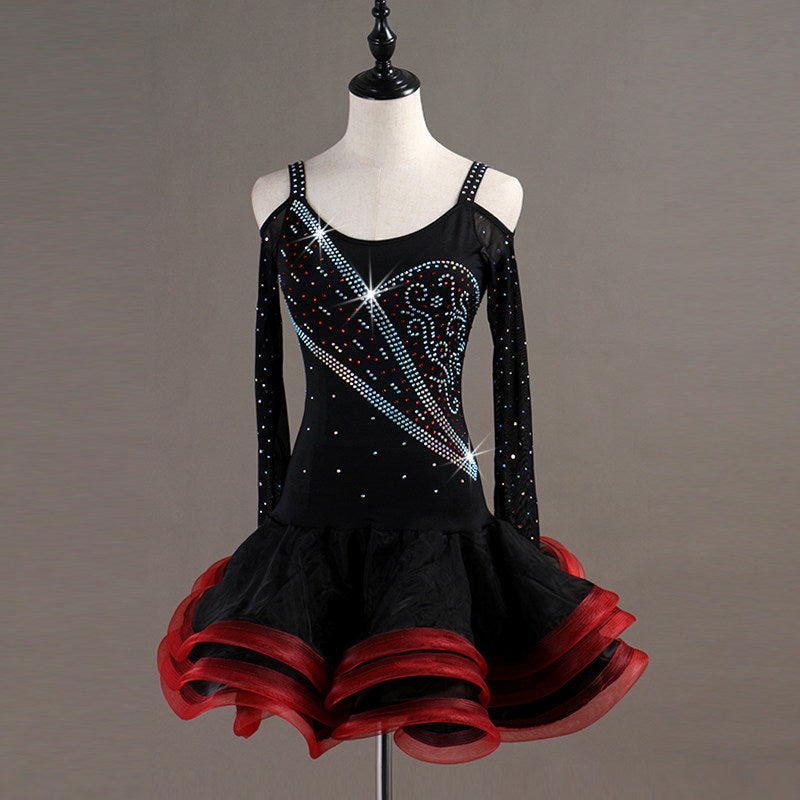
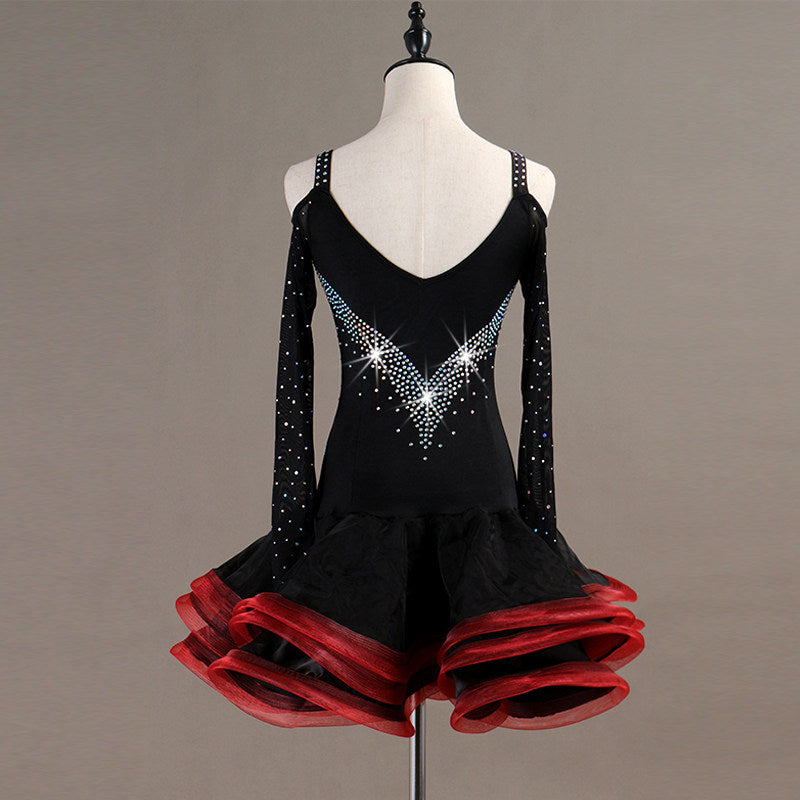
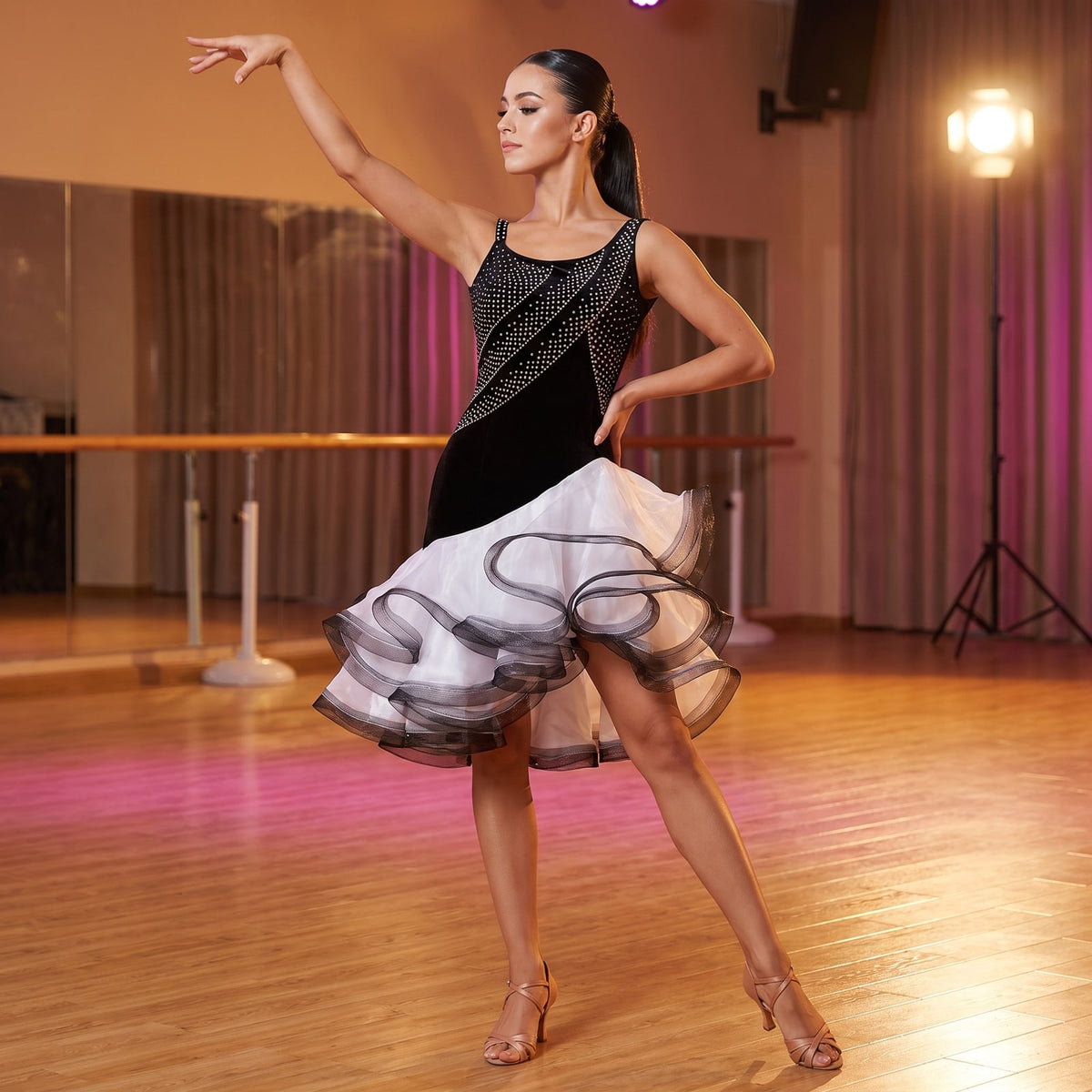
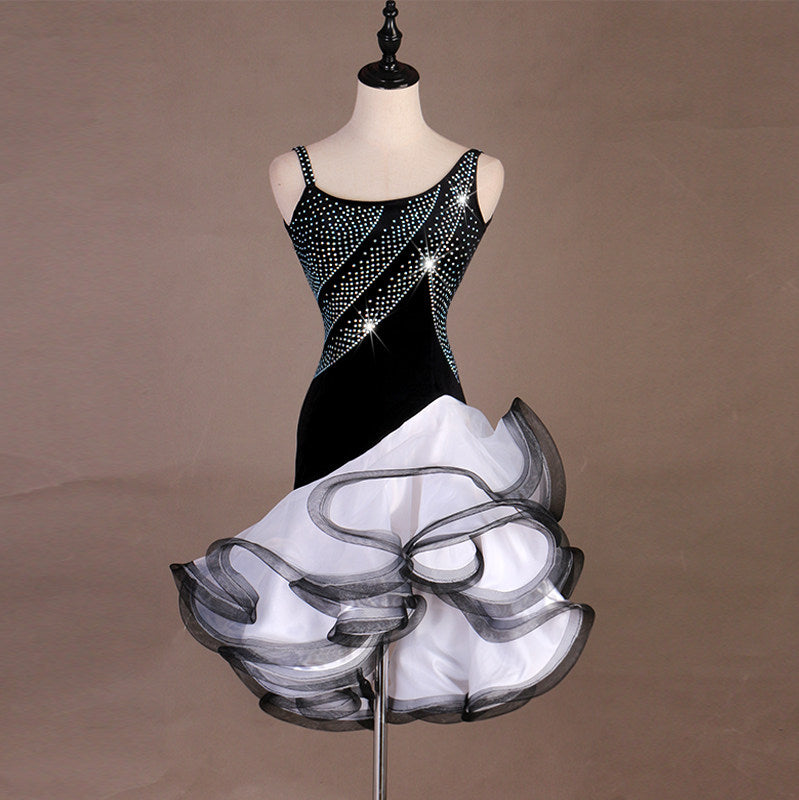
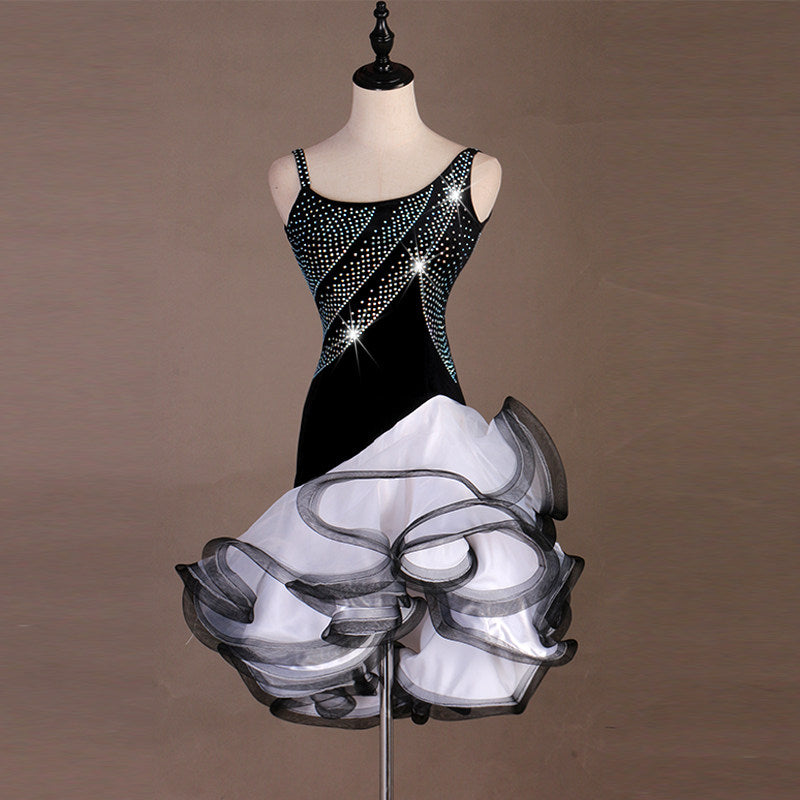
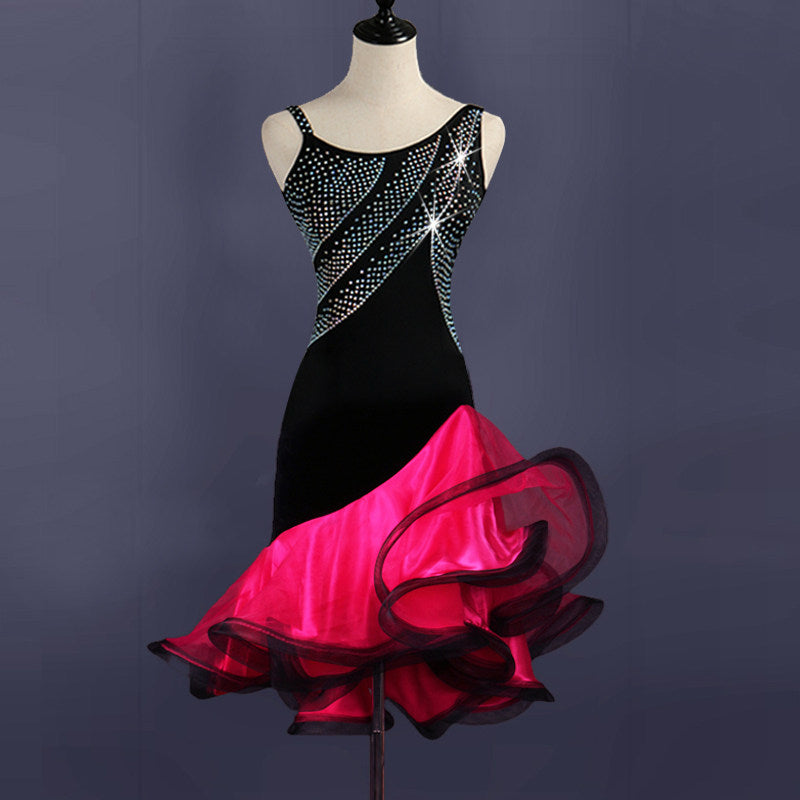
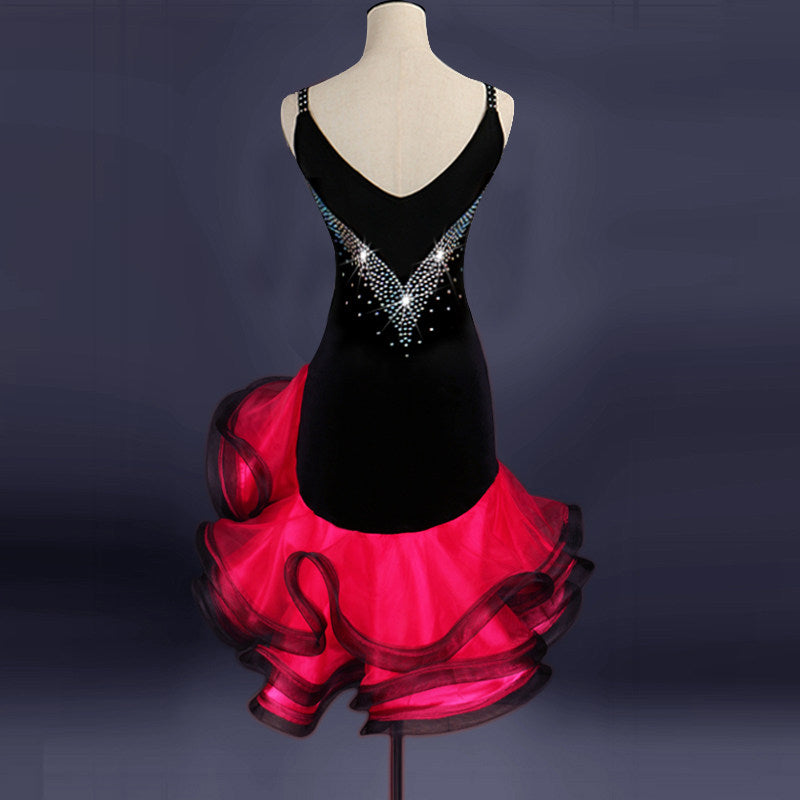
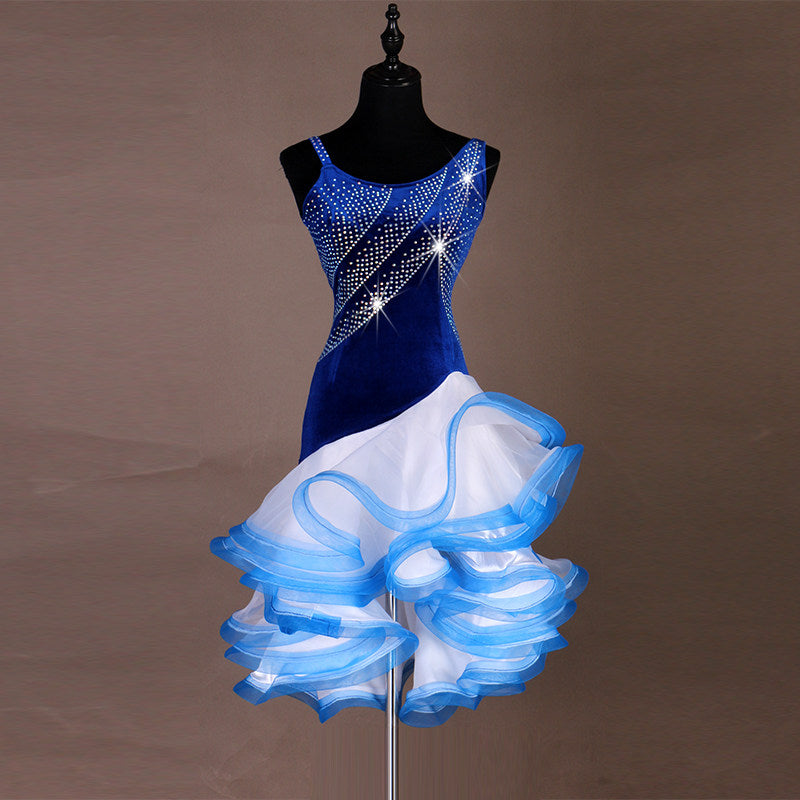
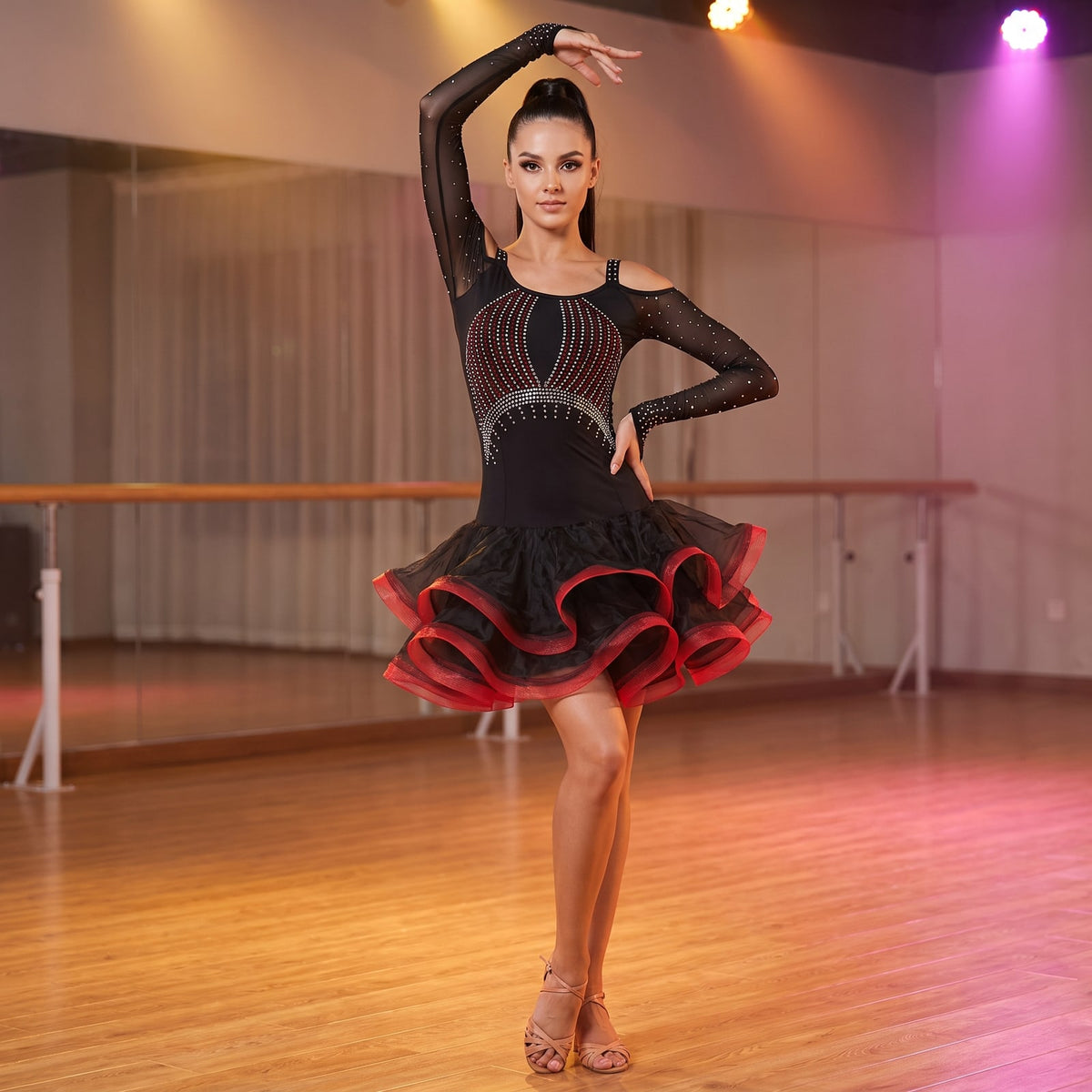
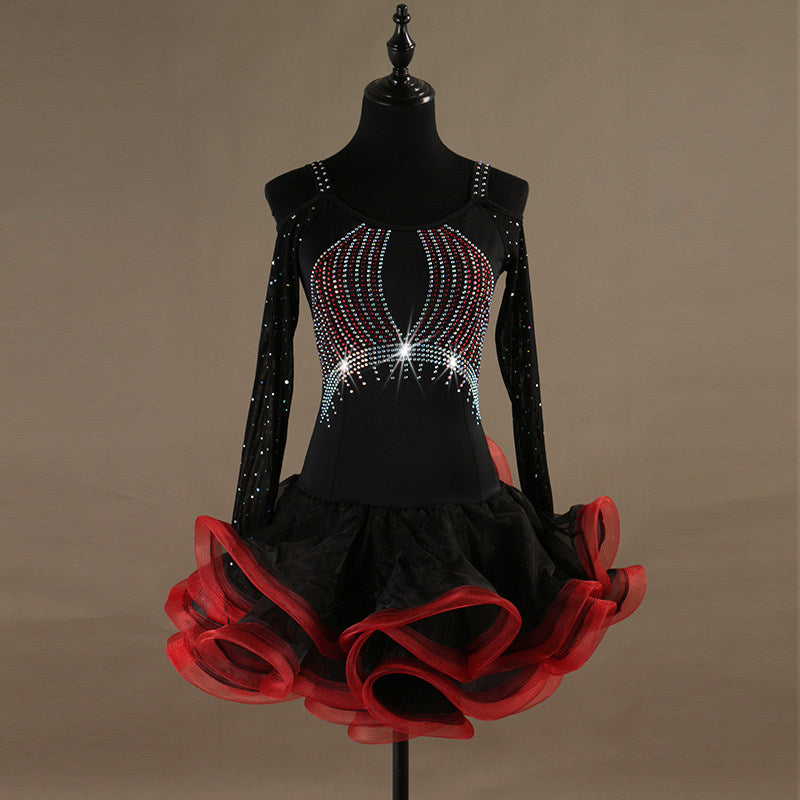
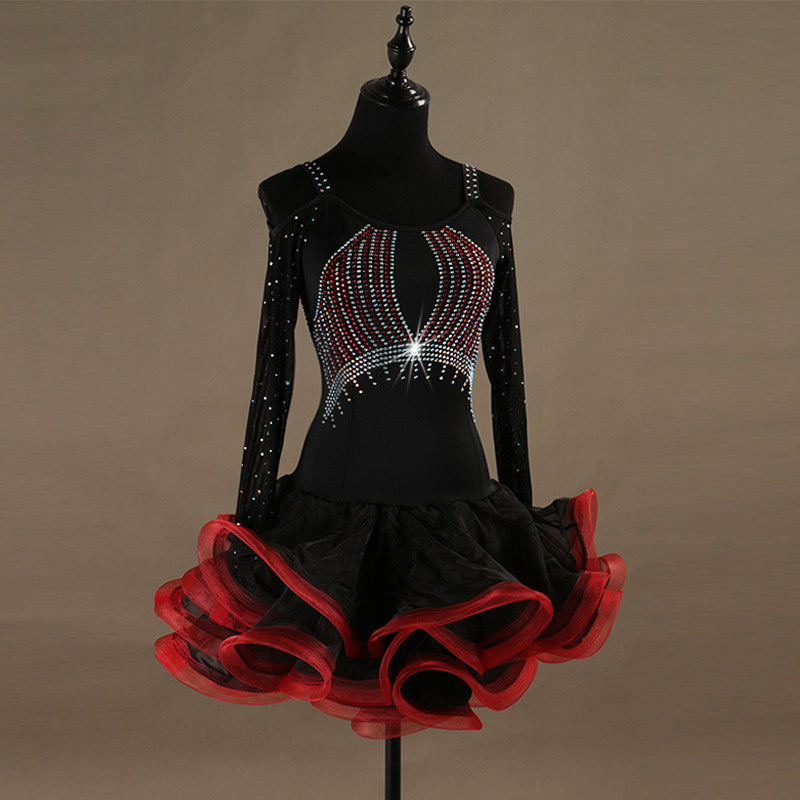
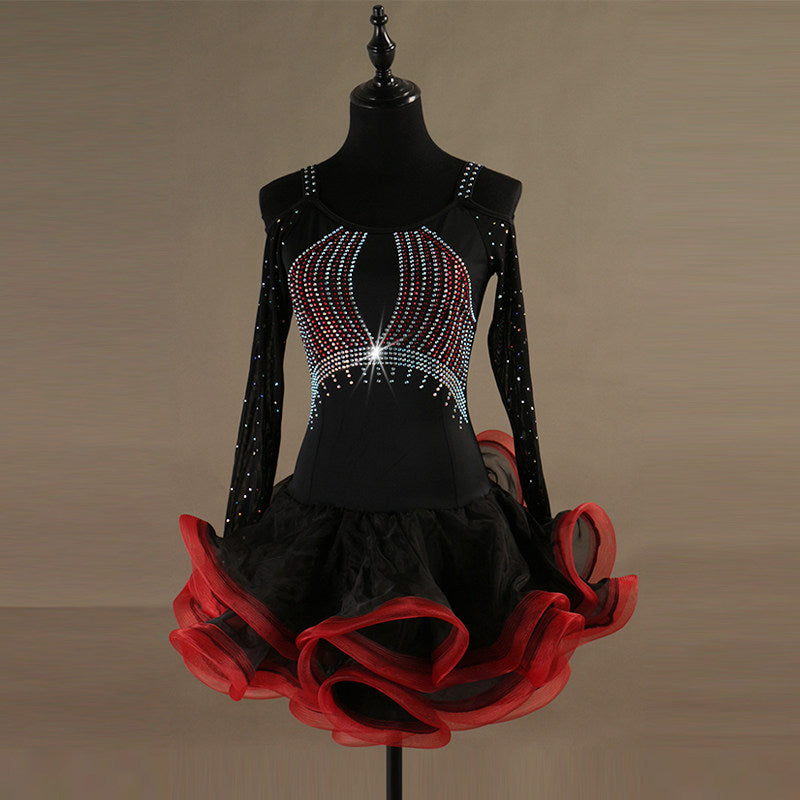
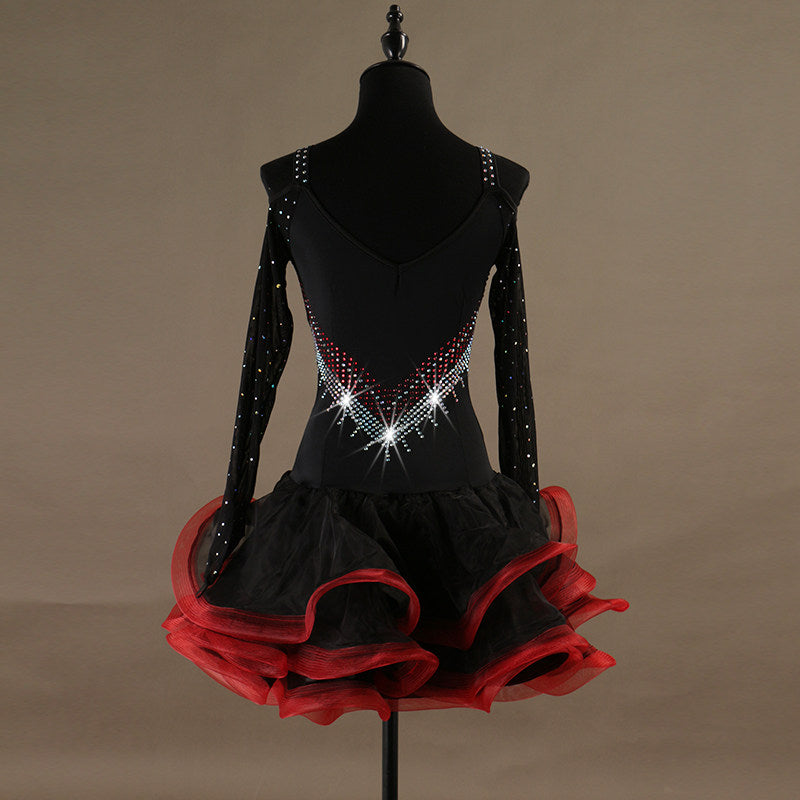
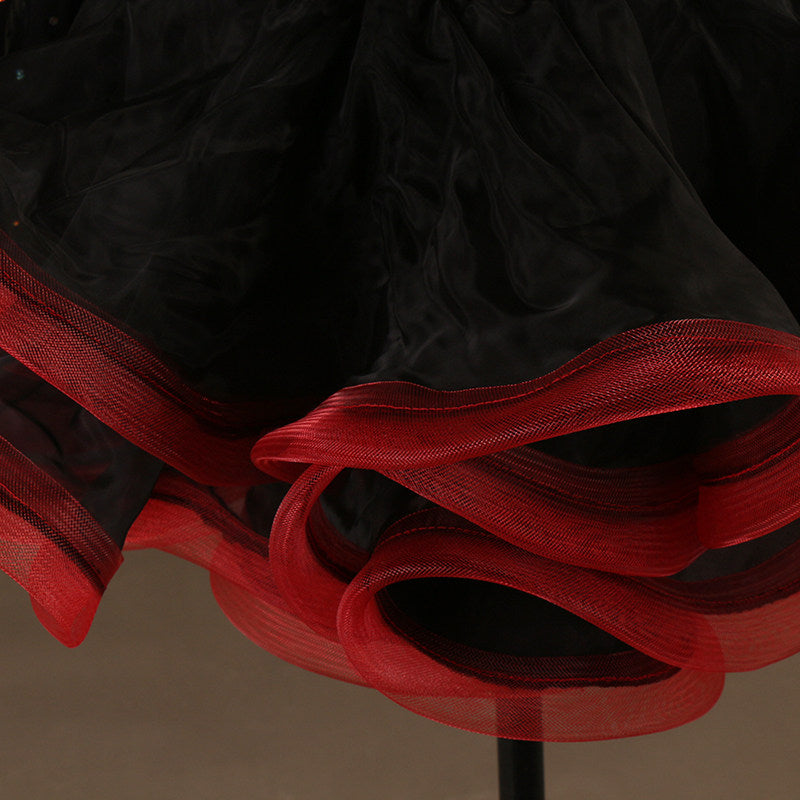
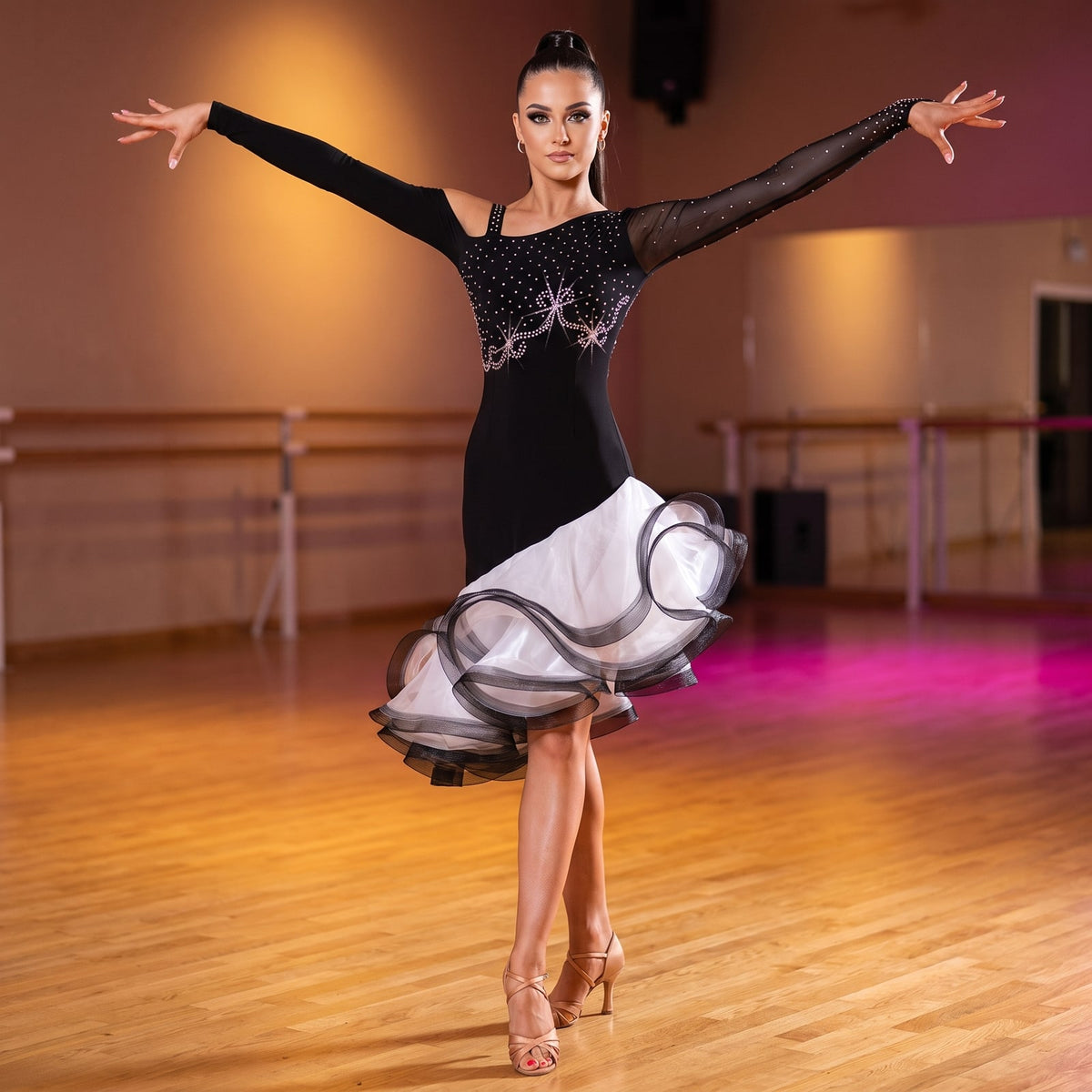
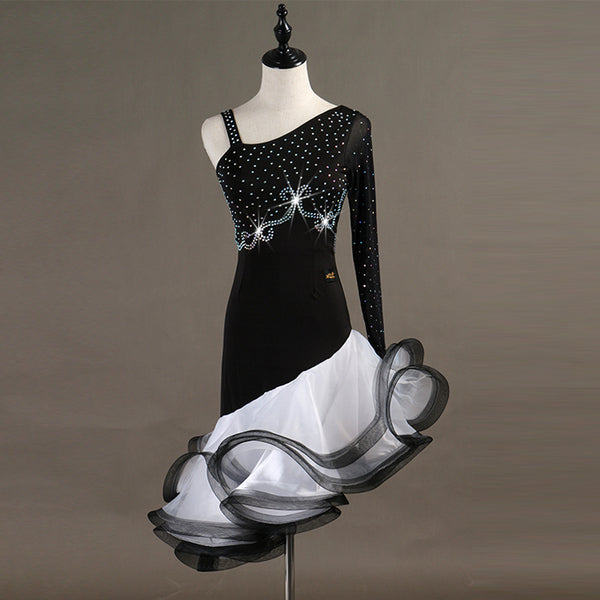
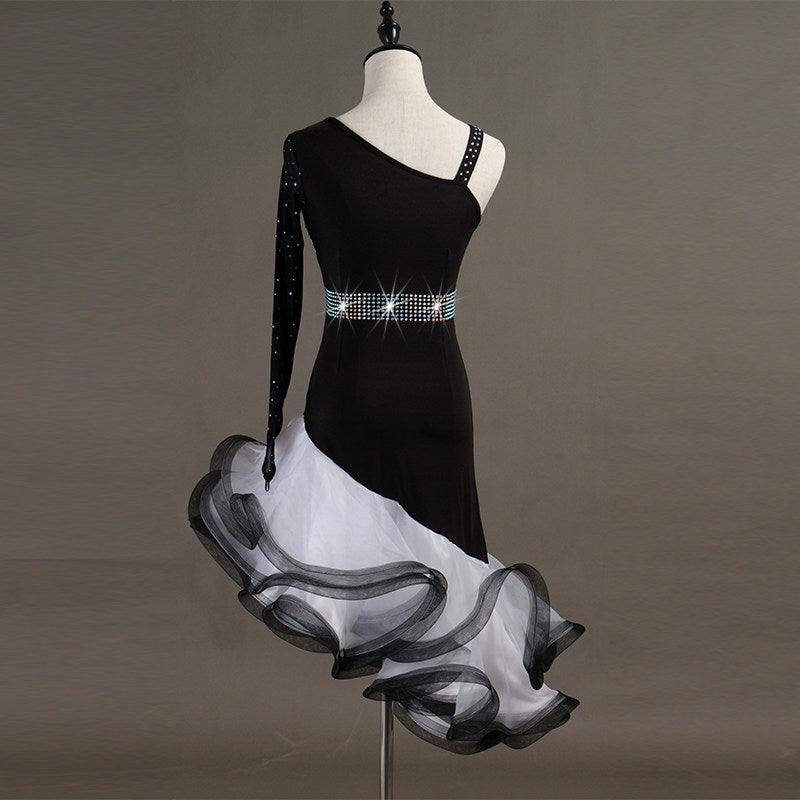
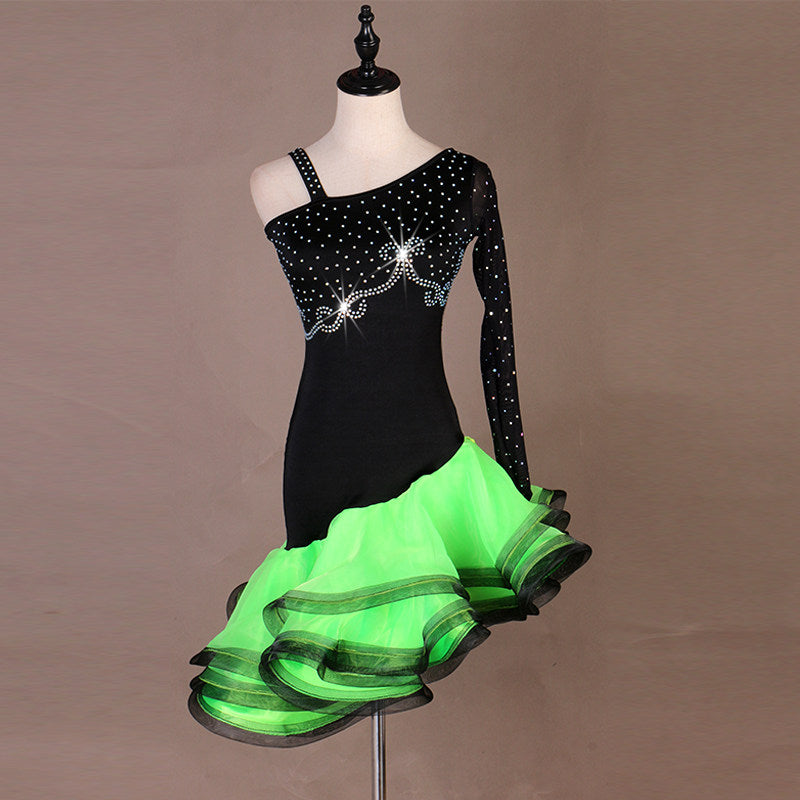
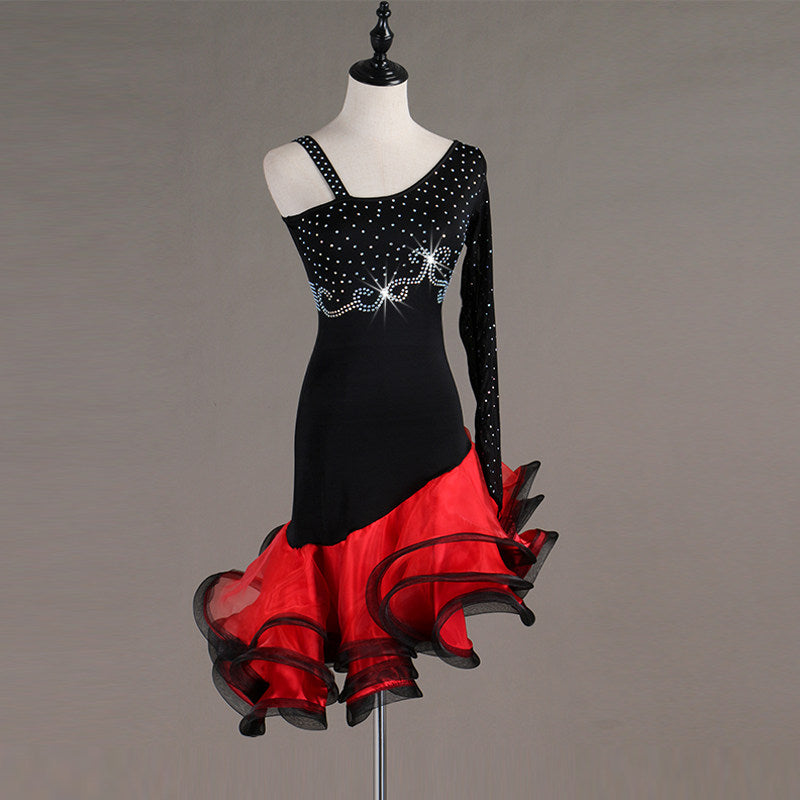
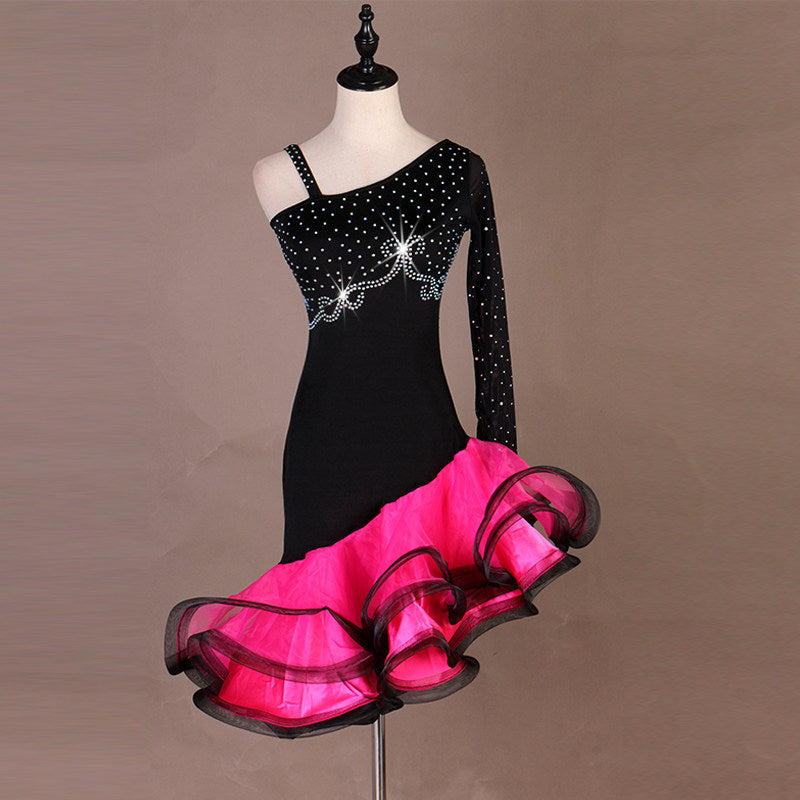
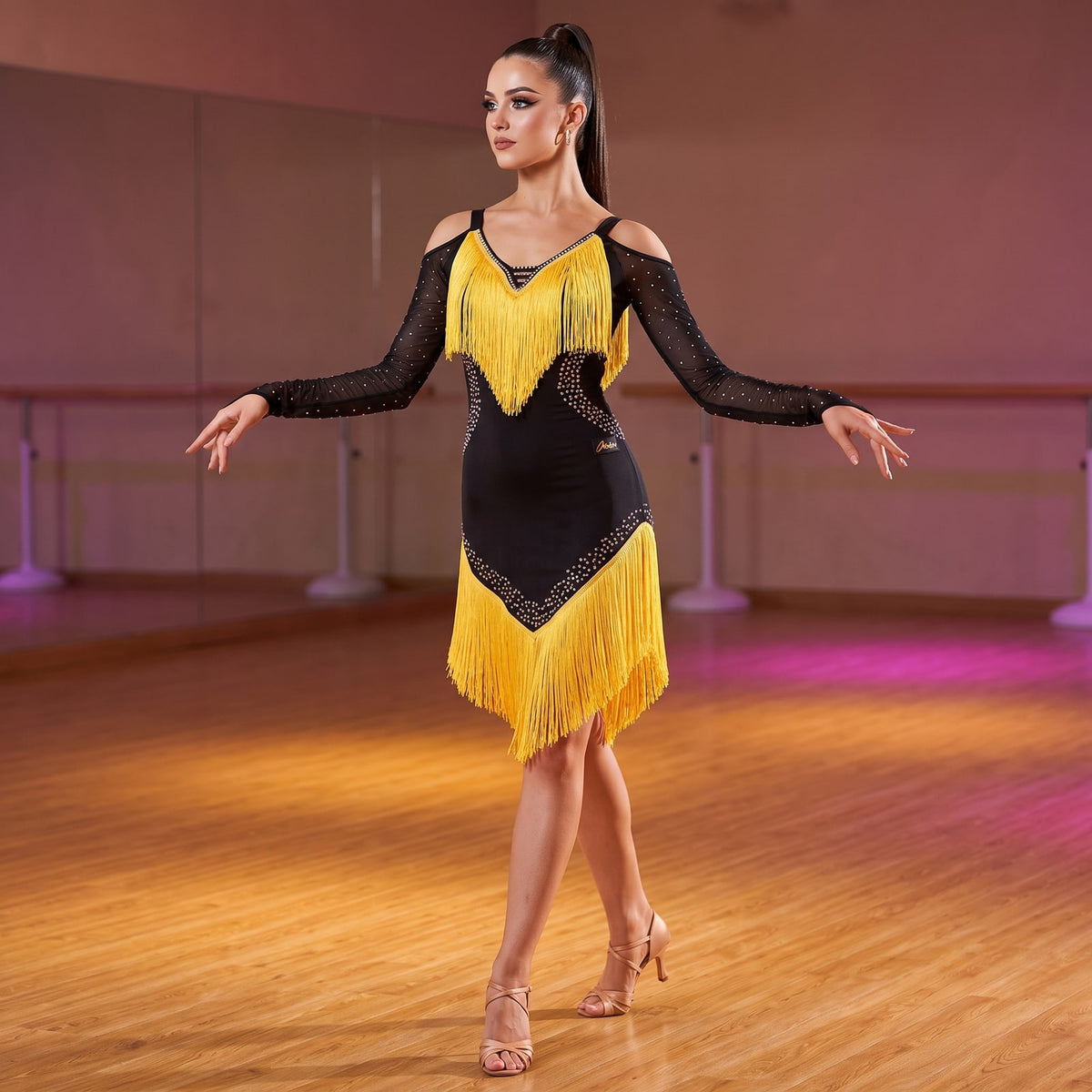
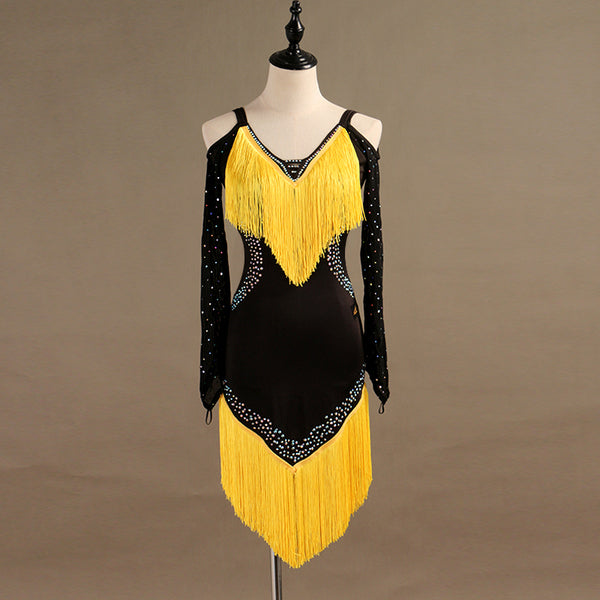
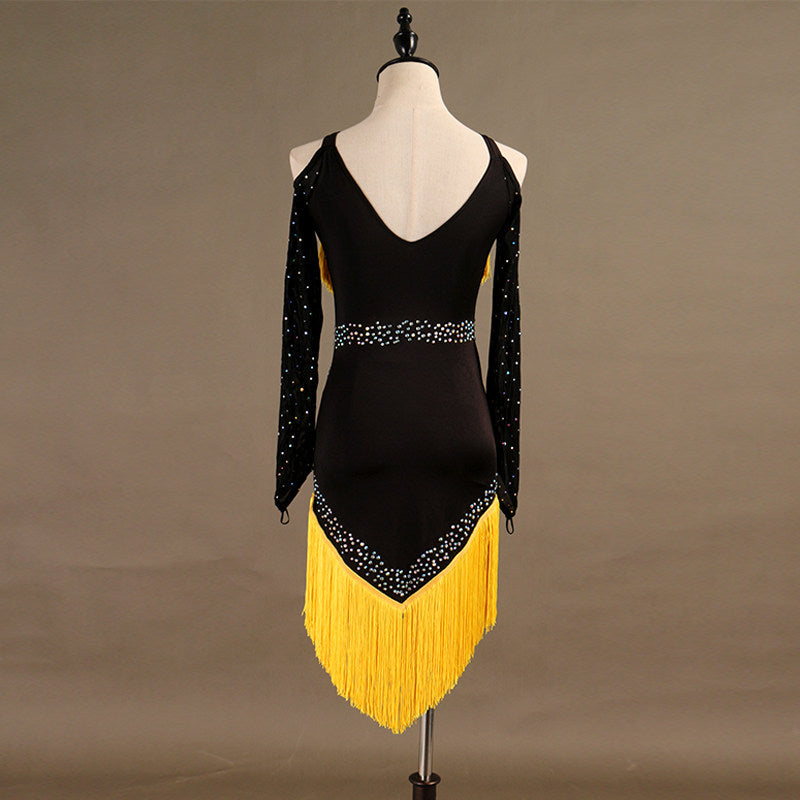
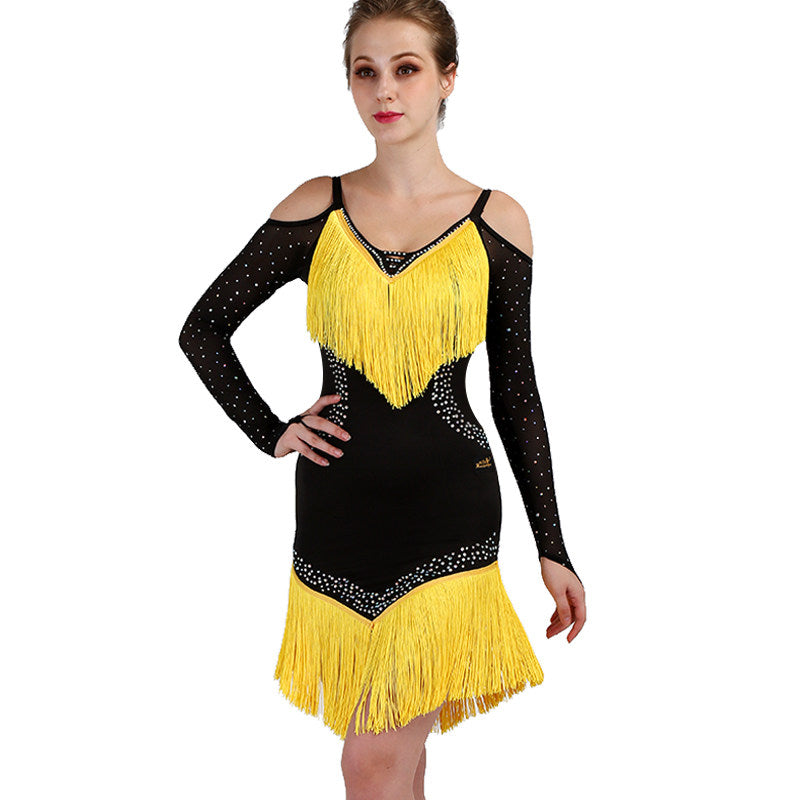
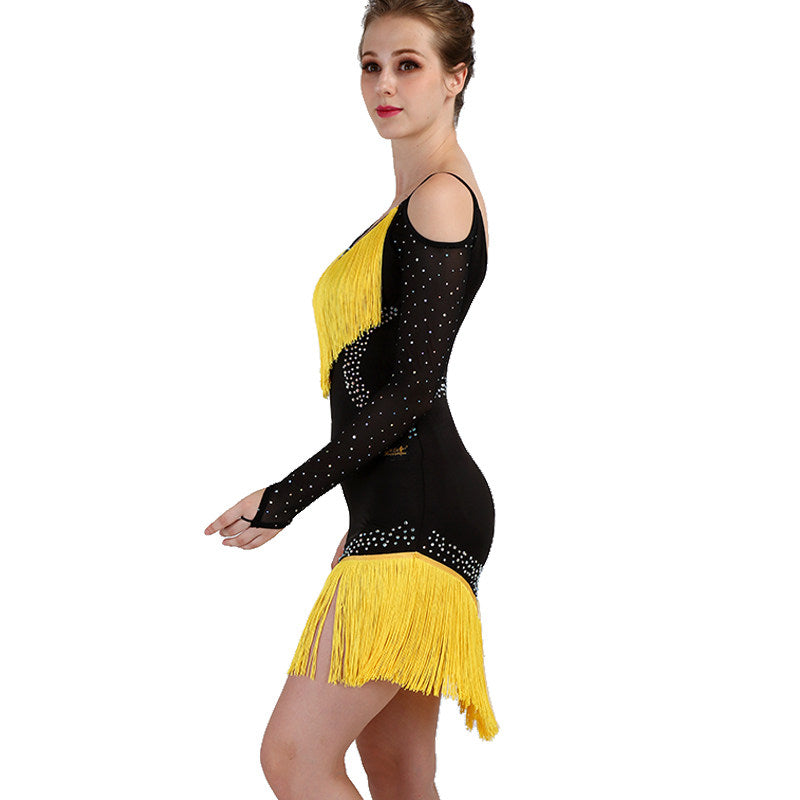
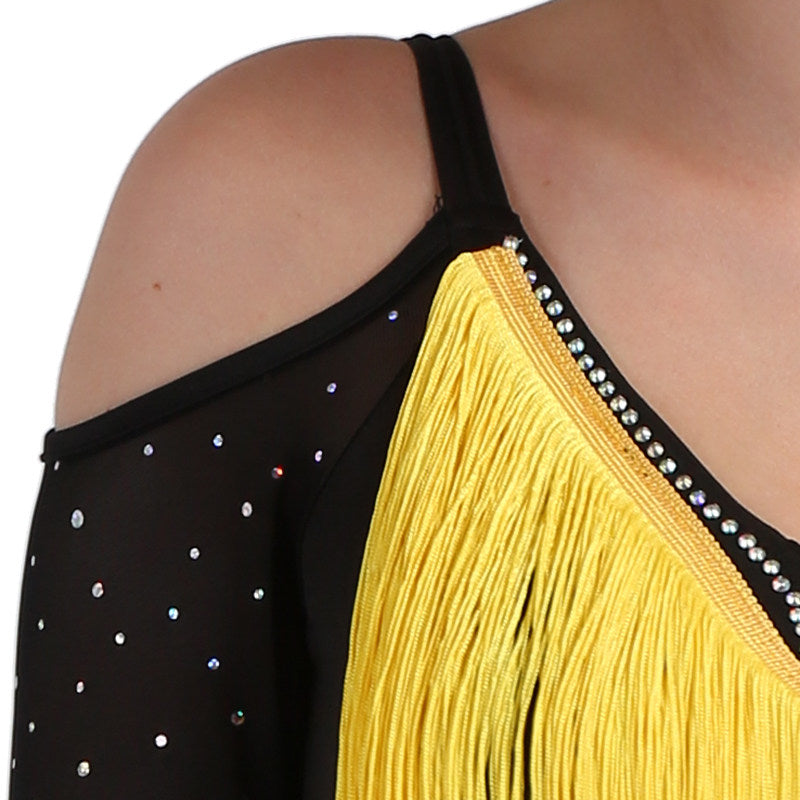
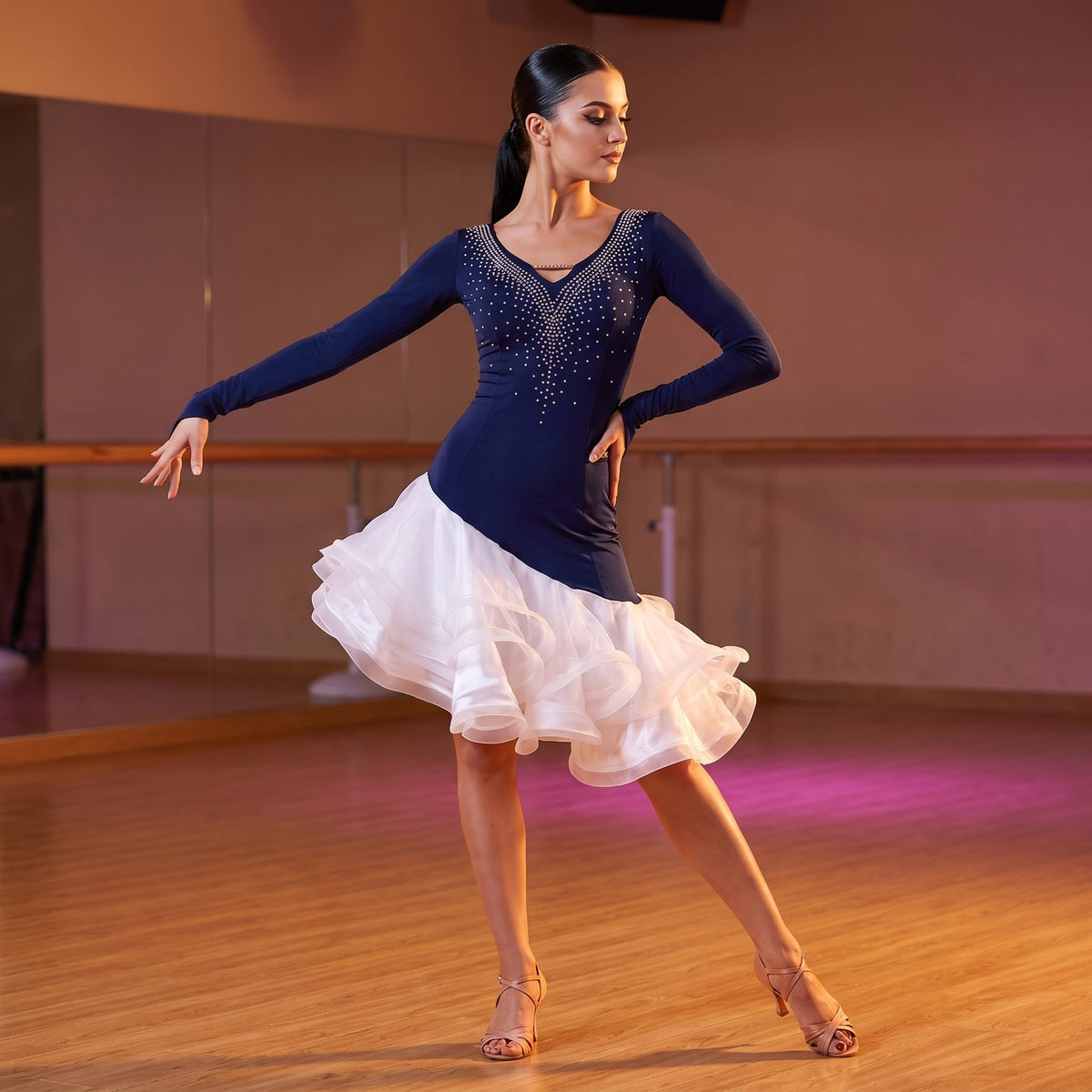
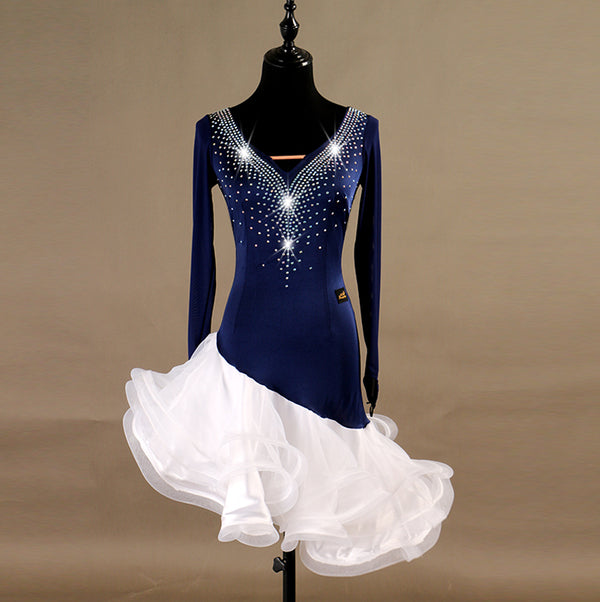
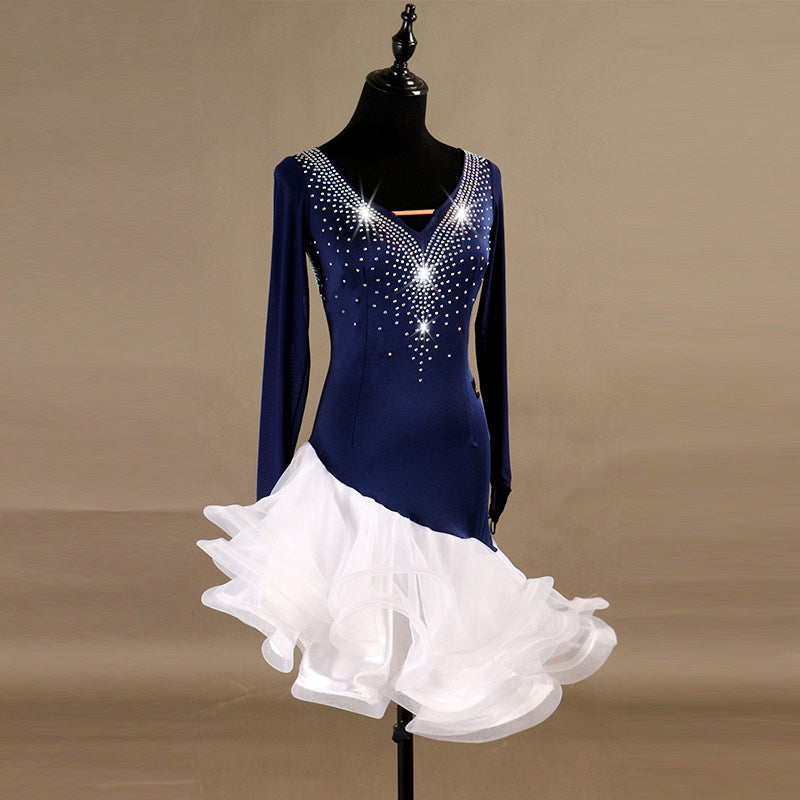
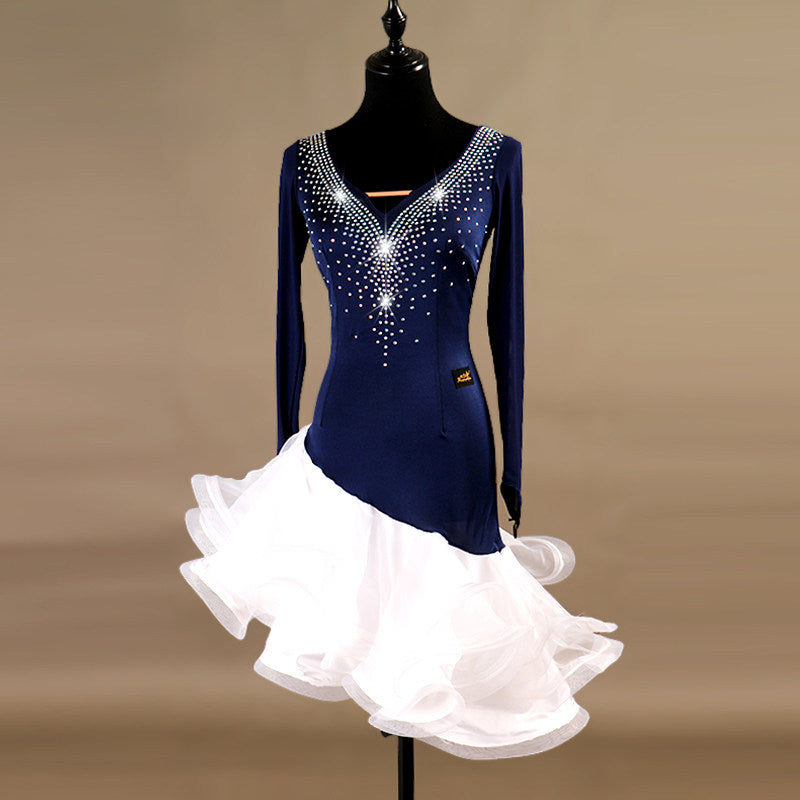
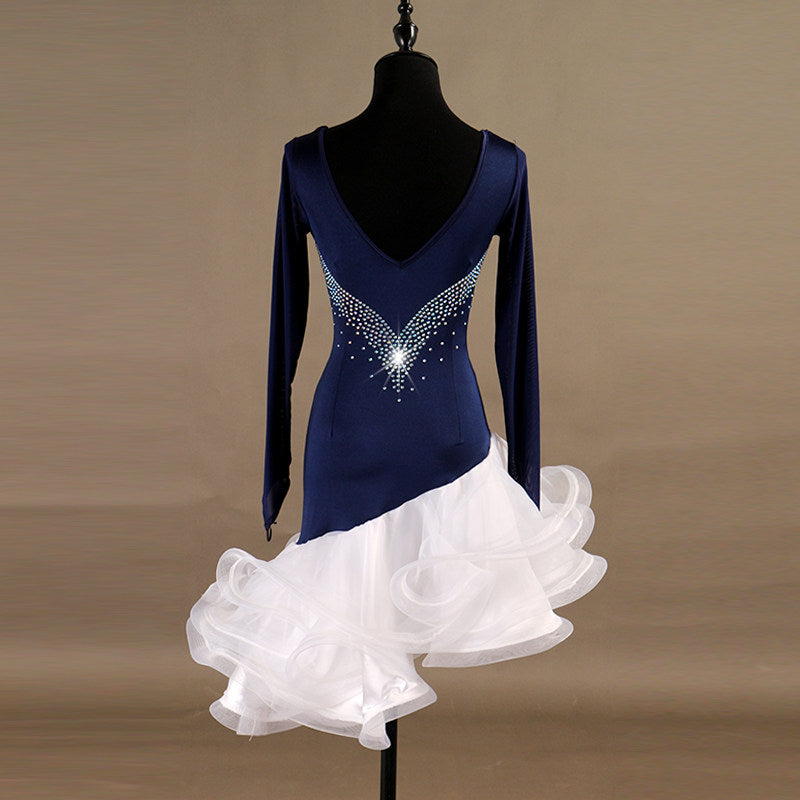
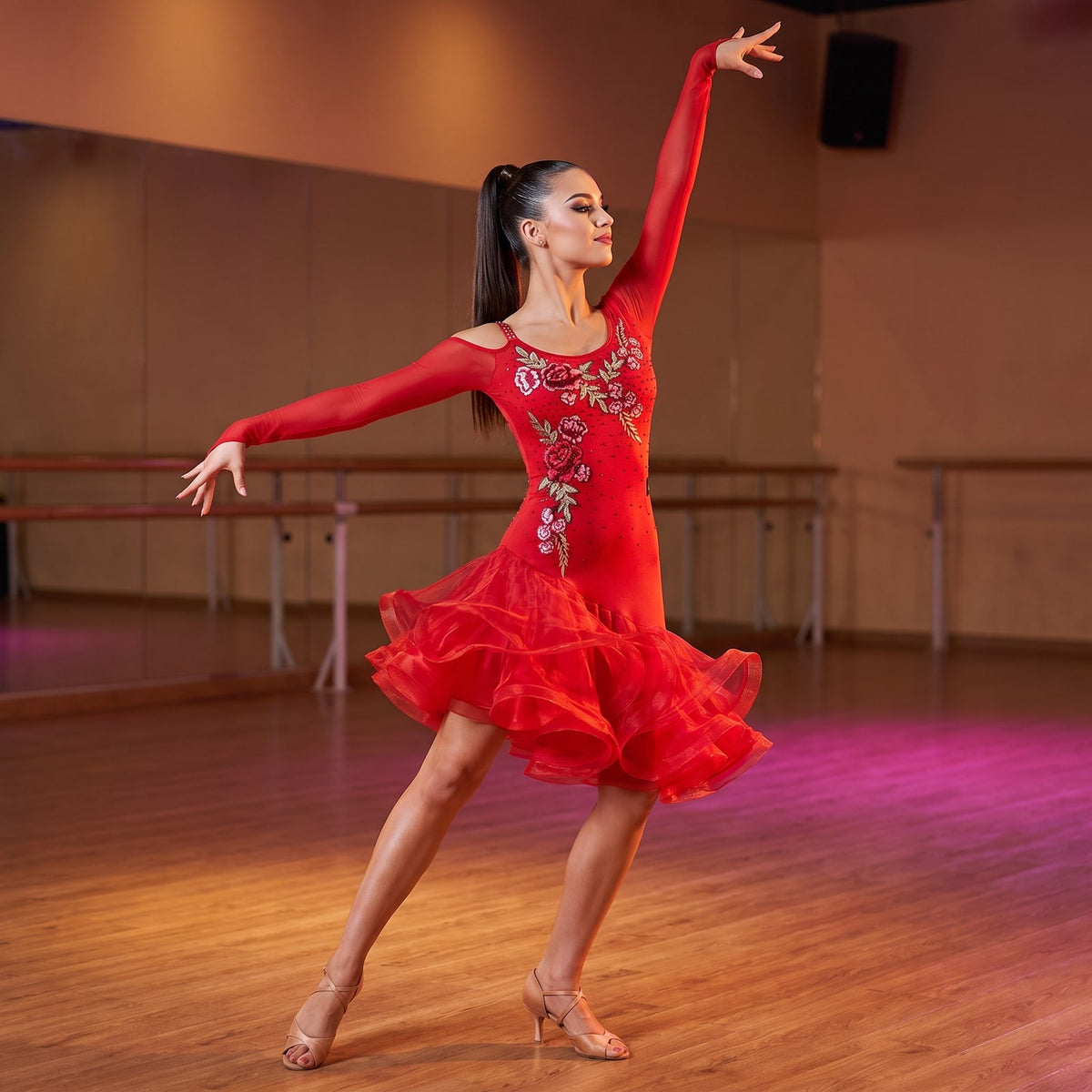
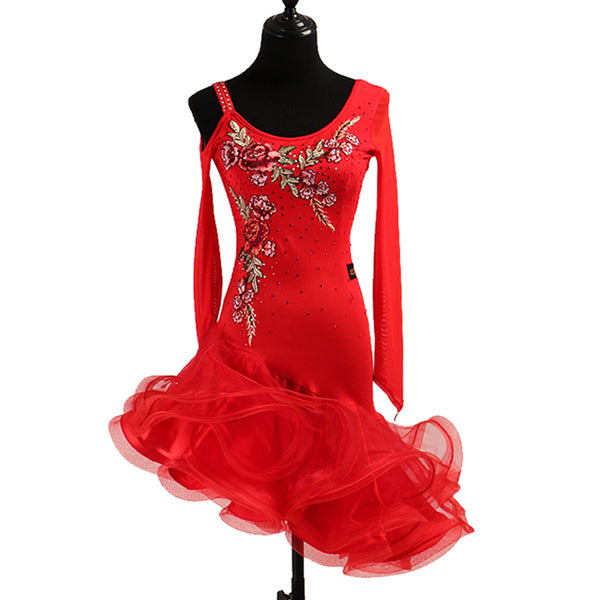
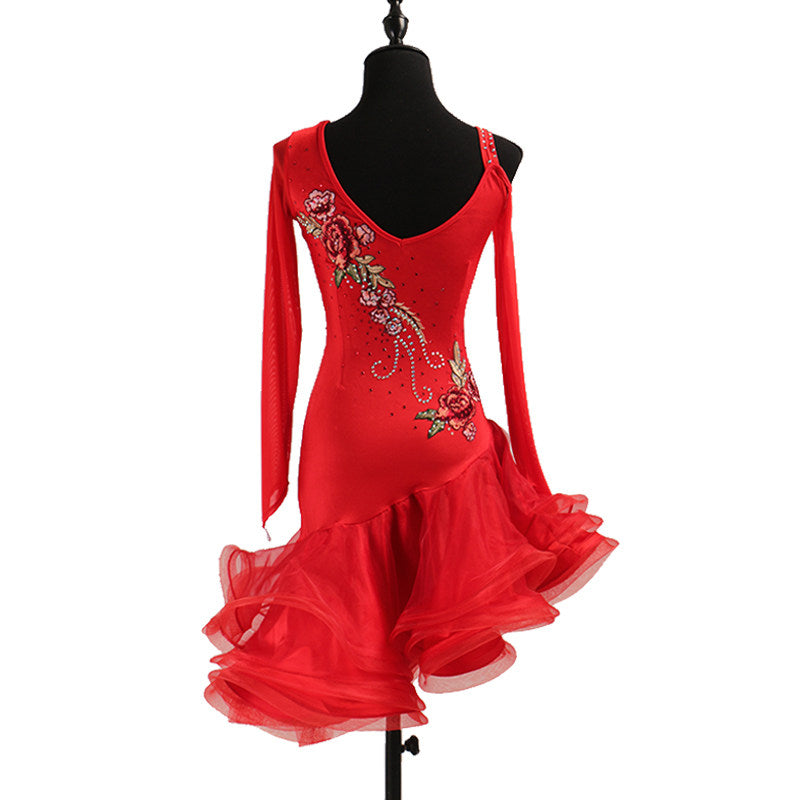
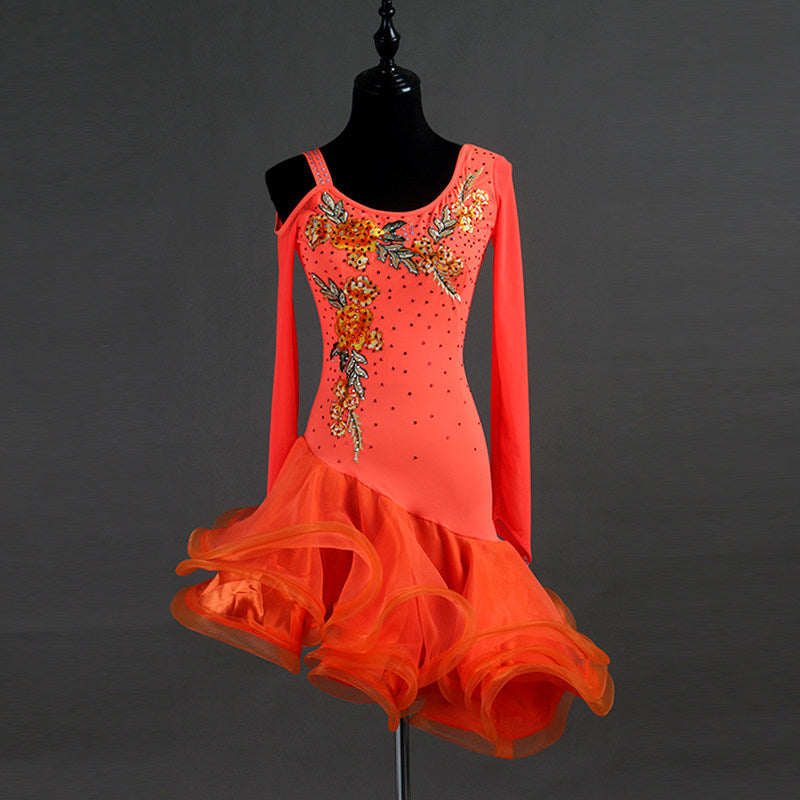
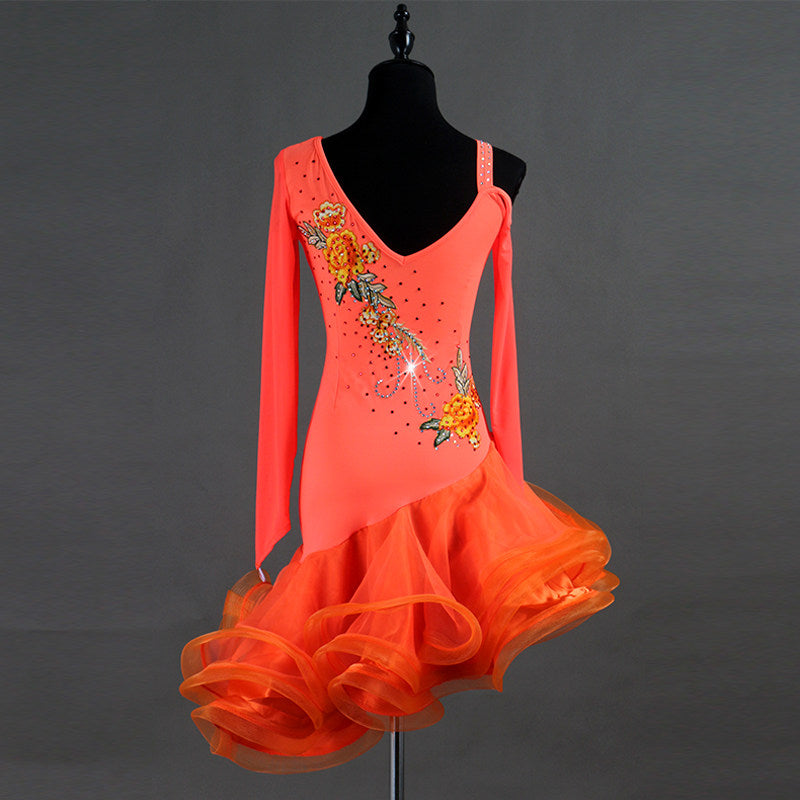
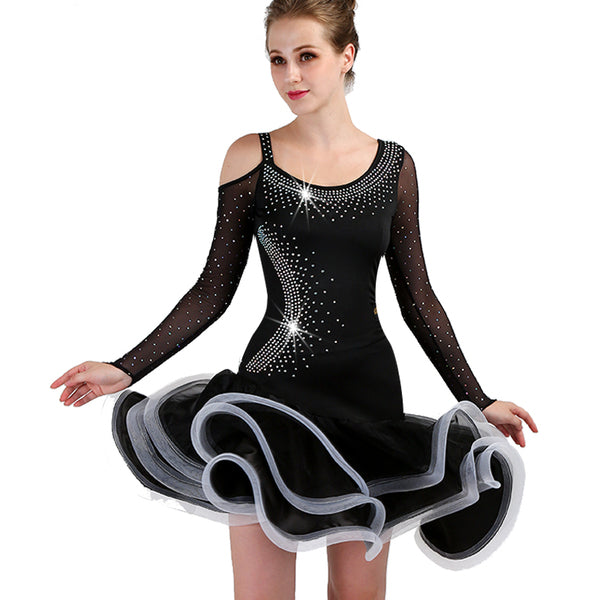
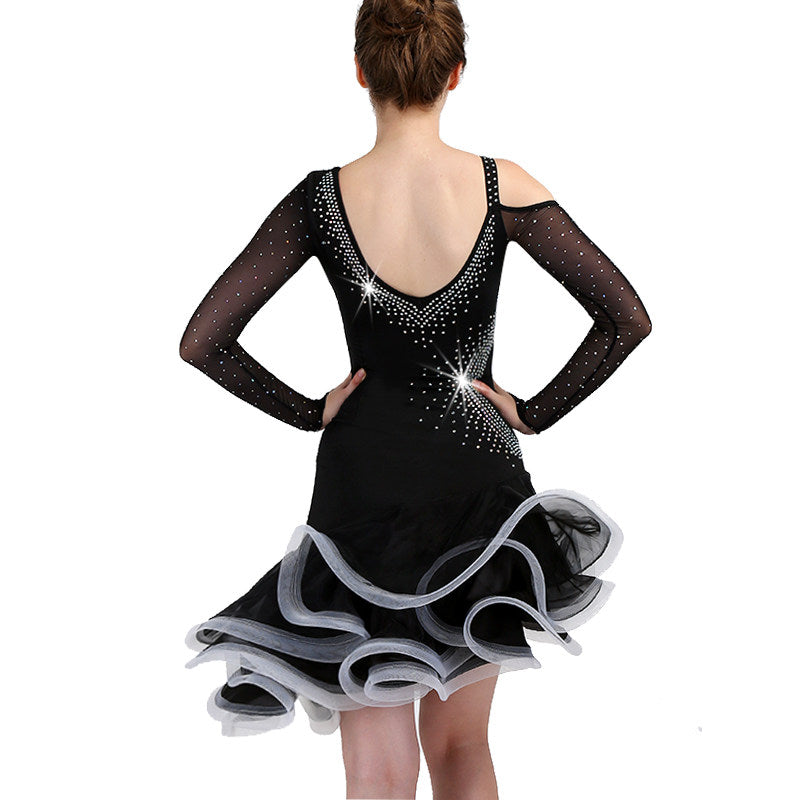
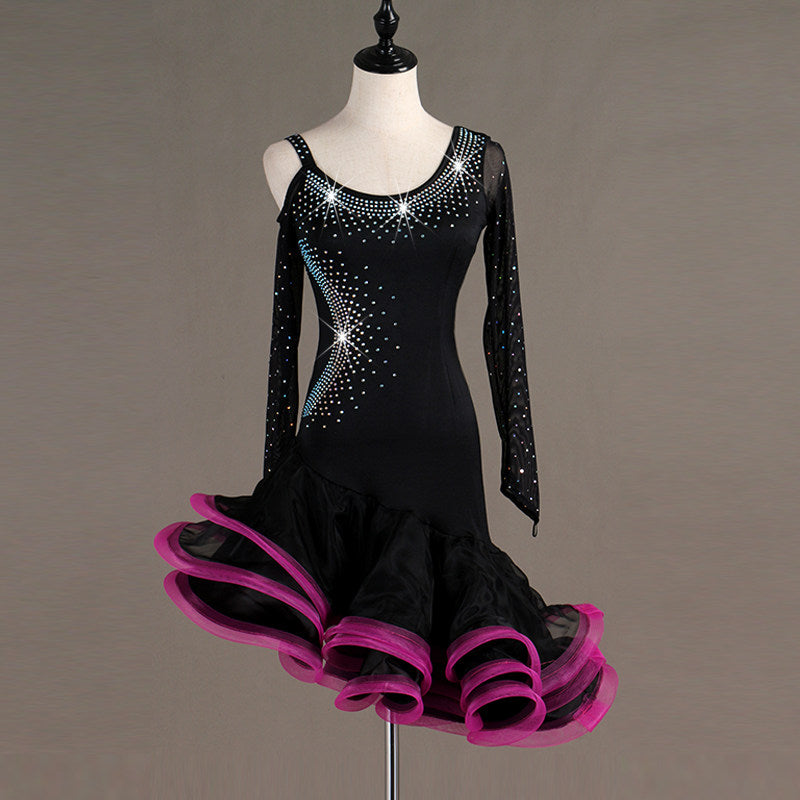
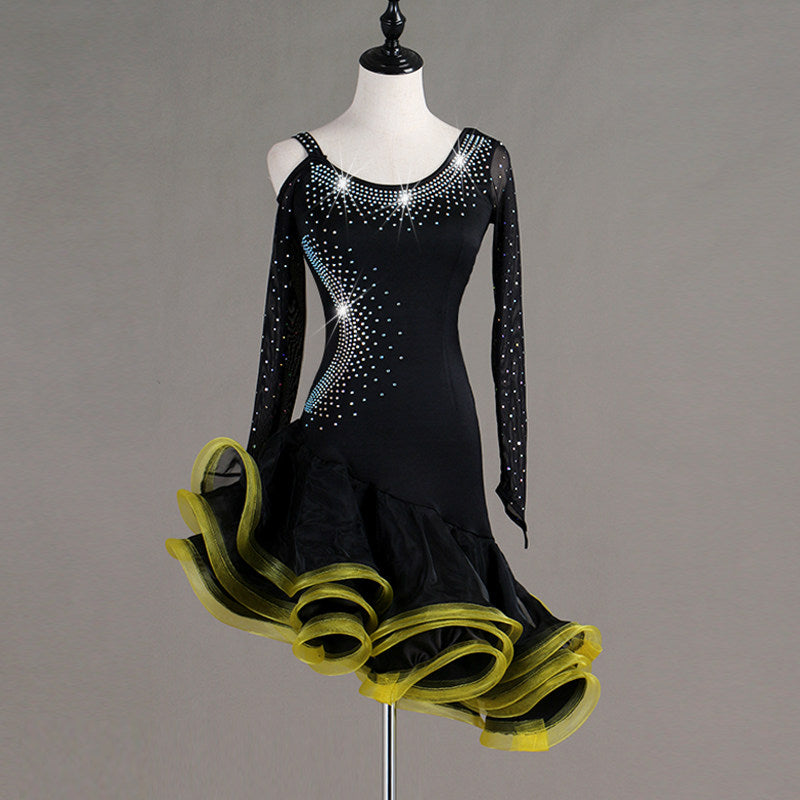
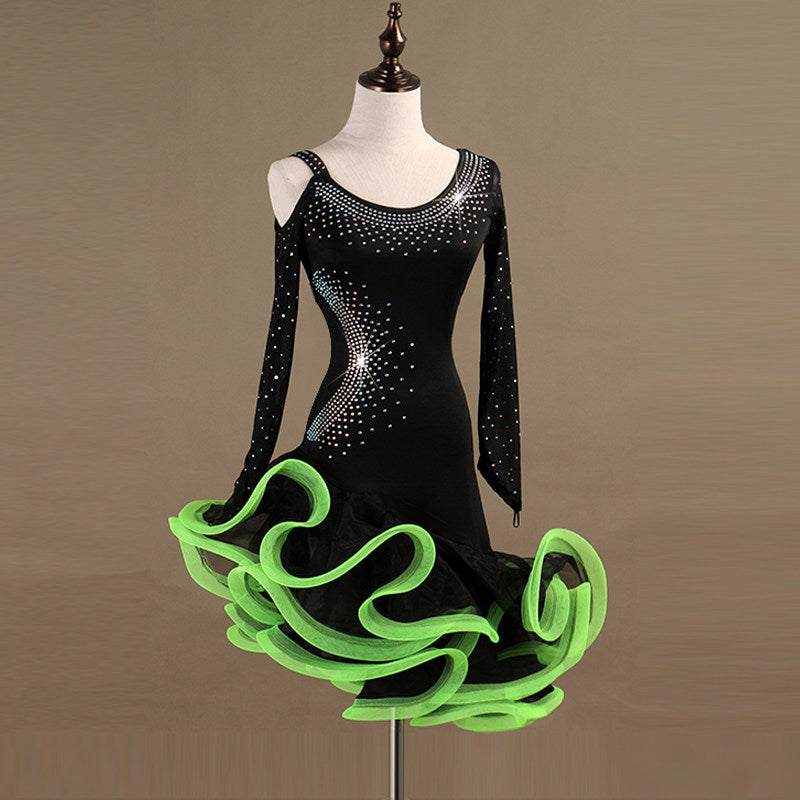
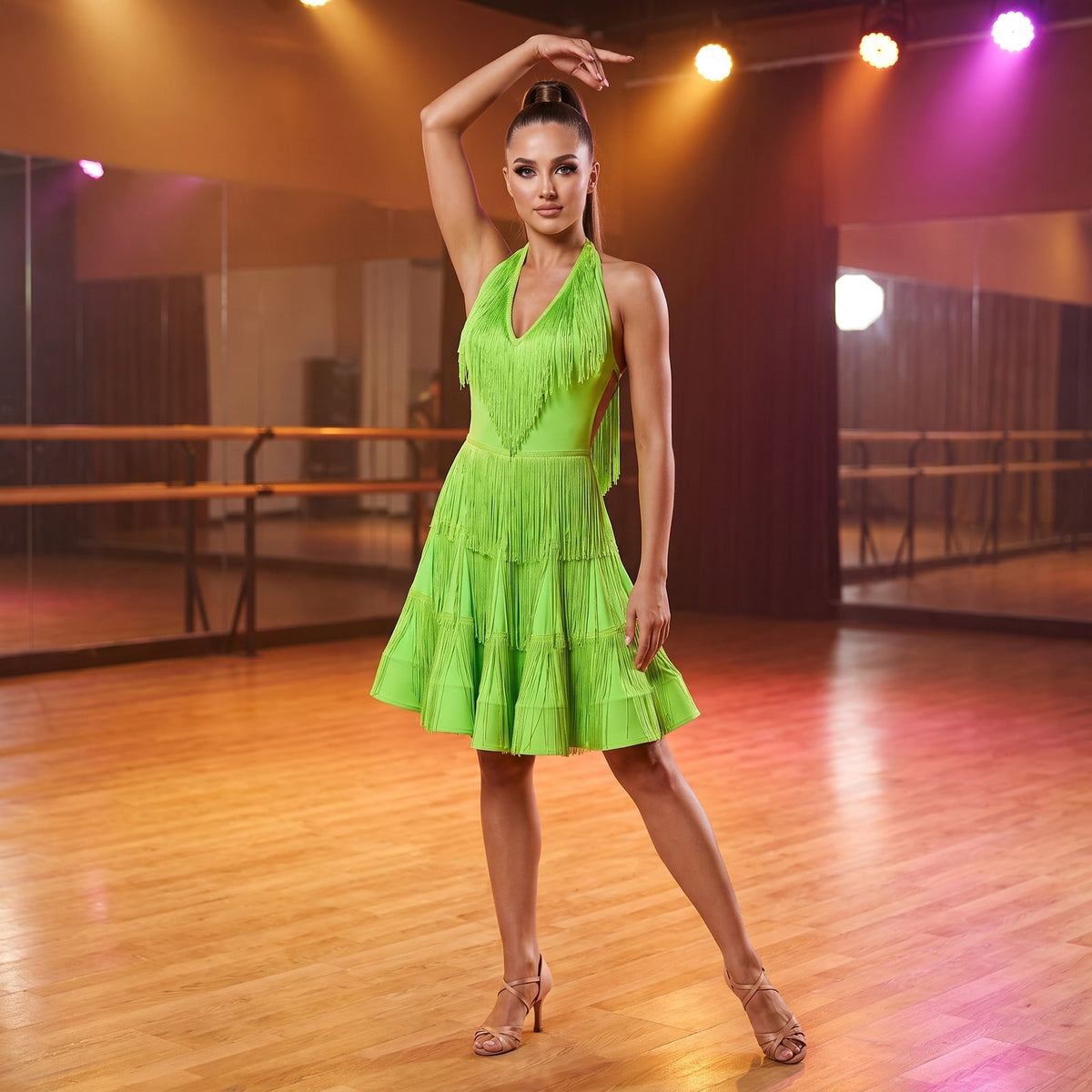
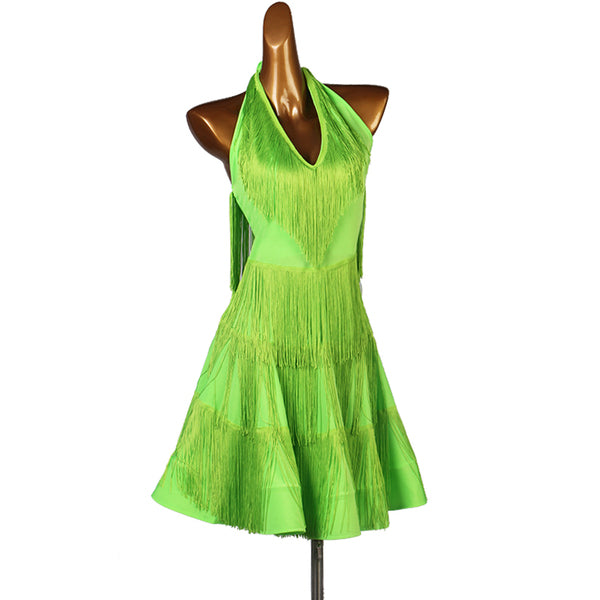
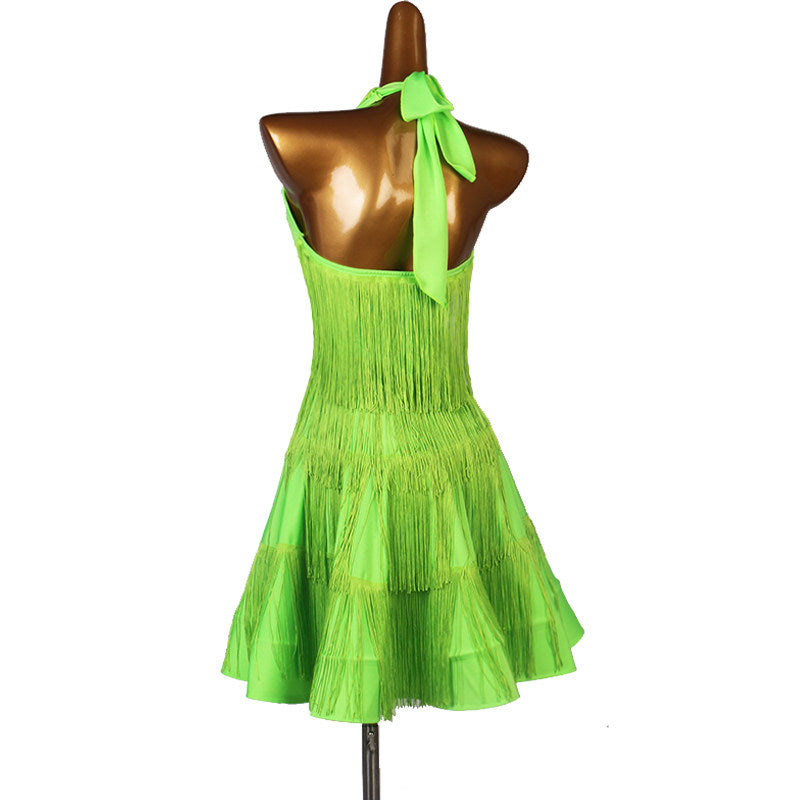
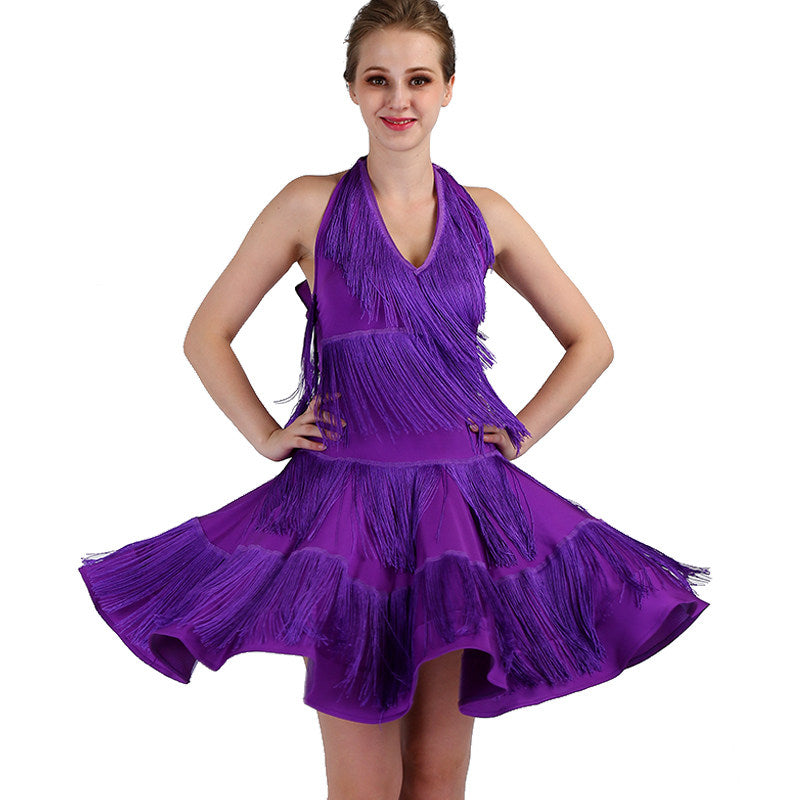
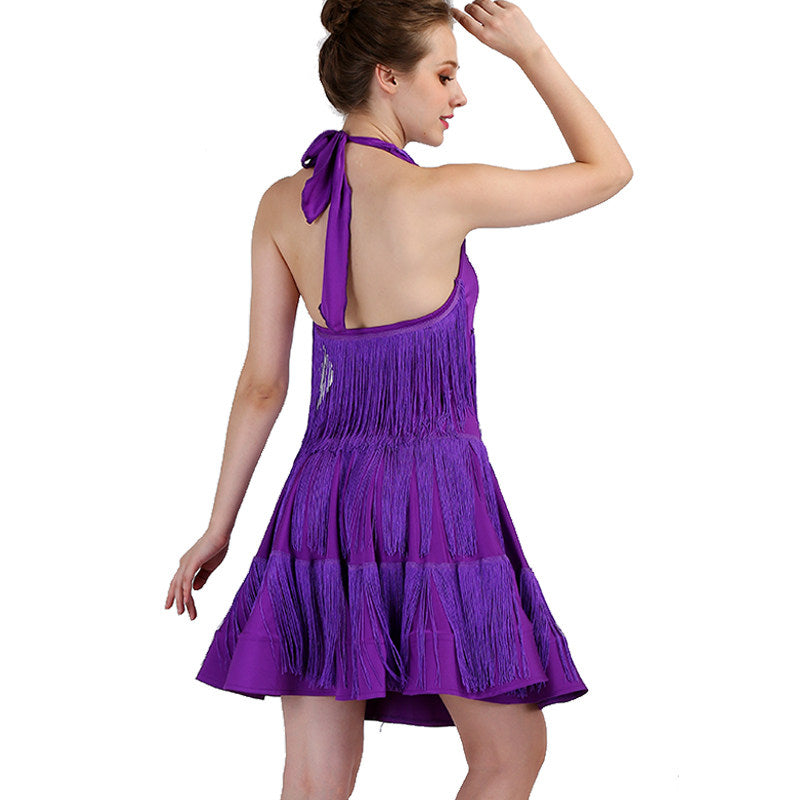
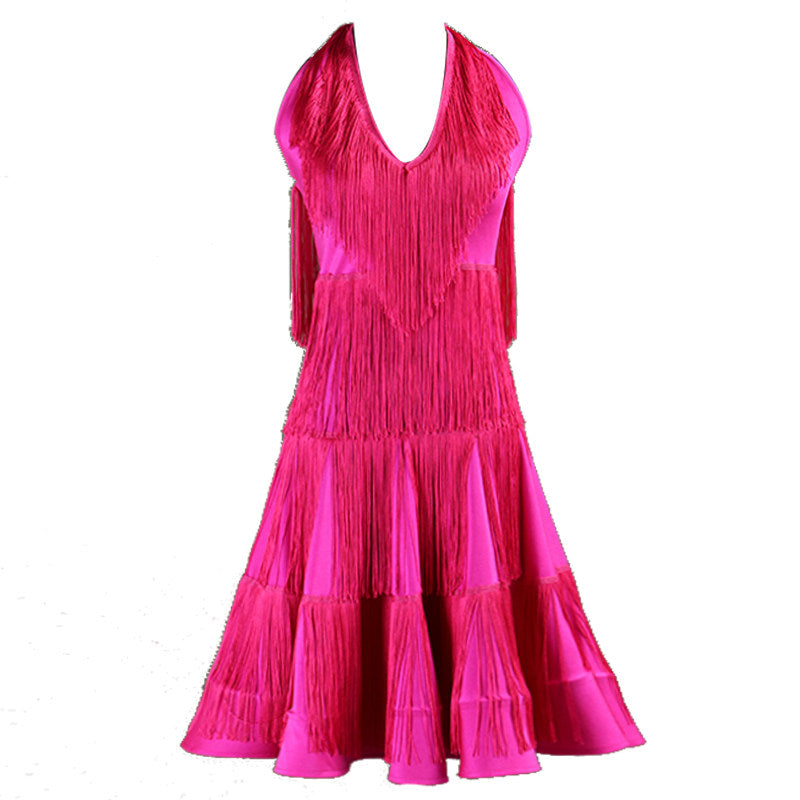
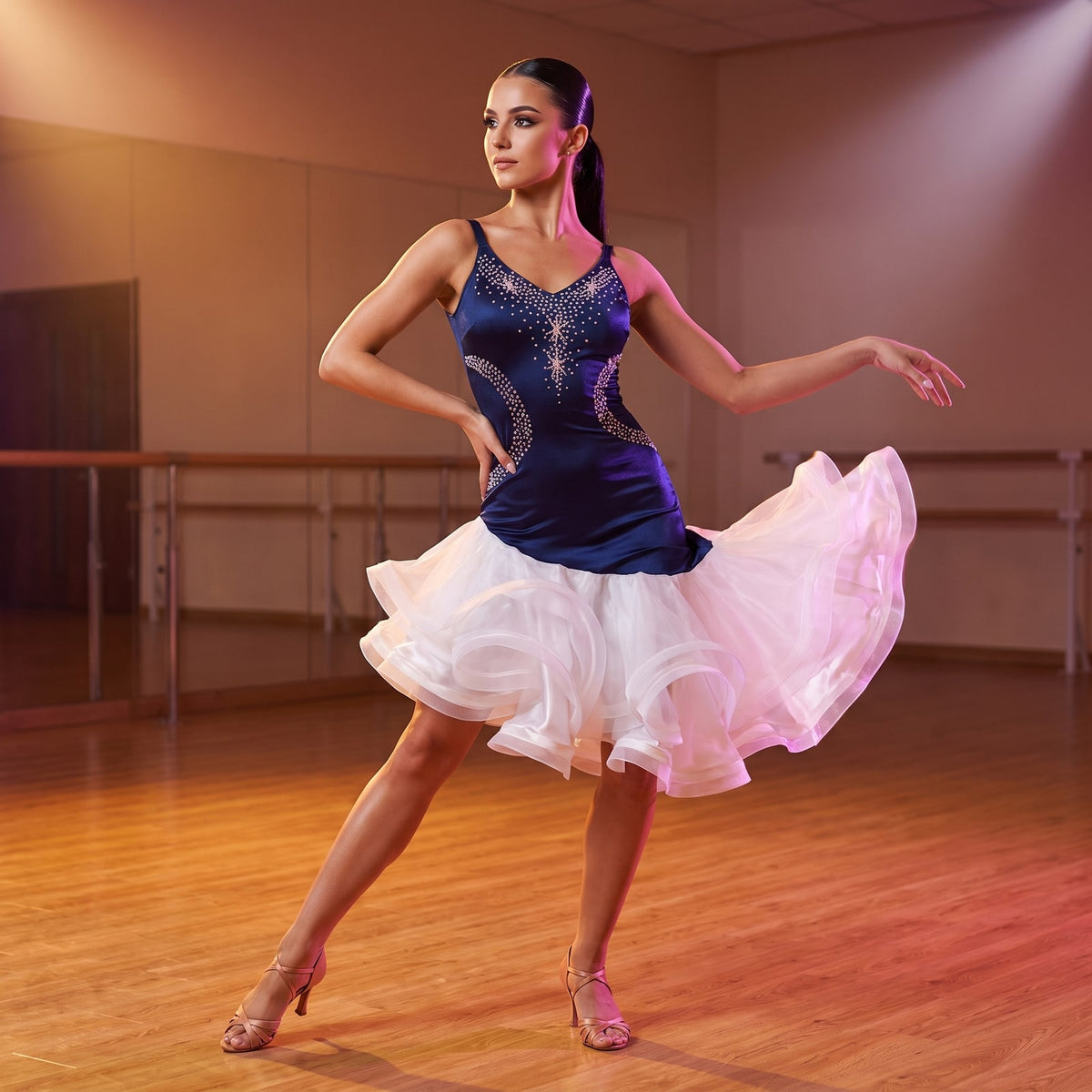
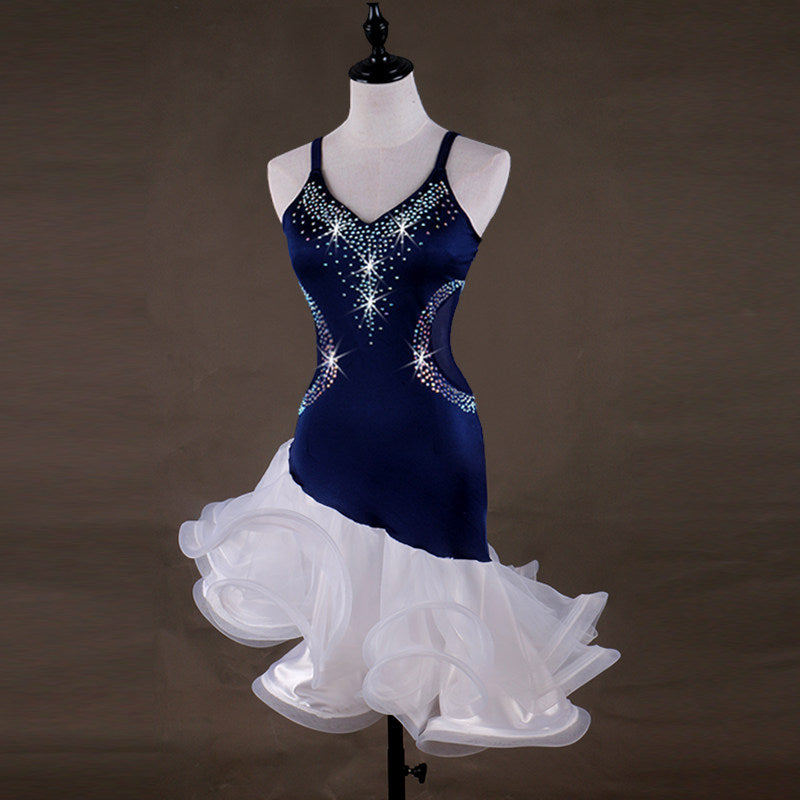
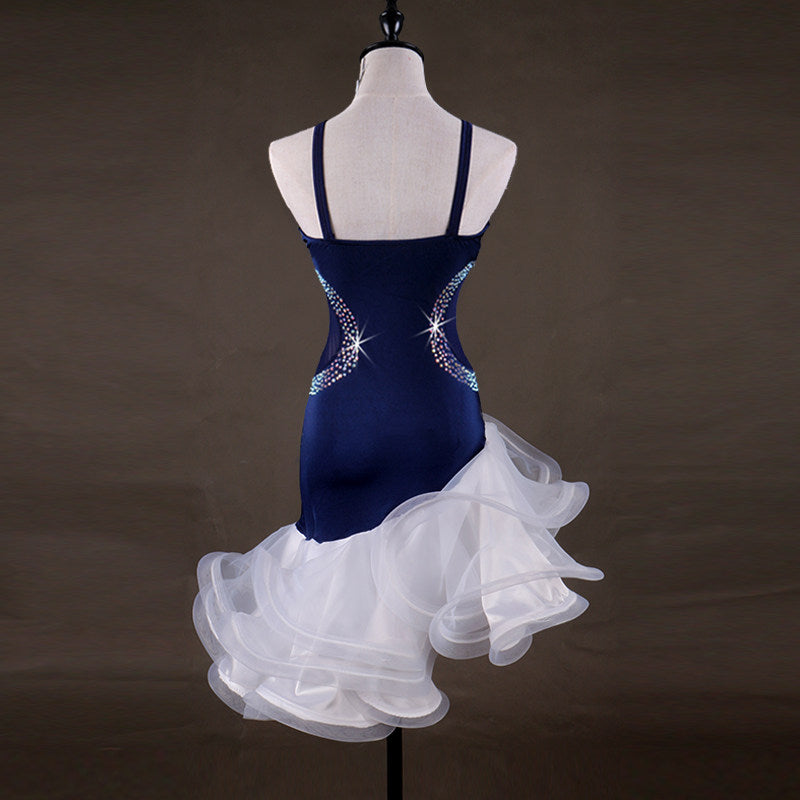
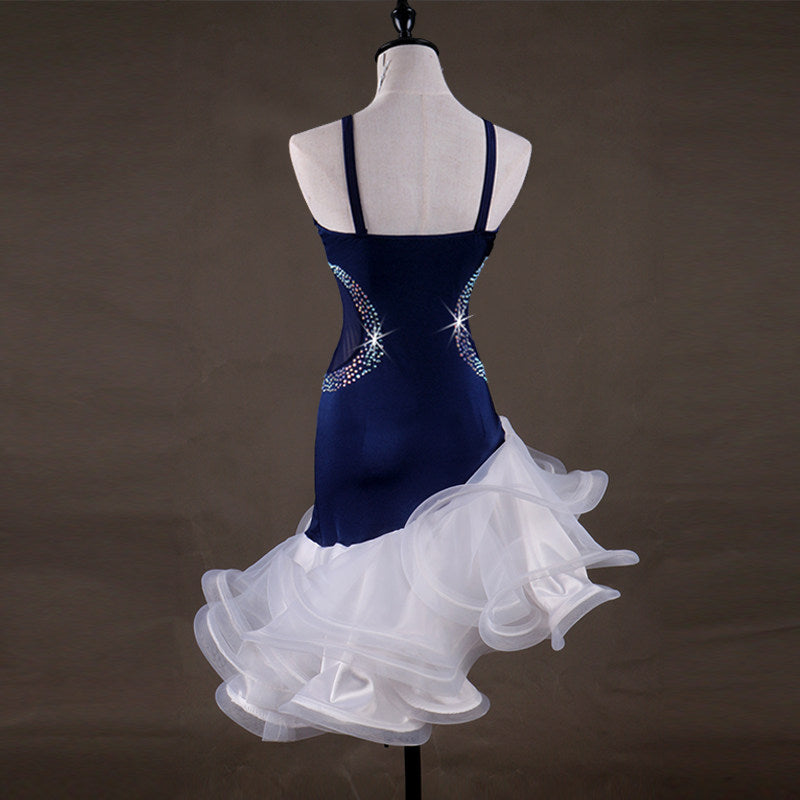
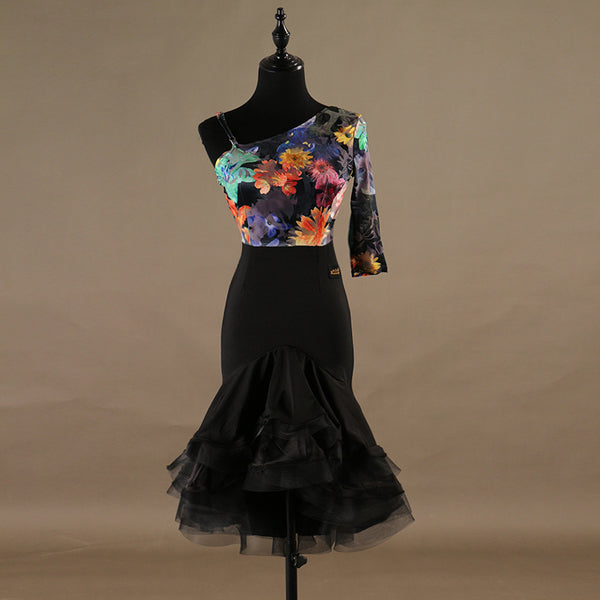
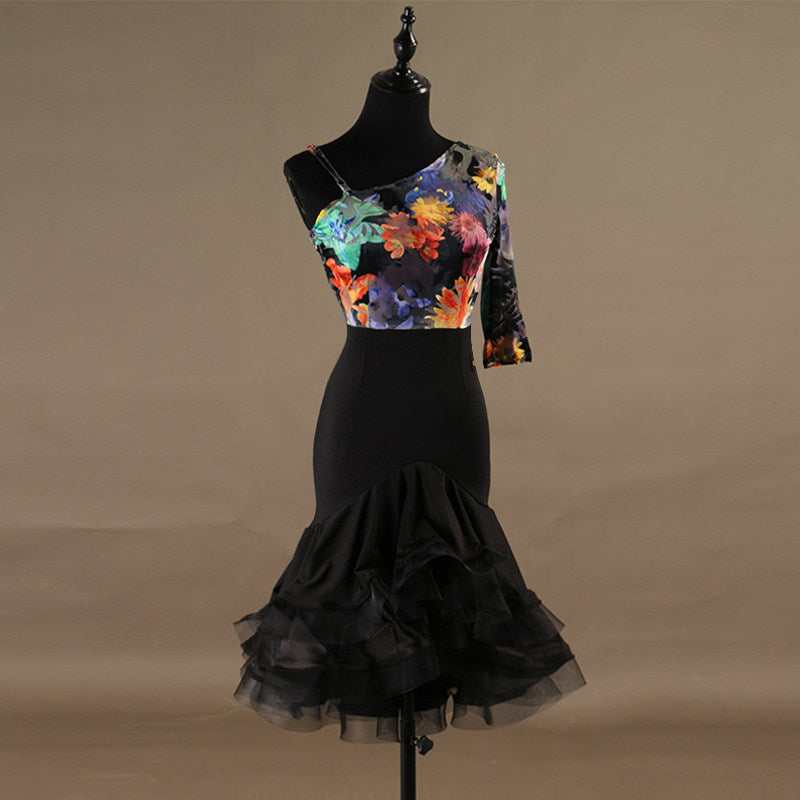
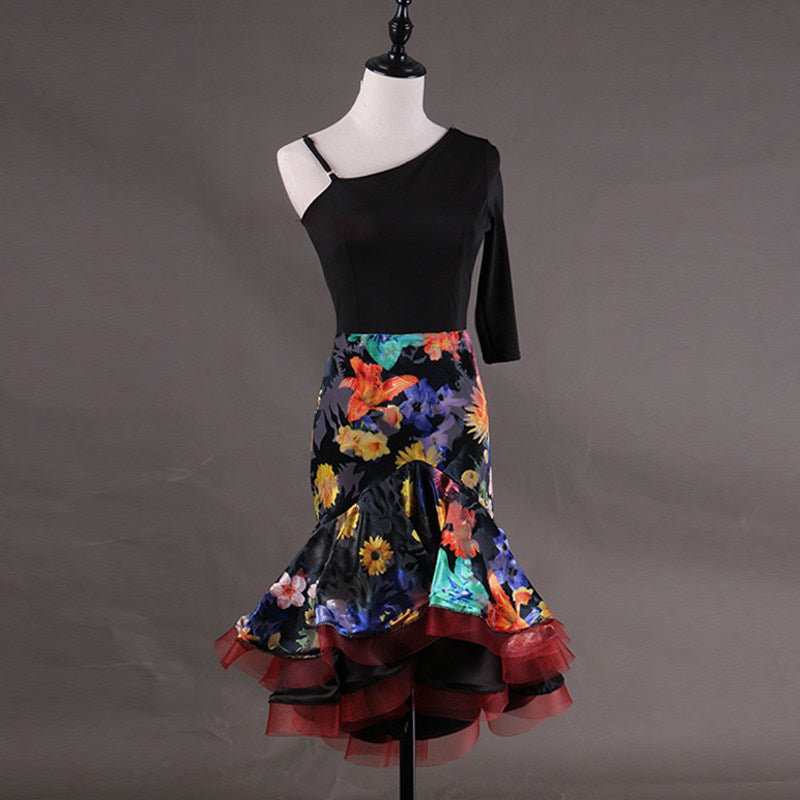
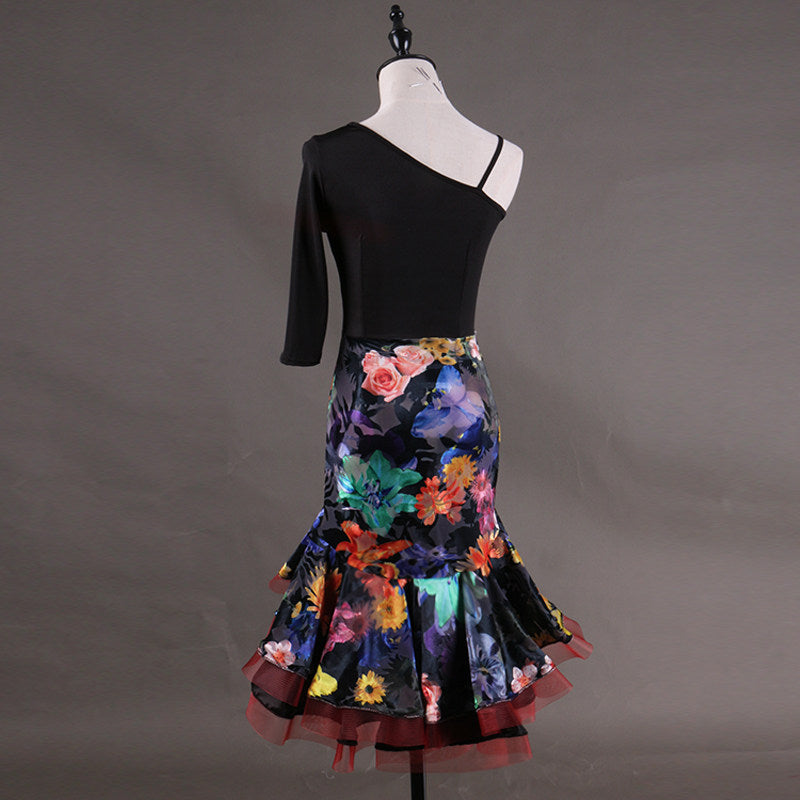
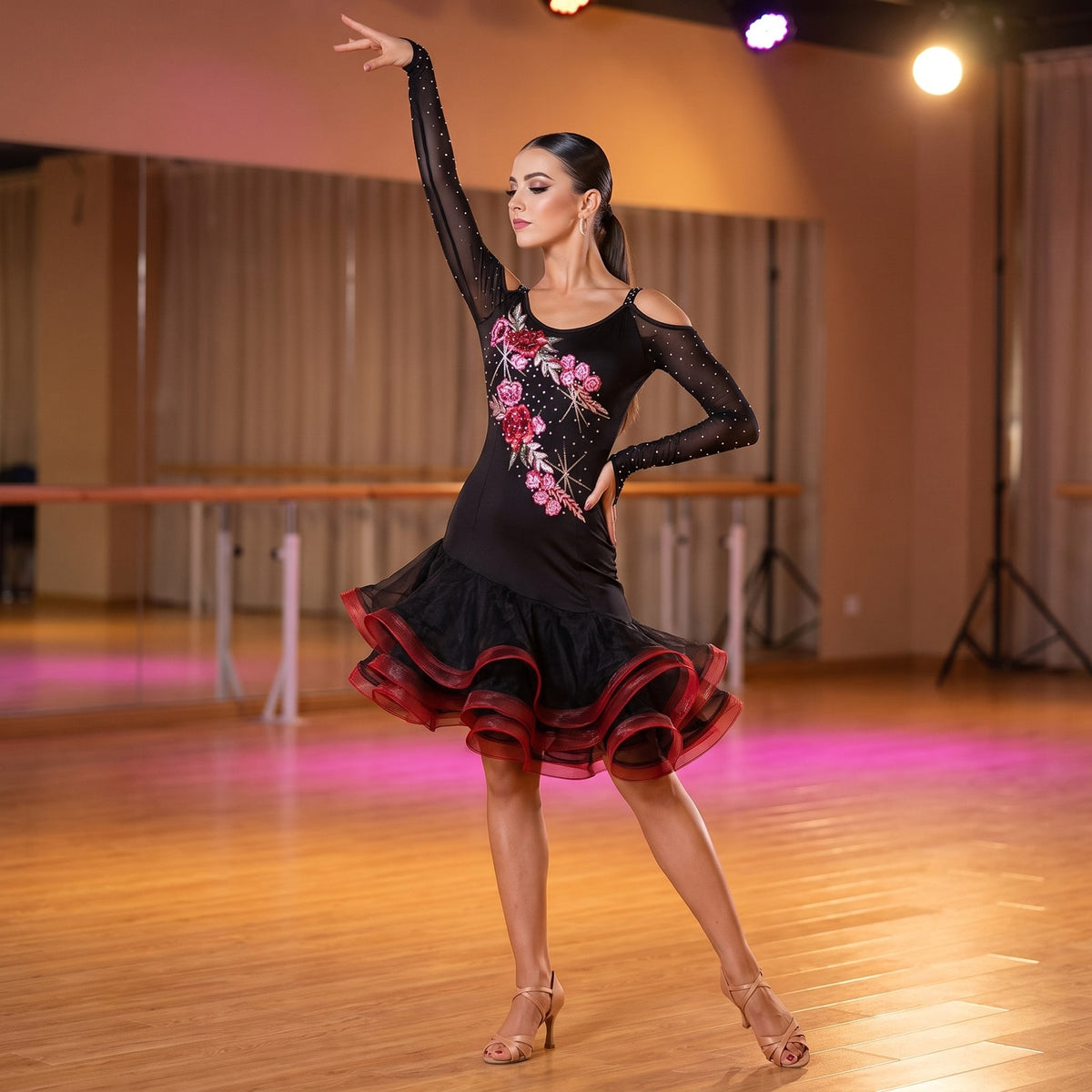
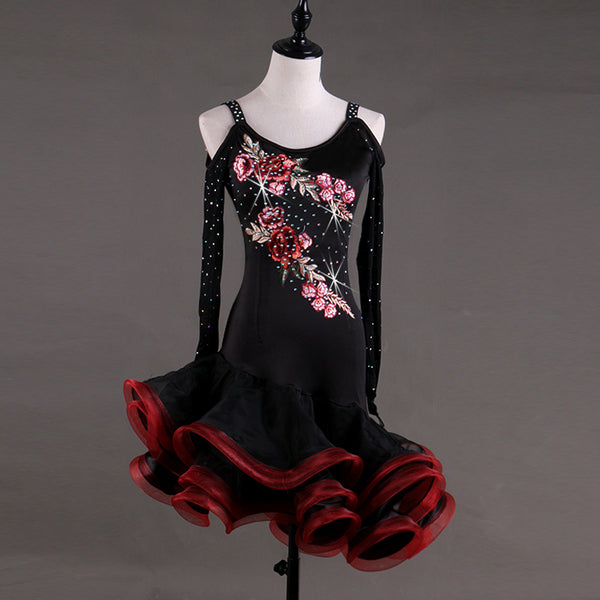
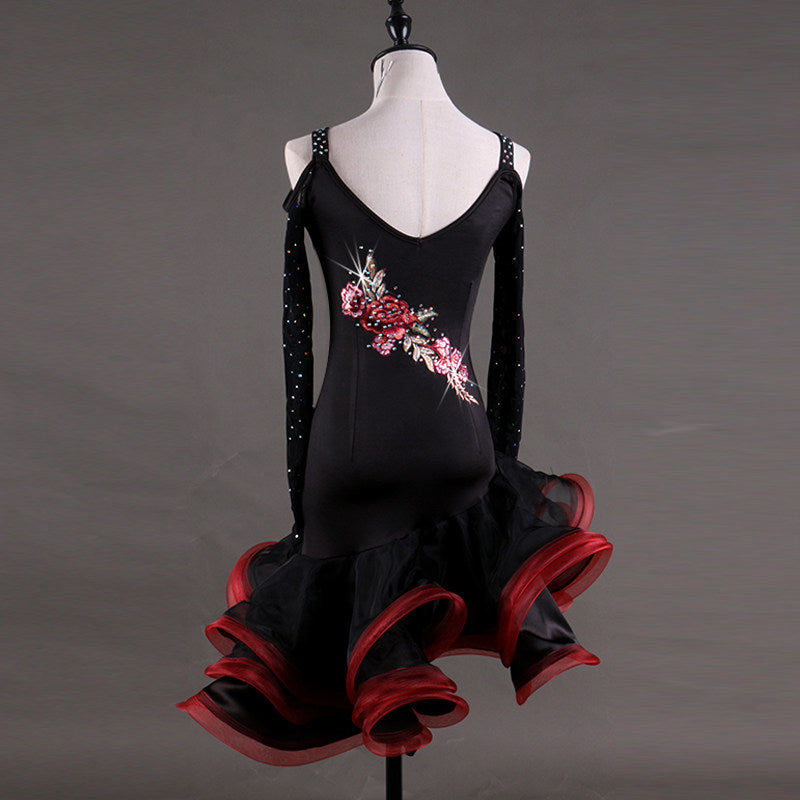
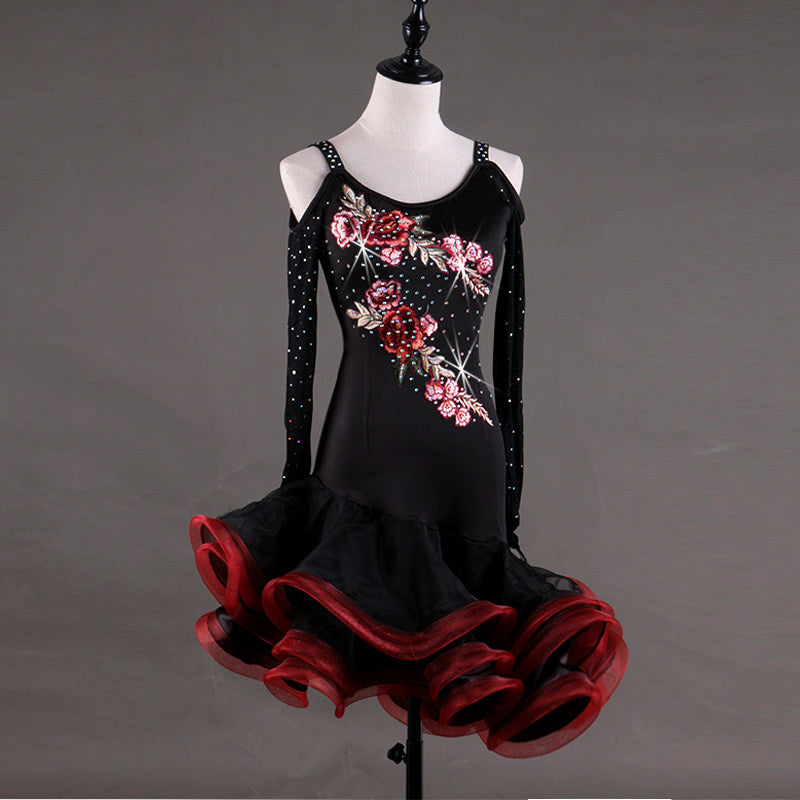
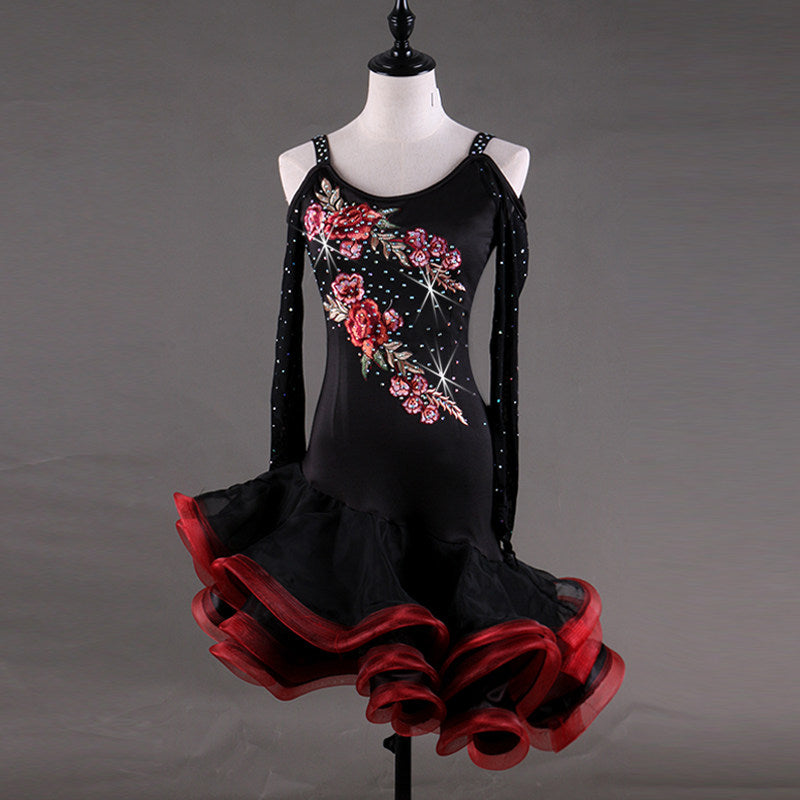
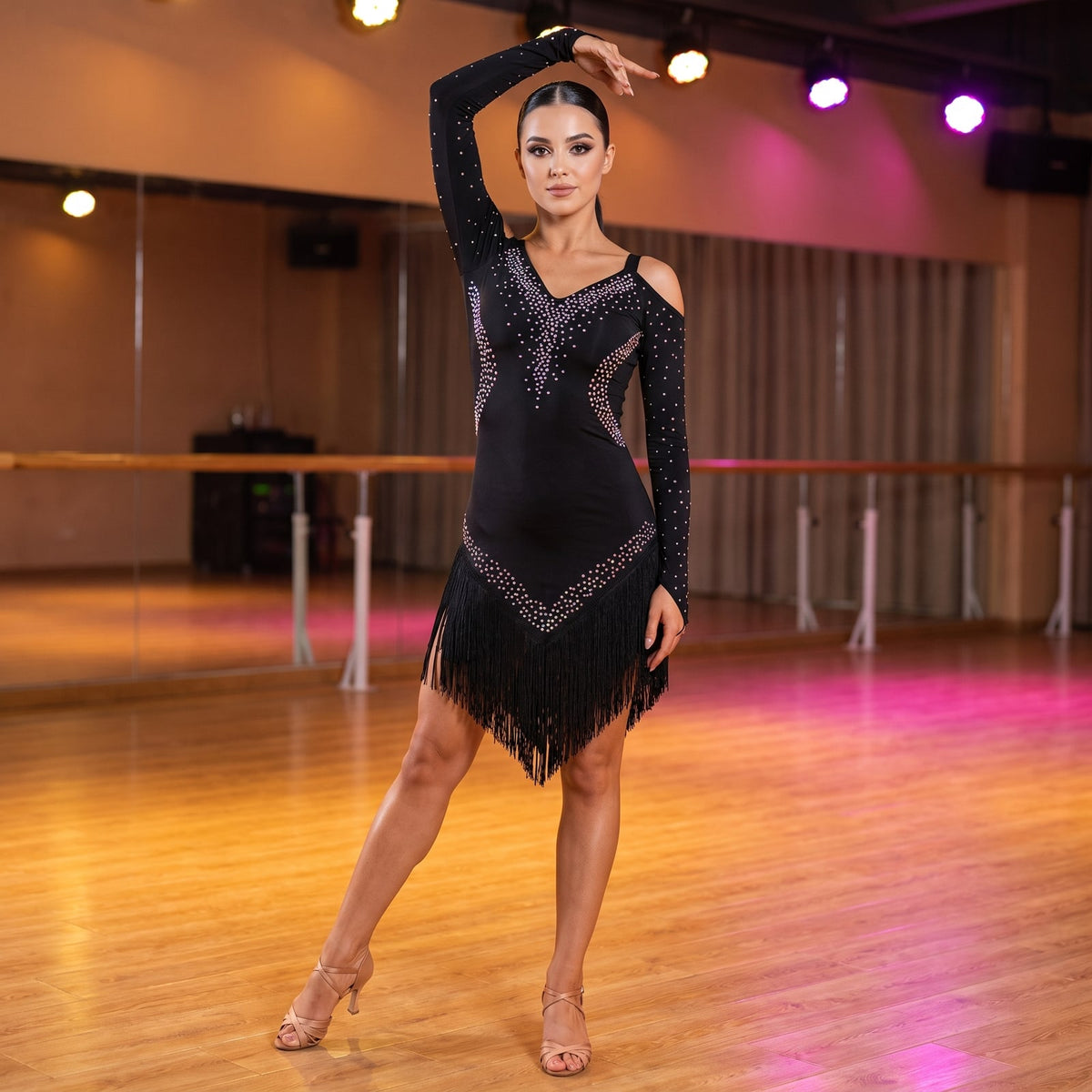
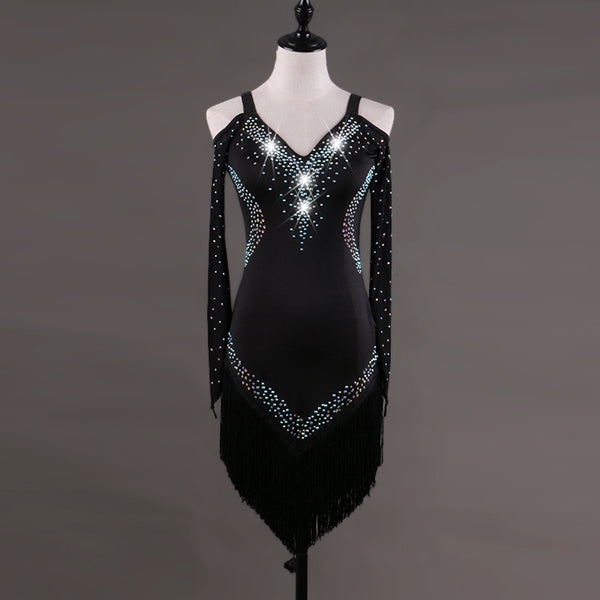
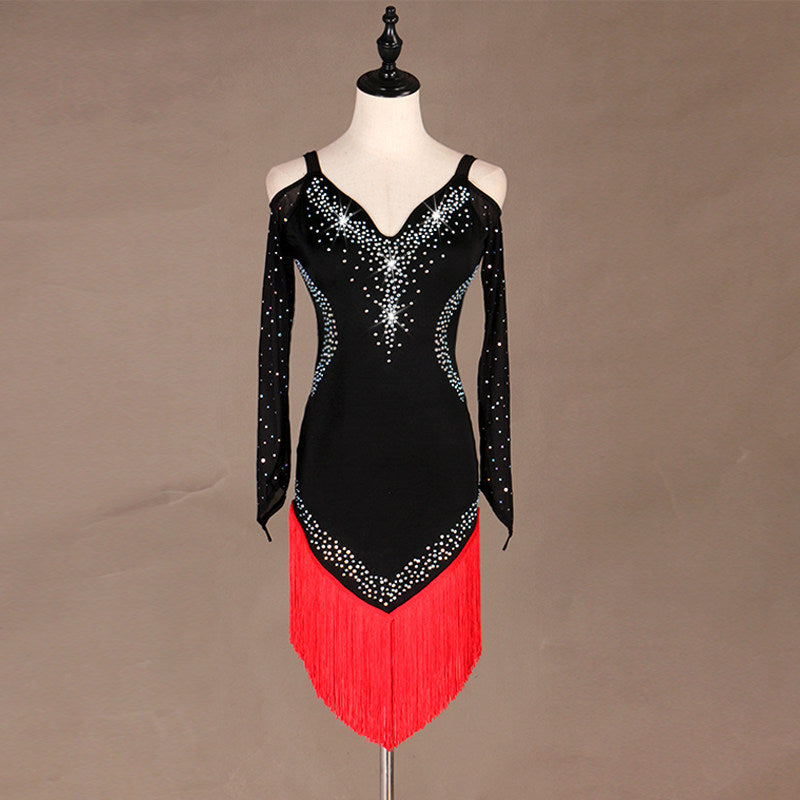
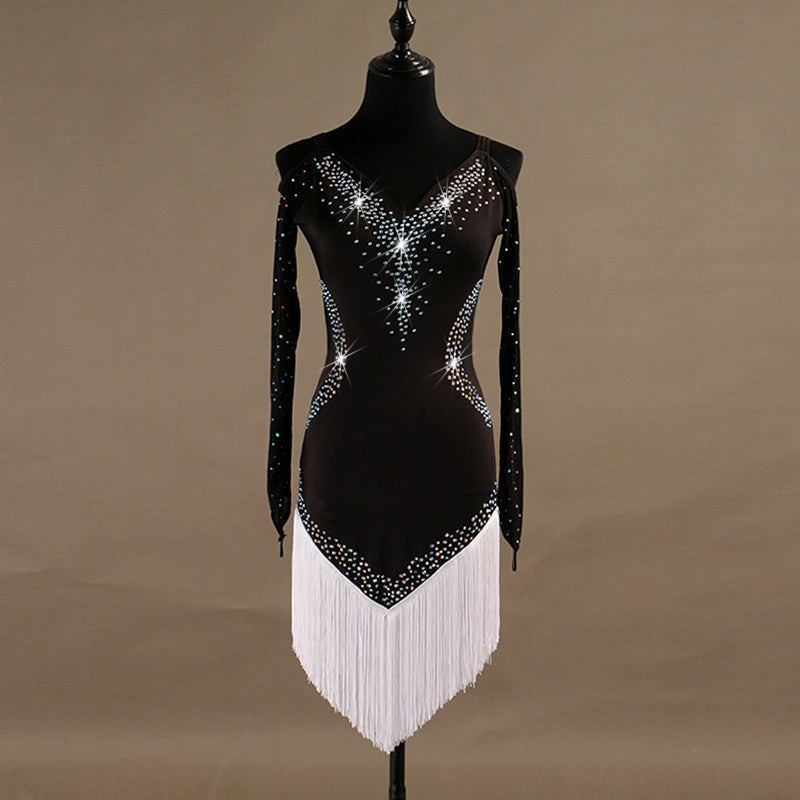
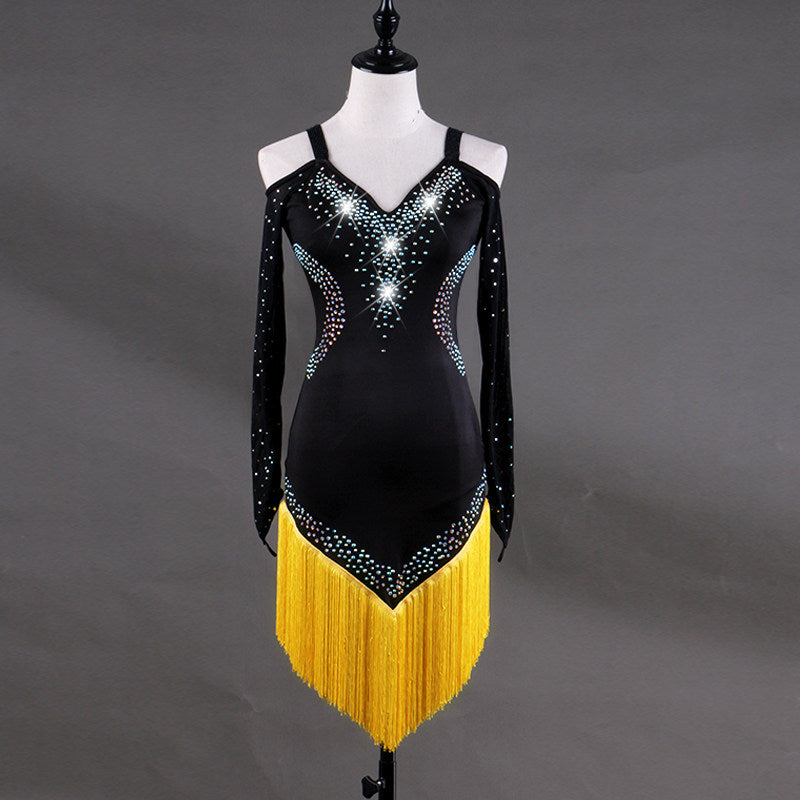
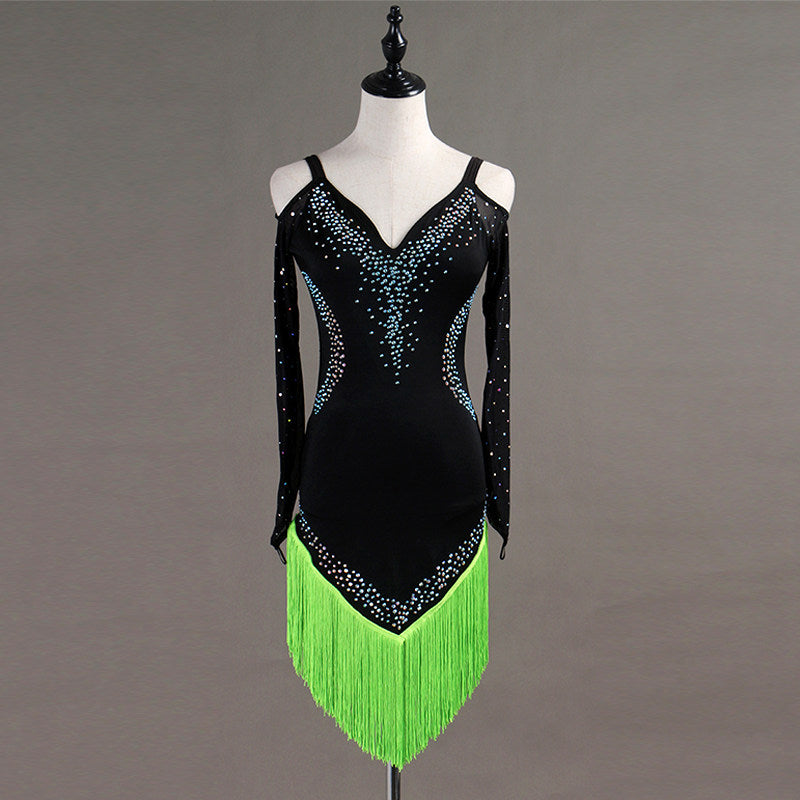
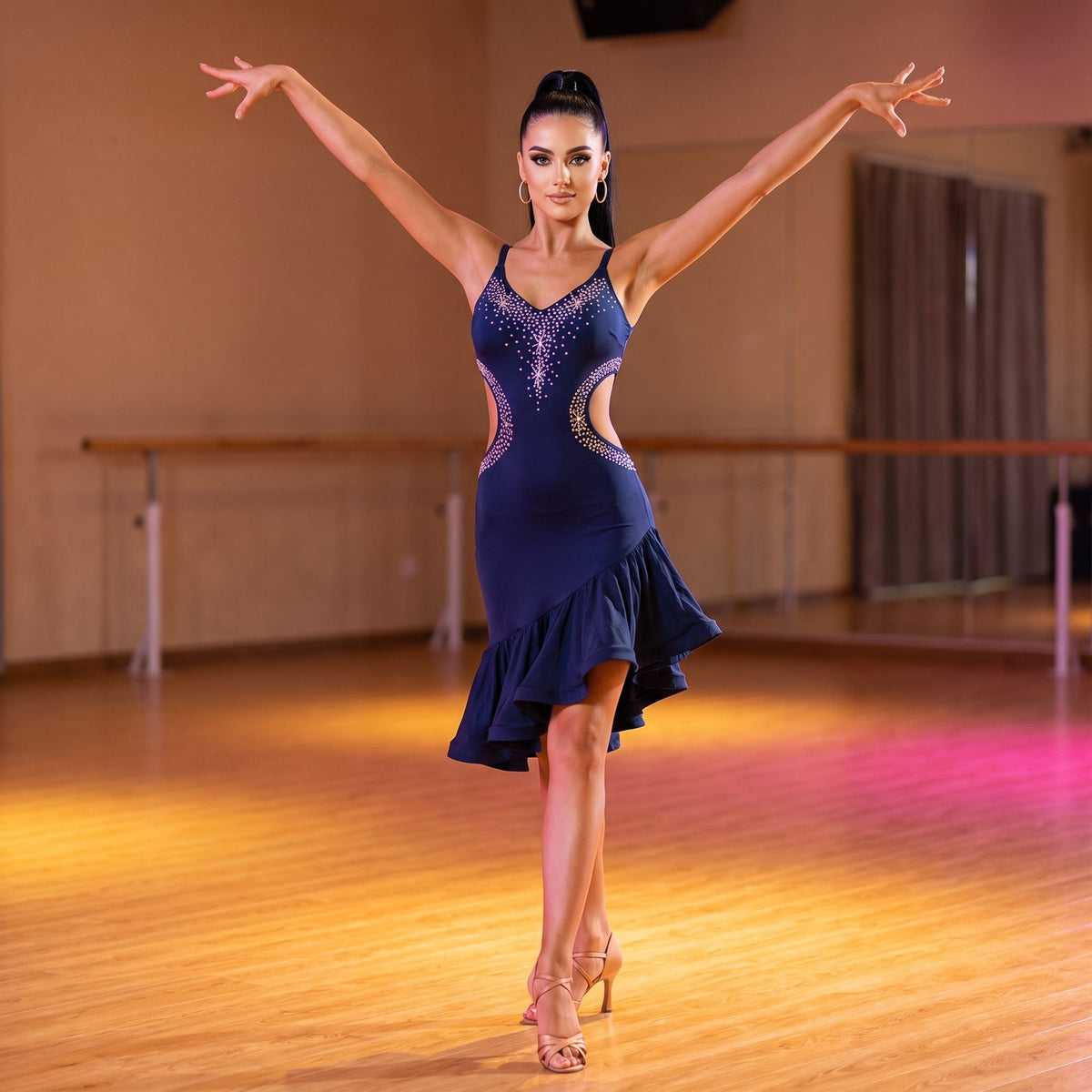
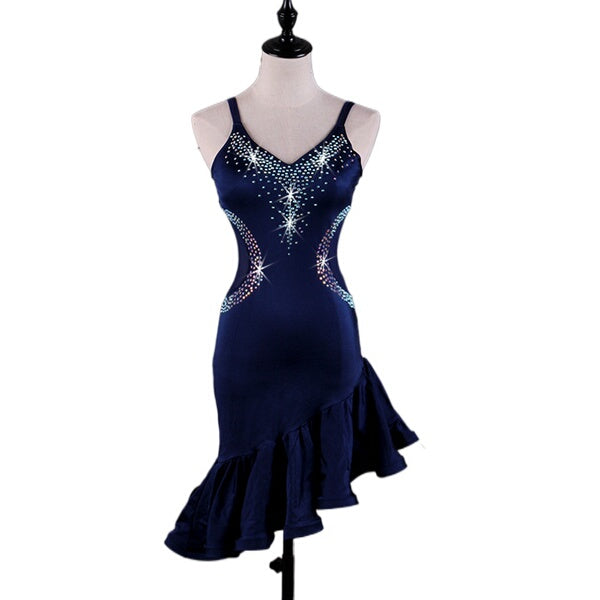
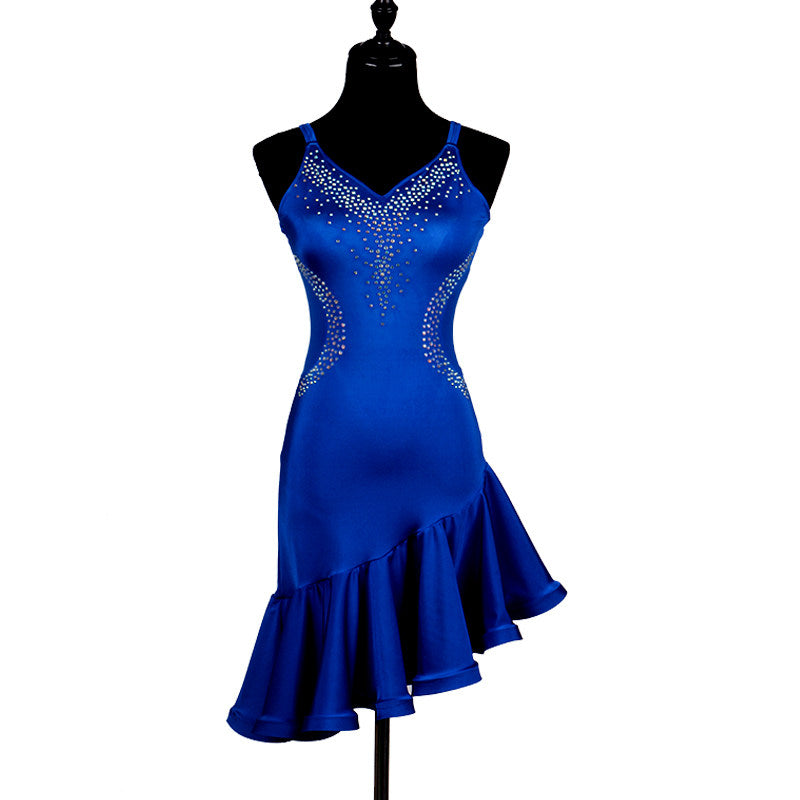
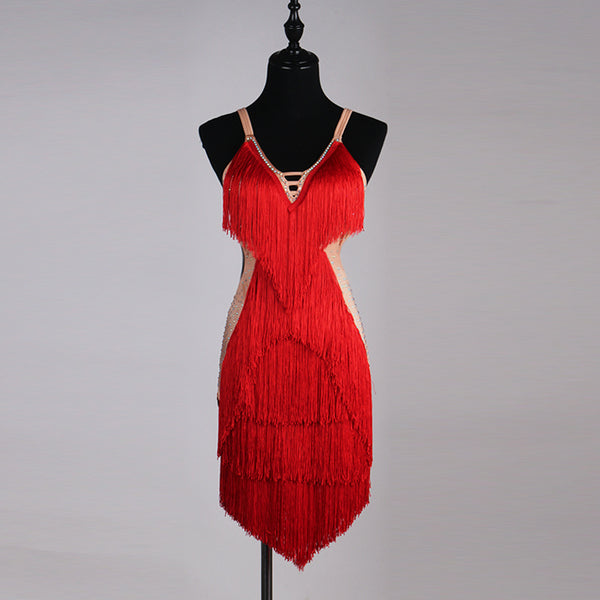
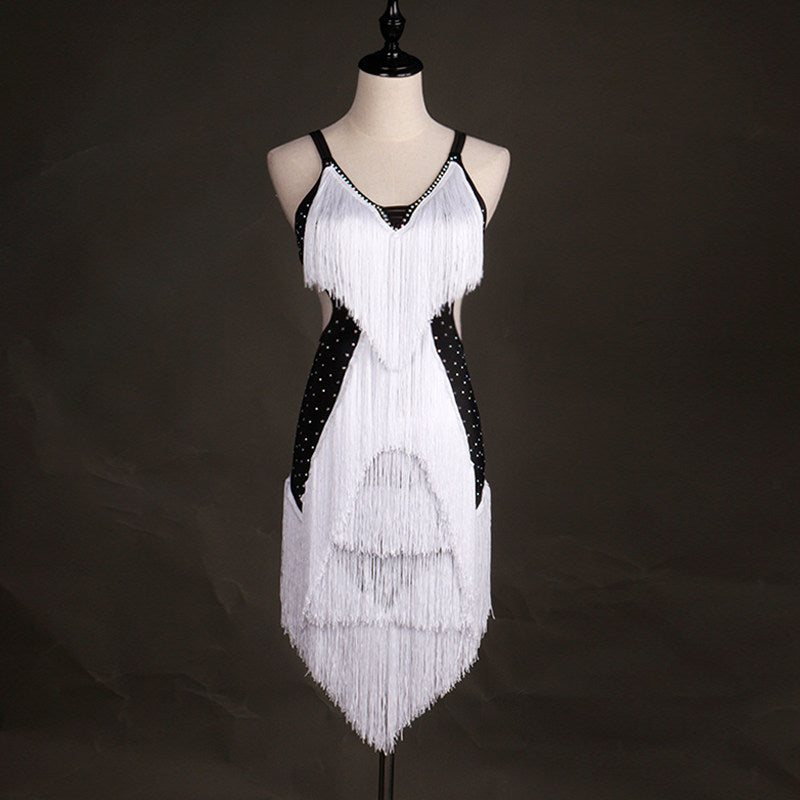
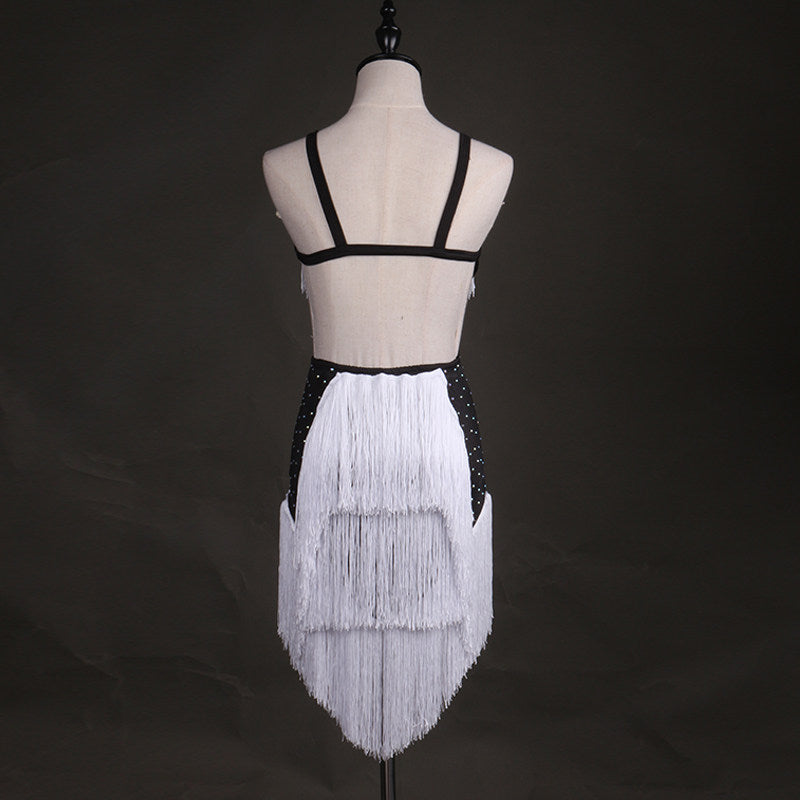
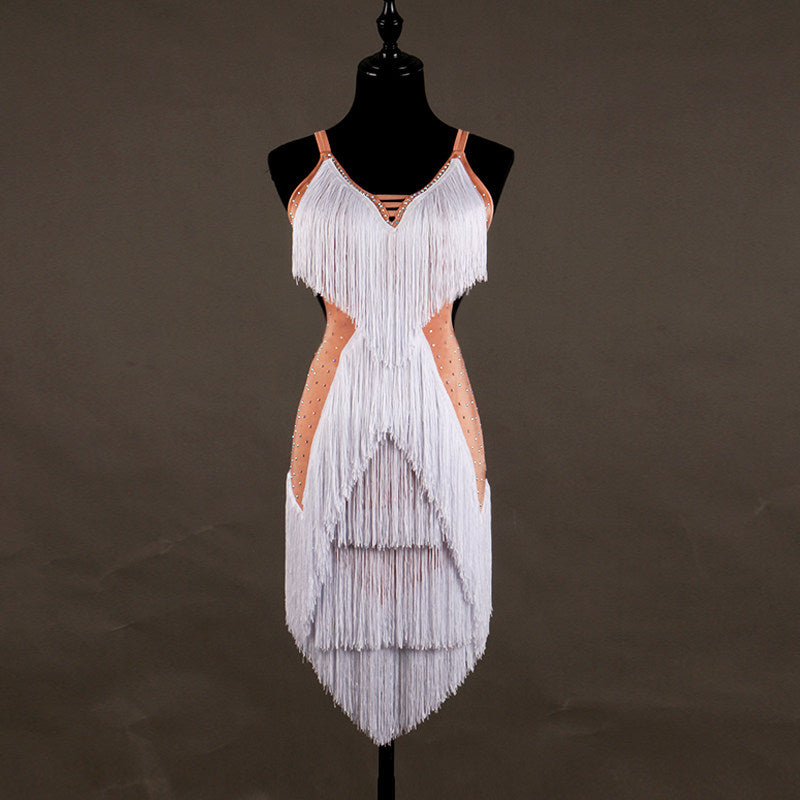
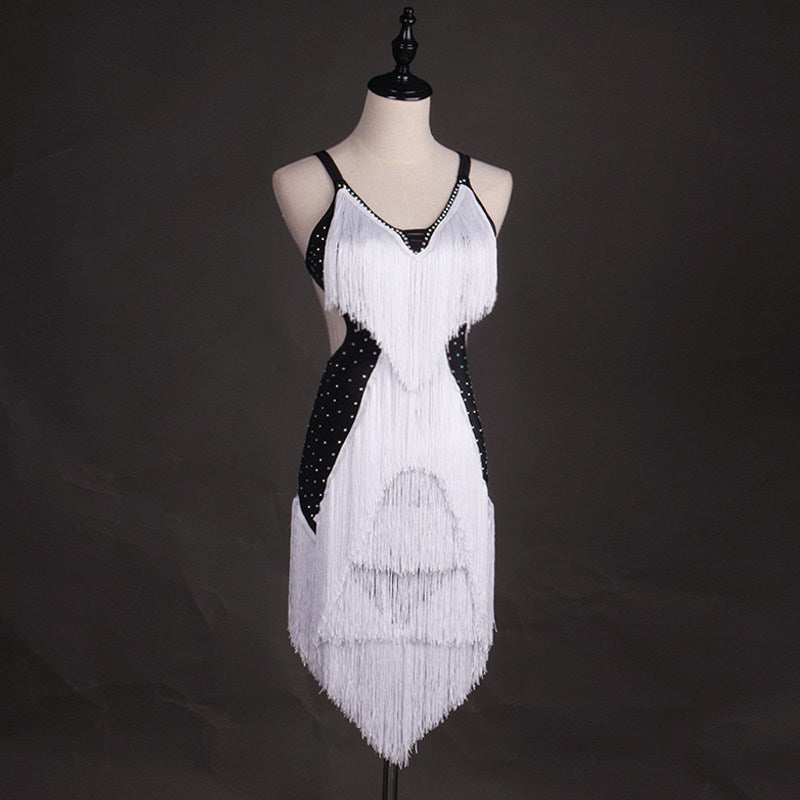
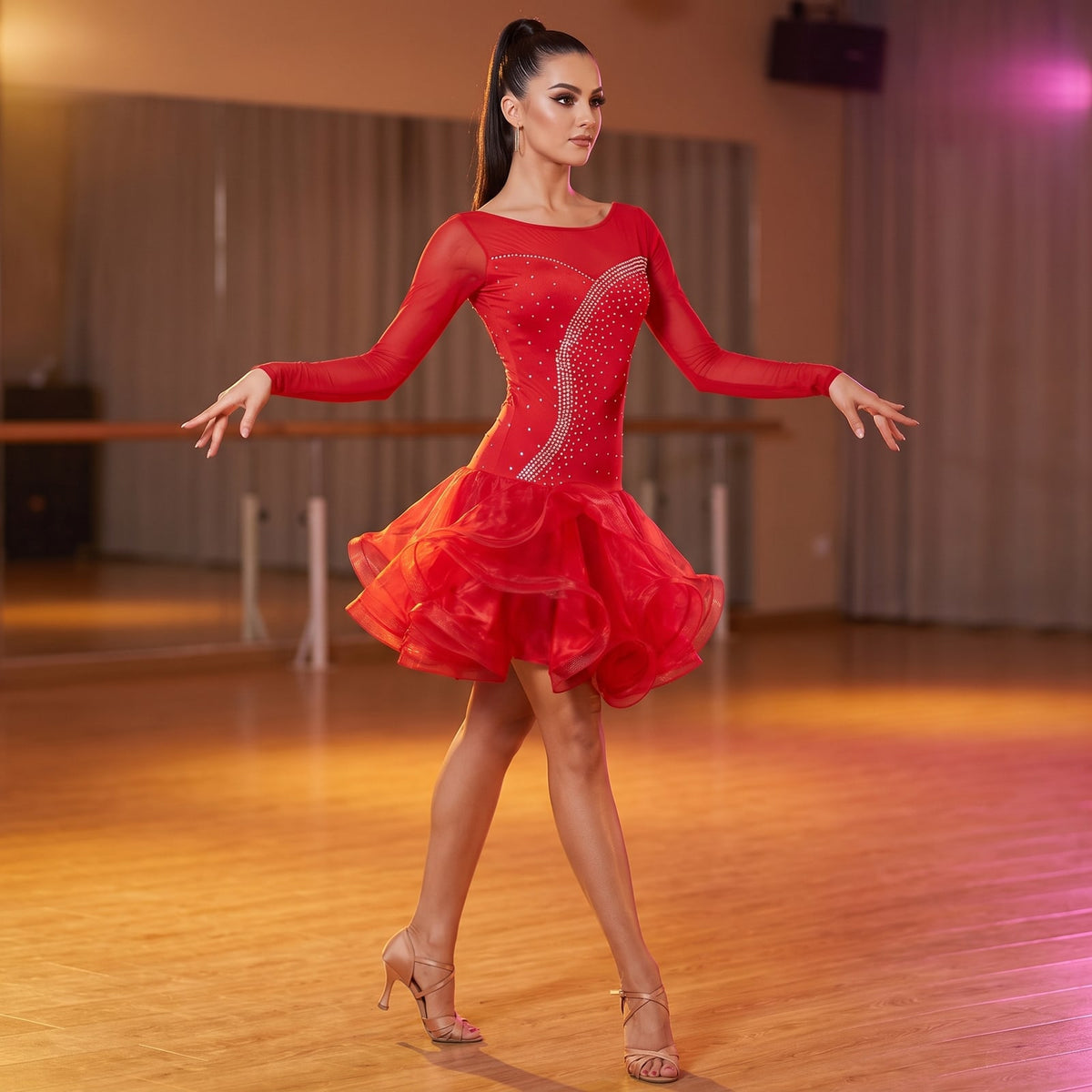
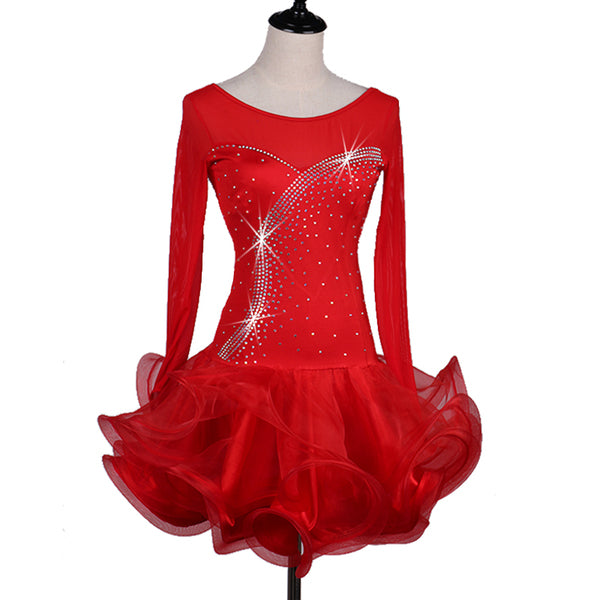
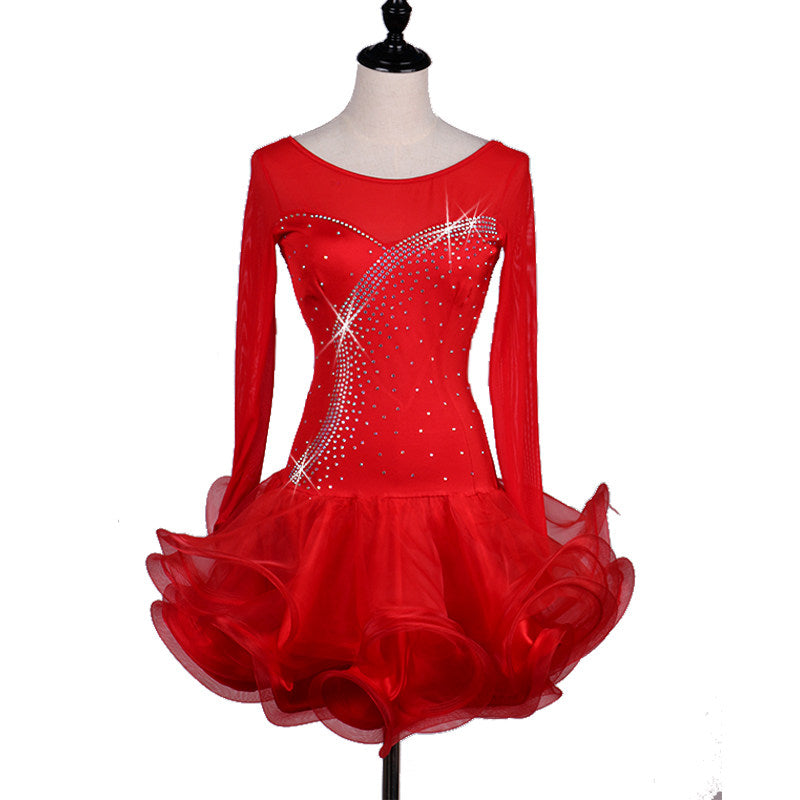
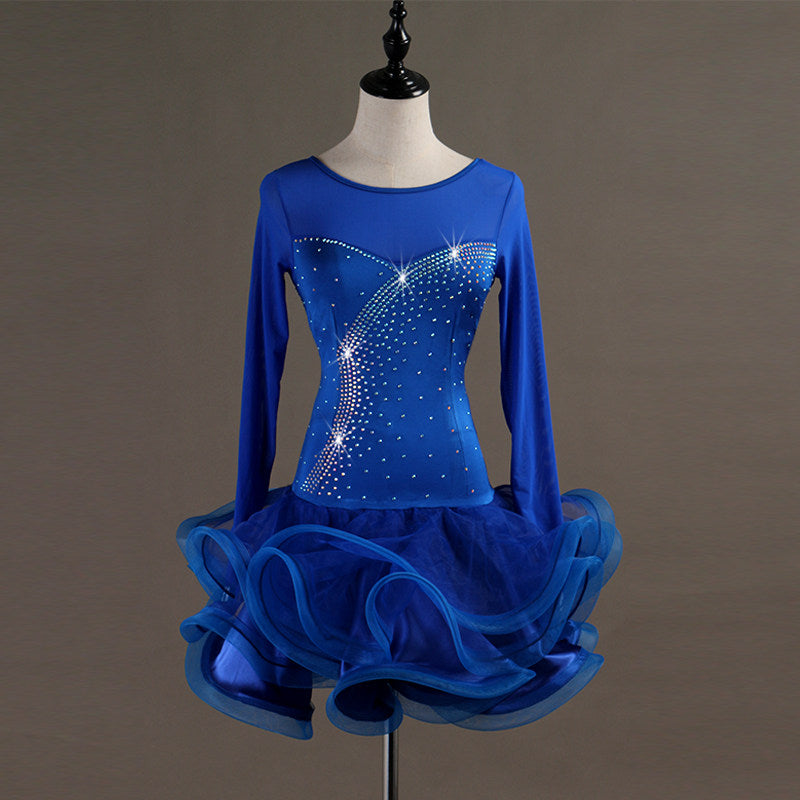
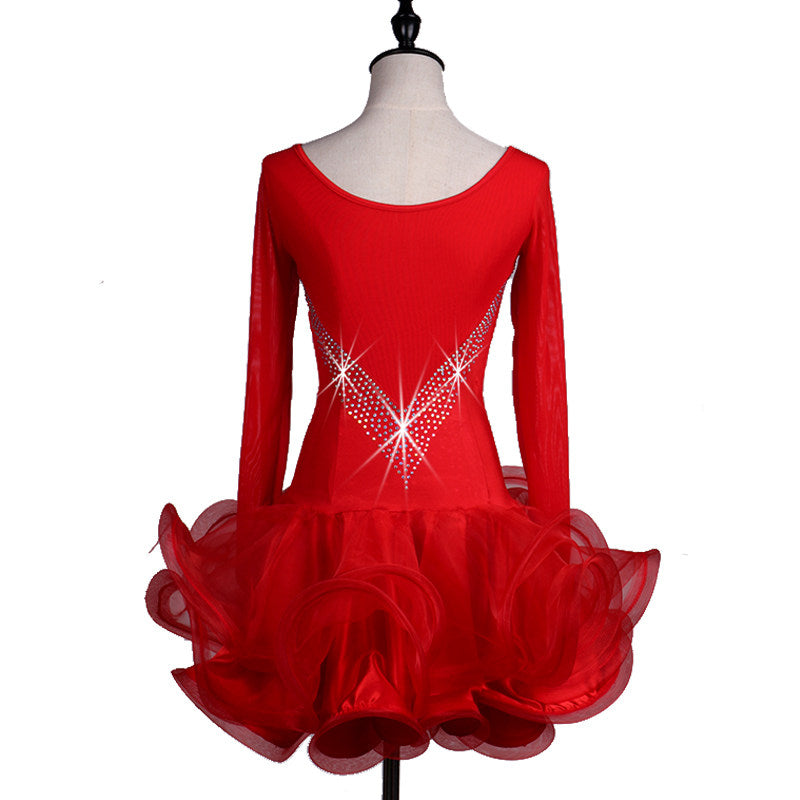
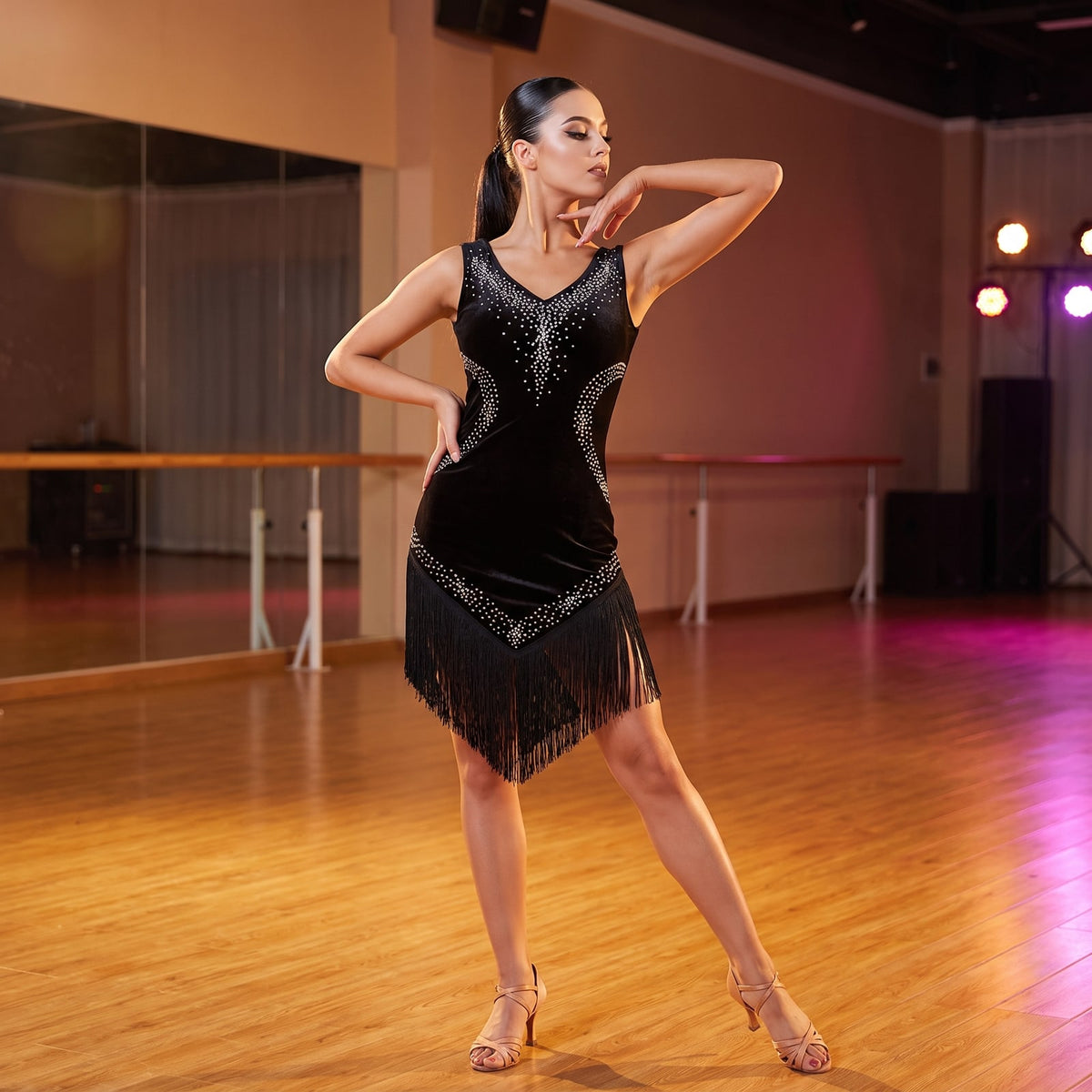
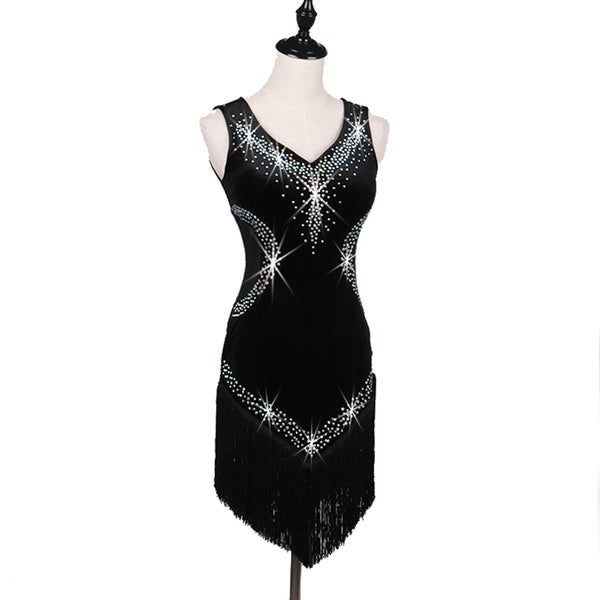
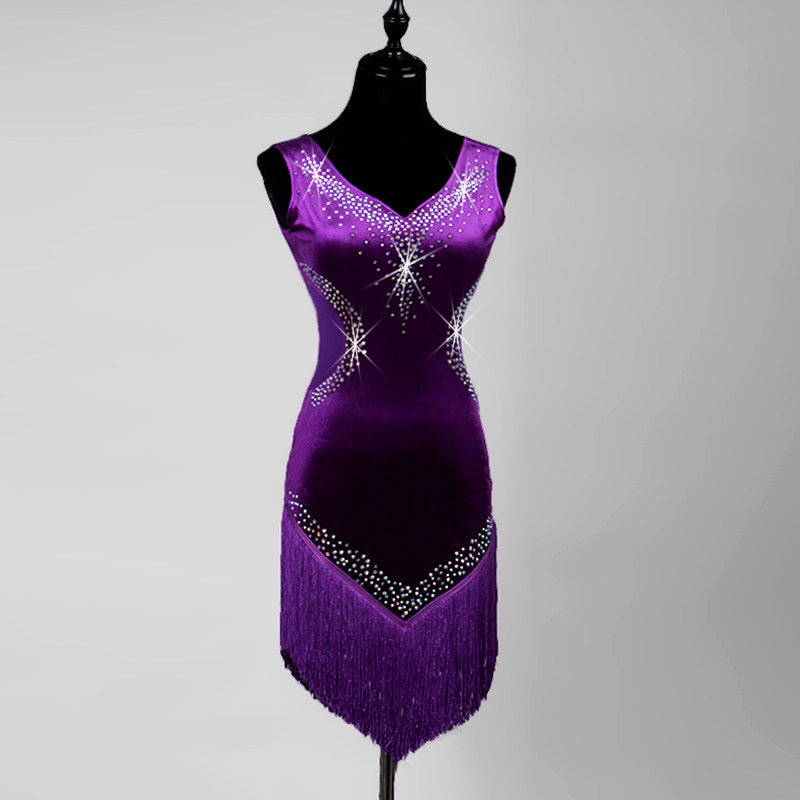
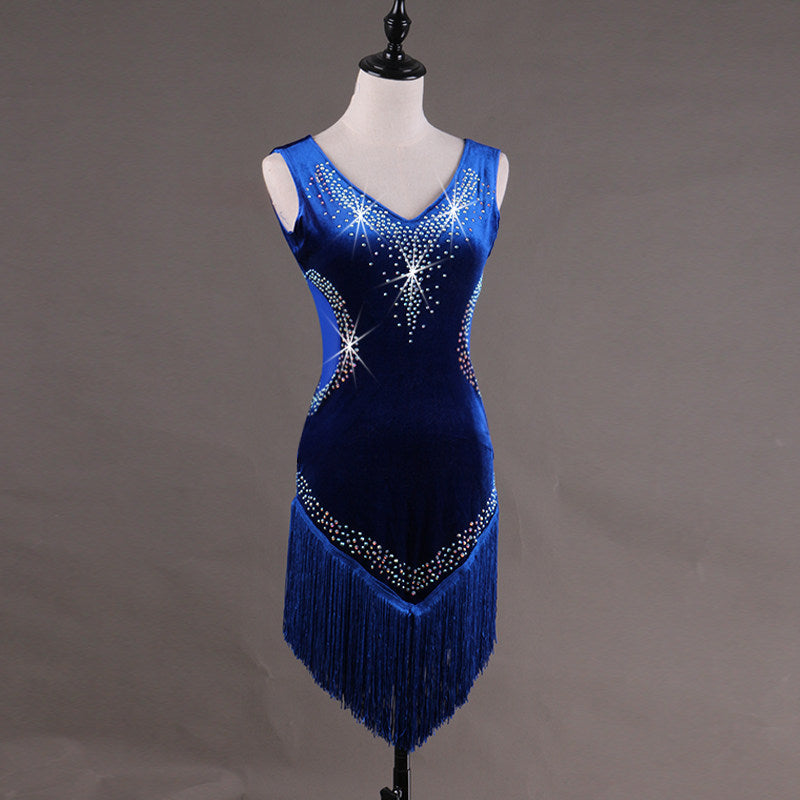
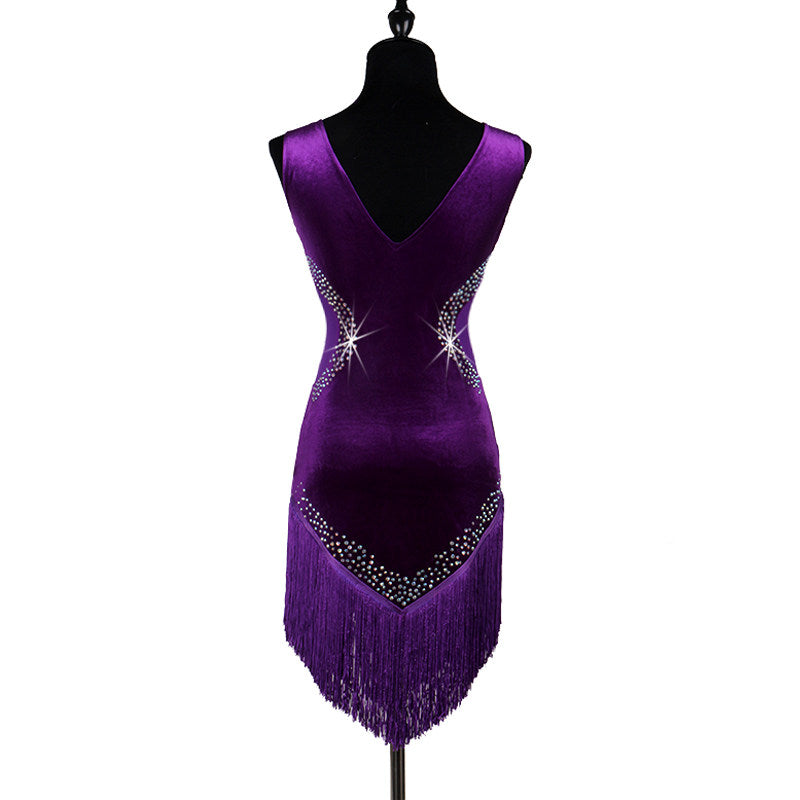
Latin is danced apart, on the beat, with the hip and knee doing visible work. The dress has to react instantly — fringe that keeps moving after you stop, a hem short enough to leave the leg line readable, stretch that stays put through a spin. That family is Latin dance dresses.
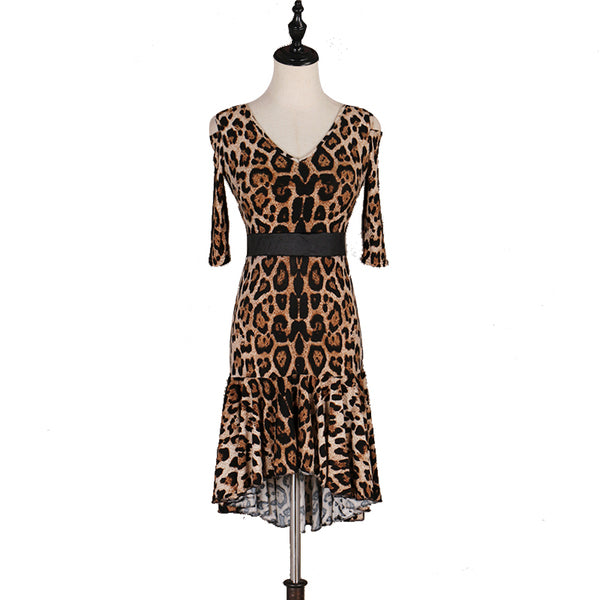
Salsa overlaps with Latin in vocabulary but not in setting. Most salsa happens socially, on a crowded floor, for hours, in a room that is darker and warmer than a studio. That changes what you want from a dress more than the steps do, which is why salsa dance dresses are worth browsing separately even if you also dance Latin.
These are three parallel families, not a hierarchy. Dancers who cross between them generally own a dress for each rather than one dress that compromises on all three.
Competition Dress or Practice Dress
The split matters more than most first-time buyers expect. A practice dress is built to survive repetition: simpler construction, fabric that washes, no stonework digging into a partner's hand. It is the one you wear to class every week, and a good one carries you to a social night without changing.
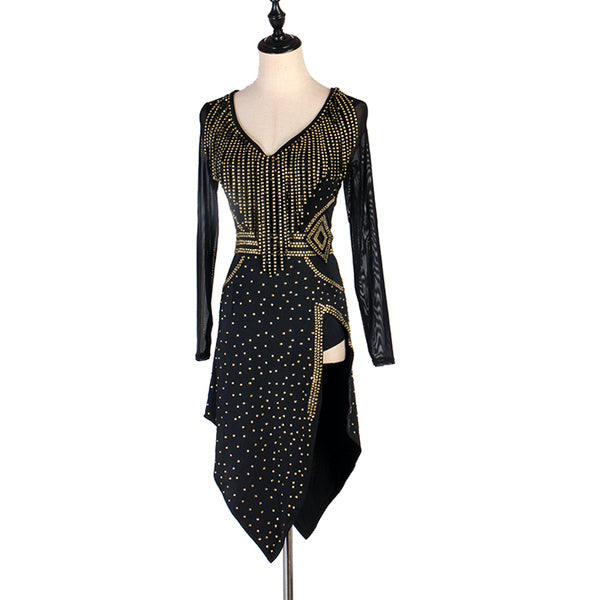
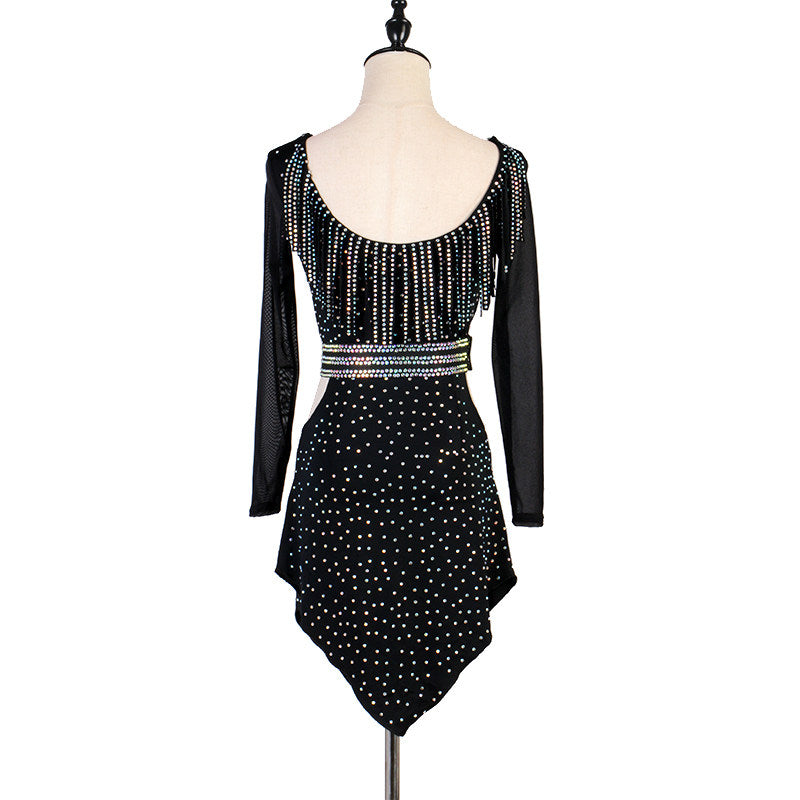
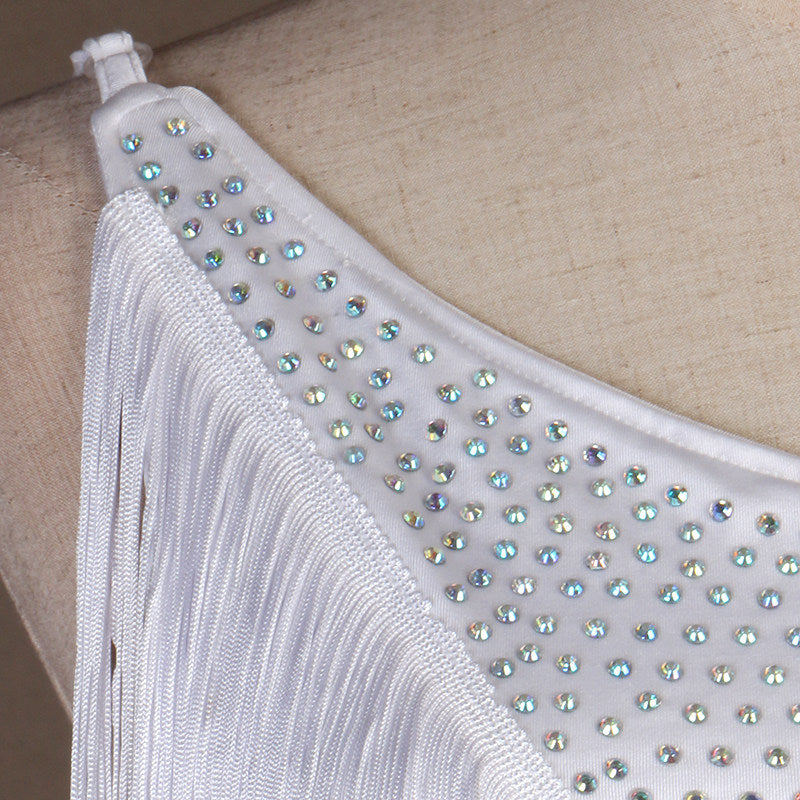
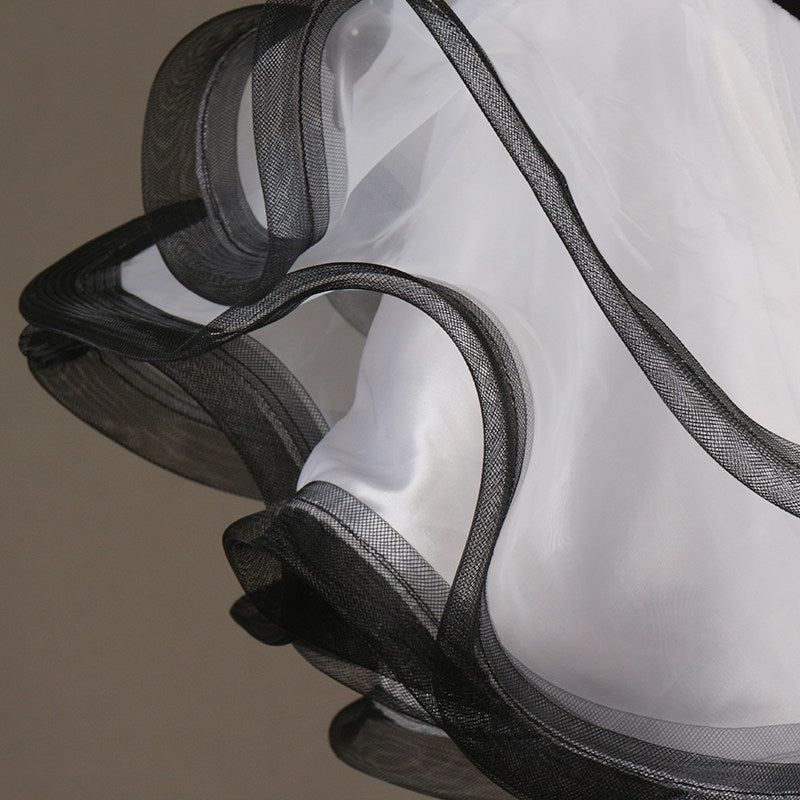
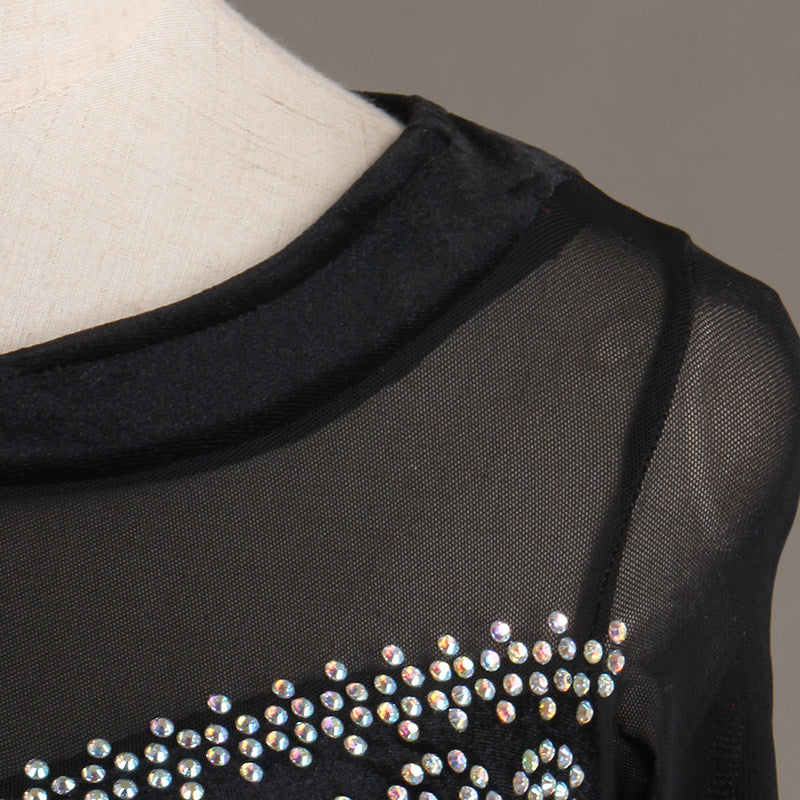
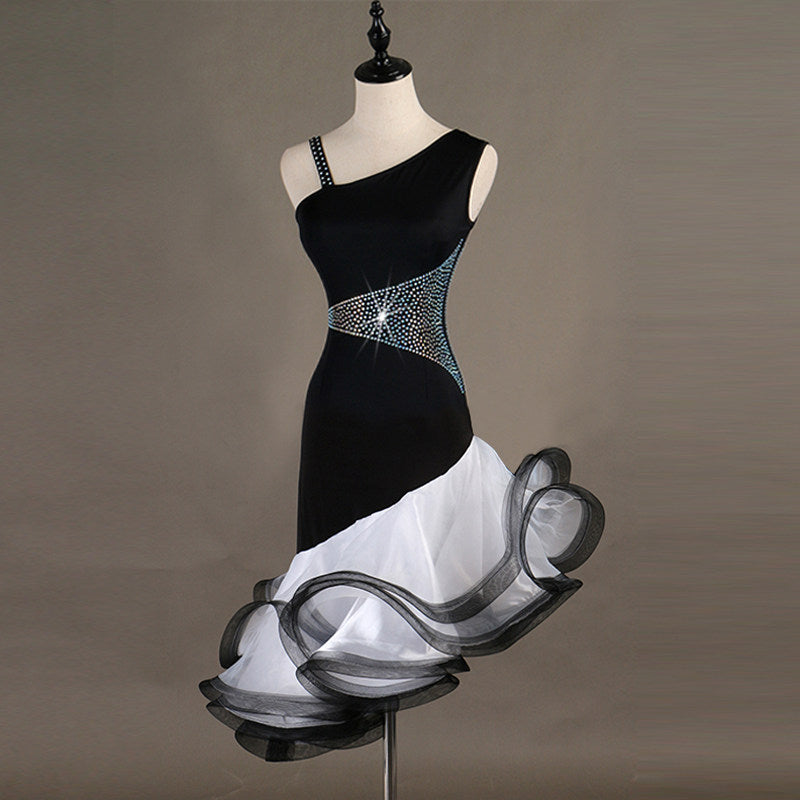
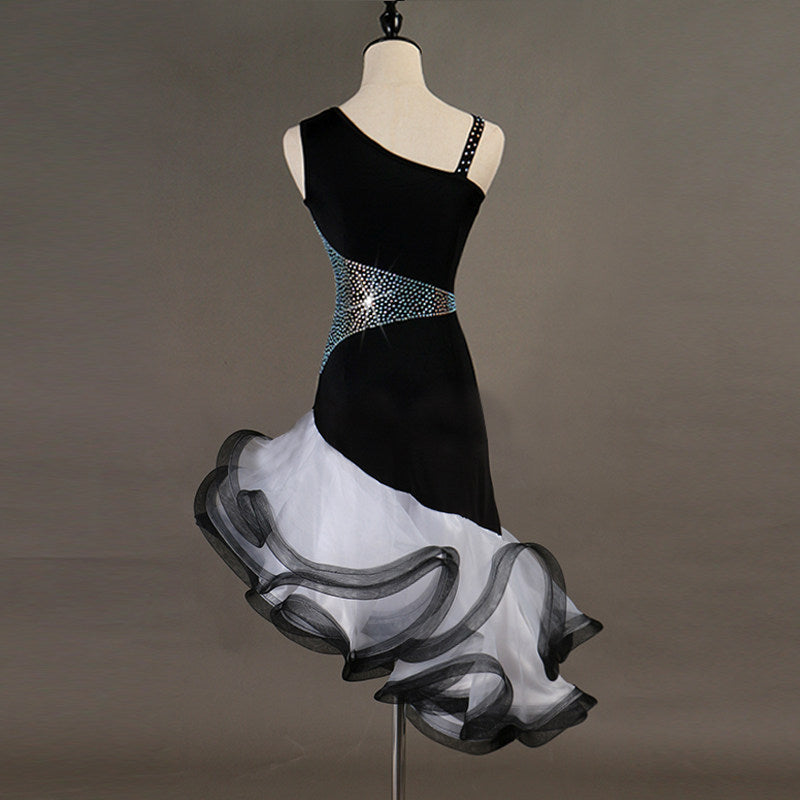
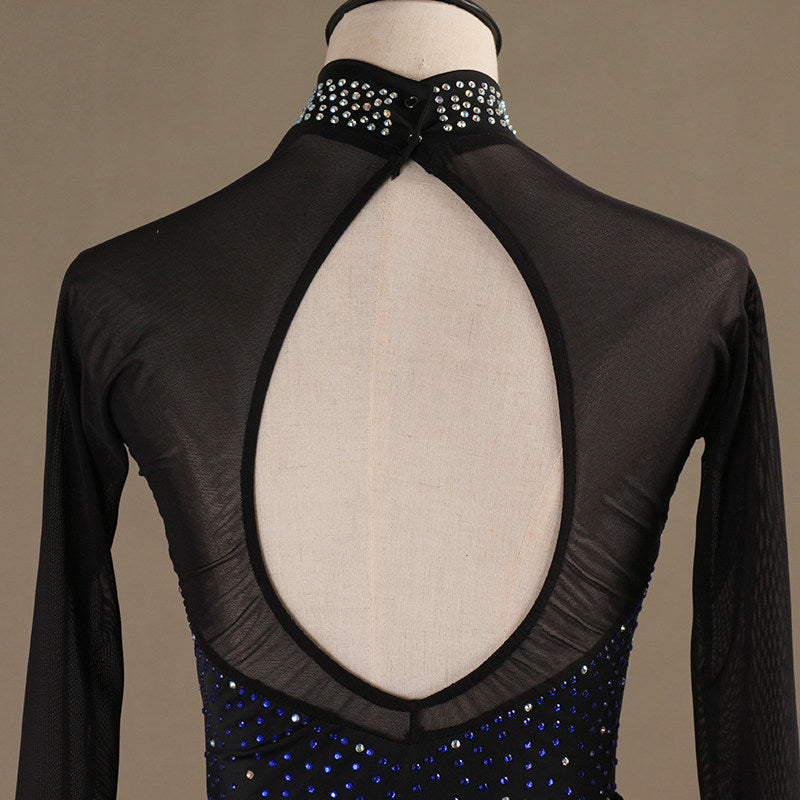
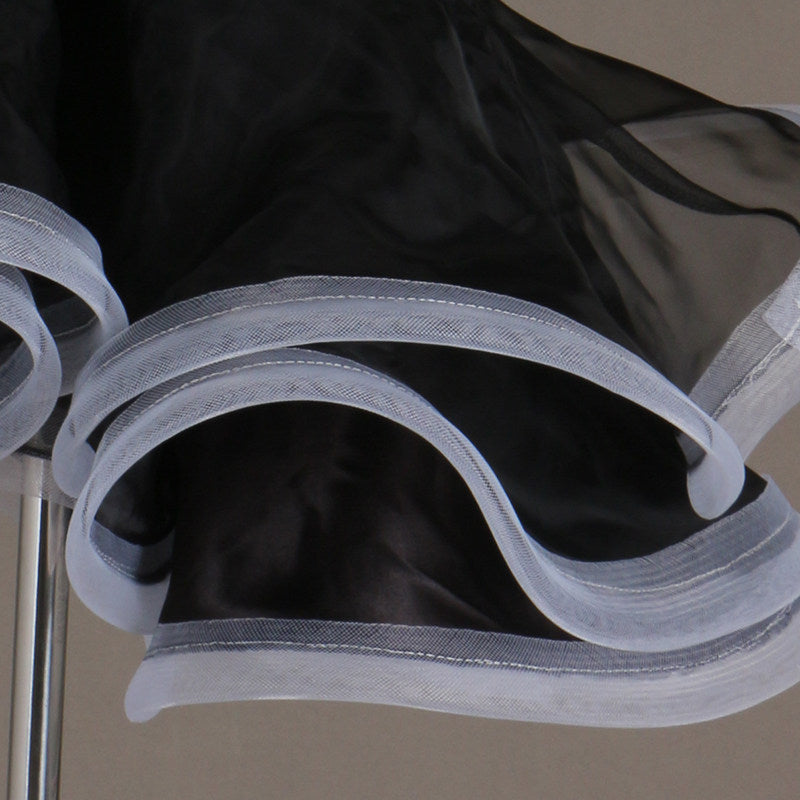
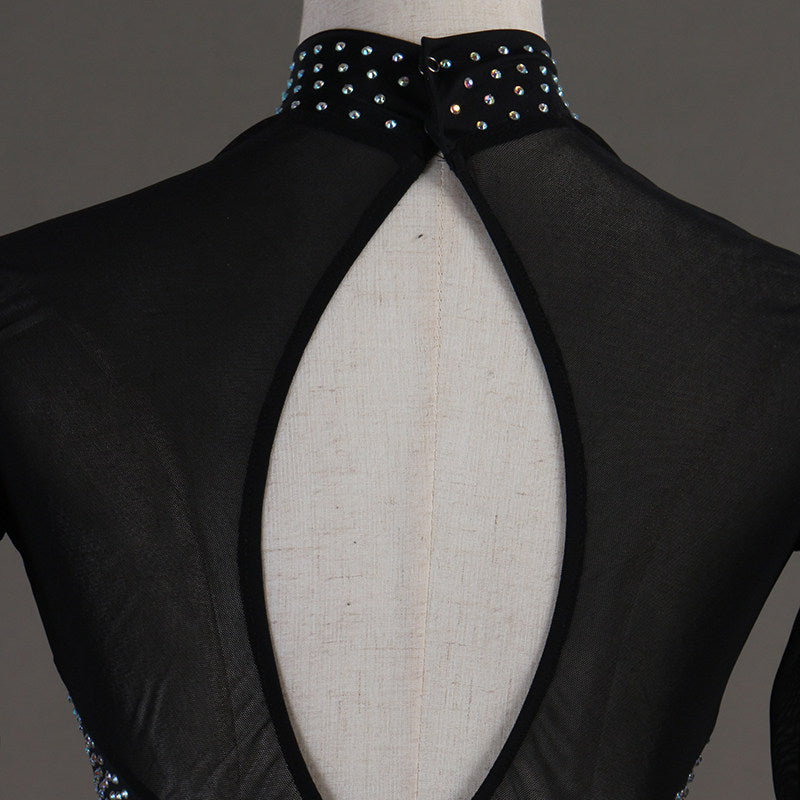
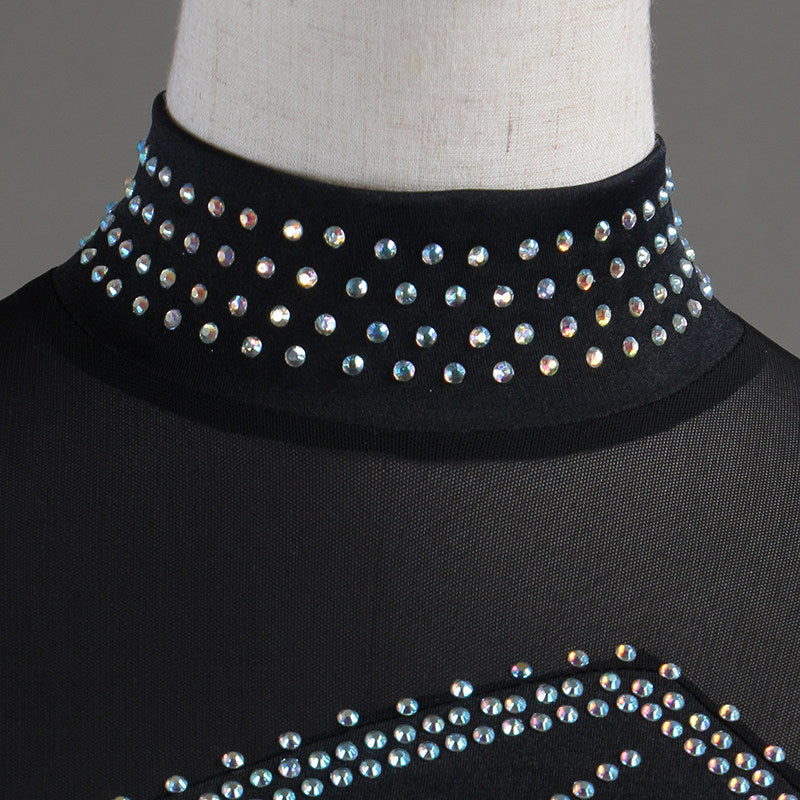
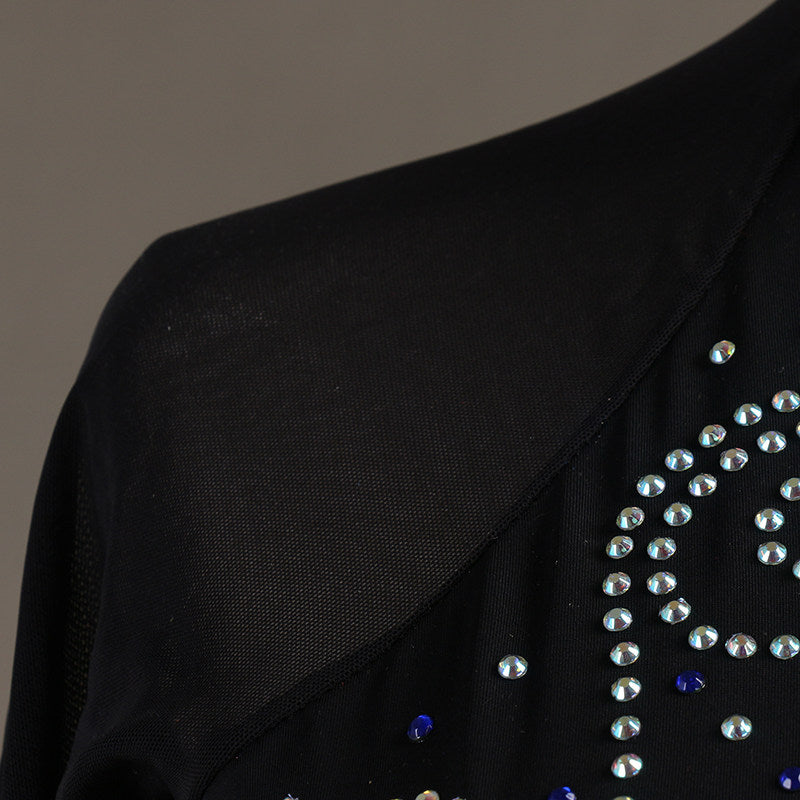
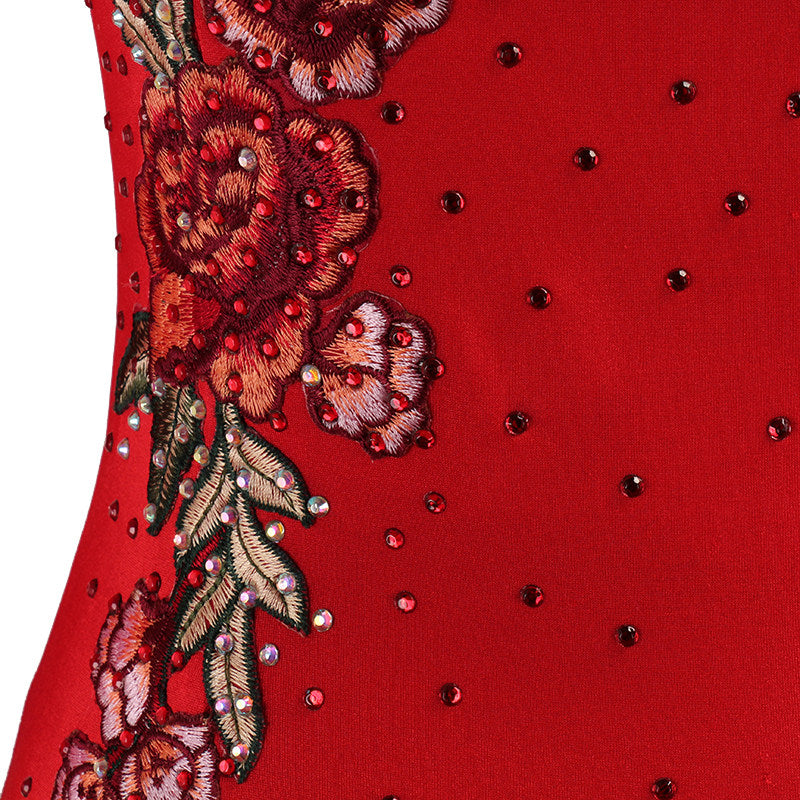
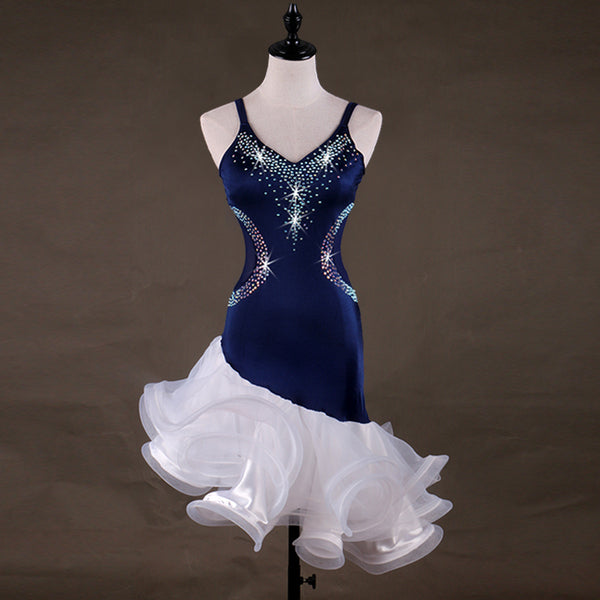
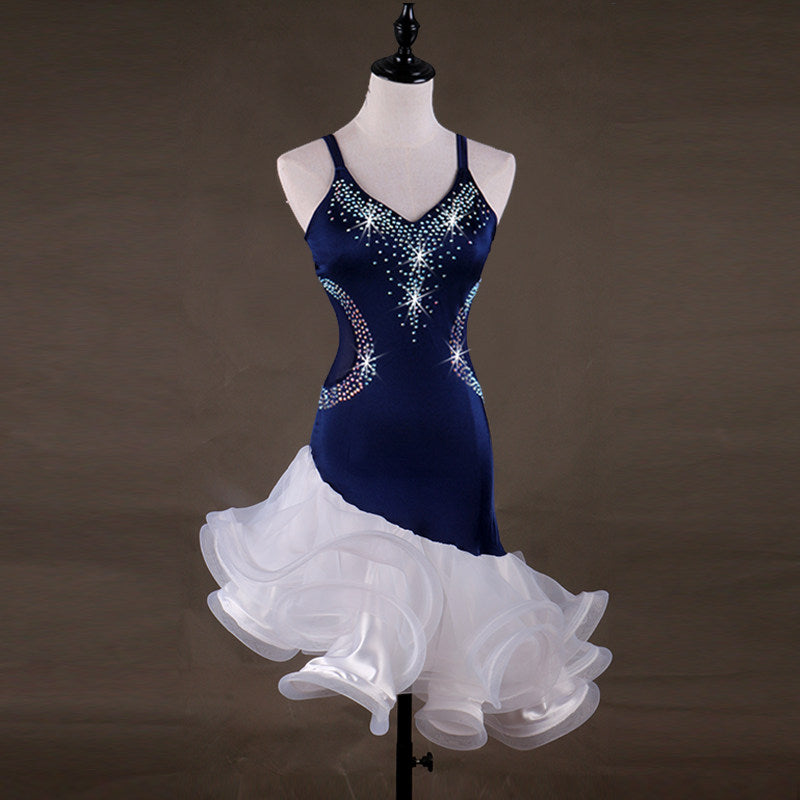
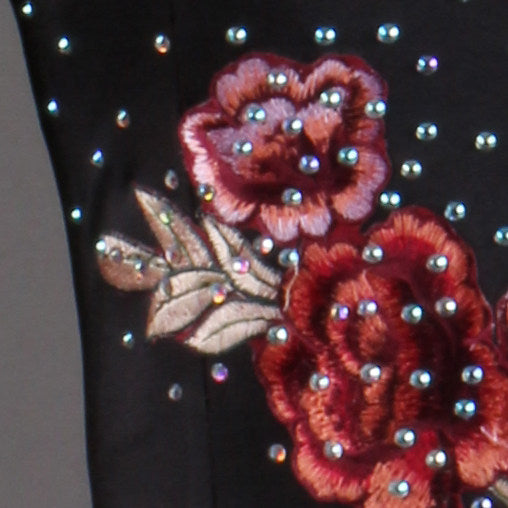
A competition dress is built to be seen from thirty feet away under stage light. Dense stonework, structured bodices, weighted or floated hems that read on camera, and construction that holds its shape through a full heat. It is a different purchase with a different life expectancy, and it is worth deciding which one you are shopping for before you start comparing pictures. Most of what is gathered here sits on the competition side; if that is what you need, ballroom competition dresses and Latin competition dresses narrow it down to that shelf directly.
What Makes It a Dance Dress
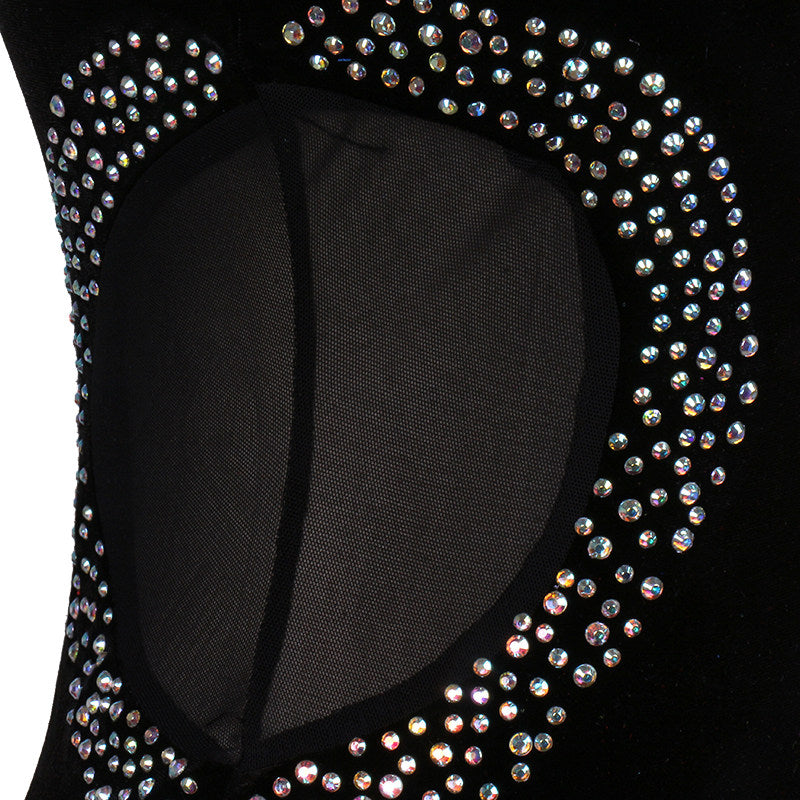
The differences from an ordinary occasion dress are mostly invisible in a photograph, which is why an evening dress bought for a wedding tends to fail on its first lesson. A dance dress is cut with the arms free above shoulder height, because a closed hold and a hand-to-hand turn both need range that a normal armhole does not allow. The body is stretch, not woven, so it recovers rather than creases through a session. Skirts are attached to hold their shape in rotation instead of wrapping around the legs. Briefs or attached shorts come as standard on most cuts, so a lift or a high kick is not a decision you have to make on the floor.
Weight is the other thing people underestimate. A heavily stoned dance dress costume is genuinely heavy, and that weight is deliberate — a weighted hem finishes where the figure finishes instead of drifting on past it. For practice, lighter is usually better; for competition, the weight is doing work.
Swing and the Social Floor
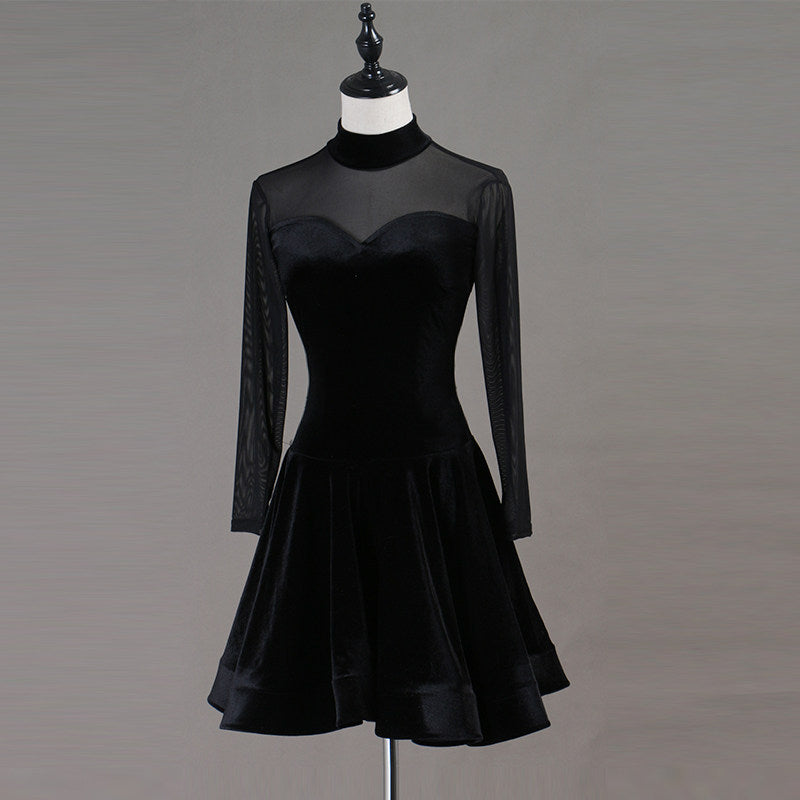
Not everything danced in a dress is ballroom or Latin. Swing, jive and social partner dancing sit slightly outside both, and the dress that suits them is its own answer: a fuller skirt that behaves well when it is thrown, a length that clears the knee, and enough structure at the bodice that it stays where you put it through a spin. Several styles here are cut exactly for that, and they double as the easiest first dance dress to own — forgiving about which class you end up taking.
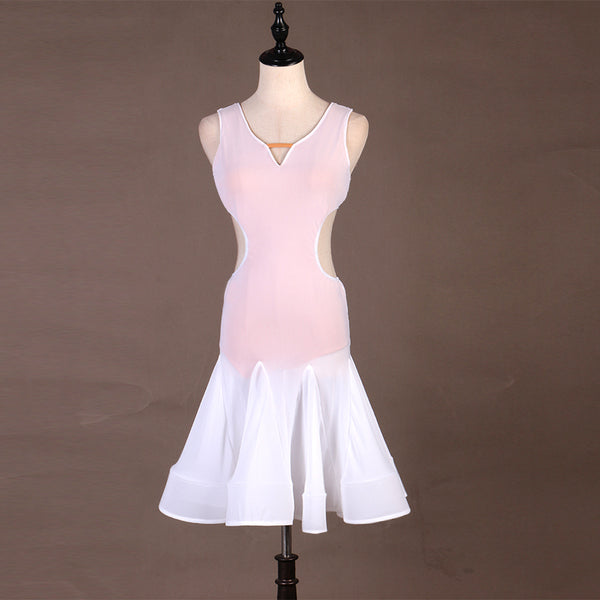
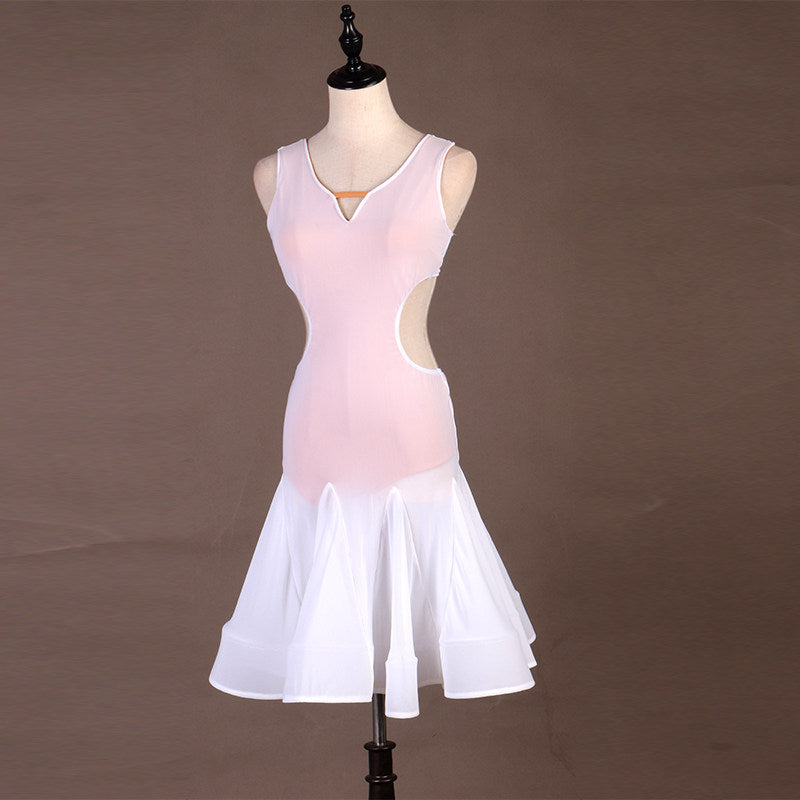
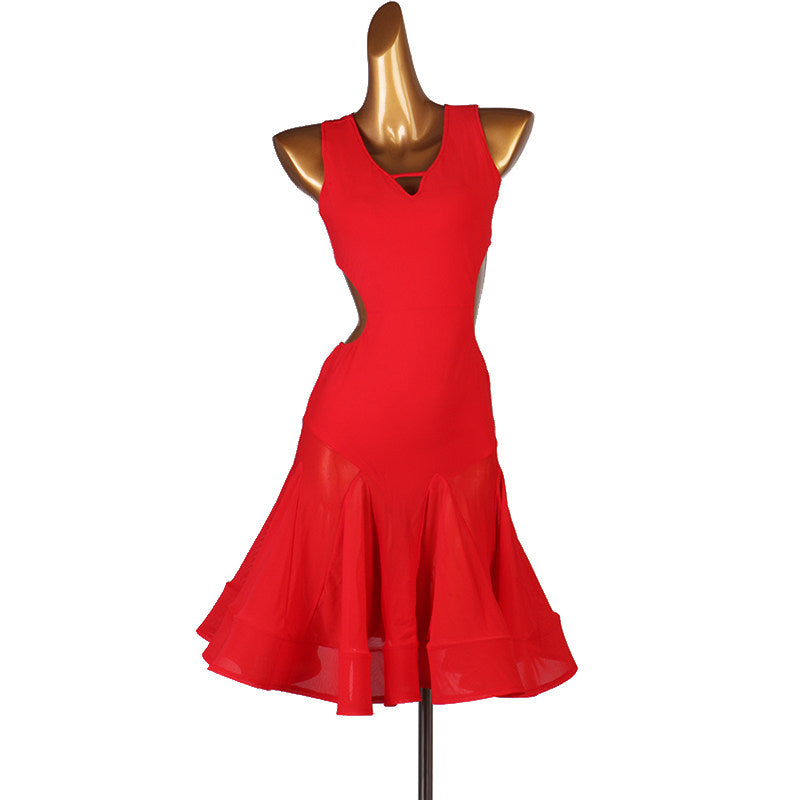
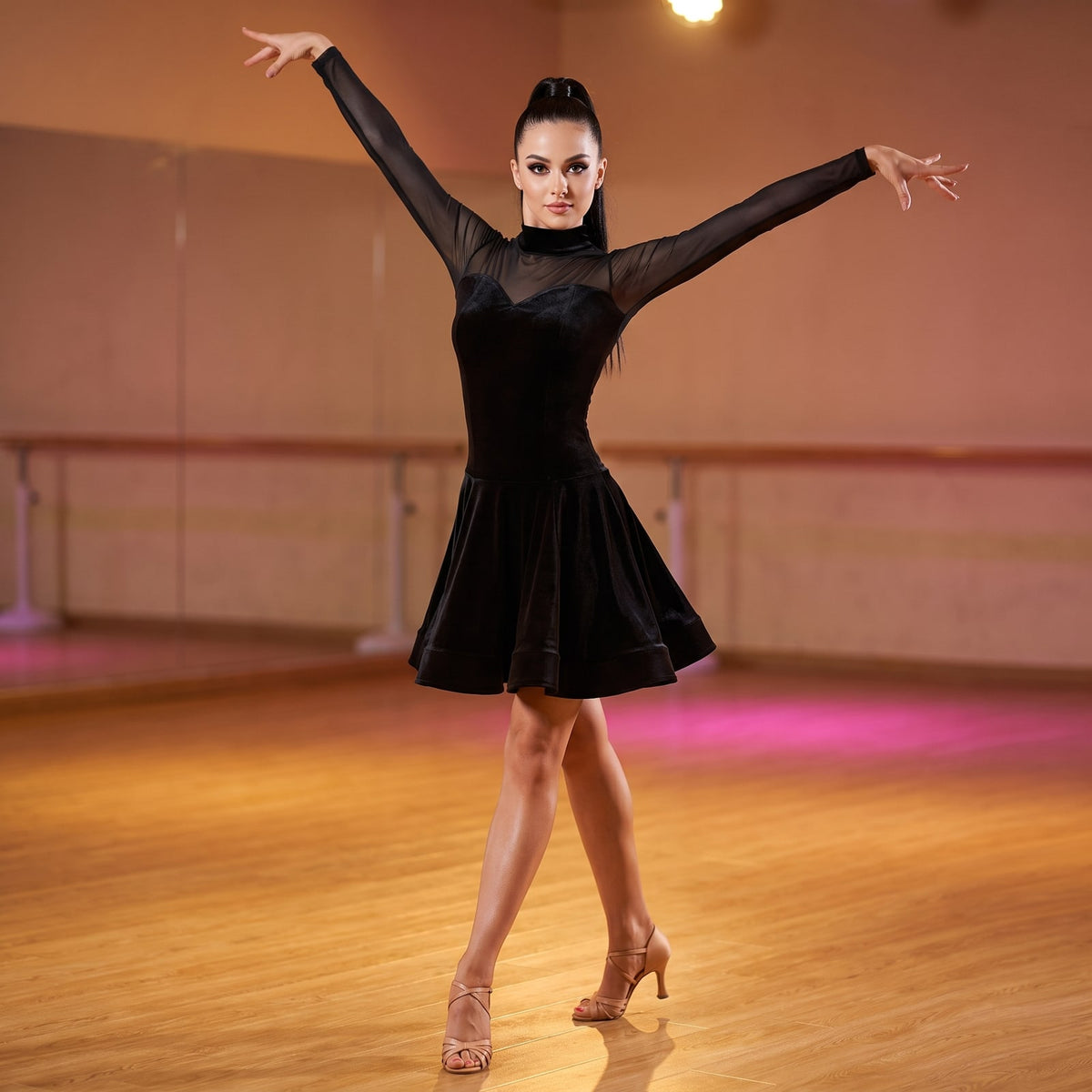
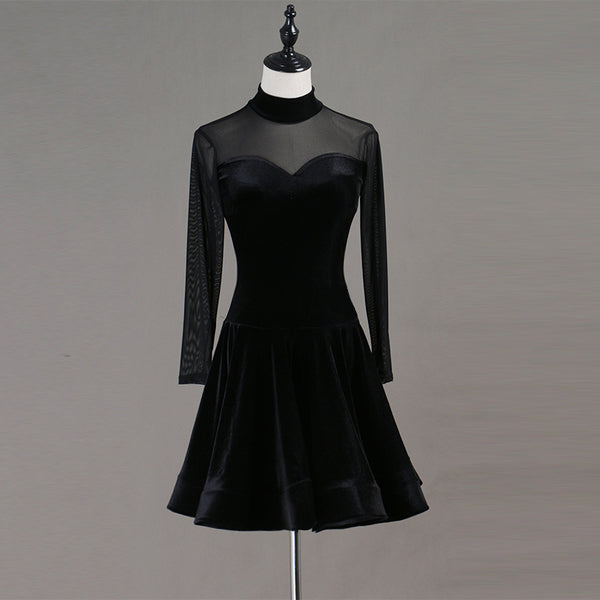
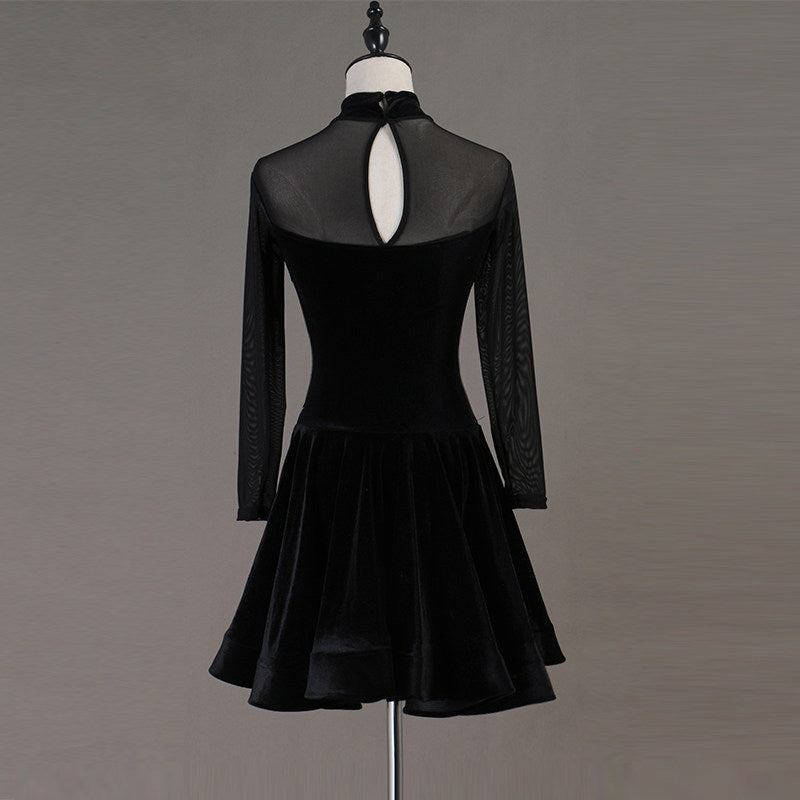
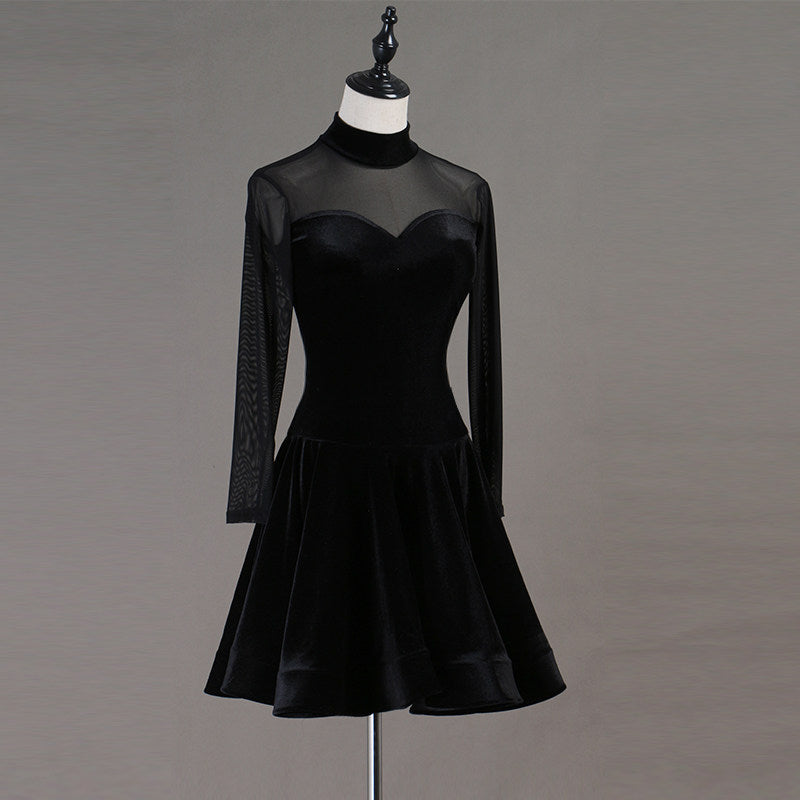
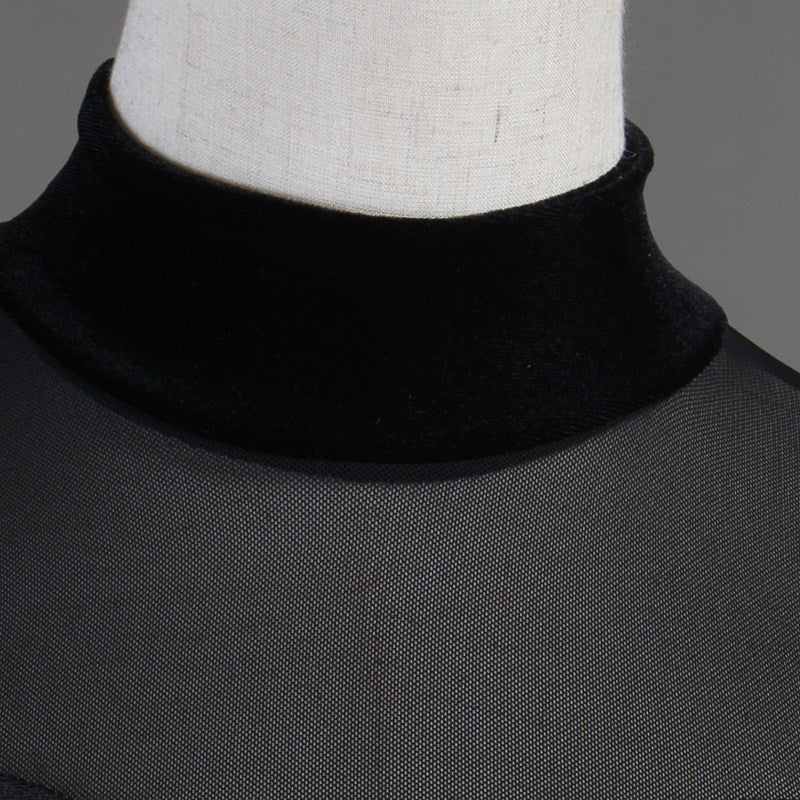
The same logic applies to colour. A black dance dress is the one that goes everywhere and photographs reliably. A white dance dress reads beautifully under stage lighting and shows every mark under fluorescent studio light. Strong colour is the one that separates you from a crowded floor, which is worth more in competition than in class.
Building More Than One Look
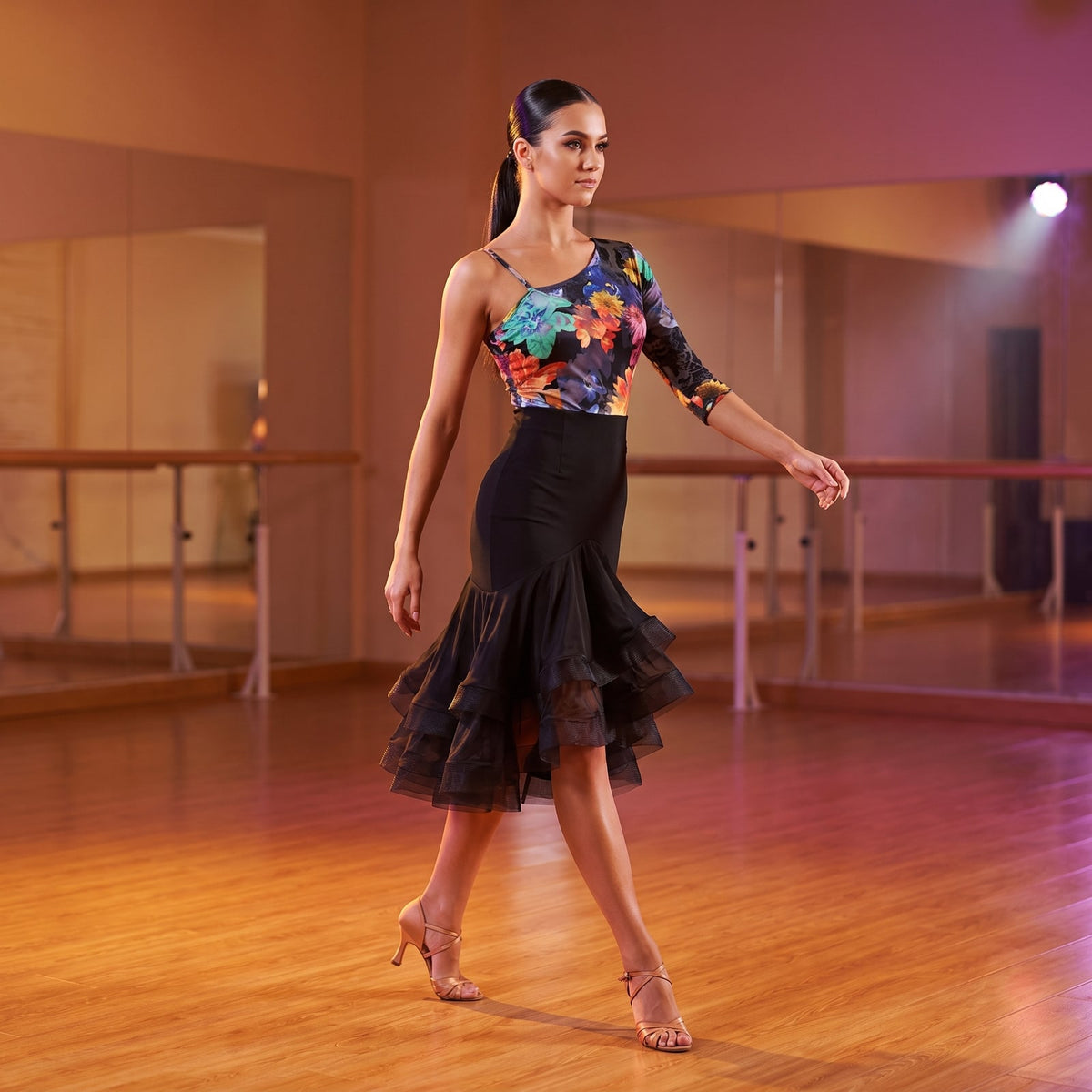
A dress is one decision covering the whole outfit, which is its appeal and also its limit. Separates give you arithmetic instead: a couple of dance skirts with two or three dance tops read as a different outfit every lesson, and a dance bodysuit holds its position under either of them, so nothing rides up mid-figure. Dance pants cover the lessons where a skirt is not what you want, and they suit practice sessions where you are working on your own rather than in hold.
Most dancers end up with both approaches: a dress for the occasions that call for one decision, and separates for the eight weeks of class in between. Shoes are the piece worth settling first either way — closed-toe for ballroom and Standard, open-toe for Latin and salsa — because the heel height you choose changes what dress length actually works on you.
Dance Dresses: Frequently Asked Questions
What is a dance dress?
A dress built for partner dancing rather than for an occasion. The practical differences are stretch fabric that recovers instead of creasing, armholes cut to allow full overhead range, a skirt attached to move predictably in rotation, and attached briefs or shorts on most cuts. It looks like an evening dress in a photograph and behaves nothing like one on a floor.
What dress should I wear for ballroom dancing?
Something with a full, long skirt that travels with rise and fall and clears your heel. Ballroom is danced in a closed hold with continuous movement, so the dress needs to work with the line rather than interrupt it at the waist. Ballroom dresses covers that family, including Standard and Smooth cuts.
What do you wear to salsa dancing?
Something short enough to leave the leg line readable, secure enough that you are not adjusting it, and comfortable enough for several hours in a warm room. Salsa is mostly social rather than competitive, so the deciding factor is usually the length of the night rather than the choreography. Salsa dance dresses is the page for that.
What is the difference between a competition dress and a practice dress?
A practice dress is simpler, lighter and built for repetition — it washes, it survives weekly classes, and nothing on it catches on a partner. A competition dress is built to read from a distance under stage light, with dense stonework, structured shaping and hems weighted or floated to show on camera. Both are here; they are different purchases rather than better and worse versions of each other.
Can the same dress work for both Latin and ballroom?
Not really, and this is the most common expensive mistake. Latin dresses are short and cut to react on the beat; ballroom dresses are long and cut to float through travelling figures in a closed hold. Each looks wrong on the other floor, and judges notice. If you dance both, plan on a dress for each family.
What size dance dress should I order?
Order against the size chart on the product page using your bust, waist and hip measurements rather than your usual street size, since dance sizing runs closer to the body than everyday sizing does. Stretch fabric gives you some room in either direction, and every order is backed by a money-back guarantee if the fit is not right.