Salsa vs bachata comes down to music, tempo, count, travel, and body feel. Salsa is usually faster, more rhythmically busy, and more turn-focused. Bachata is usually slower, more grounded, and easier for many beginners to count.
Both are Latin social dance styles, so neither is “better.” The right first choice depends on whether you enjoy sharp timing and travel, or a steadier basic step with closer partner connection.
Quick answer: salsa and bachata are both Latin social dances, but salsa is usually faster and more rhythmic while bachata feels slower and more grounded
Salsa is a partner dance with Afro-Caribbean roots, shaped strongly by Cuban son, mambo, Puerto Rican and New York social dance culture. It is commonly danced On1 or On2, with quick weight transfers, directional movement, and turns across an 8-count phrase.
Bachata began in the Dominican Republic, with early recordings emerging in the 1960s. Dominican bachata often uses lively footwork and syncopation, while many social bachata styles today emphasize grounded steps, hip action, and close connection.
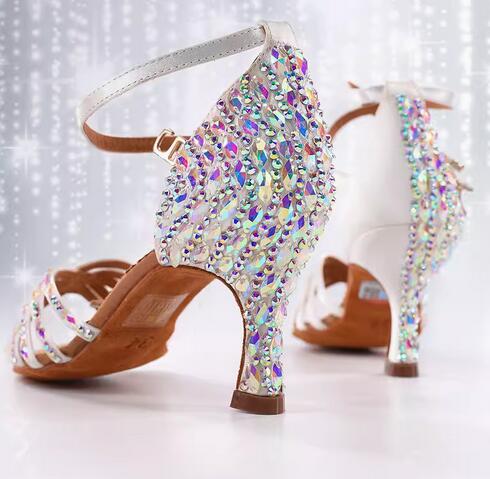
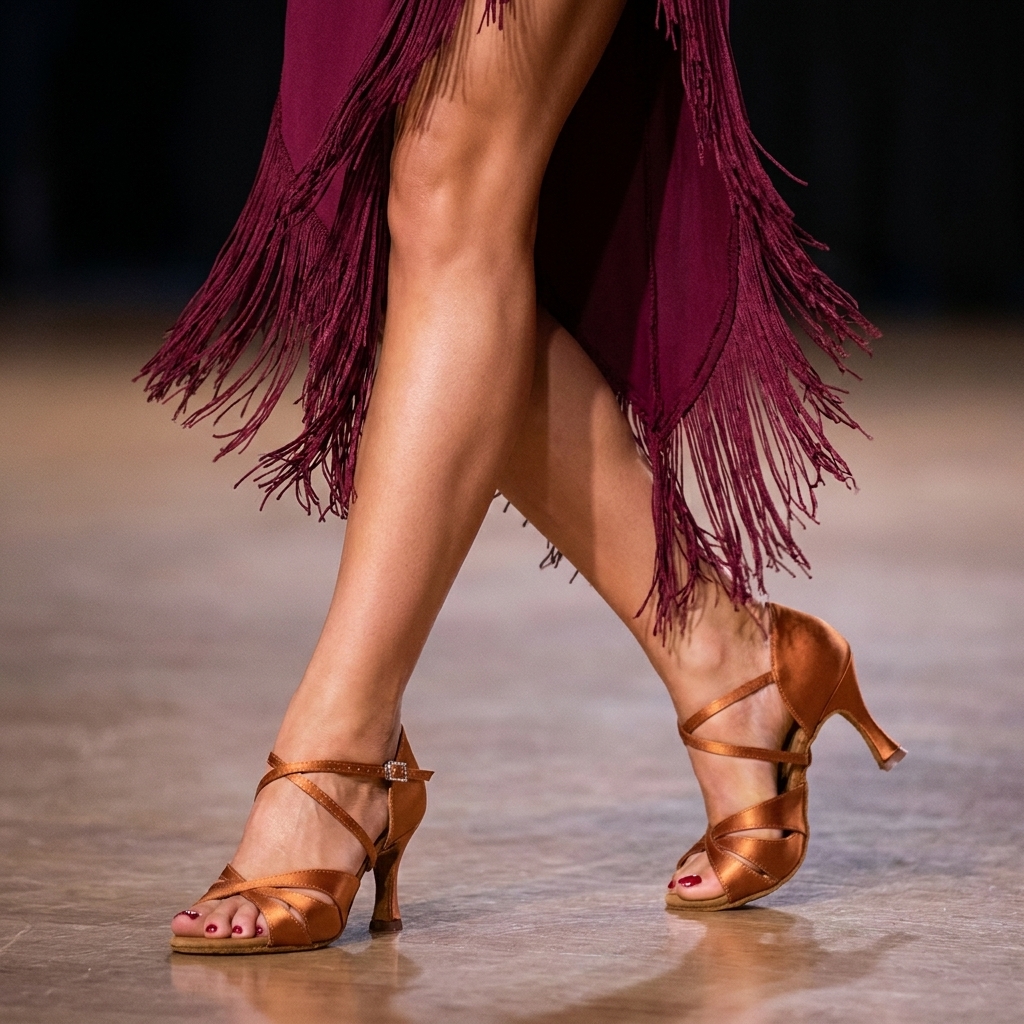
For beginners asking “is bachata easier than salsa,” the honest answer is: often, but not always. Bachata music usually has a clearer pulse and slower tempo, which helps new dancers hear the count. Salsa may feel more intimidating because the music moves faster and patterns travel more. In either style, a secure ankle strap, indoor suede sole, and stable low-to-mid heel can reduce avoidable slipping while you learn timing.
Salsa vs bachata comparison table: tempo, count, body feel, and beginner difficulty
The difference between salsa and bachata becomes clearer when you compare what a beginner actually experiences on the floor. Salsa often asks for faster foot placement, cleaner timing, and stronger balance during spins. Bachata usually gives more time to settle weight, feel the beat, and repeat the basic step.
BPM varies by song and scene, but salsa is commonly faster than bachata. Salsa music often sits around the mid-150s to 200+ BPM when counted as beats per minute, while bachata often feels more moderate, commonly around 120 to 160 BPM. Some DJs play slower or faster tracks, so listen for phrasing rather than numbers alone.
| Feature | Salsa | Bachata |
|---|---|---|
| Usual feel | Fast, bright, rhythmic | Slower, grounded, intimate |
| Common count | 1-2-3, 5-6-7 in an 8-count phrase | 1-2-3-tap, 5-6-7-tap |
| Movement focus | Travel, turns, cross-body lead, direction changes | Side basic, hip action, body movement, connection |
| Beginner challenge | Hearing timing while moving quickly | Relaxing the hips without over-styling |
| Social-floor impression | More rotational and energetic | More grounded and close to the spot |
| Beginner fit note | Low-to-mid heel around 1 to 2 inches, suede sole for controlled rotation, and a secure ankle strap for turns | Low-to-mid heel around 1 to 2 inches, suede sole for smooth weight shifts, and an ankle or instep strap to keep the foot aligned |
| Shoe support need | Controlled glide for turns and quick direction changes | Flexible forefoot and secure hold for grounded weight shifts |
If you want one practical takeaway from bachata vs salsa, choose based on rhythm confidence. Salsa rewards clear musicality and quick response. Bachata rewards relaxed weight transfer and steady connection. For indoor socials, both styles benefit from footwear that allows controlled glide without gripping the floor too hard; many beginners prefer low heel shoes while building balance.
What to notice at your first social: for salsa, listen for layered percussion, piano patterns, and a faster 1-2-3, 5-6-7 count; watch how couples travel through a lane and turn often. For bachata, listen for a clearer guitar-driven pulse and the 1-2-3-tap pattern; watch how dancers stay more contained, mark the tap, and use grounded body movement rather than wide floor travel.
What salsa feels like: faster music, more travel, sharper timing, and energetic turns
Salsa feels lively because the dancer’s weight changes are quick and precise. In many beginner classes, the leader steps forward on count 1 in On1 timing, while On2 timing places the emphasis differently and is common in New York-style salsa. Our guide to salsa On1 vs On2 timing explains the difference. The feet usually move on 1-2-3 and 5-6-7, with pauses on 4 and 8.
The body should stay lifted but not stiff. A good frame gives the partner clear information through the hands, arms, and torso without pulling. In cross-body lead patterns, the follower travels through a slot while the leader opens the pathway, then redirects the movement.
Beginners often struggle with salsa because the dance combines timing, travel, and turns at once. Spotting during spins helps reduce dizziness: focus the eyes forward, rotate the body, then bring the head around last. Keep steps small under the hips; large steps make the music feel even faster and can disturb balance. If salsa is your pick, our step-by-step salsa guide breaks the basic down slowly.
For salsa footwear, the beginner fit priorities are specific: choose a low-to-mid heel rather than a high heel, use a suede sole for indoor rotation, and look for an ankle strap that holds the heel securely during direction changes. If you are comparing salsa dance shoes online, measure both feet, check the size chart, and follow any style notes about close Latin sandal fit.
Salsa also asks for floor awareness. Because couples may rotate, change direction, and move through lanes, dancers should keep patterns compact at crowded socials. Clear timing, respectful spacing, and a calm frame matter more than complicated turns early.

What bachata feels like: slower count, clearer basic step, and more grounded hip movement
Bachata often feels easier to enter because the basic step is clear: step, step, step, tap. Many beginners hear it as 1-2-3-tap, then 5-6-7-tap. The tap is not just decoration; it helps mark the end of the phrase and prepare the next weight transfer. For a full walkthrough, see how to dance to bachata music.
The body movement is grounded rather than rushed. Hip action comes from bending and straightening the knees, changing weight cleanly, and allowing the pelvis to respond naturally. Forcing the hips can look tense and may strain the lower back, so beginners should start with relaxed knees and a soft rib cage.
Bachata connection can range from open hold to closer embrace, depending on the setting and partner comfort. Good dance floor etiquette matters here: maintain respectful space, accept or decline dances politely, and adjust closeness only when both partners are comfortable. The musicality is often easier to feel because guitar patterns and percussion give a steady guide.
The main beginner challenge is not speed; it is coordination. New dancers may hear the beat but feel self-conscious about the hips, torso, or close connection. Keep the first goal simple: step on time, change weight fully, and let the tap mark the phrase without exaggeration.
For bachata footwear, prioritize comfort through the forefoot because the dance uses repeated grounded weight shifts. A low-to-mid heel helps keep the body settled, a suede sole supports controlled glide on indoor floors, and an ankle or instep strap helps prevent the foot from sliding forward during side basics. When reviewing bachata dance shoes, use foot measurements and width notes rather than guessing from street-shoe size alone.
Five key differences between salsa and bachata every beginner should notice
The salsa and bachata difference is not only “fast versus slow.” Watch how couples use space. Salsa often rotates, opens, and redirects through the slot, while bachata tends to stay closer to one place with more grounded pulse.
The music also feels different. Salsa has dense percussion, horn lines, piano montuno patterns, bass movement, and layered rhythm. Bachata often has a more direct guitar sound and a repeated pulse that makes the count easier to locate.
| What to notice | Salsa clue | Bachata clue |
|---|---|---|
| Pace | Faster transitions and quicker feet | More time between steps |
| Floor use | More travel and turning patterns | Smaller, grounded movement |
| Partner shape | Open hold appears often | Closer connection appears often |
| Styling | Sharp accents, arm pathways, spins | Hip action, torso softness, taps |
| Beginner confidence | Timing may feel demanding first | Count may feel clearer first |
A simple listening exercise helps: observe one song before joining the floor. If the couples are turning often and traveling through lanes, it is likely salsa. If they mark side steps with visible taps and more contained body movement, it is likely bachata.
| Beginner question | If you choose salsa | If you choose bachata |
|---|---|---|
| “Will I need fast feet?” | More often, yes | Less often at first |
| “Will I turn a lot?” | Turns appear early | Turns appear, but usually feel less constant |
| “Will I stay close to my partner?” | Open hold is common | Close connection is common |
| “Will the count be obvious?” | It may take practice | Often clearer for new dancers |
| “What should I practice first?” | Small steps, timing, and controlled pivots | Weight transfer, relaxed taps, and natural hip action |
| “What shoe details help?” | Stable 1 to 2 inch heel, suede sole, secure ankle strap | Stable 1 to 2 inch heel, suede sole, secure ankle or instep strap |
Footwear should support those differences, not fight them. A secure strap, stable heel shape, and indoor suede sole can help with controlled turns in salsa and grounded weight changes in bachata. The goal is not to make the dance easier by equipment alone, but to reduce avoidable slipping or catching so technique can develop.
Which should you learn first: salsa or bachata?
If nerves are high or practice time is limited, bachata is often the easier first step. The tempo is usually slower, the basic step repeats clearly, and the dance gives beginners time to feel partner connection without chasing fast turns.
Salsa may be the better first choice if the music excites you more. Dancers who enjoy quick rhythm, sharper accents, and energetic patterns may find salsa motivating, even if the learning curve feels steeper. The key is to keep the steps small and count out loud at first.
Use this chooser: if confidence is your biggest barrier, start with the style that lets you stay relaxed for a full song. If you only have one class or practice session per week, bachata may give faster early social confidence because the basic repeats clearly. If social nerves come from crowds, salsa can feel busier at first, while bachata often gives more time to settle your timing.
If you want to learn both, start with the one that feels less intimidating socially. Build one reliable basic, one turn, and one polite way to enter and exit the floor. Then add the second style once the counts no longer blur together. TTdancewear’s practical advice for beginners is simple: use measurements, size charts, heel-height notes, and sole details to choose one secure pair that supports both styles without overcomplicating the decision.
Can you dance both styles, and do they share the same shoes?
Yes. Many Latin social events play both salsa and bachata, often in alternating sets. Learning both helps a dancer stay active during more songs and understand different kinds of partner dance connection.
The shoe needs are similar for indoor socials: a flexible forefoot, secure fit, balanced heel, and suede sole for controlled glide. Low-to-mid heel options are usually more beginner-friendly than very high heels because they make weight transfer and balance easier to manage.
For salsa, a beginner-friendly pair should have a stable heel around 1 to 2 inches, a suede sole that turns without sticking, and an ankle strap that keeps the foot secure during cross-body leads and spins. For bachata, the same low-to-mid heel range works well, but forefoot flexibility and a secure instep or ankle strap are especially useful for repeated side basics, taps, and grounded hip movement.
For one pair to work across both styles, focus on three practical details. First, choose a suede sole for indoor floors, since it allows rotation without the sticky grip of many street shoes. Second, look for a secure strap or closed fit so the foot stays aligned during turns and side steps. Third, favor a low-to-mid heel with a stable shape while building control. A versatile pair in the Latin salsa collection can be compared by heel height, strap design, sole material, and sizing notes.
FAQs
Which Latin dance is easiest to learn: salsa or bachata?
Bachata is often easier for absolute beginners because the tempo is slower and the basic step is easier to hear: 1-2-3-tap, 5-6-7-tap. Salsa can feel harder at first because the music is faster, patterns travel more, and turns require clean balance. Still, personal rhythm comfort matters more than the stereotype. Start with the dance whose music makes you want to move, and choose a stable low-to-mid heel if balance feels uncertain.
What is the difference between salsa and bachata music?
Salsa music is usually more rhythmically layered, with percussion, piano patterns, bass, horns, and syncopated accents creating a busy feel. Bachata music often sounds steadier to a beginner, with guitar patterns and a clearer pulse that supports the side basic. This musical difference changes the body: salsa encourages sharper timing and travel, while bachata supports grounded movement. Before dancing, listen for one full phrase and count the beat quietly.
How do I tell salsa vs bachata on a social floor?
Watch the pace first. Salsa couples usually move faster, turn more often, and may travel through a slot using patterns like the cross-body lead. Bachata couples often stay more grounded, use smaller steps, and mark the phrase with a tap or hip action. Listen too: bachata often feels easier to count for beginners. A practical habit is to observe one song from the edge of the floor before joining.
Can I learn salsa and bachata at the same time?
Yes, many beginners learn both because they appear at the same Latin social dance events. The risk is mixing the timing too early: salsa commonly uses 1-2-3, 5-6-7, while bachata uses 1-2-3-tap. Focus on one clean basic first, then add the second style once your count feels stable. One secure pair of suede-soled social dance shoes can support both paths if the heel height and fit match your level.
Do salsa and bachata use the same shoes?
Often, yes, especially for indoor socials. Both styles usually work well with suede soles because they allow controlled glide for salsa turns and bachata weight changes. Beginners should favor low-to-mid heels rather than very high heels, since balance matters more than appearance. The shoe should feel secure through the ankle or instep, with no excess looseness in the heel. Check foot measurements and the size chart carefully when selecting a pair online.
What heel height is best for a beginner in salsa or bachata?
Most beginners do best in a lower heel, often around 1 to 2 inches, because it supports steadier balance and cleaner weight transfer. Heel shape matters too: a flared or wider heel can feel more stable than a narrow high heel. Check the size chart, measure both feet, and review width notes before ordering. If you are new to turns, prioritize support, suede sole control, and a secure strap over extra height.
Should I choose salsa or bachata if I get nervous at socials?
Bachata may feel less intimidating because the music is slower and the basic step is easier to follow. It also tends to involve less travel, so beginners can focus on connection and timing without rushing across the floor. Salsa can feel more crowded and energetic, with faster transitions and more turns. Choose the style that matches your comfort with rhythm first. Confidence grows faster when your shoes fit securely and do not slip.
What shoes work for both salsa and bachata socials?
Look for indoor dance shoes with suede soles, a secure strap or closed fit, and low-to-mid heels for steadier balance. Salsa needs enough glide for turns; bachata needs enough flexibility for grounded weight shifts and hip action. Avoid street shoes with sticky rubber soles on traditional indoor dance floors, as they can catch during rotation. Use foot measurements, size charts, and material notes to choose a secure fit for both styles.
Conclusion
Salsa vs bachata is really a choice between two different movement experiences. Salsa is faster, more directional, and turn-driven, with timing choices like On1 and On2. Bachata is slower, more grounded, and often easier for beginners to count through its clear basic step and tap. New buyers can also check the salsa dance shoes guide before their first pair.
If confidence is the priority, start with bachata. If energy and rhythm excite you, start with salsa. Many dancers learn both, especially because socials often play both styles in the same night. For footwear, focus on fit, suede sole control, a secure ankle or instep strap, and a stable beginner-friendly heel. Those details help your technique develop while you learn the music, count, connection, and etiquette that make Latin social dancing feel welcoming.