Salsa on1 vs on2 is a timing choice, not a different dance. On1 breaks on beat 1, while On2 breaks on beat 2. The basic salsa step still uses an 8-count pattern, so once you hear the music clearly, the difference becomes much easier to feel. For beginners, the goal is not to “pick the perfect style” on day one; it is to hear the count, keep your weight transfer clean, and move with confidence.
What is salsa On1 vs On2?
Salsa on1 vs on2 refers to when you place the break step in the music. On1 means the dancer changes weight on beat 1; On2 means the break happens on beat 2. The dance vocabulary stays the same, but the timing changes the feel.
That is why beginners sometimes think they are learning two different dances. They are not. Both use the same basic step, the same lead and follow, and the same social dancing structure. What changes is where the body lands inside the 8-count.
A simple way to remember it: On1 often feels like stepping with the strongest downbeat, while On2 feels like stepping a little after it, closer to the percussion line. Many dancers relax faster once they stop treating timing as a pass-or-fail test and start hearing it as a musical choice.
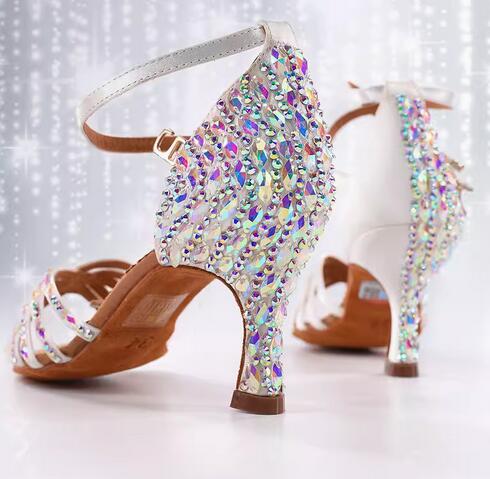
If foot comfort is distracting you, stable dance-specific footwear can help you focus on timing instead of sore arches. Many beginners also notice that a secure heel cup makes weight transfer feel clearer. For dancers looking for that kind of support, TTdancewear’s salsa dance shoes are a practical option for timing practice.
How the 8-count and quick-quick-slow rhythm work
Salsa is commonly taught over an 8-count, but the feet do not step on all eight counts. In many teaching systems, the basic step uses counts 1-2-3, then 5-6-7, with 4 and 8 as pauses or holds. That is where the familiar quick-quick-slow feel comes from.
The “quick-quick-slow” pattern is a helpful shortcut, but it should not make you rush. “Quick” means a shorter weight transfer, not a frantic step. “Slow” means you keep your balance longer before changing weight again. Good timing is really clean weight transfer, not bigger movement.
Music phrasing matters too. Salsa music often has repeating phrases, and the percussion helps you stay oriented. The conga, bass, and clave can all guide your timing, but beginners usually find the downbeat first. Once you can count a full 8-count out loud, the pattern becomes much easier to hear in real salsa music.
Here is a simple comparison:
| Timing cue | What you feel | Common beginner mistake |
|---|---|---|
| 1-2-3, 5-6-7 | Step-step-pause rhythm | Rushing the slow count |
| quick-quick-slow | Two shorter transfers, then one longer hold | Making every step the same length |
| 8-count phrase | Repeating musical cycle | Losing track after one phrase |
A useful practice habit is to clap the counts first, then step them. If you can hear the 8-count without moving, your body will usually follow more cleanly. Supportive shoes with a stable sole can make that repetition feel less tiring, especially during long timing drills. TTdancewear’s Latin salsa dance shoes are designed for controlled practice and social dancing.
On1 vs On2 step pattern: what changes in your feet
The core salsa basic step stays the same, but the break step shifts. On1 is commonly taught with the break on beat 1, while On2 places that break on beat 2. In both cases, the dancer still uses a clear weight transfer and a return to center before the next phrase.
For a beginner, it helps to picture the feet rather than the whole routine. On1 often feels like step, step, replace; pause; step, step, replace. On2 feels similar, but the first real break is delayed by one beat. That one-beat shift changes how the body settles into the music.
This matters in turns and cross-body lead patterns too. In a cross-body lead, the lead and follow still use the same shared pathway, but the timing of the rotation and redirect changes slightly. If your weight transfer is late, the turn will feel crowded. If it is early, you may drift off the beat.
A secure fit helps here. A shoe that holds the heel and supports the forefoot can make the floor feel more predictable, which is useful when you are learning to land on the correct beat. Many dancers prefer a lower heel at first because it makes balance and controlled pivoting easier. If that sounds familiar, TTdancewear’s low heel dance shoes are worth a look.
| Count | On1 basic step feel | On2 basic step feel |
|---|---|---|
| 1 | Break and change weight | Prep or hold before the break |
| 2 | Collect and recover | Break and change weight |
| 3 | Step and continue the pattern | Step and continue the pattern |
| 4 | Pause or settle | Pause or settle |
| 5 | Break on the second half of the phrase | Prep or hold before the break |
| 6 | Collect and recover | Break and change weight |
| 7 | Step and continue the pattern | Step and continue the pattern |
| 8 | Pause or settle | Pause or settle |
LA style vs New York style salsa: why the timing differs
LA style is commonly associated with On1 timing, while New York style is commonly associated with On2. That does not mean every dancer in those cities follows one rule forever, but the association is strong enough that beginners hear the labels together. Style and timing are related, but they are not identical.
LA style often feels more forward-driving and direct to new dancers, especially because the break on 1 lines up with the first strong beat many people hear. New York style often feels more “inside” the music, with the break on 2 giving a slightly different rhythmic pull. Both are social dancing styles with their own history and community context.
This difference grew from dance communities, music phrasing, and the way dancers organized social dancing around the bandstand and the beat. For beginners, that history is useful because it shows that timing is not about superiority; it is about tradition, musical feel, and local scene habits. If you are learning either style, comfort and balance still matter more than labels. And for the backstory behind these styles, see the history and origin of salsa.
How to hear salsa count in the music
If you cannot hear the count yet, start with the percussion, not your feet. Salsa music often gives beginners a clearer downbeat on 1, while beat 2 becomes easier once you listen for the repeating clave and conga pattern. Count the song out loud through 8 before stepping.
A simple drill works well. First, clap on every count from 1 to 8. Next, clap only on 1 and 5. Then tap your foot lightly on the break step while keeping the rest of the counts in your head. This builds timing without forcing the body to move too quickly.
The key is consistency. Use one song repeatedly until the rhythm feels familiar, because music phrasing repeats in cycles. If the song is fast, slow your practice down and keep the steps small. Overstepping is one of the most common beginner timing mistakes, and it usually leads to rushing.
Here is a simple listening map:
| What to listen for | What it tells you | Beginner use |
|---|---|---|
| Strong downbeat | Where beat 1 lands | Helps find On1 |
| Conga pattern | Repeating pulse in the groove | Helps stay oriented |
| Clave pattern | Rhythmic guide across the phrase | Helps hear the structure |
| Bass accents | Low-end pulse and phrase shape | Helps keep the count steady |
A useful practice habit is to count aloud, then step in place, then add the basic step. Keep the movement small enough that you can hear the music clearly. TTdancewear’s practice dance shoes can support that kind of repetition when you want a secure feel underfoot.
Which timing should a beginner learn first?
For most beginners, On1 is usually easier to hear at first because beat 1 is the strongest downbeat. That said, On2 is not harder in a permanent way; it just asks you to listen differently. Some dancers eventually prefer On2 because the percussion feels more natural to them.
The best choice depends on your local social dancing scene, the music you hear most, and how quickly you want to build confidence. If your community dances mostly one timing, learning that timing first can make social dancing smoother. If you are unsure, start with On1, then add On2 once the 8-count feels automatic.
Here is a simple decision guide:
| If you want… | Start with… | Why |
|---|---|---|
| the clearest first beat | On1 | Beat 1 is easier to hear |
| a timing that many beginners grasp quickly | On1 | The downbeat is obvious |
| a feel that follows percussion closely | On2 | The break sits later in the phrase |
| flexibility for different scenes | both, in sequence | You can learn one, then the other |

Whatever timing you choose, comfort matters. A stable heel, a secure fit, and enough support in the forefoot can reduce fatigue during repeated count work. That is one reason many dancers choose dance-specific shoes when they are still building timing confidence.
Practice tips, common mistakes, and what to wear while learning
The most common beginner mistakes are rushing the quick counts, taking steps that are too large, and losing the weight transfer before the next beat. Keep your steps small and your knees soft. Salsa is built on controlled movement, not force.
A short practice routine helps. Count 1 through 8 aloud, clap the rhythm, then mark the basic step slowly for two or three songs. Focus on the break step and the pause on 4 and 8. If turns feel unstable, return to the basic step until the timing is clean again. New to the footwork itself? Our step-by-step guide to dancing salsa breaks down the basic step.
What you wear also matters. Indoor dance floors usually reward a sole that allows controlled turns, not heavy grip. A low-to-mid heel can help many beginners feel grounded, while very high heels are not ideal at the start. TTdancewear’s salsa dance shoes are a useful option when you want a shoe built for weight transfer, balance, and longer practice sessions.
FAQs
Is On1 or On2 salsa better for beginners?
Neither timing is universally better. On1 is often easier at first because beat 1 is the strongest downbeat in the music, so many beginners can hear it quickly. On2 can feel more natural later if you respond well to percussion and phrasing. The best choice is the one you can count cleanly and use consistently in social dancing.
Do most people dance salsa on 1 or 2?
That depends on the city, the event, and the local scene. On1 is commonly associated with LA style, while On2 is commonly associated with New York style, but neither timing is “the only correct one.” If your local social dancing community favors one timing, learning that first can make partner connection and floor confidence easier.
How do I hear salsa count in the music?
Start by listening for the strongest downbeat, then count the song out loud from 1 to 8. Clap on every beat first, then only on 1 and 5, so the phrase becomes easier to hear. Percussion cues like conga and clave can help you stay oriented. Repeating the same song several times is often the fastest way to build timing awareness.
What is the difference between salsa timing explained as On1 and On2?
The difference is the beat where you place the break step. On1 breaks on beat 1, and On2 breaks on beat 2. The basic 8-count structure stays the same, so the movement vocabulary does not change. What changes is the rhythmic feel, which is why experienced dancers often describe On2 as sitting a little deeper inside the music.
Are On1 and On2 the same as LA style vs New York style salsa?
They are closely associated, but they are not exactly the same thing. LA style is commonly danced On1, and New York style is commonly danced On2. Style also includes movement quality, body action, and phrasing, not just timing. For beginners, the easiest way to remember it is that style and timing are linked, but one does not fully define the other.
What shoes help when learning salsa beginner timing?
Look for dance-specific shoes with a secure heel cup, a stable sole, and enough forefoot support for repeated weight transfer. Many beginners do well in low-to-mid heels because balance feels more manageable than in very high heels. If you are practicing often, choose a shoe that supports controlled pivoting on indoor floors. TTdancewear’s Latin collections are a practical place to compare those features.
Can I learn On2 if I start with On1 first?
Yes. Many dancers learn On1 first, then retrain the break step and listening pattern for On2 later. The main adjustment is where you place your weight transfer in the 8-count, so slow practice matters more than speed. Use a familiar song, count aloud, and keep the steps small until the new timing feels steady. Supportive shoes can make that transition feel less tiring.
Conclusion
Salsa on1 vs on2 is really about where the break step sits in the 8-count, not about learning a different dance. Once you can hear the downbeat, the quick-quick-slow pattern, and the role of percussion, the timing becomes much easier to trust. For most beginners, the best first step is choosing one timing, practicing it slowly, and staying consistent. When you are ready to buy, the complete salsa dance shoes guide compares heel height, suede soles, and fit.
If you want shoes that support clean weight transfer, stable balance, and comfortable social dancing, explore TTdancewear’s salsa dance shoes. For dancers building timing, comfort, and confidence, it can also help to browse TTdancewear’s salsa and Latin collections as you practice.