
Last updated: June 14, 2026 · Author: TTdancewear Team

Great salsa dance shoes feel secure on turns, light underfoot, and stable on dips. This 2026 guide explains how to choose the right fit, sole, and heel height—and links you to our class-tested salsa dance shoes for women at TTdancewear. Whether you need open toe salsa heels for socials or a stable beginner pair, here's everything you need to buy with confidence.
Why Salsa-Specific Shoes Matter
Salsa technique involves quick weight transfers, spins, and body movement. Salsa dance shoes provide controlled pivot, ankle support, and a secure strap or zipper so you can move decisively without slipping or over-gripping. Street sneakers grip too hard and can twist your knee on a fast turn; salsa shoes are engineered to release at exactly the right moment.
- Controlled grip: Suede soles glide without sliding out.
- Lightweight: Less fatigue; better foot articulation.
- Support: Structured heel counter, secure straps or zipper.
- Flexibility: A soft, splittable sole lets you point and pivot naturally.
Fit & Sizing: How Tight Is Right?
New salsa shoes should feel snug but not painful. A small break-in stretch (≈ 0.25 size) is normal. If you're between sizes, many dancers size down for open-toe Latin styles so the foot doesn't slide forward.
- Measure foot length & width at day's end. Use our printable sizing template.
- Check toe placement: toes near the edge for open-toe; no curling.
- Width options: try wide fit or narrow for comfort & control.
Sole Types: Suede vs Rubber vs Street
Choose based on your typical floor:
| Sole | Best For | Pros | Consider |
|---|---|---|---|
| Suede | Studio wood/marley | Smooth pivots; classic feel | Needs brushing; avoid wet streets |
| Rubber | Slippery floors | Extra grip & stability | Less spin; pick lower grip for turns |
| Street | Outdoor/club floors | Durable; versatile | Heavier; choose moderate tread |
Suede vs Rubber vs Street Sole: A Quick Deep Dive
Suede sole salsa shoes are the studio standard—the brushed nap grips a sprung wood or marley floor just enough for clean spins, then releases on the pivot. The trade-off is fragility: suede shreds on concrete and soaks up moisture, so keep it indoors. Rubber soles shine on slick, dusty, or over-polished floors where suede would slide out, but their extra grip can fight your turns, so choose a thinner, lower-grip rubber if you spin a lot. Street soles are the all-rounder for club nights and outdoor socials—durable and weather-friendly—at the cost of a little extra weight. If you only buy one pair, suede covers most classes and socials; add a street outsole when you dance outside.
Heel Heights: 2.5"–4" Explained
- 2.5–3" (beginner-friendly): Balance + ankle confidence.
- 3–3.5" (intermediate): Elegant lines; still stable.
- 4" (advanced): Maximum aesthetics—requires strong calves & ankles.
Heel shapes matter too: a flare heel gives stability for turns, while a stiletto gives sharper lines for performance. Not sure where to start? A 2.5–3" flare heel is the most forgiving for new salsa dancers, and you can browse heights in our Cuban heel and low heel collections.
Popular Styles & Use Cases
Strappy Latin Heels
Breathable and adjustable across the forefoot. These open toe salsa heels are great for warm socials and long nights of dancing.

Zipper-Design Salsa Heels
Fast on/off without re-buckling; secure heel counter. Try our Navy Zip Heel.
Closed-Toe Options
More protection on crowded floors; consider slightly softer suede for easier pivots. A good pick for beginners who want their toes covered.
Rhinestone & Crystal Heels
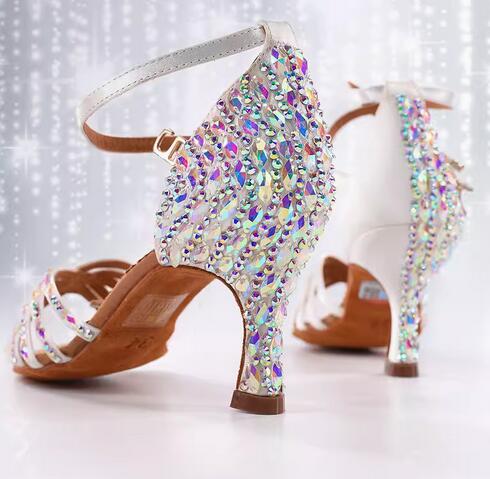
For performance and competition, sparkle counts. Our crystal collection pairs show-ready shine with the same suede-sole control.

Best Salsa Shoes for Beginners
If you're buying your first pair, prioritize stability over height. The best salsa shoes for beginners share three traits: a 2.5–3" flare heel for balance, a secure ankle strap or zipper so your foot doesn't shift, and a suede sole for controlled pivots on studio floors. Start there, get comfortable, and move up in heel height as your ankles strengthen. Browse beginner-friendly options in our salsa dance shoes for women collection, and use the size & width guide to dial in the fit.
At TTdancewear, beginners most often ask us for a comfortable 3" strappy or zip heel with extra forefoot padding—so we keep those styles in stock year-round and offer custom width on request.

Care & Maintenance
- Brush suede lightly every 2–3 sessions with a suede brush to restore the nap.
- Air-dry after class; avoid car-trunk heat, which warps the shape.
- Use gel pads for long socials; replace them when compressed.
- Store with shoe trees or tissue in a breathable bag to hold their form.
FAQs
How tight should salsa shoes fit?
Snug across the toes and midfoot with a secure heel. Expect minimal toe curl and a slight break-in stretch of about a quarter size.
Are 3-inch heels okay for beginners?
Yes—choose a flare heel for stability and consider ankle straps or zipper designs to lock the foot in place.
What are the best salsa shoes for beginners?
A 2.5–3" flare heel with a secure strap or zipper and a suede sole. It balances comfort, control, and confidence while you build ankle strength.
Open toe or closed toe for salsa?
Open toe salsa heels are cooler and show foot lines for performance; closed toe offers more protection on crowded social floors. Both work—pick by comfort and setting.
Can I wear salsa dance shoes outdoors?
Use street-sole models for outdoors and keep suede soles for clean studio floors.