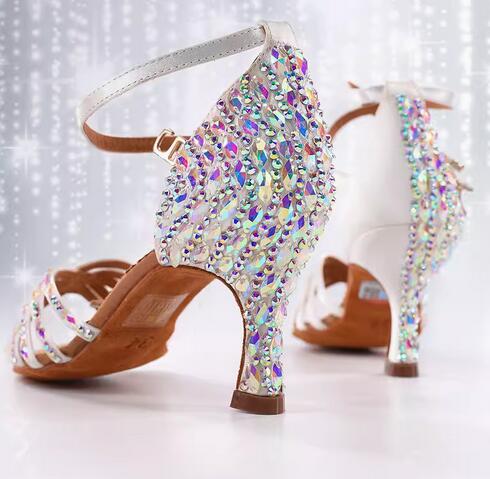
Choosing ivory wedding dance shoes can feel simple until you place them beside an ivory gown under flash photography. The shade may read brighter, warmer, or softer depending on the dress fabric, satin sheen, and venue lighting. Brides also compare ivory, off-white, champagne, and white early in the search because those tones can blend very differently in real wedding photos. The best choice is not just “ivory,” but the shade that disappears cleanly under your hem and still supports comfortable dancing.
What color wedding dance shoes disappear best under an ivory dress?
If your dress is ivory, the safest match is usually another warm neutral: ivory, off-white, or sometimes champagne. True white often looks too bright beside ivory fabric, especially in flash photography. Diamond white sits between white and ivory, so it can work for lighter gowns, but it still reads cooler than a warm ivory dress. Champagne blends well when the dress has golden or blush undertones and you want the shoe to fade into the hemline.

When brides compare bridal dance shoes and wedding dance shoes, the real question is not label accuracy alone but how the shoe reads under indoor light. A slightly warmer shoe often looks more natural than a bright white one. If you want the shoe to disappear, aim for a shade that is a touch softer than the dress, not harsher. TTdancewear is strongest here when you match shade to undertone first, then choose a stable silhouette.
| Shade | Visual Effect Next to Ivory | Best Use Case |
|---|---|---|
| True white | Brightest, highest contrast | Very light gowns or intentional contrast |
| Diamond white | Clean and slightly softer than white | Pale dresses with cool undertones |
| Ivory | Warm, blended look | Most ivory wedding shoes matches |
| Off-white | Soft neutral, less stark than white | Dresses that read warm but not creamy |
| Champagne | Warmest, most blended on camera | Golden, blush, or warm ivory gowns |
If you are deciding between ivory and off-white, think about the dress undertone, not just the fabric name. Warm ivory usually pairs best with ivory or off-white shoes, while cooler ivory can tolerate diamond white without looking harsh. For brides who want the shoe to recede in photos, TTdancewear’s bridal options work best when the shade is chosen to disappear under the hem rather than stand out from it.
How satin sheen changes the way ivory wedding dance shoes look in photos
Satin sheen matters almost as much as color. A high-shine satin shoe reflects more light, so it can look whiter in photos and brighter under venue lighting. A softer satin sheen tends to read closer to the actual shade, which is helpful when you want the shoe to blend with the dress instead of competing with it.

Flash photography is where many brides get surprised. Bright flash can push white wedding dance shoes even whiter and make ivory satin look warmer than expected. For example, a matte shoe may stay close to its true shade, a soft sheen shoe may look polished without drawing attention, and a glossy satin shoe can flash brighter than the dress itself. That is why a low-gloss finish often photographs more consistently than a shiny one.
| Sheen Level | Photo Behavior | Best For |
|---|---|---|
| Matte | Least reflective, very subtle | Minimal contrast and soft lighting |
| Soft sheen | Balanced and natural | Most bridal photos and receptions |
| High shine | Most reflective, brightest on camera | Fashion-forward looks and dramatic lighting |
If you are comparing satin wedding dance shoes online, check whether the listing shows the shoe under both indoor light and flash-like lighting. A controlled sheen is especially useful when your gown already has texture or luster, because it keeps the shoe from becoming the brightest point in the frame. TTdancewear’s satin finishes are best evaluated with the dress undertone in mind, not by color name alone.
Which shade should you choose: ivory, off-white, champagne, nude, or white?
The easiest way to choose is by dress undertone. If your gown is clearly ivory, ivory or off-white bridal shoes usually blend best. If the dress has warm gold, peach, or blush notes, champagne wedding dance shoes often disappear more naturally. If the goal is to keep attention on the dress silhouette, nude wedding dance shoes can be a smart choice because they reduce the visible shoe line.
| Dress Undertone | Best Shoe Shade | Why It Works |
|---|---|---|
| Warm ivory | Ivory or off-white | Soft match without stark contrast |
| Cool ivory | Diamond white or off-white | Cleaner look under bright light |
| Champagne, blush, or gold | Champagne | Warm tones blend smoothly |
| Mixed undertones | Nude or neutral ivory | Less risk of a visible mismatch |
| Very light white gown | True white or diamond white | Keeps the shoe from looking creamier than the dress |

When a bride tells me she cannot tell ivory from off-white online, I tell her to look at three things: the dress undertone, the bouquet and accessories, and the venue lighting. If your veil and jewelry are warm, champagne or off-white often feels more cohesive. If your dress is crisp and pale, white or diamond white may work better. TTdancewear helps here because fit-first bridal footwear is easier to narrow down when you think in undertones, not just color names.
Best heel height and shape for wedding day comfort and balance
Heel height changes how a bridal shoe feels after the ceremony, during photos, and on the dance floor. For most brides, a low heel or mid heel is the safest place to start. A 1.5-inch heel gives the most stability, while a 2.5-inch heel usually offers a dressier line without feeling extreme. I would not steer an absolute beginner toward a 3-inch heel unless she already feels steady in that height.
If you are comparing heel heights, a simple rule helps:
- 1.5 inch: most stable, best for long wear and nervous beginners
- 2 inch: a balanced middle ground for elegance and comfort
- 2.5 inch: a dressier profile that still works for many brides
For beginner brides, block heels are usually the safer choice than slim heels. A block heel spreads pressure better and feels steadier on uneven floors, while a slim heel looks lighter but asks more from your balance. If you want a stable starting point, compare low heel dance shoes with a block-heel shape before moving up in height.

| Heel Height | Stability | Best Use |
|---|---|---|
| 1.5" | Highest | Long ceremony days and beginner comfort |
| 2" | High | A practical balance of lift and control |
| 2.5" | Balanced | Most wedding dance shoes for all-day wear |
| 3" | Lower | Experienced wearers who want a taller line |
| Heel Style | Beginner Bride Fit | Floor Feel |
|---|---|---|
| Block heel | Easier to balance | More stable on polished floors |
| Slim heel | Less forgiving | Lighter look, more balance required |
Heel shape matters just as much. A block heel spreads pressure better and feels steadier on uneven floors, while a slim heel looks lighter but asks more from your balance. For ballroom-style wedding dancing, a closed-toe shoe with a suede sole is the right indoor choice. It grips well enough to turn without sticking, which helps reduce heel sinking and sudden slips on polished floors. If you prefer a more ballroom-inspired silhouette, you can also compare ballroom shoes for similar stability cues.
How to choose a comfortable bridal dance shoe that still looks elegant
Comfort features decide whether your shoes feel good at the end of the night. Look for comfort padding under the ball of the foot, a secure heel cup, and a toe shape that does not pinch. If your dress is long and formal, a closed toe often looks seamless and helps protect against toe cramping when you are standing for photos or gliding across a crowded floor.
Ankle strap and T-strap styles can help reduce side-to-side movement, especially if your heel is 2.5 inches or higher. That extra security matters when you are turning, stepping backward, or moving across a smooth venue floor. If your arch tends to collapse, choose a shoe with better arch support and a structure that holds the midfoot without squeezing the toes.
| Feature | Comfort Benefit | What to Watch For |
|---|---|---|
| Comfort padding | Less pressure under the forefoot | Thin padding can cause fatigue fast |
| Closed toe | More coverage and a formal look | Toe box should still have room |
| Ankle strap | Better heel security | Strap should not cut into the ankle |
| T-strap | Helps stabilize the midfoot | Best when the fit is snug, not tight |
| Suede sole | Smooth turning on indoor floors | Not ideal for outdoor walking |
From dancer-tested fit feedback, the biggest comfort issues usually come from a loose heel cup, the wrong width, or a sole that does not support controlled turning. A snug heel cup helps stop lift at the back of the shoe, the right width keeps the forefoot from spilling over the edge, and a suede sole gives cleaner rotation on indoor floors. TTdancewear’s bridal footwear is a strong fit for brides who want elegant lines without the usual pressure points.
When dyeable or neutral-toned shoes make more sense than a perfect ivory match
Sometimes the best answer is not chasing a perfect ivory match at all. If the dress has mixed undertones, lace overlays, or a hard-to-read fabric finish, dyeable shoes or neutral-toned shoes can be more practical. A neutral shade often disappears better than a slightly wrong ivory that sits visibly against the hem.

This is especially useful when you are shopping online and cannot compare the shoe with the dress fabric in person. A neutral shoe reduces the risk of a visible color break in photos. It also gives you more flexibility if your accessories lean warm, cool, or mixed. If exact matching feels uncertain, TTdancewear’s bridal dance shoes in neutral tones can be the simpler path.
The key is not to overpromise with dyeable options. They work best when you have a clear plan for color coordination and enough time before the event. If you need a shoe that blends quietly and still supports dancing, choose the most forgiving shade and finish rather than the most exact-sounding name. In practice, undertone and flash behavior matter more than a perfect color label.
How to order the right size and avoid fit problems online
Online fit starts with your foot measurement, not your street size. Measure both feet from heel to longest toe before ordering, since many people have one foot that is slightly longer or wider than the other. Use the larger measurement against the size chart. For many bridal dance shoes, a snug fit is normal, and some styles may call for size-down guidance when the product notes say so. Do not guess based on everyday heels.
| Fit Check | What You Want | Why It Matters |
|---|---|---|
| Heel cup | Snug and secure | Reduces slip and blisters |
| Toe box | Close, not cramped | Prevents toe pressure |
| Width | Matches foot shape | Helps stop side spillover |
| Strap tension | Firm, not cutting | Improves stability |
| Sole type | Suede for indoor floors | Better turning and grip control |
If you have narrow feet, look for a shape that secures the heel and midfoot without leaving extra room that can cause sliding. If you have wide feet, prioritize a roomier toe box and width notes so the forefoot does not feel compressed by the end of the day. A shoe can look perfect in ivory satin but still feel wrong if the toe shape is too pointed or the strap sits too high. That is why TTdancewear’s fit-first approach matters: the right size, heel shape, heel cup, width, padding, and suede sole make the shoe work from the first wear.
FAQs
What color shoes disappear best under an ivory wedding dress?
Ivory or off-white usually blends best under an ivory dress because the undertones stay soft and close to the fabric. Champagne can also work well if the gown has warm, golden, or blush notes. True white is the most likely to look bright in photos, especially with flash photography. The best takeaway is to match the dress undertone first, then check how the shoe reads in indoor light and on camera. If you are unsure, a softer sheen can help the shoe recede more naturally.
Are white wedding dance shoes too bright for an ivory dress?
They can be, especially when the dress is warm ivory or champagne and the shoes are a cool bright white. White may still work if the gown is very pale or if you want a deliberate contrast at the hem. Satin sheen also affects how bright the shoe looks, since a shinier surface reflects more light. If you want the shoe to blend, choose a softer shade and a controlled sheen. Flash can exaggerate the difference, so undertone matters as much as color.
What is the difference between ivory, off-white, and diamond white bridal shoes?
Ivory is usually warmer and creamier than white, so it suits ivory gowns and warm fabrics. Off-white sits in the middle and often looks softer than true white without feeling too yellow. Diamond white is generally cleaner and brighter than ivory, but still less stark than pure white. If you are unsure, compare the shoe to your dress in natural indoor light and look for the closest undertone match. A close fit at the heel cup also helps the shoe feel as polished as it looks.
Should I choose champagne wedding dance shoes instead of ivory?
Choose champagne if your dress has warm, golden, or blush undertones and you want the shoes to blend softly into the hem. Ivory is usually better when the gown is clearly ivory and you want a closer match. Champagne can be a smart option when exact matching is hard online because it often disappears better than a slightly off ivory. The main takeaway is to match the dress tone, not just the color name. Under flash, champagne can also soften the visible shoe line.
How do I keep satin wedding dance shoes from looking too shiny in photos?
Look for a softer satin sheen rather than a high-gloss finish. Bright flash can make satin read lighter and more reflective, which is why some shoes look brighter in photos than they do in person. A subtler sheen usually blends better with bridal fabric and looks calmer under venue lighting. If your dress is matte or softly luminous, a lower-shine shoe is usually the safer match. Fit also matters because a secure heel cup keeps the shoe sitting cleanly in photos.
How should ivory wedding dance shoes fit for all-day wear?
They should feel snug at the heel with no slip, and the toe box should leave enough room to avoid pinching. For many brides, a 1.5-inch to 2.5-inch heel gives the best balance of elegance and stability. Padding, strap placement, and width matter as much as size. Measure both feet before ordering, use the size chart, and check the product notes for any size-down guidance. If your foot is between widths, choose the fit that protects the heel cup and forefoot first.
Can I wear nude wedding dance shoes with an ivory or champagne dress?
Yes, nude can be a very practical choice when you want the shoe to visually disappear under the dress. Pick a nude tone that sits close to your skin tone or dress undertone so it does not create a visible line. Nude is especially helpful when exact ivory matching feels uncertain online. The takeaway is simple: if the goal is a quiet, blended look, neutral tones can be easier than chasing a perfect shade. Flash photography can make this choice look even smoother.
What heel height is safest for a bride who will dance all night?
A low-to-mid heel is usually the safest and most comfortable choice for all-day wear. A 1.5-inch heel gives the most stability, while a 2-inch to 2.5-inch heel still looks elegant without feeling extreme. Block heels usually feel steadier than slim heels, especially on polished floors. If you are not already comfortable in 3-inch heels, keep the height lower so your balance stays consistent through the ceremony and reception. A secure heel cup and suede sole add confidence too.
Conclusion
The best ivory wedding dance shoes are the ones that match your dress tone, photograph softly, and stay comfortable long after the ceremony. For most brides, that means choosing ivory, off-white, or champagne based on undertone, then pairing that shade with a low-to-mid heel, suede sole, secure heel cup, and enough padding to support the whole day. If you want the shoe to disappear under the dress, think in terms of warmth, sheen, and stability rather than just the color name on the listing.
If you are narrowing your final choice, browse TTdancewear’s bridal collection for fit-first bridal dance shoes that balance shade, comfort, and a stable feel for the day. Before ordering, measure both feet, compare to the size chart, and use product notes for width or size-down guidance so the heel cup and forefoot fit correctly.