The main types of swing dance include Lindy Hop, East Coast Swing, West Coast Swing, Charleston, Balboa, and jive. Swing is not one single dance; it is a family of jazz-era social dances with shared rhythm, bounce, and partner connection. For most beginners, East Coast Swing is the easiest place to start.
Each style has its own dance timing, floor pattern, tempo range, and social culture. Learning the differences helps you choose a beginner class with confidence instead of guessing from a class title.
What Are the Types of Swing Dance?
Swing dancing is an umbrella term for several related swing dance styles that grew from jazz music and social dancing. The most common list of swing dances includes Lindy Hop, East Coast Swing, West Coast Swing, Charleston, Balboa, and jive. You may also hear the word jitterbug, especially in casual or vintage dance settings.
The reason beginners get confused is simple: people often say “swing” when they mean different things. One dancer may mean Lindy Hop with swingouts and 8-count patterns. Another may mean East Coast Swing with a compact 6-count basic. A West Coast Swing dancer may picture a smooth slot, stretch, and elastic partner connection.
The shared DNA is musical. Swing dances usually respond to swung rhythm, syncopation, and a grounded pulse through the knees and ankles. But the movement can look very different. Charleston kicks forward and back. Balboa stays small and close. Jive is sharper and more ballroom-oriented.

From customer feedback and beginner shoe-fitting questions, we often see the same concern: “Which class should I choose first?” The good news is that there is no wrong entry point if the level is truly beginner. Still, East Coast Swing is often the clearest first step because its basic rhythm is easier to repeat.
Where Swing Dancing Came From: Jazz-Era Roots and Social Dance Culture
Swing dances developed alongside jazz and big-band music in the 1920s, 1930s, and 1940s. The jazz era was not only a performance period; it was a social dance culture. Ballrooms, clubs, and community spaces shaped how dancers moved, shared steps, and adapted to different bands.
Lindy Hop is strongly associated with Harlem in the late 1920s and 1930s, especially the Savoy Ballroom. Dancers responded to big-band swing with a grounded pulse, improvisation, and playful lead-and-follow conversation. The music often used 4/4 time, but dancers organized movement into 6-count, 8-count, and phrased patterns.
As swing dancing spread, names and forms shifted. Regional scenes, crowded floors, changing music, and teaching systems all influenced what people called a step. That is why “jitterbug” may refer broadly to energetic swing dancing in one setting, while another scene uses more specific names.
Technique also evolved with space. A large ballroom allowed traveling swingouts and open shapes. A crowded floor encouraged smaller footwork, which helped Balboa thrive. This history explains why the family feels connected, even when the posture, frame, and floor path differ.
Lindy Hop: The Root Style Most Dancers Should Know
Lindy Hop is one of the foundational swing dances and remains central to modern swing communities. It blends partnered connection, improvisation, athletic energy, and rhythmic play. The famous swingout is a key figure: partners move from closed position to open position, using stretch and rotation to redirect energy.
Beginners often ask about Lindy Hop vs East Coast Swing because both can use triple step rhythms. A common Lindy basic may include 8-count timing, while many classes also teach 6-count figures. This mix is part of Lindy Hop’s richness, but it can feel like more information at first.
The movement quality matters as much as the steps. Lindy Hop uses a relaxed, grounded pulse. The knees stay soft, the torso stays responsive, and weight transfers happen clearly under the body. Fast music can be exciting, but clean basics at moderate tempo build better control.
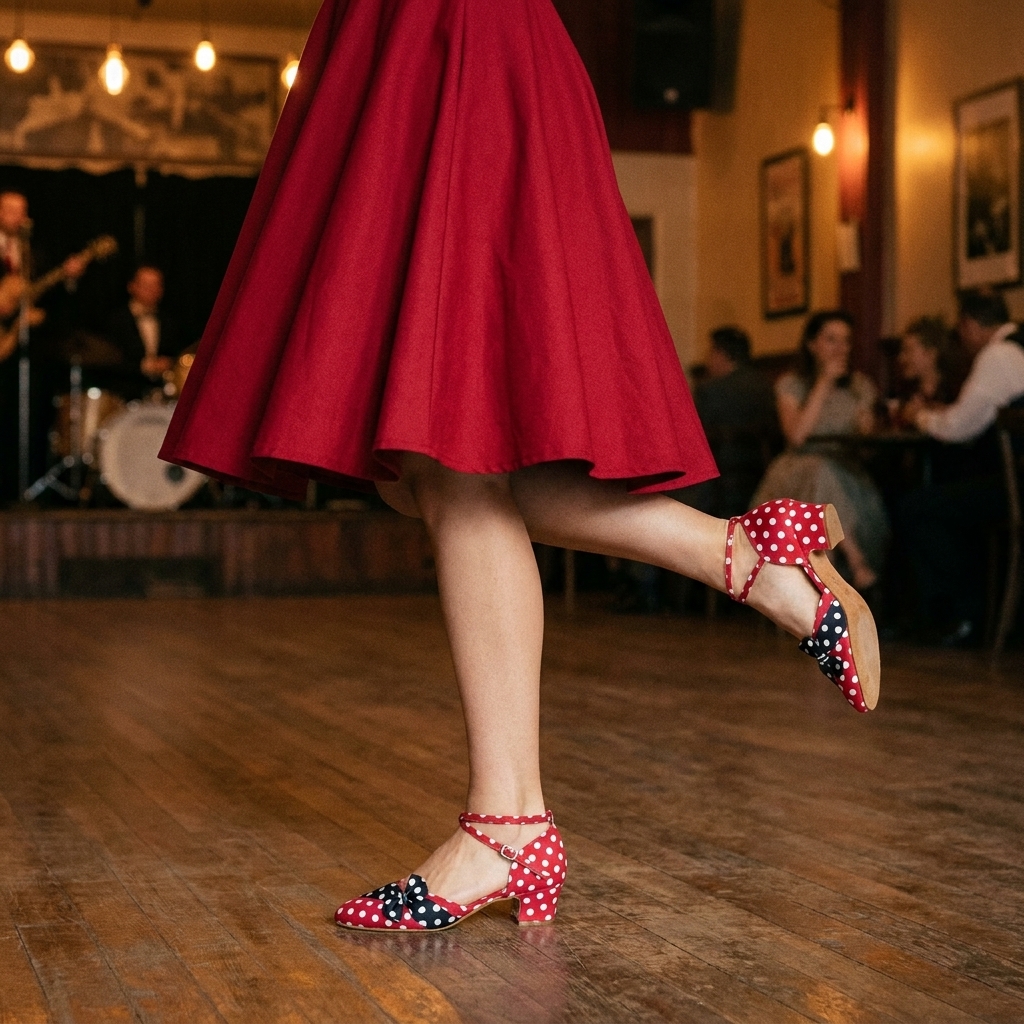
For footwear, the right Lindy Hop shoes reward flexibility, secure fit, and a sole that allows controlled turns without gripping too hard. Foot changes happen quickly, so avoid heavy shoes that make triple step timing feel delayed.
East Coast Swing: The Easiest Swing Dance for Beginners?
East Coast Swing is often the easiest swing dance for beginners because its structure is more direct. Many beginner classes use a 6-count rhythm such as triple step, triple step, rock step. Some settings simplify the rhythm further at first, then add triple step once students understand weight transfer.
This style usually feels more rotational and energetic than West Coast Swing, but less complex than Lindy Hop. The basic shapes are easy to recognize: underarm turns, tuck turns, send-outs, and simple closed-position basics. Because the patterns repeat clearly, beginners can focus on timing, frame, and lead-follow communication.
East Coast Swing also works well in casual social dance settings. The dance does not require a large floor, and it can adapt to moderate-tempo swing music. That makes it a practical first choice if you want to attend a beginner class and then join a social floor soon after.
A useful technique cue is to keep the rock step small. Many beginners step too far back, which pulls the partnership off balance. Keep the rock step under your hips, maintain a light hand connection, and let the triple step travel only as much as the music and space allow.
West Coast Swing vs East Coast Swing: Tempo, Feel, and Floor Pattern
West Coast Swing vs East Coast Swing is one of the most common beginner comparisons. The biggest difference is floor pattern. West Coast Swing is generally danced in a slot, meaning the follower travels forward and back along a line while the leader manages space and redirection. East Coast Swing feels more circular and bouncy.
West Coast Swing can use slower music, including blues, pop, R&B, and contemporary tracks, but slower tempo does not automatically mean easier. The challenge is elasticity: partners create stretch, compression, and delayed timing while staying balanced. That requires patient connection and precise weight transfer.
East Coast Swing, by contrast, is usually easier to recognize rhythmically. Its 6-count structure is direct, and its figures often rotate around a shared center. The energy is lively, but the learning curve is often friendlier for absolute beginners.
| Feature | East Coast Swing | West Coast Swing |
|---|---|---|
| Common floor pattern | Rotational and compact | Slotted and linear |
| Beginner rhythm | Often 6-count with triple step | 6-count and 8-count patterns |
| Movement feel | Bouncy, energetic, social | Smooth, elastic, controlled |
| Music feel | Swing and rock-and-roll friendly | Wider range, often smoother |
| Beginner challenge | Keeping rhythm and small steps | Connection, slot control, timing |
Charleston, Balboa, and Jive: The Other Swing Styles You’ll Hear About
Charleston, Balboa, and jive are also important names in the swing family. They are not simply “extra” styles; each shows how swing-era movement adapted to different music, spaces, and performance traditions.
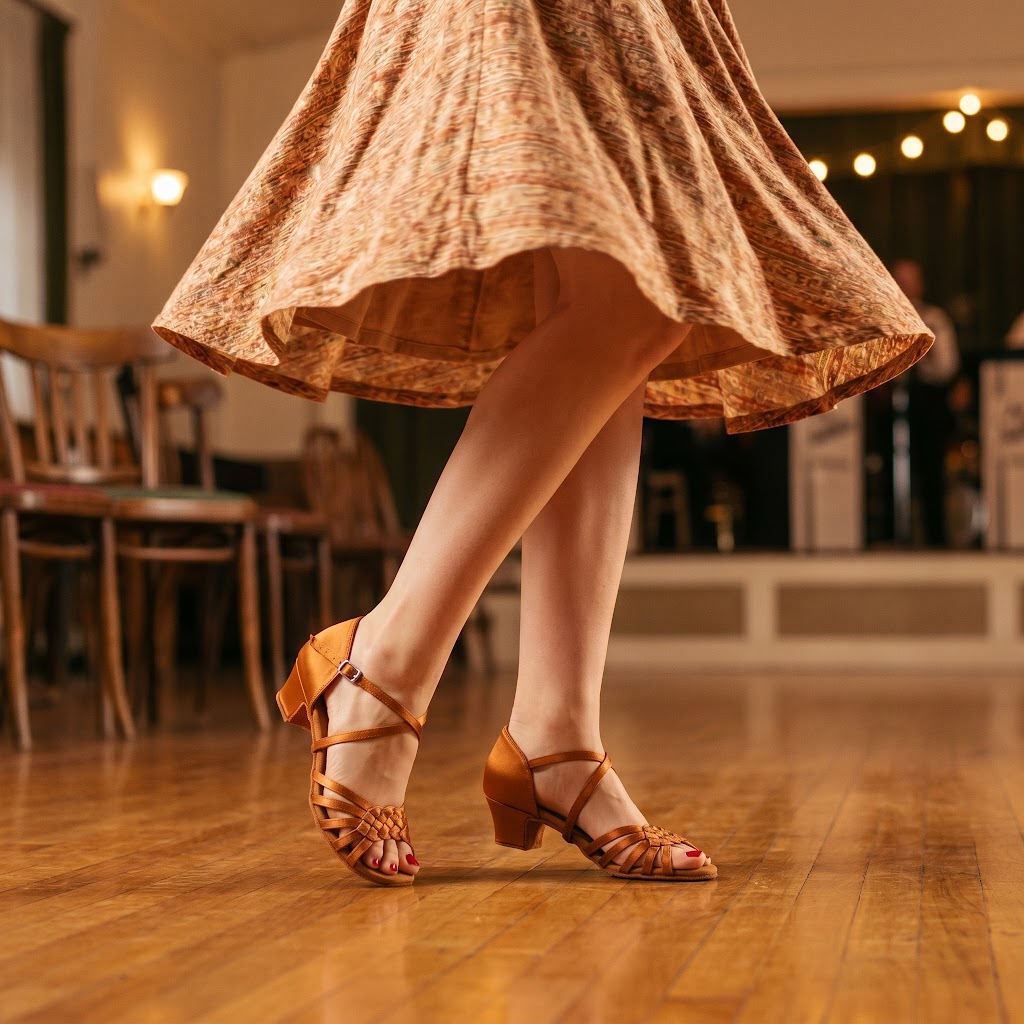
Charleston is strongly associated with the 1920s and is known for rhythmic kicks, swivels, and a lively vintage look, often danced in period-style vintage swing shoes. It can be danced solo or partnered. The basic action often uses a twisting motion through the feet and knees, so dancers should keep the joints soft rather than forcing turnout.
Balboa developed for crowded dance floors and uses compact steps, close body position, and efficient weight changes. Its small footwork allows dancers to move quickly to fast tempo music without large traveling patterns. The frame stays comfortable but organized, with the torso helping maintain connection.
Jive is often included in broader swing dance discussions, especially because of its upbeat rhythm and connection to ballroom Latin categories. It has sharper kicks, flicks, and chassés than many social swing styles. Beginners do not need to learn all three right away, but recognizing the names helps class descriptions make sense.
Swing Dance Styles Compared: Tempo, Feel, and Difficulty
A side-by-side view makes the different types of swing dance easier to understand. Difficulty is relative, not fixed. A friendly teacher, suitable music, and a true beginner class can make any style more approachable.
| Swing style | Common timing | Movement feel | Floor use | Beginner friendliness |
|---|---|---|---|---|
| Lindy Hop | Mix of 6-count and 8-count | Bouncy, playful, athletic | Rotational and traveling | Moderate |
| East Coast Swing | Often 6-count | Clear, energetic, compact | Rotational social floor | Easiest for many beginners |
| West Coast Swing | 6-count and 8-count | Smooth, elastic, slotted | Linear slot | Moderate to technical |
| Charleston | 8-count phrasing common | Kicks, swivels, vintage rhythm | Solo or partnered | Moderate |
| Balboa | Small, fast weight changes | Compact and close | Excellent for crowded floors | More specialized |
| Jive | Quick chassés and kicks | Sharp, upbeat, springy | Ballroom-style floorcraft | Moderate to energetic |
Tempo is only one part of the decision. Fast Balboa may feel efficient because the steps are tiny. Slower West Coast Swing may feel difficult because timing and connection are exposed. East Coast Swing often wins as the easiest swing dance for beginners because the rhythm is clear and the first patterns come quickly.
How TTdancewear can help: TTdancewear is an online shoe retailer with an Amazon’s Choice badge, 200,000+ pairs sold, and 14+ years helping dancers choose Latin and salsa dance shoes; that fitting experience also guides our swing footwear advice. For indoor practice, dancers often look for secure fit, stable heel shape, and soles that support controlled turning. Browse our swing dance shoes if you are preparing for class or social dancing.
Which Swing Dance Should a Beginner Start With?
If you want the simplest first step, start with East Coast Swing. It gives you a clear 6-count foundation, easy social patterns, and enough rhythm practice to build confidence. A beginner class in East Coast Swing also helps you learn partner basics: frame, rock step control, weight transfer, and listening to the lead or follow.
If you enjoy smoother music and detailed connection, explore West Coast Swing next. It may sound slower, but the slot, stretch, and timing require patience. If you love vintage jazz, faster energy, and improvisation, Lindy Hop and Charleston are excellent goals after you build basic coordination.
Balboa is a good later choice if your local scene dances to faster music or crowded floors. Jive suits dancers who like a sharper, more performance-oriented style. For the first month, choose the class you can attend consistently and warm up your ankles, calves, and hips before dancing.
FAQs
How many types of swing dance are there?
There is no single fixed number because swing is an umbrella term, not one standardized dance. Most beginners are asking about six core styles: Lindy Hop, East Coast Swing, West Coast Swing, Charleston, Balboa, and jive. Some regional scenes also include related names such as jitterbug or local swing variations. Your practical takeaway is to start by learning the class title, timing, and music style before worrying about every possible category.
What is the difference between East Coast Swing and West Coast Swing?
East Coast Swing is generally more circular, bouncy, and energetic, with many beginner classes using a 6-count triple step rhythm. West Coast Swing is danced in a slot and often feels smoother, more linear, and more elastic. Both styles share swing roots, but the frame, floor pattern, and music interpretation differ. Do not choose only by tempo; choose by whether you want clearer starter patterns or more detailed partner connection.
Which swing dance is easiest for beginners?
East Coast Swing is often the easiest first choice for absolute beginners. Its basic rhythm is usually easier to repeat, and common figures like underarm turns and rock steps appear early in class. Lindy Hop is foundational but can feel more athletic, while West Coast Swing may be slower yet more technical. Pick a beginner class you can attend regularly, wear stable practice footwear, and focus first on clean weight changes.
Is Lindy Hop the same as swing dancing?
No. Lindy Hop is one style within the larger swing dancing family. It is one of the most iconic and influential forms, especially because of its jazz-era roots and use of both 6-count and 8-count movement. Swing dancing also includes East Coast Swing, West Coast Swing, Charleston, Balboa, jive, and related social styles. If a class says “Lindy Hop,” expect more swingouts, pulse, and improvisation than a basic East Coast Swing class.
Do I need special shoes for swing dance classes?
You do not need advanced shoes for your first class, but beginners benefit from footwear that is comfortable, stable, and easy to turn in. A secure fit helps with triple step timing, rock steps, and quick weight changes. For indoor floors, many dancers prefer soles that allow controlled movement rather than sticky traction. Measure your feet, check the size and heel guide, review width notes, and choose a heel shape that supports balance.
Conclusion
The main types of swing dance share jazz-era roots, but they do not all move the same way. Lindy Hop is foundational and playful, East Coast Swing is often the easiest beginner entry point, West Coast Swing is slotted and connection-focused, Charleston is rhythm-heavy, Balboa is compact, and jive is sharp and upbeat. Start with the style that matches your music taste, class access, and comfort level. If you are getting ready for your first class or social night, TTdancewear’s swing dance shoes can help you choose stable, practice-friendly footwear online.