If you’re searching for how to break in dance shoes, the short answer is this: do it gradually, not all at once. New leather dance shoes, suede soles, and strappy salsa shoes usually need a few short wears before they feel natural, and that first week matters if you want to avoid dance shoe blisters. Across the thousands of pairs we have shipped, we consistently see beginners feel better after a simple at-home routine with short sessions, targeted padding, and a quick suede brush after wear. The goal is comfort without losing support, heel control, or floor feel before your next social dancing night.
How to break in dance shoes fast without blisters
The fastest safe way to break in new dance shoes is to wear them in short, controlled sessions. Start at home, then move to light practice, and only then use them for a full social. That gradual approach softens the shoe where your foot actually bends, instead of forcing the whole upper to collapse. Most beginners we work with do best when they treat the first week like fit break-in, not a test of endurance.
Blisters usually show up at the heel counter, strap edges, toe box seams, and the ball of the foot. If you feel hot spots early, stop and adjust before the skin breaks. A little padding, a better heel strap fit, or a smaller heel height can solve more than aggressive stretching ever will.

If you need beginner dance shoes that are easier to adapt, browse our dance shoes collection for fit-focused options that work well during a short break-in window.
What makes new dance shoes hurt feet dancing?
New shoes hurt for a few predictable reasons. Stiff uppers, rigid shanks, and tight toe boxes all create pressure before the shoe molds to your foot. Heel height matters too. A 2.5" heel asks more of your calf and arch than a 1.5" heel, while a 3" heel is usually too much for absolute beginners.
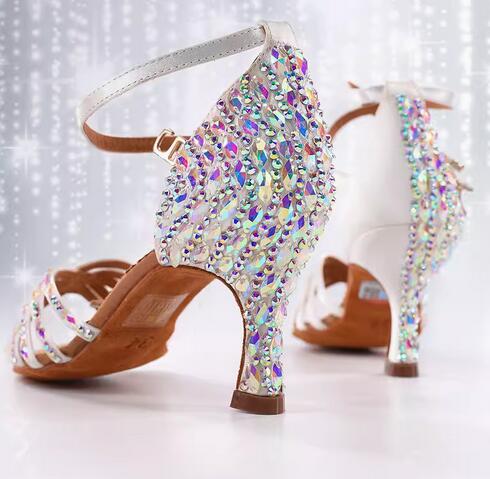
Heel shape changes comfort as well. A slim heel can feel elegant, but a flare heel gives more base support for social dancing. That is one reason beginner-friendly salsa shoes often use a wider heel base and secure ankle straps. Ballroom dance shoes should feel snug in the heel cup, with closed toes and full suede soles for stable indoor floors.
Straps can be the real culprit. Ankle straps, T-straps, and heel straps may rub until the material softens. Wide feet often feel toe cramping first, while narrow feet may notice heel slip. After fitting hundreds of social dancers, I can tell you the wrong width is often blamed on break-in when the real issue is shape.
| Feature | Comfort Impact | What to Watch |
|---|---|---|
| 1.5" heel | Lowest stress on foot and ankle | Best for newer dancers |
| 2.5" heel | Balanced height for social use | Needs good heel support |
| 3" heel | More pressure on ball of foot | Better for experienced dancers |
| Flare heel | More stable base | Helpful for balance |
| Slim heel | Less surface contact | Can feel less steady |
| Suede sole | Good glide on indoor floors | Brush after wear |
If your current pair feels wrong in the heel or width, our dance shoe fit guide can help you sort out whether you need a different size, a different shape, or just more break-in time.
7-day routine to break in new dance shoes at home
A seven-day plan works better than one long wear session because your feet can adapt without getting raw. The first two days should be short indoor wear sessions of 10 to 20 minutes. Walk, point, flex, and do a few basic dance steps, but keep it light. This is where you learn whether the toe box pinches or the heel cup slips.
On days 3 and 4, add gentle practice. Use basic turns, weight changes, and slow social dance patterns. Do not test high-impact moves yet. If the shoe is leather, you’ll often notice the upper softening at the flex point by this stage. If it is satin or mesh, the shoe may feel better faster, but the fit still needs checking.
Days 5 and 6 are for longer practice with small fixes. Add padding where the shoe rubs, then retest. This is a good time to notice if arch support feels right or if the heel strap needs adjustment. By day 7, the shoe should feel ready for a full social, or at least close enough that you trust it for a short evening.
| Day | What to Do | Goal |
|---|---|---|
| 1-2 | Wear at home for 10-20 minutes | Find hot spots |
| 3-4 | Light practice and basic steps | Soften key flex points |
| 5-6 | Longer practice with padding | Improve comfort and stability |
| 7 | Final check before social dancing | Confirm fit and control |
If you need a pair that feels more wearable from the start, our social dance shoes collection is a practical place to look before your next event.
How to soften dance shoes safely: stretching, padding, and suede brushing
Softening dance shoes safely means working with the shoe, not fighting it. Gentle stretching can help a tight toe box or a rubbing strap, but it should never remove support. Use a shoe stretcher lightly, or wear the shoe at home with thin socks if the material allows it. Never soak the shoe or use high heat. That can damage shape, glue, and heel support.
Padding is most useful where friction happens, not everywhere. Put it on the heel counter, ankle strap, or toe edge if those spots rub. Too much padding can make the shoe loose, which leads to heel slip and more blisters. For ballroom dance shoes and salsa shoes, a snug fit matters more than a soft feel.
Suede soles need special care. After wear, brush them lightly to keep the right amount of glide on indoor floors. That helps with floor grip and keeps the sole from feeling sticky. If the sole gets too smooth, you lose control. If it gets too packed down, turns feel heavy.
| Problem Area | Best Fix | What Not to Do |
|---|---|---|
| Heel rubbing | Heel pad or better fit | Add bulky inserts everywhere |
| Strap rubbing | Soft strap pad | Overstretch the strap |
| Toe pressure | Gentle stretch | Soak or heat the shoe |
| Suede sole drag | Suede brushing | Leave it packed flat |

For comfort tools that help with blister prevention, check our shoe accessories collection. A small insert can save a full social from turning painful.
Break in dance shoes by style: ballroom, salsa, and bachata
Break-in should match the dance style. Ballroom standard shoes need closed toes, full suede soles, and stable heel support. The fit should be snug without toe cramping, because standard steps ask for control and balance. A 1.5" to 2.5" heel is usually a smarter starting point than anything higher.
Salsa shoes and bachata shoes often have open toes, ankle straps, and more flexible uppers. That means the forefoot may feel easier sooner, but the straps can rub faster. A flare heel helps with balance on turns, and suede soles give the right indoor glide. If the heel feels wobbly, the shoe is probably too high or too narrow for your current level.
Beginners should keep heel height conservative. A lower heel makes it easier to stay centered while the shoe softens. For social dancing, comfort and stability matter more than a dramatic silhouette.
| Dance Style | Best Break-In Focus | Beginner-Friendly Features |
|---|---|---|
| Ballroom | Heel cup, toe box, suede sole | Closed toe, 1.5"-2.5" heel |
| Salsa | Ankle strap, forefoot, heel base | Flare heel, secure straps |
| Bachata | Flex at ball of foot, strap comfort | Soft upper, stable heel |
If your current pair is not the right style, our ballroom and Latin shoes collection can help you match heel shape and support to the way you actually dance.
When to keep breaking in shoes and when to exchange them
Not every painful shoe just needs more time. Normal break-in feels snug, a little stiff, and slightly awkward at first. It should not cause numb toes, repeated heel lift, or sharp rubbing after several short wears. If the shoe still hurts in the same place after a week of careful use, the fit is probably wrong.
Watch the toe box closely. If your toes are cramping or going numb, the shoe may be too short or too narrow. If your heel keeps slipping, the heel counter may be too loose or the heel shape may not suit your foot. Wide and narrow feet often need different solutions, and no amount of shoe stretching fixes the wrong shape.
Use padding when the issue is small and specific. Exchange the shoe when the problem is structural. That saves money and protects your feet.

If you are unsure, our size guide is a good next step before choosing whether to keep breaking in or swap the pair.
FAQs
How to break in dance shoes quickly?
The quickest safe method is short wear sessions at home, then light practice, then a full social only after the shoe feels stable. Start with 10 to 20 minutes and focus on the heel cup, toe box, and strap edges. A little padding helps more than forcing the whole shoe to soften at once. Brush suede soles lightly after wear so they keep the right indoor floor feel.
Do you have to break in dance shoes?
Yes, most new dance shoes need some break-in time, especially leather dance shoes and styles with suede soles. The goal is to soften the upper and let the shoe mold to your foot without losing support. Some pairs feel better faster than others, but heel height, strap style, and width all affect comfort. If pain stays sharp after several wears, the fit may be wrong.
How to soften dance shoes without ruining them?
Use gentle wear, light flexing, and targeted padding. Do not soak the shoe, use high heat, or bend it aggressively. Those methods can damage the shape, glue, and support. If the shoe has suede soles, keep them brushed so they still work on indoor floors. The best result is a shoe that feels more comfortable but still holds your foot securely.
How to make dance shoes more comfortable for social dancing?
Check strap security, heel fit, and toe box pressure before the event. A 1.5" to 2.5" heel is usually easier for social dancing than a higher heel, especially for beginners. Use blister pads or inserts on hot spots, but do not overfill the shoe. If the pair still hurts after short practice, it may be the wrong size or shape for your foot.
What should I do if my new dance shoes give me blisters?
Stop as soon as a hot spot starts. Clean the area, protect it with a blister pad or tape, and shorten the next wear session. Then check whether the heel, strap, or toe edge is causing the friction. Blisters often come from rubbing at the heel counter or ankle straps. If the same spot keeps blistering, the shoe may need an exchange.
Should dance shoes feel tight at first?
Snug is normal, but painful is not. Your heel should stay secure, your toes should not cramp, and the shoe should not pinch in multiple places. Ballroom shoes usually fit more closed and controlled, while salsa shoes may feel a bit more open at the toe. If you need to size down, do it for fit, not to force break-in. A wrong size will not improve with wear.
Can I wear new dance shoes to a social right away?
Only if you have already tested them at home and in a light practice session. New shoes should feel stable enough for your heel height and the floor surface. Bring blister pads just in case, and keep a backup pair if you are nervous. If the shoe still feels stiff or unstable, give it more break-in time before a full night of social dancing.
Conclusion
Breaking in dance shoes is really about protecting your feet while the shoe learns your shape. Short home wear, light practice, targeted padding, and suede brushing are usually enough to soften the shoe without ruining support. If you keep the heel height sensible and pay attention to rubbing points, you can avoid most blisters before your next social. When a pair still feels wrong after a careful week, it is usually a fit issue, not a break-in issue. For beginner-friendly options and practical fit help, browse our social dance shoes collection.